Pokémon Trading Card Game Live is putting on its academic robes for Study Season, a limited-time event designed to steer players toward the skills they may want before upcoming Regional Championships. The event begins at 10:00 a.m. PDT on September 3, 2026, and ends at 10:00 a.m. PDT on September 15, 2026.
That is a compact window, but Study Season is not merely a login-reward detour dressed in a mortarboard. Its lineup combines cosmetics, an instructional Learning Lab, a specially restricted Trainer Trial, and Build & Battle matches using Scarlet & Violet—Twilight Masquerade. In other words: class has a syllabus, and at least one portion of it involves making the smallest possible Pokémon work very hard.
For players returning after time away, the event provides multiple entry points. Someone interested in visual customization can collect the attendance-themed items. A player still getting comfortable with battle rules can work through Professor Fir’s lesson. And those who learn best by shuffling cards into a fresh, slightly chaotic plan can take on the altered rules of Bitty Basic Brawl or enter Build & Battle.
Pokémon TCG Live originally released on June 8, 2023, and is available on Windows, Mac, iOS, and Android. Study Season’s timing is explicitly tied to preparation for Regional Championships, so the event’s classroom framing is doing practical work: it is meant to encourage repeatable fundamentals rather than simply hand out a gold star for knowing what a Poké Ball is.
Free attendance rewards put the event’s theme on the scoreboard
Logging in during Study Season can earn players a mortarboard hat cosmetic as well as deck accessories marking the 2027 competitive season. These are described as free login gifts, which means participants should not confuse them with the additional academic-themed avatar cosmetics that will appear in the in-game shop.
The split is worth noting for collectors and completion-minded players. The mortarboard and 2027 season accessories are positioned as event login rewards, while some school-inspired avatar items are shop offerings. The announcement does not specify the complete contents of either pool, nor does it detail individual shop costs, so anyone assembling a digital academic wardrobe will need to check the game during the event rather than assume every scholarly accessory is part of the free package.
The Study Season Battle Board also returns. It uses a blackboard-style background with chalk doodles, giving the play area a look that is less formal lecture hall and more the moment after someone turned a strategy diagram into a doodle contest. For those who enjoy the collecting side of a digital card game, themed boards and accessories can be part of the appeal even when they do not affect a match. That familiar urge to obtain one small matching item can escalate quickly; the broader phenomenon is explored in The Collector’s Five Stages of Buying One Small Thing.
Professor Fir’s Learning Lab focuses on Special Conditions
The central lesson for this event is a new Learning Lab led by Professor Fir, covering how to use and prepare for Special Conditions in battle. Special Conditions are important because they add a layer beyond ordinary attacks and damage: a player needs to understand not only how to apply them but also how an opposing deck may respond when they appear.
Study Season’s approach is especially useful in concept because it pairs that focused subject with formats where players can put ideas into practice. The Learning Lab is the study session; the Trainer Trial and Build & Battle matches are where the notes meet the test, possibly with fewer pages and more tiny monsters than a conventional exam allows.
The event also points players toward previous Learning Labs covering Stadium cards and damage counters. Those earlier subjects make sense alongside Special Conditions. Stadium cards can shape the environment for both players, damage counters demand careful tracking and calculation, and Special Conditions can change the urgency of every decision. Together, they form a tidy set of subjects for players who want to be more deliberate about the board state instead of discovering its details only after an opponent has politely ended the game.
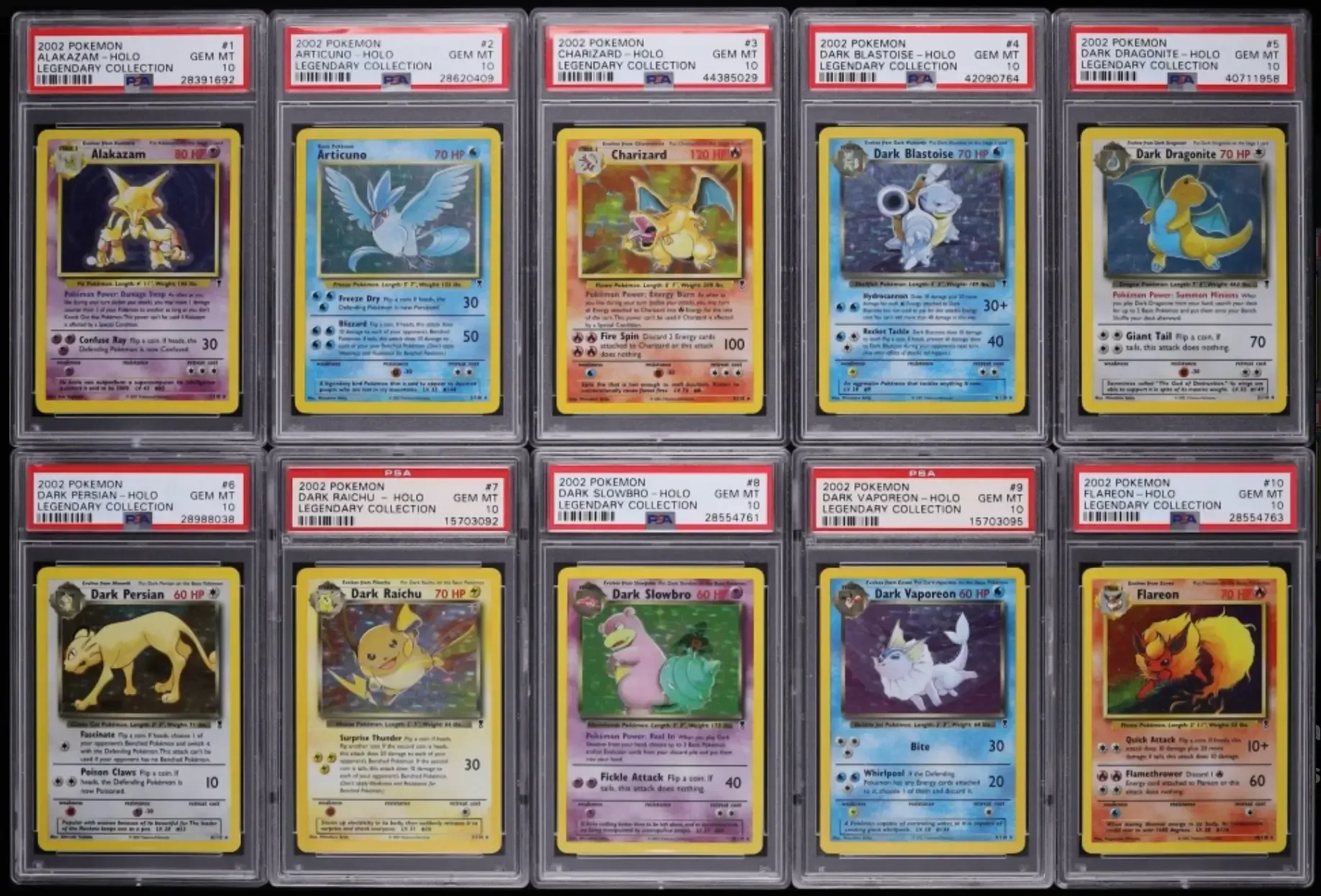
For a different foundational reference, collectors parsing physical Pokémon cards can also review Pokémon Rarity Symbols: Start with the Set, Then Read the Stars. Rarity and competitive utility are not interchangeable ideas, of course, but knowing how a card belongs within a set is useful context for anyone moving between collecting and playing.
Bitty Basic Brawl cuts decks down to essentials
The event’s new Trainer Trial is called Bitty Basic Brawl, and the name accurately previews its miniature rule set. Decks are reduced to 30 cards. Players use three Prize cards. Most importantly, decks may contain only Basic Pokémon.
That last restriction is the big classroom rule written in permanent marker. It removes evolved Pokémon from deck construction for the trial, placing the focus on Basic Pokémon and on choices that must work without evolution lines as part of the plan. The smaller deck and Prize counts should also make each card and each knockout matter faster than in the standard structure players may be accustomed to.
The format is described as beginner-friendly, and its limitations help explain why. A compact deck is easier to inspect and can make a basic game plan more visible. Restricting the Pokémon pool can likewise reduce the number of moving pieces that a newer player needs to weigh at once. That does not mean every match becomes effortless. Constraints have a habit of making overlooked decisions much more obvious, which is usually educational right up until the moment it is extremely educational.
Bitty Basic Brawl also offers a clear place to test the Special Conditions material from the new Learning Lab. The announcement frames the Trial as an opportunity to apply lessons learned, rather than as an unrelated novelty mode. Players who want to use the event as intended can start with the lesson, identify the relevant interactions, then see how those ideas hold up under the 30-card, Basic-only rules.
Build & Battle offers a different kind of study session
For players seeking a more deckbuilding-oriented challenge, Study Season includes Build & Battle matches. This mode is presented as a way to become familiar with different expansions, experiment with constructing decks, and earn rewards.
During the event, the available cards for Build & Battle come from Scarlet & Violet—Twilight Masquerade. That gives the mode a defined expansion focus, useful for players who want to explore how that card pool fits together rather than approaching deck construction as an endless pile of possibilities. Build & Battle is a fitting companion to the Basic-only Trainer Trial: one asks players to thrive within a sharp restriction, while the other emphasizes getting acquainted with an expansion and making a deck from what is available in that setting.
The event announcement calls out rewards for Build & Battle, but does not identify the specific rewards or explain their distribution. It is therefore best treated as an incentive to play the mode, not as a promise of a particular card or cosmetic. Likewise, the details provided establish that Twilight Masquerade cards will be playable during the event, but do not add further rules beyond the mode’s stated deckbuilding and expansion-familiarization purpose.
A short event built around useful repetition
Study Season runs for 12 days, ending at 10:00 a.m. PDT on September 15. Players interested in the login gifts, the returning Battle Board, the Professor Fir lesson, Bitty Basic Brawl, or Twilight Masquerade Build & Battle matches will want to keep that end time in mind.
Its most appealing feature may be how the pieces reinforce one another. Free cosmetics make the event feel distinct. The Learning Lab provides an explicit topic to review. Bitty Basic Brawl supplies a reduced-scale rules environment. Build & Battle shifts the emphasis toward expansion knowledge and deck construction. None of those elements needs to turn every participant into a Regional Championship contender, but together they make a credible case for opening the app, doing a little homework, and discovering that the blackboard has more strategic notes on it than first expected.