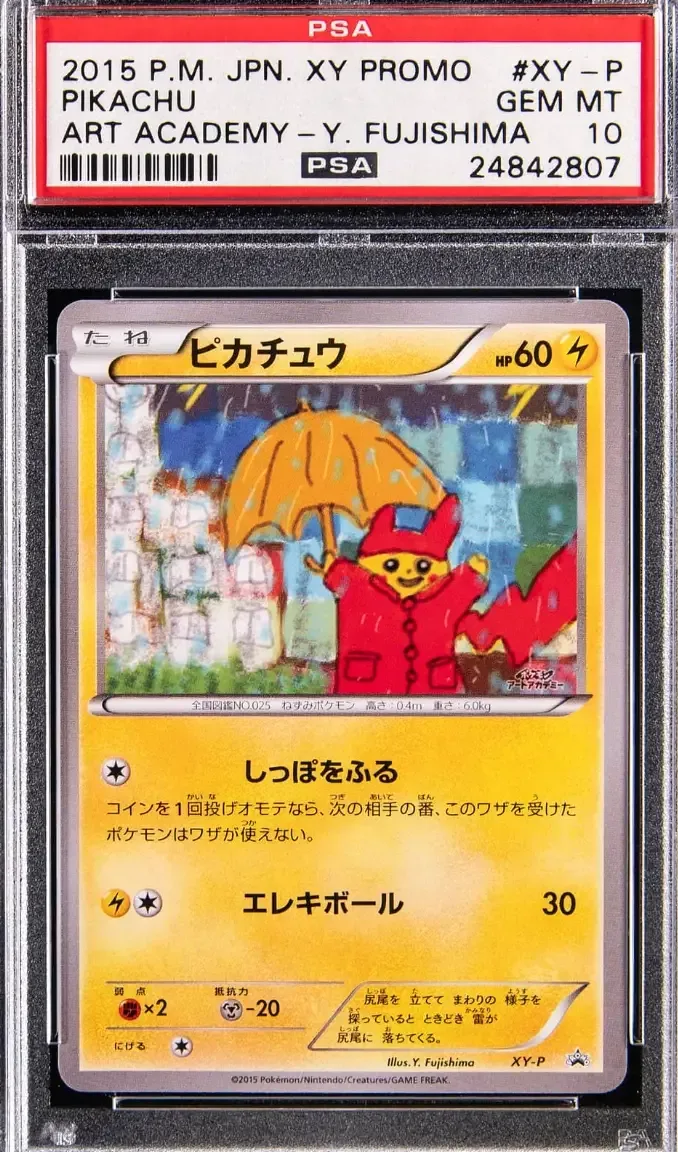
Pokémon occupied all five positions among the largest tracked trading-card sales for October 11–17, 2026, producing a combined $3,977,000. The week’s defining lot was a 2015 Japanese XY Promo Art Academy Pikachu featuring Y. Fujishima artwork, graded PSA 10, which sold for $1,037,000 on October 11.
That headline result was not a one-card story. Another Art Academy Pikachu reached $660,000, while a complete 19-card PSA 10 Legendary Collection holo lot changed hands for $960,000. A Southern Islands Mew and Plasma Storm Lugia EX each also sold for $660,000. The spread of cards is notable: it runs from early promotional material and a multi-card set achievement to a Black & White-era Full Art and competition-created designs.
For context, the five transactions were up from a combined $2.96 million in the prior week’s comparison. That is a week-over-week increase of roughly $1.017 million, although a single weekly total should be treated as a snapshot of reported high-end sales rather than a complete measure of the entire Pokémon card market.
The five reported Pokémon sales
- 2015 Pokémon Japanese XY Promo Art Academy Y. Fujishima Pikachu #XY-P, PSA 10 — $1,037,000. Sold through Goldin on October 11.
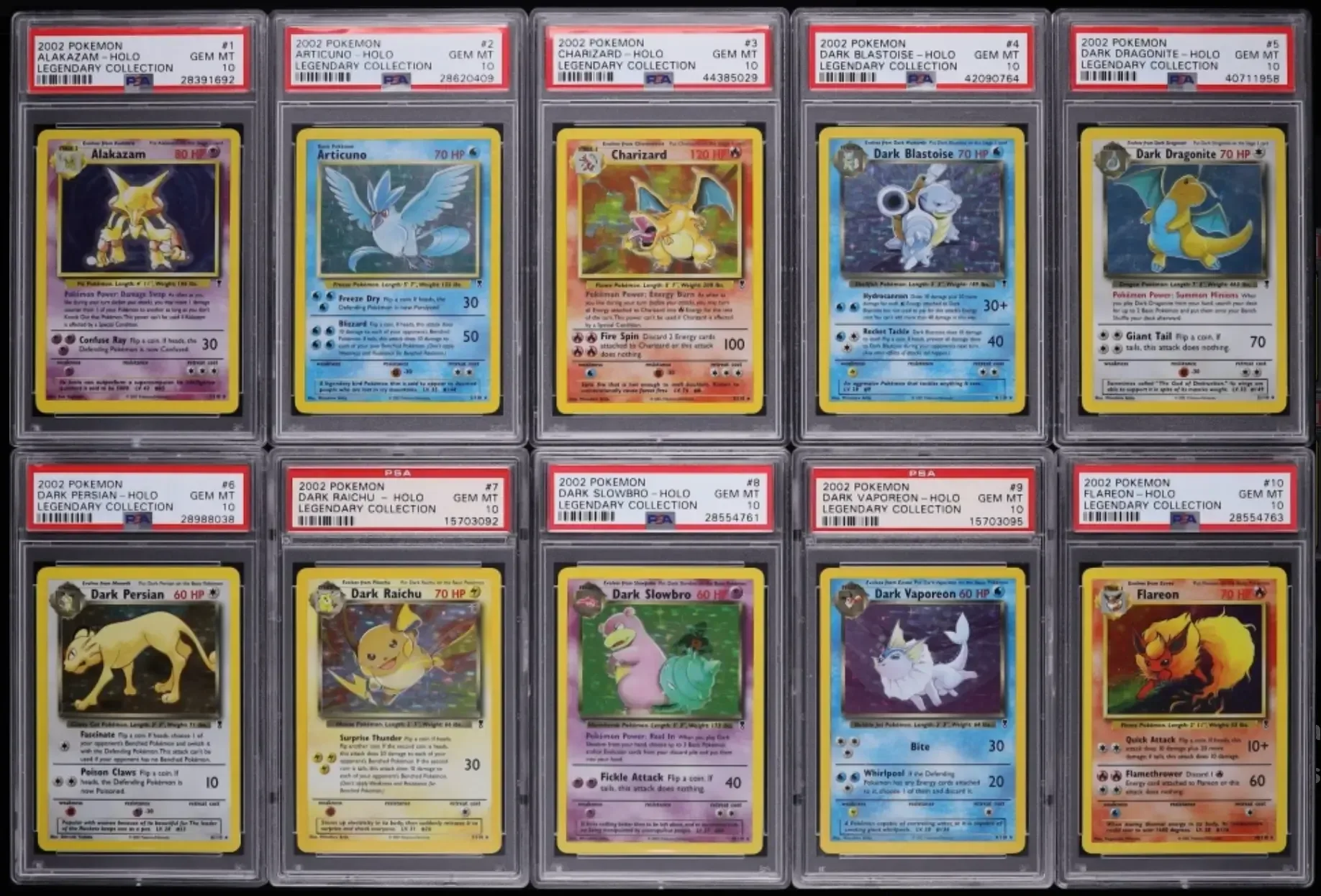
- 2002 Pokémon Legendary Collection complete 19-card holo lot, PSA 10 — $960,000. Sold through Fanatics Weekly on October 11.
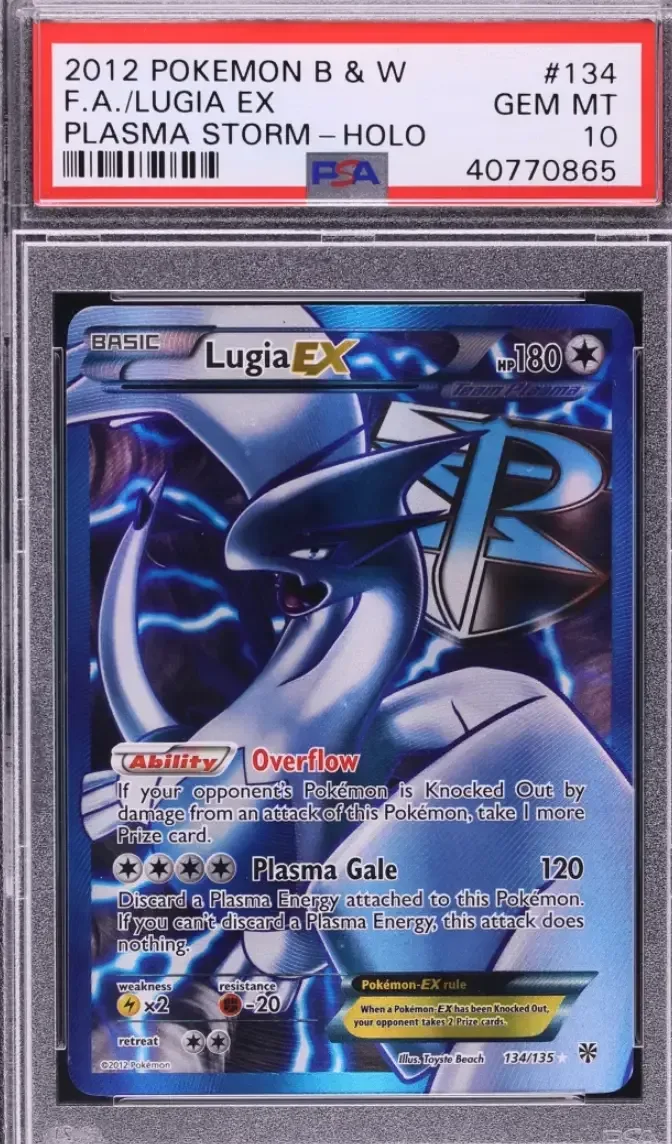
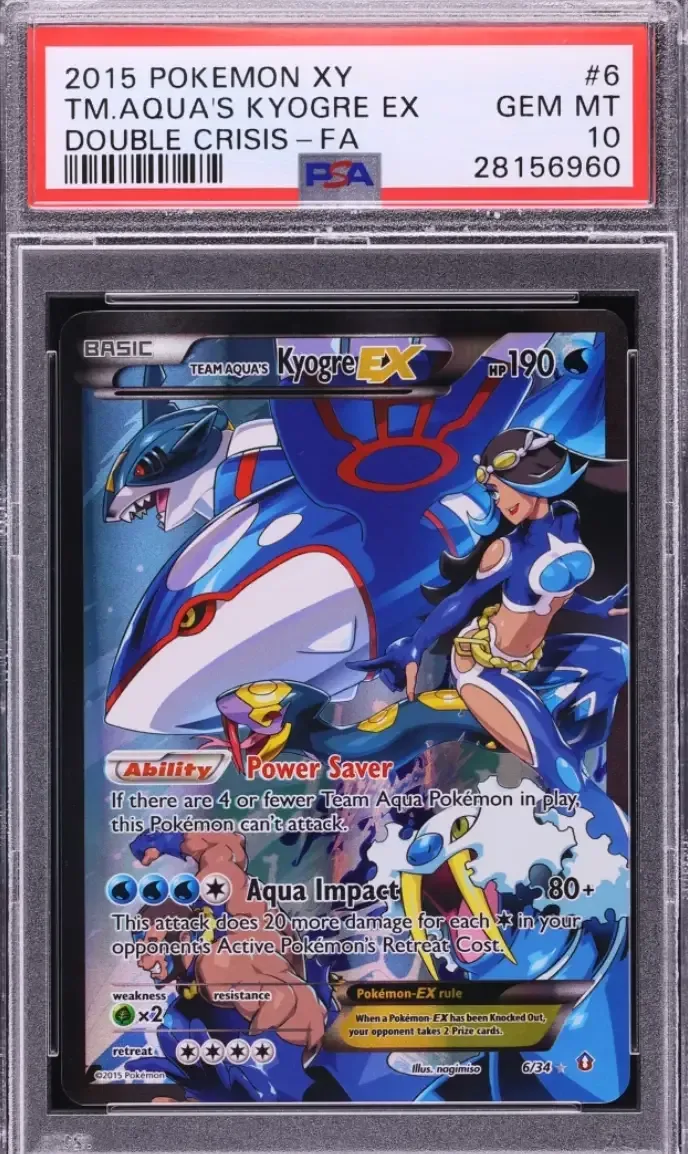
- 2012 Pokémon Black & White Plasma Storm Full Art Lugia EX #134, PSA 10 — $660,000. Sold through Fanatics Weekly on October 11.
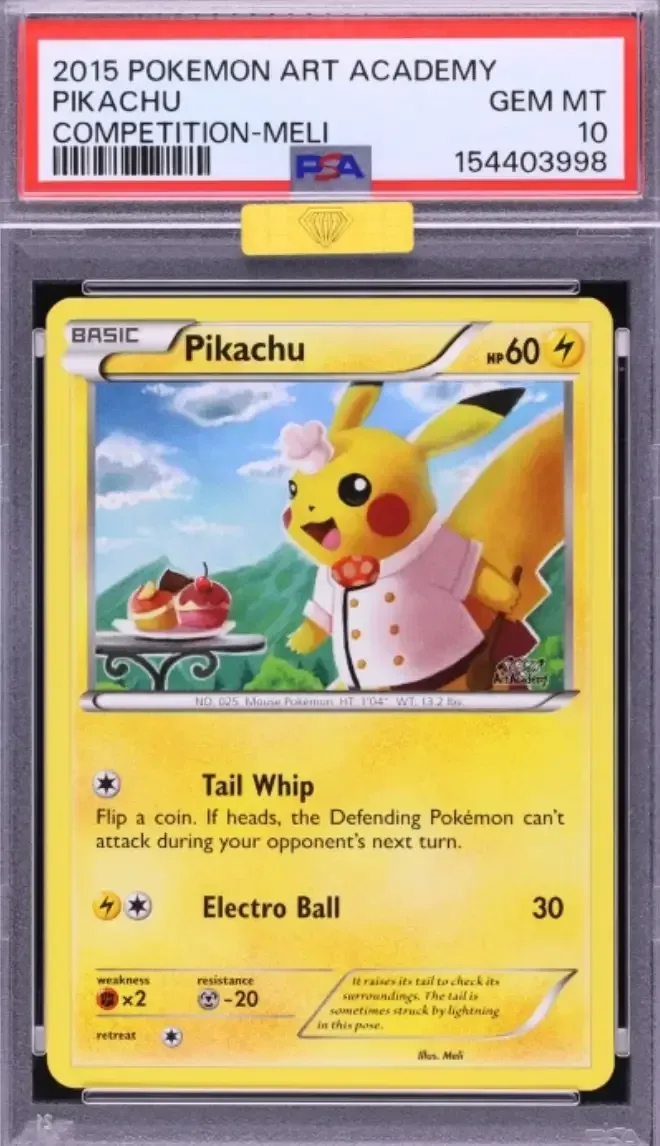
- 2015 Pokémon XY Art Academy Competition Meli Pikachu, PSA 10 — $660,000. Sold through Fanatics Weekly on October 11.
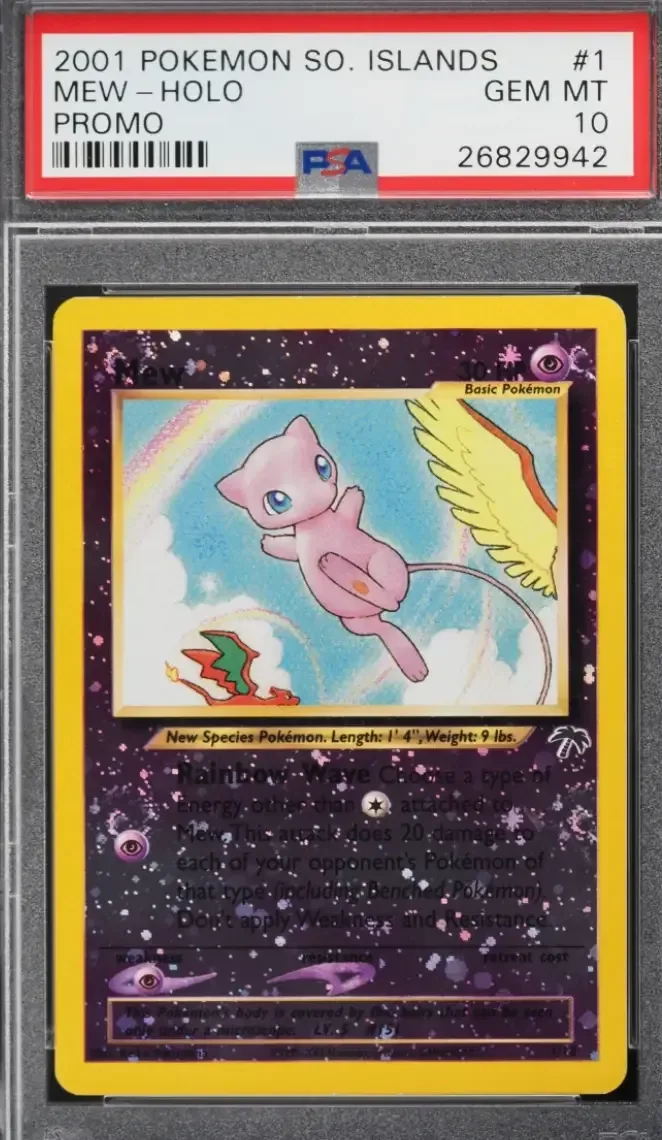
- 2001 Pokémon Southern Islands Promo Reverse Holo Mew #1, PSA 10 — $660,000. Sold through Fanatics Weekly on October 11.
The ranking contains an unusual three-way tie at $660,000. Together, those three sales account for $1.98 million of the weekly $3.977 million figure. The two Art Academy Pikachus alone totaled $1.697 million, putting the competition-related promotional theme at the center of the week’s activity.
Why the Art Academy Pikachus stand apart
The highest sale was a Japanese XY Promo Art Academy Pikachu with artwork credited to Y. Fujishima. It is tied to the Pokémon Art Academy competition program rather than a conventional trading-card expansion. The No. 4 Meli Pikachu shares that Art Academy connection, giving this niche of Pokémon promotional material two places in a top-five list otherwise populated by familiar characters and established releases.
Promo is short for promotional card: a card distributed outside the normal framework of a standard set release. The supplied sale records distinguish these Art Academy cards through their competition origin and artwork, an origin story that is materially different from cards made for ordinary set packs. That distinction is important in collecting because a card can be desirable for more than character recognition or visual rarity. Its method of creation and distribution can be part of what collectors are pursuing.
Pikachu’s place at No. 1 is therefore not just a case of Pokémon’s most recognizable character appearing at the top of a sales list. The same weekly results include two separate Art Academy Pikachus at dramatically high prices. The pair provides stronger evidence of attention toward this particular promotional theme than a single isolated result would.
It is also worth preserving the limits of what the figures say. The reported transactions show what these individual PSA 10 examples sold for on this occasion. They do not establish a universal value for every Art Academy Pikachu, every Pikachu promo, or cards in lower grades. Card-specific version, condition, grading designation, venue and timing all remain central to interpreting any comparable sale.
Related coverage includes Art Academy Pikachu Tops $3.977M Pokémon TCG Sales Week.
A complete Legendary Collection holo run makes No. 2
The second-largest transaction was not one card but a 19-card group from 2002 Pokémon Legendary Collection. The complete holo lot, including Charizard, Zapdos and Dark Blastoise, sold for $960,000. Every card in the group was graded PSA 10.
A lot is a group of items sold together as a single transaction. In this case, the lot’s appeal is not reducible to any one card named in the sale description. It combines completeness with uniformly top-graded condition across 19 holos. The sale consequently differs from the rest of the top five, which are single-card results.
PSA 10 is the grade attached to every listed item or card group in this week’s ranking. In practical terms, the grade is a condition designation from PSA, and it matters because the sales being compared are all specifically PSA 10 examples. A $960,000 transaction for a complete PSA 10 holo lot should not be casually used as a price reference for an incomplete group or for cards carrying different grades.
The Legendary Collection sale also illustrates why aggregate totals need context. It contributed $960,000 as one transaction, but it represents 19 cards. Counting it alongside four single-card sales is correct for a transaction leaderboard, yet it is not the same as saying five individual cards made up the full $3.977 million.
Mew and Lugia show the range beneath the headline
The No. 5 sale was a 2001 Southern Islands Promo Reverse Holo Mew #1, graded PSA 10, at $660,000. It follows a related comparison from the prior week, when a Southern Islands Holo Mew PSA 10 reportedly sold for $840,000. The two descriptions should not be collapsed into one price point: one is identified as Reverse Holo and the other as Holo, so they are distinct cards or variants in the available sales descriptions.
A reverse holo is a card finish designation used in the transaction record. Here, it is useful primarily as an identifier: the $660,000 result belongs to the Southern Islands promotional Mew described as Reverse Holo, not the earlier $840,000 Southern Islands Holo Mew. For collectors tracking comparables, precise card descriptors are more useful than broadly saying that “a Mew” sold for a given amount.
The week’s other $660,000 card was the 2012 Black & White Plasma Storm Full Art Lugia EX #134, PSA 10. It offers a markedly different era and presentation from the Southern Islands Mew. The listing’s Full Art descriptor identifies the card’s visual format, while the comparison noted for the prior week involved a Crystal Lugia from Aquapolis that sold for $360,000. Those Lugia results demonstrate that character demand can appear across different releases, but they are not interchangeable comparables: their sets, formats and release periods differ.
For readers who also follow the collecting side of comic properties, Joking Joystick has covered Detective Comics #1114; the shared takeaway across collectible categories is that edition, condition and provenance-related details can matter as much as the headline character.
What this week’s numbers do—and do not—indicate
The clearest conclusion from the reported data is that the top end of Pokémon collecting accommodated several different kinds of scarcity and appeal in the same week. Competition-origin Pikachu promos drew the largest combined attention. A fully graded 19-card holo collection nearly reached seven figures. Meanwhile, Mew and Lugia each placed at $660,000 through releases separated by years and design styles.
It would be premature to turn that into a blanket claim about every Pokémon card category. Weekly leaderboard results are naturally weighted toward exceptional transactions, especially when all five entries are PSA 10. They do, however, show the specific cards and collections that attracted substantial spending during the October 11–17 window.
For collectors researching a card, the practical lesson is to record the complete description before making comparisons: year, set or promo name, card number where available, finish or format, grade, whether it is a single card or lot, and the date of sale. This week’s Mew comparison, the distinct Lugia releases and the 19-card Legendary Collection transaction all show why a character name alone is not enough.
At the top of the board, the Y. Fujishima Art Academy Pikachu’s $1.037 million result is the standout. But the broader story is the combination of two Art Academy Pikachus at $1.697 million, three separate $660,000 transactions, and a five-sale total just shy of $4 million—all from Pokémon cards, all within the same reported week.