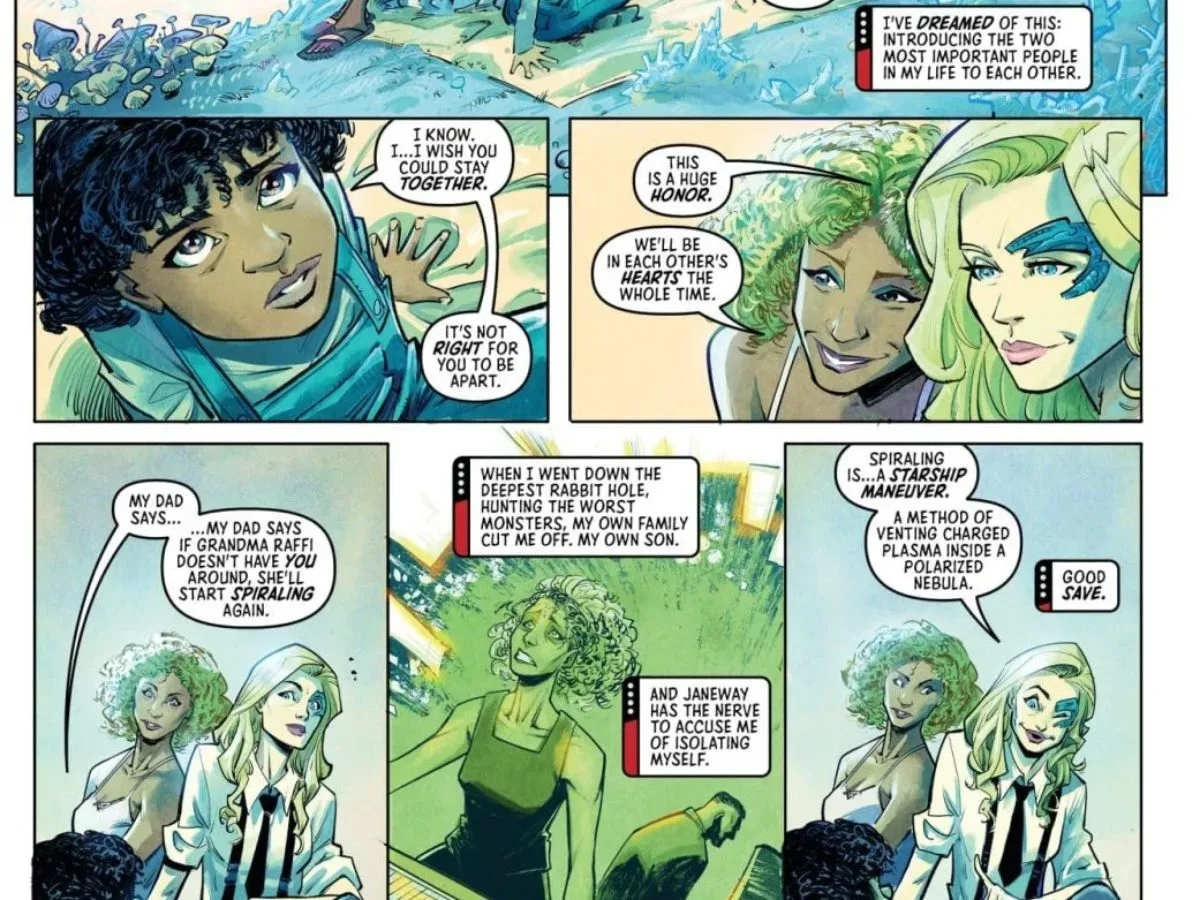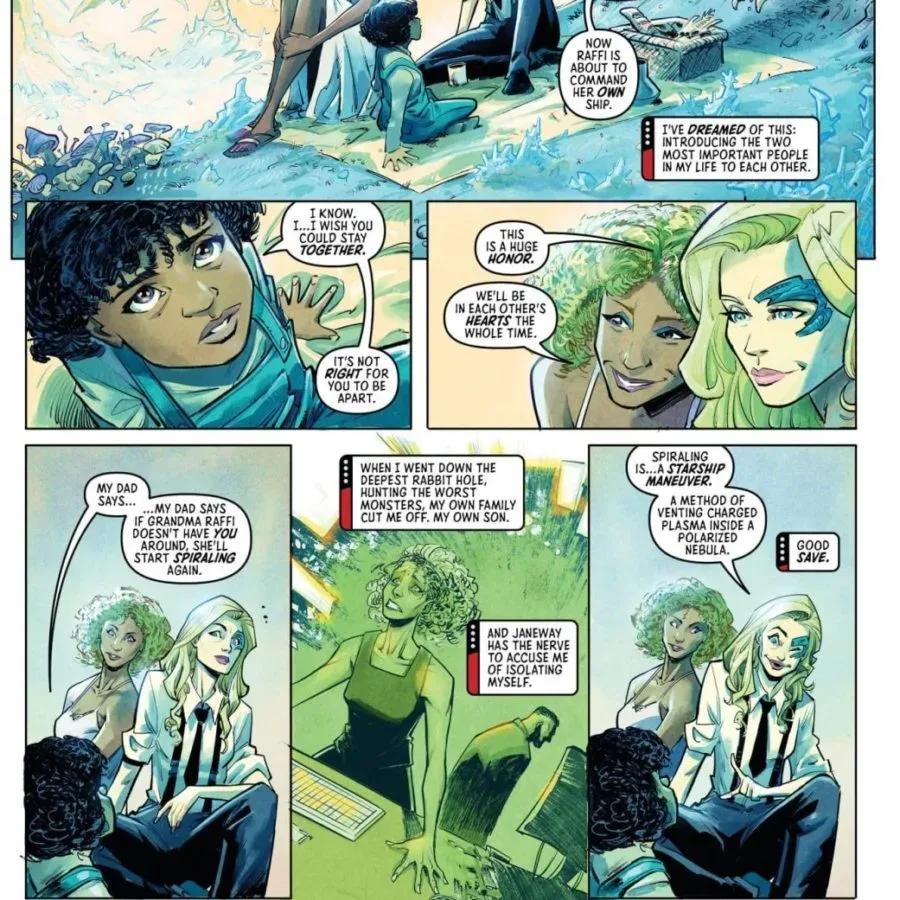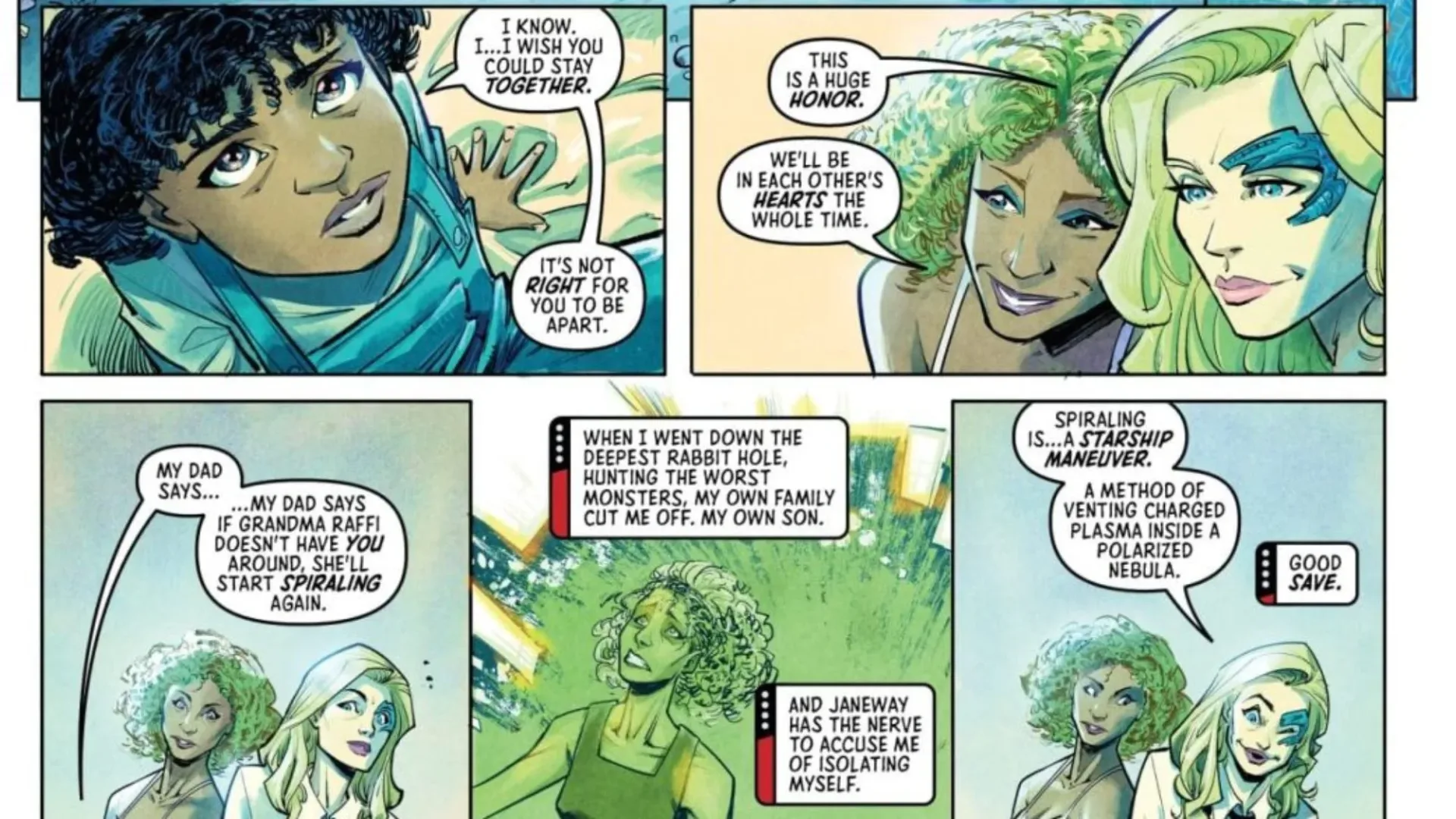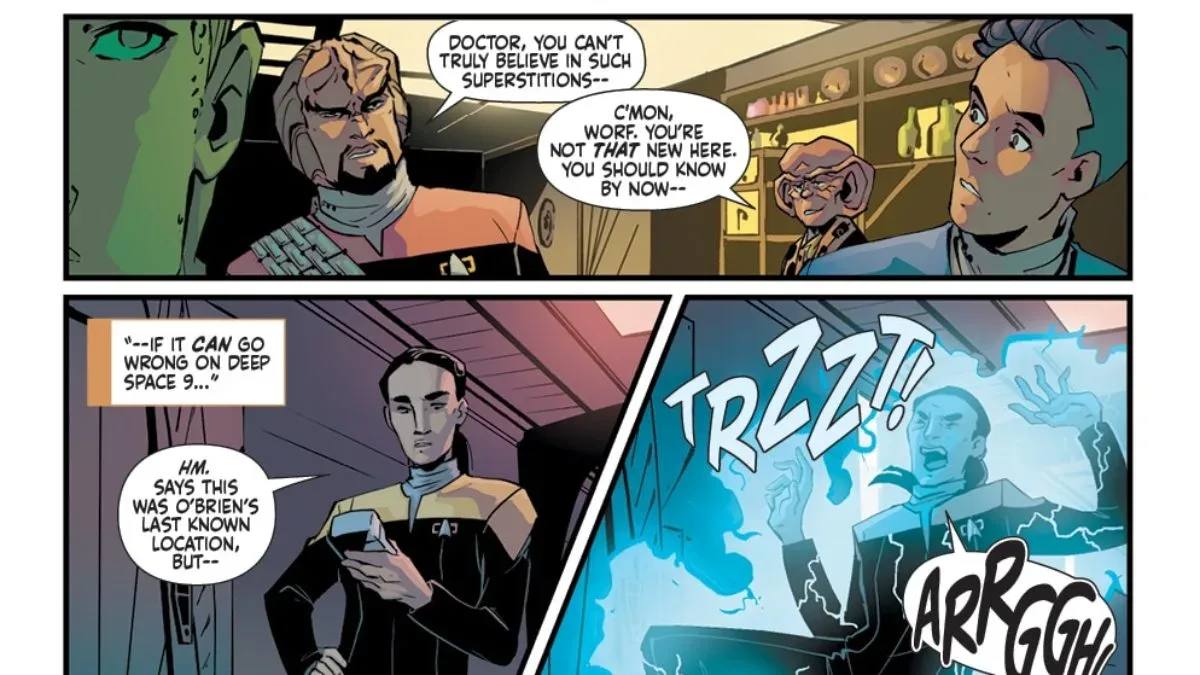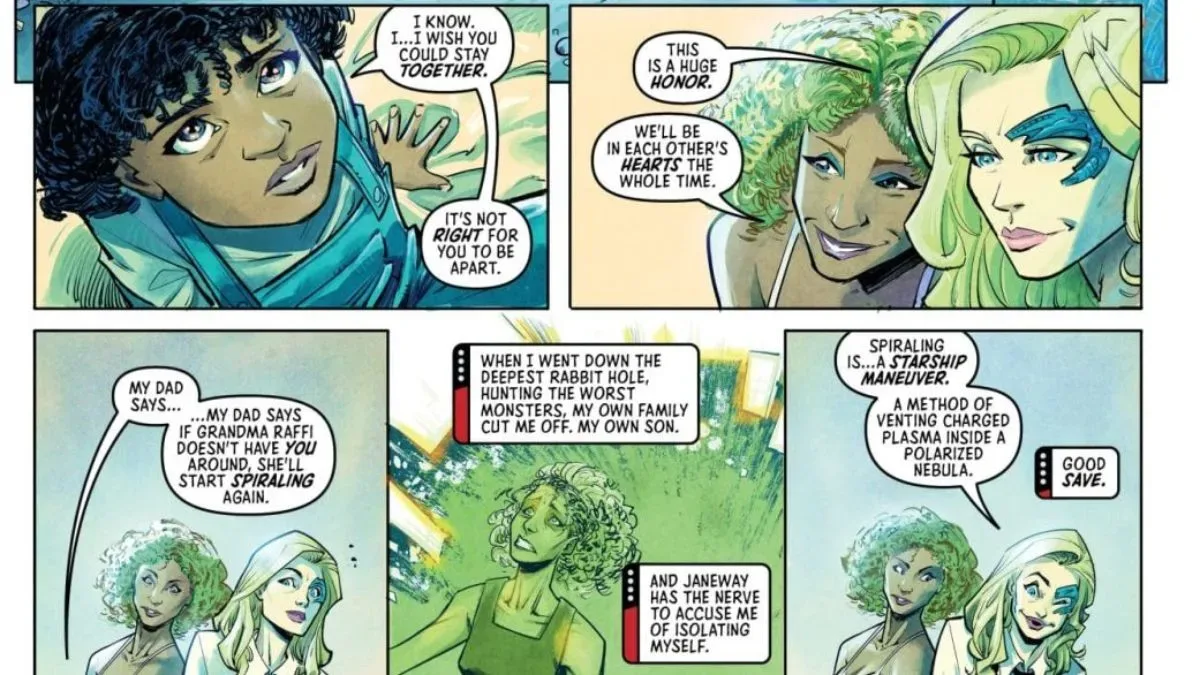
Star Trek: Zero Point #1 is set to begin a new classified mission on October 14, 2026, putting Raffi Musiker in command of the U.S.S. Endeavour and immediately confronting her with an awkwardly familiar science-fiction problem: Starfleet wants her to trust a powerful artificial intelligence that nobody has adequately tested.
Published by IDW, the 32-page, Rated T issue is written by Charlie Jane Anders, illustrated by Isaac Sánchez González, and features a cover by Valeria Favoccia. It is positioned as the opening tie-in to Star Trek (2026), but its premise is sufficiently direct that the first issue has a clear dramatic engine of its own. The Endeavour is sent toward a starship graveyard on the moon, under a directive that asks Raffi and her crew to follow the guidance of an AI constructed with technology recovered in the Epsilon Corridor.
That AI is said to anticipate threats before they occur. It is also explicitly untested. Those two details are the entire pressure chamber for the series: prediction can be invaluable in a crisis, but a prediction is not the same thing as an explanation, and an order issued through a machine is not automatically an order that a captain can safely surrender her judgment to.
A command story built around accountability
Raffi takes command of the Endeavour at the same moment the ship receives its classified assignment. The setup makes command responsibility central rather than incidental. Starfleet may issue the directive, and the machine may offer forecasts, but Raffi is still the person asked to lead a crew when systems fail and missions begin to unravel.
The solicit describes a captain haunted by failure, which gives the decision more weight than a routine debate about whether computers are useful. If a captain has already lived with the consequences of a bad call, a system claiming it can see danger in advance could feel like a safeguard, a temptation, or both. Conversely, ignoring its warning could become hard to justify if the danger arrives exactly as projected.
There is an important distinction in the premise between guidance and authority. Guidance means the AI supplies information, likely including warnings or recommended choices. Authority means the people on the ship effectively allow its conclusions to decide what happens. The book’s tension appears to sit in the unstable space between those ideas. The Endeavour may need the AI’s insight, yet Raffi still has to determine when a useful tool becomes a force no one is meaningfully questioning.
What “predictive AI” means in Zero Point’s setup
A predictive system, in plain terms, is one designed to identify patterns and estimate what might happen next. In Zero Point, the AI’s supposed ability is unusually high-stakes: it can warn the crew about threats before they happen. That creates practical questions the series can use to make every warning more complicated.
- How certain is a warning? A forecast might be treated as a probability, but a crew in danger may hear it as certainty.
- What information is behind it? The premise identifies the technology as mysterious, which means the crew may not know how the system reaches its conclusions.
- What is the cost of acting early? Avoiding one predicted threat could expose the Endeavour to another, abandon a mission objective, or strain trust among its people.
- Who owns the final decision? Even an accurate machine does not remove the captain’s responsibility for choices made under its direction.
Those questions fit the issue’s stated focus on escalating pressure and failing systems. An AI’s confidence is most alluring when people have the least time and information. That is also the moment when a crew may be most vulnerable to following a recommendation without challenging its assumptions.
The premise does not establish that the AI is malicious, mistaken, or secretly pursuing an agenda. Readers should not assume any of those outcomes from the word “untested.” What the setup does establish is uncertainty: its creators used recovered technology from the Epsilon Corridor, its capabilities appear powerful, and Raffi must decide whether to trust it over the instincts and judgment of her crew. That uncertainty is more interesting than a simple “machine bad” scenario because it leaves room for the system to be genuinely useful while still being dangerous to rely on completely.
The moon’s starship graveyard raises the stakes
The mission’s destination is described as a starship graveyard on the moon. That image immediately gives the first issue a strong visual and thematic foundation: a place defined by failed voyages, wreckage, and history that has not stayed safely in the past.
The solicitation warns that some discoveries are better left buried, without specifying what is concealed at the site. That wording connects the graveyard to the AI’s origin and the larger stakes facing the Federation, but it does not confirm that they are the same mystery. The important detail for now is that the Endeavour is not entering a cleanly mapped exploratory assignment. It is heading into an environment where past damage and hidden information are part of the danger.
There is a productive contrast here. The graveyard represents physical evidence of events already finished: broken ships, visible consequences, things that can be examined in the present. The AI works in the opposite direction, asking the crew to act on events that have not happened yet. One is a warning written in wreckage; the other is a warning delivered as prediction. Raffi’s job is to navigate both without letting either dictate more than it truly can.
Why the creative team suits the premise
Anders is credited as a Nebula and Hugo Award-winning writer, and the issue follows work including New Mutants and Lessons in Magic and Disaster. González’s listed credits include TMNT and Godzilla. Based on the announced premise, their collaboration has two major demands: the personal interiority of a captain facing a confidence-shaking decision, and the external spectacle of a mission involving a lunar wreck field, starship trouble, and escalating systems failures.
That pairing matters because the book’s premise should not work solely as an abstract debate. Readers need to understand why Raffi might listen to the machine, why members of the crew might resist it, and what becomes immediately imperiled when a forecast demands a difficult action. The series description makes the outcome potentially consequential for the Federation, but its most immediate stakes are likely to be felt inside the Endeavour: trust, command, and the consequences of following an instruction when nobody can fully explain why it is right.
Favoccia supplies the main cover, while the issue also has several variants. For readers who enjoy comparing editions rather than seeking only the standard cover, the announced lineup includes a photo variant, a foil variant by Farro, an IDW Goes Dark variant by Jaro, a sketch variant, and retailer-incentive variants credited to Beals, J. Gonzo, and Wu. Variant availability can vary by shop, especially for incentive editions, so it is sensible to ask a local comic retailer about ordering options rather than assume every version will be stocked.
Collectors considering multiple editions may also find it useful to separate the reading decision from the cover decision. The standard issue is the straightforward way to follow the story; variants are alternate presentations of that same issue, not additional chapters. For a broader reminder that condition, scarcity claims, and asking prices can be easy to conflate in comics markets, see this look at differing graded and listed prices for Crossed #0.
Release details and the editions announced so far
Star Trek: Zero Point #1 goes on sale October 14, 2026. The standard 32-page issue carries a $4.99 US cover price and is rated T. The announced Canadian price for the standard edition is $6.99.
- Standard edition: $4.99 US / $6.99 CAN
- Variant B, Photo Variant: $4.99 US / $6.99 CAN
- Variant C, Foil by Farro: $12.99 US / $17.50 CAN
- Variant D, Jaro IDW Goes Dark Variant: $4.99 US / $6.99 CAN
- Variant E, Sketch Variant: $4.99 US / $6.99 CAN
- RI (10), Beals: $4.99 US / $6.99 CAN
- RI (25), J. Gonzo: $4.99 US / $6.99 CAN
- RI (50), Wu: $4.99 US / $6.99 CAN
The central appeal is not merely that the Endeavour has an advanced computer on board. It is that the crew receives a tool capable of forecasting disaster precisely when its provenance, limits, and reliability remain open questions. Zero Point begins with Raffi having to decide whether the most dangerous thing on the mission is a threat the AI can see coming—or the choice to believe it.