IDW Publishing is preparing a new ongoing James Bond comic written by Grant Morrison, beginning with a six-part opening storyline called Sunbreaker. The project begins a collaboration between IDW and Ian Fleming Publications Ltd., putting 007’s comics license in a new home after its most recent run at Dynamite Entertainment.
There is one very large name attached and many meaningful blanks still to fill. Morrison will write the series, but IDW has not yet identified its artist, confirmed the comic’s final title, or announced a release date. That makes Sunbreaker less a fully mapped publishing slate than a promising first mission briefing: Bond has his assignment, but readers are still waiting to see the dossiers on much of the creative package.
What is confirmed about Morrison’s Bond
The concrete detail is that Morrison’s opening story will run for six parts and carry the Sunbreaker name. Morrison has described the project as an attempt to deliver a major, broad-spectrum Bond adventure: espionage, violence, shifting loyalties, deception, new vehicles, new gadgets, and a newly created central villain are all part of the stated plan.
The premise also points toward a contemporary-feeling world distorted into something more threatening. Morrison’s description suggests Bond will confront unfamiliar enemies and situations while retaining the core image of the character as a remarkably capable, charismatic, and dangerous operative. That tension matters. A Bond comic has to make space for the familiar apparatus of the franchise without merely arranging recognizable props on a page like a particularly expensive garage sale.
For now, readers should treat the project’s broader creative specifics as unannounced. There is no confirmed artist, no confirmed official series title beyond the opening arc’s name, and no stated publication schedule. Those absences are important, particularly for a monthly or ongoing comic, where the visual collaborator and format will do a great deal to establish the book’s personality.
Why Grant Morrison is an attention-grabbing choice
Morrison is widely associated with work including New X-Men and Doom Patrol. That history immediately makes this a notable fit-and-friction proposition. James Bond is an enormously recognizable character with durable conventions: covert operations, international intrigue, peril, technology, villains, betrayal and a lead who needs to look cool under pressure even when the room is very actively attempting to explode.
Morrison’s stated goal is not to discard those conventions. Instead, the writer has framed Sunbreaker as a story designed to include what audiences expect from Bond while pushing him into less familiar circumstances. In practical terms, that could be the key question hanging over the series: what does “definitive” mean when applied to a character who has endured through repeated reinventions and adaptations?
It need not mean treating every previous version as a checklist. It can mean identifying the dramatic engine beneath the accessories. Bond stories work through pressure: incomplete intelligence, compromised allies, concealed motives and an agent forced to make rapid, sometimes brutal choices. Cars and gadgets are useful genre signals, but they are not substitutes for a tense operation. A terrifying villain is only as effective as the threat they create and the ways they expose Bond’s limitations.
Morrison has specifically promised all of the above categories—new cars, equipment and a headline-connected ultimate antagonist—so Sunbreaker is positioned as a high-stakes introduction rather than a quiet side assignment. The phrase “ripped straight from the headlines” establishes an intended topical edge, although no specific real-world event, subject, or villain identity has been revealed. Readers should not infer more than that from the tease.
Six issues: what that structure implies
A six-part arc gives an opening Bond story enough room to function as a complete operation rather than an oversized debut issue. In comics terms, an arc is a connected run of installments that tells one larger story across multiple issues. It can establish a new status quo, introduce antagonists and supporting figures, then carry a conflict to a conclusion while leaving room for the ongoing series to continue.
The format is well suited to espionage because it can distribute revelations. A first chapter can pose the mission; subsequent issues can reveal that the mission was misread, redirected, or compromised; the final installments can turn the accumulated secrets into a confrontation. That is an explanation of the storytelling flexibility of the announced six-part shape, not a plot outline for Sunbreaker. No issue-by-issue details have been disclosed.
Calling the comic an ongoing series is also distinct from calling it a six-issue limited series. An ongoing series is intended to continue beyond one self-contained storyline, whereas a limited series has a fixed ending point. IDW’s choice of an opening arc therefore signals an effort to establish a continuing line of Bond stories, even though the schedule and later story plans remain unknown.
A new publisher, with Bond’s comics history moving again
The James Bond comics license has appeared at multiple publishers over the decades. The immediately previous home mentioned for new Bond comics was Dynamite Entertainment; IDW now takes the baton for fresh adventures under its collaboration with Ian Fleming Publications Ltd.
That transfer is significant beyond the label on a cover. A publisher determines the editorial framework around a series, the artists and designers who shape its look, its release strategy, and how it is presented to comics readers. IDW arriving with a high-profile writer and an opening multi-part story provides a clear lead creative voice, even while the rest of the package has not been shared.
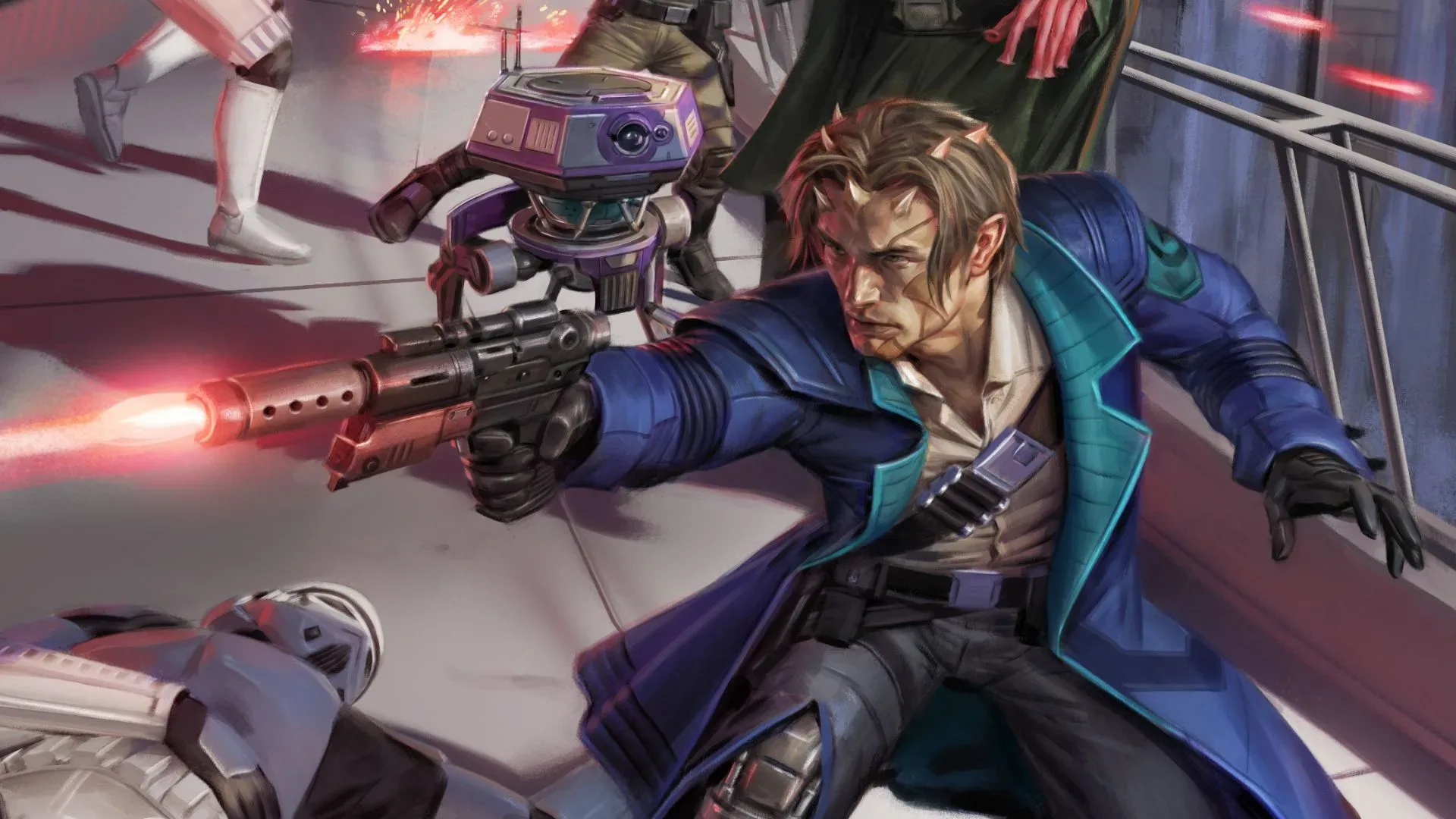
It is also another reminder that licensed fiction is not static simply because its protagonist is famous. The essential balancing act is to preserve a recognizable identity while giving the new creative team room to make choices that justify the story’s existence. That same tension is present in other licensed comic ventures, including the secret Rebel-focused setup explored in this look at D&D Star Wars’ Tyro Squadron. Familiar worlds need a viewpoint or dramatic problem that is specific enough to feel like more than a guided tour of established iconography.
What Bond readers can reasonably expect—and what remains unknown
The safe expectations are rooted in Morrison’s own outline: a six-part opener, a world of intrigue and double-crosses, fresh tools and vehicles, a formidable new opponent, and a Bond who remains an exceptionally assured figure within a dangerous assignment. The writer has also emphasized an affection for the character, comparing Bond’s cultural stature with enduring British figures such as King Arthur, Robin Hood and Sherlock Holmes.
That comparison helps clarify the scale of the task. Bond is not simply a name that can be placed atop any spy plot. He comes with an established manner, set of expectations, and a long tradition of reinvention. A comic needs to communicate velocity, glamour, menace and complicated information clearly in static images and carefully paced pages. The art announcement will therefore be especially consequential once it arrives. The artist will define the physical world of the book: whether its action feels sleek or brutal, whether its technology feels plausible or flamboyant, and how easily readers can follow a globe-spanning conspiracy from panel to panel.
But it is premature to judge those choices. No art team has been named, no cover has been detailed, and no publication date has been supplied. There are likewise no confirmed supporting characters, locations, format details, or explanation of how the series will connect to prior Bond comics. For a project selling secrecy as part of its appeal, that may be appropriate. Even so, the practical takeaway is simple: Morrison and Sunbreaker are the confirmed essentials; the rest of the case file is sealed for now.
The real mission for Sunbreaker
Sunbreaker has an unusually direct brief. It must arrive as a welcoming point for readers who know Bond primarily through other media, satisfy comic readers curious about Morrison’s approach, and prove that an ongoing 007 title can offer more than inherited brand recognition. The early description gives it the correct tools for that job: a new villain, a distinct contemporary edge, classic espionage ingredients and a defined opening structure.
Whether those elements combine into the “definitive” Bond story Morrison is aiming for will depend on execution still under wraps. The book does not have a release date yet, and its visual identity has not been announced. What is already clear is that IDW’s new Bond era will not make a timid entrance. A six-part launch from Morrison is a deliberate statement that 007’s next comics mission is meant to be a major one.