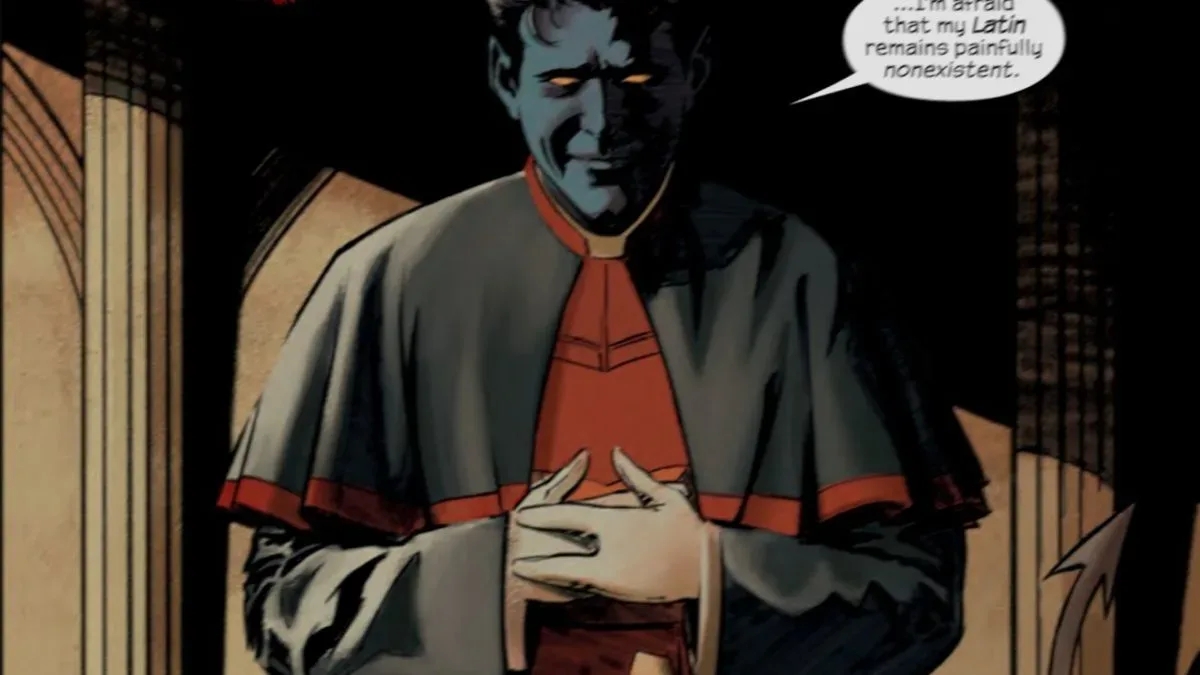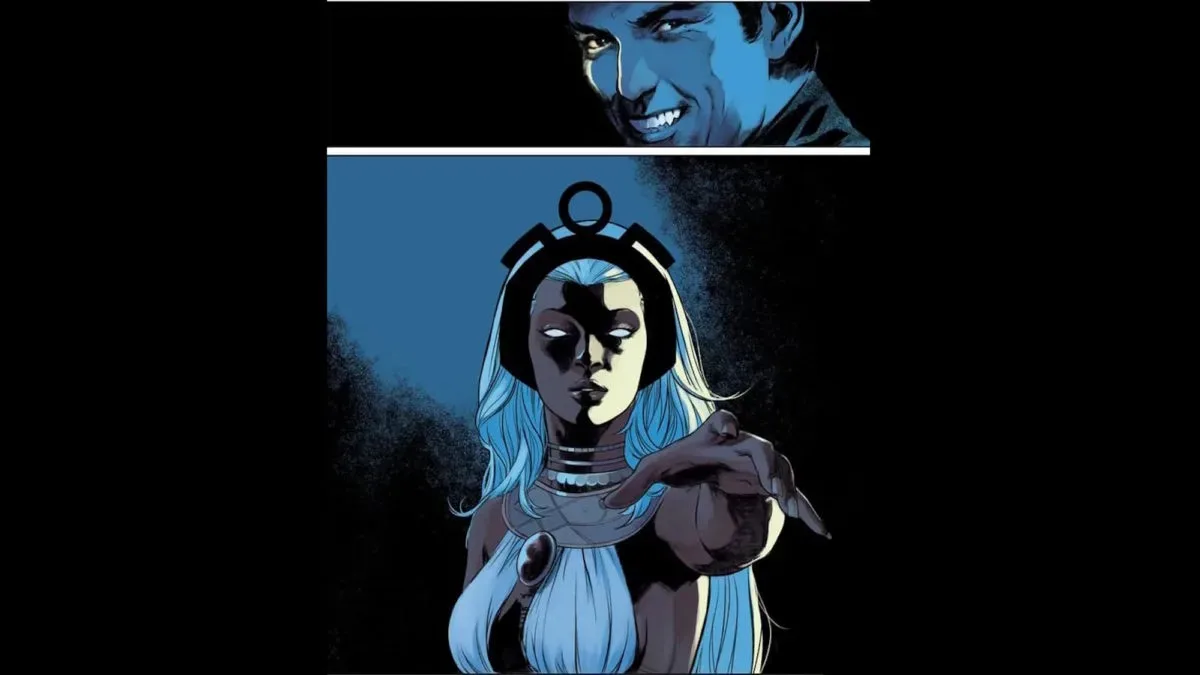
Midnight X-Men #2, written by Jonathan Hickman with art by Matteo Della Fonte, is scheduled for November 18, 2026. The second issue continues a new X-Men setting where vampires and mutant empyres exist in a tense, unstable peace—and where a full war could leave the “unturned” caught between both sides.
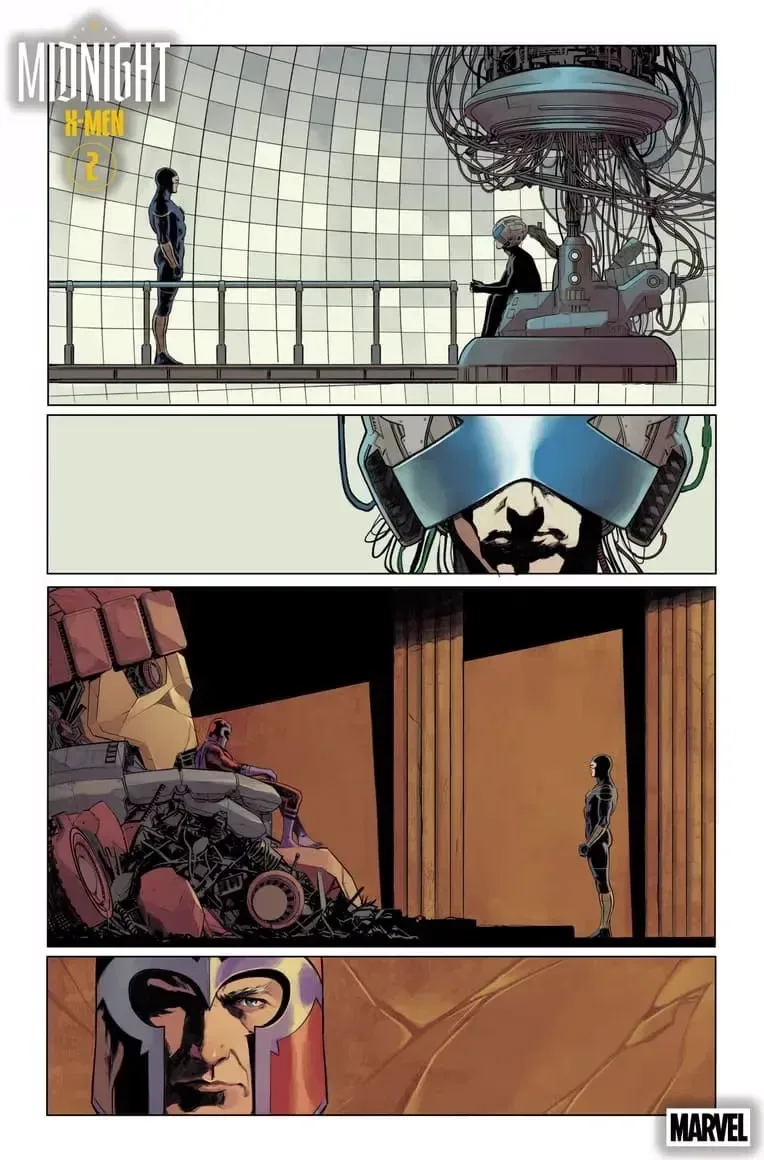
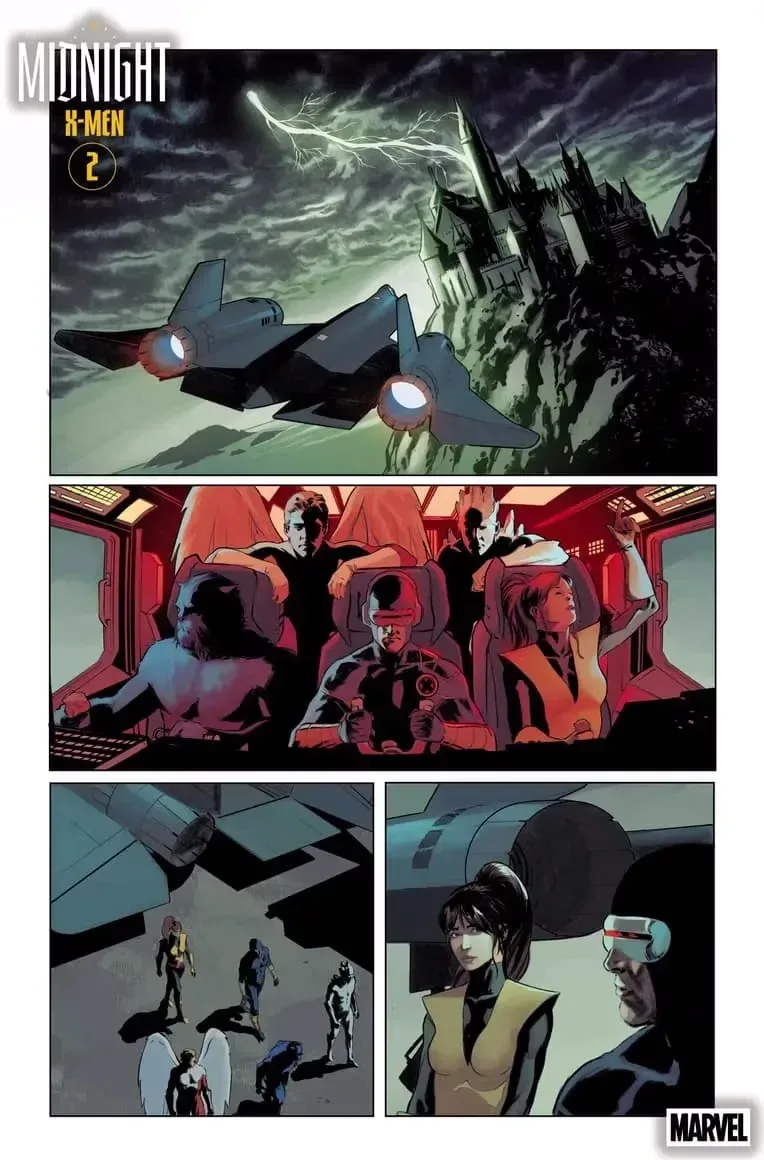
The newly shown interior material points toward a story operating in more than one time period. Readers can expect scenes involving Cyclops, Professor X and Cerebro, as well as Magneto positioned on a throne made from Sentinels. A separate flashback takes the Original X-Men to Dracula’s castle in Transylvania aboard the Blackbird. But this is not presented as a simple recreation of a familiar X-Men past. The lineup itself has changed in conspicuous ways.
Kitty Pryde appears in the place normally associated with Jean Grey, while Angel is described as an original version of himself. Beast is mutated, and Iceman is presented in a further “fractal” form. Those differences matter because they indicate that Midnight X-Men is not merely adding vampires to a standard X-Men continuity. It is reshuffling character histories and identities while placing mutant mythology beside Dracula’s world.
A vampire-mutant cold war, not simply a monster fight
The premise for the series frames New York City as a place stalked by vampires and mutant empyres. “Empyre” is being used here as a designation for the mutant side of the conflict, not simply as a synonym for any ordinary mutant community. The central pressure is political as well as supernatural: peace is threatened both by the divide between vampires and mutants and by rival factions within each group.
That gives the series a different dramatic engine from a straightforward superhero-versus-vampire tale. The major danger is not only an immediate attack. It is the possibility that a fragile arrangement collapses into a wider conflict. The first issue’s setup describes an outright war as brewing, with people who have not been turned into vampires vulnerable to the fallout. In other words, the conflict has civilian stakes as well as factional ones.
Hickman has described the structure as beginning in media res. The Latin term means starting in the middle of the action rather than at the beginning of events. In practical storytelling terms, that approach allows a comic to show readers the consequences or current state of a conflict before fully unpacking how it began. Here, it also makes space for the book to move among the past, present and future instead of treating its flashbacks as detached backstory.
“It’s really about combining several mythologies into one story,” Hickman said of the series’ approach.
That description is useful for reading the preview pages. Cerebro, Sentinels, the Blackbird, Dracula’s castle and altered versions of the Original X-Men all belong to different strands of familiar X-Men and vampire imagery. Their appearance together signals the project’s larger intent: establish a shared setting where those traditions affect one another instead of staying in separate narrative lanes.
Why Storm is the obvious mystery
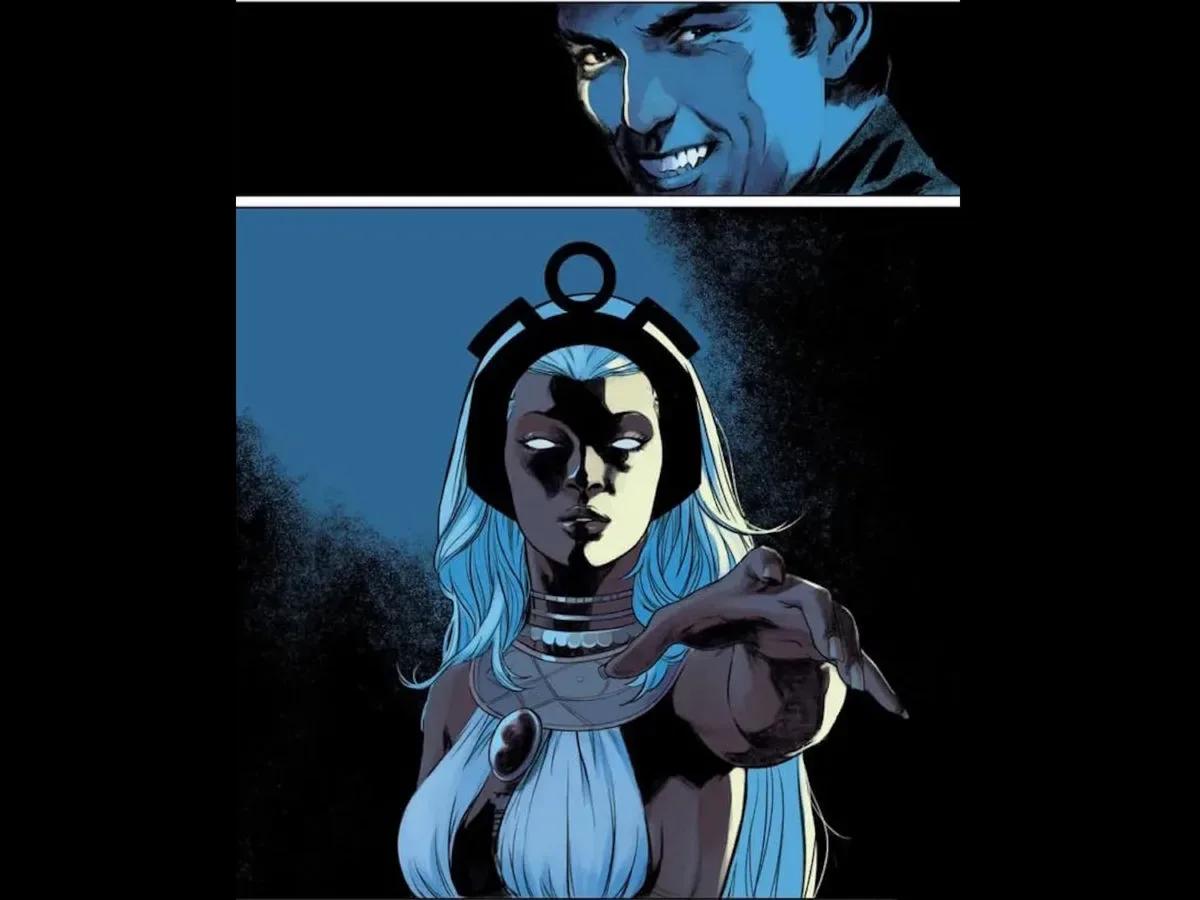
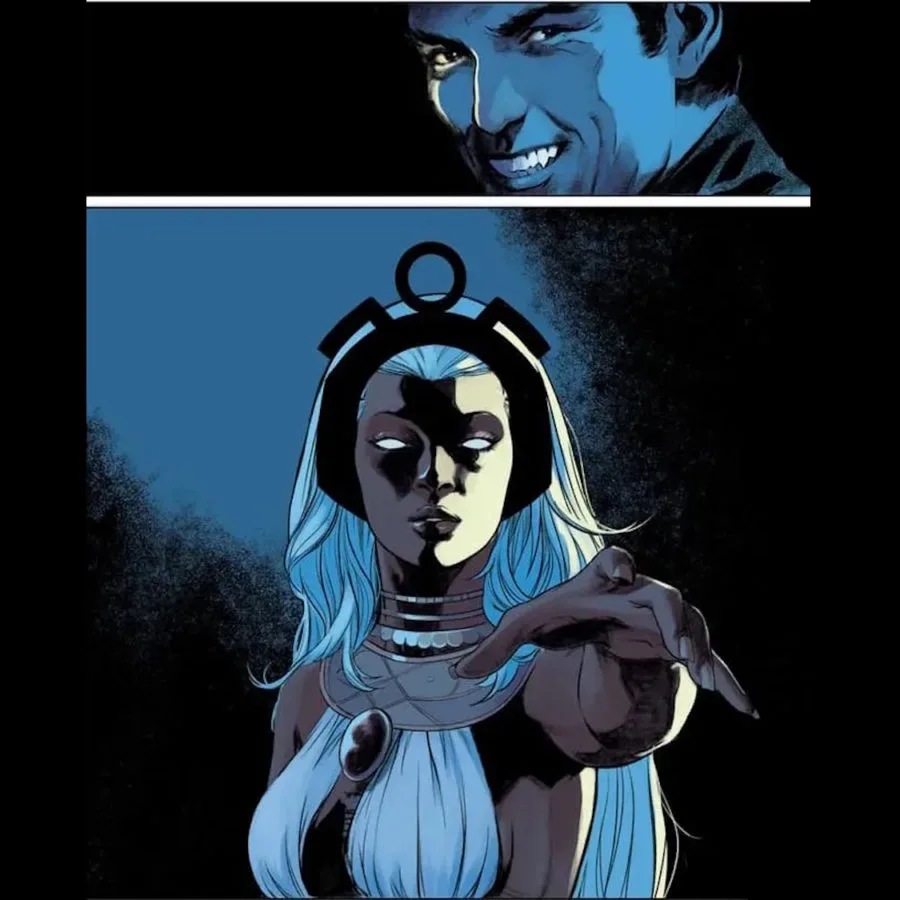
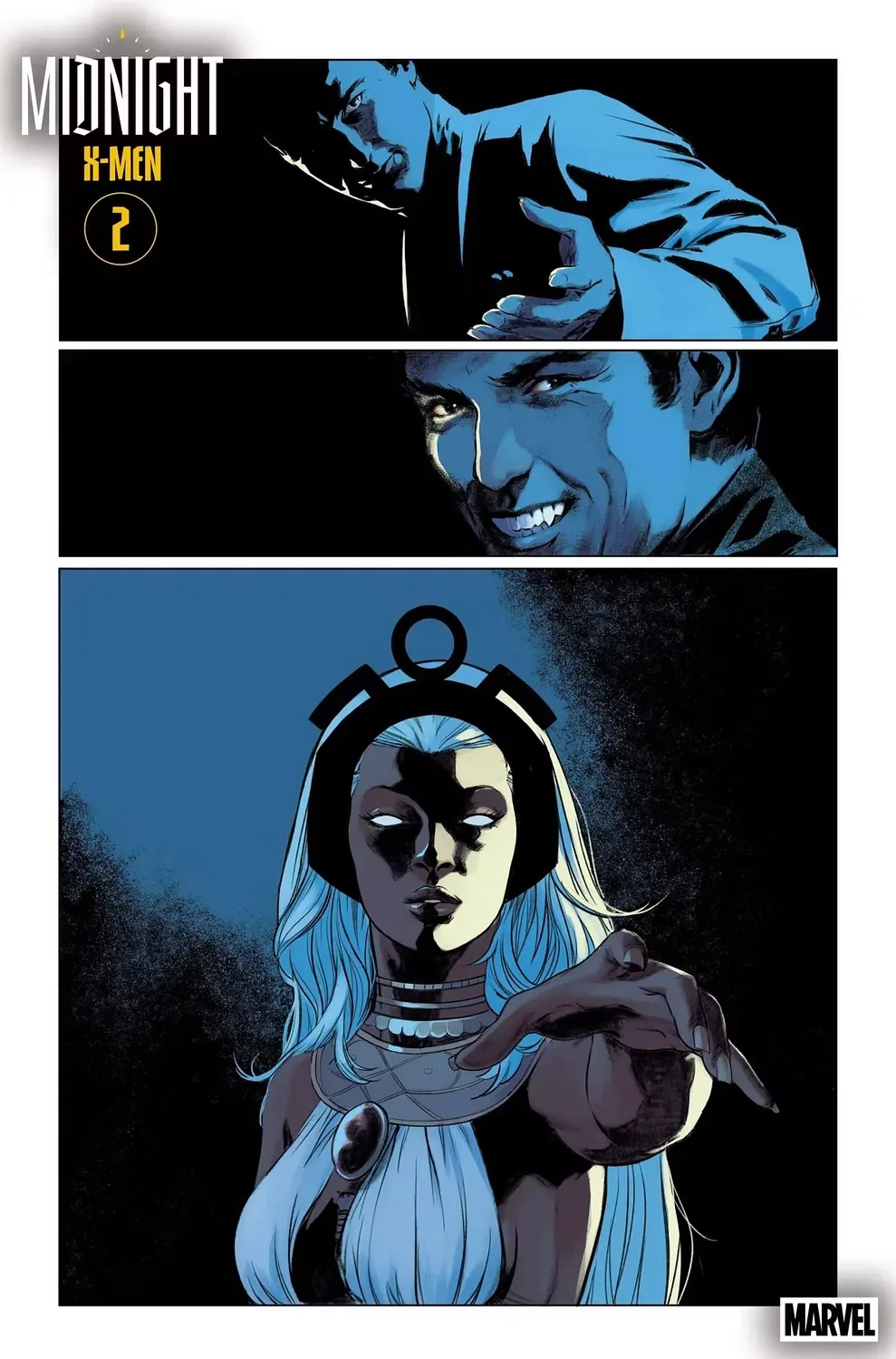
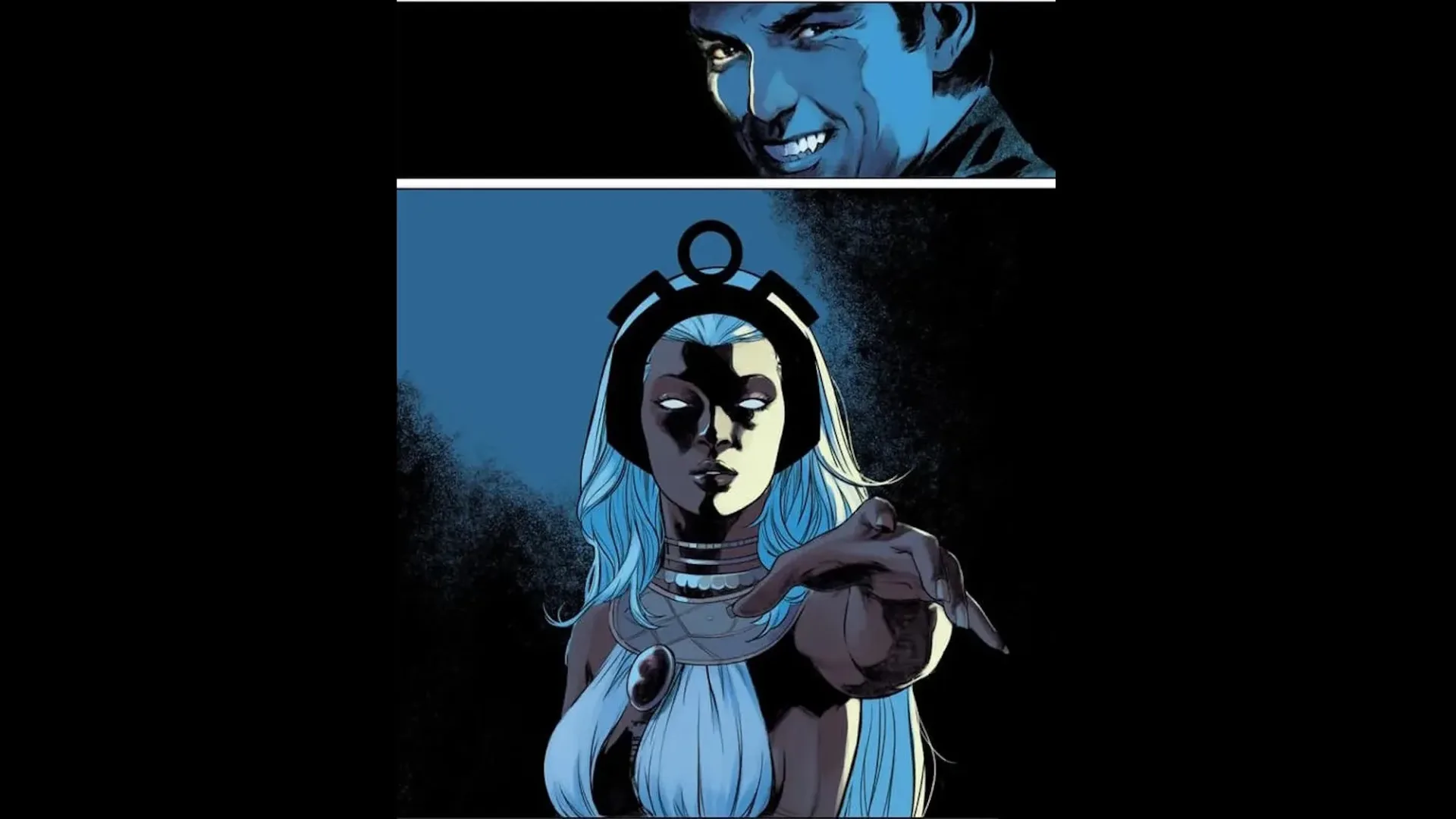
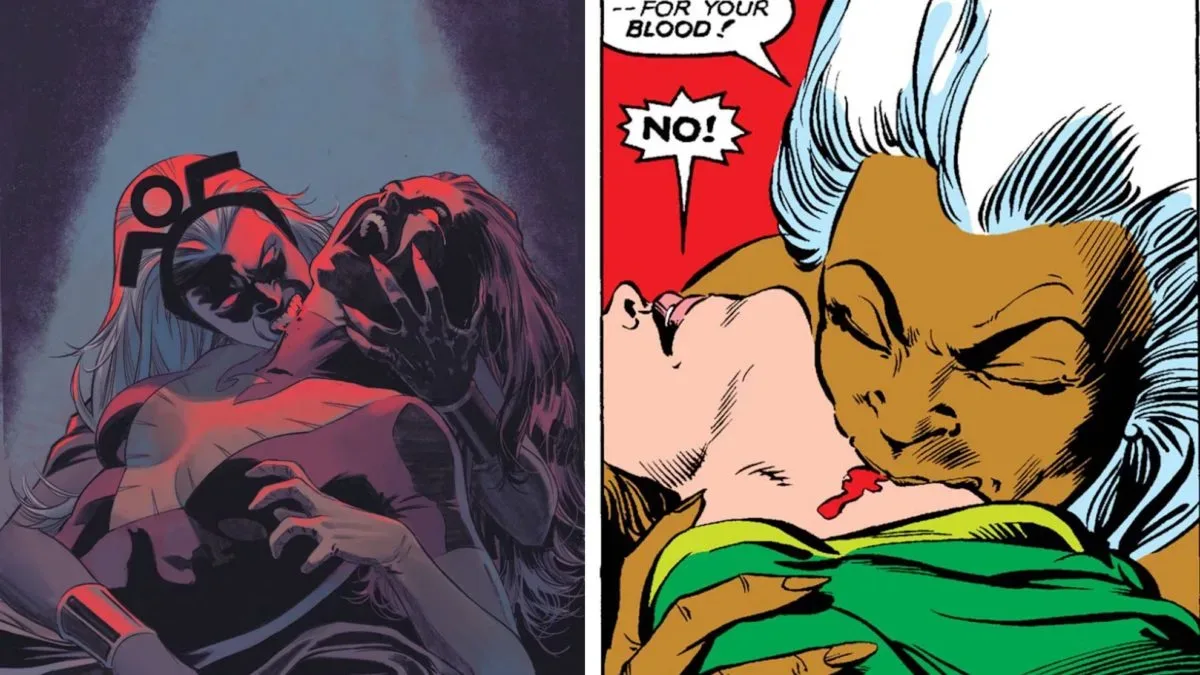
The most immediate question raised by the issue’s material concerns Storm. The preview suggests Dracula may have sired the empyre Storm, echoing an older piece of X-Men lore while promising a changed outcome. “Sired” in vampire fiction generally means that one vampire created another by turning them. The wording therefore implies a potentially defining link between Dracula and Storm, not merely an encounter or alliance.
However, that point should be treated as a setup rather than a settled explanation. Hickman specifically characterized the Storm element as a nod to earlier X-Men material before the story takes a new direction. That means the familiar reference is part of the tension: readers are invited to recognize the allusion, but not to assume the new series will repeat the same result.
Storm is also important because she can bridge the book’s larger concerns. If one of the most recognizable mutant figures is entangled with Dracula’s side of the setting, the question becomes more complicated than whether two species can coexist. It becomes a question of identity, loyalty and which version of a character’s history still applies in this universe.
The series’ use of altered figures in the Original X-Men flashback reinforces that uncertainty. Jean Grey’s absence from that scene is especially notable because Kitty Pryde’s presence changes the group’s emotional and generational makeup. The material does not yet explain why Kitty occupies that role, nor does it establish a full account of the continuity behind these versions. What it does establish is that the past is active territory for the series, not a fixed reference point.
Cerebro, Sentinels and the meaning of the flashbacks
The glimpses of Cyclops dealing with Professor X through Cerebro and Magneto on a Sentinel throne create another set of questions. Cerebro is the X-Men technology associated with locating and identifying mutants, while Sentinels are machines traditionally linked to anti-mutant persecution. Putting Magneto above a structure of Sentinels immediately turns an emblem of mutant oppression into an image of authority, conquest or reclamation.
The available material does not state what has led Magneto to that position, whether the image occurs in the past or present, or what role it plays in the vampire-mutant balance. Still, the visual is thematically consistent with a series built around political instability. It suggests that power is not neatly divided between one “heroic” side and one “monstrous” side.
Likewise, a Cyclops-and-Professor-X scene involving Cerebro may point readers toward questions of surveillance, leadership and who gets to define the mutant community. A device that can locate minds and identify mutants is useful in a crisis, but it also carries enormous authority. In a story where different groups fear each other and war is approaching, control of information can be as consequential as physical strength.
These are interpretations of the setup, not confirmed plot answers. The preview material provides images and character configurations, while the wider mechanics of the world remain to be revealed. That restraint is likely deliberate: an in-media-res narrative benefits from giving readers vivid evidence of a changed world before providing a complete historical map.
Hickman’s Cold War comparison
Hickman compared the Storm-related event to the Cuban Missile Crisis within the world of Midnight X-Men. His point is not that the comic is retelling that historical episode. Rather, he uses it as a framework for a moment when the world nearly ended, cooler heads prevented the worst outcome, and a prolonged cold war followed.
Applied to the comic’s premise, that language suggests a prior catastrophe or near-catastrophe has shaped the current era. The apparent peace between vampires and mutant empyres may therefore be less a resolution than a pause maintained by necessity, deterrence and fear. A cold war differs from open war because the parties remain in conflict even while avoiding total escalation. That is a fitting model for a series whose first issue describes peace as hanging under a sword of Damocles.
Hickman also connected the conflict to people asking a higher power for salvation when they cannot save themselves. That idea broadens the book beyond tactical factional conflict. It implies ordinary people may be affected by forces—vampires, mutant powers, institutions and political decisions—that they cannot control. The word “midnight” in the title consequently reads as more than horror decoration: it fits a setting in which security is fragile and survival depends on decisions made by powerful groups.
What the first three issues establish
- Midnight X-Men #1 is dated October 7, 2026, at $4.99. It introduces the vampire-mutant setting in New York City and the danger to the unturned if conflict breaks out.
- Midnight X-Men #2 is dated November 18, 2026, at $4.99. Its short tagline is “Eat. Prey. Love.” The preview material connects Dracula, Storm, altered Original X-Men history, Cerebro and Magneto.
- Midnight X-Men #3 is dated December 16, 2026, at $4.99. Its solicitation promises “No Mutants. No Mercy,” along with weapons of earthly and heavenly construction and realms between old failures and new sins of expedience.
Taken together, the three issue descriptions indicate a compact opening movement: establish an uneasy society, deepen the hidden history behind it, then raise the stakes with a harsher third-issue promise. The December solicitation remains deliberately abstract, so it does not confirm specific character outcomes. It does, however, underline the series’ interest in mixing mutant concerns with religious and supernatural language.
For readers following other pop-culture stories built around unstable futures and franchise reinvention, Avatar: Seven Havens’ uncertain new setting offers another example of how a familiar property can use a changed world as the basis for fresh conflict. Midnight X-Men takes a very different route, but its altered history and supernatural political tension similarly make the setting itself part of the mystery.
For now, the clearest takeaway from Midnight X-Men #2 is that the series intends to make recognition uneasy. Dracula is present, Storm’s connection to him is a major question, the Original X-Men are not quite the group readers expect, and classic symbols such as Cerebro and Sentinels are appearing in a new context. The November issue should add another layer to the world’s past while showing why its present peace may not hold.
Shop the products
Check current price, model and availability at the retailer.