Spoilers for Midnight X-Men #1 follow.
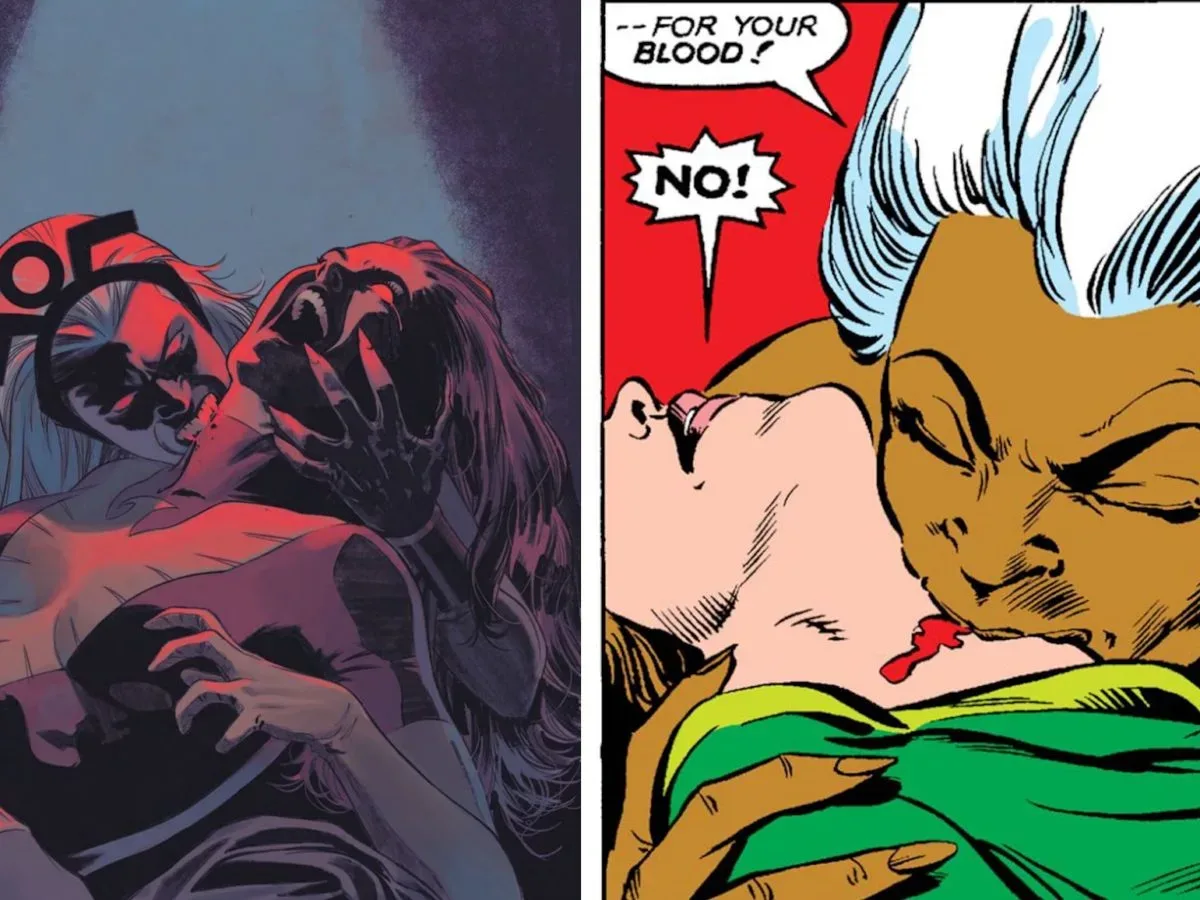
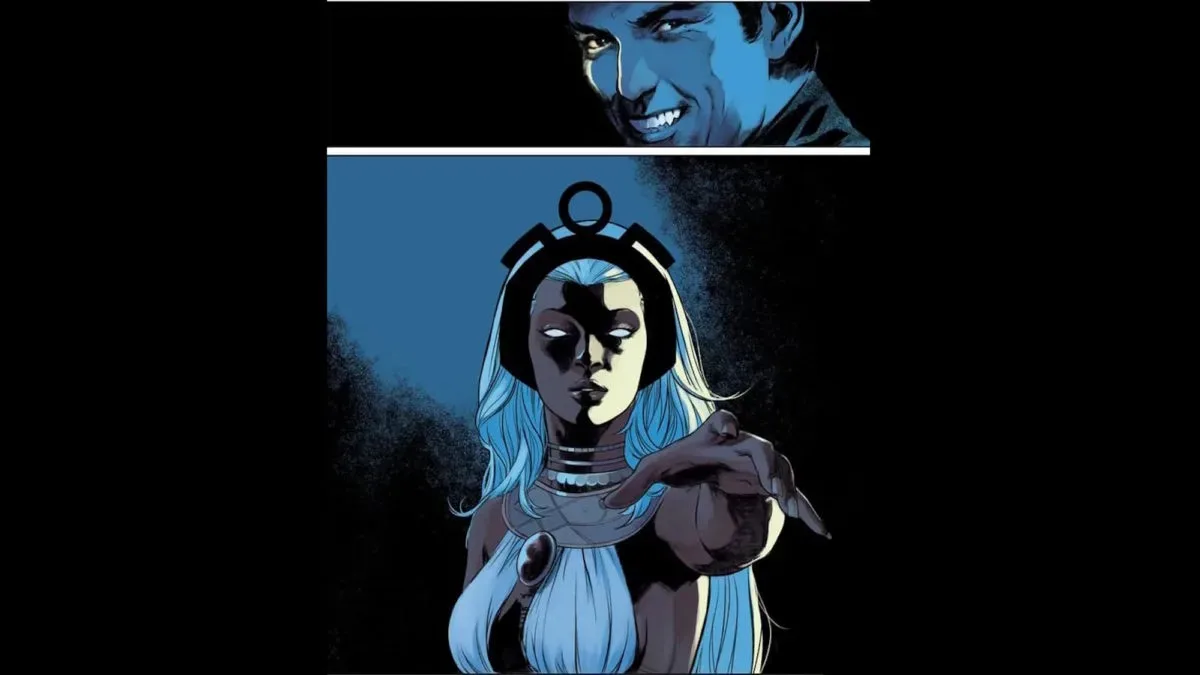
Midnight X-Men #1, by Jonathan Hickman and Matteo Della Fonte, opens a new Marvel setting by taking a particularly potent piece of X-Men history and asking what its most disastrous outcome might look like. The issue’s central suggestion is clear without being formally settled as a complete answer: Storm’s prior brush with Dracula and vampirism may have led to a reality in which she fully became something far more dangerous.
That premise does more than put a familiar hero in fangs. The Midnight setting is a splintered 2026 built around separate populations, competing authorities, and a peace arrangement that nobody appears to trust completely. Humans, mutants, vampires, and mutant vampires occupy the same world, but they do not share it comfortably. The result is less a simple monster takeover than a political horror story, where survival depends on boundaries, compromises, and the fear that one provocative act could ignite a war.
Storm’s vampire past is the key historical thread
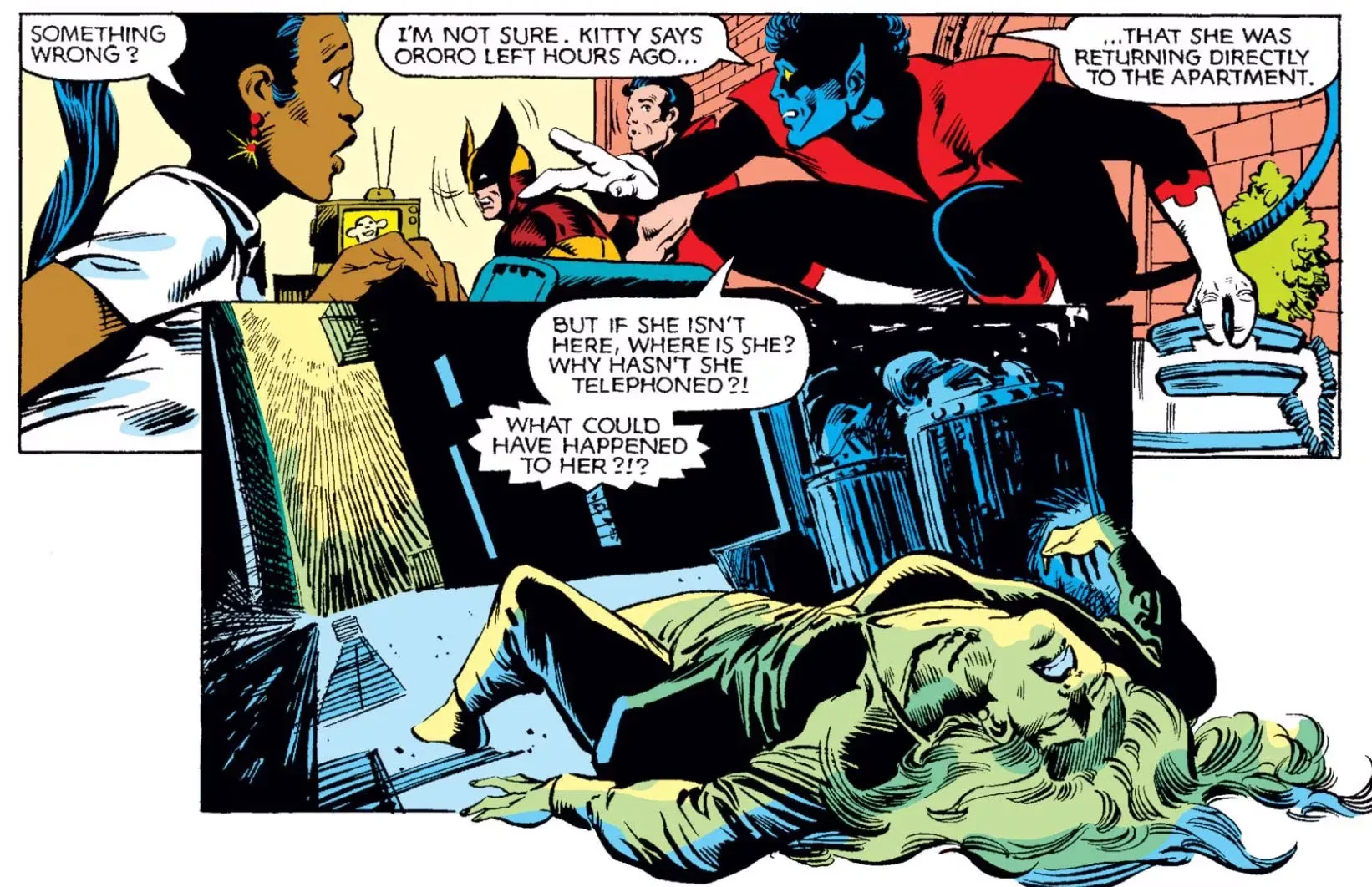
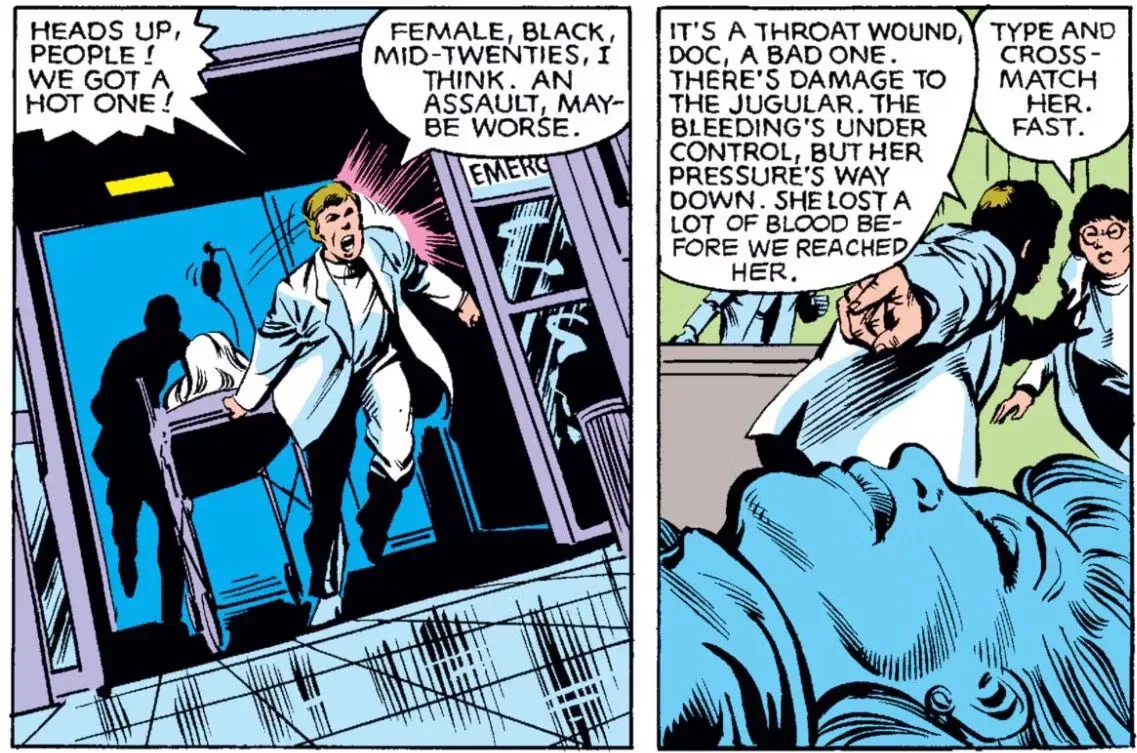
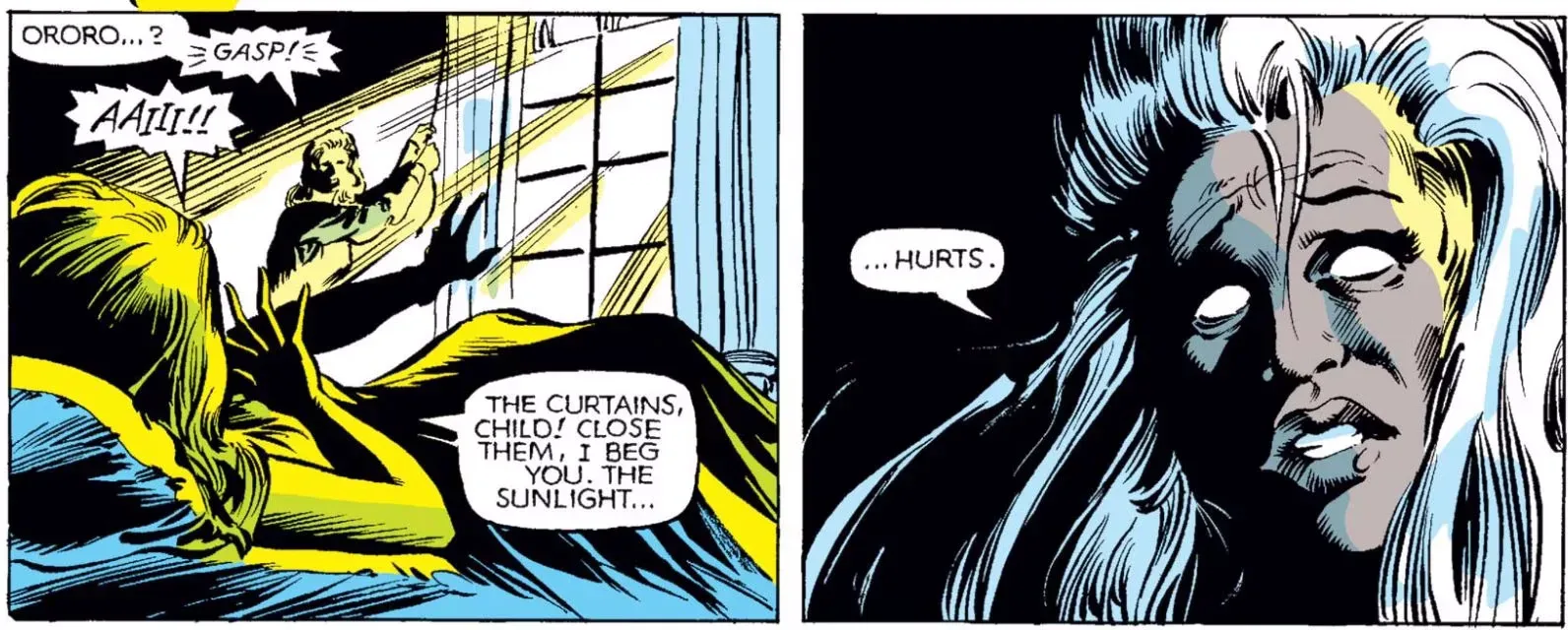
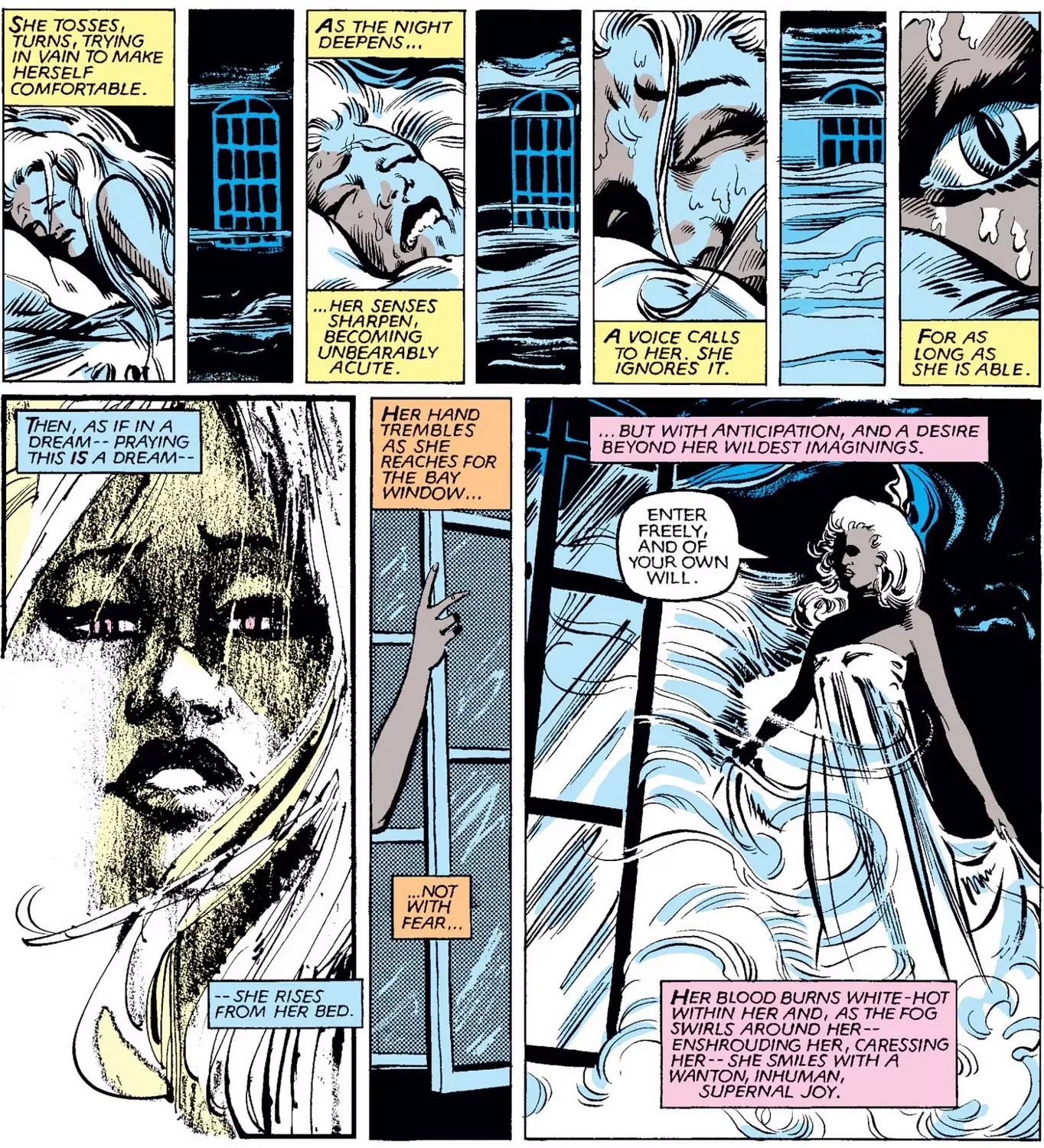
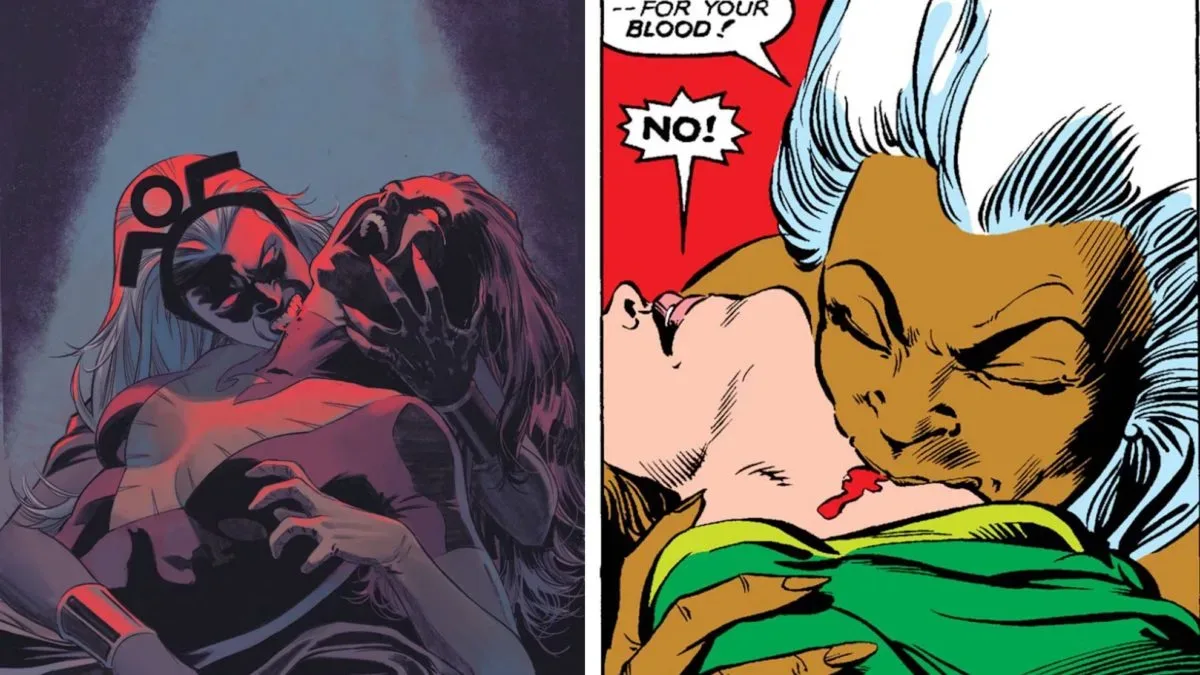
The story has a substantial foundation in Uncanny X-Men #159, the 1982 issue by Chris Claremont and Bill Sienkiewicz. In that earlier story, Storm is attacked, infected, and drawn into Dracula’s plans. Dracula sees a potentially extraordinary vampire in her: Storm’s command of the elements would remain a formidable asset alongside vampiric power.
The episode pushed Storm toward physical and psychological transformation, and Dracula reaches the X-Men’s home as the danger worsens. Kitty Pryde plays a vital part in resisting the threat, armed with extensive vampire-book knowledge, while the rest of the team is overwhelmed in the fight. Storm ultimately does not give herself over to Dracula’s influence, and she is cured. But the scenario did not vanish from the character’s history once the immediate crisis ended.
Claremont and Sienkiewicz returned to related territory in X-Men Annual #6, while parallel versions of Storm who remained vampires emerged under the name Bloodstorm. That makes the new series’ apparent counterfactual feel rooted in existing Marvel material rather than drawn from nowhere. It takes an old near-disaster and follows the path that mainstream continuity avoided.
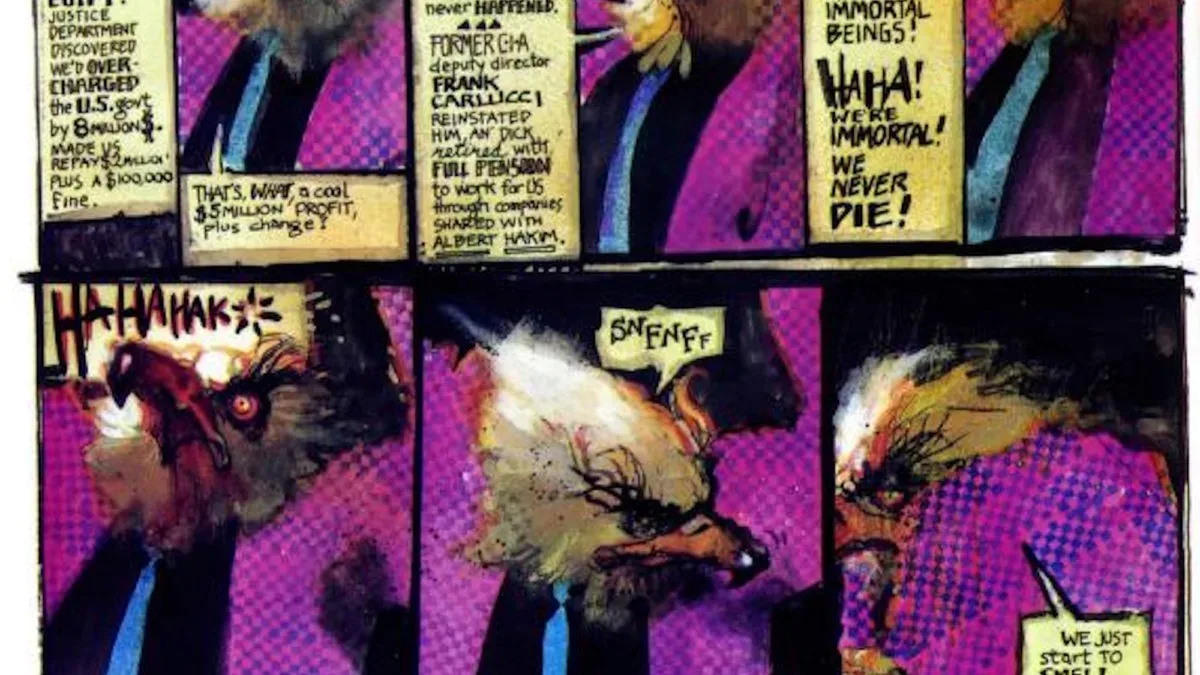
Bill Sienkiewicz’s X-Men work remains an important landmark in that earlier connection; readers interested in another upcoming project associated with the artist can also see details on Shadowplay’s one-night Toronto stage presentation.
Analysis: Calling this an elaborate “What If?” is useful as a way to understand the comic’s engine, but it should not be treated as a confirmed label solely from the story’s setup. What the first issue establishes is a world whose history has been radically diverted by Storm’s infection and its aftermath. The question of exactly when the divergence occurred, and how completely the series will map that chain of events, remains part of the mystery.
A nine-year aftermath rather than an origin issue
Rather than spending its full opening chapter on the first infection, Midnight X-Men #1 places much of its action in the immediate past and works from the knowledge that nine years have passed since Storm’s infection and the upheaval that followed. This approach matters. The series begins after the new order has already hardened into institutions and habits, leaving readers to assemble the catastrophe from its consequences.
One especially grim image in that implied history is Storm drinking Jean Grey Phoenix dry. Cyclops’s place in the story is likewise shaped by tragedy, including the possibility that he witnessed Jean’s death at Storm’s hands. He is no longer presented as the leader of a conventional X-Men roster. He operates on his own as an independent X-Man, a distinction that signals how thoroughly the group’s familiar shape has been broken.
Journalist Trish Tilby returns to this landscape. Tilby first appeared in 1986’s X-Factor work by Louise Simonson and Butch Guice, and her presence gives the Midnight setting a useful civilian-facing perspective. The story also presents a Magneto associated with a fragment of Asteroid M kept in a jar, an evocative detail that links the world’s altered present to damaged symbols from mutant history.
The issue does not provide a neat timeline that resolves every relationship or death. That uncertainty looks intentional. Readers are given pieces: old loyalties, changed offices, vanished teams, and people who have made themselves indispensable to an uneasy status quo. The gaps make the setting feel lived in, but they also turn the first issue into a careful exercise in identifying which pieces of familiar continuity still matter and which have become relics.
Who holds power in the Midnight Universe?
The book’s most important worldbuilding idea is that no single faction appears to have fully conquered everyone else. Instead, power is distributed among groups with different resources and incompatible goals.
- The Reavers are vampires associated with secure coffins that cannot be broken into.
- The House of X is run by Magneto and includes figures tied to his Brotherhood of Evil Mutants orbit: Toad, Unus, Quicksilver, Scarlet Witch, and Polaris are identified among its ranks.
- The empyres are mutant vampires. Gambit, Psylocke, Glob, and Empath are among the named characters in this group.
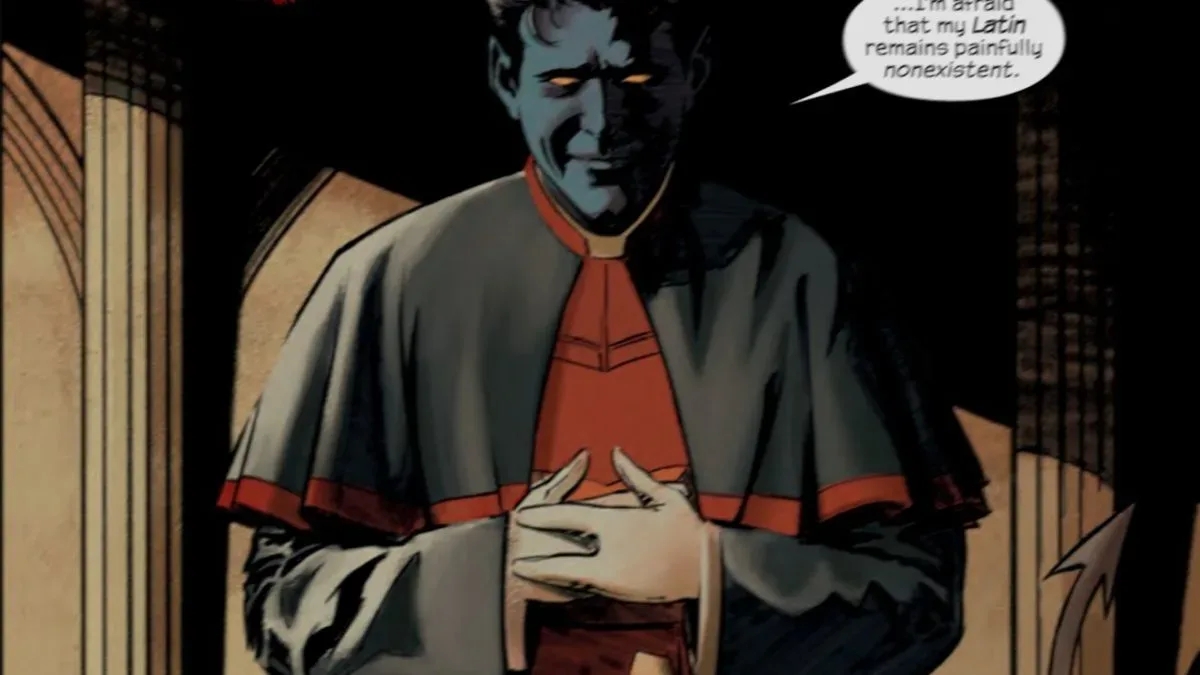
- The Catholic Church and its Purifiers operate through figures including Bishop Kurt Wagner, better known as Nightcrawler, and Cardinal William Stryker.
- Cyclops stands apart as a rogue, independent X-Man rather than the representative of a conventional team.
The term empyre is central to understanding the issue. Here, it refers to mutant vampires: characters positioned between the ordinary mutant and vampire categories. The classification is not cosmetic. Empyres can identify mutants by smell even when Reaver vampires cannot, giving them an informational advantage in a world where some people do not know they are mutants themselves.
That detail has practical stakes. If mutant identity is hidden and subject to experimentation, the ability to detect it is power. It can make a person a target, a bargaining chip, or an asset. It also means that the Midnight Universe’s divisions are not simply drawn along who is human and who is supernatural. Knowledge itself is unevenly distributed. Some characters can detect what others cannot see, including facts about identity that an individual may not know about themselves.
Nightcrawler and Stryker make faith part of the conflict
One of the issue’s most striking reversals is Kurt Wagner’s role as Bishop Nightcrawler. The Purifiers of the Vatican visit him in New York, and the narrative underscores that his faith is sincere. This is not merely a costume or title exchange. Nightcrawler’s religious position intersects directly with his relationship to the empyre Storm, who protects him.
That protection is reciprocal in effect: Nightcrawler is sheltered by the Catholic Church while he remains under Storm’s protection. Their arrangement is one of many that keeps the wider system from coming apart. It is a surprisingly delicate position for a character so often associated with the X-Men’s moral center. Here, he becomes a bridge between institutions that may otherwise regard one another as existential threats.
William Stryker’s transformation is equally consequential. In standard X-Men history, the Reverend Stryker is a former sergeant and Christian minister whose intense anti-mutant hatred leads him to campaigns against mutants. He debuted in the 1982 graphic novel X-Men: God Loves, Man Kills, by Claremont and Brent Anderson. In the Midnight setting, he is Cardinal Stryker, with his crusading hostility turned toward vampires, especially mutant vampires.
His elevation does not imply that his old worldview has softened. It suggests the opposite: an existing ideology has found a new enemy category, with supernatural conditions supplying a fresh justification for persecution. The issue also says that Magma has taken holy orders. Together, those changes make religion an active political institution in the setting, not simply a source of atmosphere.
A statue involving Exodus and Professor Xavier adds another charged historical image. Exodus is described as a 12th-century French nobleman sent to the Crusades, whose mutant powers were awakened and amplified by Apocalypse before he became Magneto’s Acolyte ally. The statue’s exact event is left in question, but its inclusion reinforces how the issue turns history, faith, mutant supremacy, and violence into overlapping symbols.
The Compact is the series’ real ticking clock
The governing idea behind the Midnight world is a compact: an agreement preserving an equilibrium between factions. Its terms regulate territories, permitted actions, and reprisals. It is not portrayed as a moral resolution or a warm reconciliation. It is a working compromise designed to stop mass death.
The peace must hold.
Repeated as a mantra, that line captures the book’s central tension. Peace is presented as conditional, transactional, and perhaps unsustainable. In ordinary superhero storytelling, the looming question is often whether heroes can defeat a villain. In Midnight X-Men #1, the early question is whether anyone can avoid making a move that causes every faction to fight at once.
The phrase “sword of Damocles” describes this condition well. It means a severe threat that hangs over someone even when the present moment appears stable. The peace exists, but it exists beneath the constant possibility of collapse. The comic’s divided powers are therefore not proof of balance so much as evidence that everyone understands the scale of the alternative.
The Catholic Church’s actions could strain this compact. Cyclops might threaten it by himself after finding Hope. The issue leaves the consequences unresolved, but Hope’s appearance carries immediate narrative weight because even one person can upset a system organized around containment and fear. If the existence of mutants becomes public in a world where it has been hidden and experimented upon, the implications could run far beyond a single faction’s borders.
What the first issue establishes for the wider Midnight line
Midnight X-Men #1 is part of a broader Midnight setting that also includes Midnight Spider-Man #1 by Phillip Kennedy Johnson and ScieTronc and Midnight Fantastic Four #1 by Benjamin Percy and Kev Walker. The related material indicates that mutant identity is concealed and experimented on, while the threat of revealing it could draw vampires into the open as well. The larger line also reaches for cosmic horror imagery through Cthulhu Galactus, signalling that the setting’s scale may extend well beyond New York’s factional standoff.
For the X-Men corner, however, the opening issue’s strength is its specificity. Storm is not just a shocking dark version of a beloved character; she is the apparent axis around which a transformed society now turns. Magneto has a power base. Stryker has a new ecclesiastical role. Nightcrawler’s faith and friendships place him on a dangerous fault line. Cyclops is alone, carrying a history that may be inseparable from the world’s original disaster.
The debut issue is dated October 7, 2026, at $4.99. Midnight X-Men #2, also by Hickman and Della Fonte, is listed for November 18, 2026 at $4.99, followed by Midnight X-Men #3 on December 16, 2026 at $4.99. The second issue carries the subtitle Eat. Prey. Love.; the third promises “No Mutants. No Mercy.”
For now, the vital takeaway is not that every mystery has been explained. It is that Midnight X-Men begins by making the avoided fate of Storm’s vampire storyline into the basis for an entire unstable civilization. Its heroes and villains are no longer separated by the familiar borders of an X-Men team book. They are agents, survivors, rulers, believers, and monsters attempting to keep a peace that seems engineered to fail.
Shop the products
Check current price, model and availability at the retailer.