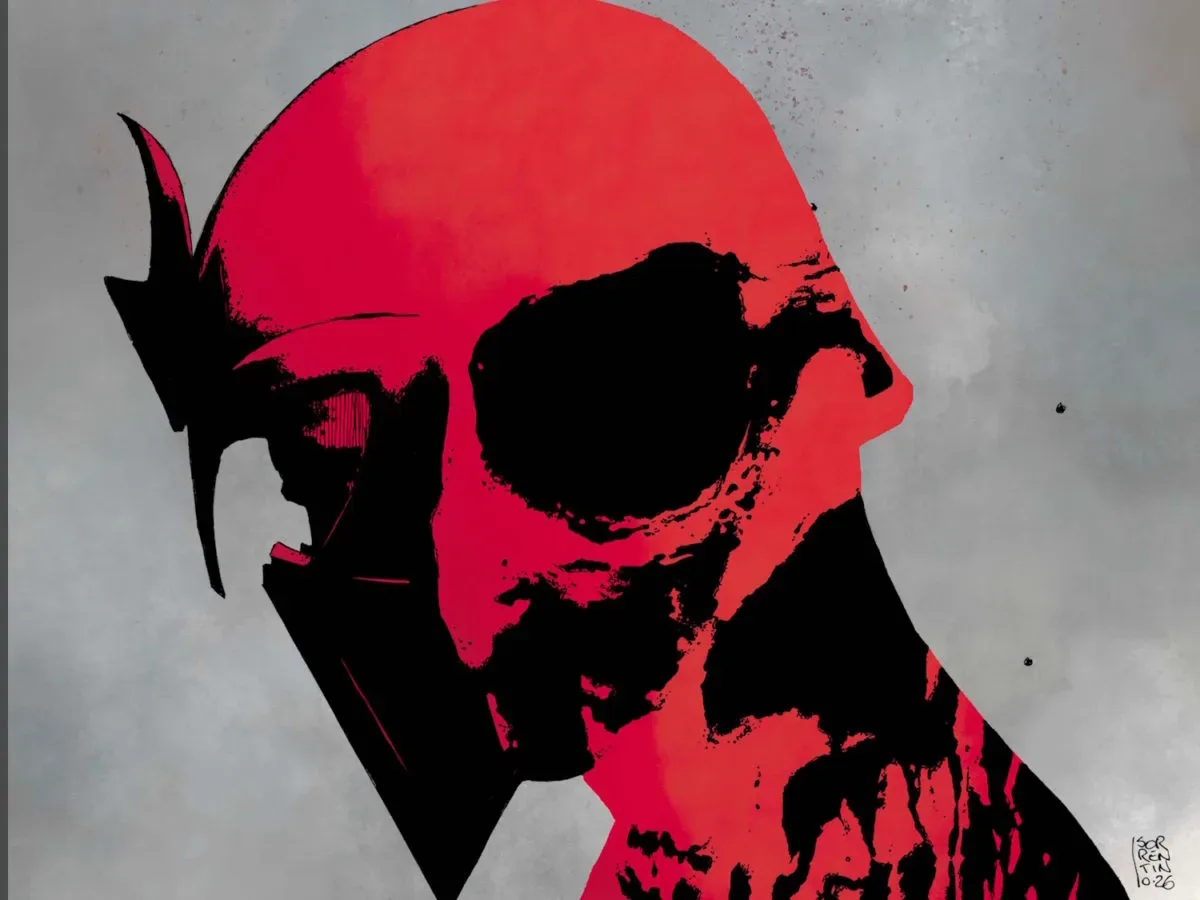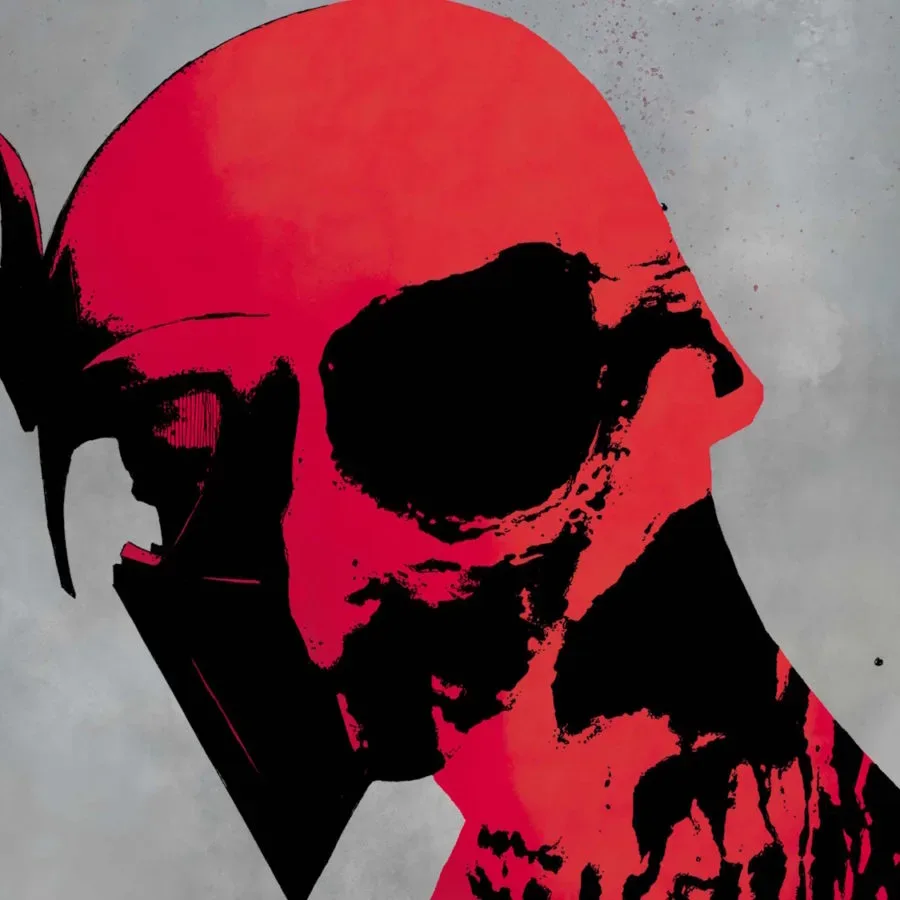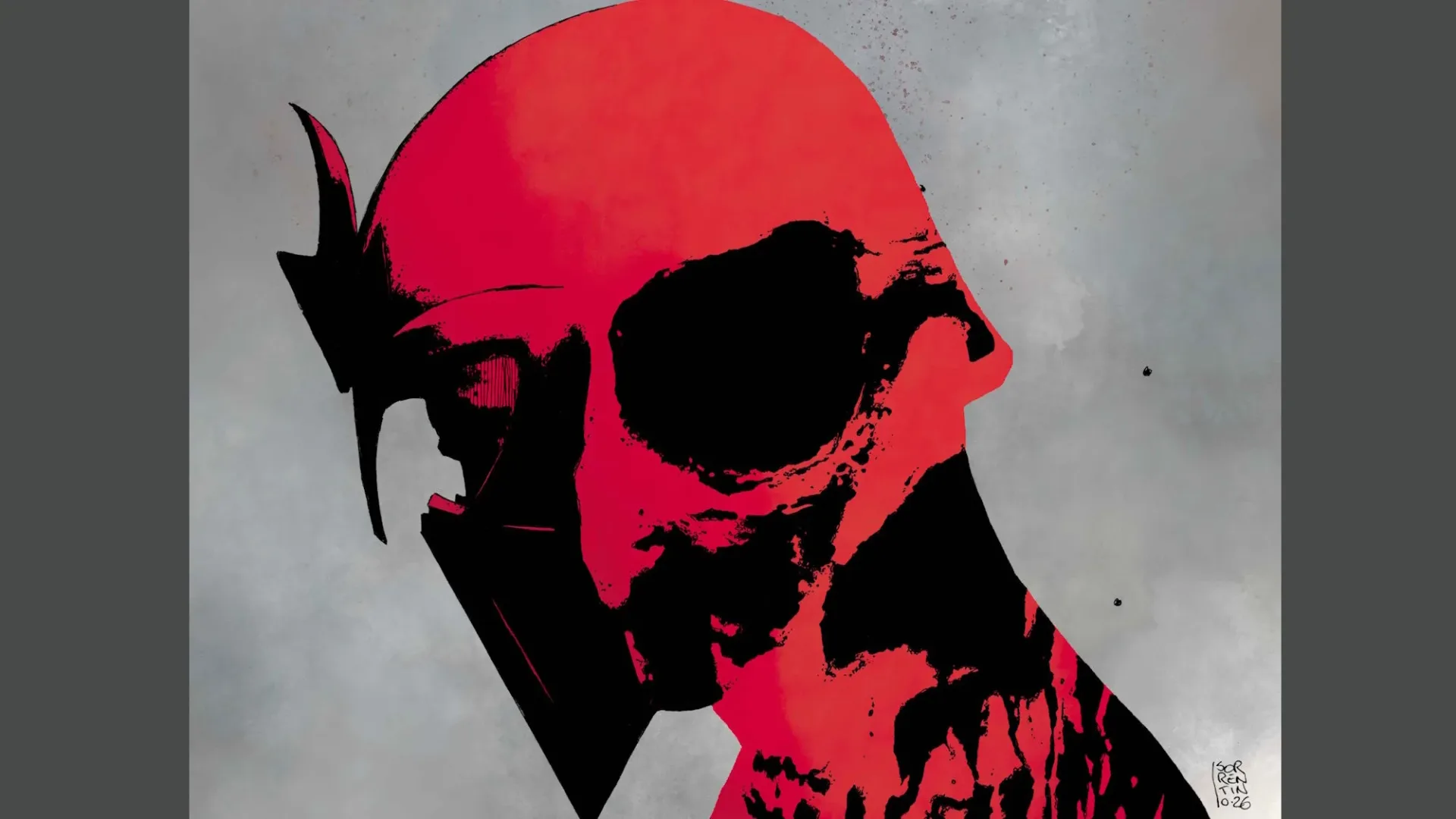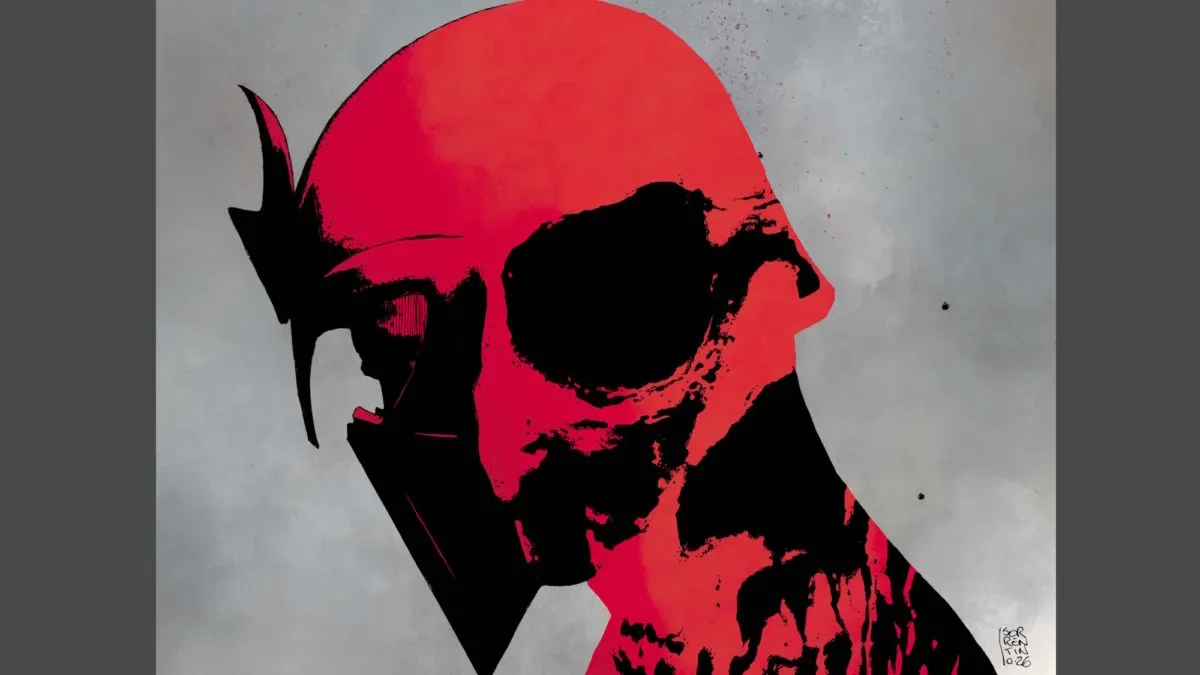
Marvel has revealed Magneto: End of Days, an eight-issue prestige comic-book series centered on the Master of Magnetism. Written by Brian Michael Bendis, illustrated by Andrea Sorrentino and colored by Dave Stewart, the project is scheduled to begin with Magneto: End of Days #1 on February 3, 2027.
The series reunites Bendis and Sorrentino after their work on Old Man Logan, while Stewart completes a creative trio with an imposing assignment: build a story around a Marvel character whose history extends more than six decades and whose role has repeatedly changed across that span.
Rather than concentrating on one isolated period, Magneto: End of Days is set to move through multiple stages of Magneto’s life. Each issue is described as unfolding from a different point in his past, present or a near-future scenario in which the effects of his decisions take unexpected directions. Marvel has also promised guest appearances, positioning the book as a broad examination of the character’s place in the X-Men corner of Marvel and beyond.
A Magneto story built around time, consequence and contradiction
The announced structure is important because Magneto is not a character easily reduced to a single status quo. He has occupied dramatically different places in Marvel storytelling: opponent, uneasy ally, leader and ideological counterweight. A format that jumps among eras can acknowledge that long, sometimes conflicting record directly instead of attempting to smooth it into one uninterrupted version of the character.
That appears to be the central purpose of the series. Marvel frames the project as a portrait of Magneto’s conviction and contradiction, two qualities that help explain why he has remained so prominent within the X-Men mythos. “Conviction” suggests the certainty with which he pursues his beliefs; “contradiction” leaves room for the costs, reversals and difficult consequences that can follow when those beliefs collide with other people and institutions.
In practical terms, an issue-by-issue shift in time gives the creative team latitude to make each chapter do a distinct job. A past-set installment can revisit the forces that formed Magneto. A present-day chapter can deal with the character as he currently stands. The near-future element can function as a thought experiment, asking what happens when choices made now are carried forward. None of that necessarily means the series will provide a linear biography. The announced premise instead points toward curated snapshots that assemble into a larger character study.
That distinction matters for readers approaching the book without exhaustive X-Men knowledge. A sprawling continuity can be daunting when a character has appeared for decades across many series. A prestige miniseries is usually a limited run with a defined number of issues; here, that number is eight. The premise suggests those eight chapters are intended to provide selected entry points into Magneto’s life, rather than requiring the book to retell every event associated with him.
The creators’ connection to Magneto and Marvel’s mutant stories
Bendis has written Magneto in several major Marvel contexts, including House of M, Avengers vs. X-Men and Uncanny X-Men. That background is particularly relevant to a series designed to assess Magneto across eras, since it means the writer returns to the character with experience of him in stories involving mutants, the Avengers and the wider Marvel Universe.
“This time, we're going to delve into his world in very curated, unique chapters from every era of the Marvel Universe,” Bendis said of the new series.
Bendis has called Magneto one of Stan Lee and Jack Kirby’s strongest creations. His description of the project emphasizes its deliberately selected structure and the return of collaborators he values, including Sorrentino, Stewart and editor Tom Brevoort. The team has been working on the comic for months.
Sorrentino, meanwhile, has described the opportunity as both exciting and intimidating. That response makes sense for an artist taking on a figure who carries not only an instantly recognizable visual identity but also a considerable creative legacy. Magneto has been drawn by many of the medium’s notable artists, and an artist working on a new solo-focused project must find a personal visual approach without losing the qualities that make the character immediately legible.
Sorrentino has specifically said he wants to experiment with layouts and discover new ways to depict both Magneto’s powers and personality. In comics, layouts are the arrangement of panels, figures, dialogue and empty space on a page. They are more than decoration: a tightly packed grid can control information and pace, while a fragmented or unconventional arrangement can create tension, motion or disorientation. For a character associated with magnetism, force and large-scale physical impact, the page itself can become part of the storytelling language.
The color work is likewise a significant part of the announced package. Colorists establish mood, clarify spatial relationships and guide the reader’s attention through a page. With the story shifting among past, present and near future, Dave Stewart’s work could help give individual chapters their own atmosphere while maintaining a coherent look across all eight issues. That is analysis based on the format and roles announced, not a claim about pages that have not yet been shown.
What “prestige series” signals—and what it does not
Marvel calls Magneto: End of Days a prestige series. In this context, the phrase signals a project intended to stand out as a focused, high-profile limited comic rather than an open-ended ongoing title. The confirmed details are its eight-issue length and its creative team; no additional format, cover, pricing or collection information has been provided in the announcement.
For readers, the clearest takeaway is that there is a planned endpoint. That can be useful for a character examination with multiple time periods because the team can structure the series around a specific arc rather than indefinitely extending the premise. It may also make the series appealing to readers who want a self-contained Magneto project while still engaging with his larger history.
However, the word “prestige” should not be treated as a guarantee of particular paper stock, page count, release schedule beyond the first issue, or collector-oriented extras. Those details have not been announced. Anyone interested in ordering the series should watch for later information from Marvel or their preferred comic shop rather than assuming standard publishing details from the label alone.
Why the near-future angle could be the key
The near-future portion of the premise is more than a way to give the series a science-fiction sheen. It gives the book room to explore consequences without declaring that every possible outcome is permanently fixed. A future-set Marvel story can show where a course of action might lead, then use that vision to deepen the stakes of material set in the present or past.
For Magneto specifically, this approach fits a character defined by argument as much as action. His stories often concern competing ideas about survival, power, protection, community and authority. A near-future chapter can put those ideas under pressure by showing their potential results. The announcement’s reference to choices playing out in surprising ways suggests that cause and effect will be an active theme, not merely a backdrop for cameos.
The promise of guest stars also leaves room for the story to test Magneto’s relationships rather than presenting him in isolation. Marvel has not named any guests, so readers should be cautious about expecting specific X-Men, Avengers or other characters. Still, the concept of visitors from different parts of the universe fits a series examining how Magneto’s beliefs and actions have shaped the world around him.
Release timing and the broader Marvel slate
Magneto: End of Days #1 arrives February 3, 2027. The book was unveiled at New York Comic Con 2026 during a Marvel panel. Its debut will also follow Magneto’s planned appearance in Avengers: Doomsday this December, a timing that may bring renewed attention to the character across Marvel media.
That does not mean the comic has been presented as a film tie-in. The announced series is a comics project with its own eight-issue premise and its own creative team. But the overlap does create a useful moment for different kinds of readers: longtime X-Men followers can approach it as a focused treatment of a familiar figure, while people newly curious about Magneto can look to a series explicitly designed to move across the character’s history.
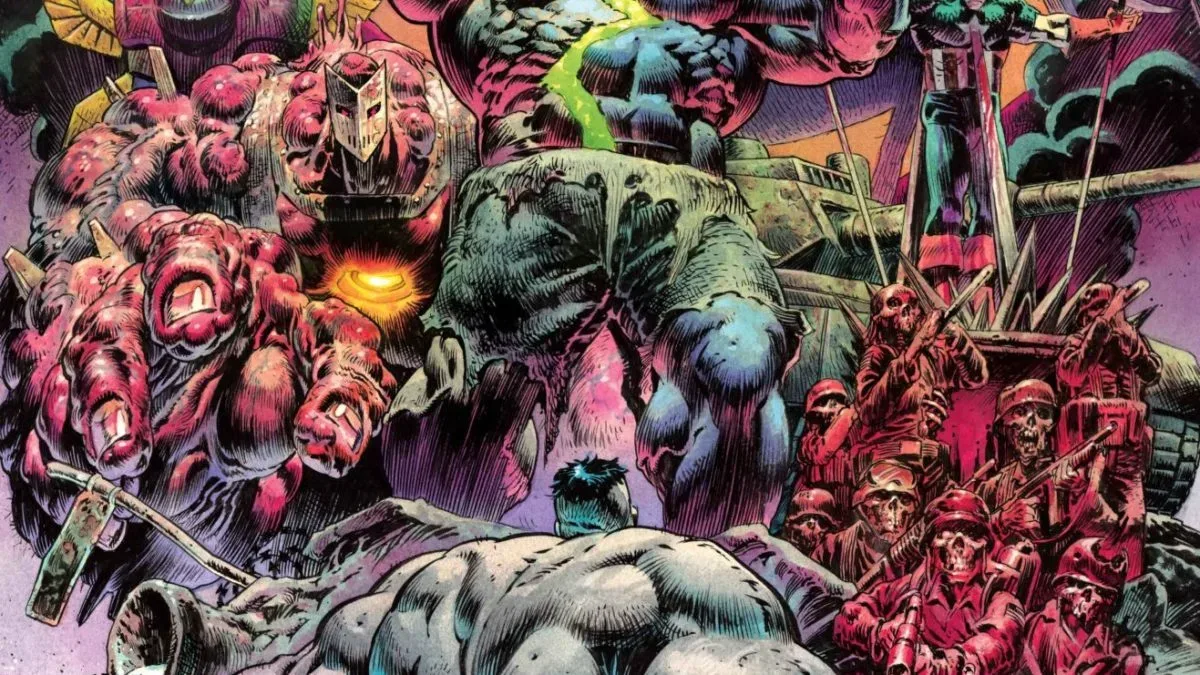
Marvel’s February 2027 plans also include another limited Hulk project, Hulk War: Infernal Rage, which is set to conclude Phillip Kennedy Johnson and Nic Klein’s Hulk run. Together, the announcements point to a month that will include high-profile Marvel stories built around major legacy characters, though the projects have separate premises and creative teams.
What to watch for before February 2027
- Issue-specific settings: Marvel has confirmed movement between past, present and near future, but has not identified which era each chapter will explore.
- Guest cast: Guest stars are promised, but no characters have been named.
- Visual previews: Sorrentino’s interest in experimental layouts makes preview pages especially worth watching when they become available.
- Publishing details: Only the first issue’s on-sale date, February 3, 2027, and the eight-issue count are confirmed in the announcement.
For now, Magneto: End of Days has a straightforward but ambitious hook: use eight carefully selected chapters to confront the full weight of Magneto’s history, including the parts that do not fit together neatly. With Bendis, Sorrentino and Stewart reunited, the series is being positioned less as a routine appearance for the Master of Magnetism and more as a concentrated examination of why the character continues to generate conflict, loyalty and debate across Marvel’s mutant stories.