Major spoilers follow for DNX #2, Fantastic Four #17 and X-Men #38.
The newest group of DNX chapters initially appears to offer the X-Men something uncommon in a major crossover: a clean upper hand. Cyclops’ team is successfully overpowering 3K, the mutant terrorist organization associated with the Krakoan-era Hank McCoy known as the Chairman. Yet the issue’s final turn recasts that apparent victory as exactly what it is in a crisis story: a victory at the wrong level of the conflict.
While the battle rages above Philadelphia and a separate scientific effort attempts to save Magneto at the Baxter Building, the Chairman has already initiated his contingency. The X-Virus has been released. The Fantastic Four remain trapped. The X-Men have not solved the central threat—they have simply reached the point where it becomes unmistakably larger than the fight they were winning.
That ending makes DNX #2 the connective tissue for three very different approaches to the same event. The core issue supplies the public superhero conflict and the looming catastrophe. X-Men #38 takes the conflict inside Magneto’s mind, where his identity and choices are tested through a grim alternate-path scenario. Fantastic Four #17, meanwhile, turns its team into injured, memory-less figures in an unfamiliar environment before revealing that their struggle is taking place inside Magneto himself.
A three-front fight over Magneto
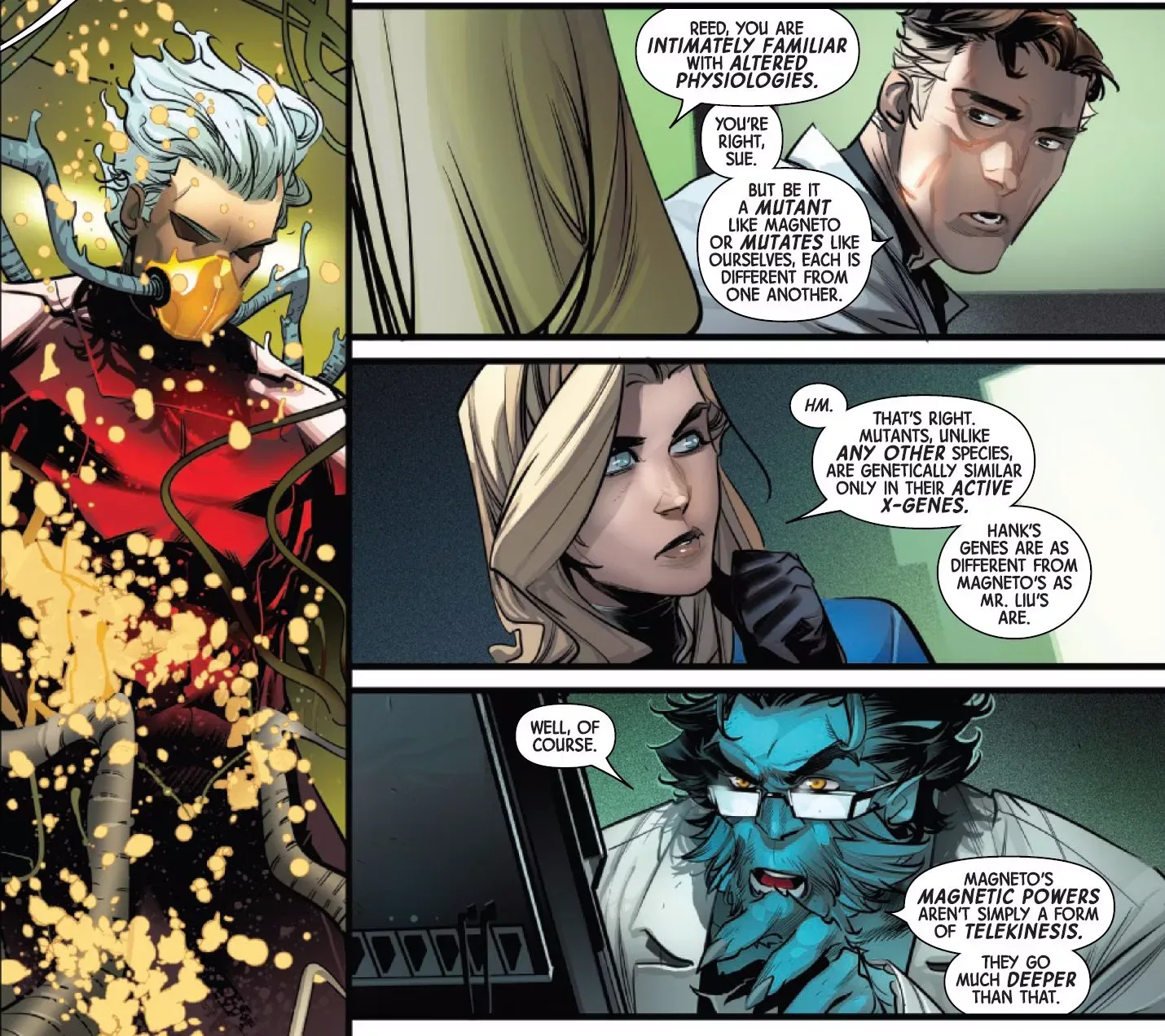
Magneto is not merely a patient needing rescue in these issues. He is the literal and thematic center of the crossover’s action. On the outside, Reed Richards and the revived Avengers-era Beast work to revive him. Beast’s specific incarnation matters here: the story distinguishes him from the Krakoan-era Beast who leads 3K as the Chairman. That split allows the crossover to place two radically different versions of Hank McCoy on opposite sides of the same emergency.
At the same time, Magneto experiences a conflict inside his own mindscape. A mindscape is an interior mental space rendered as a location or narrative environment, allowing a comic to stage memory, fear, imagination or psychic pressure as visible action. In this case, the confrontation is not simply abstract self-reflection. Magneto is presented with an alternate future tied to a recent role as a stabilizing force—a “pacifier”—and is forced to consider how much worse events might have become without that intervention.
Charles Xavier appears within that internal story, but the circumstances are deliberately uncertain. The presence may be Xavier actually communicating with Magneto, or it may be Magneto’s mind producing Xavier as part of the vision. Either reading changes the emotional texture. A genuine Xavier would make the sequence a form of contact or guidance; an imagined Xavier would make it Magneto interrogating himself through the voice of his oldest ideological counterpart. The uncertainty is useful because the immediate stakes are less about proving who is on the line than about what Magneto must acknowledge.
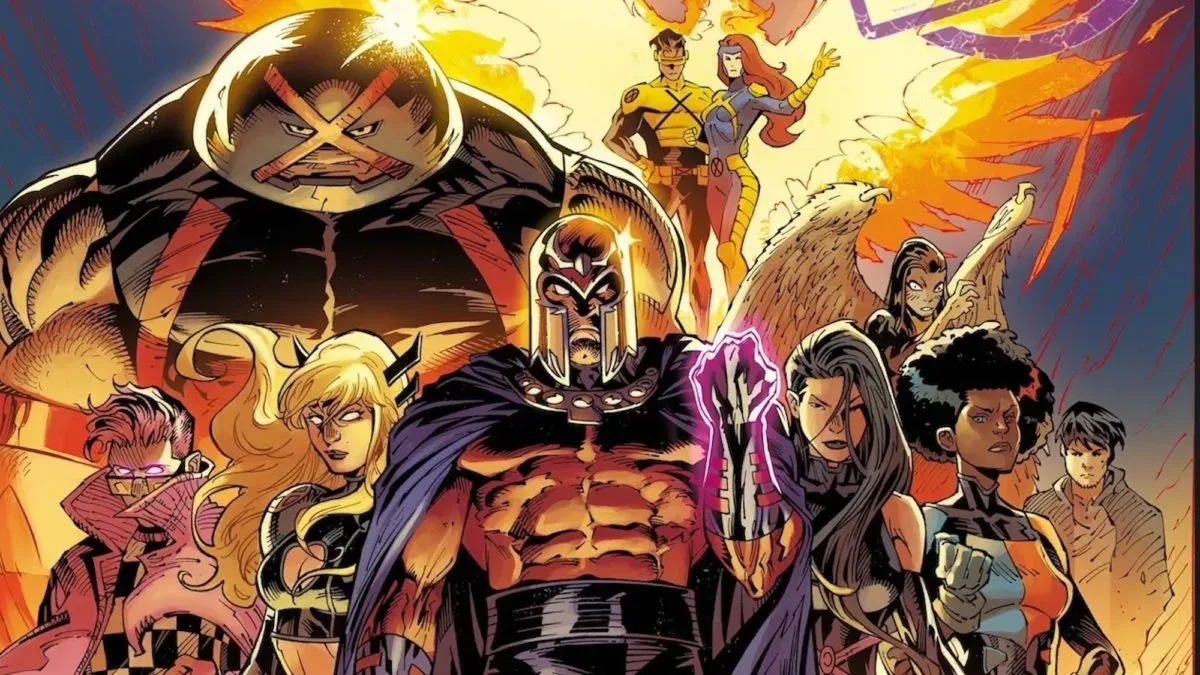
The issue’s stated premise calls him many things: terrorist, warrior, father, teacher and killer. Those labels capture the breadth of a character who has repeatedly moved between antagonist, revolutionary, protector and ally. The new addition is “genetic prophet,” connected to a message from the future written in his blood. Rather than treating that phrase as a simple superpower upgrade, the crossover uses it to make Magneto’s body a contested source of information and danger.
Why the alternate-future framing matters
X-Men #38 evokes the structure of a familiar holiday fable: a protagonist is confronted with a reality shaped by the absence of a particular moral choice or personal influence. Here, the question is not whether Magneto would be happier or more beloved under different circumstances. It is whether the role he recently played—however imperfectly—prevented a darker future from taking hold.
That is a notably complicated use of an alternate-world device. Such visions can offer easy absolution, telling a troubled character that all their past actions were secretly necessary. The supplied details suggest a narrower and more consequential proposition. Magneto sees a world where conditions play out worse if he had not acted as a moderating presence. That does not erase the heavy list of identities attached to him, nor does it establish that every decision he has made was correct. It asks whether even a compromised figure can become essential at a specific historical moment.
For readers following the crossover, this inward-facing chapter appears to be the best place to look for Magneto’s personal stakes, while DNX #2 advances the larger emergency. The two stories are complementary. One examines what Magneto means to the future; the other shows what his enemies are prepared to do in the present.
The Fantastic Four’s strange mission is an internal rescue operation
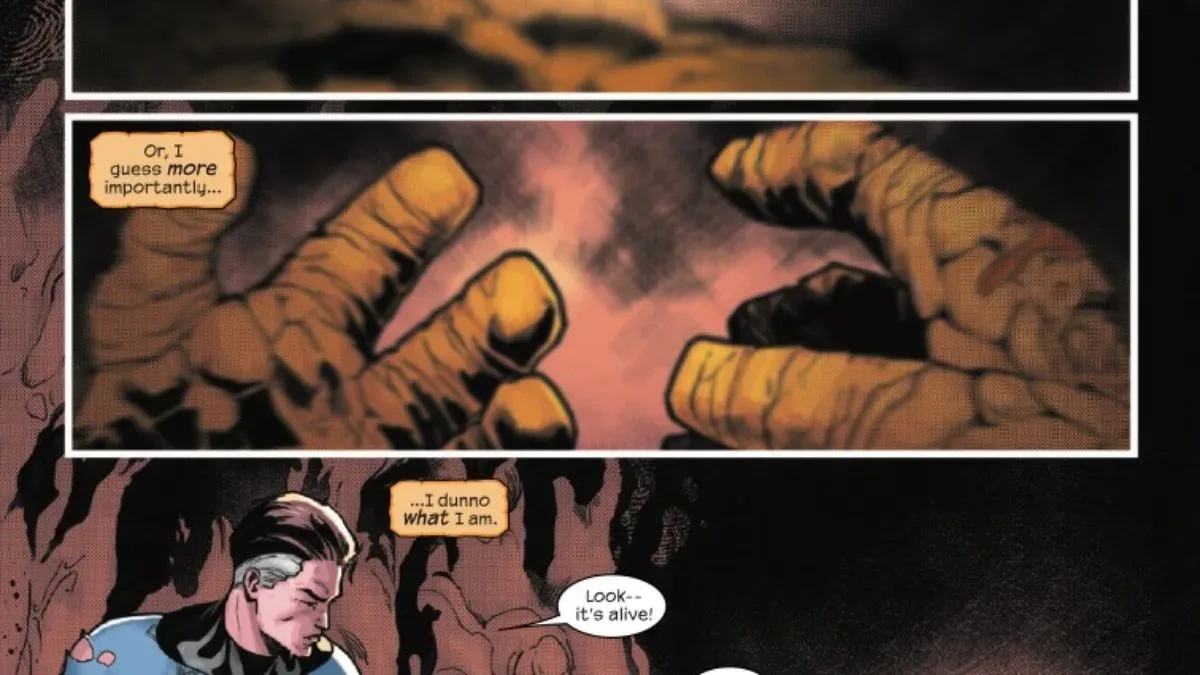
Fantastic Four #17 begins with a classic identity-disruption setup. The four heroes have no memory of where they are, how they arrived, or even who they are. They can nevertheless identify the clues around them: a rock-like member of the group, unnatural powers, severe injuries and burns apparently caused by the youngest teammate. An older man with elastic limbs has written a single command on his own arm in blood: SURVIVE.
The eventual twist is that the team is operating inside the real Magneto. It is a premise that borrows the broad idea of a miniature expedition inside a body, but it applies the concept through fractured memories and an unknown internal environment. The memory loss is crucial because it prevents the Fantastic Four from approaching the mission as established experts. They do not begin with a map, a clear diagnosis or the certainty that they are a family and a team. They have to reconstruct their identities while enduring danger.
That structure also creates a practical crossover function. The Fantastic Four are not simply dropping into the main battle to lend additional force. They are handling a task that the exterior fight cannot resolve: navigating whatever is happening within Magneto and helping make his revival possible. Their contribution therefore runs in parallel with the X-Men’s confrontation with 3K rather than duplicating it.
A Magneto clone linked to 3K complicates matters further. The Fantastic Four contribute against that threat in the wider conflict, even as the real Magneto remains the location of their other battle. The distinction between the actual Magneto, his clone, and the message encoded in the real man’s blood is part of what gives these chapters their dense, disorienting momentum. Identity is not background flavor in this event; it is the battleground.
The Chairman’s final move changes the meaning of the battle
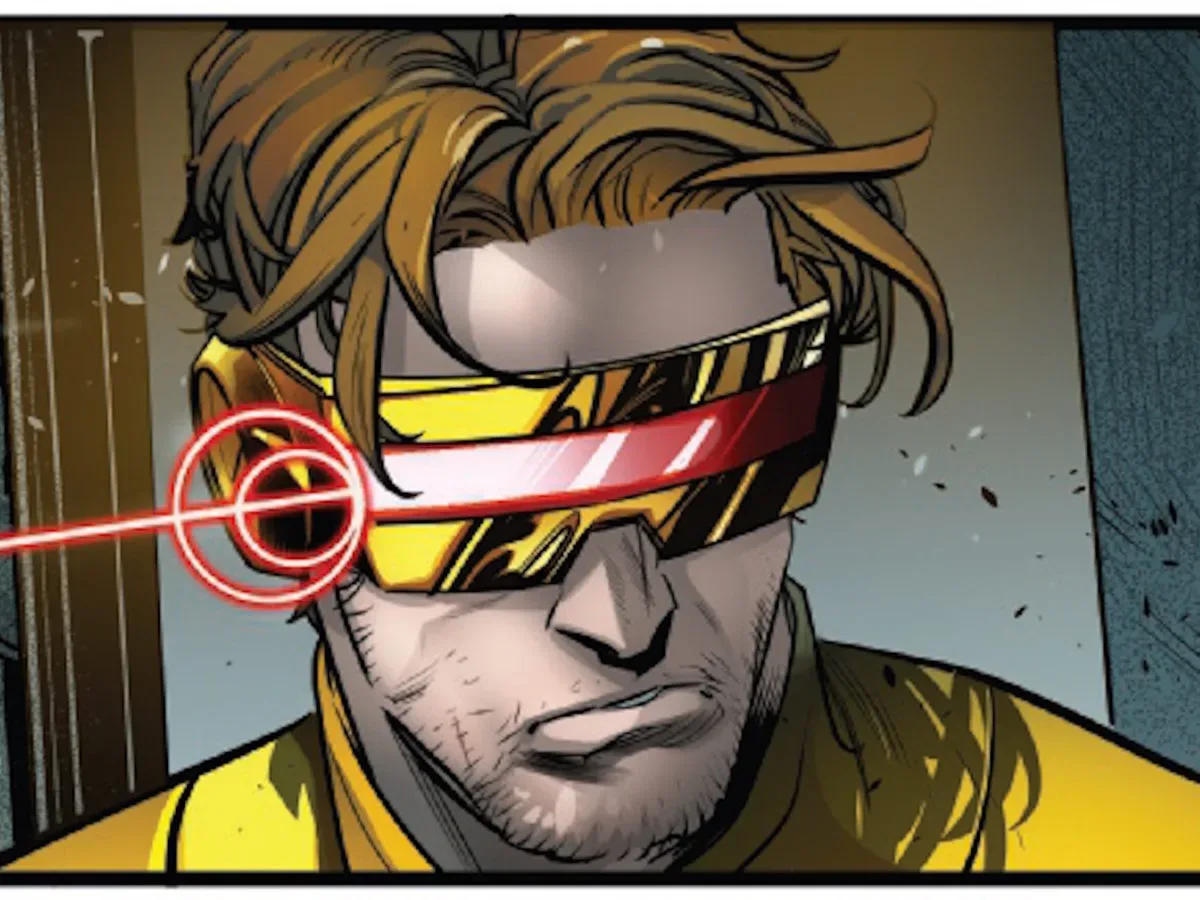
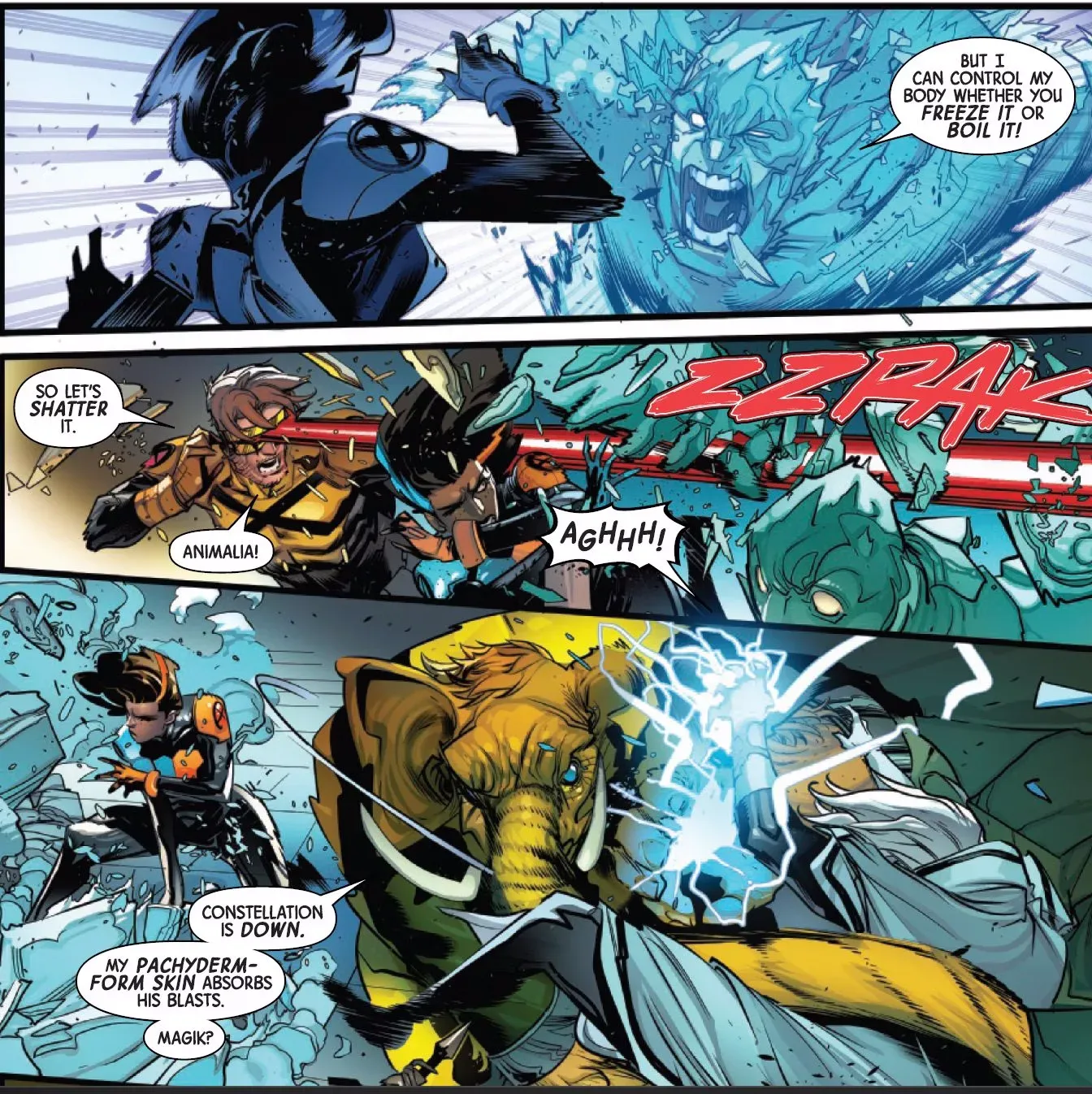
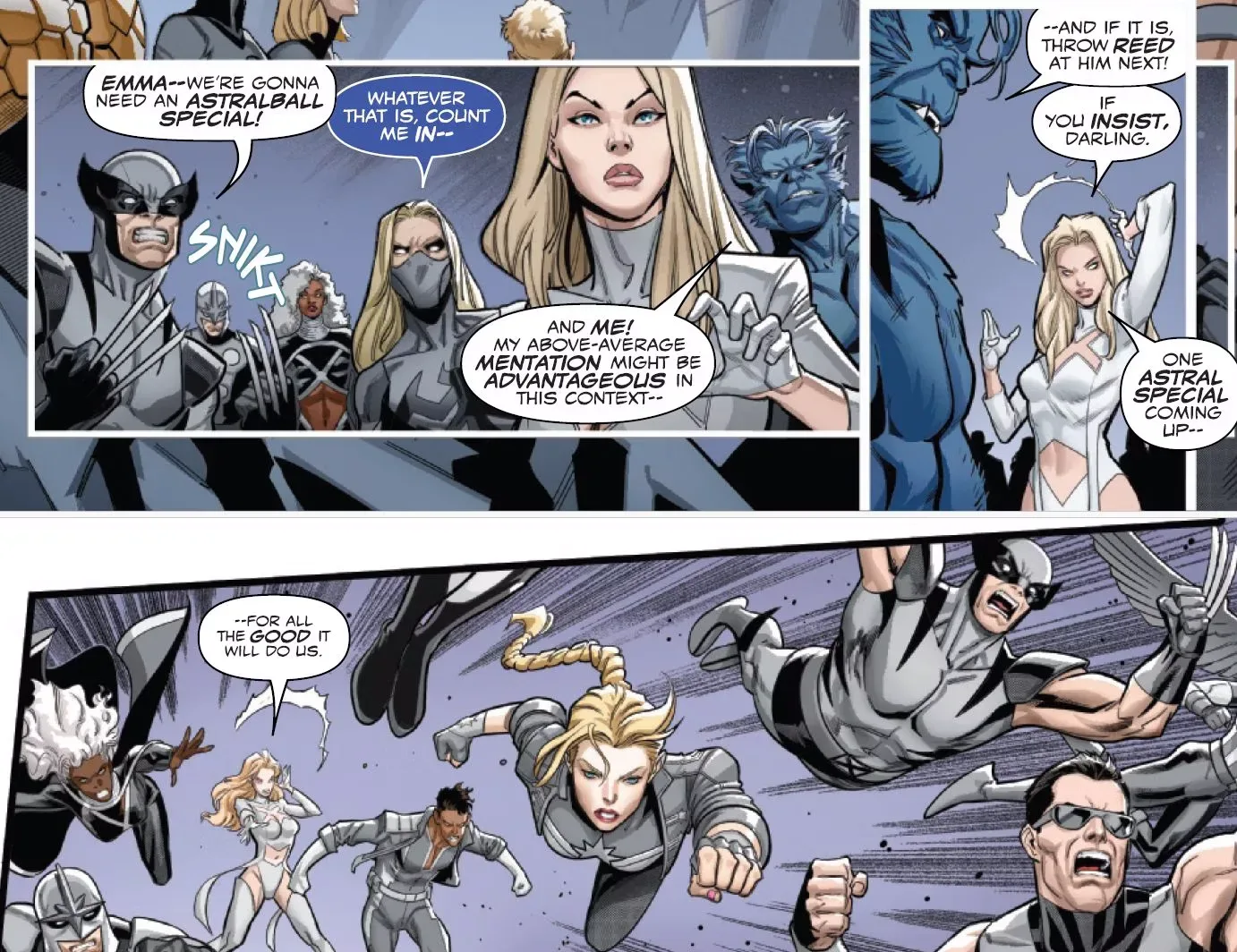
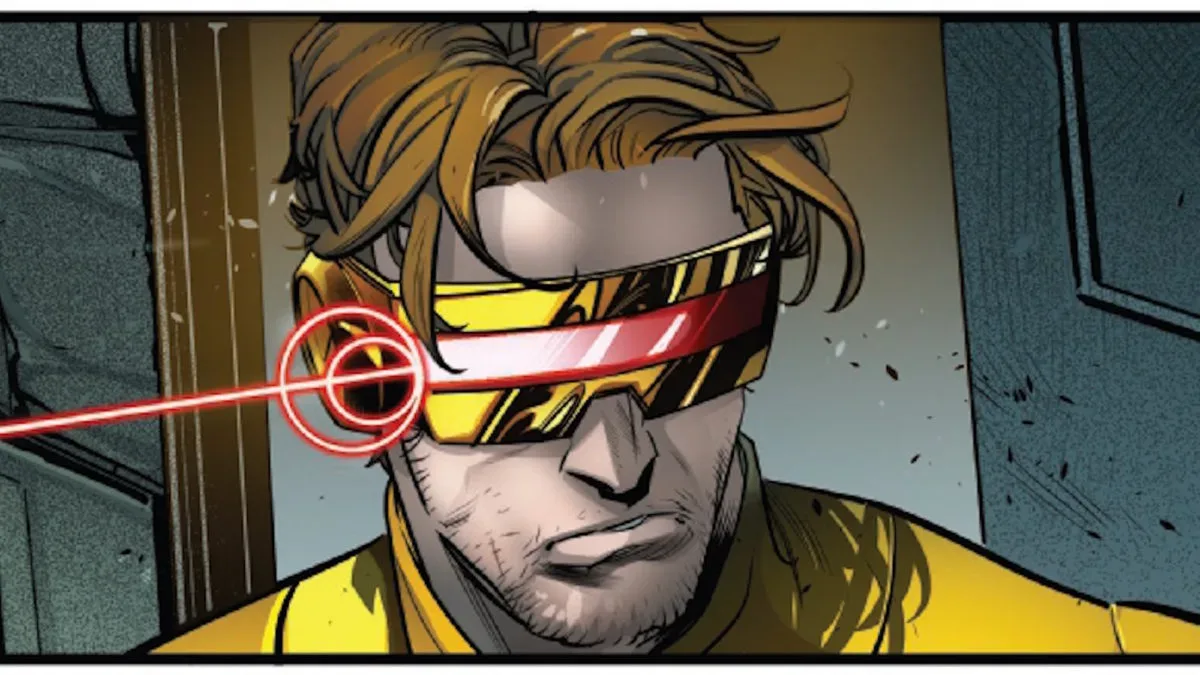
On the most visible front, Cyclops leads the X-Men against 3K high above Philadelphia, with members of the Fantastic Four aiding the struggle. The action has the feel of a decisive confrontation. The X-Men are described as beating the terrorist group with relative ease, and the plan for a mutant viral apocalypse seems to be frustrated through direct intervention at precisely the needed moment.
Then comes the reversal. The Chairman did not merely threaten an outbreak as a future possibility. He released the X-Virus 35 minutes earlier.
That precise time gap gives the cliffhanger a sharp procedural quality. It means the heroes’ tactical success may have been real, but it was not sufficient. They may have stopped the people in front of them, yet their enemy’s plan was designed to outlive a direct loss. In storytelling terms, a contingency is a backup action activated when a primary scheme fails. The Chairman’s contingency turns the climax from “Can the heroes win this fight?” into “Can they respond to damage that has already begun?”
The comparison suggested by the issue’s final sting is understandable: an apparent antagonist defeat gives way to the realization that the catastrophe was set in motion earlier. But the important takeaway does not depend on any outside reference point. The reveal is a warning against measuring an event solely by the physical contest at its center. The X-Men may land the winning blows, but the release of the virus makes those blows only one part of a broader emergency.
What readers should track after this chapter
- The X-Virus: Its release is the crossover’s biggest unresolved development. The available details establish that it is loose, but do not establish its full effects, spread, treatment or final target.
- Magneto’s recovery: Reed Richards and the revived Beast are trying to revive him while the Fantastic Four face an internal mission. Whether these efforts are directly coordinated, and what Magneto’s future-blood message says, remain central questions.
- The Fantastic Four’s escape: Their lack of memory and location inside Magneto turn their tie-in into more than a side adventure. They remain trapped as the main crisis escalates.
- The two Beasts: The opposition between the Avengers-era Beast assisting Reed and the Krakoan-era Beast serving as the Chairman gives the event a personal scientific and moral conflict beyond the larger X-Men-versus-3K fight.
- Cyclops’ next response: His team’s battlefield success now has to be translated into a solution for a threat that was activated before the apparent victory.
The result is an event installment built around a clever contrast: the outside battle is direct, forceful and seemingly winnable; the most important problems are invisible, internal or already in motion. It gives each title a distinct assignment without disconnecting any of them from the larger plot. DNX #2 supplies the disaster clock, X-Men #38 interrogates Magneto’s place in the future, and Fantastic Four #17 converts the rescue of one man into a surreal survival story.
DNX #2 is credited to Jed MacKay and Federico Vicentini. Fantastic Four #17 is by Ryan North and Vincenzo Carratu. The supplied publication details for X-Men #38 associate it with Tony Daniel and Netho Diaz, while the issue listing also identifies Jed MacKay and Tony Daniel; readers seeking creator-specific information may want to check the issue’s printed credits. All three issues are dated September 30, 2026, with a listed price of $4.99 each.
For more comics coverage beyond Marvel’s current crossover, see our look at the future taking shape in Wonder Woman Annual #1.
Shop the products
Check current price, model and availability at the retailer.