Warning: major story spoilers for Wonder Woman Annual: Wonder War – The Matriarch #1 and references to Wonder Woman #32 and #34 follow.
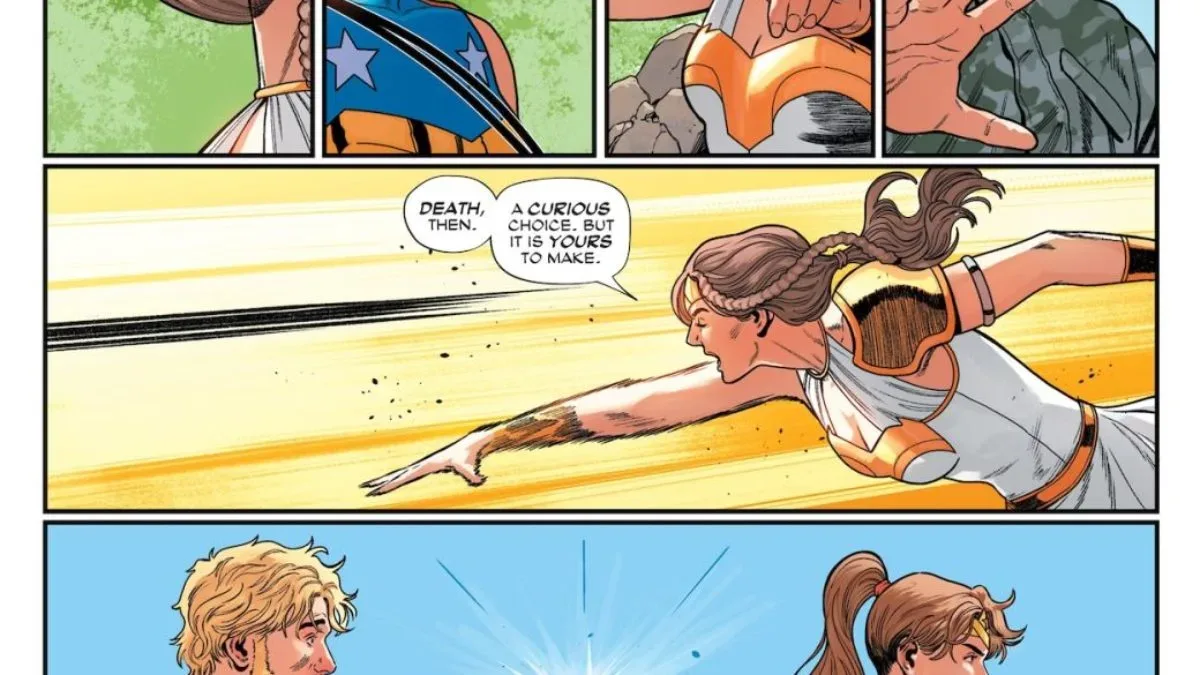
DC’s Wonder Woman Annual: Wonder War – The Matriarch #1 does more than place the Matriarch in another confrontation with the heroes around Diana. The annual gives readers a wider view of her path through time: from infancy in the present era to the powerful future incarnation known as the Matriarch, who operates as an agent of the Fates.
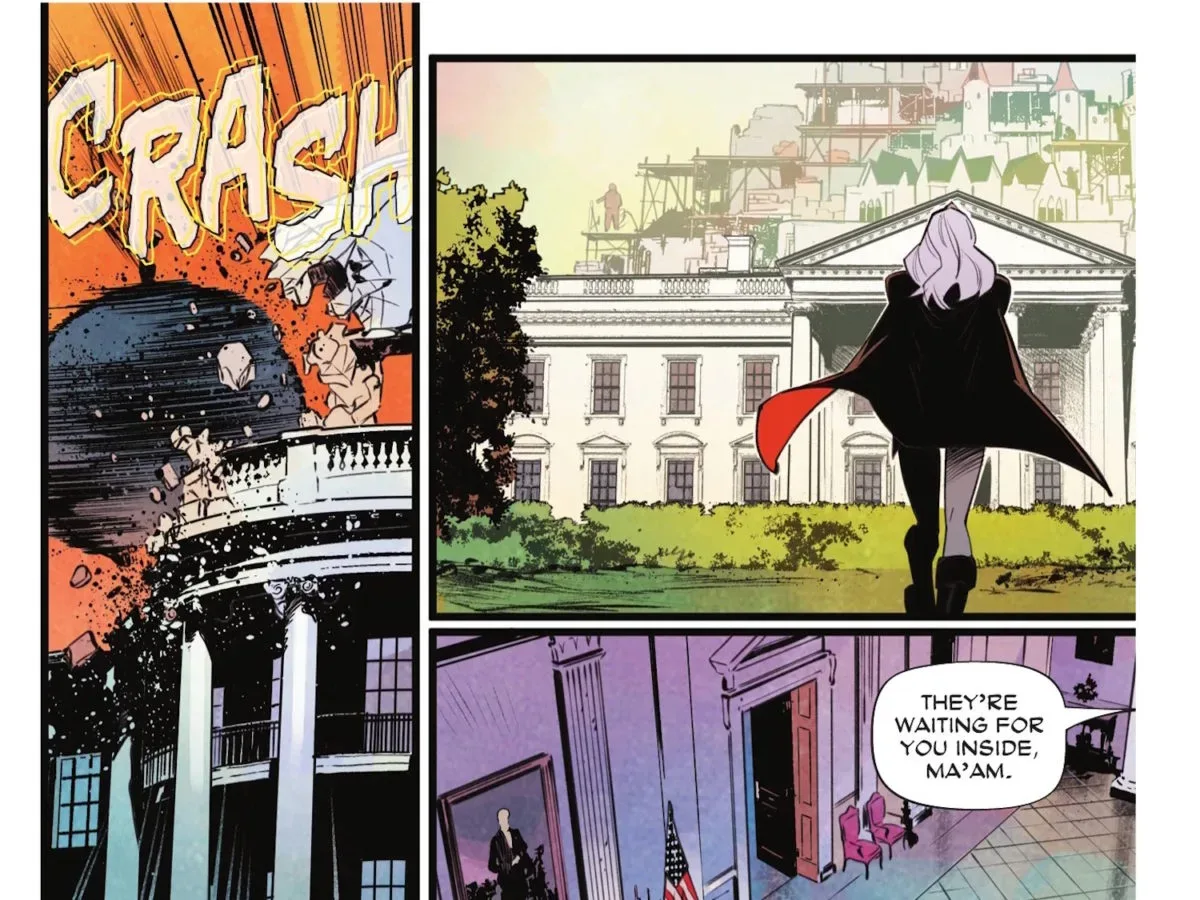
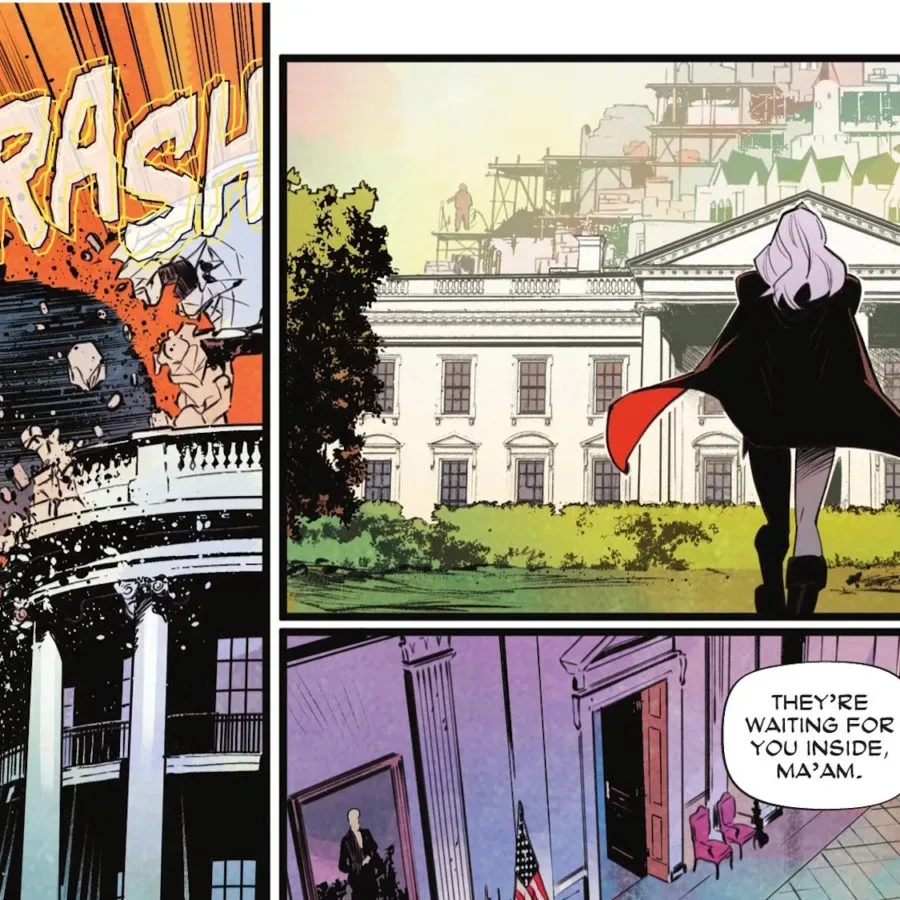
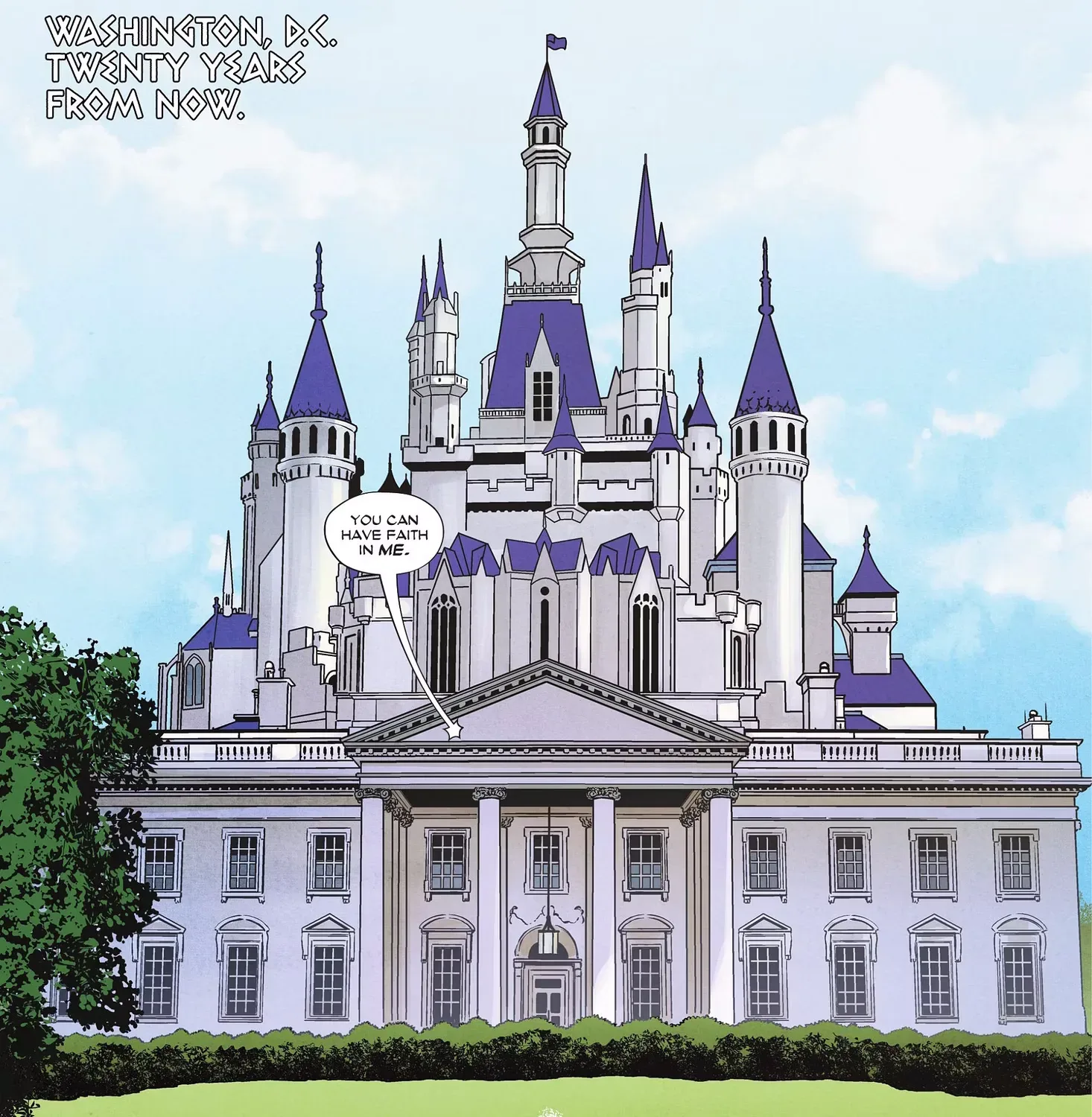
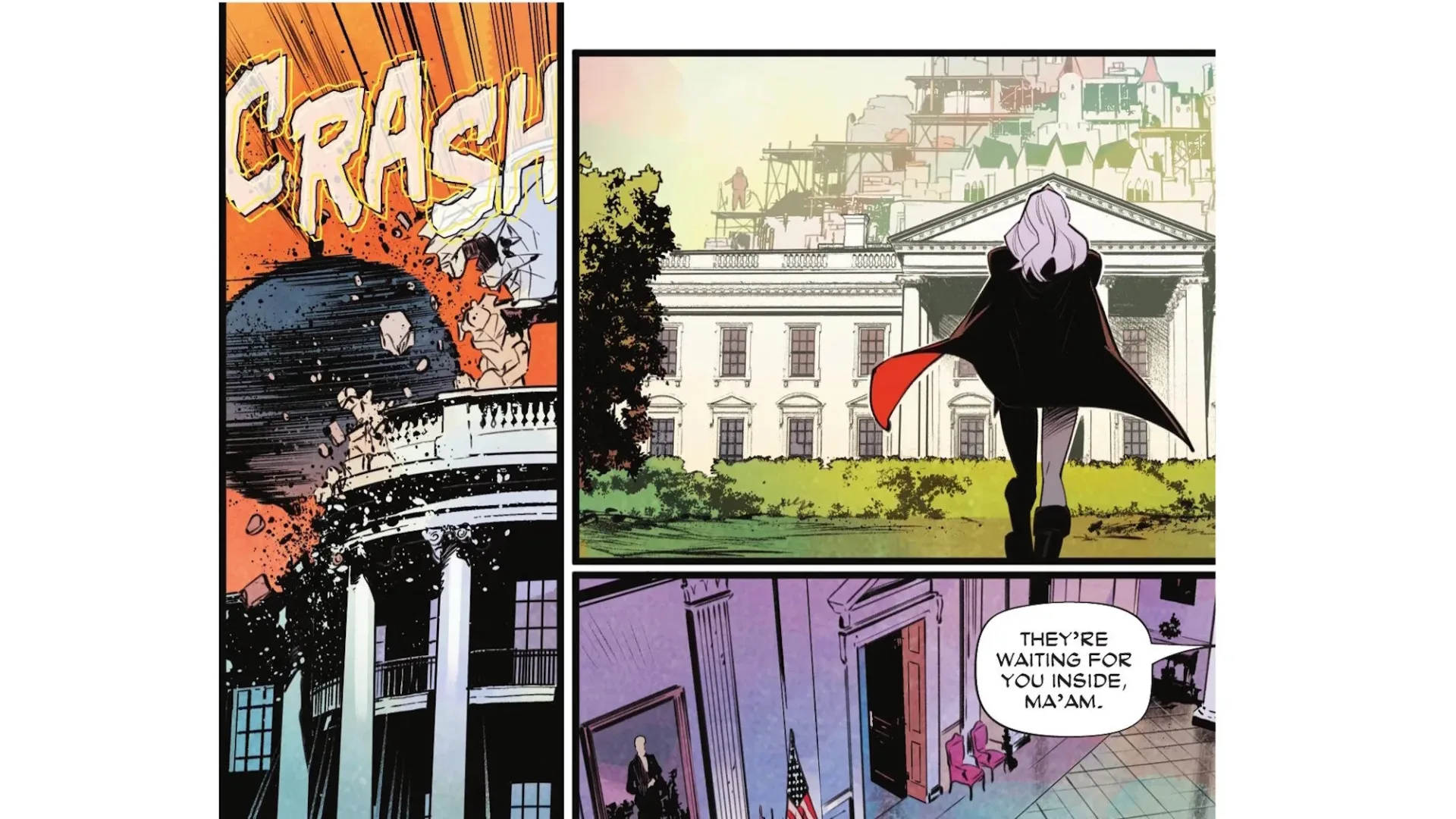
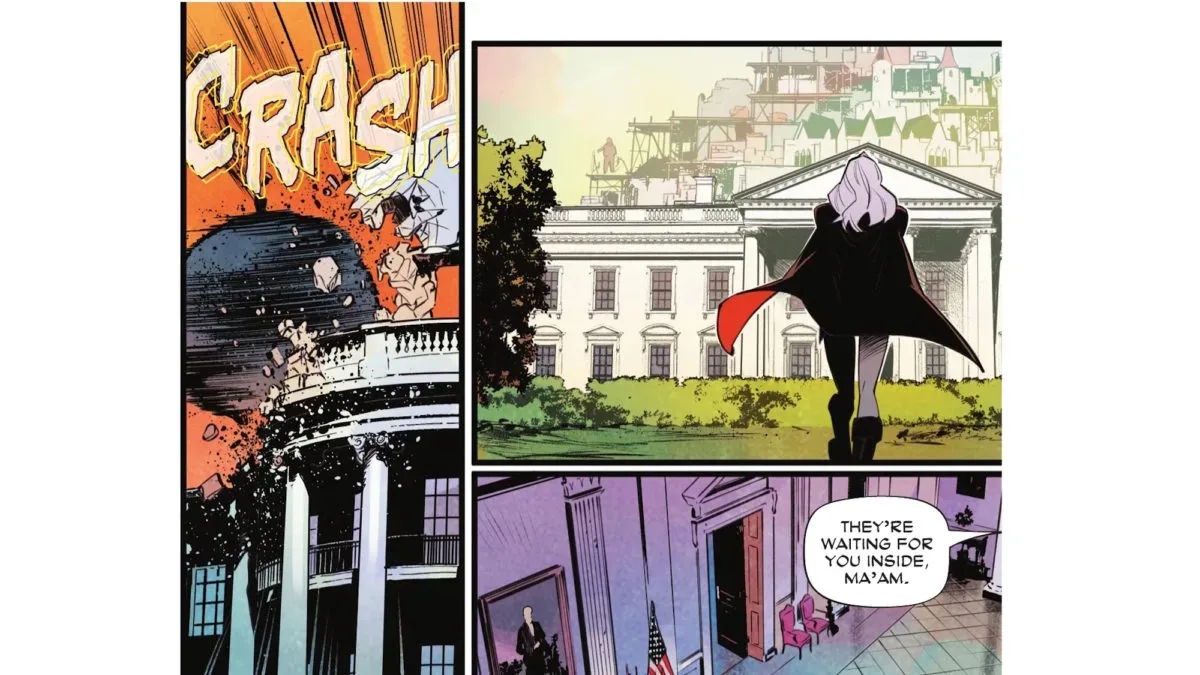
That larger timeline matters because the ongoing series has already offered a grim glimpse thirty years ahead. Wonder Woman #32, by Tom King and Daniel Sampere, showed a transformed White House, one apparently altered on an enormous scale. The annual now supplies more of the story behind that image. The Matriarch ultimately reaches the White House and remakes it into the center of her own rule—a personal Xanadu built through destructive ambition rather than a simple change of administration.
It is a superhero-comics image with a deliberately uncomfortable amount of real-world symbolism. A seat of American political power is not merely a useful landmark in this future; it becomes physical evidence of the Matriarch’s authority, ego and willingness to reshape public institutions around herself.
The Matriarch’s story is a time-spanning rise
The annual’s most substantial contribution is perspective. Rather than treating the Matriarch only as the imposing future threat readers have encountered, it tracks her at distinct points in life. The contrast between a baby in the present and the adult ruler seen decades later makes the future feel less like an isolated alternate-image splash page and more like a destination the narrative is actively mapping.
Her connection to the Fates is particularly important. In mythic and superhero storytelling, a figure associated with fate represents more than a conventional villain with a plan. Fate implies an outcome that characters may fear is unavoidable. The annual’s setup nevertheless keeps the central dramatic question alive: if the Matriarch’s future is known, can it still be changed?
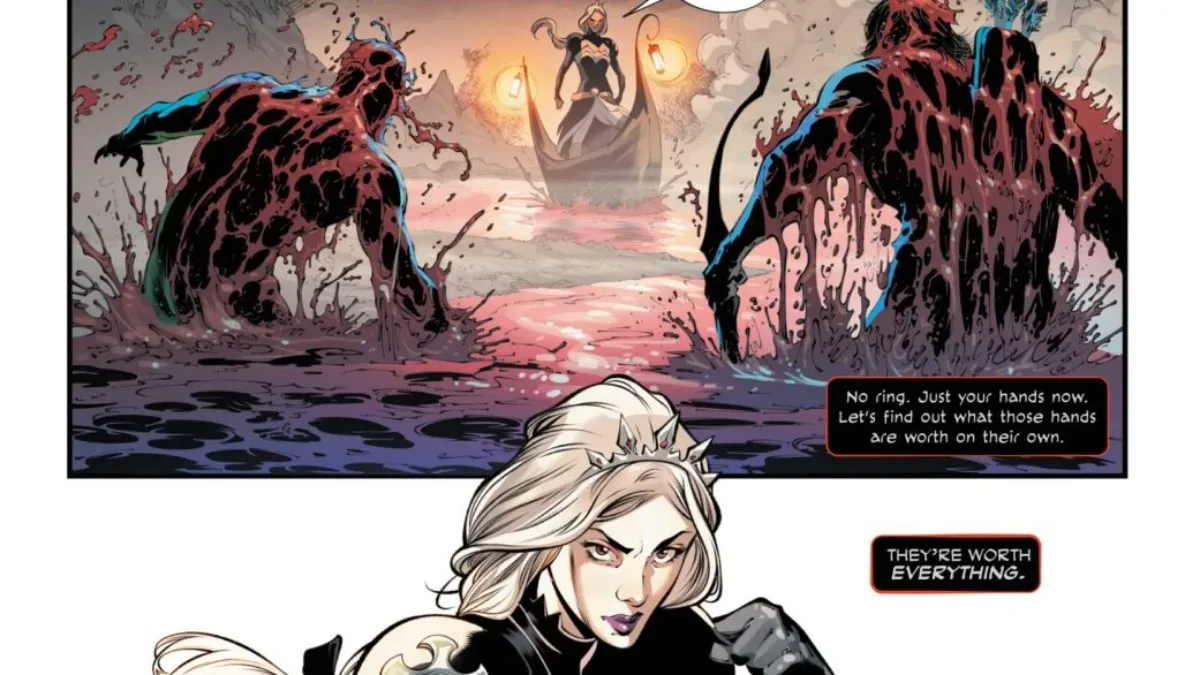
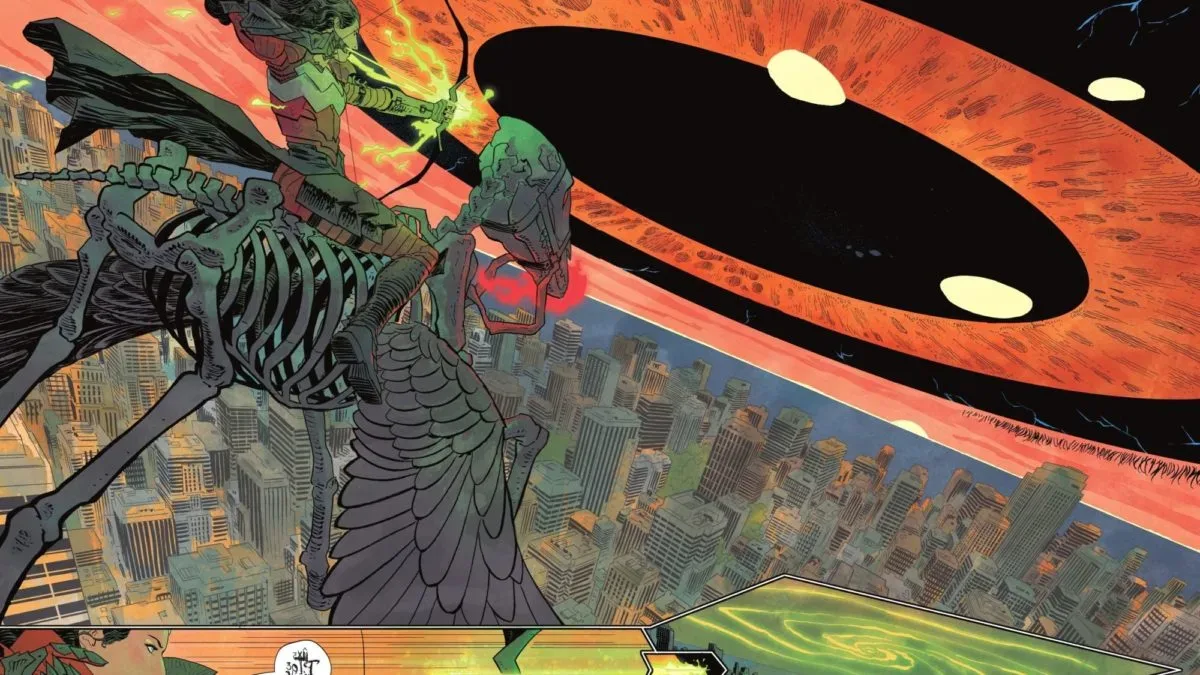
That question drives the issue’s stated conflict. Following the events of Wonder Woman #34, the Matriarch must make her way through Hell and return to the land of the living. Her objective is to prevent Steve Trevor and Trinity from changing the past. Waiting in her way is a river filled with the souls of heroes and villains who died at her hand, turning her journey into a confrontation with the consequences of her own actions.
The premise gives the annual a useful double pressure. On one level, the Matriarch is trying to preserve the chain of events that creates her. On another, she must answer to the damage that future has already caused. “Retribution” is therefore more than a vague threat: the dead are literal obstacles in her route, and the plot frames survival as uncertain even for someone aligned with the Fates.
Why the White House image carries so much weight
Superhero stories often communicate the scale of a villain’s victory by handing them a familiar city, fortress or planetary throne. The White House operates differently. It is a real-world building loaded with associations of democratic government, executive authority and national identity. Altering it in fiction sends a fast visual message that the normal order has not simply been defeated; it has been repurposed.
In the future presented by the Wonder Woman story, the Matriarch’s renovation is a statement of possession. Her ascent does not stop at entering the White House. She changes the structure itself and creates an extravagant domain in her own image. Calling it a Xanadu underscores the excess: the residence is no longer simply a workplace or a symbol of public service, but a monument to an individual’s power.
That imagery has also invited an overt political reading because it parallels discussion of real-world White House expansion and bunker construction. The comic does not need to duplicate reality for the allusion to land. Its point is visual and thematic: a leader’s architectural appetite can become shorthand for how that leader sees power—shared, constrained, or entirely personal.
There is a further irony in positioning this development within a Wonder Woman story. Diana’s mythos is frequently concerned with truth, compassion, justice and opposition to domination. A future in which a figure called the Matriarch turns a public institution into a private citadel is an effective counter-image. The title “Matriarch” might initially suggest care, community or lineage; the annual instead associates it with control, violence and a legacy built on bodies left behind.
Legacy heroes are part of the future, not background scenery
The annual also spends time on younger legacy superheroes who will become the adults of the future timeline. That detail gives the series’ long-range vision emotional stakes beyond the Matriarch herself. A future setting works best when readers can see who will inherit it, who might resist it and what was lost between the present and that eventual era.
“Legacy heroes” is comics shorthand for characters who carry forward a mantle, family connection, mission or heroic tradition established by earlier generations. The term does not only mean a replacement wearing the same costume. In a story such as this, it highlights continuity between generations: younger characters are not fixed in childhood forever, but future actors whose choices and conflicts will shape the wider world.
Wonder Girl and Nubia are among those who take issue with the Matriarch’s White House project. Their presence prevents the sequence from becoming merely an origin point for a dictator’s landmark. It establishes opposition within Wonder Woman’s orbit and reminds readers that the Matriarch’s version of the future has not gone unchallenged.
For the ongoing narrative, this is a significant distinction. A bleak flash-forward can feel predetermined if it presents only the villain’s victory. Showing future heroes, and showing their resistance, creates room for tension. The characters in the present may be trying to avert a known future, while their older counterparts contend with its consequences from inside that damaged world.
A future reveal that reframes earlier pages
The White House seen in #32 was already provocative because of its condition and what it implied about the future. The annual’s value lies in recontextualizing that earlier scene. Instead of treating the building as an unexplained visual of dystopia, the newer story ties it to the Matriarch’s ascent and her methods.
This is one of the strengths of serialized comics: an image in one issue can function as an unanswered question, then acquire a different meaning after later chapters reveal the people and choices behind it. The story is effectively filling in causal links. Readers know the destination—a White House radically altered in thirty years—and the annual provides more evidence of how the Matriarch gets there.
It also puts the annual’s time-travel stakes in clearer terms. Steve Trevor and Trinity are not trying to revise an abstract historical detail. They are challenging the conditions that lead to a future in which the Matriarch can seize and transform an emblem of national power. The outcome could affect not just one antagonist’s fate, but the lives and identities of the legacy heroes shown growing into adulthood.
That intergenerational structure is familiar to superhero fiction, but it is especially fitting for Wonder Woman. Her stories can move between present-day human institutions, mythic forces such as the Fates and long-lived heroic legacies. Here, the annual uses all three layers at once: a mythic antagonist and her destiny, a recognizably political symbol, and younger heroes whose future selves will have to live through the result.
What readers should take from the annual
Wonder Woman Annual: Wonder War – The Matriarch #1 is best understood as a bridge issue with real consequences for the series’ future-facing storyline. It expands the Matriarch from a distant threat into a character whose life is being examined across decades, reinforces the threat she poses to the world around Diana, and adds definition to the vision readers received in #32.
The annual’s Hell sequence adds another complication: the Matriarch is not presented as consequence-free simply because she has become powerful. The river of people she killed makes her past active and inescapable. Her attempt to stop changes to history is, at the same time, an attempt to secure a future in which those deaths and her dominance lead somewhere.
For readers following comics that use future timelines to put pressure on their present-day casts, the issue makes a clear promise. The adults of the dark future were once the younger heroes now appearing on the page, and the imposing White House was once a future image waiting for explanation. The Matriarch connects both threads.
Readers looking at another comics property wrestling with the challenges of revisiting established continuity may also be interested in the conversation around a reported Clone Saga series. The situations are very different, but both underline how much meaning audiences attach to continuity, legacy and the consequences of changing the past.
With Stephanie Williams and Leah Williams writing, Eduardo Pansica and Belen Ortega on art, and DC publishing the annual on September 30, 2026, Wonder Woman Annual: Wonder War – The Matriarch #1 makes the Matriarch’s future feel both larger and more specific. The transformed White House is no longer only an ominous glimpse of what is to come. It is a marker of a campaign for power—and of the heroes and history that may yet disrupt it.
Shop the products
Check current price, model and availability at the retailer.