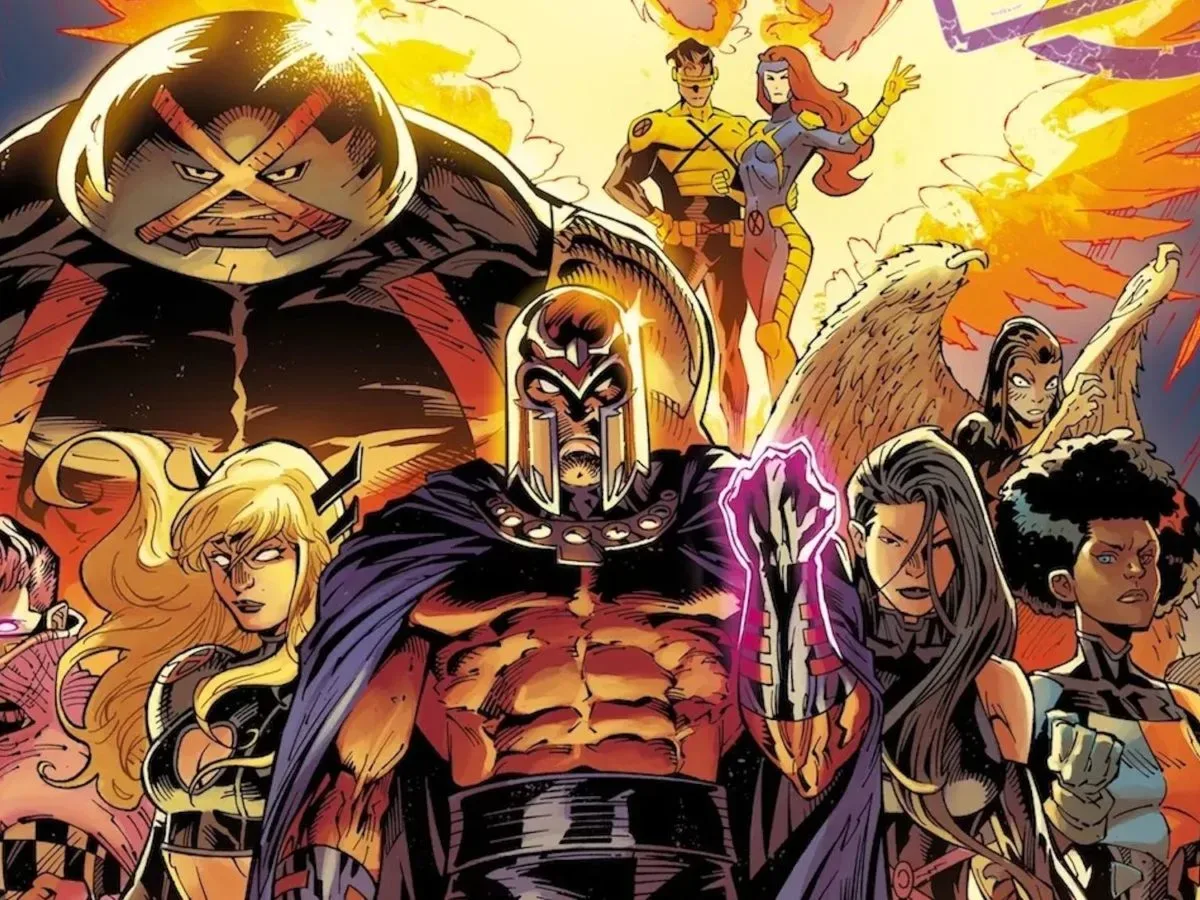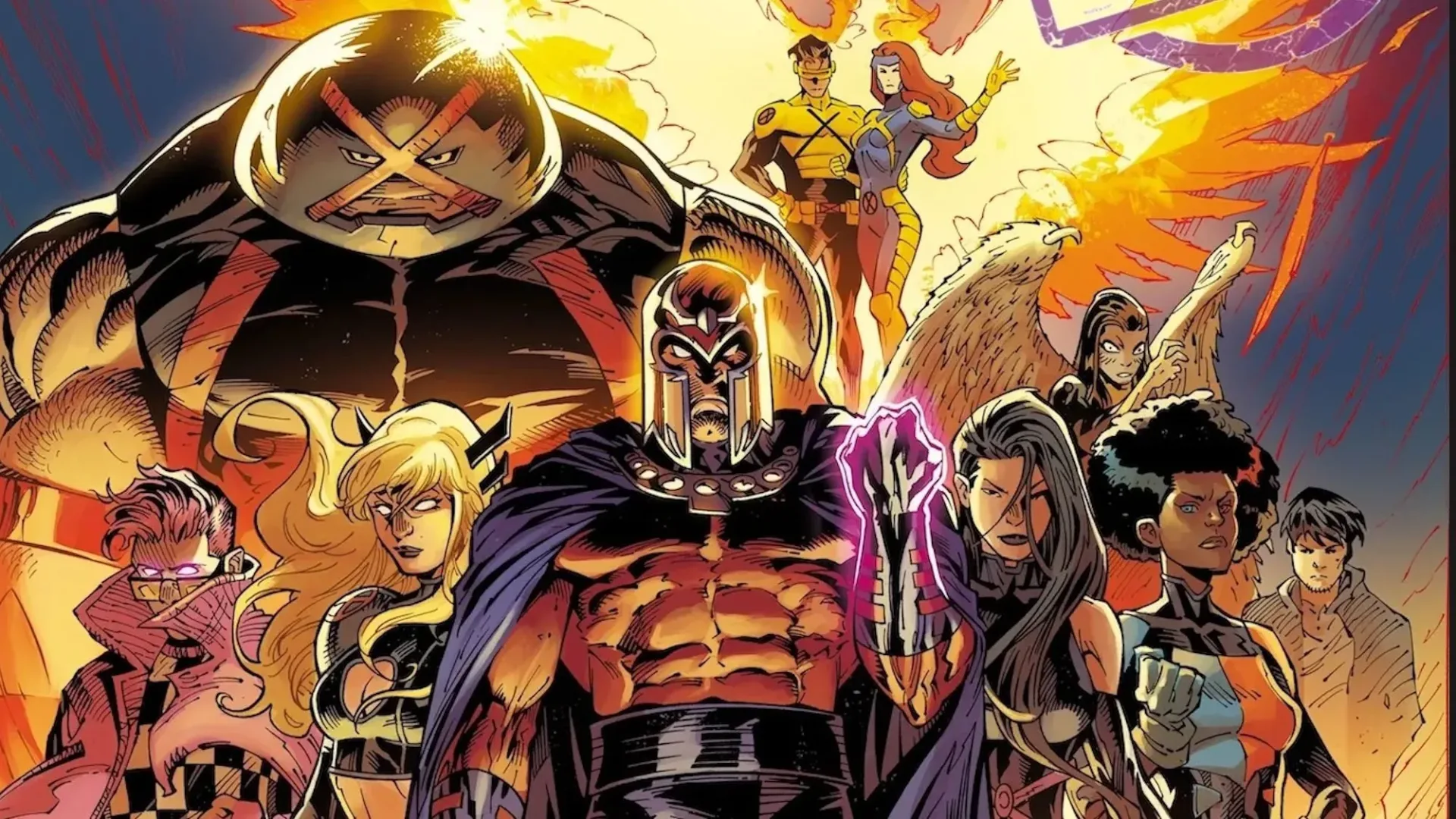
Marvel’s December 2026 X-Men lineup is positioning DNX as an event with consequences that will not be quickly waved away. The clearest signal comes in X-Men #42, which follows the event’s apocalyptic climax with the team gathering to remember a lost comrade. That wording deliberately leaves the identity of the fallen mutant unstated, but it establishes something more important than a routine cliffhanger: the X-Men are entering a period of grief while their larger problems continue to accelerate.
The two weekly issues of X-Men arriving that month, plus the second chapter of the new Jean Grey miniseries, build a tightly connected picture. A tragedy will hang over the team; Magneto is restored; Jean returns from space; and the X-Men in Alaska must apparently choose who leads them next. At the same time, Jean’s own title begins an ominous story in Merle, Alaska, involving an ancient and dangerous presence.
There is much that the solicitations do not reveal. They do not confirm the deceased character, explain precisely what restores Magneto, or say what DNX has done to the X-Men’s status quo. Still, the material provides enough to identify the questions likely to define this stage of the line: who has been lost, whether the group can stay together after DNX, and what Jean and Magneto each mean for a team already crowded with powerful personalities.
A memorial after DNX, but no pause for the X-Men
X-Men #42, by writer Jed MacKay and artist Vincenzo Carratù with a cover by Netho Diaz, is scheduled for December 9 at $4.99. Its premise is plain about the emotional fallout: in the aftermath of DNX, the X-Men have suffered a tragedy and meet to honor a comrade who is gone. But the story description immediately adds that the world will not stop to let them mourn, as events already set in motion continue to build.
That is a familiar but effective structure for an ensemble superhero book. A memorial gives the cast a moment to state what the absent teammate meant to them, expose old disagreements, or reconsider plans that the deceased character influenced. The accompanying escalation makes sure the issue is not simply a pause between event chapters. The X-Men will seemingly have to make decisions while their judgment is compromised by shock and loss.
One major contextual detail raises the stakes: the Krakoan Resurrection Protocols are no longer available. In broad terms, those protocols were a means by which deceased mutants could be brought back, making death in that era different from a normal comic-book loss. Their absence does not prove that a death can never be reversed by any other narrative device, and the solicit does not make that claim. It does mean readers should not assume that an immediate restoration is built into the X-Men’s current world.
That distinction matters for the wording “lost comrade.” It may be intentionally vague rather than a definitive statement of permanent death. Yet it is substantially more serious than a temporary disappearance or a character merely being sidelined. The issue is being marketed around remembrance, tragedy and the consequences of DNX—not merely around a mystery to be solved in the next few pages.
Who might the fallen comrade be?
At this point, the identity is speculation, not confirmation. One plausible candidate is The Chairman, identified as DNX’s leader and as the Krakoan-era version of Beast. That version’s status is particularly complicated because an Avengers-era Beast has already been resurrected in the main books. If the character mourned after DNX is The Chairman, the story could explore a loss that is emotionally real to the team even when another incarnation of Hank McCoy exists elsewhere.
This is an important bit of comic-book terminology. A character’s “version” or “era” can matter as much as the name on the cover when continuity contains multiple iterations created by radically different circumstances. Two Beasts need not have the same recent experiences, moral record or relationships. The available information does not establish that The Chairman will die, nor does it establish that he is the only candidate. It simply makes him a notable possibility given his central connection to DNX and his roots as an X-Men founder.
Readers should also be cautious about treating the word “comrade” as a clean roster clue. It is emotionally expressive language, and it could encompass someone who is controversial, estranged, recently allied with the team, or connected to its longer history. The story’s eventual point may be less about guessing a name correctly than about how a group reacts when one of its defining figures is removed from the board.
Magneto and Jean Grey return to a leadership question
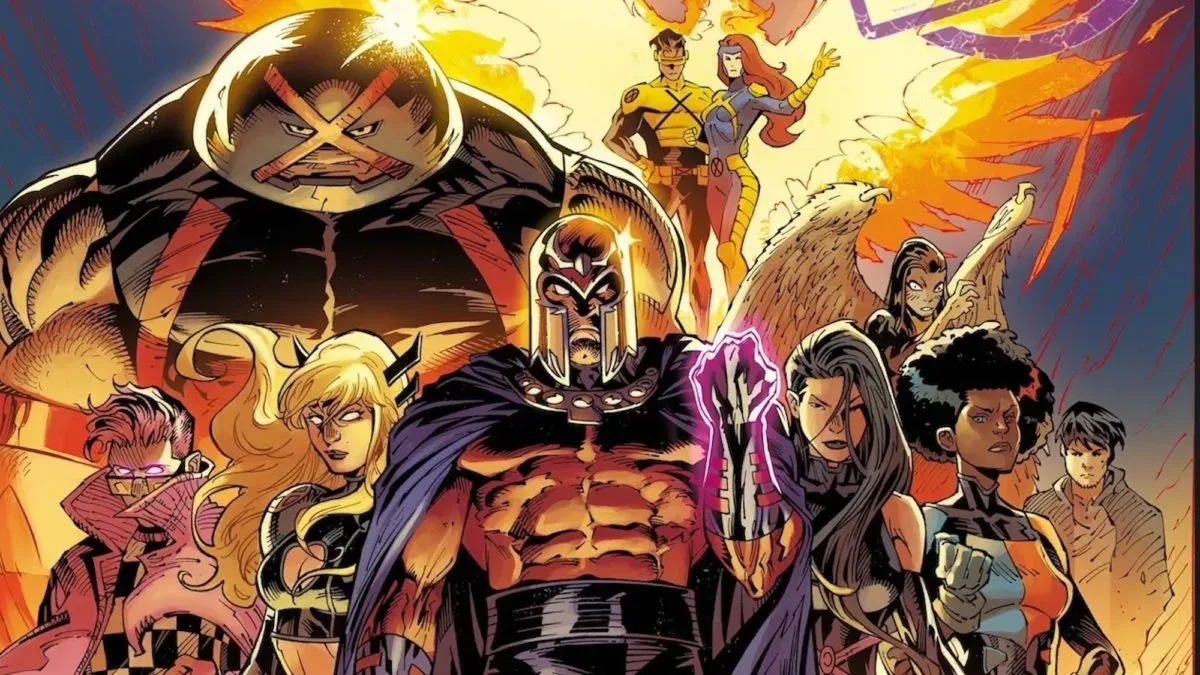
The next issue, X-Men #43, arrives December 23 for $4.99 and keeps MacKay, Carratù and Diaz together. Its selling point is a major shift in the team’s makeup: Magneto is restored, while Jean Grey returns from space. With both characters back in play and competing perspectives within the team, the X-Men must decide who will lead them. The solicitation frames the choice in distinctly electoral language, telling readers to mark their choice on the ballot with an X.
That wording suggests a leadership dispute or selection process rather than a straightforward appointment. It does not say there will be a literal in-story election, identify the candidates, or explain the rules of any vote. But it clearly connects the post-DNX tragedy to the practical issue of authority. A team can agree that it has been hurt and still disagree profoundly over what comes next.
MacKay has described Magneto as stepping into a more active role among the X-Men. He also said that Jean will encounter a team very different from the one she knows, making her adjustment a key part of the story. In MacKay’s description, Jean’s outlook differs from Scott’s: where Scott brought his X-Men together to keep them from going wrong, Jean sees people who can be encouraged to do better.
“But Jean is also a character who believes in redemption,” MacKay said of the direction. “While Scott gathered his X-Men to keep them from going wrong, Jean would see this group as people who can be encouraged to do better.”
That is a useful lens for the leadership setup. The conflict may not be reducible to a contest of raw power—although Jean and Magneto undeniably bring enormous presence to any room. Instead, it can be about what the X-Men are for after an apocalypse: containment, rehabilitation, defense, governance, or some combination of all four. Jean’s belief in redemption could put her at odds with a team shaped by fear of its own members failing again. Magneto’s renewed prominence adds another forceful perspective at the exact moment the group is being asked to chart a new course.
Alaska is the setting explicitly named for the team’s fateful choice. That shared location also makes Jean Grey #2 feel less like a detached side story and more like another angle on the same unsettled period.
Jean Grey #2 brings an ominous problem to Merle, Alaska
Jean Grey #2, the second of five issues, is due December 30 at $4.99. MacKay writes, Rogê Antônio provides the art, and Joëlle Jones supplies the cover. The issue follows Jean after she has landed from her time in space and reunited with the X-Men. While she considers what being back on Earth means for her, something threatening stirs in Merle, Alaska: an ancient, cold and dangerous presence.
The description is intentionally atmosphere-first. It does not name the force, reveal whether it is a person, creature, location or phenomenon, or say how it ties into DNX. “Insidious” implies a threat that works through secrecy, corruption or gradual infiltration rather than simple open conflict. “Ancient” and “cold” establish the tone, but they are not enough to identify an existing villain or storyline without overreaching.
Its placement after the leadership-focused X-Men #43 is potentially significant, however. Jean may be processing the team’s loss and her changed place within it while a separate threat develops nearby. A solo series can provide space for a character’s internal response that a large team book cannot always afford, especially when the main title is simultaneously covering a memorial, returning figures and a major decision.
For readers who want another upcoming comic mystery with a very different setup, Ghost of a Ghost #1’s psychedelic spy premise offers a separate genre-flavored case to follow.
December 2026 reading order and what it means
- December 9: X-Men #42 — DNX’s aftermath begins with the team mourning a lost comrade.
- December 23: X-Men #43 — Magneto is restored, Jean returns, and the X-Men face a leadership decision in Alaska.
- December 30: Jean Grey #2 — Jean confronts the implications of her return as an unidentified danger emerges in Merle, Alaska.
All three issues are priced at $4.99. The order makes the immediate shape of the month fairly clear: mourning comes first, a decision about the team’s future follows, and Jean’s individual thread continues with a new local threat. What remains unclear is whether the Alaska mystery directly grows out of the leadership story, whether it is the next consequence of DNX, or whether it will stand on its own until later issues connect the dots.
The solicits are strongest when read as a promise of instability rather than as a final list of answers. DNX appears set to remove someone important from the team’s orbit. Magneto and Jean will arrive at a moment when the X-Men cannot avoid defining who has the authority to lead. And Jean’s return does not sound restful; it begins with reckoning, uncertainty and danger close to the team’s new focal point. The eventual identity of the lost comrade is the obvious mystery, but December’s broader story may be the X-Men deciding what kind of family they can still be after the loss.