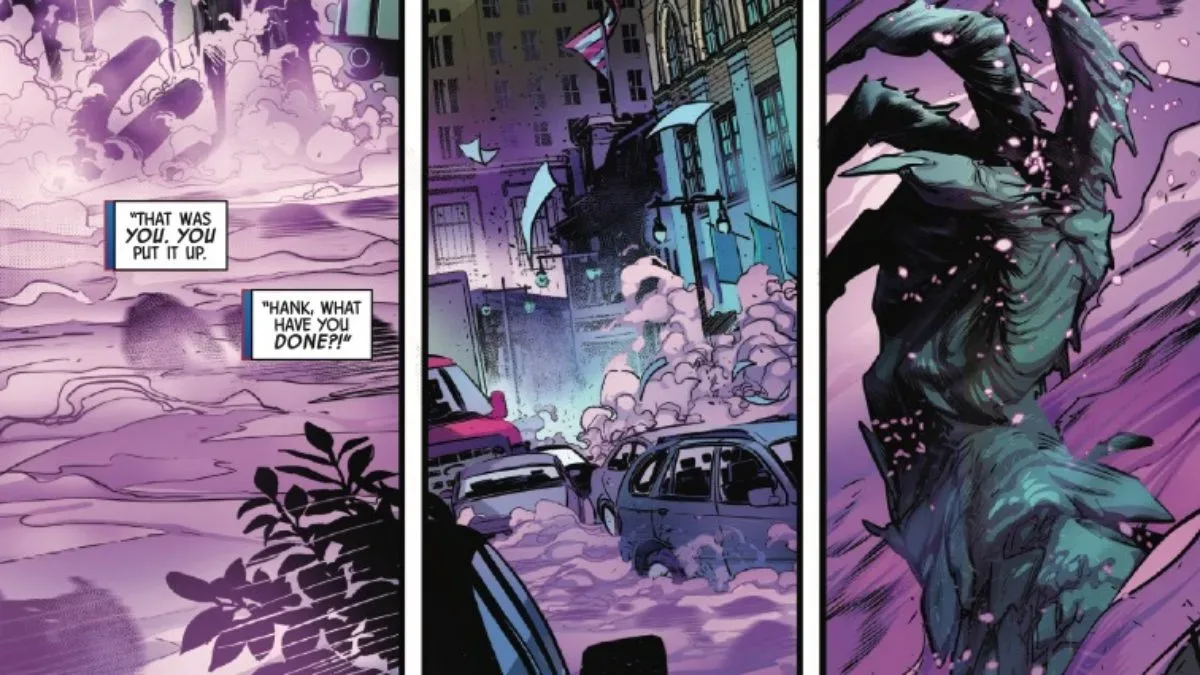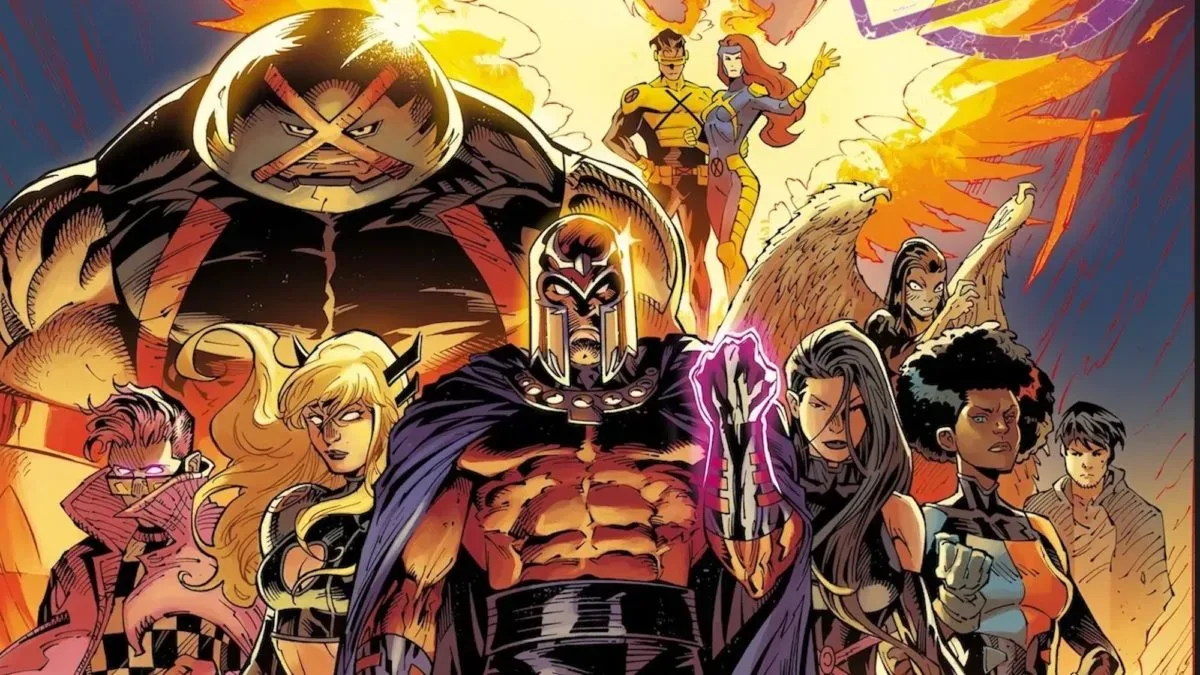
Marvel’s X-Men #40 is set to put Psylocke at the center of a tightly focused, high-pressure mission. Arriving October 28, 2026, the 32-page issue is billed as a DNX tie-in and sends the psychic mutant aboard what may be a “flying tomb,” where she is alone, tracking a mysterious monster and looking for answers that may only create more questions.
That is a deliberately compact premise, but it establishes a great deal about the kind of X-Men story this installment appears positioned to tell. Rather than a broad team operation with multiple simultaneous threats, the solicitation points to isolation, pursuit and uncertainty. Psylocke is not merely fighting an identified enemy; she is stalking something unknown in a hostile setting whose very description suggests danger before the hunt has even begun.
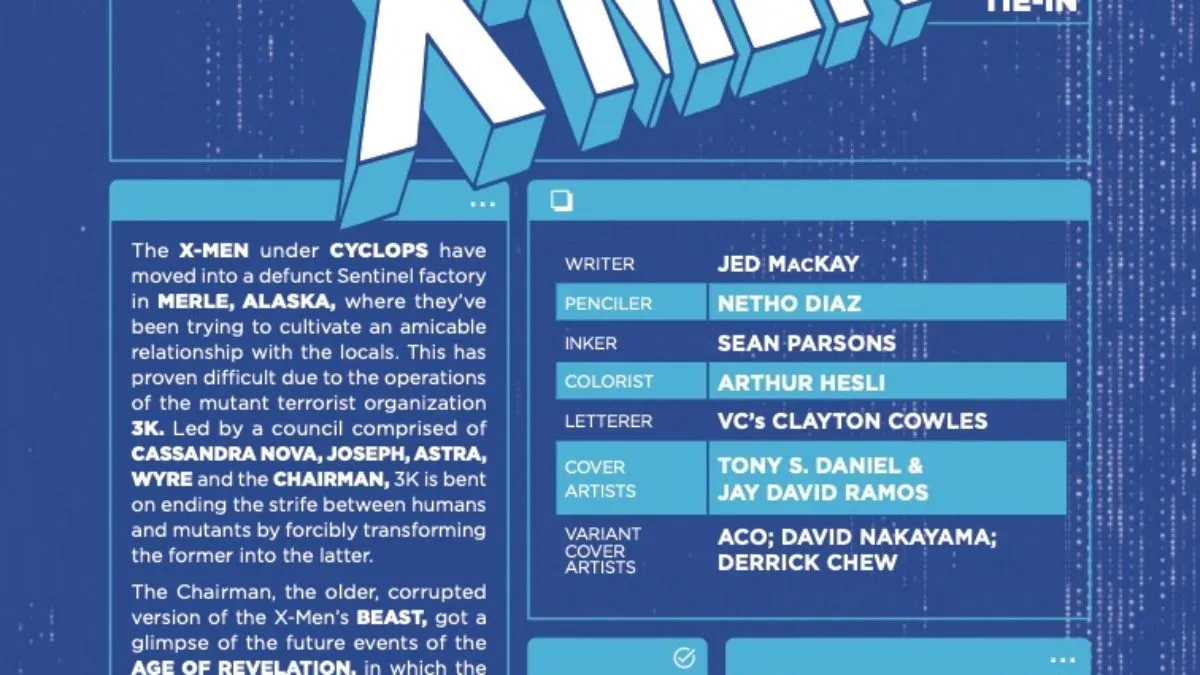
Jed MacKay writes the issue, with Tony Daniel handling interior art and the main cover. Marvel lists it at $4.99 in the US, rated T+, with two additional $4.99 US variants: a Pere Pérez DNX variant and a Simone Di Meo art-style variant.
A one-character mission with room for larger questions
The phrase “solo mission” matters here. X-Men comics often derive momentum from the friction and cooperation of a team: characters bring different powers, outlooks and priorities to a crisis. Removing that support system changes the shape of the story. Every decision rests more directly with Psylocke, and every threat has fewer immediate answers or safeguards.
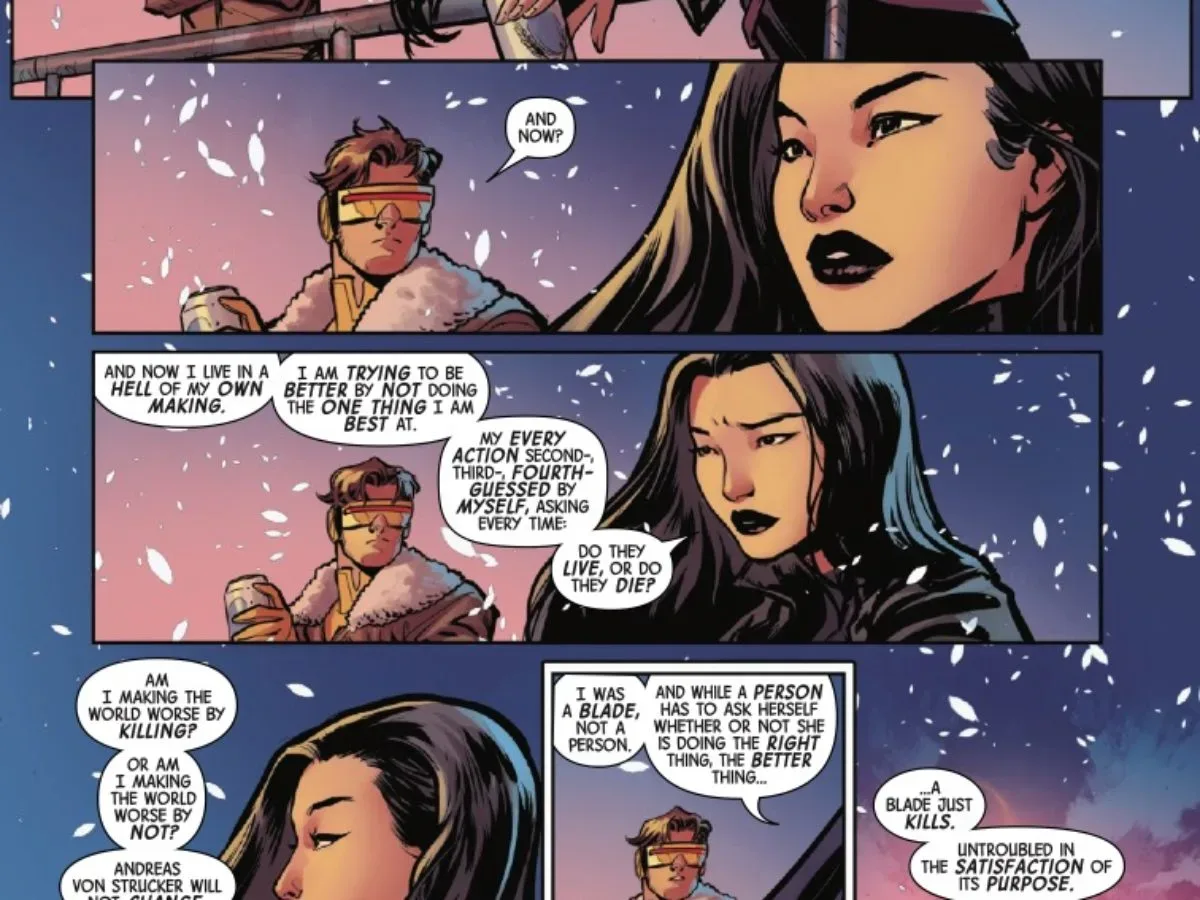
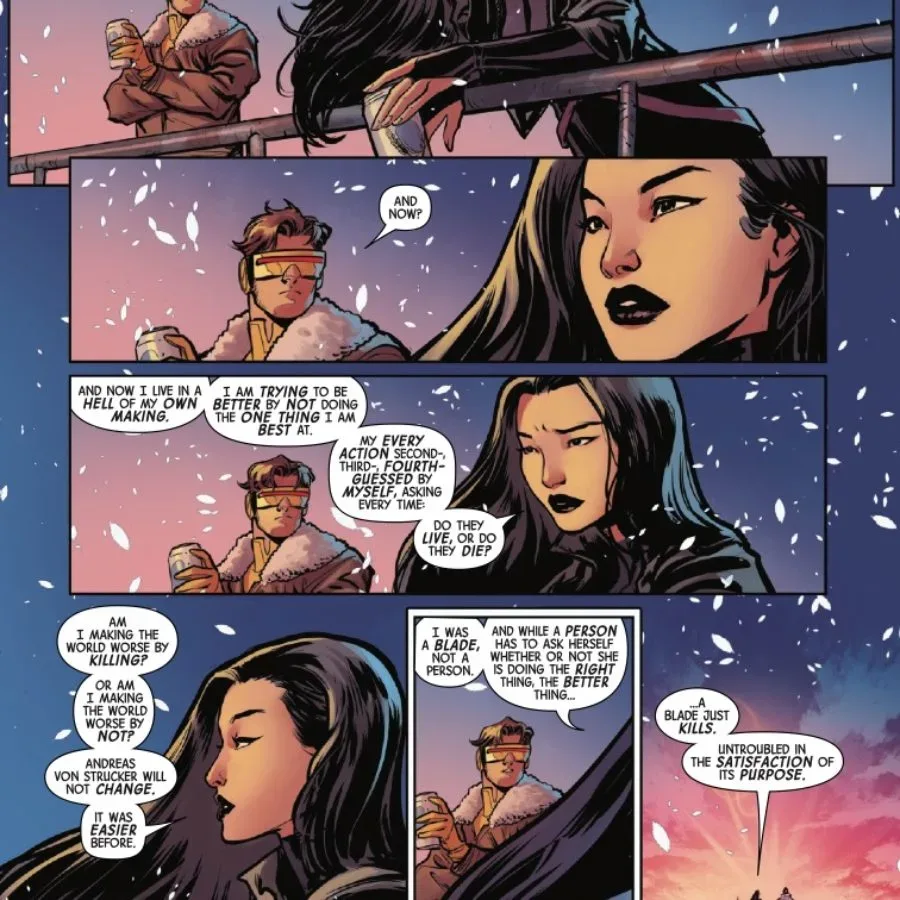
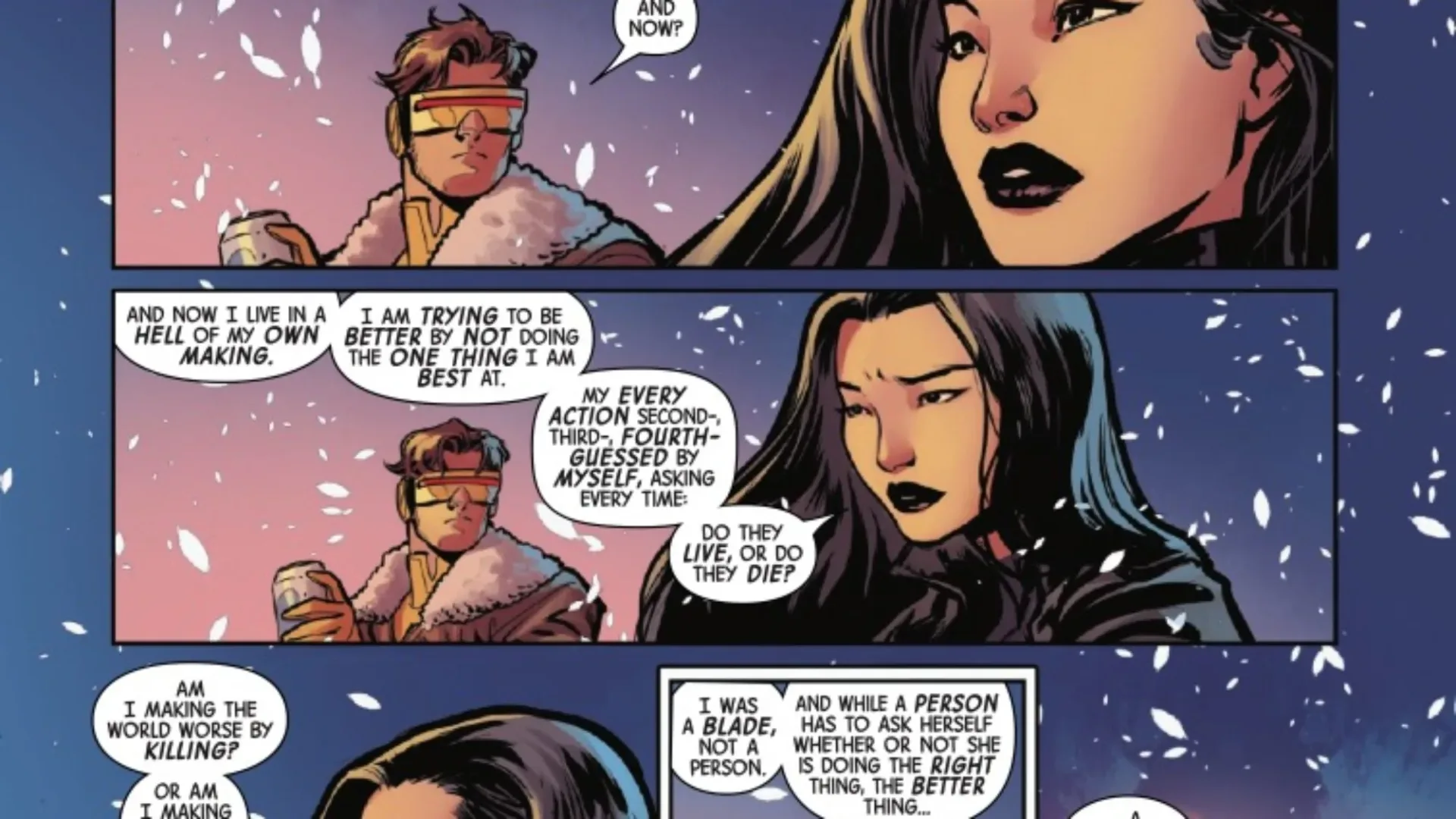
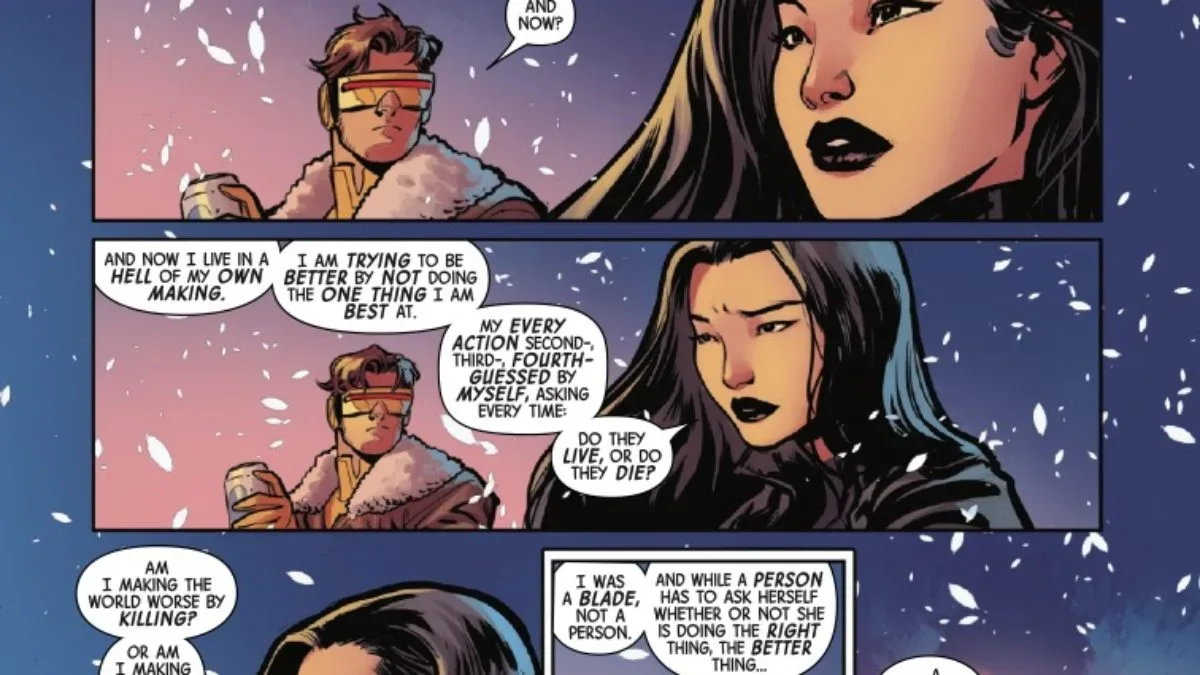
The preview material frames that solitude as more than a logistical problem. Psylocke is shown confronting questions about identity and whether what she does actually makes the world better. Those are not the same question. One concerns self-definition: whether she sees herself as an instrument, a person, or something caught between those ideas. The other concerns consequence: whether decisive and violent action produces meaningful improvement rather than simply a temporary victory.
There is no indication that the issue will resolve either question neatly. In fact, the official setup explicitly warns that its answers could generate further questions. That signals a mystery built around discovery rather than a straightforward “find creature, defeat creature” structure. The monster may be the immediate danger, but the issue’s tension appears likely to come from what the encounter means for Psylocke and for the information she is seeking.
What the “flying tomb” setup can accomplish
A flying tomb is evocative language, and the solicitation leaves its exact nature unexplained. Still, as a story environment, it immediately creates useful pressure. It is enclosed, remote and potentially fragile. If the vehicle is in danger, then escaping may be as difficult as confronting the thing aboard it. If it is truly tomb-like, the setting may also imply death, confinement, old secrets or a mission from which returning is uncertain.
The wording is intentionally conditional: Psylocke is on what could be a flying tomb. That preserves a central unknown. The vessel may be doomed, it may only seem doomed, or the description may chiefly reflect Psylocke’s perception of the situation. Readers should not treat the phrase as confirmation of a crash, fatalities or the true identity of the monster. The available details establish atmosphere and stakes, not plot answers.
That restraint is part of why the premise is effective. A monster hunt works best when the monster remains a question for at least part of the story. “Mysterious monster” does not specify an origin, ability, allegiance or even a fixed relationship to Psylocke’s mission. The lack of definition makes the threat flexible: it could be a physical adversary, an obstacle protecting the answers she wants, or a presence connected to the personal issues raised in the preview pages.
Psylocke’s identity is the issue’s apparent emotional engine
The supplied preview description emphasizes that Psylocke is grappling with whether she is a blade or a person. In superhero fiction, “blade” is a loaded metaphor. It suggests someone shaped to perform a function—often combat—rather than someone allowed to decide who they are and what their power is for. The contrast with “person” is not about whether Psylocke is literally human; it is about agency, conscience and the right to be more than a weapon.
Placed beside the question of whether she improves the world, that metaphor becomes more complicated. A blade can be useful, precise and effective, but it does not choose its target. A person can choose, but must also carry the moral weight of that choice. A solo mission aboard an ominous vessel is a fitting place to bring those pressures together: without a team visible in the premise, Psylocke has less external structure to define the purpose of her actions.
This does not mean the comic is necessarily abandoning action for introspection. A stalking scenario is inherently physical, particularly when a monster is involved. The more promising implication is that action and reflection may be linked. The threat can force choices, and those choices can test the self-conception Psylocke is already struggling to articulate.
For readers following Marvel’s wider mutant line, the issue’s tie-in status makes it part of the DNX publishing thread, though the provided information does not define what DNX entails or identify the broader plot around it. The reliable takeaway is simply that X-Men #40 connects to that banner while retaining a distinctly Psylocke-led scenario.
Creative team and edition details
MacKay and Daniel are the credited creative leads for X-Men #40, with Daniel also providing the main cover. The listing identifies the standard issue as 32 pages, in the usual comic-book dimensions, and rated T+. For readers who collect by cover rather than solely by story, Marvel has also listed two variants:
- X-Men #40 Pere Pérez Variant [DNX] — $4.99 US / $6.25 CAN
- X-Men #40 Simone Di Meo Art Style Variant [DNX] — $4.99 US / $6.25 CAN
The distinction is important for collectors and readers planning a pull-list: these are variant cover editions, not separate story chapters based on the details currently available. Anyone seeking the interior story rather than a particular cover can look for the standard edition; anyone collecting the DNX-branded Pérez cover or Di Meo’s art-style variant will want to confirm the specific edition with their comic shop.
This is also a useful moment to separate what has been announced from what has not. The issue has a release date, price, page count, rating, premise, credited writer and artist, and named variants. The current details do not disclose the monster’s identity, the answers Psylocke is seeking, how long the solo mission lasts, or the specific nature of the danger facing the vessel. Those absences are story hooks, not gaps that need speculative answers.
Where this issue sits for mutant-comic readers
The immediate appeal of X-Men #40 is its narrow focus. Tie-in comics can sometimes sound expansive by default, but this one is introduced through a single character’s perilous assignment. That makes it potentially accessible on a basic premise level: Psylocke enters a dangerous airborne location, hunts an unknown creature and confronts uncomfortable questions about herself. At the same time, its DNX label indicates that readers invested in the connected mutant storyline may find additional relevance beyond the self-contained mission.
It also arrives amid another mutant mystery featuring familiar faces. Tomb of Apocalypse #3 similarly places Jubilee and Wolverine within a dangerous unfolding mystery, although its available setup concerns a different book and should not be read as evidence of a direct plot connection with X-Men #40.
For Psylocke readers, the particular draw is the promised interior conflict. A monster can supply the visible threat, and the threatened craft can supply a ticking-clock atmosphere, but the solicitation’s most distinctive detail is that Psylocke’s pursuit is bound up with questions of personhood and purpose. If the issue delivers on that combination, the monster hunt may function as both suspense story and character examination rather than merely an obstacle course.
Release information
X-Men #40 goes on sale October 28, 2026. It is published by Marvel, written by Jed MacKay, drawn by Tony Daniel, and features a main cover by Daniel. The standard edition carries a $4.99 US cover price, runs 32 pages and is rated T+. The issue is a DNX tie-in centered on Psylocke’s isolated search for answers aboard a potentially fatal airborne vessel.
With the monster, the ship and the sought-after answers all still undefined, the book is being positioned less as a solved riddle than as a dangerous question Psylocke must enter alone.