Ghost of a Ghost #1 arrives September 23, 2026, giving Agent Jian of Giant Robot Hellboy her own four-issue mission. The new Dark Horse Comics miniseries puts its superspy lead in the middle of a hunt for enkeladite, a powerful and mysterious material that has already changed Jian herself.
The immediate premise is deliberately unstable in the way a promising espionage story should be. Jian has been exposed to enkeladite and gained new abilities. She is then brought into a secretive spy ring whose assignment is to locate stores of that same substance and prevent it reaching “the wrong hands.” The complication is not simply that the material is dangerous. The series’ central question is who gets to decide which hands are wrong.
That setup gives the book more to work with than a straightforward superpowered-agent adventure. Jian is not merely investigating an external threat; she is a living example of the thing every interested faction is trying to understand, contain, exploit, or protect. The tension between her status as an operative and her connection to enkeladite should make the mission personal from the opening issue.
What Ghost of a Ghost #1 is setting up
Enkeladite is the story’s essential piece of fictional technology. In genre terms, it is a powerful material whose properties create the stakes: exposure has enhanced Jian, while existing stores of it are valuable enough to require a covert operation. The solicitation does not define its origin, limits, or full range of effects, and that uncertainty is important. Readers should not assume it is simply a convenient superhero power source. Its scarcity, strategic value, and the ambiguity around its ownership are what make it a spy-story object of pursuit.
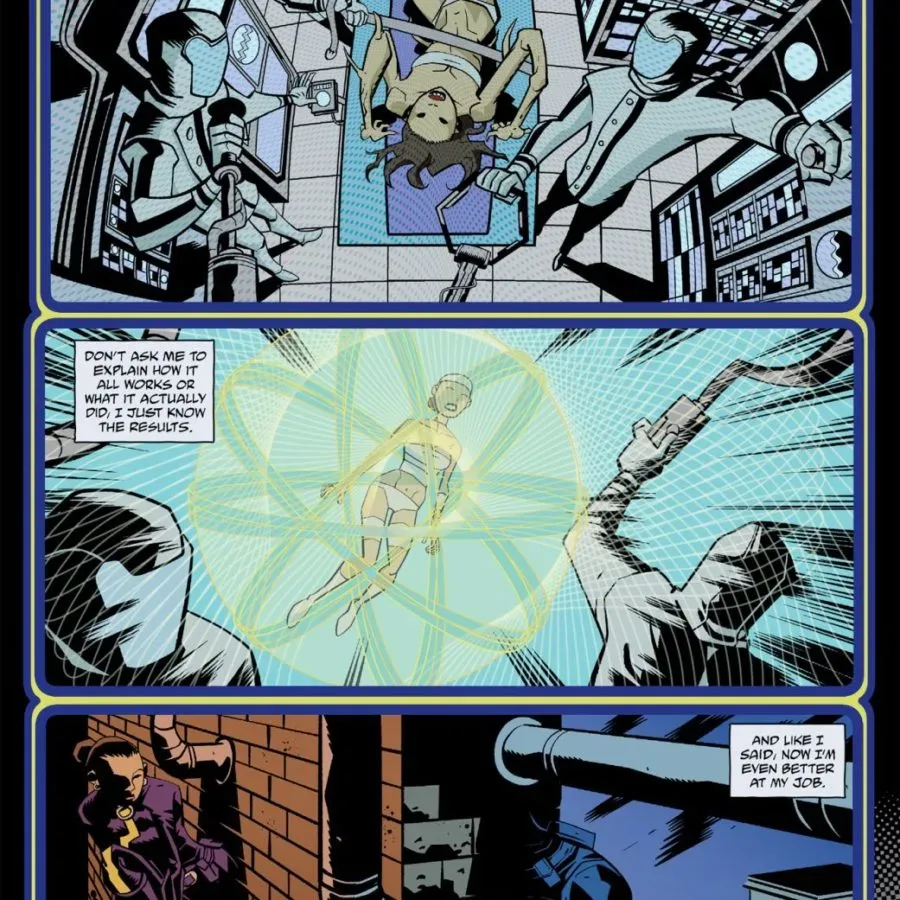
“Spy-fi” is shorthand for espionage fiction blended with speculative or fantastical concepts. Here, that means secret organizations, investigations, competing loyalties, and an enhanced agent all operating around a material with extraordinary potential. The creative description also places the series in a psychedelic 1960s mode. That signals an approach where the visual language and atmosphere may matter as much as tradecraft: vivid design, surreal energy, and period-inflected spy adventure rather than a strictly realistic intelligence thriller.
That combination fits a mystery in which every institution may have a self-interested answer to the same problem. Keeping a resource away from abuse can sound noble, but it also creates a question of custody. Is a clandestine group safeguarding enkeladite, monopolizing it, or both? Jian’s task becomes more complex because the official objective does not automatically settle the moral one.
A spinoff that puts Jian at the center
Ghost of a Ghost spins directly out of Giant Robot Hellboy, where Jian was exposed to enkeladite. That connection provides a clear entry point for readers familiar with the earlier story: it follows the consequences of her transformation rather than treating it as a closed plot point. The book’s premise also identifies Jian as the lead, not just an ally rotating through a larger ensemble.
For newcomers, the core concept is still easy to follow. There is an agent with recently acquired powers, an unusual substance worth fighting over, and a covert assignment to trace it. The series is described as a four-issue project, which establishes a defined, compact scope instead of an open-ended monthly run. A limited series can be especially suited to a focused investigation because it gives the creative team room to build the conspiracy, challenge the initial assumptions, and bring the mission to a resolution without implying that every mystery must become permanent franchise machinery.
The source material identifies Mike Mignola, Chris Roberson, Michael Avon Oeming, and Taki Soma as the creators on the series. Oeming also provides the main cover. Dave Johnson and Michael Cho are among the variant-cover artists named for the launch.
Why the premise’s ambiguity matters
The strongest part of the announced setup is the distinction between possession and responsibility. In many adventure stories, a dangerous object simply needs to be taken from villains. Ghost of a Ghost begins from a murkier proposition: the people seeking to secure enkeladite may themselves be difficult to trust. That does not establish that Jian’s organization is corrupt, nor does it reveal an opposing group’s motives. It does establish a useful dramatic pressure point.
Jian’s abilities sharpen that pressure. An enhanced spy can be an asset in an operation, but also evidence of what the material can do. Anyone who controls enkeladite might want to reproduce her powers, neutralize them, study their risks, or use Jian as proof that their own plan is justified. The character therefore occupies a complicated position in the story’s power structure. She is tasked with tracking the resource, yet her own body and skills are inseparable from the resource’s consequences.
The use of a “mysterious spy ring” also matters. Espionage narratives depend on incomplete information: characters do not necessarily know an employer’s full agenda, an ally’s allegiance, or the real purpose of an operation. The announced premise promises that uncertainty without spelling out answers in advance. That is a better foundation for a first issue than a synopsis that attempts to map every faction and twist before readers have met them.
The 1960s psychedelic spy-fi angle
The series’ 1960s psychedelic framing is not merely a decorative label. It is the stated tonal lens through which the espionage action and fantastic elements are being presented. “Psychedelic” generally describes imagery that is intense, altered, surreal, or deliberately disorienting. Paired with spy-fi, it suggests a book that can treat scientific or cosmic mystery as an experience to look at as well as a puzzle to solve.
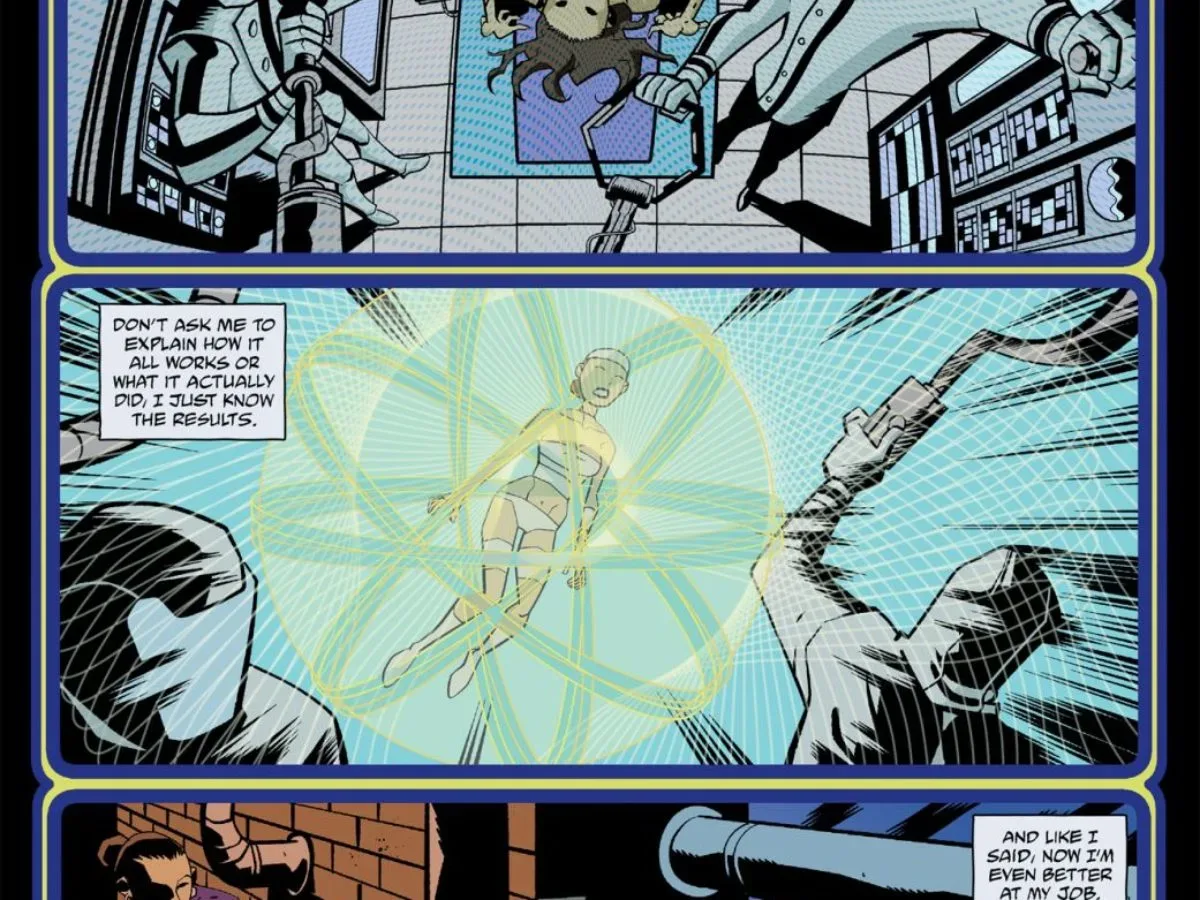
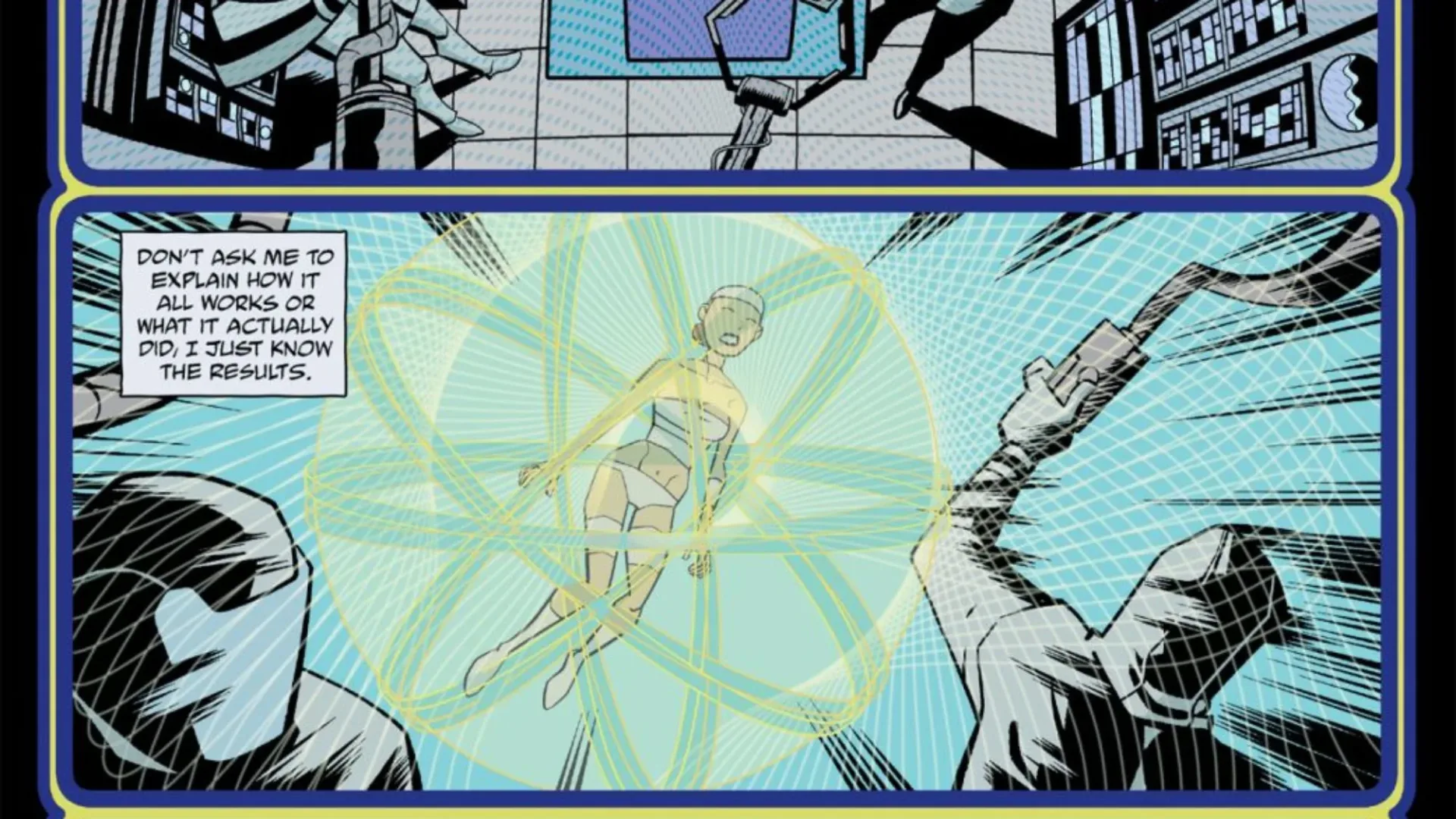
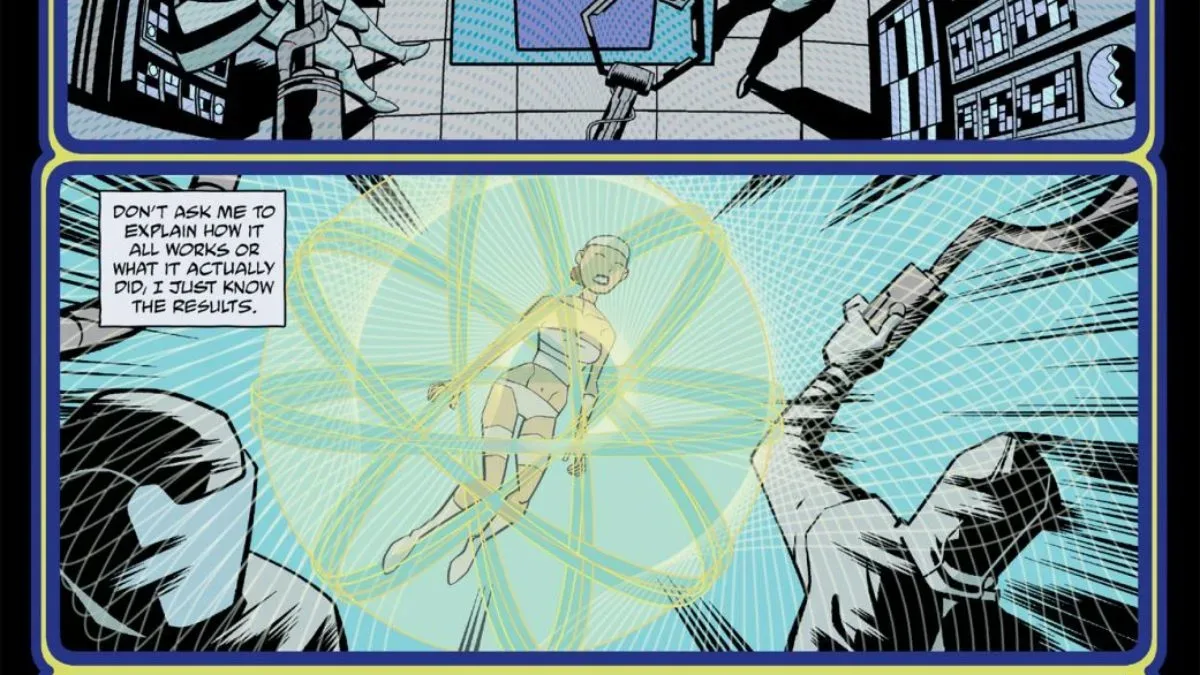
The supplied details point to imagery involving robed technicians and swirling energy around Jian, reinforcing that the story’s science-fictional material may be approached through a strikingly stylized visual atmosphere. That aesthetic is well matched to a comic about an unknown substance: readers can feel that something is strange and potent before every rule is explained.
Importantly, the announced material does not specify whether the story is set in the 1960s, merely that it is a psychedelic 60s spy-fi action series. The distinction is worth keeping clear. A tonal or stylistic influence is not, by itself, a confirmed setting. What is certain is the intended mixture of colorful espionage energy and fantastical action.
Issue details and variant-cover choices
Ghost of a Ghost #1 is a 32-page, Rated T comic priced at $4.99 in the US. The listed release date is September 23, 2026. A Cover B variant by Dave Johnson is also listed at $4.99 in the US and $6.99 in Canada, while Michael Cho is named among the variant artists for the issue.
For readers weighing an edition, a variant cover is an alternate cover design for the same issue rather than a separate installment of the story. Unless a publisher specifies otherwise, the basic practical decision is aesthetic: choose the image and artist you prefer, while confirming with a local retailer which versions they expect to stock. The announced information identifies the creators and the cover options but does not establish print quantities or any relative rarity, so it would be premature to make scarcity claims.
That restraint is useful in a market where cover conversations can sometimes eclipse the comic itself. Variant art can be a compelling way to support favored artists or personalize a collection, but the central appeal here is still the opening chapter of Jian’s standalone mission. Readers interested in broader comic-shop questions around issue condition and retailer concerns can also see this look at damage reports and their implications for retailers and collectors.
What readers can reasonably expect from issue one
The first issue is positioned to establish three connected elements: what enkeladite has done to Jian, why the material is now a priority for covert actors, and how much faith she can place in the people giving her orders. The solicitation does not promise particular antagonists, locations, or plot turns, so the responsible expectation is a launch that introduces the mission and its underlying uncertainty rather than one that resolves the mystery immediately.
It is also a chance to see how the book balances its components. A superheroic power set changes the usual limits of a spy protagonist; a psychedelic visual direction can change the mood of an investigation; and a defined four-issue run creates an expectation that the story has a destination. If those pieces pull together, Jian’s spinoff has a strong hook: an agent empowered by the very substance she has been sent to keep from everyone else.
That is the question hanging over Ghost of a Ghost #1: not simply whether enkeladite can be secured, but whether any group claiming to secure it deserves the authority. For a superspy whose new capabilities are tied to the material at the center of the dispute, the answer is unlikely to stay simple for long.