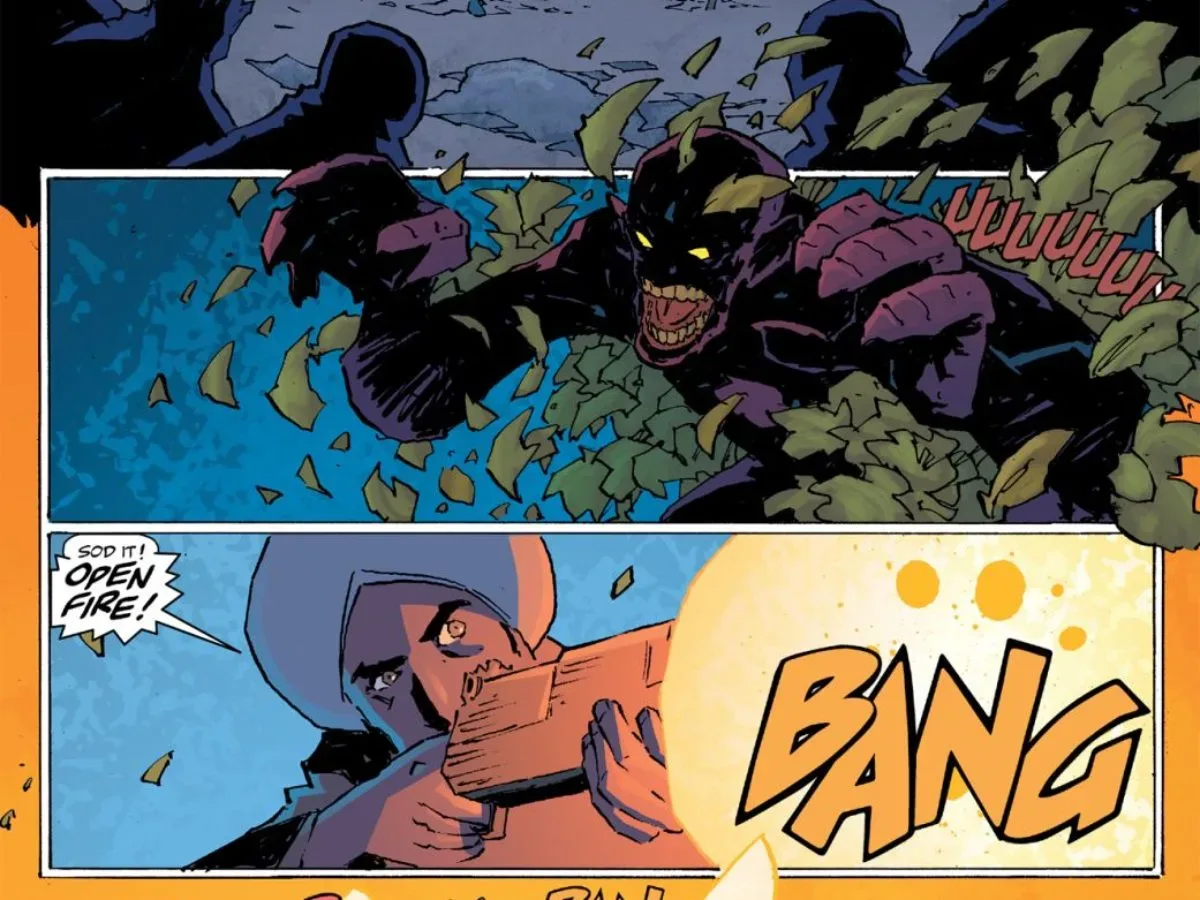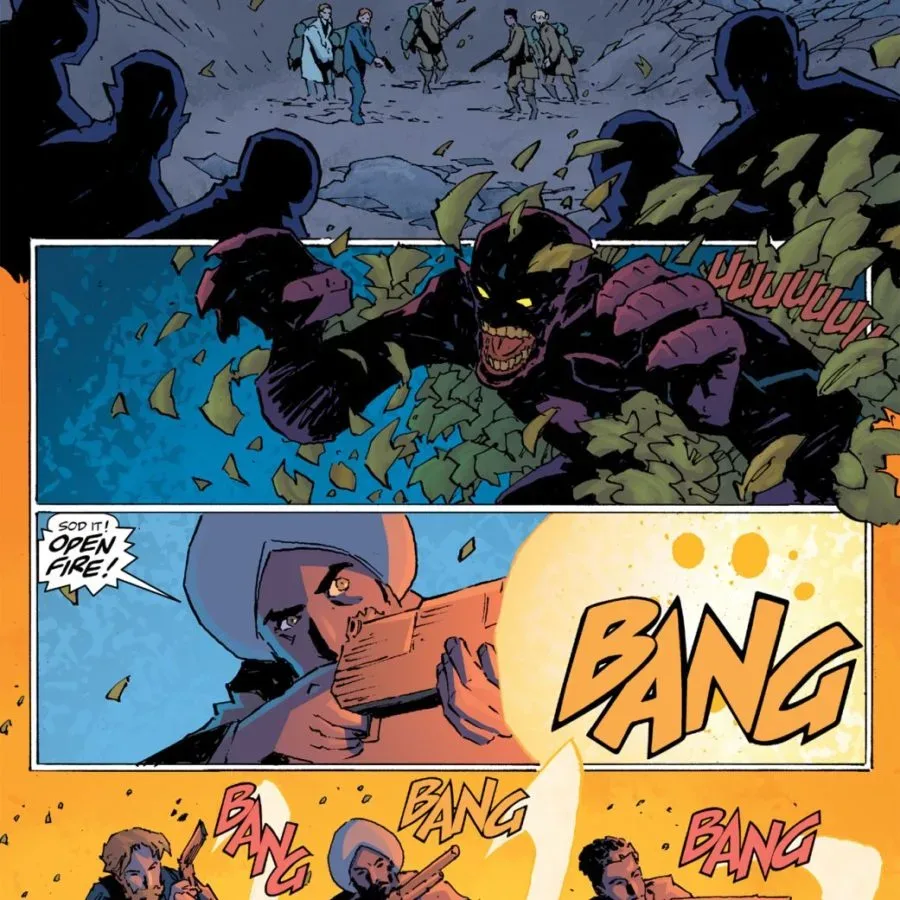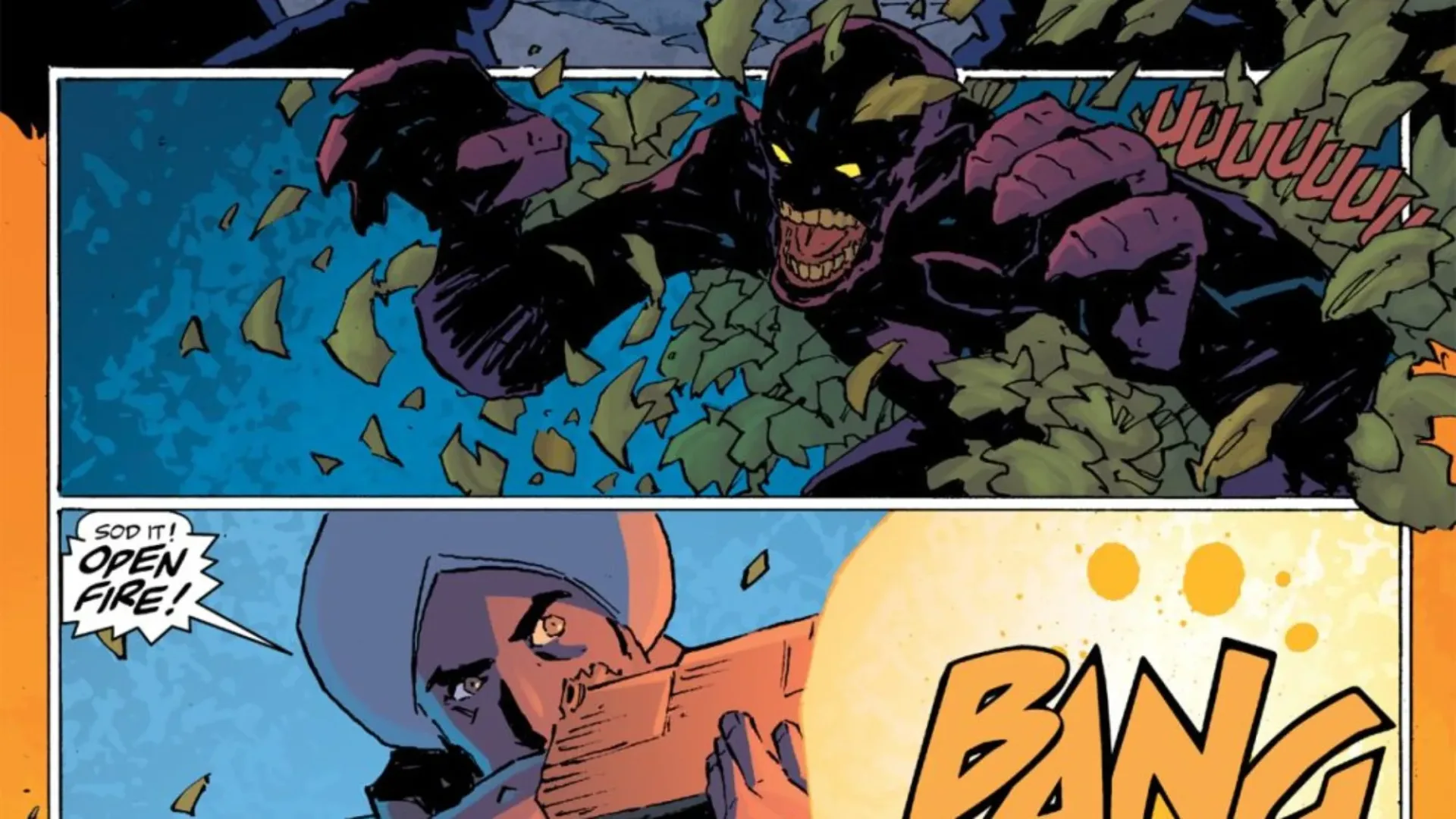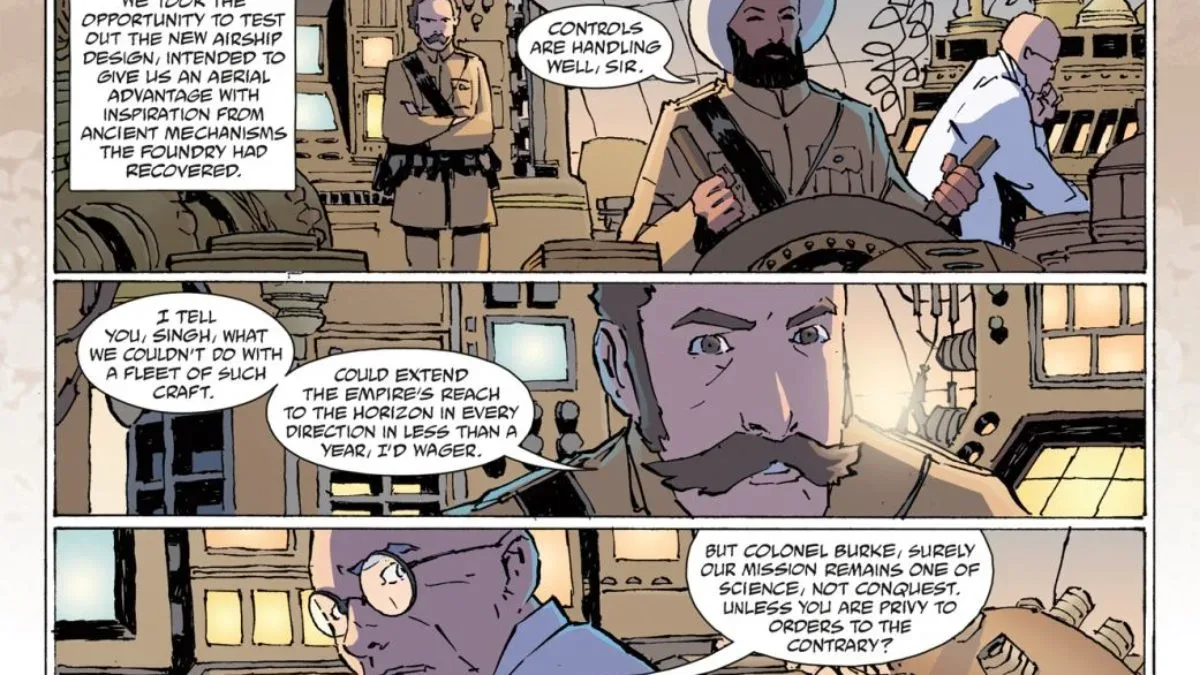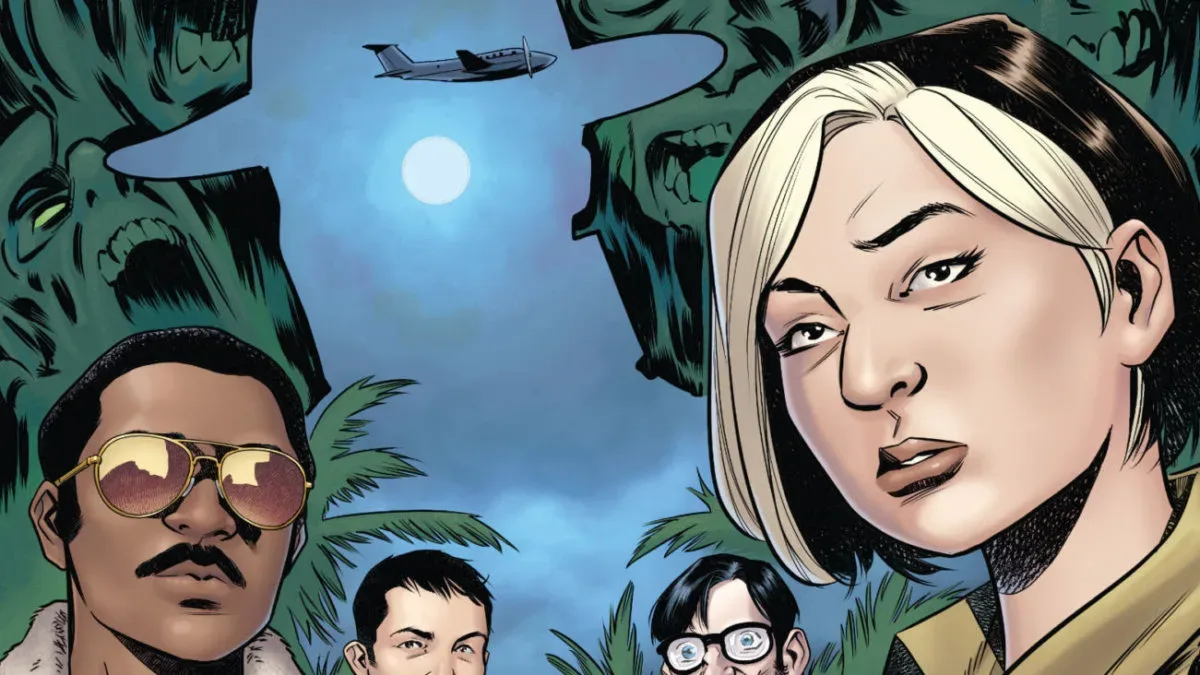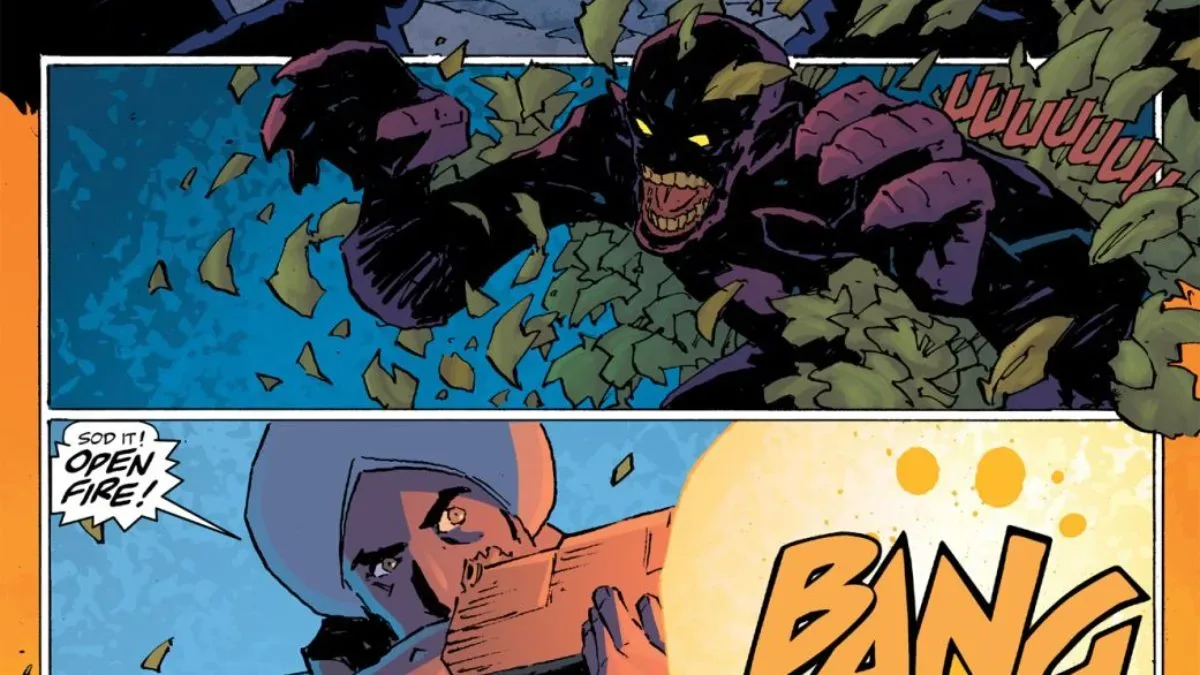
The Foundry #3 is scheduled to go on sale November 4, 2026, and its central problem is immediate: an airship attack has forced the Queen’s paranormal investigators down in unfamiliar territory. The crash site is not merely remote. It holds bizarre creatures and signs that people may be living there, leaving the team to decide which danger deserves their attention first.
That setup gives the third issue of the four-part series a strong survival-story pressure point. The investigators arrive with a mission connected to supernatural-powered technology, but a forced landing changes the order of priorities. Before they can learn what the place is or who has made a home there, they have to endure it. In a story built around travel, strange civilizations and occult forces, being stranded turns exploration into a more precarious kind of investigation.
A crossover-minded supernatural expedition
The Foundry brings together characters from Witchfinder and The British Paranormal Society. The premise places those figures in a globe-spanning search for supernatural technologies and the cultures that have used them. The series is interested not just in unusual devices, but in what follows when people discover power they may not fully understand: that power can be used constructively, destructively, or in ways that blur the line between the two.
Issue #3 appears positioned to put that larger idea under stress. The team’s crash occurs in a setting where the supernatural is not an abstract lead to pursue; it is part of the immediate environment. Strange creatures pose one apparent threat, while evidence of human life introduces another, less easily measured threat. A monster can be dangerous, but a settlement can mean rules, secrets, rival interests, or a history the outsiders do not yet know.
That distinction is useful for readers approaching the series. The creature element signals physical peril. The human element signals uncertainty. Neither necessarily tells readers who the enemy is, and the issue’s premise hinges on that ambiguity rather than providing a simple “fight the monster, save the day” scenario.
What the airship crash changes
An airship is more than a period-appropriate way to move characters from one country or mystery to another. In narrative terms, it is the team’s connection to mobility, supplies and a planned route. Once it is attacked and brought down, the investigators lose the advantage of choosing when and how to engage with the unknown.
The result should make the locale matter as much as the team’s broader mission. The investigators are now on the ground, in a place whose inhabitants and creatures may know the terrain far better than they do. The question of whether the humans or the nonhuman beings are more dangerous also suggests that the issue will not reduce its setting to a generic monster zone. The people in the settlement are part of the mystery, not just background dressing.
“Paranormal investigators” is also a meaningful label here. It implies characters who are trained to seek explanations for phenomena outside ordinary understanding. That is different from arriving as tourists or soldiers. Their work is to recognize patterns, identify causes and make judgments about strange powers. A crash puts those skills to a direct test: observation and caution become survival tools when the group cannot simply fly away.
The creative team and format
The issue credits Mike Mignola, Chris Roberson, Christopher Mitten and Michelle Madsen, with a cover by Mitten. Roberson and Mitten reunite for the series, which is a four-issue limited run. The comic is published by Dark Horse Comics, is rated T+, and is listed at 32 pages.
Mitten’s cover contribution gives the issue a visual identity tied directly to one of the series’ credited creators, while the interior story continues the collaboration around an adventure that draws on the worlds of Witchfinder and The British Paranormal Society. For readers who follow new comic projects across publishers, IDW’s planned White Ash Comics romantasy imprint is another example of how publishers are framing distinct genre lines and connected reading identities around upcoming books.
The Foundry’s format is worth noting because a four-issue series has limited room to establish a traveling premise, develop its combined cast and bring its supernatural-technology thread somewhere meaningful. Issue #3 is therefore likely to carry the middle-to-late-series burden of tightening the situation. The crash and the encounter with an unknown settlement give the installment a focused conflict while keeping the larger trip moving.
Why the human settlement is the key detail
“Signs of human life” may sound like reassurance in a story full of bizarre creatures. It is not necessarily reassurance here. The premise specifically frames the investigators’ fear as a choice between the creatures and the people. That framing creates room for a setting in which survival cannot be separated from interpretation.
The team may have to work out whether the settlement is isolated, hostile, threatened, cooperative, or connected to the supernatural forces they are tracking. None of those possibilities is confirmed by the available details, but the uncertainty is the point. The issue’s tension comes from landing somewhere that has its own concealed context. Even a friendly human presence could have motives or knowledge that complicate the investigators’ mission.
There is a thematic fit with the series’ stated interest in civilizations that harness supernatural power. Technologies are shaped by their users. A supernatural device is not simply a tool with a fixed moral alignment; its consequences depend on who controls it and why. An unknown human community amid strange creatures is a natural place to explore that idea without treating the setting’s inhabitants as incidental.
Release details for The Foundry #3
- On-sale date: November 4, 2026
- Publisher: Dark Horse Comics
- Series length: Four issues
- Format: 32 pages
- Cover price: $4.99
- Rating: T+
- Credited creators: Mike Mignola, Chris Roberson, Christopher Mitten and Michelle Madsen
- Cover: Christopher Mitten
For readers already following the intersection of Witchfinder and The British Paranormal Society, the third issue promises a particularly contained but consequential detour: an investigation becomes a crash-survival problem, strange beings share the stage with an enigmatic human presence, and the team must determine what kind of danger they have fallen into before it is too late.