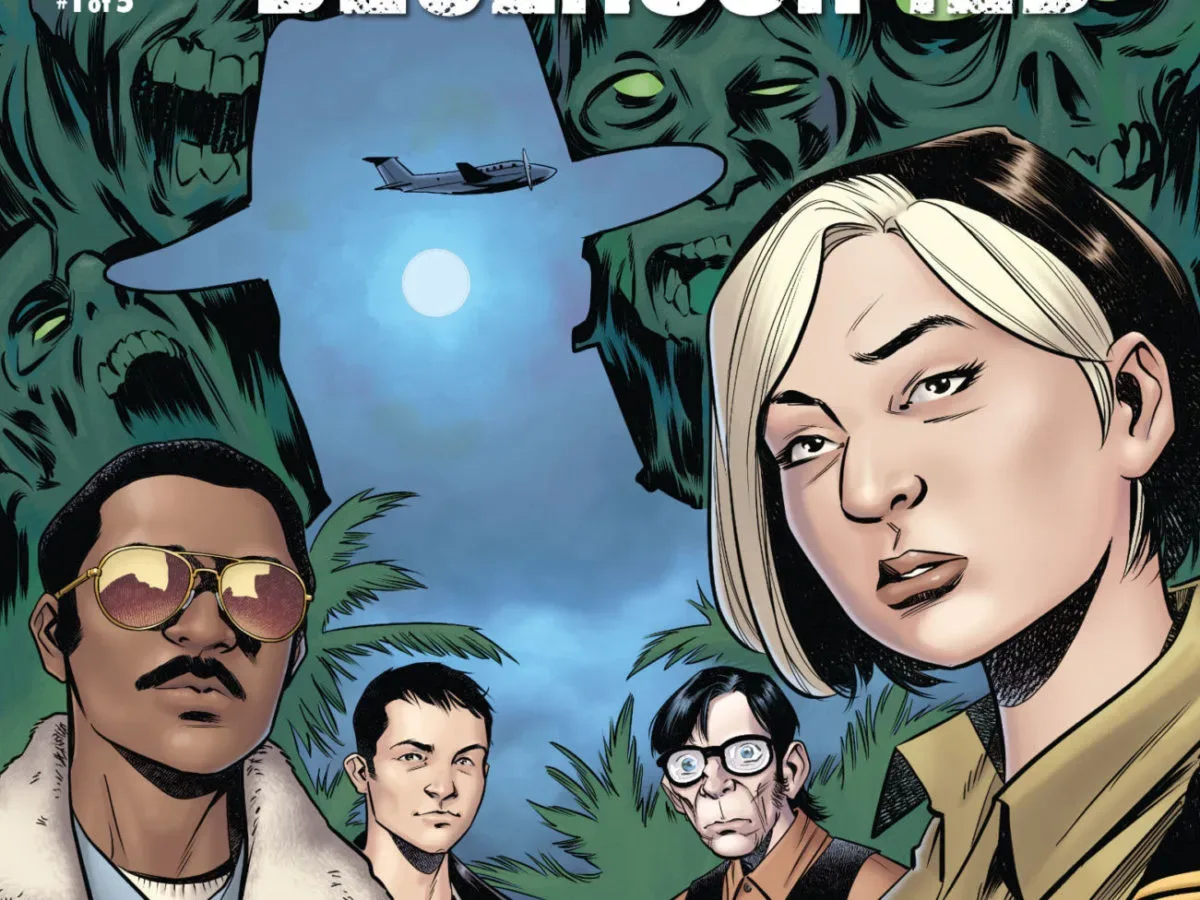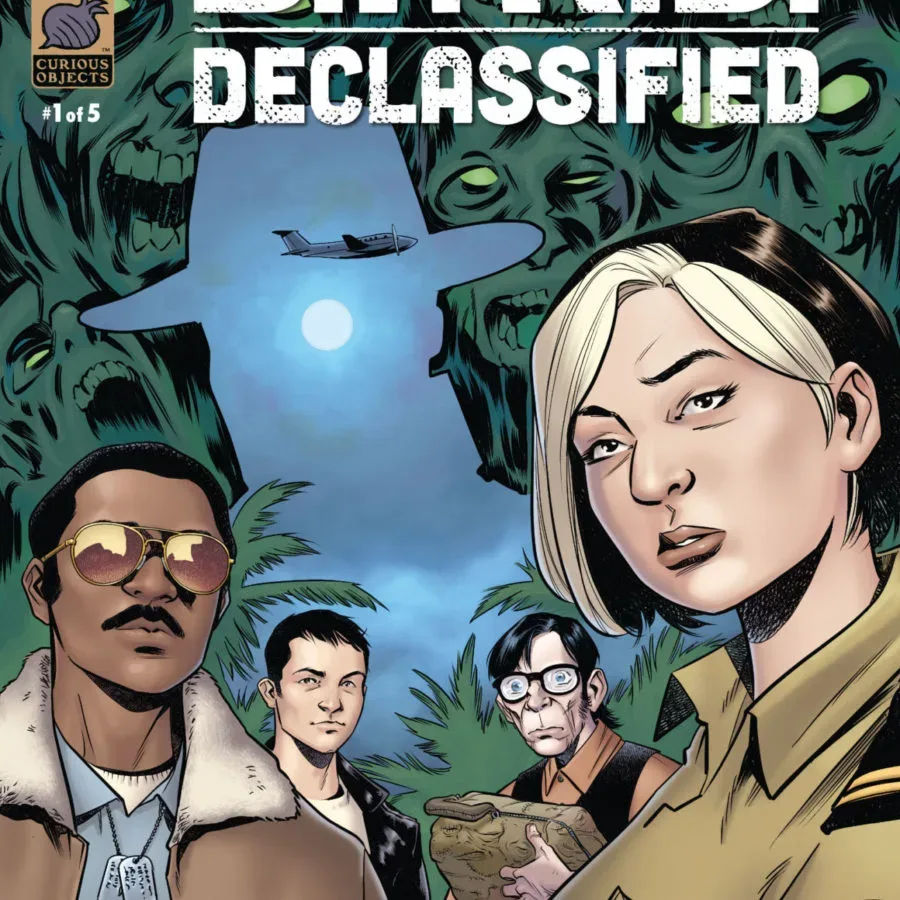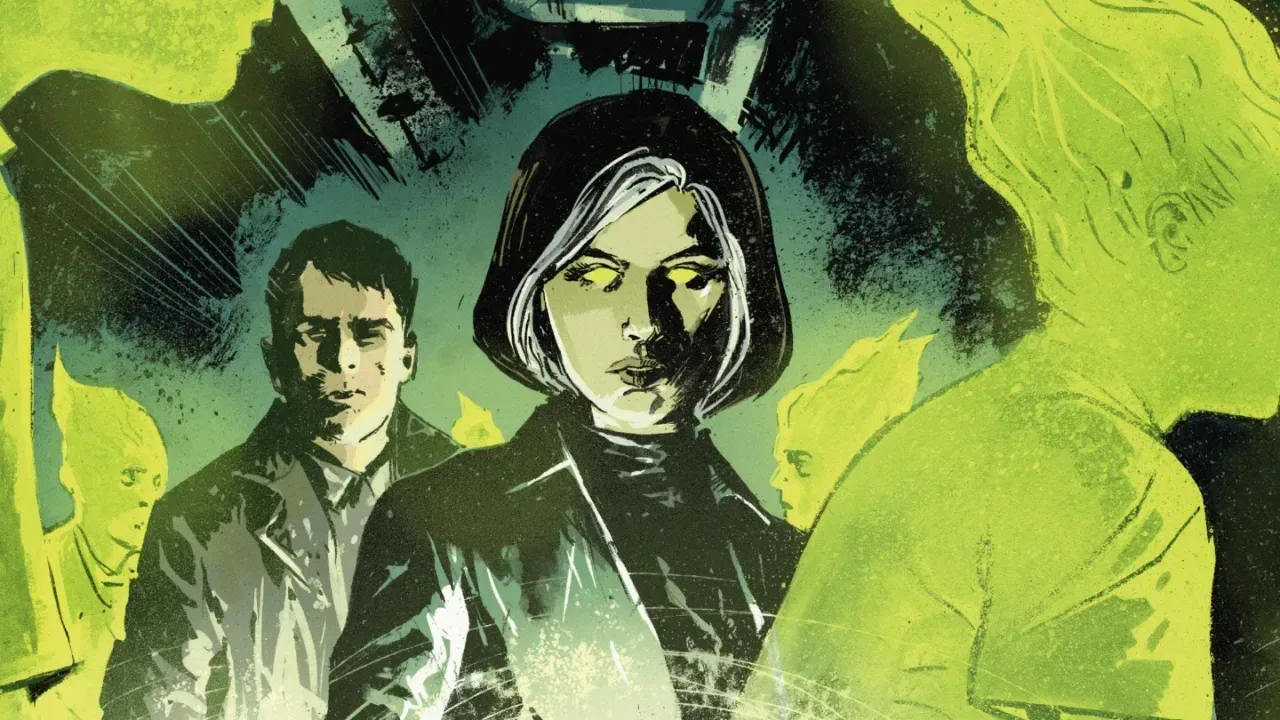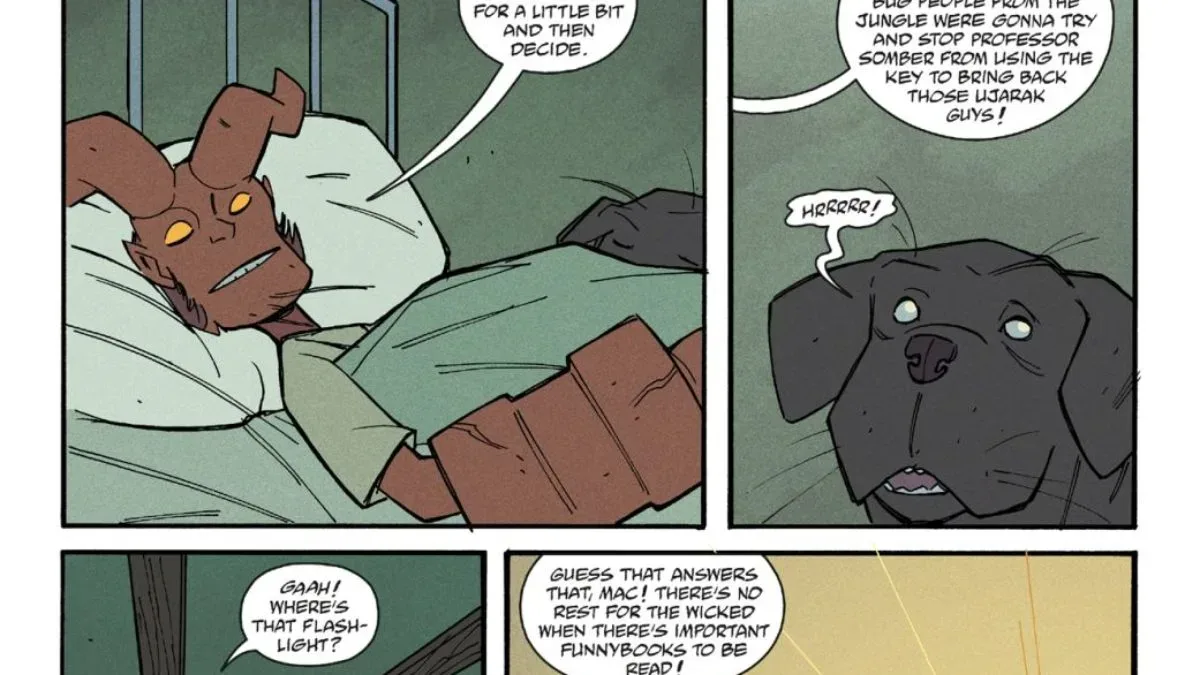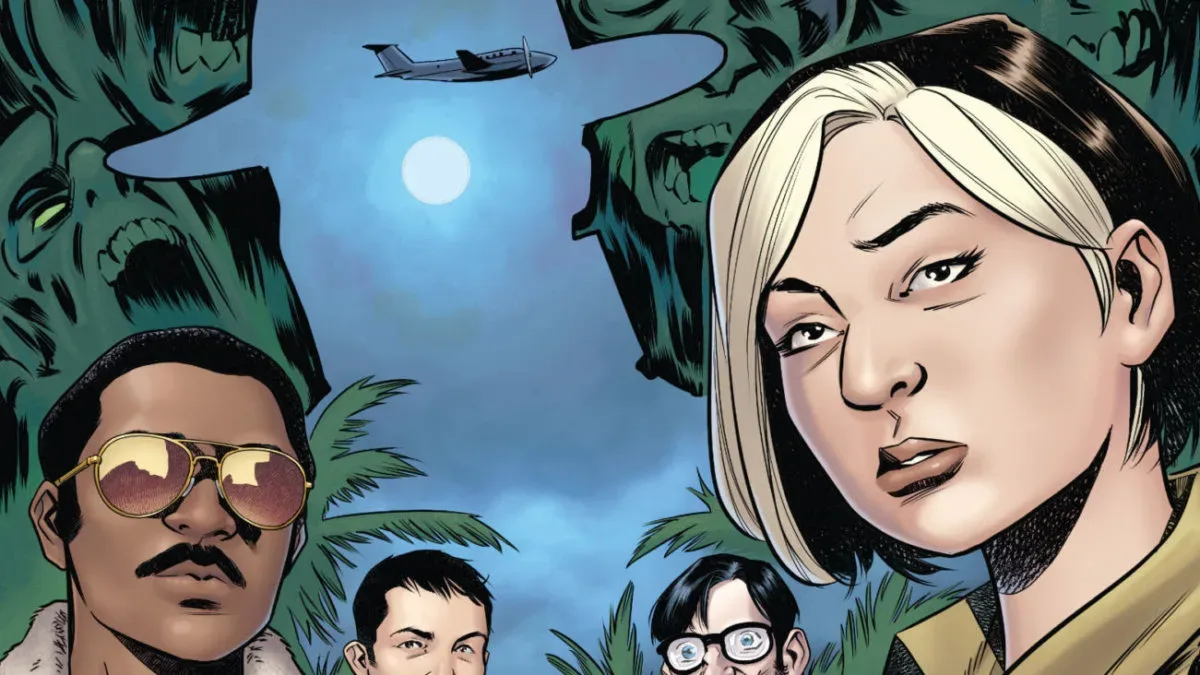
B.P.R.D.: Declassified will bring two less frequently spotlighted agents of the Hellboy universe’s paranormal bureau into the foreground when its first issue arrives on February 17, 2027. The five-issue Dark Horse Comics series is written by Mike Mignola and Chris Roberson, illustrated by Mike Norton, and colored by Dave Stewart.
The premise sends psychic agent Susan Xiang and astral-projecting agent Victor Koestler to Honolulu, Hawaii, on what begins as a missing-person investigation. The absent man is Henry Rouch, who disappeared while working overseas on a classified government project. The B.P.R.D. becomes involved because supernatural circumstances surround the case—but the investigation soon proves to reach beyond a single disappearance.
A case built around two specialized B.P.R.D. agents
The B.P.R.D., or Bureau for Paranormal Research and Defense, is the organization at the center of this branch of the Hellboy setting. Its agents are called in when a problem falls outside an ordinary investigation: monsters, occult forces, anomalous phenomena, or in this case a disappearance with supernatural implications.
Declassified is significant in part because it puts Xiang and Koestler at the center of the action. Both have unusual abilities that should shape how the mystery unfolds. Xiang is identified as psychic, a term generally used for a character with perception beyond normal senses. Koestler can astrally project, meaning his consciousness can operate apart from his physical body. Those capabilities give the book a natural investigative angle, while also posing obvious storytelling questions about what information such powers can reveal—and what dangers they may expose an agent to.
The series’ Honolulu setting and the classified government connection add another layer to the mission. A classified project is one whose details are restricted by the government, so Rouch’s work may put official secrecy in direct tension with a bureau trying to establish the paranormal facts. The announced setup does not spell out the nature of the project or the force behind Rouch’s disappearance, leaving the central threat deliberately unresolved.
The occult cold war moves out of the margins
Roberson has framed the new series as an opportunity to focus on an “occult cold war” that has previously appeared around the edges of recent Hellboy and the B.P.R.D. stories. In practical terms, that description suggests a covert conflict involving occult interests rather than a conventional, openly declared war. The important point is not that every answer has been revealed—far from it—but that the series intends to broaden the perspective beyond the bureau’s side of the board.
“B.P.R.D.: Declassified is a chance to pull the curtain back a bit and focus our full attention on what’s been going on in the shadows, and to see that the agents of the B.P.R.D. aren’t the only players on the board.”
That focus could make the five-issue format especially useful. A limited series has a defined length rather than an open-ended run, and this one has a clearly identified initial hook: find Rouch, understand the supernatural circumstances, and determine why the matter is bigger than the missing-person report first indicates. At the same time, the broader occult-conflict thread gives the investigation a connection to the continuing world around it.
For readers following the more recent material, Xiang’s role has a direct point of reference. She previously appeared in 2025’s The Shadow of the Golden Crane, by Roberson and Michael Avon Oeming, where she investigated her family’s connection to the Golden Crane Society. Declassified does not merely reuse that setup; its announced case pairs her with Koestler for a new mission. Still, her prior story establishes that Xiang has already carried an investigation with personal and occult stakes.
Mignola, Roberson, Norton and Stewart reunite
The creative lineup joins Mignola and Roberson as co-writers with Norton on art and Stewart on colors. Norton has previously illustrated Hellboy and the B.P.R.D.: From Below, and he has emphasized the visual unpredictability of a B.P.R.D. assignment—particularly in stories written by Roberson. That is a promising fit for a series built around a classified project, psychic investigation, astral projection, and an expanding supernatural mystery.
For a comic artist, “art” in a credit line generally refers to the interior drawing work that determines character acting, environments, panel-to-panel storytelling, and the design of whatever strange entities or events the plot requires. Coloring is a separate but consequential part of the final page: it establishes atmosphere, helps distinguish locations and planes of action, and guides the eye through a scene. With Stewart handling colors, the announced team is structured around distinct writing, drawing, and color roles.
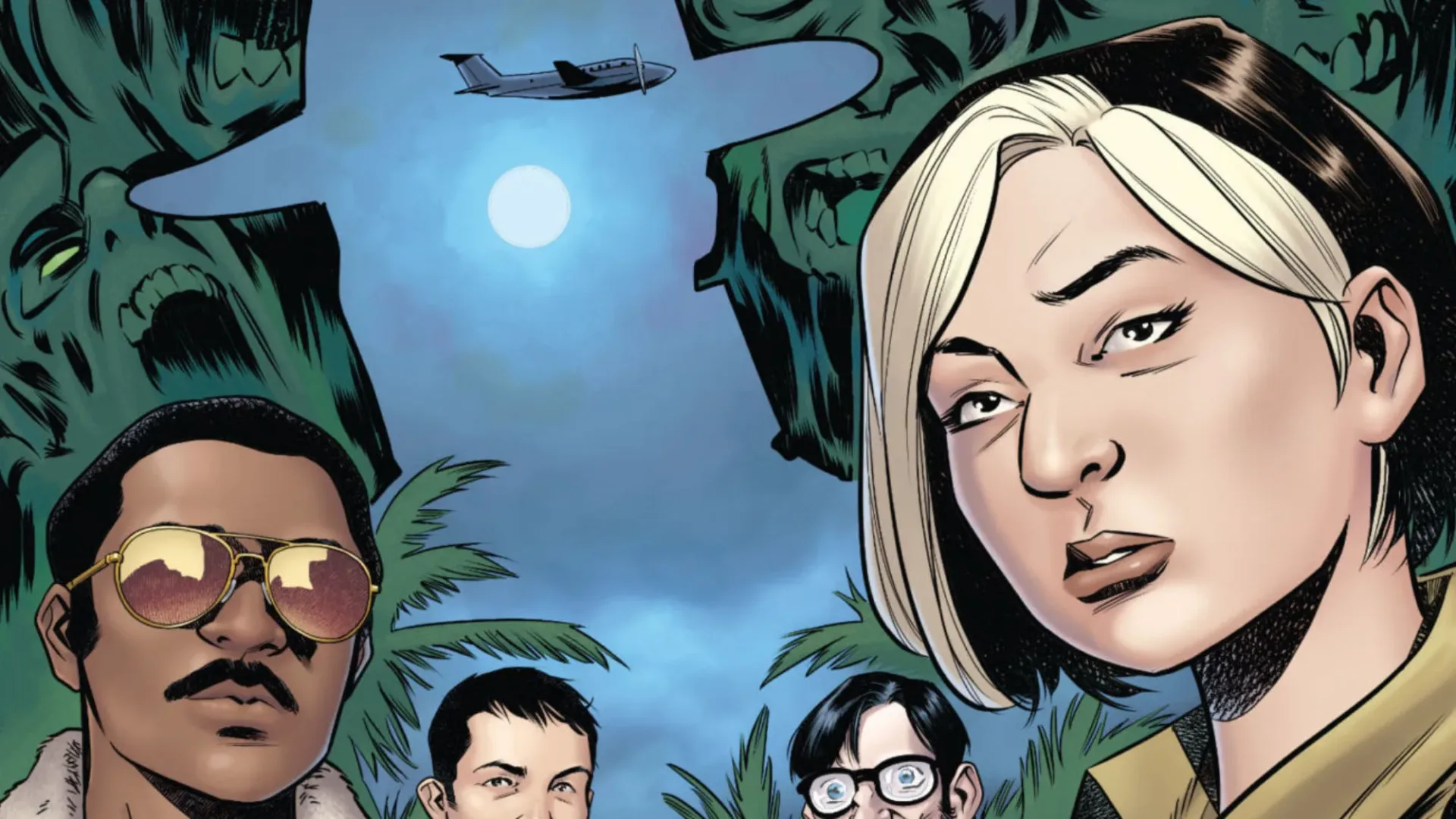
Norton is also providing the main cover for the debut issue. Gabriel Hardman will contribute a variant cover, while later cover contributors named for the series include Christopher Mitten, Craig Rousseau, and Michael Avon Oeming. A variant cover is an alternate cover image for the same issue, rather than a separate chapter of the story. For readers primarily interested in following the narrative, the key distinction is simple: the main and variant editions carry the same interior installment unless otherwise specified.
What is known—and what remains under wraps
Several basics are firm. B.P.R.D.: Declassified is a five-issue series from Dark Horse Comics. Its first issue is scheduled for February 17, 2027. Xiang and Koestler are its lead agents, Honolulu is the mission’s destination, and Henry Rouch’s disappearance is the case that sets the plot in motion.
There are also meaningful unknowns. The information available does not identify the classified project Rouch was working on, explain the exact supernatural event that drew B.P.R.D. attention, or name the outside participants in the larger occult conflict. It likewise does not state how heavily the series will rely on prior reading. The presence of a previously seeded background plot and Xiang’s earlier Golden Crane Society investigation indicates continuity-minded readers may find connections to trace, but the new book’s missing-person premise is designed as a concrete entry point of its own.
That balance matters for a paranormal procedural. The immediate problem gives the agents a reason to act, while the larger mystery can make each discovery change the apparent scale of the case. Xiang’s and Koestler’s particular abilities reinforce that structure: the story is not simply about whether Rouch can be located, but about what can be perceived beyond the obvious facts—and who else may be operating in the shadows.
Readers interested in other franchise-world projects moving toward crowdfunding can also see the planned return of the Battlestar Galactica board game. For B.P.R.D. readers, though, the next date to mark is February 17, 2027, when the Honolulu investigation begins in B.P.R.D.: Declassified #1.