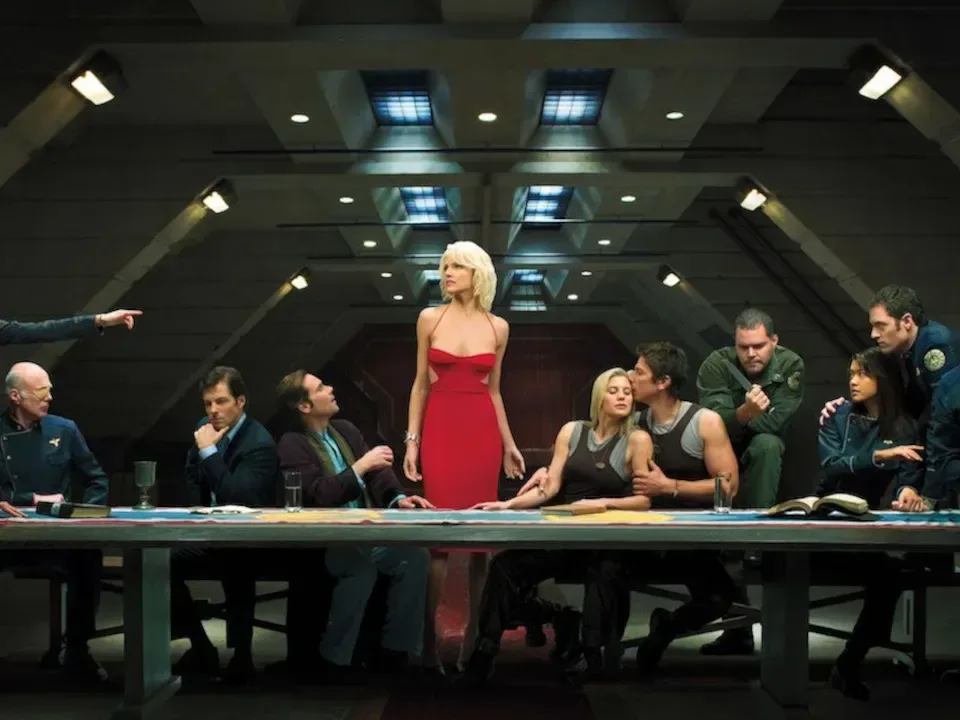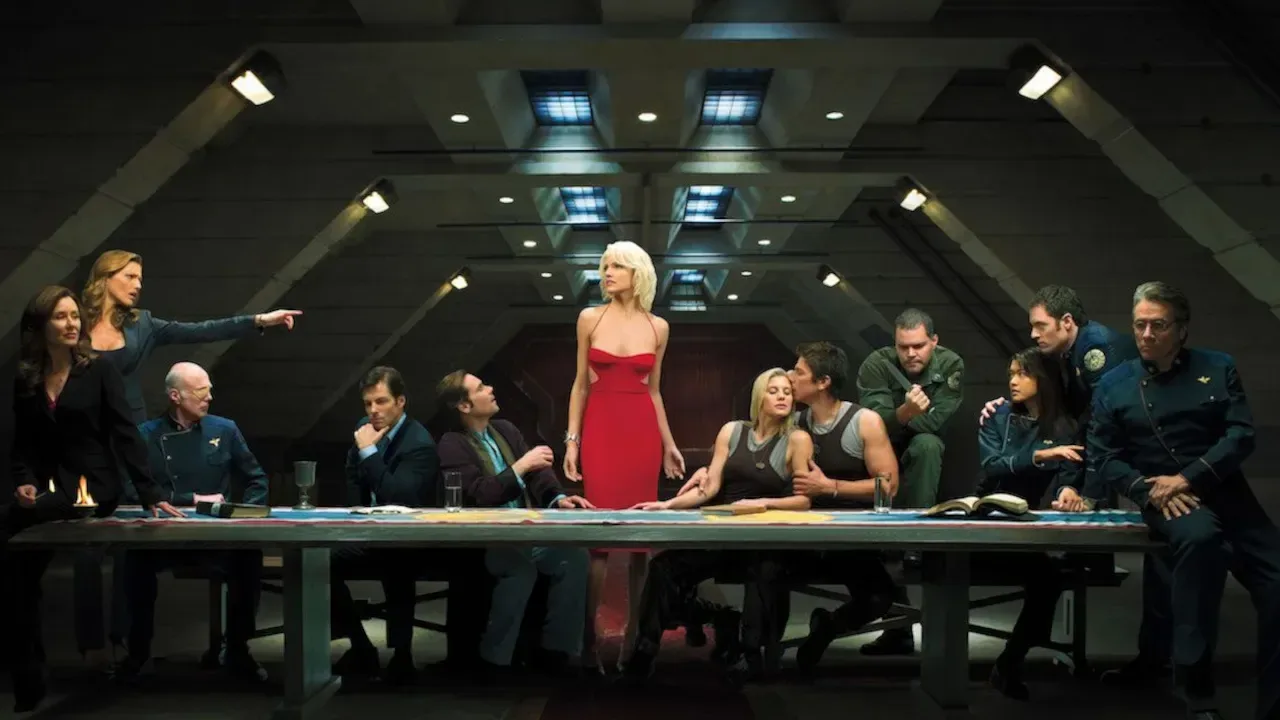
Battlestar Galactica: The Board Game is headed back to the table. Ghost Galaxy has entered an agreement with Universal and Fantasy Flight Games to publish a new edition of the long-out-of-print tabletop game. A crowdfunding campaign is planned for early next year, with a campaign page expected to arrive soon.
That is consequential news for players who have watched the original game become one of tabletop gaming’s harder-to-find licensed releases. The 2008 title, built around imagery from the televised Battlestar Galactica reboot, was followed by three expansions before going out of print nearly a decade ago. Complete sets comprising the base game and expansions can command more than $1,000 on the secondary market.
There are still major unanswered questions. Ghost Galaxy has described the project as a new edition with an “updated design,” but no further specifics have been provided on rules, included content, components, expansion material, player count, campaign tiers, pricing, or a final delivery timetable. For now, the important distinction is simple: this is a newly published edition, not a confirmed reprint of every prior product.
Why the original became such a sought-after game
The original Battlestar Galactica board game is a social-deduction game with a hidden-traitor structure. In practical terms, players must make consequential group decisions while suspecting that someone at the table may secretly be working against the group. Its premise borrows directly from the central tension of Battlestar Galactica: the human survivors are trying to get home, while concealed Cylon agents can undermine that goal from within.
That structure makes trust part of the game’s core resource. Players are not merely solving a puzzle in silence; they are weighing who to believe, deciding where to place responsibility, and judging whether a bad outcome came from misfortune, a strategic disagreement, or deliberate sabotage. The appeal is less about proving who has the loudest argument than about surviving a shared crisis when complete certainty is unavailable.
“Hidden traitor” does not mean every player is automatically an antagonist. Rather, the possibility that a player may have a secret opposing allegiance changes the meaning of ordinary table behavior. A cautious decision can look evasive. A risky decision can look malicious. A player advocating for the group’s immediate need may still be setting up a later failure. That uncertainty is why the format can produce memorable stories, but it also helps explain why the game’s theme has remained so closely associated with its mechanics.
The show’s human-versus-Cylon paranoia is therefore not merely decorative. It supplies the logic for the game’s suspicion and cooperative pressure. That close marriage of licensed setting and social gameplay is a large part of why the game has endured in the minds of tabletop fans after its print run ended.
What the new publishing arrangement confirms
The confirmed elements are limited but meaningful. Ghost Galaxy will publish the new edition under its agreement with Universal and Fantasy Flight Games. Christian T. Peterson, Ghost Galaxy’s CEO, is overseeing the project. Peterson previously founded and led Fantasy Flight Games and is also the creator of Twilight Imperium.
Related coverage includes Battlestar Galactica Board Game Set for New Edition Through Ghost Galaxy.
That background provides useful context without answering the design questions that matter most to returning players. An updated design could refer to visual presentation, component usability, rules adjustments, product structure, or several of those areas at once. It could also leave the underlying experience substantially familiar. Until Ghost Galaxy provides details, none of those interpretations should be treated as confirmed.
The same restraint applies to the original game’s expansions. The earlier release received three expansions, and the cost of assembling a complete set is one reason this announcement will attract attention from both players and collectors. But there has been no confirmation that expansion content will return, be integrated into the base product, be offered separately, or be omitted. Anyone interested primarily in a specific older expansion should wait for the crowdfunding materials rather than assume the new edition resolves that particular gap.
New edition versus reprint: why the wording matters
In tabletop publishing, the difference between a reprint and a new edition can be important. A reprint generally suggests the same game returning in another production run. A new edition signals that changes may be involved, even if the central identity of the game remains intact. Here, the explicit mention of an updated design tells prospective backers to expect some degree of revision, while the lack of details makes it impossible to assess its scale.
For longtime owners, that creates a sensible wait-and-see moment. The new edition could eventually become a way to get a playable copy without chasing expensive aftermarket listings. It may also appeal to groups that missed the game during its original availability. Yet people who already own earlier material will likely want to know whether components, rules, and any future add-ons connect cleanly with what they have. There is no answer to that yet.
The aftermarket question
Out-of-print status often turns a game into two different things at once: a game people want to play and an object people want to own. Battlestar Galactica has occupied both positions. A full original collection has been expensive enough that many interested groups have effectively been priced out of exploring it through the secondary market.
A new edition could change the practical equation for players by creating a legitimate route back into the game. It does not automatically tell us what will happen to prices for original copies or full expansion sets. Original editions may remain important to people who value their particular contents, history, or completeness, while a new product may meet demand from players whose priority is simply getting the experience to the table. Those are overlapping audiences, not necessarily identical ones.
It is also worth separating an announced crowdfunding campaign from a retail release. Crowdfunding is a funding and ordering model in which supporters commit during a campaign, usually after reviewing a project’s stated offerings and terms. The announcement confirms that this is the intended route for the new Battlestar Galactica edition; it does not yet reveal the eventual campaign’s contents or conditions. Prospective backers should evaluate those details when the page is live instead of treating the announcement as a complete product specification.
Unfathomable remains a useful point of reference, not a substitute for details
Fantasy Flight Games released Unfathomable in 2021, described as a reskinned take on Battlestar Galactica’s broad formula. It trades the Galactica for a boat and replaces Cylons with Lovecraftian horrors. Its existence showed that there was continued interest in a tense, cooperative game where hidden opposition can destabilize the whole group.
But the new Ghost Galaxy project is notable precisely because it returns to the Battlestar Galactica setting rather than offering a thematic cousin. Fans interested in the original’s television-inspired atmosphere have a reason to watch this campaign closely. At the same time, no announced information establishes how closely its rules or product structure will track either the 2008 game or Unfathomable.
The broader tabletop market has also seen Fantasy Flight Games begin its Vault Series with Arkham Horror Remastered, a campaign intended to revisit the much-loved second edition of Arkham Horror. The Battlestar Galactica project has a similar broad appeal—a notable older design returning to public availability—but it is being published by Ghost Galaxy rather than Fantasy Flight Games. It has not been confirmed as a Vault Series entry.
What to watch for when the campaign page launches
The forthcoming campaign should answer the questions the initial reveal leaves open. The most useful information for prospective backers will be the exact explanation of the “updated design,” a clear list of what comes in each offering, and whether any material associated with the old expansions is part of the plan.
- Rules scope: Are there changes to the original social-deduction and hidden-traitor systems, or is the update chiefly presentational?
- Product contents: What is in the core box, and what—if anything—is separated into additional tiers or add-ons?
- Legacy material: Is content from the three earlier expansions addressed in any form?
- Compatibility: Can existing owners use prior components with the new edition, or is it a self-contained product line?
- Fulfillment information: What does the campaign say about its production and delivery plan?
Those details will matter more than nostalgia alone. A famous, hard-to-find game returning is exciting, but tabletop buyers need to know what version they are being asked to support and how it fits their group’s needs. As with other game news, including the changes being discussed around Wo Long 2’s development feedback, the useful question is not only whether a familiar name is back, but exactly what is changing and why.
For Battlestar Galactica fans, the immediate takeaway is encouraging but incomplete: a legitimate new edition is planned, Ghost Galaxy is leading it, and crowdfunding is slated for early next year. The next campaign update will need to turn that promising premise into a concrete picture of the game that will actually reach tables.