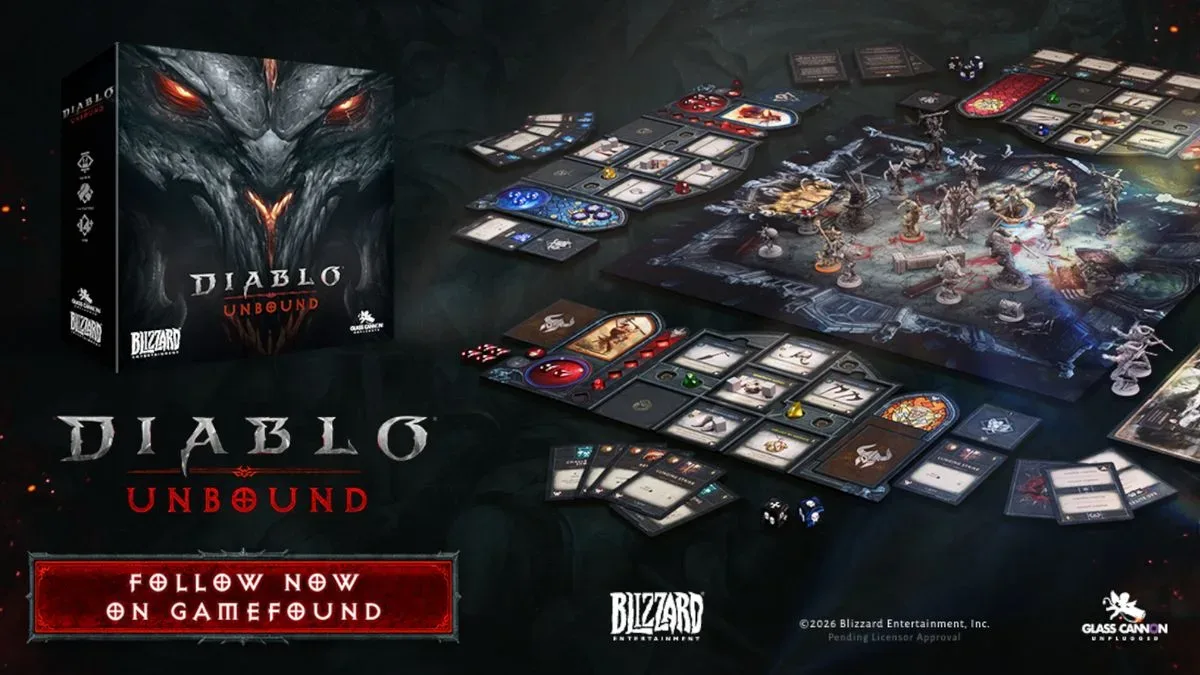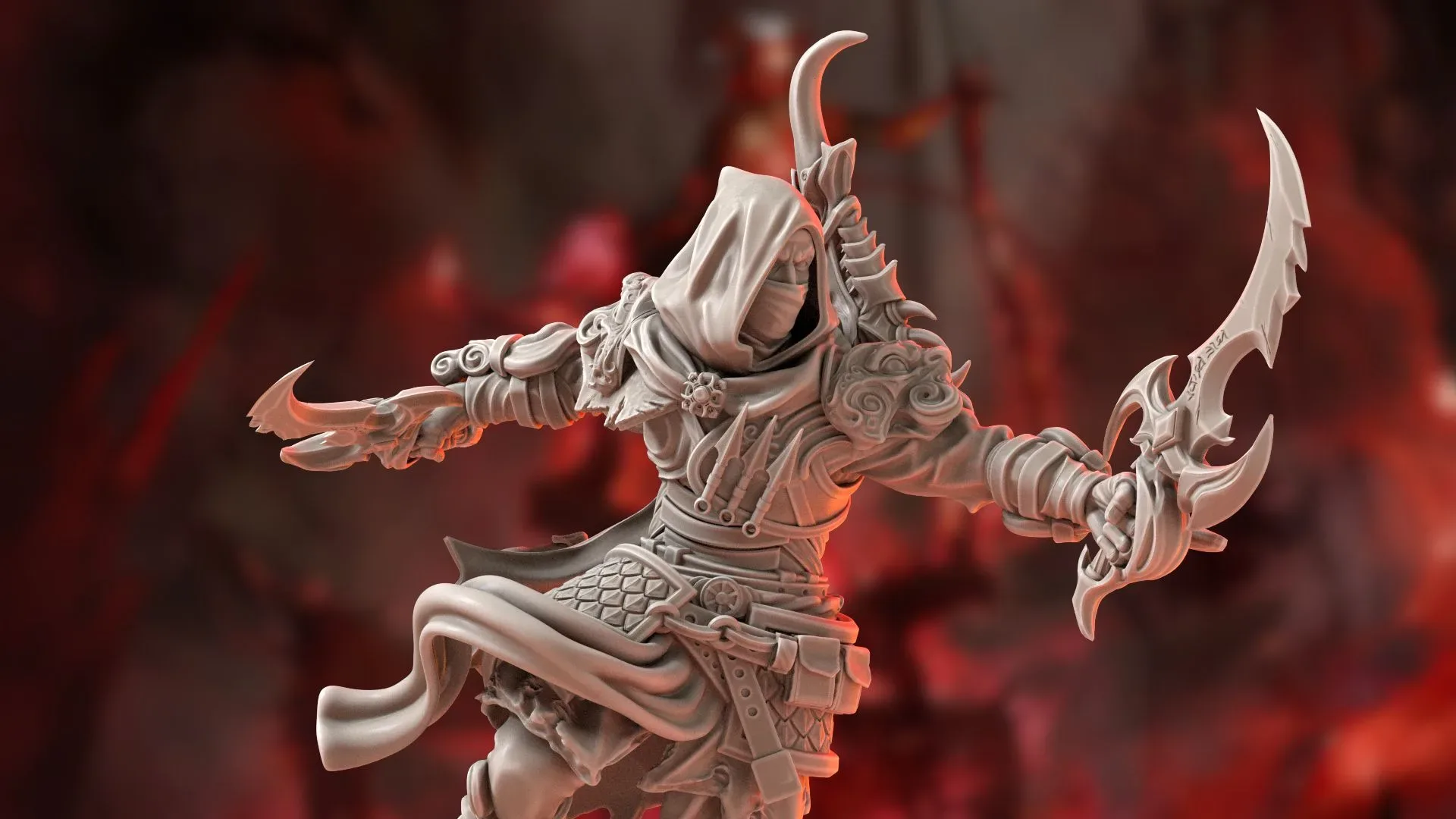
Diablo: Unbound is preparing to bring Sanctuary to the tabletop, but its maker is deliberately resisting the usual “dungeon crawler” label. Glass Cannon Unplugged instead calls the project a “dungeon battler”: a game about pressing deeper into a selected dungeon, confronting relentless monsters and bosses, and deciding how much more danger to risk for loot and glory.
That distinction is more than a branding flourish. A dungeon crawler commonly evokes exploration-led tabletop play, with rooms, maps and the gradual discovery of what lies around the next corner. Diablo: Unbound, based on the details currently shared, appears to put its greatest emphasis on combat momentum. Players select a dungeon, populate it with monster and boss miniatures, then fight their way downward through the threat. The intended rhythm is not simply wandering through a dungeon, but surviving a deliberate descent in which the action never really lets up.
The project is still some distance from its crowdfunding campaign, which is scheduled to launch on Gamefound in early 2027. However, it is due to be playable at SPIEL Essen from October 22 through 25, offering an earlier look at how that combat-heavy identity translates from concept to the table.
Four Diablo classes, each with its own build path
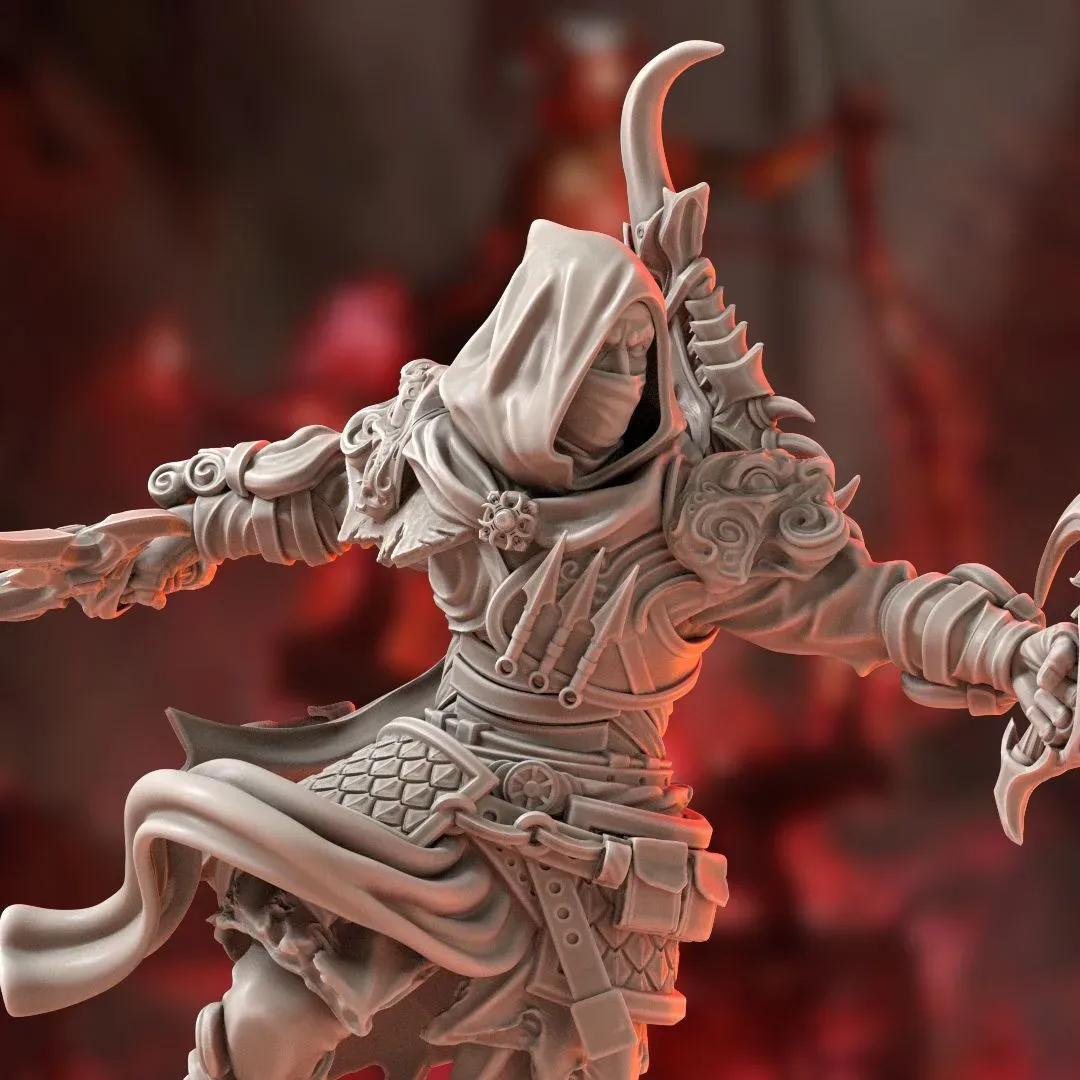
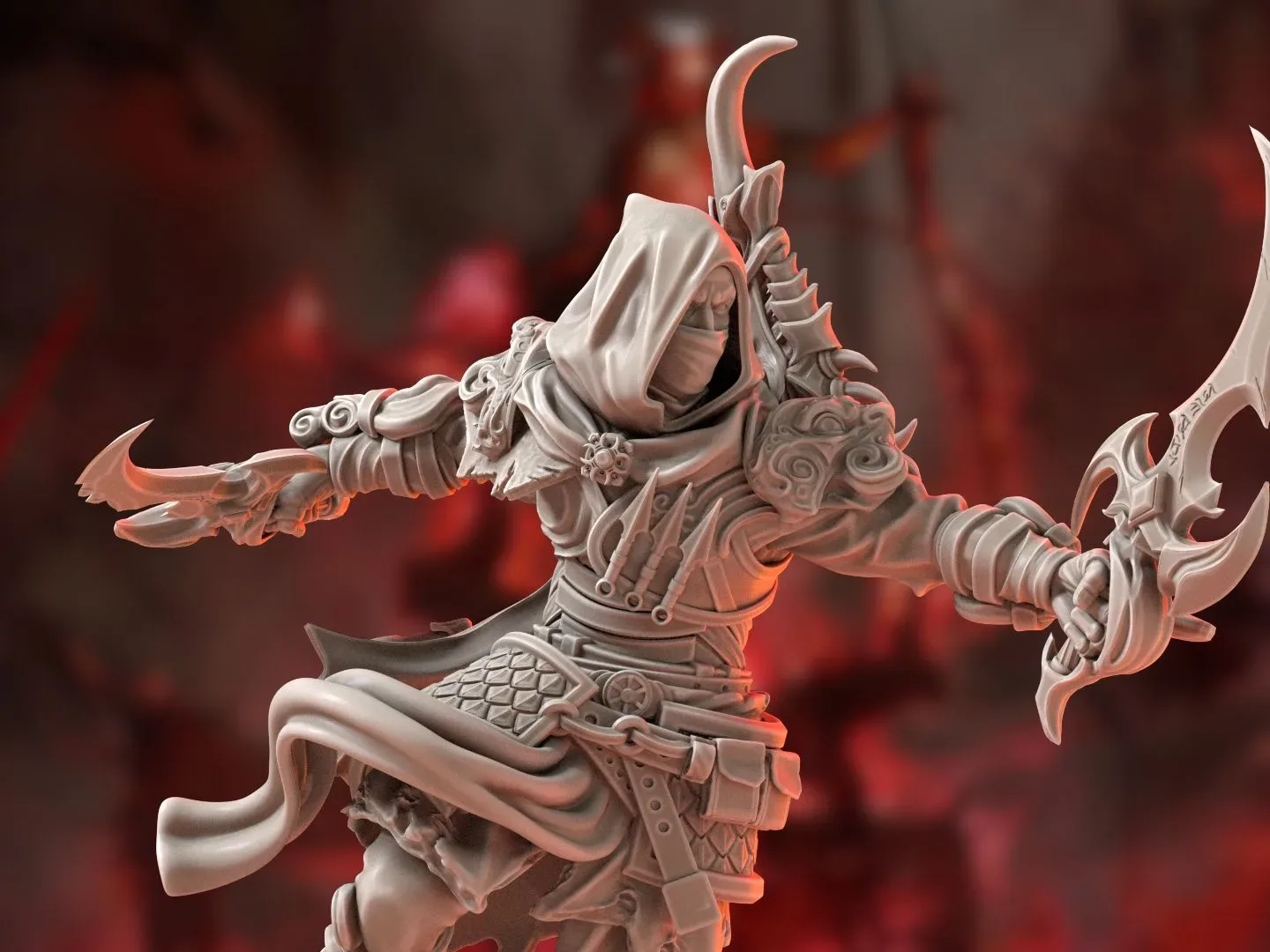
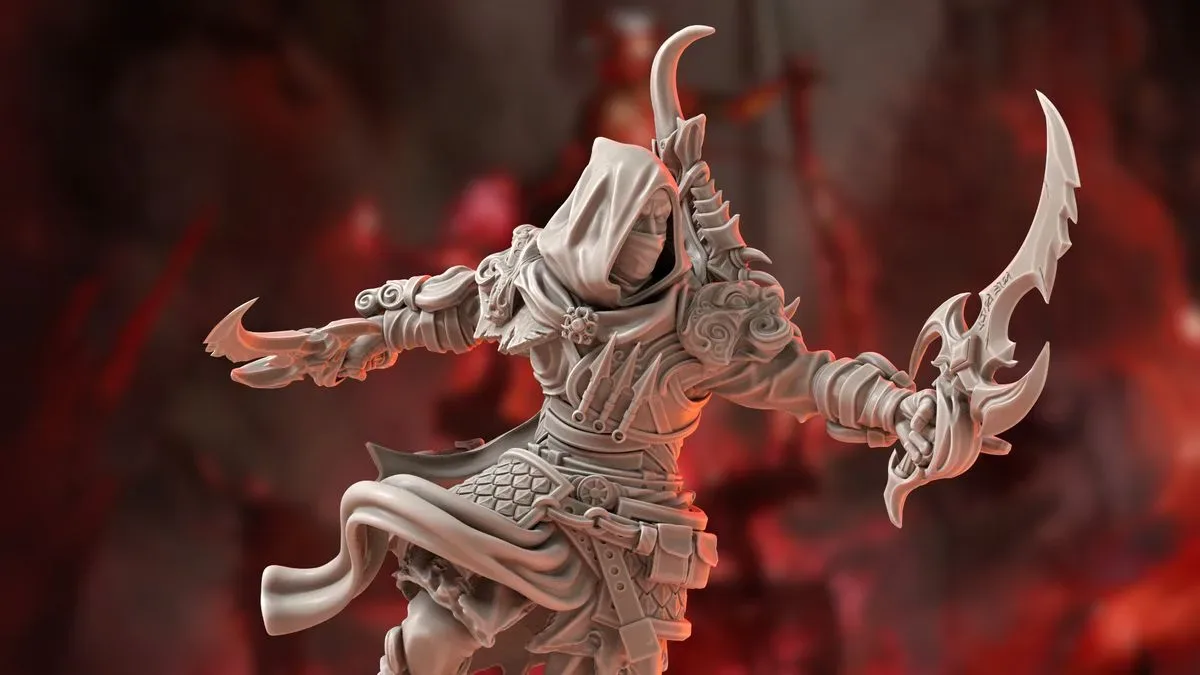
Diablo: Unbound will feature four familiar character archetypes: the Barbarian, Paladin, Sorceress and Rogue. Each is described as having a distinct playstyle, extensive customization and a unique skill tree.
In a tabletop context, a skill tree is a progression structure in which players select improvements or abilities along branching paths. The practical appeal is choice: two players using the same class may not necessarily make the same decisions about how that class develops. That is particularly important for a Diablo adaptation. Character building and the tension between specialization and flexibility are central to the series’ broader identity, so the game’s class system will have a great deal to prove beyond simply attaching a well-known name to four miniatures.
The developer has also described the design as highly modular. That term generally means a game is constructed from interchangeable components or configurations rather than a single fixed sequence. Here, the promise is replayability: different setups, character builds and dungeon challenges should give groups reasons to return. Specific details on exactly how dungeons, encounters or other modules will vary have not yet been outlined, so prospective players should treat replayability as an aim rather than a finished guarantee until more of the game is shown.
A descent structured around combat and risk
The game’s headline idea is fighting toward “the bitter depths” against a horde of enemies. That gives the dungeon a directional purpose. Rather than treating a scenario as a flat arena, Diablo: Unbound is built around the pressure of moving deeper while enemies and rewards accumulate.
“You get the high-stakes showdowns of a boss battler—and hordes of monsters that never let up,” Glass Cannon Unplugged CEO Jakub Wiśniewski said. “But you don’t crawl through dungeons. You battle your way down. That’s why we call it a dungeon battler.”
Related coverage includes Diablo: Unbound Aims to Turn Sanctuary Into a Relentless 'Dungeon Battler'.
The “boss battler” part of that description is supported by the announced boss structure. Bosses have individual attacks, their own lairs and multiple combat stages. Multi-stage encounters typically signal a fight that changes over time rather than a single enemy health pool being worn down through the same loop. The announced information does not explain how those stages are triggered or what mechanically changes between them, but it does establish bosses as set-piece encounters with their own identities.
That approach may also help distinguish ordinary monster battles from major confrontations. Mobs create the ongoing attrition and combat pressure; bosses serve as more tailored obstacles. The core question will be whether the game can make those pieces work together: routine encounters need enough variation to avoid becoming procedural, while bosses need enough personality to feel like more than longer battles.
Loot is a reward—and a reason to overextend
Loot is not being treated as a purely automatic prize. Diablo: Unbound will offer several stated ways to earn it: chests, side quests, Elite enemies and kill streaks earned while fighting mobs. The number of routes matters because it gives players competing incentives inside a dungeon. A direct path may be safer, but a chest, optional objective or tougher Elite enemy could make a detour tempting.
Glass Cannon Unplugged describes this as a push-your-luck element. In board-game terms, push-your-luck design asks a player to weigh a potential gain against the increasing chance or cost of failure. The decision is not merely whether a reward exists; it is whether pursuing one more reward is worth what it might expose the party to.
For a Diablo game, that is a sensible thematic fit. Loot-chasing works best when it creates a real tension between greed and survival, rather than handing out rewards without meaningful trade-offs. Still, the precise penalties for overreaching—and the degree to which players can mitigate them—have not been detailed. Those rules will determine whether the risk feels exciting, calculable or simply punishing.
The Town Phase provides room to rethink a build
Diablo: Unbound will not keep players underground without interruption. Before every encounter, a Town Phase allows them to improve skills or respecialize their character builds.
Respecializing, often shortened to “respec,” means revising a character’s previous progression choices. It can be valuable in a game with distinct bosses and variable dungeon circumstances because it lets a player respond to what has happened rather than be locked into an early decision for an entire campaign. A build suited to clearing groups of foes might not be the best answer to a boss with a particular attack pattern, for instance.
The announced Town Phase therefore appears to be the strategic breathing space between battles: combat and loot acquisition happen in the dungeon, while character development and adaptation happen before the next encounter. It also suggests the design wants players to experiment with its four classes instead of treating an early build choice as permanent. How extensive those upgrades and respec options are remains unknown.
Nine dungeon levels, then a Torment-mode challenge
The planned campaign structure consists of three acts, with three dungeon levels in each act. Each dungeon is expected to take up to 90 minutes. That establishes a clear nine-level framework without claiming that every group will play at precisely the same pace; “up to” leaves room for shorter sessions depending on the encounter, player choices and experience.
Completing those acts is not intended to be the final stop. Diablo: Unbound also has an endgame mode called Torment, in which players take on bosses in their ultimate forms. “Endgame” here means additional high-level content that opens after the principal progression path, giving players a reason to continue using their developed characters and earned tools after the standard objectives are complete.
Torment mode could be an important part of the replay value pitch. A modular game with class customization creates options before a campaign is completed; an endgame challenge gives those options a purpose after it. Of course, it will depend on how much the ultimate boss forms differ from earlier encounters and how much reward the mode offers beyond simply a tougher repeat. Those details have not been announced.
What is known about the team—and what is not
Glass Cannon Unplugged has prior experience adapting video-game properties for tabletop play. Its previous projects include an Apex Legends board game and a Diablo tabletop role-playing game, giving the studio direct familiarity with Sanctuary as well as experience turning a game-world premise into physical components, rules and group play.
That background is useful context, but it should not be mistaken for a complete picture of Diablo: Unbound. There is no announced crowdfunding price, release timing, full rules explanation, component list, player count or confirmation of how the final campaign will be packaged. The upcoming Essen play opportunity may provide more clarity, while the early-2027 Gamefound campaign should eventually establish the project’s formal offer.
For now, Diablo: Unbound’s pitch is focused and appropriately brutal: pick a class, shape a build, battle down through a dungeon full of miniatures, decide when loot is worth the danger, and reserve some strength for a boss that can change the terms of the fight. As discussions around physical games continue to matter across gaming, including the value of tangible releases in other formats, physical games still occupy an important place in the wider conversation. Diablo: Unbound’s eventual challenge is to make its tabletop form feel as repeatable and tempting as the loot-driven fantasy it is adapting.
Shop the products
Check current price, model and availability at the retailer.