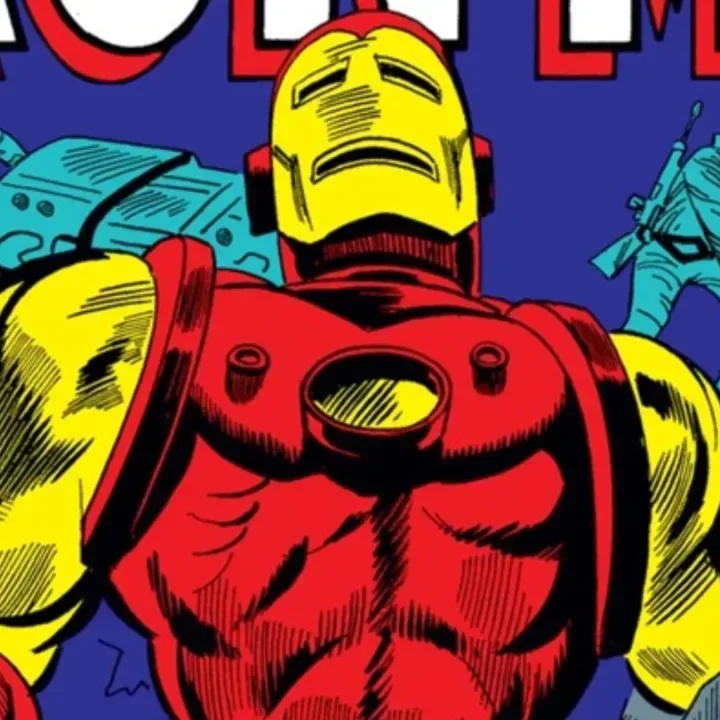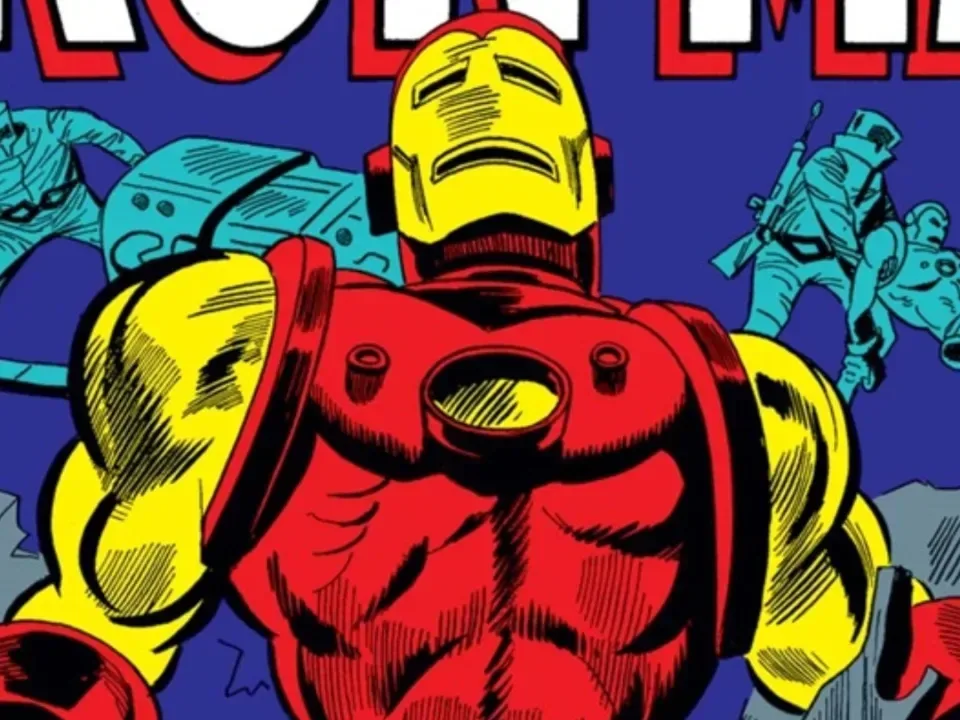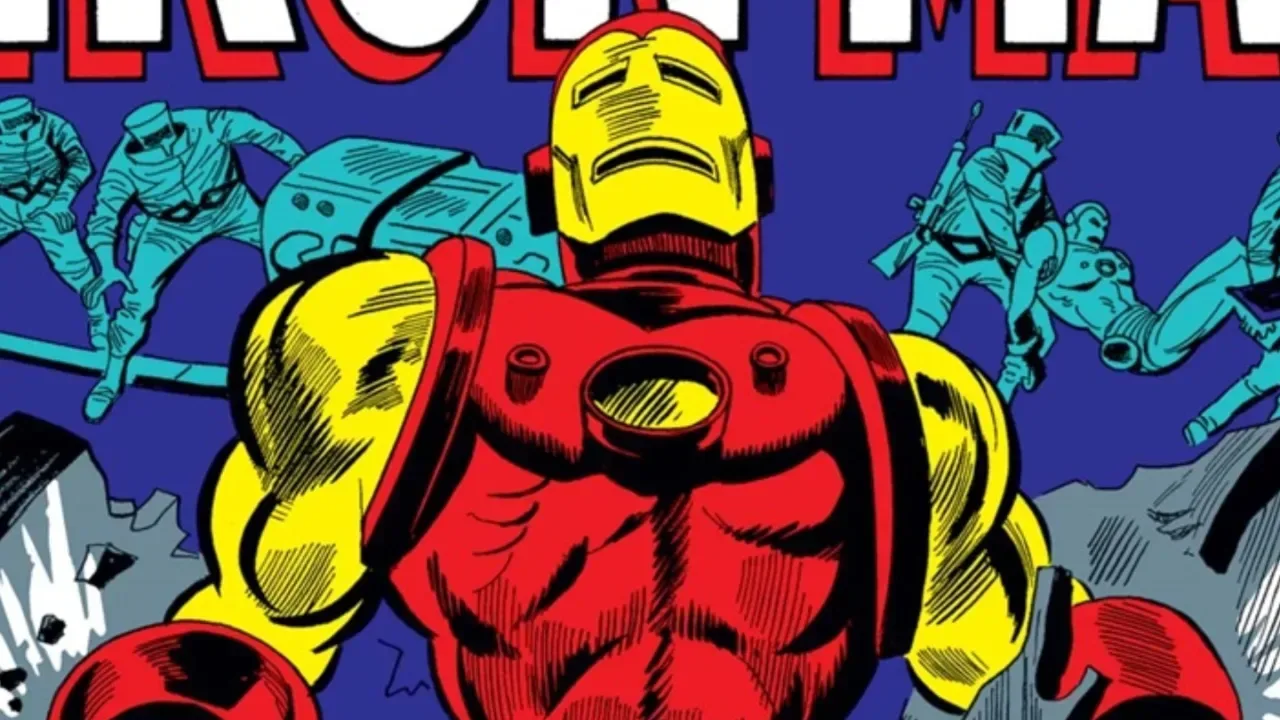
A remarkable slice of Marvel history is heading into a comic-art auction: the opening splash page from Iron Man #1, published in 1968. Drawn by penciller Gene Colan and inker Johnny Craig, the page has a claim few superhero-art lots can match. It is page one of Iron Man’s first solo comic, a large introductory image designed to establish the character’s own title from the very first moment.
The original art was previously owned by David Maisel, identified as Marvel Studios’ founding chairman. At the time the auction details were published, bidding on the page had reached $6,750. That number is a snapshot rather than a final result, but it illustrates an important reality of the original-art market: a comic’s cultural importance, a character’s profile, the artists involved, and a page’s particular job within an issue can all matter at once.
And this sale is not limited to Iron Man. The event’s highlighted material also includes Jerry Robinson’s cover for Detective Comics #68 from 1942, Joe Shuster’s cover for Action Comics #22 from 1940, pages from Frank Miller’s 1980s Daredevil work, and Jim Lee’s cover for 1992’s X-Men #6. The Lee cover had reached $135,000 when the listing was noted, a figure that puts the gulf between “neat piece of comics history” and “serious auction trophy” in very blunt terms.
Why the Iron Man page is more than an early issue page
In comic-book production, a splash page is a page dominated by a single large image. It is commonly used to introduce a character, establish a dramatic premise, or give a sequence a moment of visual emphasis. The Iron Man art is more specifically an opening splash: it begins the issue rather than appearing midway through it. That gives it a role beyond depicting the hero. It is the title’s front door.
Its position is central to why the piece stands out. This is not merely art from an early Iron Man adventure; it is the first original page from the first issue of his solo series. The combination of “Issue #1,” “Page 1,” and a full-page presentation turns provenance into a visible part of the object. A collector does not need a footnote to understand the page’s place in the comic. Its narrative purpose is inseparable from its historical significance.
Colan supplied the pencils, the drawn framework that establishes figures, staging, anatomy, and composition. Craig provided the inks, the finished linework that defines and clarifies the artwork for reproduction. Original comic art is therefore often a collaborative artifact. The credited penciller and inker are both essential when identifying what is on the board and why a page has a particular visual character.
Maisel singled out two qualities in Colan’s work: an Iron Man suit that felt expressive and flexible rather than static, and a cinematic approach to the page. That observation gets at why superhero art can have a life outside the printed story. Armor could easily read as rigid or purely mechanical. An artist who makes it appear mobile and emotionally responsive gives the character more presence, especially on an opening image that needs to sell readers on a new solo adventure immediately.
“The combination of it being the historic first page of the first issue, the big art of a Page 1 splash ... and Gene’s art was something I couldn’t say no to,” Maisel said.
The auction follows continuing interest in Iron Man as a character across comics and screen media, though the board itself belongs to a much earlier creative moment. For readers tracking Marvel beyond print, the character is also the focus of discussion around Marvel’s Wolverine and the player-agency conversation around its motorcycle chase. That is a very different medium and story, but it underscores how durable Marvel’s character history can be when it moves between formats.
Golden Age survival is part of the story
The Iron Man splash comes from 1968, but two even older covers lend the auction a broader historical range. Jerry Robinson’s cover for Detective Comics #68 dates to 1942. The issue is notable as Two-Face’s second appearance. Joe Shuster’s cover to Action Comics #22, meanwhile, dates to 1940.
Those dates place both works in the era commonly described as the Golden Age of comic books. In practical collecting terms, original cover art from that period is not simply old; its survival in strong condition is itself notable. Original production art was working material, created to be photographed and printed rather than necessarily preserved as museum pieces. That makes the condition and continued existence of a 1940 or 1942 board meaningful before any discussion of the characters or creators attached to it.
The Robinson cover also has a clear character-appearance hook. Two-Face is named specifically in connection with the issue’s second appearance, which gives the piece an added place in Batman-related publishing history. Shuster’s Action Comics #22 cover carries similarly direct creator and title recognition. These lots show that original-art collecting can be driven by multiple forms of significance:
- Publication position: an opening page or cover is often structurally prominent.
- Character history: early appearances can make an issue, and art from it, especially memorable.
- Creator association: work by influential artists can be prized for its own visual authorship.
- Survival and condition: scarcity is not just about what was printed, but what original production material remains intact.
None of those elements automatically determines a final auction price. They do, however, explain why original art cannot be treated as interchangeable with a copy of the comic. A printed issue is a reproduced publication; the art board is the one-of-one production object from which that image was made.
Modern-era landmarks are sharing the catalog
The sale’s reach extends beyond early superhero publishing. Several pages from Frank Miller’s celebrated Daredevil run of the 1980s are included, as is Jim Lee’s cover for X-Men #6 from 1992. The latter’s $135,000 bid at the time noted is especially striking beside the Iron Man splash’s $6,750 current bid, though the two figures should not be mistaken for final sale prices or direct, like-for-like measures of importance.
Auction bidding is time-sensitive. Different lots can be at different stages of interest, and a current bid is not a settled market verdict. The supplied figures establish only where bidding stood at that point. They do not tell us the eventual hammer prices, buyer premiums, or whether bidders will push higher before the sale closes.
Still, the spread usefully demonstrates how original comic art is valued as a particular object rather than a simple ranking of which character is biggest. The Iron Man work has extraordinary first-solo-issue and first-page importance. The Lee cover has its own prominent format, a major X-Men title, and a distinctive 1992 publication context. Miller’s Daredevil pages represent another major creative period. Collectors may respond to any combination of image quality, page function, creator reputation, nostalgia, character appeal, and historical placement.
What prospective bidders should keep in mind
The event is a reminder that original art is a physical collectible with considerations separate from buying a comic book to read. The evidence available here identifies creators, issue dates, current bid snapshots, and the stated historical importance of the listed pages. It does not establish final pricing, future value, or what any individual buyer should spend.
For anyone considering a bid, the useful distinction is between appreciating an image and acquiring the unique board behind it. The latter can mean competition for an object with no second copy, even when the published comic itself is widely known. A Page 1 splash from a debut solo issue is not replaceable by another copy of the issue, nor is a Golden Age cover art board replaceable by a later reprint of that cover.
That uniqueness is why the standout lots have such different appeal. The Iron Man page is an origin-point artifact for a solo title. Robinson’s and Shuster’s covers offer surviving Golden Age production art tied to landmark superhero publishing. Miller’s pages represent a defining 1980s run, while Lee’s X-Men #6 cover brings a high-profile 1990s image to the same event.
For comic fans, it is a compact tour through decades of superhero art; for collectors, it is also a reminder that the most consequential part of an auction lot can be impossible to reduce to one number. A bid amount matters, but so do the page’s purpose, the hands that made it, the issue it came from, and the fact that this particular piece of original artwork survived long enough to reach the block.