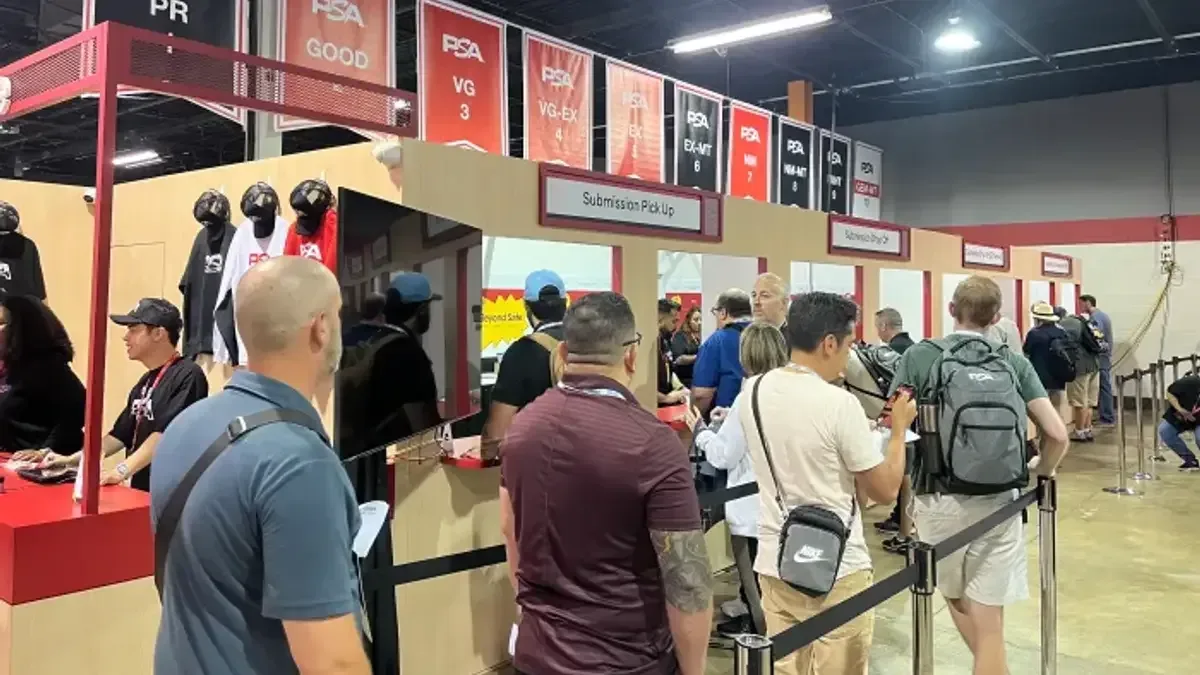
A PSA grade is an assessment of a particular collectible under PSA’s grading standards. It is useful information, but it is not a complete description of why you might want that card. The number does not choose your favorite artwork, establish your budget, or promise what another collector will pay later.
Begin with the published standard
PSA’s scale uses 10 for Gem Mint and 9 for Mint. Its published Gem Mint criteria address corners, focus, gloss, stains, printing imperfections, and centering. At the time of this guide’s source review, the stated front centering tolerance for a 10 is approximately 55/45, with 75/25 on the reverse. PSA also describes an element of grading judgment. Read the current standards before submitting; a number measured from a photograph cannot guarantee the result.
PSA also explains outcomes involving alterations or questionable authenticity. Cleaning, recoloring, trimming, or other treatment can affect eligibility and labeling. Do not attempt to “improve” a card with a substance or repair because a seller presents it as a grading trick.
Read the whole label
Check the set, year, subject, card number, and any variation described. Then compare the actual card with those details. A high grade for the wrong parallel does not answer your collecting goal. If the label or certification record seems inconsistent, resolve the discrepancy before committing to a purchase.
Use the grading company’s own verification route, reached through its official website, as one part of that process. A matching number alone should not end your examination of the item, photographs, seller, and transaction terms.
Look at the card, not just the number
Ask for clear front and back photographs and images that reveal the surface without concealing it under glare. Note what you personally notice first: centering, a visible mark, color, or the appearance of a corner. Two cards with the same grade can still differ in how they look to you.
Write down why one copy appeals more than another before looking at the price difference. This simple exercise helps separate your preferences from the label. A collection can be built around attractive cards at a consistent budget without making the highest grade an automatic requirement.
Decide what submission would accomplish
- Identification or authentication support for a card you intend to keep.
- A standardized condition description for your collection records.
- A holder and label you prefer for display or organization.
- A potential sale, evaluated with current fees and relevant completed sales.
The first three reasons are personal collecting decisions. The fourth needs more calculation. Obtain current service information directly from the grader and include shipping, insurance, and other applicable costs. Compare actual sales of the same card, version, and grade; do not assume a hoped-for grade or an advertised price will become your outcome.
Write a decision before sending the card
Record the exact card identity, visible condition, photographs, submission purpose, and maximum total cost you are comfortable with. Consider whether you would still be happy owning it if the grade were lower than expected. That question is particularly useful when the reason for submission has quietly changed from “I love this card” to “the internet says every copy should be a ten.”
Grading is a tool. Use it when the information or presentation serves your collection, and keep the underlying card at the center of the decision.