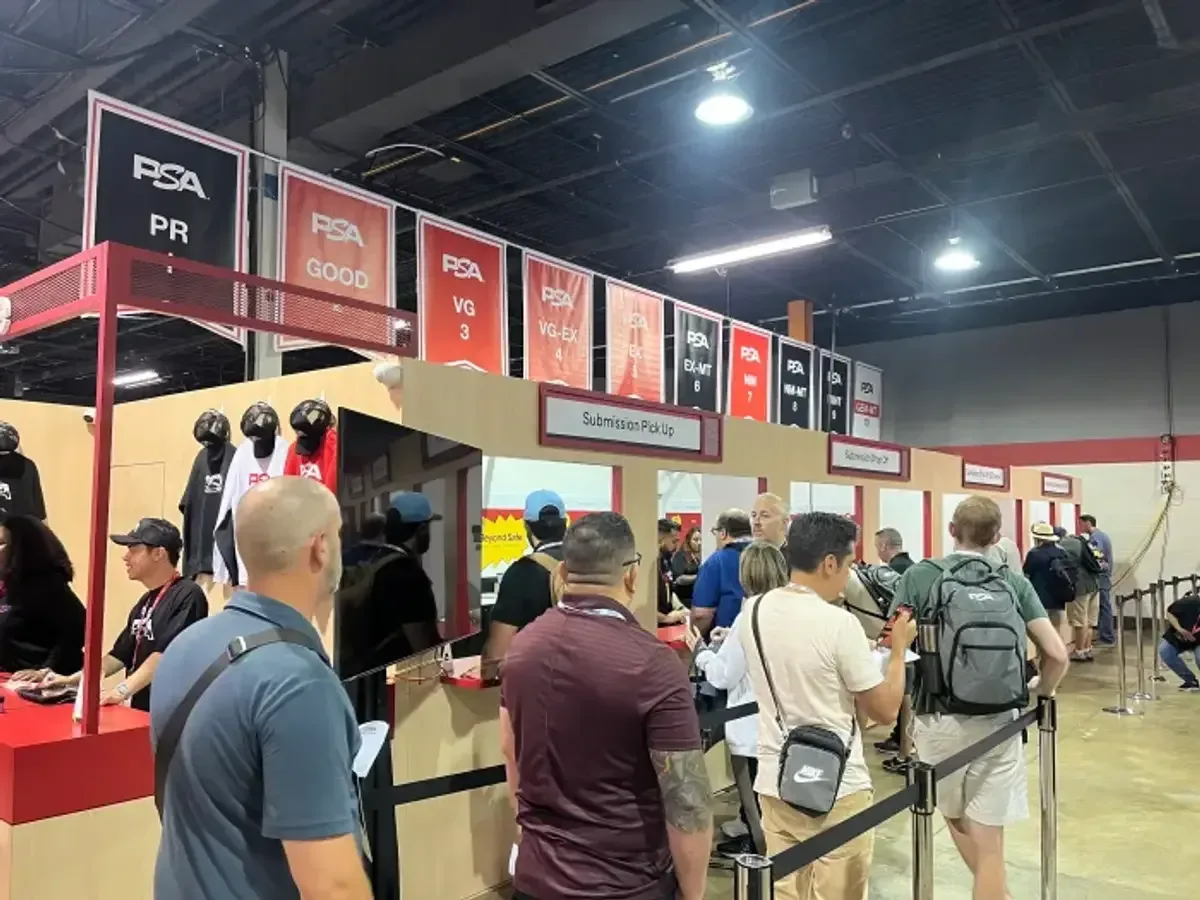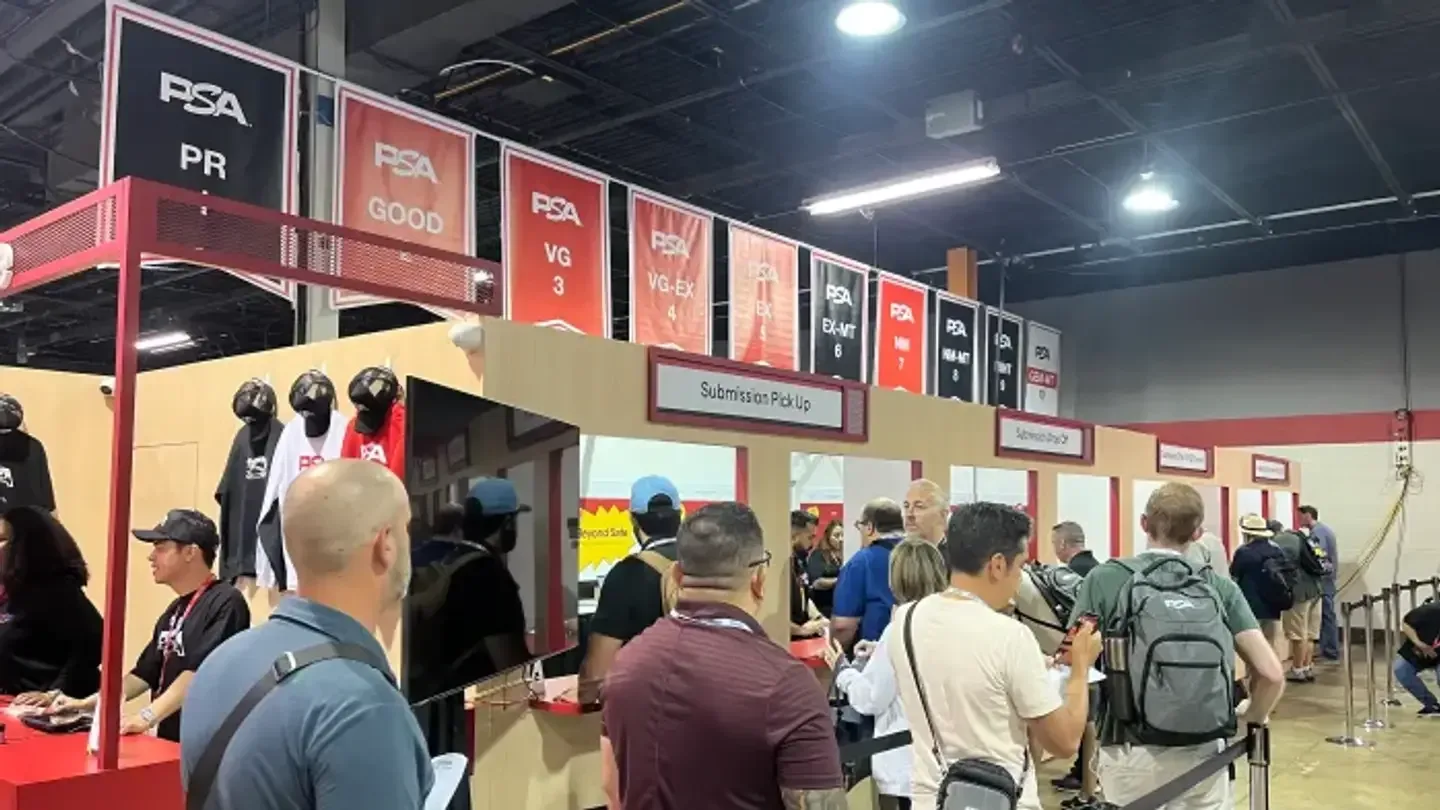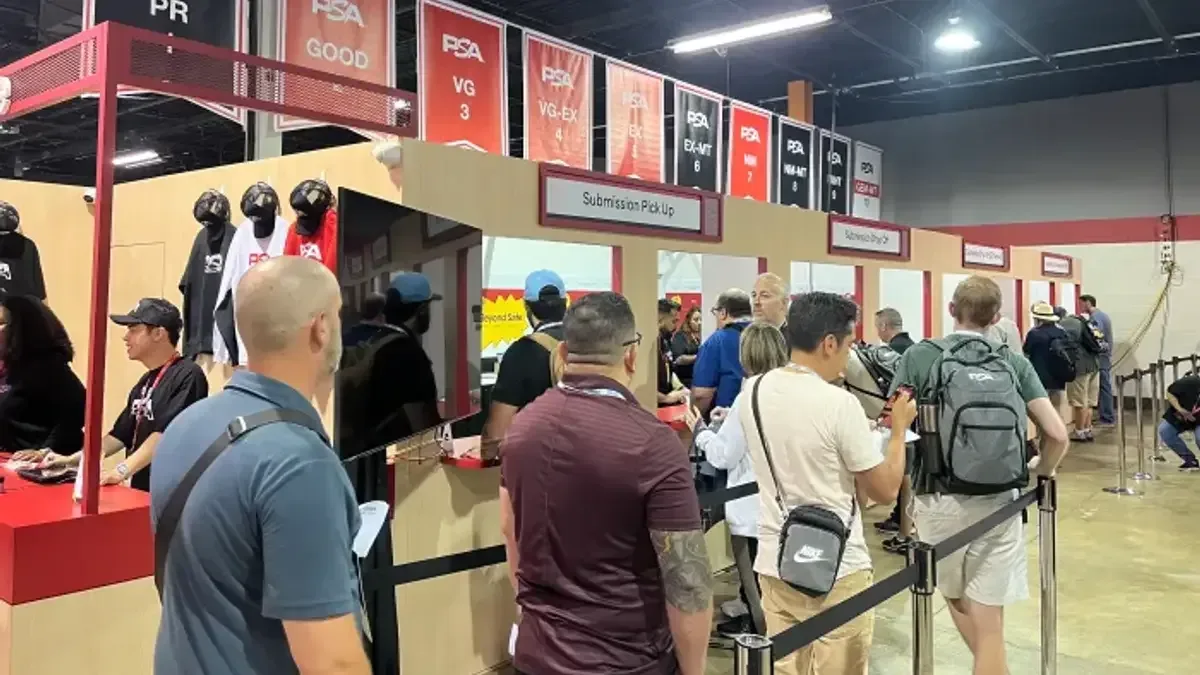
PSA is reshuffling its grading menu at a moment when its active backlog has fallen below 10 million cards. The reported figure is approximately 9.9 million, still an enormous number of collectibles waiting in the queue, but a meaningful threshold for a company that has had lower-cost submission options on pause. Beginning September 14, 2026, collectors will see a new Standard service level, revised names for several existing offerings, changed pricing in parts of the lineup, and updated estimated turnaround windows.
The headline for many collectors will be Standard: a $59.99-per-card grading tier with a maximum insured value of $1,000 per item and an estimated turnaround of 90 to 100 business days. It is not a return of the Value tiers, which remain unavailable for now. Instead, Standard represents a measured step back toward a broader service ladder while PSA attempts to keep demand and processing capacity from recreating the kind of mountain of cardboard that turns a mailbox into a seasonal event.
A day later, on September 15, PSA is also scheduled to begin accepting direct submissions at its new Frankfurt, Germany, facility. The European center is designed to bring local grading access to collectors in the region and reduce the shipping complications that come with sending cards and other eligible items across borders.
Standard arrives, but Value remains on the bench
Standard launches September 14 with three details collectors should keep front of mind:
- Fee: $59.99 per card.
- Maximum insured value: $1,000.
- Estimated turnaround: 90 to 100 business days.
That turnaround is an estimate rather than a promise, and Standard submissions will enter the workflow behind existing Value and Bulk orders. In practical terms, that sequencing matters. The tier gives collectors a newly available option between an indefinitely paused budget route and the more expensive services already open, but it does not leapfrog the cards already in the system.
PSA has indicated that the Value tiers are not being replaced by Standard. Those lower-cost levels are expected to return in stages, with demand monitored as each phase is introduced. The company’s stated marker for reopening Value is an active backlog of 5 million cards. With the backlog currently around 9.9 million, that means there is still considerable distance between today’s queue and that benchmark.
For collectors deciding whether to submit now, the distinction is important. Standard may fit cards that are worth grading but cannot justify a much higher grading fee, particularly when the declared value stays within the $1,000 insurance limit. But it is not a substitute for a true low-cost bulk submission pathway, nor is it positioned as a speedy option. Collectors with less urgent cards may prefer to wait and watch for future Value-tier reopening news; collectors facing a near-term selling, gifting, or collection-management need have a newly defined choice.
What the revised service ladder looks like
Beyond Standard, PSA is reorganizing the names attached to key levels. Some changes are primarily branding; others pair familiar turnaround estimates with a new price. Here is the stated structure for the tiers covered in the update, from the new lower-priced available option upward:
Related coverage includes PSA Adds Standard Grading Tier, Renames Service Levels, and Opens Frankfurt Submission Center.
- Standard: $59.99, estimated 90–100 business days, maximum insured value of $1,000.
- Priority: The former Regular tier’s new name. It remains $79 per card, with an estimated 70–80 business days and a $1,500 maximum insured value.
- Express: Estimated 20–30 business days. Its fee becomes $199 as the tier absorbs increased demand while other levels remain paused.
- Super Express: Unchanged in this update.
- Premier: The renamed Walk-Through service. It costs $599 per card, carries an estimated 7–10-business-day turnaround, and has a $10,000 maximum insured value.
- Premium: Begins at $999, with an estimated 5–7-business-day turnaround.
The change from Regular to Priority and from Walk-Through to Premier may seem cosmetic at first glance, but clear labels matter when collectors are comparing cost, speed, and declared value. The service menu is effectively a risk-and-urgency matrix: a collector has to balance what the card is worth, how soon it is needed, what insurance ceiling applies, and whether the grading expense makes sense relative to the card’s potential market value.
The Express increase is the most notable price change in the named tiers. Its 20–30-business-day estimate remains in place, but the new $199 cost reflects pressure on a faster service option in an environment where cheaper routes are still paused. That is useful context for anyone who sees Standard as a return to normal operations. It is progress in access, but the service structure remains shaped by backlog management.
A backlog strategy built around controlled reopening
PSA’s plan is to restore additional tiers gradually rather than flipping every paused option back on at once. The objective is to measure incoming demand, keep submissions from surging beyond available capacity, and avoid another extended delay cycle. It is a deliberately cautious approach, and the 5-million-card backlog target for Value indicates how much importance the company is placing on buffer room before reopening its entry-level services.
Ryan Hoge, President of PSA and Grading at Collectors, credited the company’s teams and operational investments for maintaining record throughput while preserving grading standards. The message behind the restructuring is not simply that more cards are moving through the system; it is that capacity expansion and queue discipline are meant to move together.
Collectors should therefore treat every quoted turnaround period as a planning estimate. A 90–100-business-day Standard order is not merely “about three months” in the casual sense, because business-day calculations exclude weekends and can extend around holidays. Add the existing Value and Bulk work ahead of Standard in the processing order, along with shipping and preparation time, and a submission calendar can look very different from a simple fee comparison.
It is also worth separating the grade decision from the submission decision. A collectible can be a good candidate for authentication or encapsulation without being an obvious candidate for a $59.99, $79, or $199 service. Condition, card value, the intended sale venue, personal collection goals, and the maximum insured value all remain core considerations. That applies across sports, Pokémon, entertainment, and games-related cards alike. A collector considering a card from Magic: The Gathering’s Reality Fracture, for example, still needs to weigh grading cost against the specific card’s condition and expected long-term demand rather than grading it because a new tier exists.
Frankfurt opens direct European submissions
PSA’s Frankfurt facility is scheduled to open to submissions at 12:01 a.m. Central European Time on September 15, 2026. Collectors across Europe will be able to submit directly for local grading rather than relying on the previous international-shipping path.
The Frankfurt operation is set to offer all service levels that are globally available for several categories: cards, autographed cards, tickets, and packs. That scope is significant because it extends beyond conventional trading-card submissions. For European collectors, local handling should reduce the time, cost, and potential friction associated with international transport, although individual turnaround estimates and available tiers will still govern the service selected.
Matthias Peuckert, PSA Europe’s managing director, described the local operation as a way to give European customers faster and more straightforward access to the same authentication and grading services offered elsewhere. The facility follows the recent opening of a Texas location, adding another piece to a wider expansion effort.
Infrastructure is the bigger story behind the menu changes
The tier revision and Frankfurt opening are tied to a $200 million infrastructure investment announced in May. That investment is the foundation for a strategy that combines increased throughput, new facilities, and a cautious return of services. The Standard tier is consequently more than a new button on a submission form: it is an early test of whether PSA can add accessibility without opening the floodgates so wide that collectors once again face a queue measured in geological eras.
For now, the near-term dates are straightforward. Standard becomes available September 14. Frankfurt direct submissions begin September 15 at 12:01 a.m. CET. Value remains paused until the active backlog reaches 5 million cards, while the latest reported total sits near 9.9 million. Collectors have more choices than they did before this update, but the company’s phased approach makes clear that the broadest, least expensive grading options are not back yet.