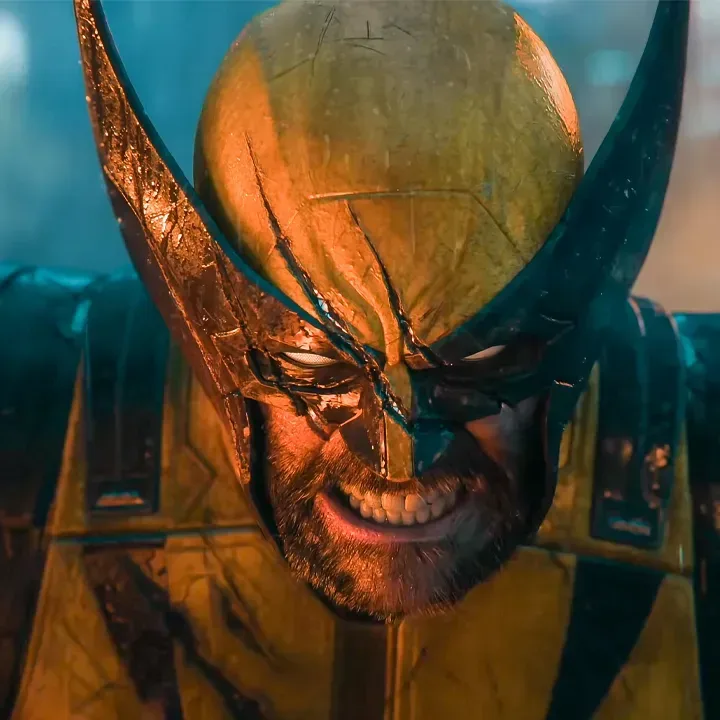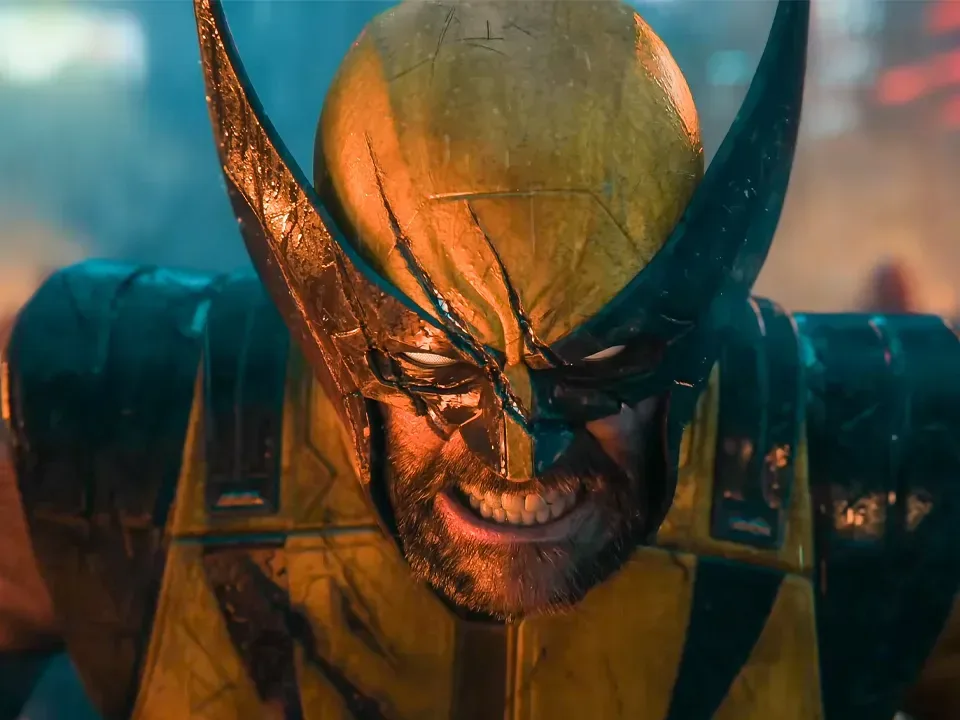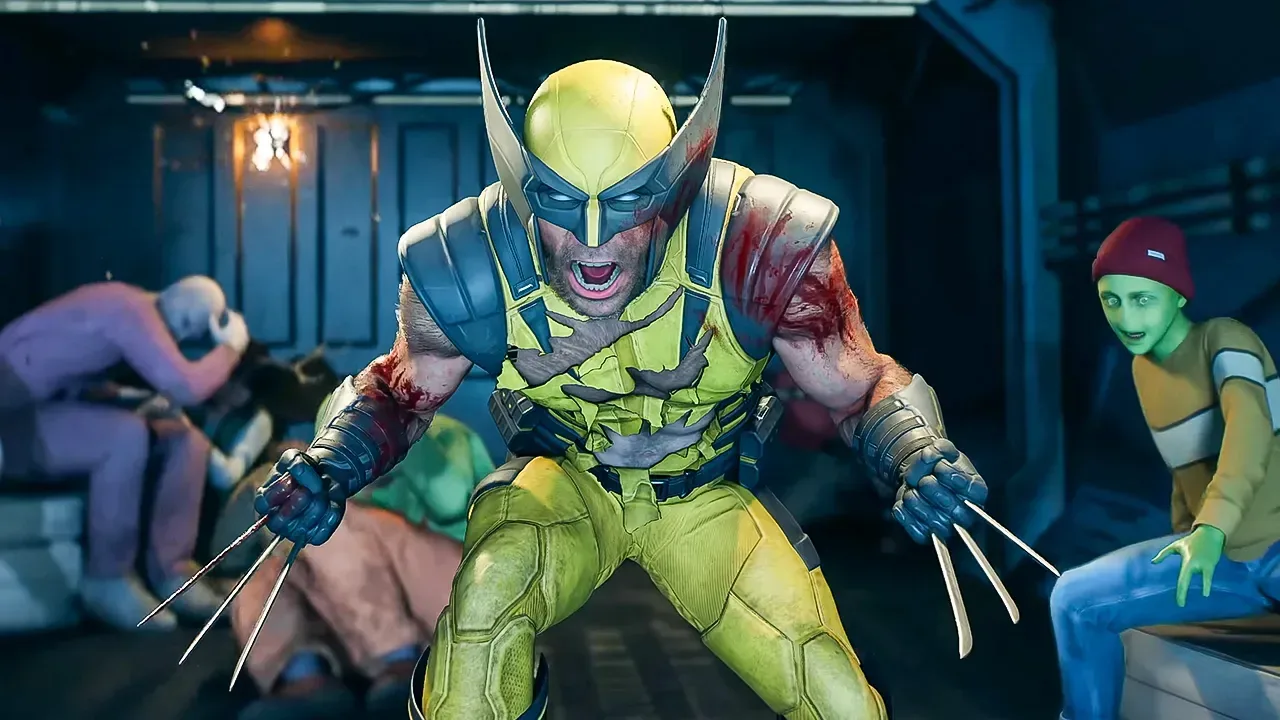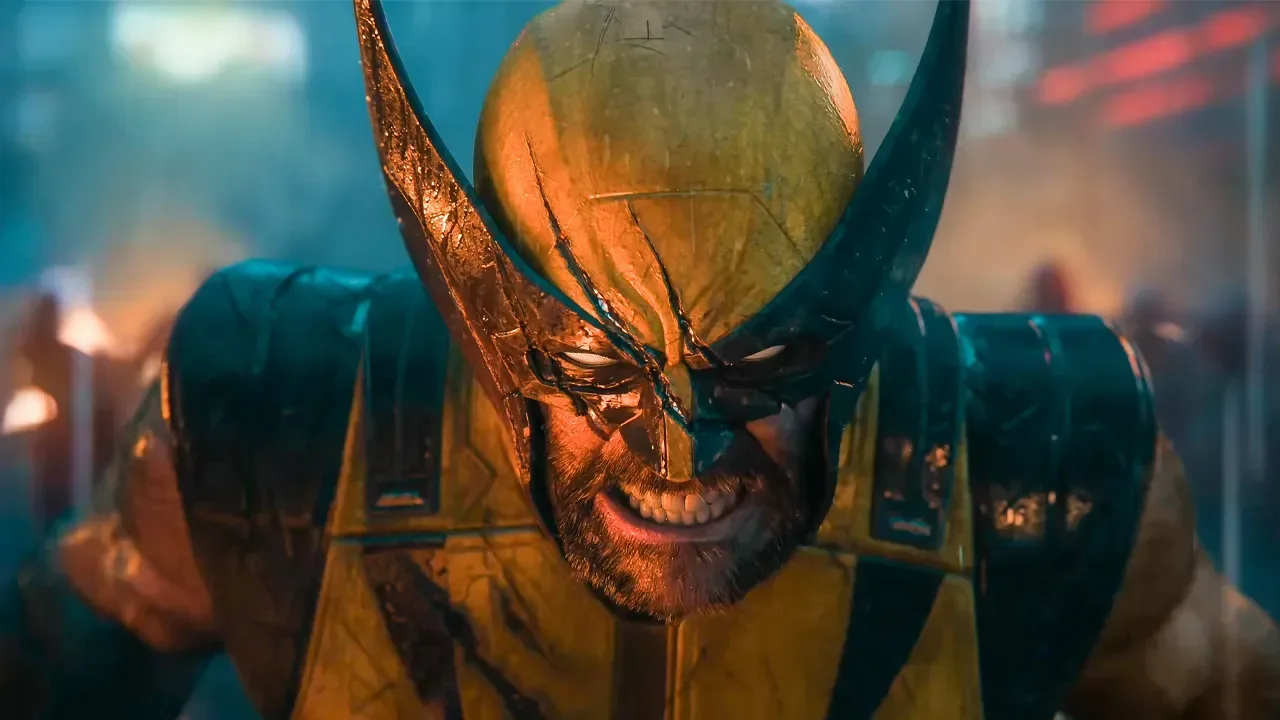
Marvel’s Wolverine has found itself at the center of another argument about what a cinematic action sequence should ask of the person holding the controller. This time, the flashpoint is a motorcycle chase in which Logan races along a winding mountain highway, moving through traffic in pursuit of a truck carrying captured mutants.
Videos and player reports circulating online suggest that, in at least some runs, the chase can carry Logan to its endpoint even when the player puts the controller down. Rather than immediately crashing out, Wolverine can ricochet between barriers and continue down the road, eventually catching the fleeing enemies. That result has prompted a simple but surprisingly thorny question: if a player can reach the next scene without actively steering, what is the intended role of the player in the chase?
The answer is not as clean as “the motorcycle drives itself.” Reports also indicate that Logan can die when struck by oncoming traffic. In an odd twist, some players argue that taking control can make a failure more likely, because deliberate steering introduces opportunities to move directly into a vehicle rather than letting the sequence’s boundaries and momentum shepherd Logan forward.
That distinction is why the discussion has split so sharply. One camp sees an overprotected set piece that looks interactive while declining to demand much interaction. The other sees a conventional action-game transition: a short on-rails moment with hazards, a destination, and failure states, even if its steering model is forgiving enough that a hands-off attempt may sometimes succeed.
What players appear to be testing
The much-shared experiment is straightforward. A player begins the chase, releases the controller, and watches to see whether the game ends in failure or resolves the pursuit anyway. One widely circulated clip showed Logan bouncing along guard rails in a way that resembled pinball more than precision riding, yet still travelling through the encounter.
These tests matter because they target the gap between presentation and mechanical demand. The scene’s stakes are clearly communicated: a rescue is urgent, enemies are escaping, traffic is dangerous, and the mountain road is visually framed as a high-speed obstacle course. Under ordinary game-language assumptions, that setup tells players that clean steering is essential. When the system can sometimes complete the journey without it, players may feel the scene has made a promise its mechanics do not fully keep.
At the same time, a single successful hands-off run cannot establish that every version of the encounter is guaranteed. A collision can still kill Wolverine, meaning a failure condition exists. The debate instead turns on consistency and pressure: how frequently does no input work, what circumstances cause it to stop working, and how much better does skilled riding make the outcome?
Those are separate questions. A game can technically allow failure while still giving players very little meaningful leverage over success. Conversely, a heavily guided sequence can remain interactive if players reliably need to read hazards, make timely corrections, and suffer the consequences of poor decisions.
QTEs, on-rails segments, and the agency problem
The conversation has repeatedly used terms such as QTE, on-rails, and player agency. They are related, but they do not mean the same thing.
- Quick-time event (QTE): a moment that asks for a specific prompt or input inside a limited window. Its challenge usually comes from noticing and executing that instruction quickly.
- On-rails sequence: a section where the game substantially controls forward movement, route, camera, or pacing. Players may still aim, dodge, steer within a lane, or handle occasional threats, but they have restricted freedom over the overall path.
- Player agency: the sense that a player’s choices and execution meaningfully shape what happens. It does not require an open-ended route or multiple endings; it can be as focused as making the difference between avoiding a collision and suffering one.
The Wolverine chase seems to be causing friction because it sits between these categories. It is presented as manual motorcycle riding, but reports of successful no-input runs make it resemble an on-rails segment with unusually broad guard rails—both literal and mechanical. And if players interpret it as a QTE-like spectacle whose required action is optional, the label becomes shorthand for a larger complaint: the game appears to be directing the outcome more than the player is.
Supporters of the sequence have a different definition of what it needs to accomplish. In their view, the segment mainly moves Logan from one story beat to the next while adding motion, danger, and spectacle. The fact that collisions can kill him means it is not wholly passive. A brief chase does not necessarily need the depth of a standalone racing challenge, particularly if its job is to maintain story momentum.
Critics are not necessarily demanding a fully simulated motorcycle system. Their concern is that the controls should be legible and consequential. If the safest or most reliable approach is to do nothing, then a scene framed around evasive riding can feel less like a challenge and more like a cutscene that happens to accept analog-stick input.
Why the failure state does not settle the argument
“Logan can die” is the strongest rebuttal to claims that the chase is completely automated. It establishes that the player is not invulnerable and that traffic can matter. But it does not, by itself, answer whether the scene delivers satisfying agency.
A useful way to assess a guided action sequence is to separate three ideas:
- Existence of risk: Can something go wrong? Here, oncoming vehicles reportedly provide that risk.
- Clarity of responsibility: Does the player understand what decisions prevent that failure?
- Reliability of influence: Does better input consistently produce a safer or stronger result than no input?
The online tests are aimed largely at the third point. If an unattended run regularly reaches the truck, players can reasonably question how much their handling skill contributes. If unattended runs only occasionally work, while active riders can consistently avoid collisions and finish cleanly, the case for the chase as a forgiving but legitimate interactive sequence becomes stronger.
There is also a tonal issue. Wolverine is a character associated with physical danger and forceful action, so a set piece built around rescuing captives naturally invites expectations of intensity. Players who find the game challenging elsewhere may still judge this one moment as too insulated from failure. Others may welcome an accessible breather between combat encounters. Neither reaction requires pretending the other experience did not happen.
A small sequence can expose a bigger design preference
The motorcycle dispute follows broader mixed reactions to Marvel’s Wolverine. Earlier discussion had already focused on a Sentinel boss encounter, the style of the voice acting, scent-trail tracking, combat difficulty, and the perceived use of low-stakes or impossible-to-fail prompts. The chase has become especially visible because it is easy to demonstrate: players can simply record a run with no controller input and let viewers decide what they think they are seeing.
That kind of clip is powerful, but it is also incomplete. It shows a specific outcome, not necessarily the full set of conditions behind it. Difficulty settings, traffic patterns, collision behavior, checkpoints, and the exact duration of the player’s inaction could all matter, but the available discussion does not establish a comprehensive technical explanation. It is more accurate to say that players have documented hands-off completions and reported deaths from vehicle impacts than to declare the entire chase definitively automatic.
For players approaching the game, the practical takeaway is modest. Treat the chase as a guided story sequence with real hazards rather than assuming either extreme. Steering may not always appear necessary to keep moving forward, but it may still be necessary to avoid a fatal hit. Anyone trying to evaluate it for themselves should pay attention not merely to whether the scene ends, but to whether their choices improve positioning, reduce impacts, or change how safely they reach the truck.
The broader lesson for developers is equally practical. Spectacle-heavy sequences work best when their rules are clear. If a game wants players to feel like they are driving, then visible, repeatable consequences for good and bad handling help preserve that feeling. If it instead wants a largely authored chase, leaning into that presentation can avoid the impression that the player is being handed controls without meaningful authority.
Online criticism can turn a narrow complaint into a verdict on an entire game, particularly when short clips are easy to share. The more productive version of this debate is not whether a guided chase is inherently bad, nor whether the mere presence of a death screen makes every control input meaningful. It is whether the sequence’s demands match its dramatic framing.
That is a recurring issue across action games, and it is one worth discussing precisely. Similar conversations about how studios respond when players identify friction points are unfolding elsewhere, including in a recent player-feedback discussion around Wardogs. In Wolverine’s case, the mountain road has become a compact test of a much bigger preference: do players want a cinematic rescue that protects its pace, or a chase that trusts them to earn every narrow escape?