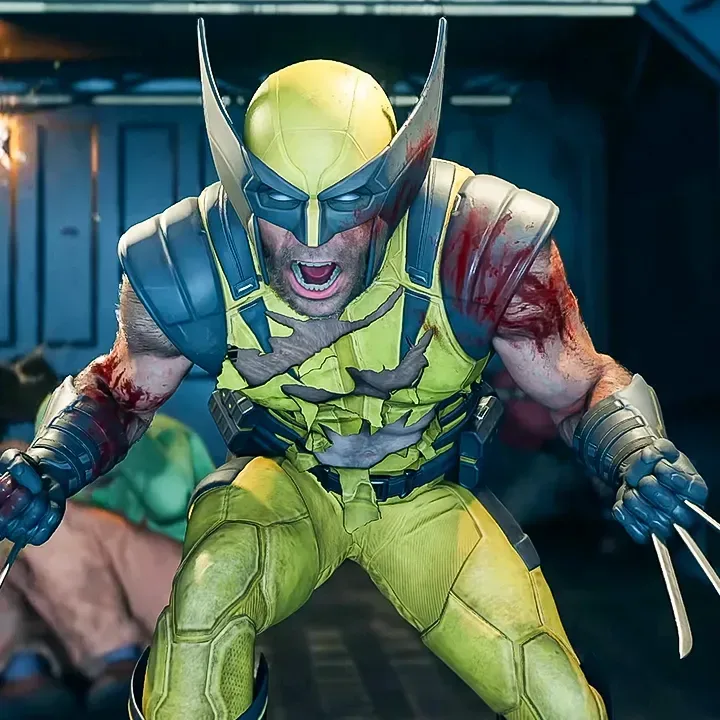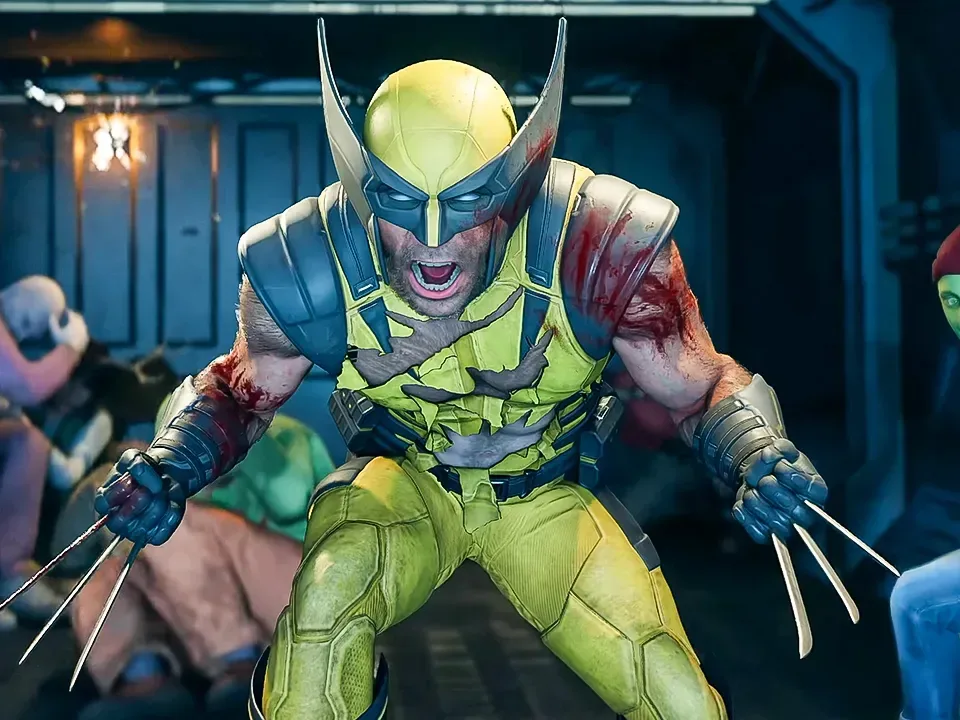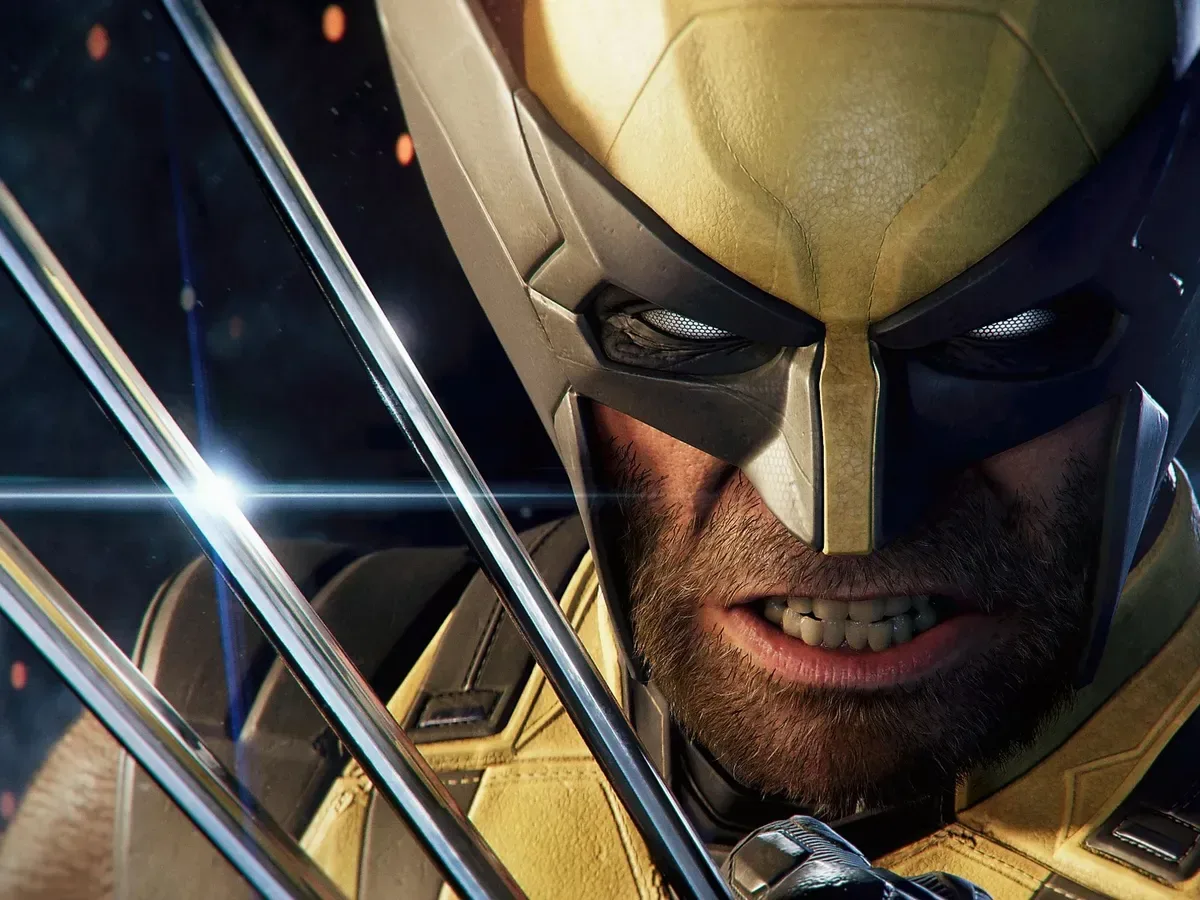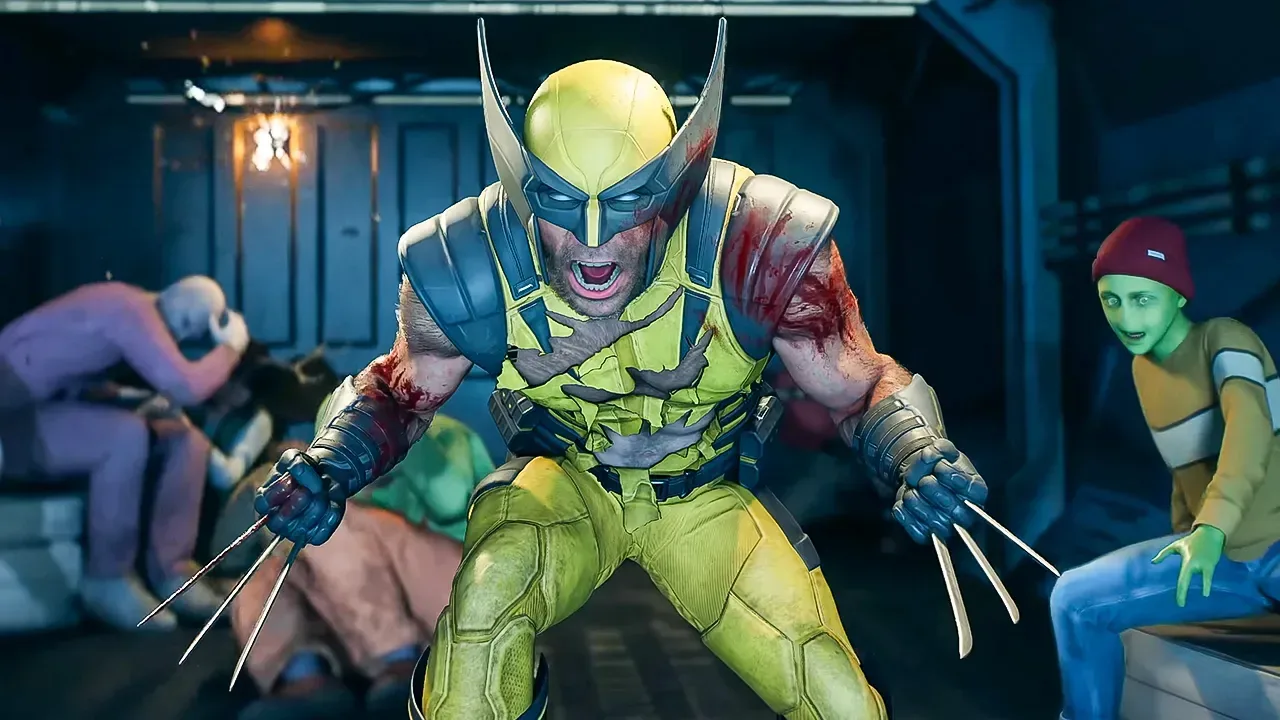
Marvel’s Wolverine does not simply hand Logan a comic-faithful costume and hope players ignore what happens after several close encounters with claws, bullets, explosions, and whatever else a Wolverine game can throw at him. Near the opening of the game, Walter Langkowski gives Logan a proper superhero suit—cowl included—and supplies a clean in-universe answer for why that outfit can repeatedly return from damage: it can repair itself in the field.
The important wrinkle is that the suit’s nanotechnology is not presented as generic futuristic fabric. It is identified as Phalanx technology, tying a practical gameplay accommodation to an established part of Marvel lore. That small explanation does a surprising amount of work. It preserves the visual identity of Wolverine’s signature costume, gives the game a reason not to leave Logan progressively more tattered after every fight, and introduces a name that carries potentially unsettling comic-book associations.
A solution to the “indestructible hero, destructible shirt” problem
Wolverine’s healing factor has always created an obvious visual question in action games. Logan’s body can recover, but ordinary clothes cannot. If his jacket, shirt, or superhero uniform takes the same punishment as he does, a strictly literal approach would mean visible wear accumulating until the character is barely dressed at all.
That might make sense for a moment, but it is not necessarily useful for a game built around a recognizable character silhouette. Wolverine’s yellow-and-blue costume, its mask, and its bold shapes are part of the character’s visual language. Keeping that image intact after combat is not merely cosmetic housekeeping; it helps the game retain an immediately legible version of Logan.
Langkowski’s suit explanation turns a familiar convention into story information. Rather than treating a restored costume as an invisible reset between encounters, the game establishes an autorepair function. In plain terms, the material can restore itself after being damaged, just as Logan’s healing ability restores his body. The distinction matters: Wolverine himself is not magically healing cloth. The suit has its own repair mechanism.
It is a sensible division of responsibilities. Logan’s biological recovery remains his own extraordinary trait, while the costume’s recovery is a technological feature designed to operate around someone who routinely survives extreme damage. That also makes Walter Langkowski’s role more meaningful than a simple wardrobe handoff. He is providing equipment tailored to the reality of being Wolverine.
What “nanotech” means here
Nanotechnology is a broad fictional term for technology operating at an extremely tiny scale. In superhero stories, it is often used to describe materials or machines able to change shape, assemble into a suit, repair damage, or perform other feats that ordinary equipment could not manage. In this case, the relevant function is straightforward: the suit can mend itself while Logan is active in the field.
The concept is useful because it lets a game acknowledge damage without requiring permanent visual degradation. A developer can show that combat has consequences in the moment, then allow the character’s iconic appearance to return without pretending nothing happened. For players, that can make a cosmetic reset feel less arbitrary. The game is not asking them to believe fabric shares Logan’s mutant healing factor; it is telling them the outfit was built for his working conditions.
Nanotech has become a frequent superhero-story tool, particularly for advanced costumes. Its flexibility is also why some audiences have grown wary of it: a vague technology can become an all-purpose explanation if it is allowed to do anything whenever the plot needs it. Marvel’s Wolverine narrows the use case, at least in the information currently available. The stated job is suit autorepair, not an unlimited source of powers, weapons, or solutions.
That specificity is welcome. “The costume fixes itself” is a modest explanation for a modest but persistent question. It does not need to be more complicated than that—unless the game decides the Phalanx connection is more than background flavor.
Why the Phalanx name is more loaded than it first sounds
The word Phalanx is not neutral Marvel-brand jargon. In Marvel lore, the Phalanx are a cybernetic species associated with techno-organic lifeforms, infection, and a hivemind. A hivemind is a collective intelligence or network in which individuals are connected and function as part of a larger whole rather than as wholly independent actors.
That background gives the otherwise practical costume explanation an edge. A suit able to rebuild itself is one thing. A suit using technology tied to a cybernetic collective known for converting or infecting other species is another. The available details do not establish that the game will turn Logan’s costume into a threat, that the Phalanx will play a major role, or that the material has consequences beyond repair. Those would be assumptions, not confirmed facts.
Still, selecting Phalanx tech rather than unnamed nanobots is a deliberate-feeling piece of Marvel-world texture. It lets the game use a recognizable concept from the wider mythology while solving a mechanical presentation issue. The reference may ultimately be a nod for readers familiar with X-Men material. It may also be groundwork for a larger plot thread. At this stage, the latter remains uncertain.
That ambiguity is part of what makes the detail interesting. In superhero fiction, technology is often more than equipment. It can signal a character’s alliances, reveal dangerous origins, or create a future complication. Phalanx-based material has enough baggage that viewers and players may reasonably keep an eye on it, even if the immediate explanation is simply that Logan needs a suit that can survive being Logan.
Walter Langkowski’s presence gives the suit an owner and a purpose
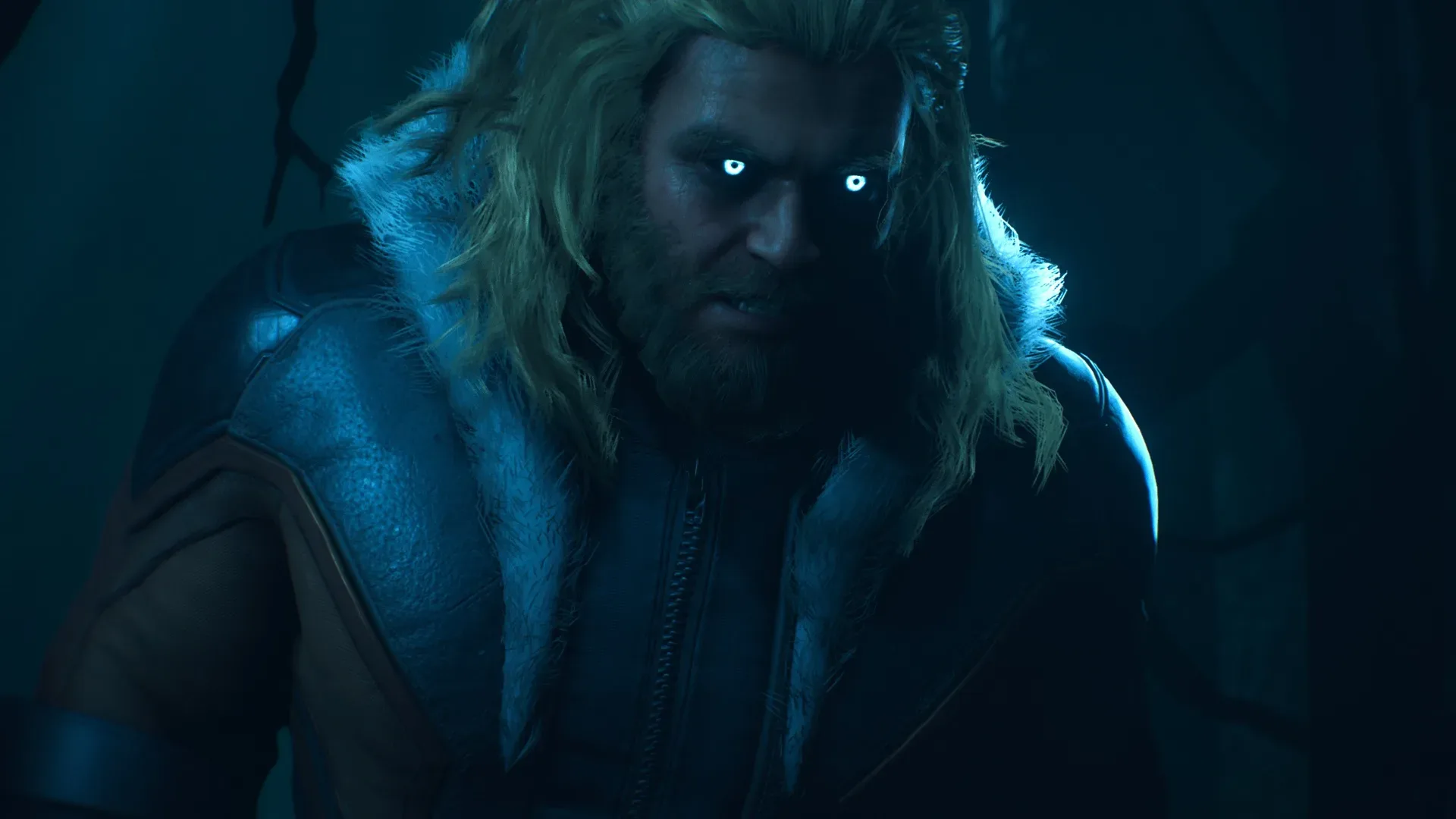
Walter Langkowski is the character who gifts Logan the costume and explains its repair technology. The scene therefore avoids a common shortcut: an iconic outfit appearing with no meaningful origin beyond the fact that the audience recognizes it. Logan receives a purpose-built superhero suit from a named figure, and the repair system is discussed rather than silently assumed.
That context helps the comic-inspired costume sit within the game’s world. A cowl and bright superhero design can look natural in a comic panel, but a game benefits from a reason the gear exists and a person capable of making it. By pairing the visual homage with a functional explanation, Marvel’s Wolverine appears to be treating the costume as equipment as well as iconography.
It also establishes an expectation for how the game may handle other familiar elements. If the developers are taking time to explain why the suit repairs itself, they may be interested in grounding classic Wolverine imagery without stripping away its heightened comic-book character. That is an interpretation of this single detail, not a promise about the game’s full approach—but it is a notable choice.
An answer earlier Wolverine games did not need to provide
The new game’s explanation stands in contrast to X-Men Origins: Wolverine, an earlier game cited as an influence on Insomniac’s title. In that game, Logan’s wounds could heal outside combat. His clothing could appear to recover as well, but there was no stated in-world reason for the outfit to regenerate alongside him.
That older approach was hardly unusual. Games routinely restore a hero’s appearance after damage because permanent costume destruction can be distracting, expensive to represent across every scene, or simply inconsistent with the character’s established look. Most players understand the convention intuitively. A health system, a checkpoint, and a clean costume often serve readability and pacing better than a simulation of every torn seam.
Marvel’s Wolverine is taking the extra step of making that convention part of the fiction. It is not a revolution in game design, nor does it need to be. It is a piece of connective tissue between gameplay presentation and Marvel continuity. For fans who notice these details, that is more satisfying than an unexplained visual reset; for everyone else, it should keep the suit looking like Wolverine’s suit after a fight.
What players should and should not infer
The firm takeaway is limited but clear: Logan receives his signature superhero costume from Walter Langkowski, and the outfit can autorepair through Phalanx nanotech. That is the game’s explanation for the costume recovering from damage in the field.
- Confirmed: The suit has an in-world autorepair function.
- Confirmed: The relevant nanotechnology is identified as Phalanx technology.
- Confirmed: The costume is modeled on Wolverine’s familiar comic-book look, including the cowl.
- Not established: That the Phalanx will be a major antagonist or central story focus.
- Not established: That the suit’s technology will cause harm, alter Logan, or have abilities beyond repairing the outfit.
That separation matters because the Phalanx label invites speculation. It is fair to recognize the lore attached to the name; it is not fair to convert that recognition into a confirmed plot prediction. For now, the clearest reading is that Marvel’s Wolverine has found an elegant comic-universe rationale for an old action-game convenience.
And it is a rationale particularly suited to Wolverine: a hero whose body can take astonishing punishment, whose costume is inseparable from his identity, and whose world has more than enough strange science to ensure the two can keep pace with each other.
For another look at how games build character relationships and let companion dynamics affect player choices, see our coverage of Exodus’ approach to multiple romances.