Spoilers for DNX #1 and X-Men #37 follow.
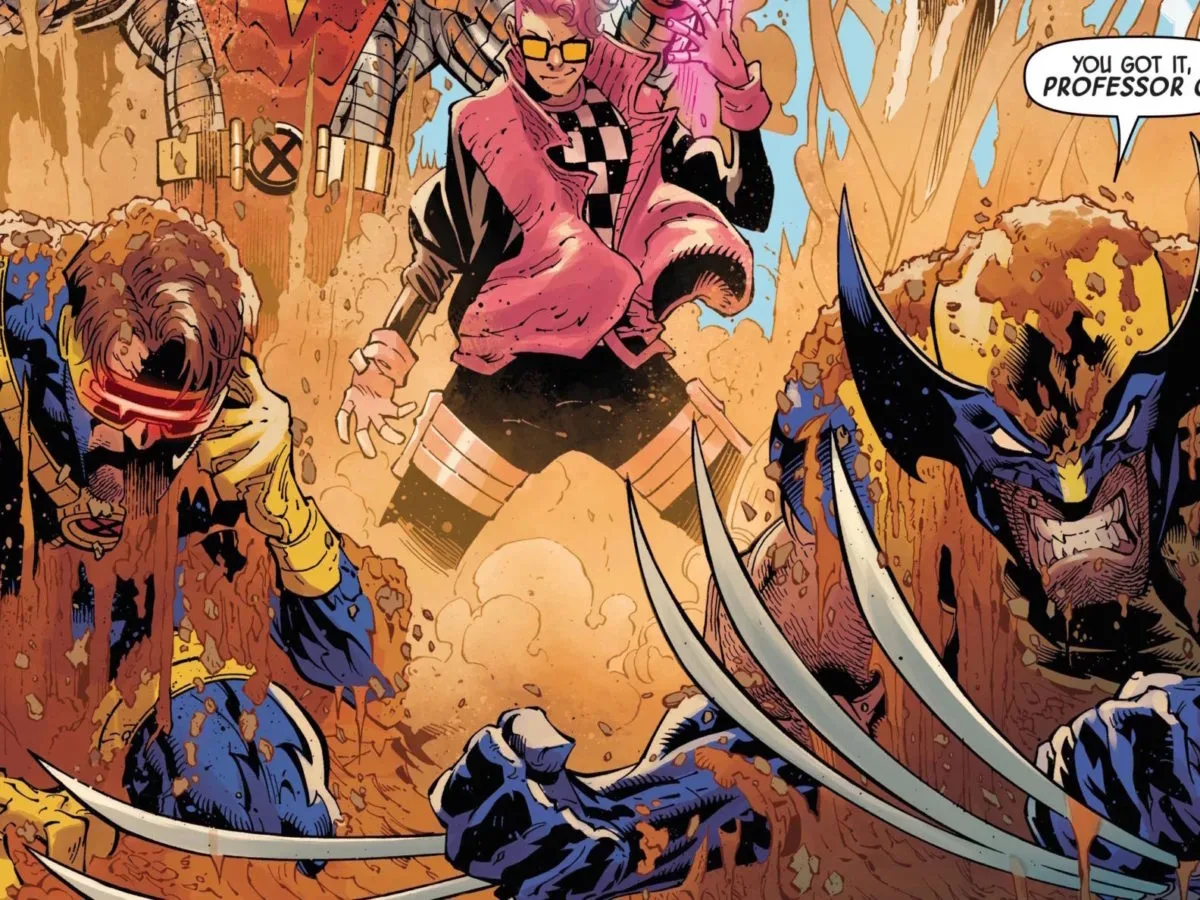
Marvel’s mutant line has opened a particularly high-stakes front in DNX #1 and its X-Men #37 tie-in: a looming biological weapon, a struggle over Magneto’s life and abilities, and a telepathic duel between Quentin Quire and Cassandra Nova. The immediate danger is the X-Virus, described as a gene bomb intended for release in a major population area. But the key dramatic turn is not merely whether Kid Omega can outthink an ancient enemy. It is the return of a Phoenix-linked force to the X-books, used as the decisive answer to Cassandra Nova.
DNX #1 is written by Jed MacKay with art by Federico Vicentini. X-Men #37, also written by MacKay, features art by Netho Diaz. Both issues are dated September 16, 2026, and their stories position the X-Men against 3K, an antagonistic mutant faction with its own claim to Xavier’s legacy.
The immediate threat: 3K and the X-Virus
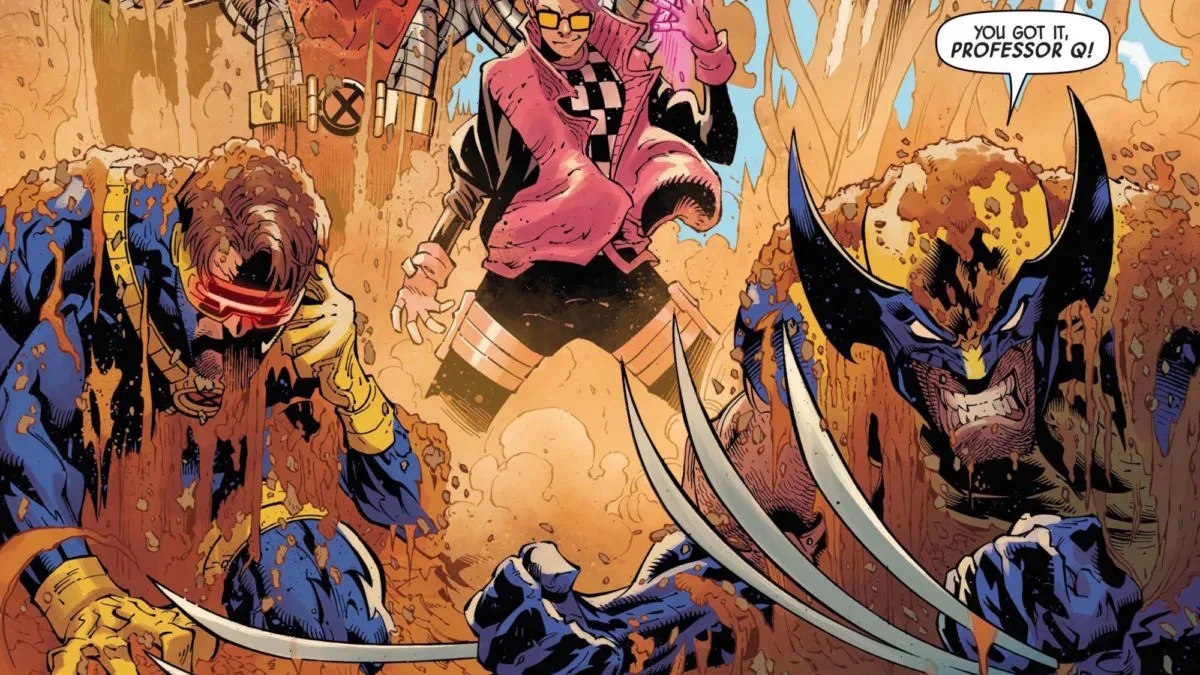
The conflict is bigger than one villain-versus-hero confrontation. The X-Men and 3K are presented as rival groups steered by “original heir[s] of Xavier,” each pursuing radically different outcomes for mutantkind. Cyclops and the Chairman have both experienced the future called the Age of Revelation, but their responses diverge. The X-Men return intending to stop that future; 3K wants to bring it about and control it.
That context makes the X-Virus more than standard supervillain doomsday hardware. The available setup calls it a gene bomb and says the White Beast plans to unleash it in a densely populated location. In plain terms, a gene bomb is a weapon whose danger is rooted in genetic change rather than a conventional explosion. The phrase “evolution is contagious” frames the virus as an engineered catastrophe with potentially broad human and mutant consequences. The story’s stakes therefore extend beyond the survival of a single team or city block.
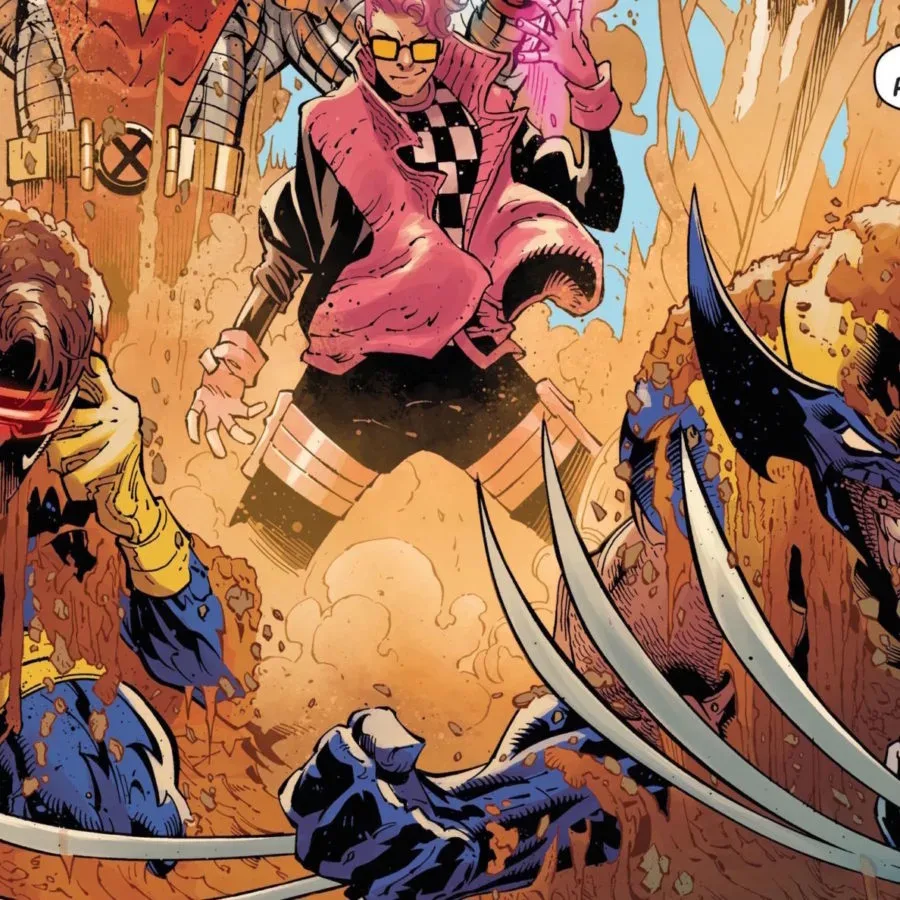
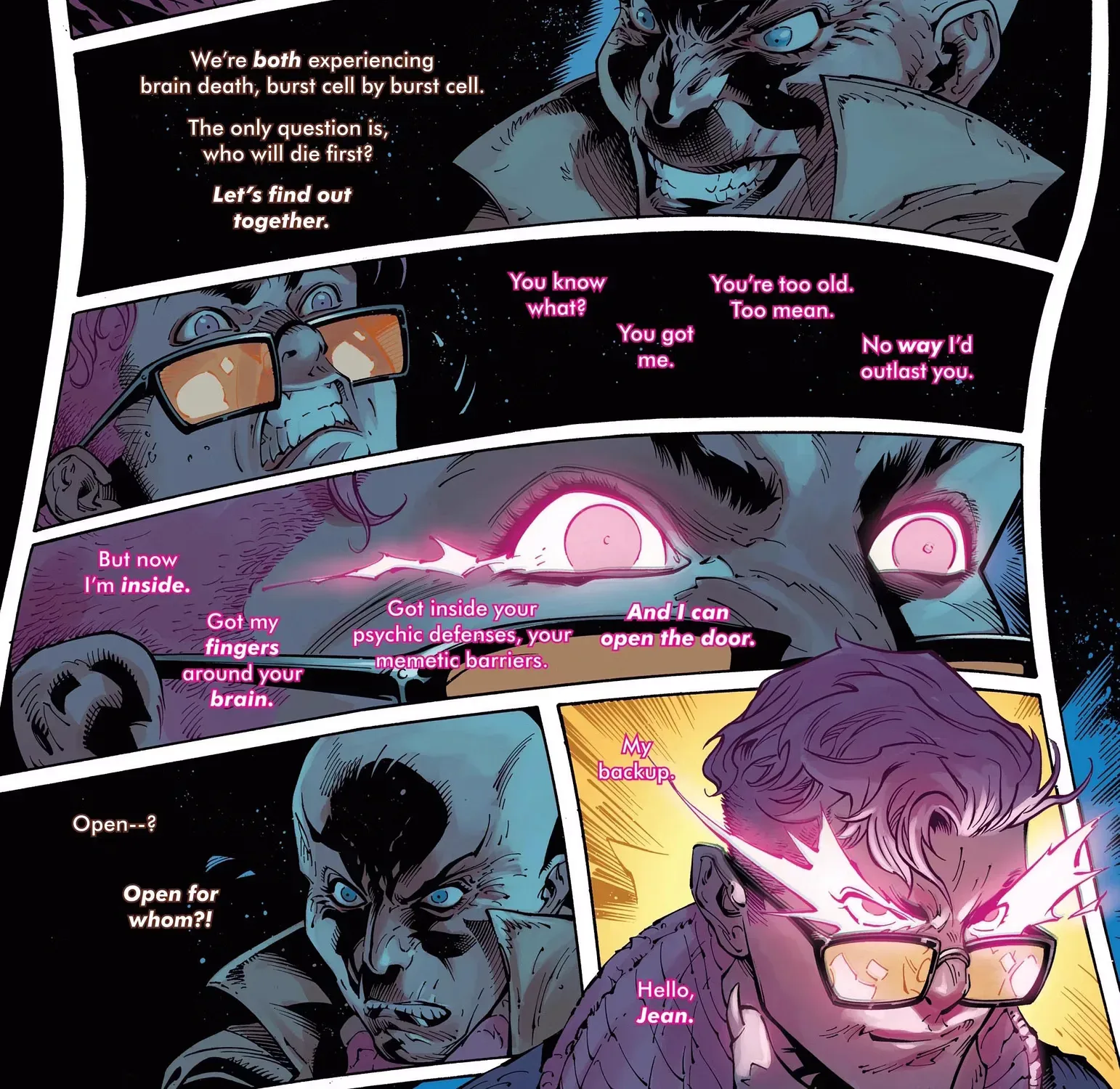
While the wider X-Men conflict attempts to halt 3K’s plan, Quentin Quire takes on Cassandra Nova directly. Quire, also known as Kid Omega, is identified as an Omega-level telepath. “Omega-level” is Marvel’s designation for mutants operating at the extraordinary upper limit of a particular power; here, that power is telepathy, the ability to access, affect or contend with minds.
Cassandra is no ordinary psychic opponent. She is described as Charles Xavier’s mummudrai twin and as an entity who has existed for billions of years. Whether Quire can win is consequently not just a test of raw psychic force. It is a battle of endurance, nerve and control inside a mental confrontation where each combatant is trying to become the one left standing.
Quentin Quire’s win does not stay won
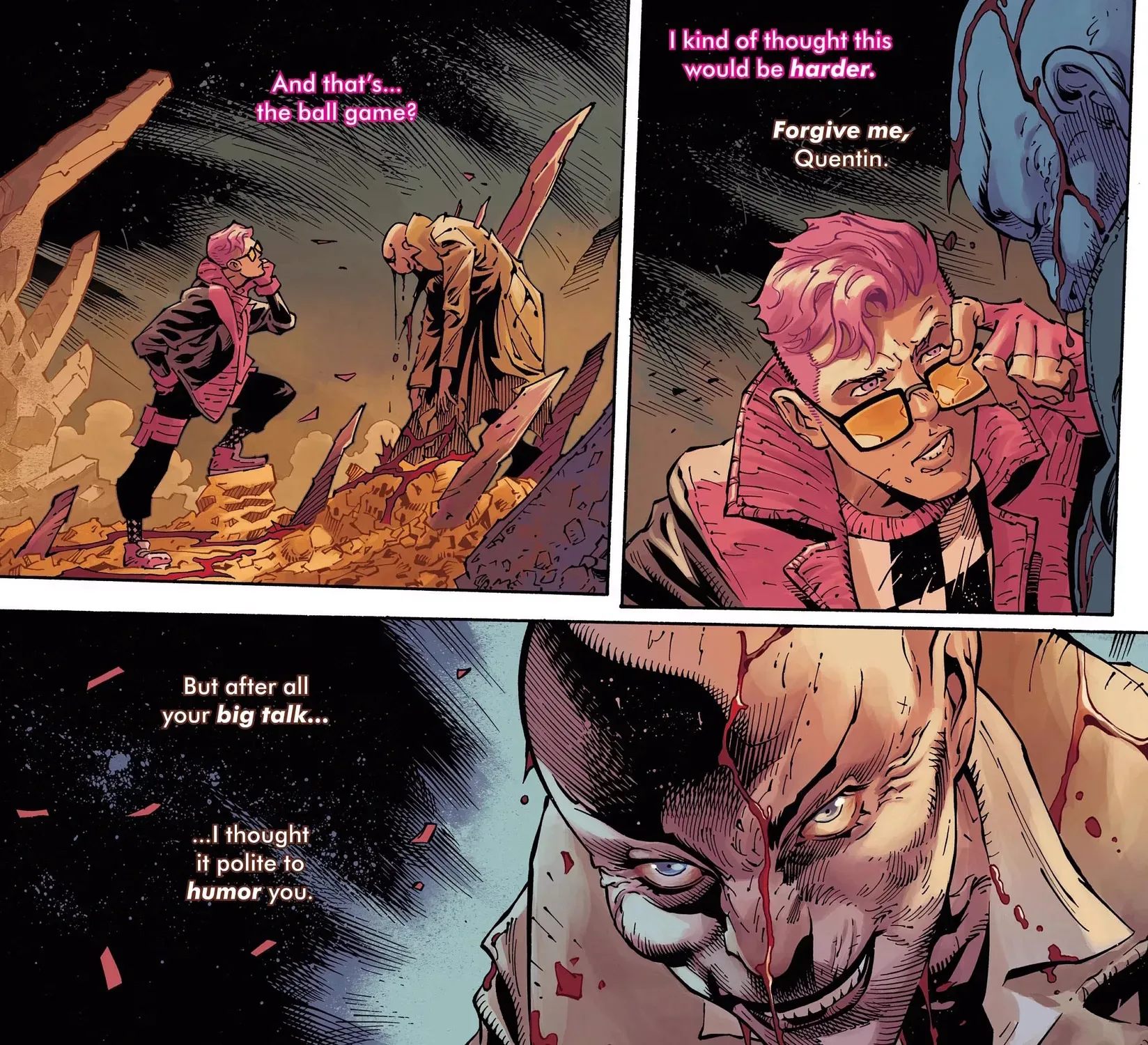
The suspense in the psi-war comes from the instability of Quire’s apparent victory. He believes he has beaten Cassandra Nova, only to learn the threat remains active. That reversal matters because it turns an otherwise straightforward power comparison into a question of what weapon, memory or intervention can break the stalemate.
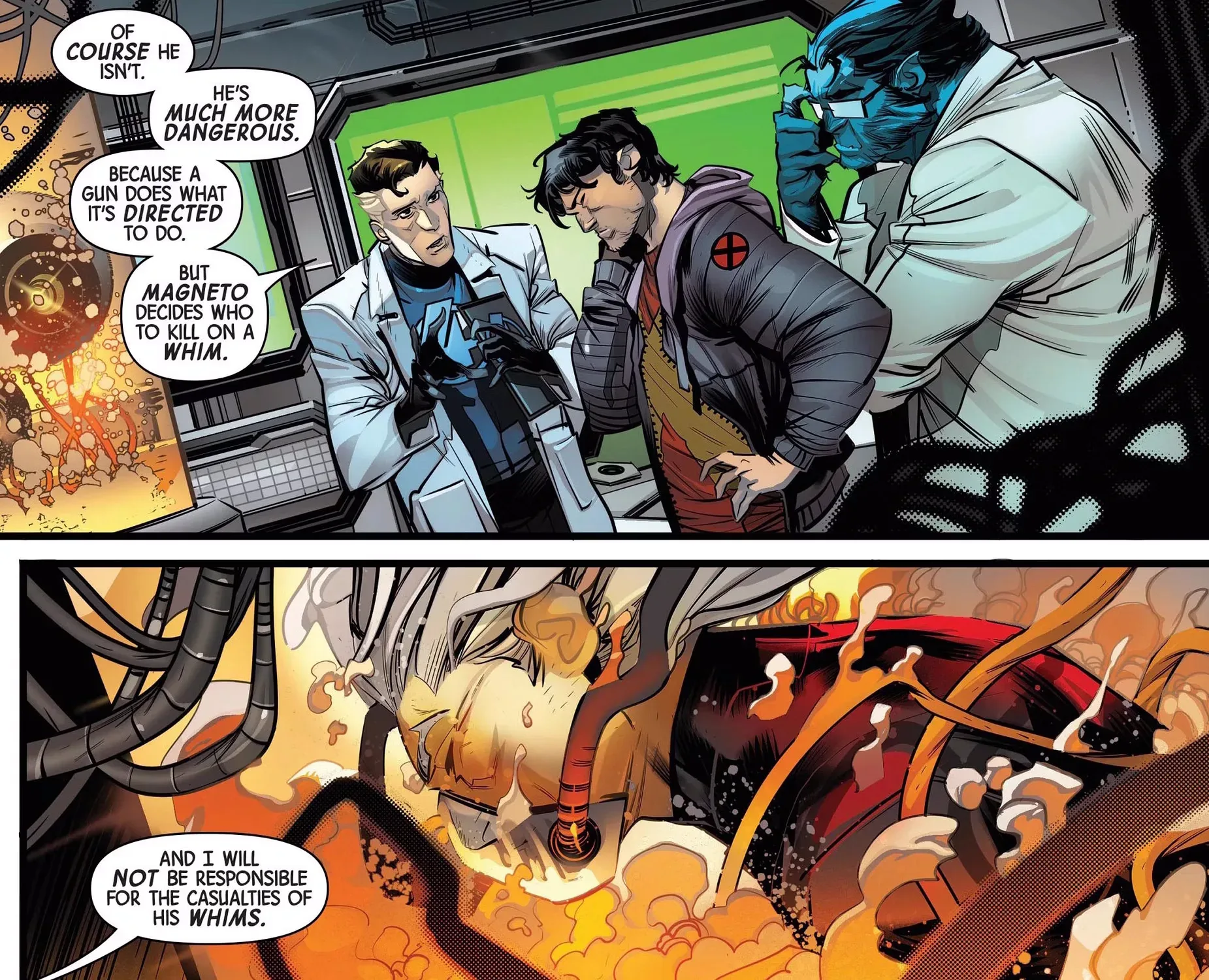
The confrontation is characterized as telepathic chicken: neither side can safely yield, and survival depends on forcing the other combatant into the fatal mistake first. Quire eventually finds a weapon within that desperate contest. The imagery then moves from firearm logic—an object acting on the direction it is given—to a psychic act of aiming that weapon at Cassandra.
This is where the issue’s major return lands. A Phoenix-associated presence re-enters the X-Men books and is directed against Cassandra Nova. The visual and thematic connection is explicit enough to make the intent clear: the resolution is referred to as a “Jean bomb,” a pointed contrast with 3K’s gene bomb, and the Phoenix-versus-Cassandra pairing supplies an apt mythic rhyme. Cassandra’s name evokes the prophetic figure of classical myth, while Phoenix imagery signifies death, rebirth and overwhelming transformative power.
Importantly, the source material supports the return and the Phoenix/Jean framing, but does not provide a complete explanation of the returning figure’s continuing status, plans or exact role beyond this intervention. Readers should treat the moment as a major development rather than evidence that every question around the character has already been answered.
Why the Phoenix intervention changes the story
At the plot level, the return gives Quentin an answer to an enemy he cannot simply overpower. Quire remains central to the scene—he identifies the weapon and directs it—but the payoff complicates the idea that this is a victory earned through his telepathy alone. He is confronting someone portrayed as comparably formidable, far older, and deeply entangled with Xavier’s history. The Phoenix-linked arrival changes the board.
At the thematic level, it creates a sharp contrast between the two “bombs.” 3K’s weapon is the X-Virus, an instrument of mass infection and coercive evolution. Quire’s answer is framed as a Jean/Phoenix event: a targeted psychic and cosmic response to Cassandra rather than another indiscriminate outbreak. The parallel gives the sequence a sense of escalation while distinguishing the X-Men’s desperate defense from 3K’s planned attack.
It also ties the psychic battle back to the line’s larger concerns about inheritance. Cassandra’s connection to Charles Xavier is central to who she is, 3K and the X-Men are each linked to Xavier’s legacy, and the Phoenix-associated return arrives at the exact point where Quentin needs a means to end the clash. The issues are not treating Xavier’s influence as a settled inheritance. It is a contested one, fought over by heroes, extremists, a telepathic adversary and the people whose lives hang in the balance.
Magneto’s fate remains another pressure point
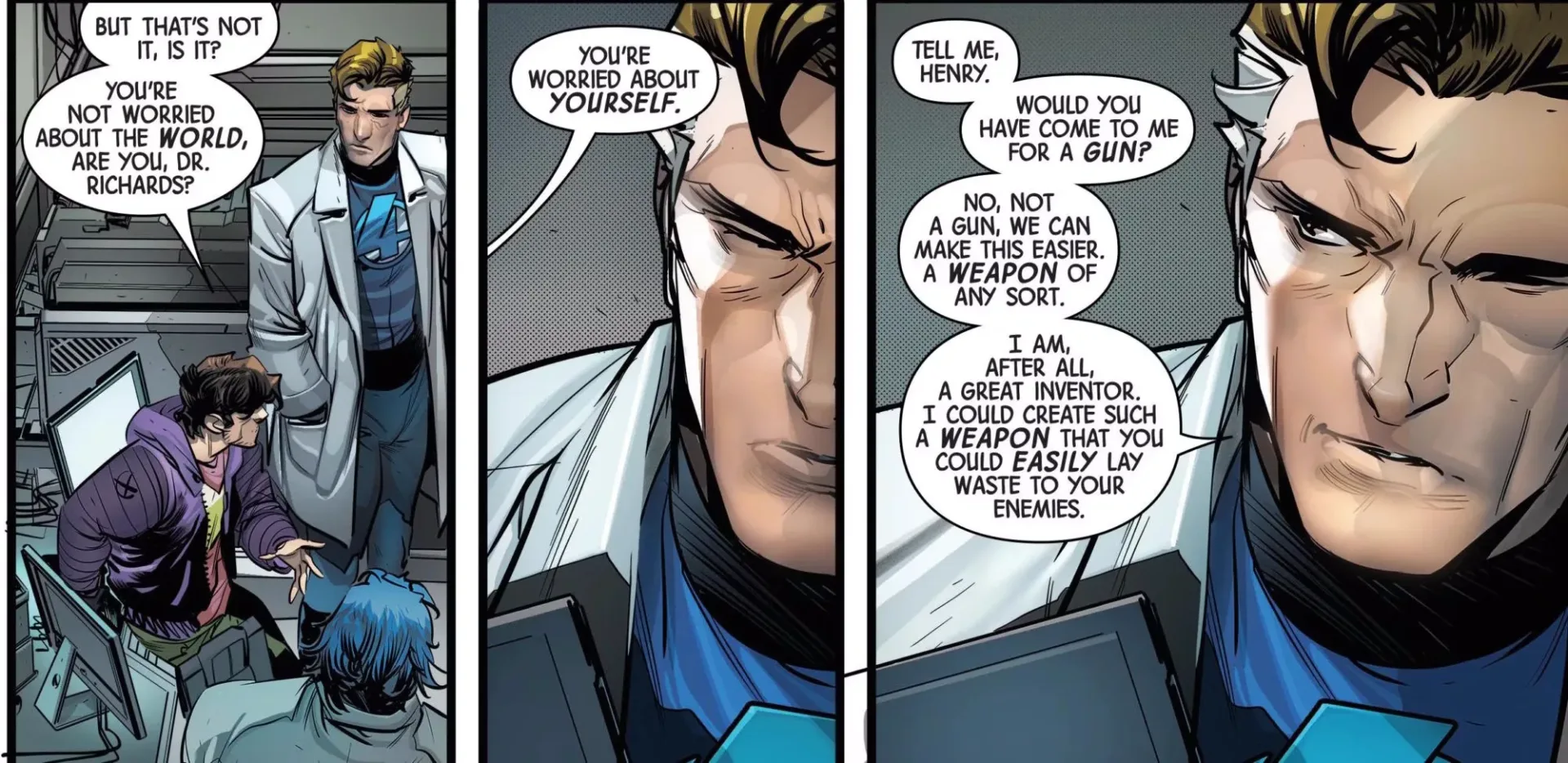
Elsewhere in DNX #1, Reed Richards weighs the morality of saving Magneto’s life and restoring or preserving his mutant powers. The situation is deliberately framed as an ethical question, not simply a technical rescue. Reed’s involvement signals that the Fantastic Four are being drawn into the mutant crisis because the problem calls for expertise beyond the X-Men’s immediate resources.
The available story details do not resolve Magneto’s outcome, so it would be premature to declare that he is healed, restored or prepared for a specific future role. What is established is that he is important enough to the present conflict for the X-Men to seek the Fantastic Four’s help, and that retaining his powers is part of the moral calculus. In a story already concerned with how mutant power is deployed, weaponized or denied, that distinction carries weight.
The Magneto thread also gives DNX #1 two complementary kinds of tension. Cassandra Nova and the X-Virus provide an immediate, outward-facing crisis. Magneto’s case is more intimate and philosophical: if someone can be saved, what exactly should be saved, and who has the authority to make that decision? Neither question is small when the person involved is Magneto.
How the two issues fit together
DNX #1 is the broader event entry point, setting the X-Men and 3K on opposite sides of the coming Age of Revelation and advancing the X-Virus plot. It also contains the Reed Richards and Magneto material. X-Men #37 is identified as a DNX tie-in and narrows its focus to the psychic war between Kid Omega and Cassandra Nova while the X-Men battle 3K.
For readers deciding where to start, the supplied descriptions make the relationship relatively clear: DNX #1 supplies the wider crisis and multiple story threads, while X-Men #37 spotlights the Quire-versus-Cassandra fight. Reading both provides the most direct route through the X-Virus threat, the debate surrounding Magneto, and the Phoenix-linked turn that ends the telepathic standoff.
- DNX #1 — Jed MacKay and Federico Vicentini; dated September 16, 2026; $5.99.
- X-Men #37 — Jed MacKay and Netho Diaz; a DNX tie-in dated September 16, 2026; $4.99.
What readers can take from the spoiler
The most concrete takeaway is that the mutant line is using its new crisis to bring a major Phoenix-associated element back into play. That moment does not erase the danger around the X-Virus, nor does it settle the moral dilemma surrounding Magneto. Instead, it gives the story a decisive answer to Cassandra Nova while leaving the larger 3K conflict active.
For fans tracking Marvel’s broader pop-culture slate, the timing also puts renewed attention on Magneto and the X-Men ahead of Avengers: Doomsday. The comics themselves establish the current stakes inside the mutant narrative; any precise connection beyond that remains unconfirmed by the material here. The practical reading is simpler: DNX #1 and X-Men #37 are the relevant issues for a consequential shift in the current X-Men story, one that combines a world-scale contagion threat with an intensely personal psychic showdown.
For more screen-oriented Marvel and entertainment coverage, see Joking Joystick’s look at film’s evolving relationship with AI and human creativity.
Shop the products
Check current price, model and availability at the retailer.