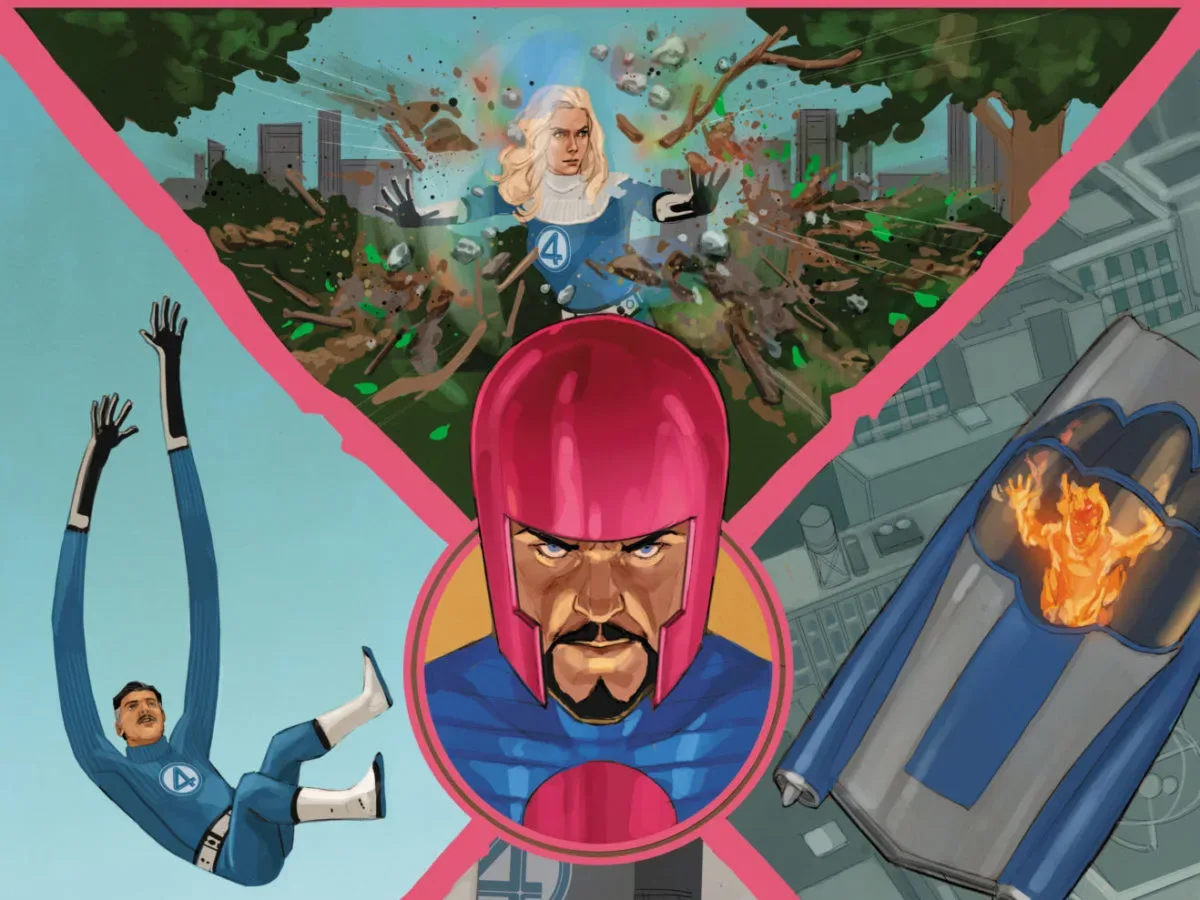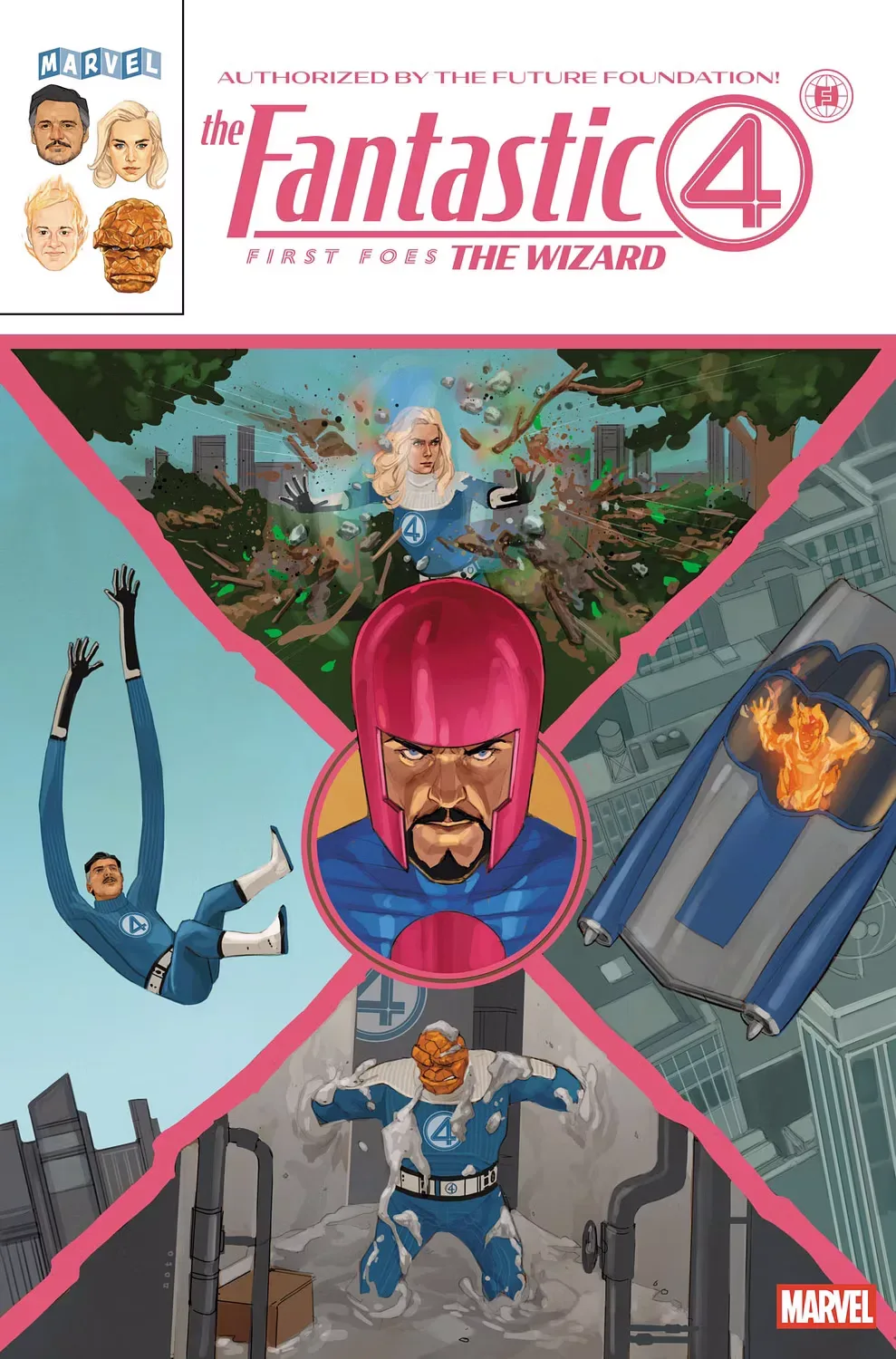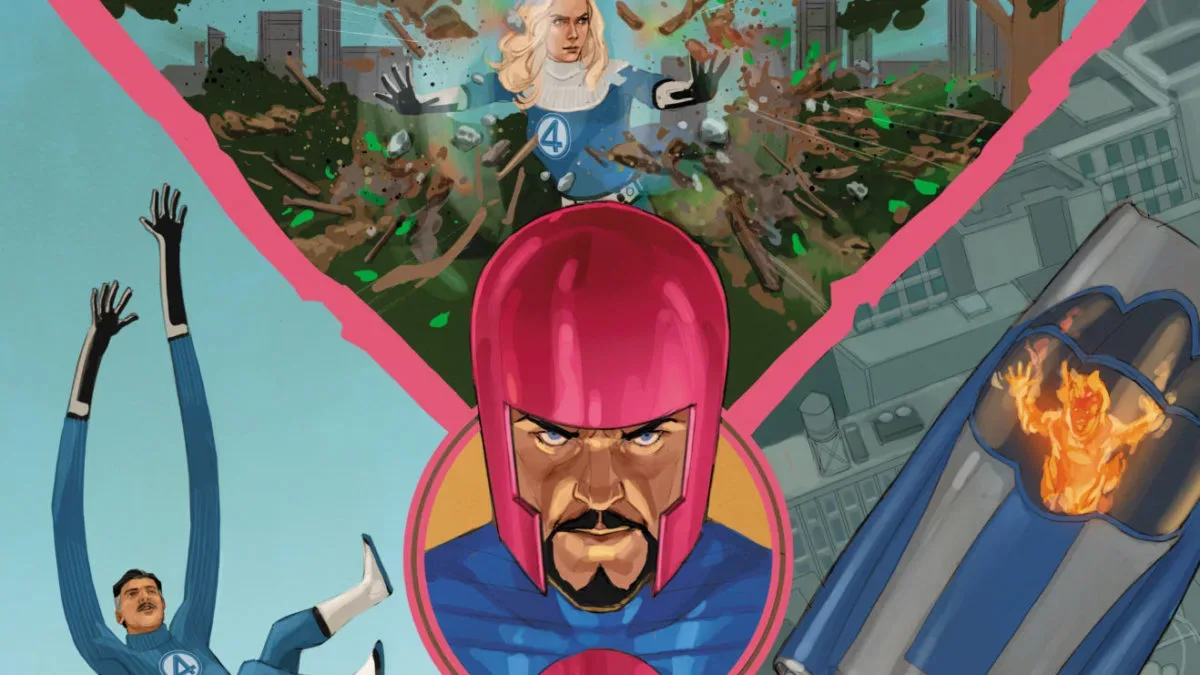
Marvel’s Fantastic Four: First Foes – The Wizard #1 is set to put Bentley Wittman’s resentment of the Fantastic Four at the center of the next comic expansion of the Fantastic Four: First Steps world. Written by Fabian Nicieza with art by Mark Buckingham, the one-shot is scheduled to go on sale December 9. Phil Noto, Betsy Cola and Buckingham are credited on covers.
The premise is pleasingly direct: Wittman believes the Fantastic Four have received acclaim he deserves, and he intends to prove his intellectual superiority by humiliating them and taking the Baxter Building. The issue also brings in the Frightful Four, described here as sinister counterparts to the Fantastic Four. That makes this more than a story about one ambitious scientist with a building-sized grudge; it is positioned as an effort to create a full opposing quartet.
It is the final announced entry in the First Foes line, following one-shots focused on Mole Man and Mad Thinker. The project’s function is to explore adversaries and incidents that sit around a brief but consequential part of the film’s world, rather than simply retell the movie. For comic readers, that gives the series a particular appeal: it is a continuity-minded side route built to make a piece of the screen setting feel more populated.
A name in Reed Richards’ criminal map gets a story
The Wizard was one of several names Reed Richards identified while discussing criminal organizations in Fantastic Four: First Steps. Reed said he had been tracking 47 organizations, including the Puppet Master in the Bowery, the Wizard in Gramercy Park and Diablo in Washington Heights.
That line established a broad map of danger without stopping to explain every person on it. First Foes – The Wizard takes one of those compact references and develops it into a narrative. In practical terms, this is what a tie-in expansion can do well: a mention that worked as atmospheric world-building on screen can become the starting point for a comic story with room for a villain’s motive, plan and supporting cast.
The supplied setup identifies Wittman as “the Wingless Wizard,” but the important detail is his self-image. He is not presented as someone hoping merely to rob a famous institution. He sees the Baxter Building as a globally known symbol of science, and stealing it is framed as a way to challenge the public standing of the people who occupy it. The target is therefore both physical and reputational.
Why the Baxter Building matters to the conflict
A villain trying to seize a headquarters is a familiar superhero-comics engine, but this case has a sharper thematic fit. The Baxter Building is described as a monument to science. Wittman’s objective ties his criminal action to an argument over genius, recognition and ownership of public admiration.
That distinction matters because it explains why the Fantastic Four themselves are the necessary opponents. Wittman does not simply want access to an impressive facility; he wants to embarrass the group whom he believes have unfairly received the accolades due to him. His plan is built around a rivalry of intellect and status, with the building serving as the clearest trophy available.
It also supplies a natural reason for the Frightful Four. A “counterpart” team is not just additional opposition in a fight scene. The concept invites the comic to test a Fantastic Four-style unit against a villain-made reflection of that unit. Buckingham has said that the issue will bring not only the Wizard but “a whole quartet of Frightful villains” to push the Fantastic Four hard. The publisher’s synopsis says Wittman will create the team to accomplish the Baxter Building heist.
What “reimagining” means here
Both creators characterize the job as a reimagining of the Wizard and the Frightful Four for the First Steps setting. That word is worth taking literally and cautiously. It indicates that the comic is adapting these established Fantastic Four adversaries to this particular film-connected world. It does not, on the information currently available, tell readers the exact make-up of the Frightful Four, their powers, or how closely every detail will align with earlier comic incarnations.
In other words, readers should expect recognizable villain concepts filtered through this project’s setting, not assume that a name alone confirms every trait associated with it elsewhere. The strongest confirmed elements are Wittman’s role, the Baxter Building scheme, and the formation of a four-person villain group.
Nicieza described the opportunity as a chance to expand the film and rework the Wizard and the Frightful Four with Buckingham. Buckingham similarly emphasized revisiting and reimagining the earliest adventures of the Fantastic Four, while calling this installment the largest villain test in the series. Those comments point to a comic designed to engage with the characters’ long comic-book identity while functioning as a direct screen-to-page crossover.
The creative pairing and the First Foes format
Nicieza is handling the script and Buckingham the interior art. Buckingham’s comments place this collaboration after work with writers Matt Fraction, Charles Soule, Greg Pak and Dan Slott on related material, and he calls the wider project a first-of-its-kind direct crossover between Marvel Studios and Marvel Comics. That framing is significant because it describes the intended relationship plainly: these are not unrelated comics that happen to use similar characters, but stories made to operate within the world of the film.
The format is a one-shot, meaning this issue is structured as a self-contained comic rather than a numbered chapter that requires an open-ended monthly run to finish its central story. That does not guarantee every question about the wider setting will be answered, but it does make the stated conflict unusually clear: Wittman’s envy, the formation of the Frightful Four, and the move against the Baxter Building are the core pieces readers should expect this issue to address.
The preceding Mole Man and Mad Thinker specials provide the immediate context for the series. Each selection points toward an approach built around individual Fantastic Four adversaries, with the Wizard installment serving as the closing chapter currently described by Marvel. The escalation is visible in the premise itself: where one antagonist can create a focused threat, Wittman’s plan introduces an organized four-villain answer to the team.
What is confirmed — and what remains unknown
Comic announcements often encourage readers to fill gaps with expectations from older stories, adaptations or character memory. For this issue, separating the confirmed information from the unannounced details is useful.
Confirmed for the one-shot
- Title: Fantastic Four: First Foes – The Wizard #1.
- Release date: December 9.
- Writer: Fabian Nicieza.
- Artist: Mark Buckingham.
- Cover artists: Phil Noto, Betsy Cola and Mark Buckingham.
- Central antagonist: Bentley Wittman, also called the Wingless Wizard.
- Story objective: Wittman seeks to discredit the Fantastic Four and steal the Baxter Building.
- Team development: Wittman creates the Frightful Four.
- Setting: the world of Fantastic Four: First Steps.
Not detailed in the announcement
- The identities of the other members of this version of the Frightful Four.
- How Wittman intends to take the Baxter Building.
- The precise scope of any revelations teased for the final First Foes issue.
- Whether any additional First Foes comics will follow this concluding installment.
Those unknowns are not minor bookkeeping points. The identity and characterization of the Frightful Four will shape how much this one-shot functions as a villain-origin story, a team-versus-team showcase, or an expansion of the movie’s larger criminal landscape. For now, Marvel has supplied the hook without disclosing the whole lineup.
Why this may matter to Fantastic Four readers
The most interesting promise is not simply that the Wizard appears. It is that the appearance is built around an antagonistic philosophy: Wittman feels intellectual glory has been misallocated, and he responds by trying to take the most visible scientific symbol connected to his rivals. That is a sturdier foundation than generic conquest, because it places a personal grievance inside an attack on the Fantastic Four’s public identity.
The Frightful Four raises the pressure further. The Fantastic Four are explicitly a family-shaped superhero team, so a hostile quartet is an immediate structural challenge. The announcement does not reveal the final cast or tactics, but the very idea of an engineered opposing four makes the conflict feel designed rather than accidental. Wittman is not only aiming at the Baxter Building; he is building an answer to the people who made it meaningful.
For readers interested in comic-book speculation more broadly, our look at how video buzz and cover chases can influence comic heat offers a separate example of how attention can gather around individual issues. In this case, though, the concrete reason to watch is the announced creative team and the unanswered question of who will comprise the new Frightful Four.
Fantastic Four: First Foes – The Wizard #1 is scheduled for December 9. It closes the currently announced run of film-world one-shots with the largest stated team concept of the group: Bentley Wittman’s attempt to claim the Baxter Building, the recognition it represents, and a Frightful Four constructed to make that challenge possible.