Spoiler warning: This article discusses story elements and character callbacks from DNX #1 and X-Men #37.
Marvel’s mutant line is treating its newest emergency as more than a race to stop a biological threat. DNX #1, by Jed MacKay and Federico Vicentini, and X-Men #37, by MacKay and Netho Diaz, place 3K’s planned X-Virus release in a story built around memory, inherited allegiances, and the stubborn weight of X-Men continuity. The immediate stakes are clear: 3K intends to unleash the X-Virus in a major population area, while the X-Men work to prevent the future that its leaders have seen. But the two issues also keep asking a more difficult question: when a character’s past includes radical change, betrayal, catastrophe, or redemption, which version is the one that should be trusted now?
The result is a paired narrative in which old X-Men images and ideas are not simply decorative nostalgia. They become evidence in an argument. Cassandra Nova’s history informs Quentin Quire’s psychic battle. Magneto’s earliest status as an enemy becomes an obstacle to Reed Richards’ confidence. Quicksilver’s beginnings alongside Magneto still matter to Cyclops. And Hank McCoy’s desire to be trusted lands differently when readers carry the memory of the Age of Krakoa into the scene.
The present crisis: stopping 3K and the X-Virus
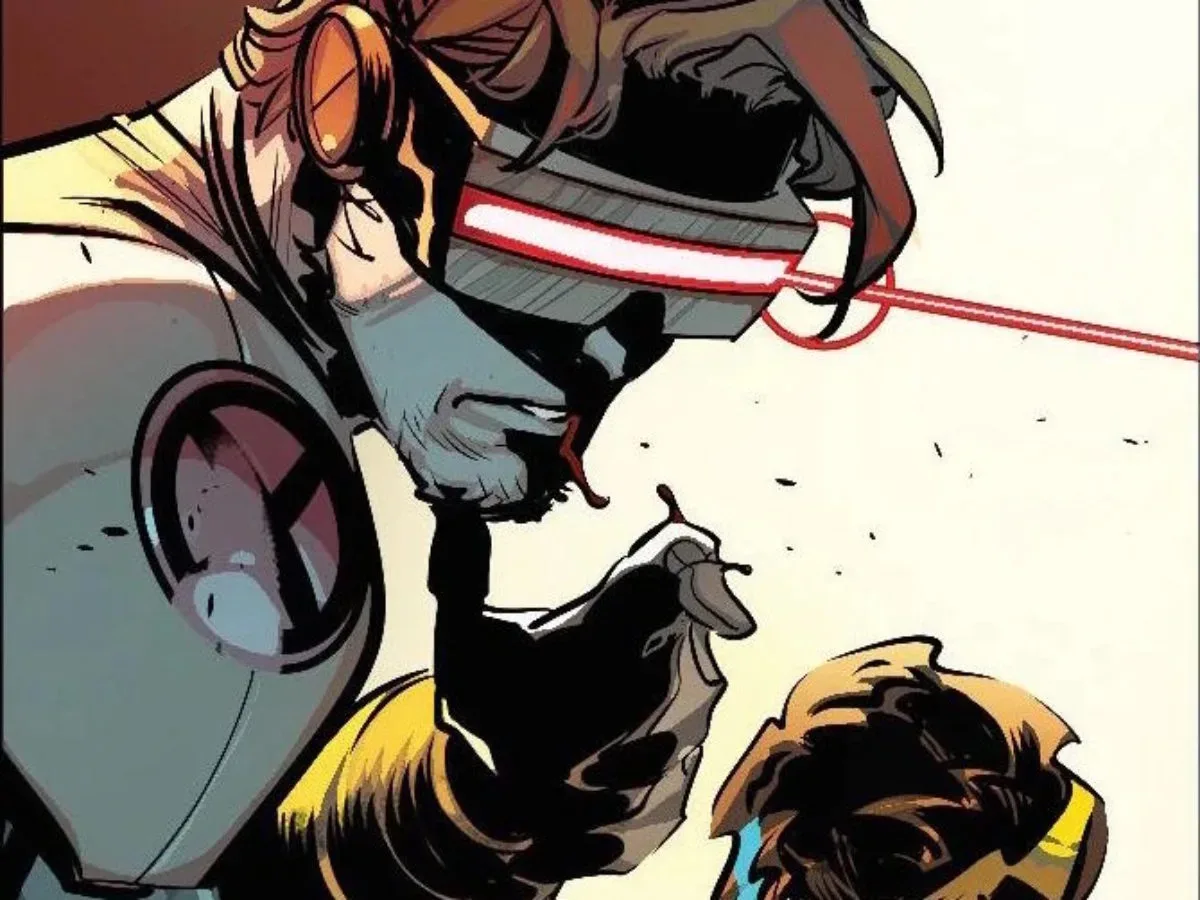
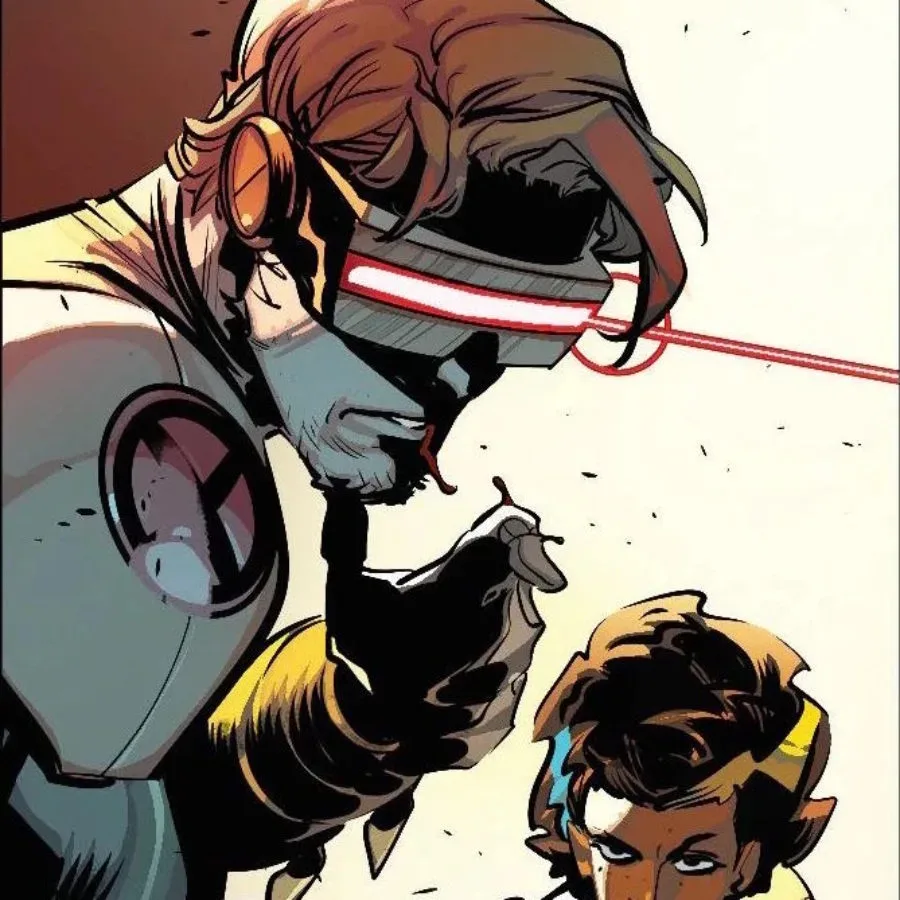
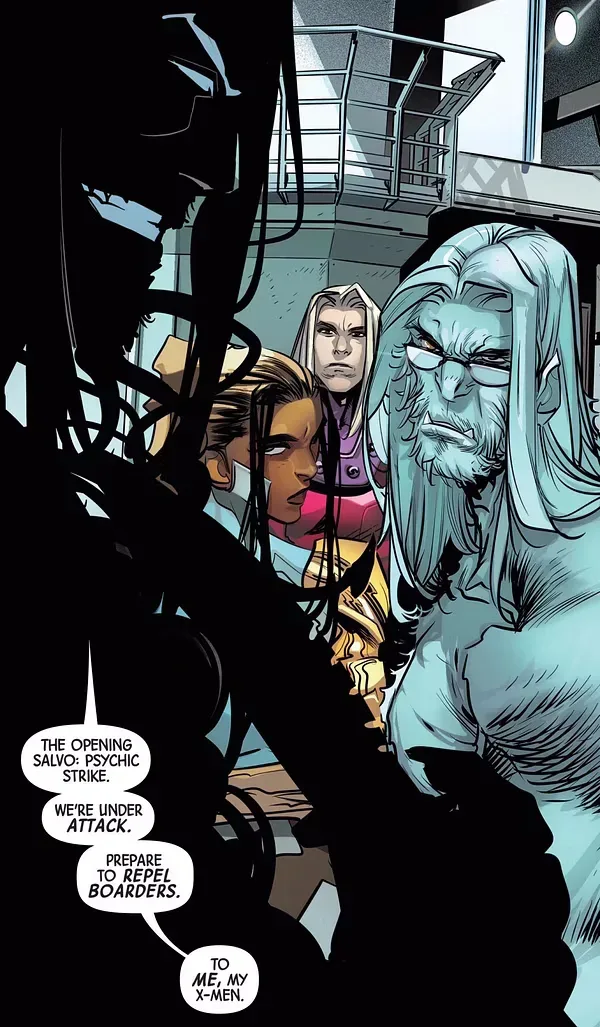
DNX #1 establishes the pressing conflict between the X-Men and 3K, described as opposing mutant forces led by original heirs of Xavier with incompatible ambitions for mutantkind. Cyclops and 3K’s Chairman have each experienced the future of the Age of Revelation and returned with a mission shaped by it. The X-Men seek to stop that future from arriving. 3K seeks to possess it.
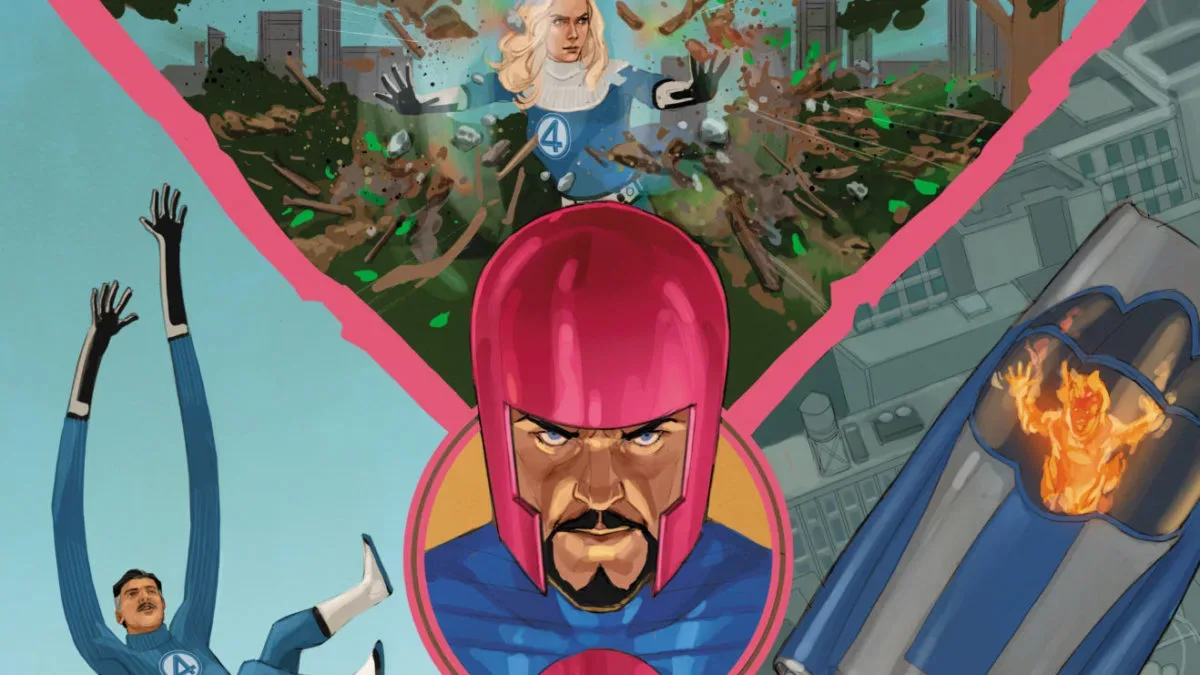
That distinction makes the apparent shared knowledge of a future especially important. This is not a simple disagreement about what will happen; it is a struggle over what should be done with knowledge of a potential outcome. 3K’s position is tied to the X-Virus, an engineered or otherwise weaponized threat that the White Beast plans to release into a densely populated area. The X-Men, meanwhile, turn to the Fantastic Four for help saving one of their own.
The title’s conflict is therefore both physical and ideological. A virus can be a literal danger, but “evolution is contagious” frames it in the language that has long surrounded mutant stories: mutation, inheritance, fear of transformation, and control over who gets to define the next stage of humanity. The X-Virus is not presented as a neutral scientific development. It is a tool in a contest over the future.
For readers entering through this crossover point, the basic functional distinction is useful. 3K is the adversarial mutant group driving the X-Virus threat; the Age of Revelation is the future experience that motivates both sides in different ways; and DNX is where the broader conflict is put in motion. X-Men #37 is explicitly a DNX tie-in, narrowing its focus to a telepathic confrontation whose emotional force comes from the franchise’s history.
Quentin Quire’s psi-war with Cassandra Nova
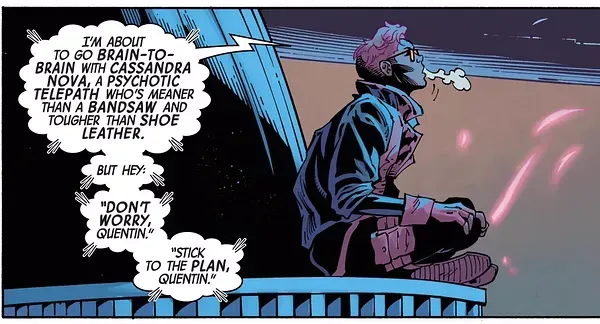
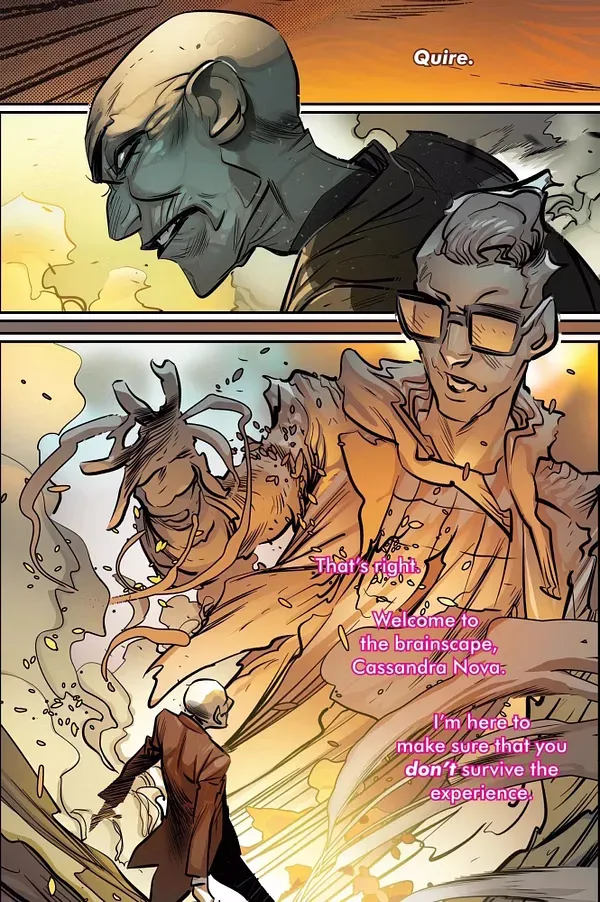
In X-Men #37, Quentin Quire, also known as Kid Omega, faces Cassandra Nova in a direct psychic conflict. A telepathic battle, or “psi-war,” means the stakes are fought mind-to-mind rather than only through physical force. That framework lets the story move through memory and identity with unusual freedom: historical callbacks can operate as weapons, trauma can become terrain, and a character’s view of the past can matter as much as any immediate tactical advantage.
Cassandra Nova is described here as the Mummudrai twin of Charles Xavier. In this context, the term identifies her as a malignant counterpart to Xavier, an adversarial reflection whose connection to him makes her especially potent within an X-Men story. Her presence links the issue back to New X-Men #114, the 2001 issue by Grant Morrison and Frank Quitely that introduced her. The current conflict also revisits what she did during the Age of Krakoa, ensuring that the reference is not solely about a famous earlier debut.
Quentin’s confrontation thus sets two very different relationships to the past beside one another. Cassandra is associated with an immense, deeply fixed bitterness. Quentin recalls Magneto’s capacity for change in contrast. That comparison is crucial because it resists reducing X-Men history to a checklist of villains and heroes. Magneto began as an enemy in the earliest stories, but his place in the mythos has changed over time. Cassandra’s role, as framed in the issue, is defined by a far less flexible hostility.
This is a thematic fit for Quentin Quire. His own use of old Xavier-associated language is not just a wink toward readers who recognize it. It puts a younger, volatile psychic in conversation with the legacy of Xavier and with the nightmare-image embodied by Cassandra. The issue makes the past an active part of the fight rather than a museum display.
A famous Xavier line, revisited across decades
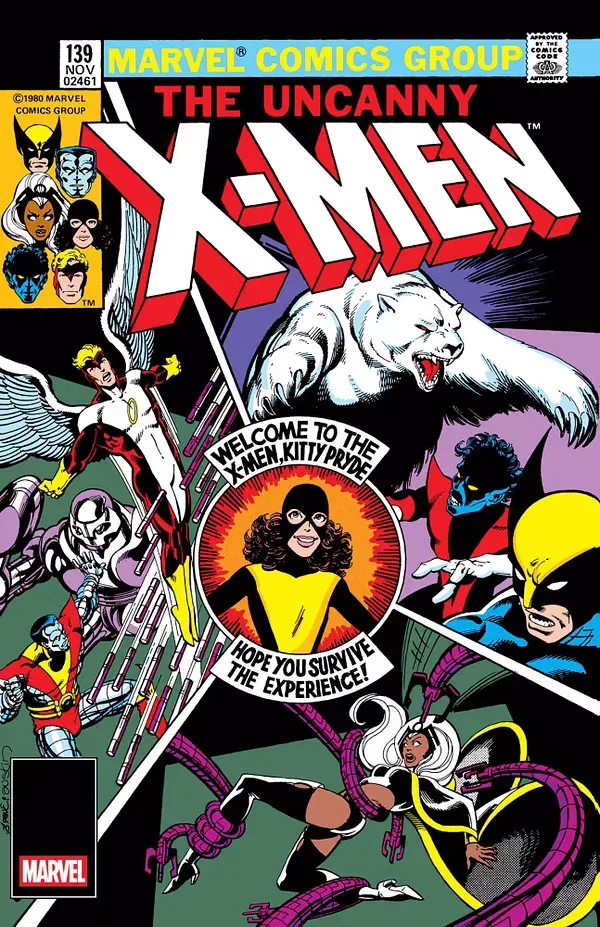
DNX #1 reaches back to the opening era of the franchise through Wyre’s summoning of a 3K version of the X-Men. Its imagery and phrasing evoke X-Men #1, the 1963 debut by Stan Lee and Jack Kirby, and a line associated with Professor X that has been repeated and reshaped over the decades.
The callback’s path is itself a concise map of how superhero comics build shared language. The idea appeared in the original X-Men debut, was later parodied in Excalibur #93 in 1995 by Pete Wisdom while he was in a wheelchair and imitating Professor X, then became especially iconic through New X-Men #114. That latter issue matters doubly in this pairing because it is also Cassandra Nova’s introduction.
What makes the reference productive instead of merely archival is the way DNX #1 applies it to 3K’s own X-Men-like force. The familiar shape of Xavier’s team is no guarantee of familiar values. If 3K can field a version of the X-Men, readers are invited to consider what really constitutes an X-Men team: the costumes and roles, a connection to Xavier, a stated purpose, or the moral choices made when mutant survival is at stake.
That concern is particularly fitting for a plot where the antagonist wants to control a foreseen future. The most recognizable X-Men symbols carry authority because of what they have represented in previous stories. A distorted version of those symbols can exploit that authority. The nostalgia is not only comfort; it can be a warning that history is easy to invoke and hard to live up to.
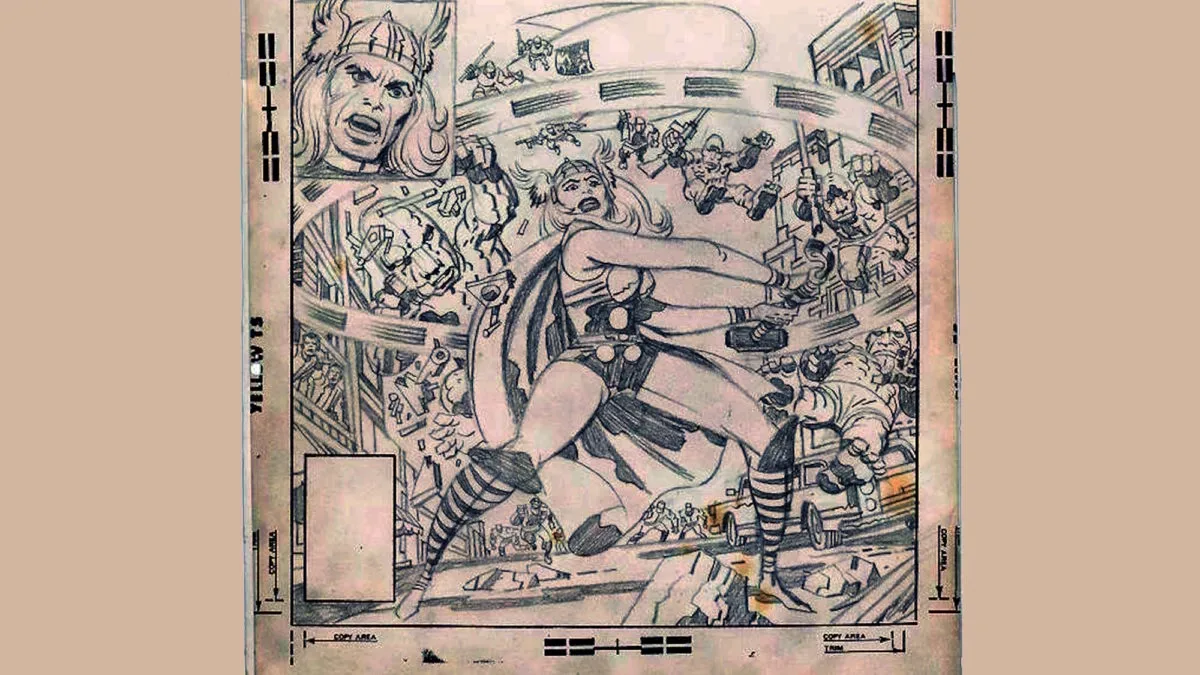
Lee and Kirby’s foundational work remains relevant to discussions of how this franchise continually reworks its earliest premises. Readers interested in Kirby’s wider legacy may also want the site’s coverage of the Jack Kirby Museum receiving more than 50 original art pages from the Richard Howell collection.
Magneto and Quicksilver: early enemies, later complications
One of the sharpest uses of deep continuity in these issues comes through a basic fact that modern readers can easily overlook: in X-Men #1, Magneto was positioned on the opposing side. Reed Richards cannot simply ignore that history in DNX #1. His reluctance emphasizes a practical reality of superhero alliances: a person’s current role may change, but former harm does not disappear just because a story later grants them a different status.
At the same time, Quentin’s comparison between Magneto and Cassandra Nova supplies the counterargument. Magneto’s historical movement matters precisely because it demonstrates the possibility of change. The issue does not erase the significance of his early antagonism. Instead, it treats his development as something that must be weighed against it.
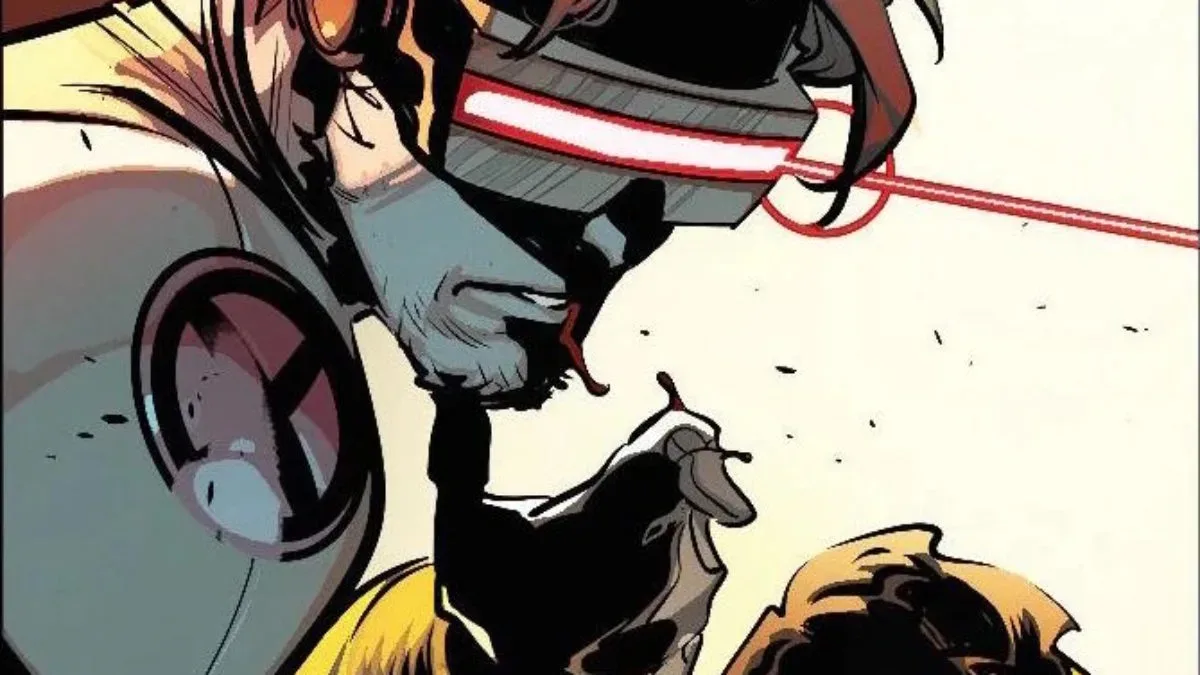
Cyclops’ recollection of Quicksilver’s earlier association with Magneto extends the same idea to another character. That connection has precedent in X-Men #11, also by Lee and Kirby, published in 1964. It is another reminder that allegiances in the X-Men’s world have never been static. A character who began on one side of a conflict may later be understood through family, team, ideology, loss, or a changed sense of responsibility.
For the current 3K storyline, this matters because it keeps readers from assuming that a person’s origin story offers a complete prediction of their choices. That is also the danger and promise of a future-focused plot: foreknowledge can turn people into fixed categories. The comic’s historical references argue that people are more complicated than their first alignment, even while refusing to pretend past actions carry no consequences.
Beast, Reed Richards and the burden of trust
DNX #1 also connects Hank McCoy, Beast, to Reed Richards through an apparent bid for trust. On its surface, that is a familiar superhero-science dynamic: two exceptionally capable figures operating around a crisis that calls for scientific expertise. Yet the scene carries extra pressure because Hank’s prior Age of Krakoa counterpart remains a point of comparison.
The important word here is trust, not intelligence. Technical ability cannot by itself answer whether someone should be believed, empowered, or given access to a solution with enormous consequences. The contrast implied by the issue asks readers to distinguish the present Beast from the Krakoan-era version while recognizing why others might find that distinction hard to accept.
That tension parallels Reed’s concern about Magneto. Neither thread says that history permanently locks a character into one role. Neither says history can be waved away. In both cases, the story identifies trust as an action taken under uncertainty. Reed is asked to assess a former adversary’s changed place in the world; readers are asked to assess Hank’s request in light of a version of him associated with serious prior wrongdoing.
This is a stronger use of continuity than a simple cameo or reference. The older stories are relevant because they establish what has been damaged: confidence. In a plot involving an X-Virus, a hostile group, and a potential future disaster, confidence is as strategically valuable as any device, power, or alliance. A team that cannot decide whom to trust may struggle to respond even when it has the tools to do so.
What the tie-in structure means for readers
The two issues divide the DNX material by scale. DNX #1 handles the external emergency, 3K’s plan, the future conflict, and the effort to bring in the Fantastic Four. X-Men #37 takes the internal and psychic dimension through Kid Omega and Cassandra Nova. Reading them together clarifies why so many old stories are being summoned at once: the plot is not just trying to avert a future, but confronting the precedents that make each present-day choice difficult.
The practical reading takeaway is straightforward. Readers following the central X-Virus threat will find the main premise in DNX #1. Readers looking for the Cassandra Nova confrontation and its connections to New X-Men and Krakoa will need X-Men #37, which is labeled a DNX tie-in. The schedule continues quickly, with DNX #2 set for the following week.
DNX #1 carries a $5.99 price and X-Men #37 is $4.99. Both are dated September 16, 2026. Together, they present a mutant crisis in which stopping 3K is only half the challenge. The other half is deciding whether the X-Men’s long, contradictory history offers a way out of the coming future—or gives 3K the material it needs to build one.
Shop the products
Check current price, model and availability at the retailer.