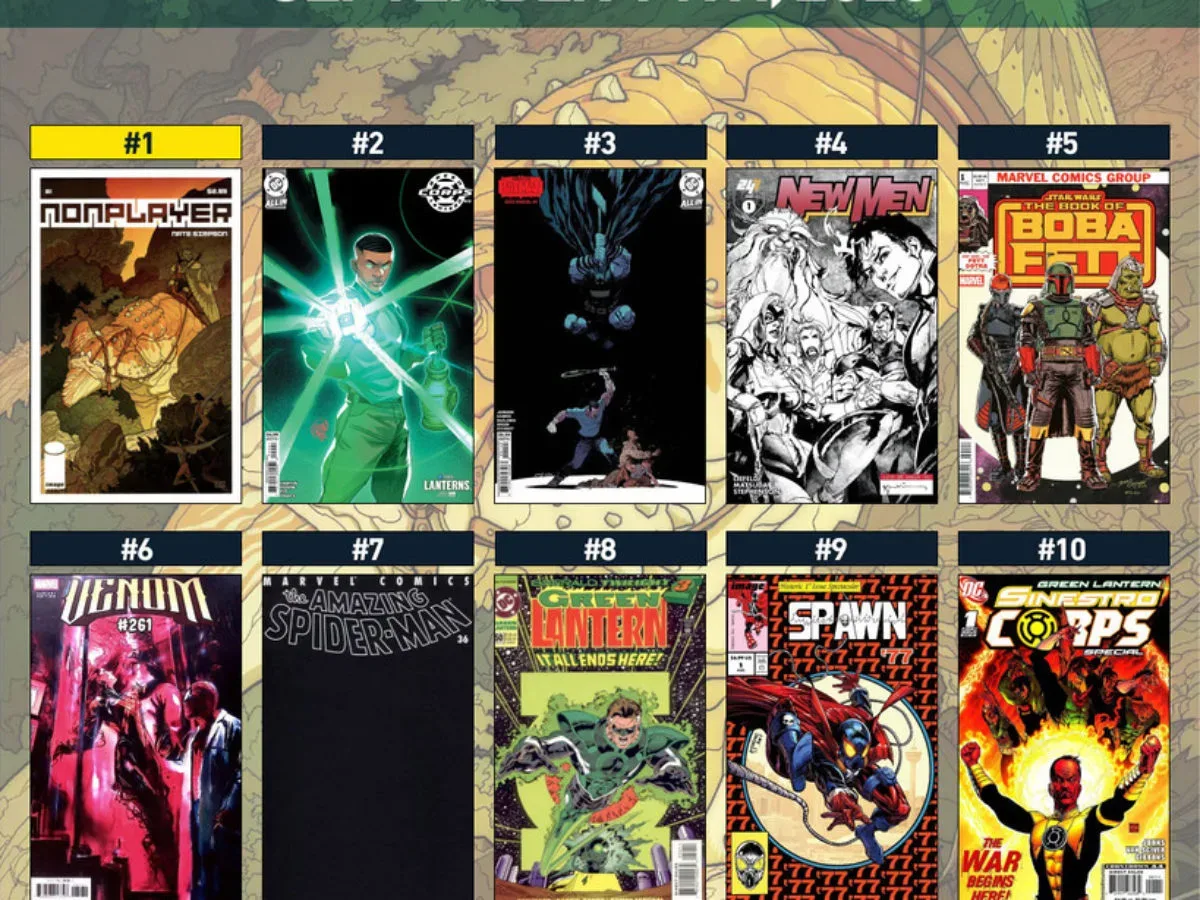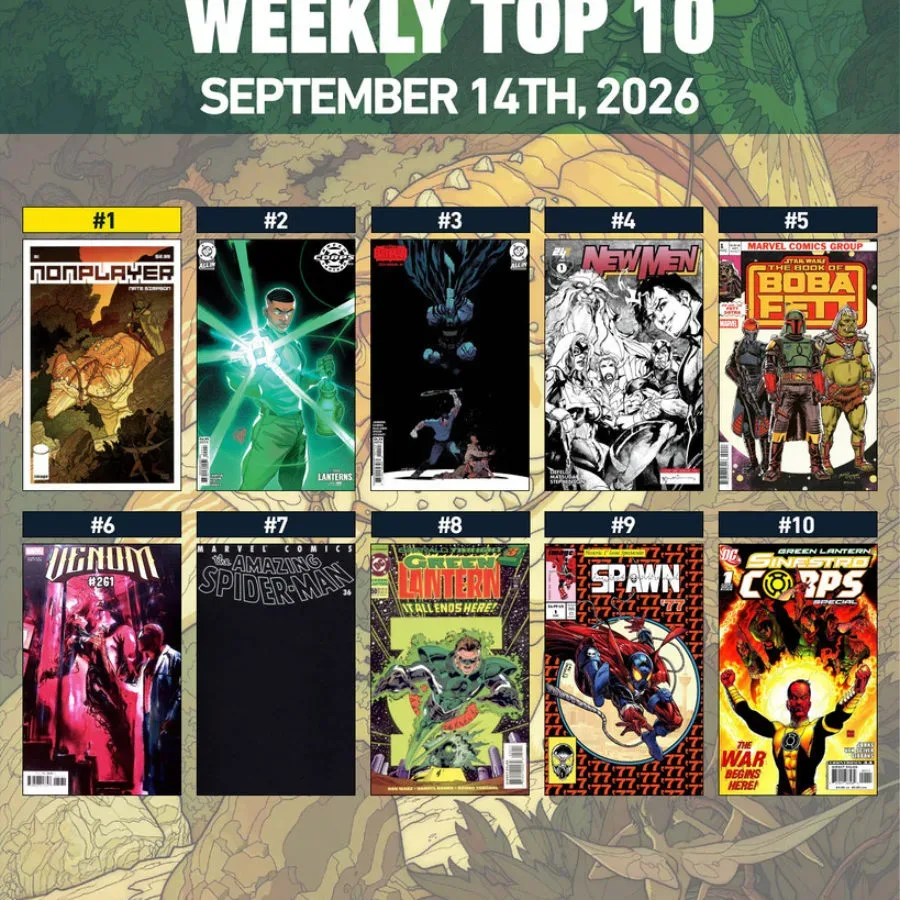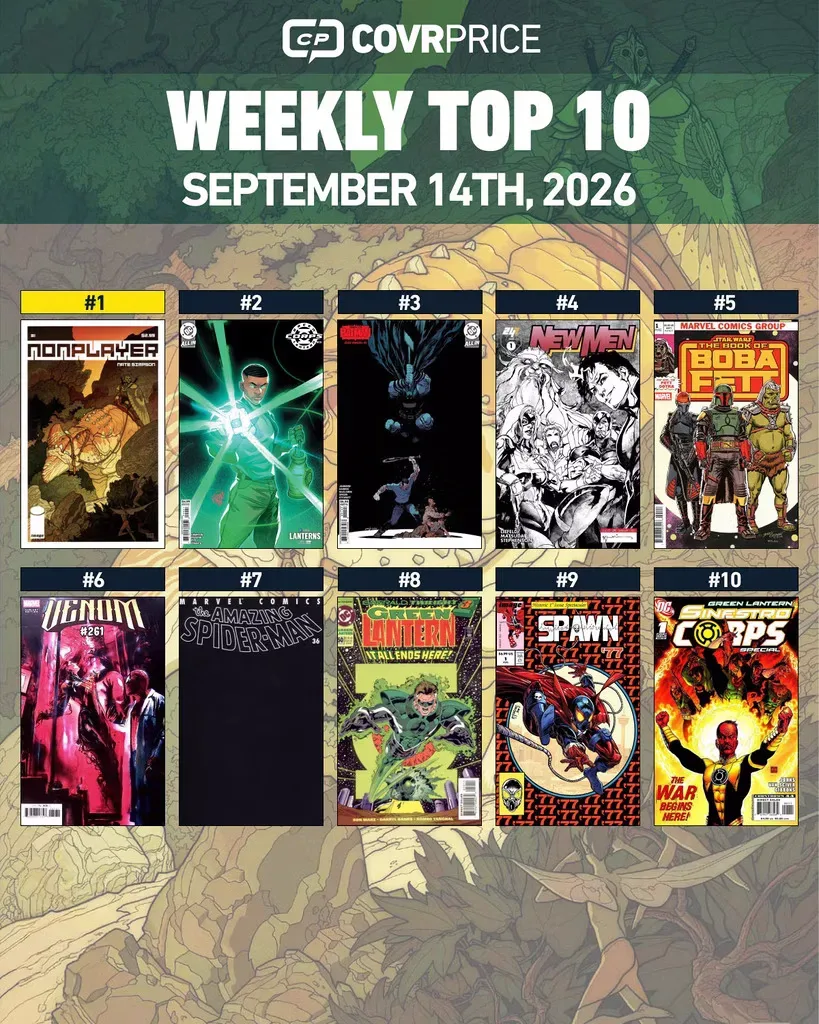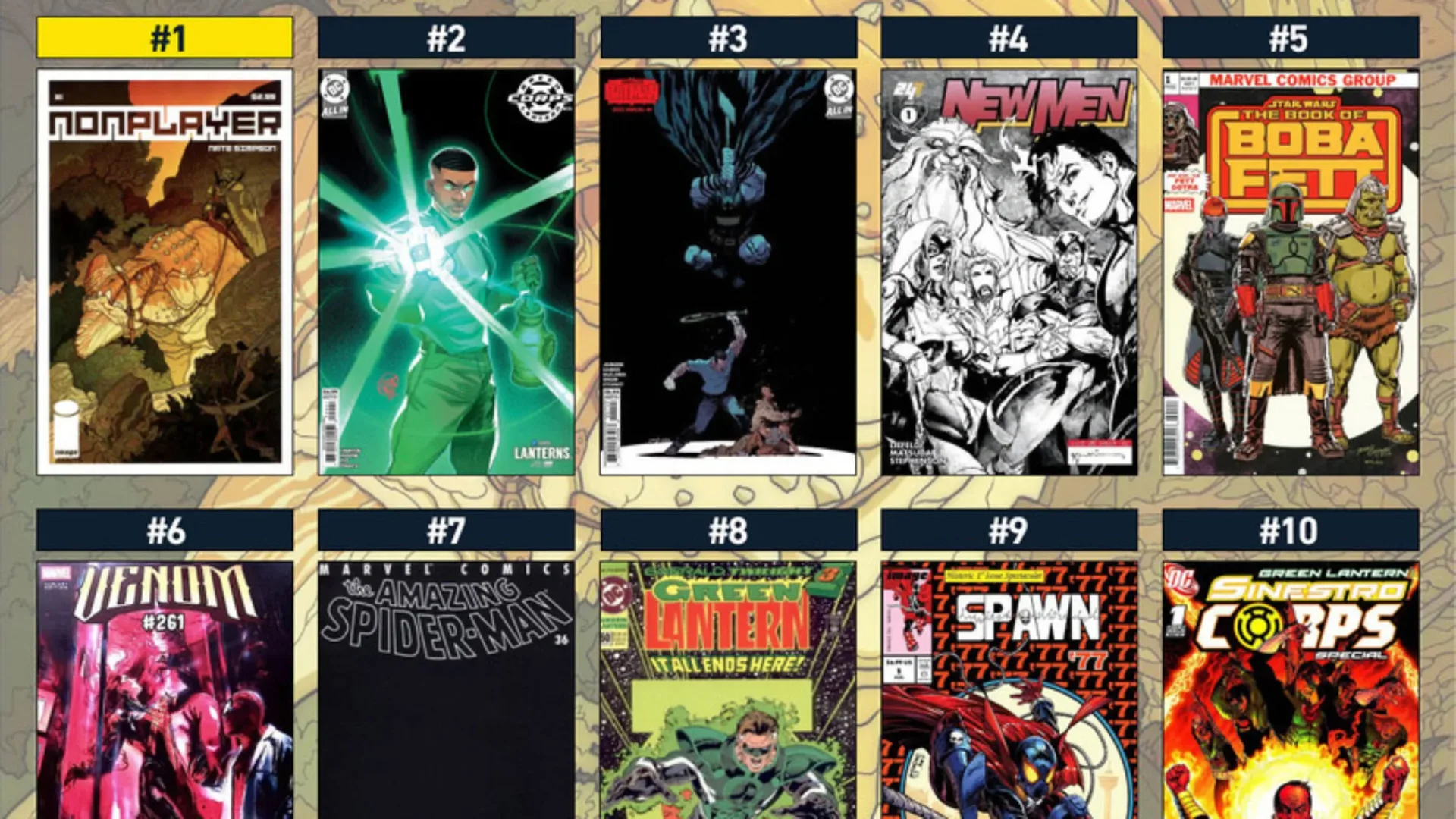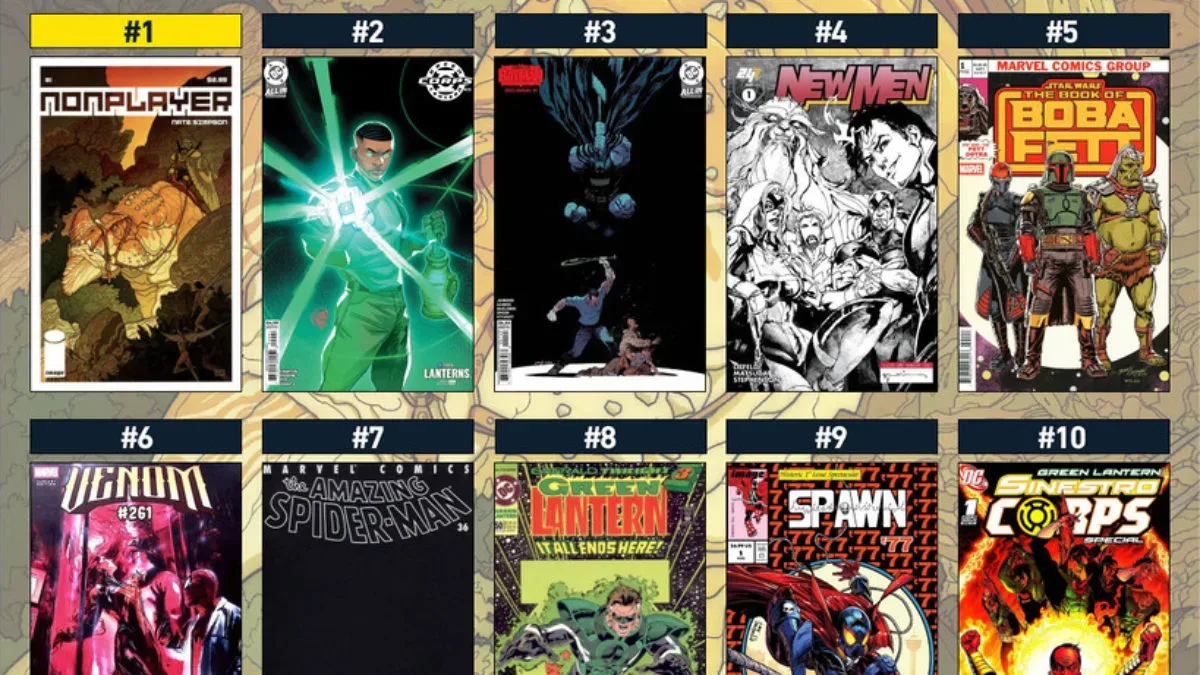
Nonplayer #1, Nate Simpson’s 2011 Image Comics debut, has become the most active book in a weekly aftermarket ranking after a recent video documentary renewed attention around its unusually short, unfinished publishing history. The reported high sale was $16 for a raw NM+ copy, with a current raw NM fair-market value of $12.
That is a modest dollar figure beside the biggest sale on the list, but the book’s position says more about a sudden shift in collector attention than a single expensive transaction. The weekly ranking uses a weighted blend of sales volume and price movement, rather than functioning as a hand-picked shopping list. Put simply: it measures what buyers have been pursuing online, not what any individual collector should purchase.
The rest of the week’s ten-book lineup offers a useful snapshot of how several different forces can move comics at once. A creator-focused video can reintroduce an overlooked series. A currently running screen story can intensify interest in older continuity. A calendar anniversary can bring readers back to a culturally significant issue. And contemporary covers, especially scarce variants and homage pieces, can command attention principally because of the object itself.
Those are distinct reasons to care about a comic, even if they can all produce the same visible result: more completed sales.
Why Nonplayer #1 suddenly matters to buyers
Nonplayer has an unusually concentrated history. Simpson envisioned it as a seven-issue story, but only two issues have been released. The second arrived nearly four years after the first, and the series has remained dormant since. That makes issue #1 not merely a debut issue, but the doorway into a project readers have had very little opportunity to follow in periodical form.
A mini-documentary from YouTuber Mystery Treehouse, focused on the comic and Simpson, appears to have been the immediate catalyst for the latest demand. This is an important distinction. The movement is not tied to a confirmed new issue, a confirmed screen project, or newly disclosed publishing plans. It is attention driven by rediscovery.
There is screen-rights history in the background: Legendary Entertainment acquired film rights in 2017, a writer was hired and pre-production began. However, there have been no public updates for nearly a decade. That absence should matter as much as the old rights deal. It provides context for why people may be re-examining the book, but it is not evidence that a film is now moving forward.
For a comic with just two published issues, an online explainer can have an outsized effect because it gives newcomers a compact route into the story’s reputation, its scarcity of output, and the question of what happened next. The strongest practical takeaway is also the simplest: a burst of visibility can drive demand without changing the underlying publication status. Collectors interested in reading should recognize that the available narrative remains incomplete; collectors watching prices should recognize that visibility-driven spikes can be volatile.
Lanterns puts Green Lantern books in three different lanes
Three books on the weekly list connect to Lanterns, but they do so for different reasons. That is a reminder not to treat every “adaptation-related” comic as the same kind of item.
Green Lantern Corps #20, featuring a Jahnoy Lindsay cover, is a modern 2026 issue whose imagery depicts Aaron Pierre as John Stewart. Pierre plays Stewart in Lanterns, alongside Kyle Chandler as Hal Jordan. The show reportedly reached 9.3 million global viewers in its first three days, a record for a DC series debuting on HBO Max, and attention around the series has helped place this cover among the week’s movers. A raw NM copy reached a reported $28 high sale; current raw NM fair-market value was listed at $8.
That large gap is useful context. A high sale is the most expensive recorded transaction in the tracked period, while fair-market value, or FMV, is an estimate intended to represent the going level for comparable sales. Neither number guarantees what a particular copy will bring. A single high sale can reflect timing, buyer competition, presentation, or a buyer who particularly values a given cover.
Green Lantern #50 takes a different route. The 1994 issue is linked to the Emerald Twilight storyline, in which Hal Jordan breaks down, kills numerous Lanterns and becomes Parallax. Viewers have been speculating that the show could head in a related direction after its latest episode left Hal in a troubling position. But that remains speculation, with nothing officially confirmed. The reported high sale was $20 for a raw NM copy, and raw NM FMV was $11.
The third Green Lantern entry, Green Lantern: Sinestro Corps Special #1 from 2007, is likewise being pulled by theories rather than confirmed adaptation information. The reported onscreen tension between Hal and John, along with clues concerning Hal’s former mentor Sinestro, has encouraged readers to wonder whether Parallax, betrayal or a turn toward the yellow side could be in play. A raw NM+ copy reportedly sold as high as $15; the listed raw VF FMV was $8.
Analysis: these books illustrate the difference between direct visual relevance and storyline speculation. The Lindsay cover has immediate connection to an actor’s live-action version of John Stewart. The older issues are being discussed because readers see possible narrative parallels. Both responses are real market behavior, but a theory is not a production confirmation. Anyone assessing the books should keep the distinction intact—particularly with only three episodes of Lanterns remaining at the time of the ranking.
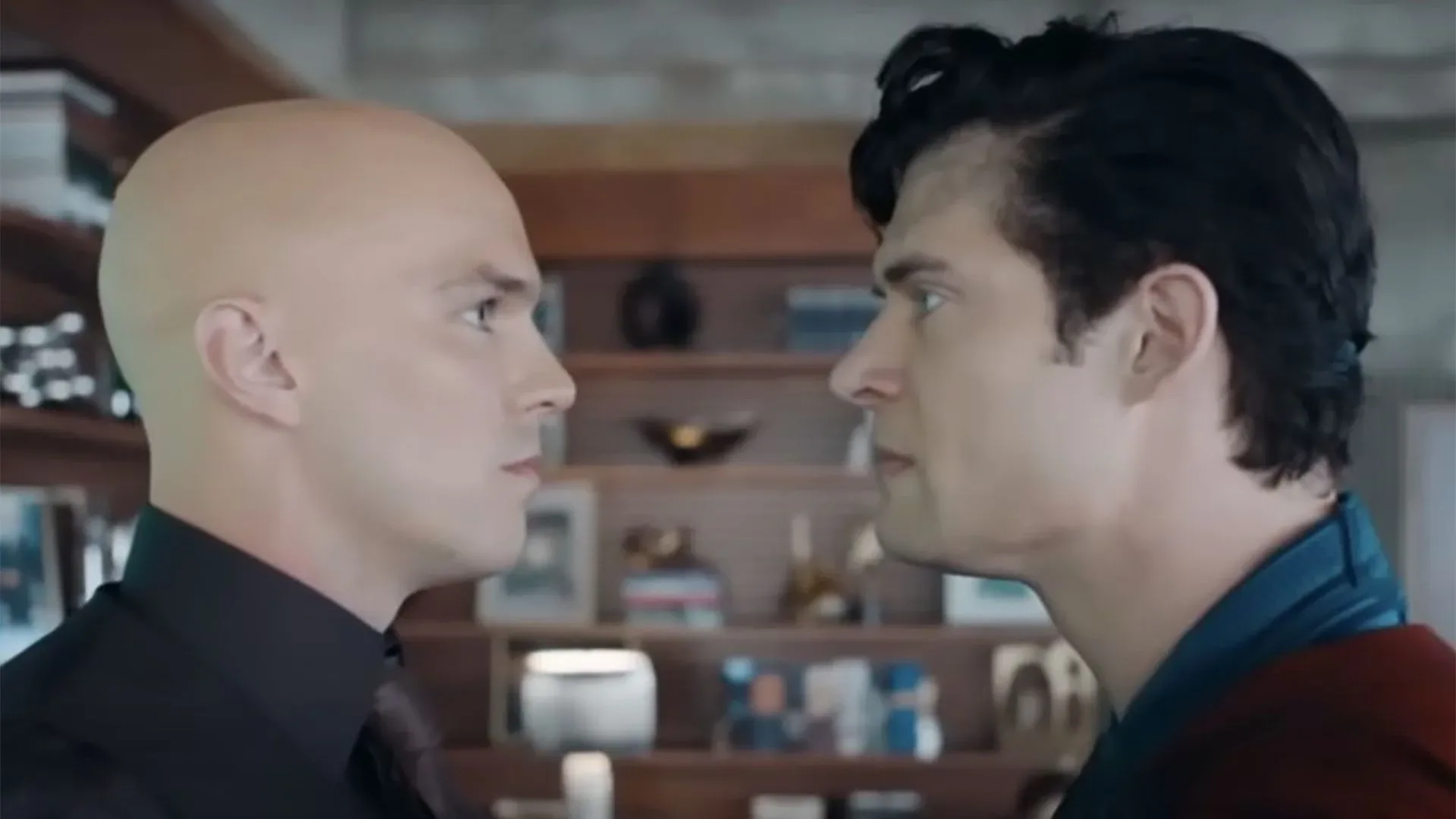
For more DC screen-story context, see the focus of Man of Tomorrow’s Clark Kent and Lex Luthor story.
Variants and covers dominate much of the modern half
The chart also demonstrates how cover art, printing status and distribution can matter as much as interior story content in the modern market.
Absolute Batman 2025 Annual #1, fourth-print Cover B, features Daniel Warren Johnson art. The annual first arrived in October 2025 and drew sustained attention after a controversial storyline sparked online debate. Nearly a year later, its fourth printing has returned it to the weekly top ten, with a reported $15 high sale and $11 raw NM FMV. A later printing is a subsequent production run of an already published comic, often identifiable through its own cover treatment or print indicators. It is not automatically rarer than a first printing; its appeal can instead hinge on the new cover, the artist, the run’s circumstances, or demand from fans who missed an earlier version.
Newmen: Special #1 brings together Lucas Lee-Garza and Bill Sienkiewicz on a black-and-white cover. A remastered version of Rob Liefeld’s Newmen is scheduled for November. Attendees at SDCC previously received a black-and-white foil virgin cover limited to 100, while this trade-dress alternative gives collectors another version to seek. The reported high sale was $45 for raw NM, with raw NM FMV at $24.
The jargon here is worth separating. A virgin cover generally removes the usual logo and other publication text from the front image. A trade-dress cover retains those elements. Neither description alone states a book’s quality or investment outlook; they describe the presentation. The known 100-copy limit applies to the foil virgin convention version, not automatically to every other black-and-white edition.
Star Wars: The Book of Boba Fett #1 is a Jerry Ordway 1:25 incentive variant. Its composition pays homage to Star Wars #42, using the series’ characters in the same poses. The connection has extra collector resonance because #42 is widely regarded as Boba Fett’s first appearance, though CGC does not share that designation. The issue recorded a $72 raw NM high sale and a $57 raw NM FMV.
A 1:25 variant is a retailer incentive cover tied to ordering ratios: typically, a shop must order 25 qualifying copies to obtain one incentive copy. That structure can constrain supply relative to the regular cover, but it does not by itself settle market value. Ordway’s homage concept, Boba Fett’s importance, and the specific image all contribute to why this one has drawn attention.
Venom #261 is another cover-first entry. Ito’s Marvel cover had already generated interest after being shown on the artist’s Instagram, and collector demand carried into aftermarket sales. A raw NM+ copy hit $25, while raw NM FMV was reported at $20. It is a straightforward example of artist demand crossing into a new publisher context: buyers may be responding to the novelty of Ito producing a Marvel cover, the character, or both.
Homage, scarcity and the week’s largest price point
The week’s largest reported transaction belonged to Spawn 77 #1, Todd McFarlane’s Whatnot red retro-logo variant. Limited to 400 copies and initially sold through the live-sales app, it reached a raw NM high sale of $295 and raw NM FMV of $244.
The appeal begins with a familiar visual language. The book uses a Spider-Man #300 homage cover, a deliberate reference to a prior comic’s recognizable design. This version changes the “77” numerals in the background to red. Homage covers can be especially effective when they pair a well-known image with a character or series that gives the visual new meaning. In this instance, limited distribution adds another variable: collectors who did not acquire it through the original app release must look to the aftermarket.
Yet scarcity deserves precise language. “Limited to 400” identifies the stated quantity, while the current FMV reflects the data’s estimate of prevailing market activity. It does not mean every raw near-mint copy will sell instantly at $244, nor does a $295 sale create a floor. Condition, the desirability of a given cover, and the number of buyers seeking it at the same moment all remain important.
Amazing Spider-Man #36 returns for a very different reason
Amazing Spider-Man #36, the 2001 direct edition, stands apart from the variant-driven books and the adaptation speculation. It returned to the list around the 25th anniversary of the September 11 attacks. The issue places Spider-Man and other heroes alongside first responders while focusing on the character’s thoughts, and it was praised when released for its tribute and emotional impact. A raw VF copy recorded a reported $84 high sale; raw NM FMV was listed at $54.
This is not simply a story of a character key, a new print run or a scarce incentive. It is an issue whose collector activity repeatedly rises around a particular time of year because readers revisit its subject matter and its place in superhero comics. That can make the book emotionally significant in ways that are not captured by a numerical ranking.
The grade comparison also reinforces why condition language matters. VF means Very Fine, while NM means Near Mint; the plus sign in NM+ indicates a slightly stronger position within that near-mint range. These terms are assessments of physical condition, not guarantees of a precise universal price. The $84 noted here was for a VF copy, while the $54 FMV is an NM estimate, so they should not be treated as a clean same-grade comparison. Sale timing and individual-copy factors matter too.
Reading the chart without mistaking momentum for certainty
This group of ten comics is less one unified trend than several overlapping ones: a dormant creator-owned series rediscovered by viewers; live-action enthusiasm concentrating attention on Green Lantern material; a memorial issue revisited on an anniversary; and a modern-cover market energized by artists, homages, later printings, incentives and limited distribution.
That variety is why a top-ten list is most valuable as a record of the week’s conversation. It can identify what collectors are actively chasing, but it cannot confirm an unannounced adaptation, promise more issues of a stalled series, or ensure that a particular copy will match a prior sale. For readers, the list is a compact guide to comics being discussed. For collectors, it is a useful prompt to check edition, condition, distribution details and recent comparable sales before attaching too much meaning to a single headline number.