Warning: This article discusses major spoilers for the Lanterns Season 1 finale.
Grant Morrison’s verdict on Lanterns is not a simple thumbs-up or thumbs-down. The veteran comic creator believes the DCU series fundamentally works, with Aaron Pierre’s John Stewart and Kyle Chandler’s Hal Jordan supplying the charisma and chemistry needed to sell its grounded, detective-inflected approach. But Morrison has also raised a sharp objection to the season’s final resolution: in their view, it abandons the moral and legal consequences implied by a story about an intergalactic police organization.
The flashpoint is Sheriff Kerry, played by Kelly Macdonald, killing Hal after he discovers that her son Noah is a Manhunter in disguise. Morrison’s argument is not merely that the twist is upsetting, nor that the scene lacks tension. They described the finale as neatly assembled while saying they did not like its ending. Their concern is what happens afterward—or, more precisely, what does not appear to happen afterward.
For Morrison, the aftermath makes it difficult to understand the Green Lantern Corps as an institution with rules, authority and accountability. If one of its operatives can be killed and others simply move on, the series risks treating a foundational premise as background decoration rather than a source of dramatic stakes.
What Morrison liked about Lanterns
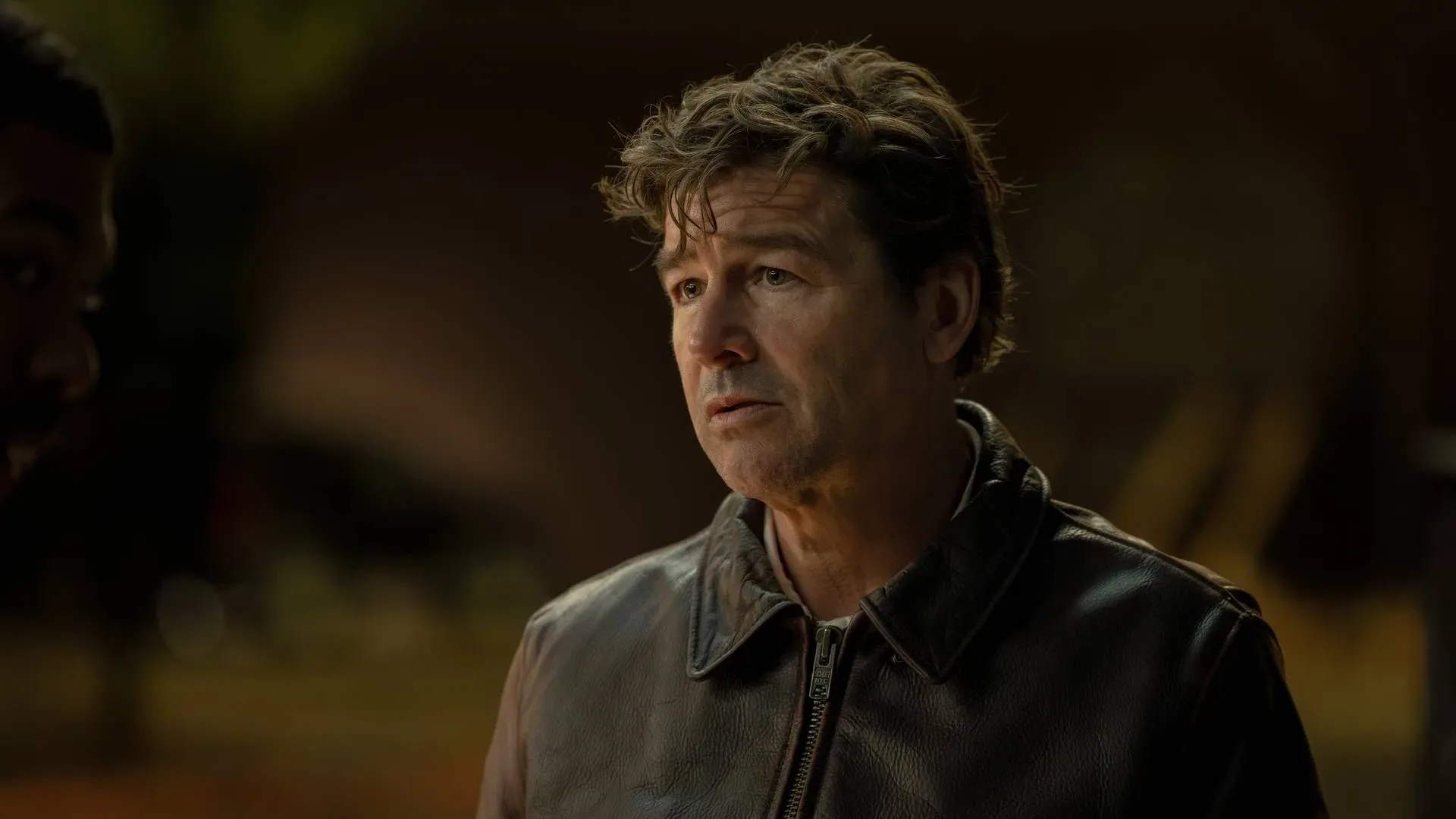
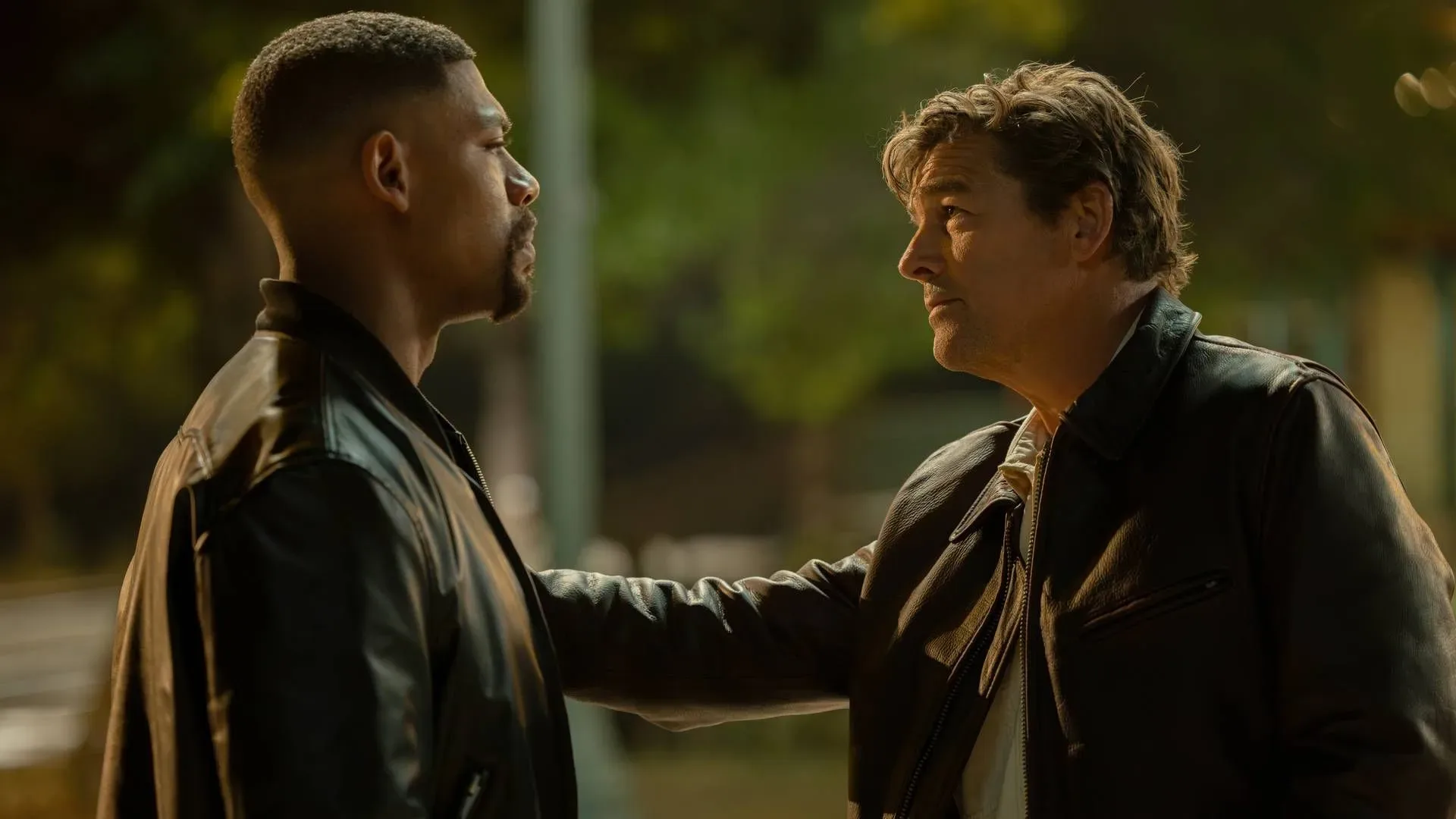
Morrison’s criticism comes alongside substantial praise. They said Lanterns worked as a show, crediting the principal pairing above all else. Chandler’s Hal Jordan received particular emphasis, while Morrison also pointed to Pierre’s John Stewart and the strength of the supporting cast.
The series has been framed in comparison with True Detective, a reference Morrison felt had some justification because of the leads’ interplay. The comparison matters less as a claim that the two shows are identical than as a shorthand for a procedural structure driven by personalities, investigation and uneasy partnership. In that format, the audience needs to believe not only in the mystery, but in the systems the investigators represent and challenge.
Morrison even noted falling asleep during episodes six and seven, clarifying that this was not a judgment that those installments were dull. They described television viewing as a relaxing experience that can lead to drifting off. It is a small but useful distinction: their larger assessment was that the series’ core creative package landed, particularly when it put Stewart and Jordan together.
That makes the response to the finale more consequential than a broad dismissal would have been. Morrison is not arguing that the series lacked a compelling cast or that its detective ambitions never connected. They are arguing that the final ethical decision weakened elements the show had otherwise established.
The disputed choice in the finale
In the closing stretch, Hal learns that Noah is a Manhunter in disguise. Kerry then shoots Hal once, cutting off his attempt to communicate a fuller plan. He manages only part of that plan and a quick declaration of love before dying.
Morrison’s issue is Kerry’s state of mind and the apparent response from the characters and organization around her. They characterized the shooting as a psychotic break and questioned why everyone seemed to accept it without a meaningful reckoning. The objection is therefore twofold:
- Personal accountability: Kerry has killed Hal, a Green Lantern, in an apparently volatile moment.
- Institutional accountability: The Green Lantern Corps and its Guardians are presented as a law-enforcement body operating under an interplanetary judiciary, yet the finale does not provide a clear response that establishes how that body handles the killing of one of its officers.
“Interplanetary judiciary” is important language in Morrison’s critique. A judiciary is a system that interprets and applies law. Law enforcement, in turn, is expected to work within—or at least visibly contend with—that system’s procedures and consequences. The Green Lantern Corps is not simply a collection of independent costumed heroes following individual consciences. In Morrison’s reading, it is a space-policing force with a chain of authority, a mission and obligations that should remain legible when a crisis involves its own members.
That distinction is the heart of their position. A superhero story can sometimes allow a character to act outside conventional law because its premise is built around vigilantism: an individual chooses a personal code and accepts, evades or challenges formal authority. Lanterns, however, asks viewers to see its protagonists as officers of a much larger structure. Once that structure is foregrounded, the absence of a visible consequence can feel less like ambiguity and more like a missing part of the story.
Why the Manhunter decision compounds the problem
Morrison also objected to John allowing the Manhunter to go free despite knowing it could one day destroy the world. That decision adds a second unresolved question to the fallout from Hal’s death. The show is not only asking viewers to accept an unpunished killing; it is also asking them to accept the release of a potentially catastrophic threat.
There can be dramatic reasons for characters to make choices that are reckless, merciful, compromised or strategically uncertain. Those choices can generate future stories. Morrison’s point is that the finale, as they interpret it, pulls back from the implications of those choices rather than confronting them. If Kerry’s action is truly outside the bounds of the Corps’ order, the organization’s reaction becomes part of the plot. If the Manhunter represents an ongoing global danger, John’s decision requires an explanation of its reasoning and cost.
Without those elements, Morrison argues, the ending becomes “morally and legally incoherent.” That is a more exact accusation than simply calling the finale unsatisfying. A morally incoherent ending is one where the story’s treatment of right, wrong, culpability or harm does not appear to match the seriousness of its events. A legally incoherent one is where the rules and procedures that should govern those events are unclear, selectively applied or seemingly absent.
That does not mean every plot consequence needs to be concluded immediately. A season finale can deliberately defer answers. But deferred consequences generally need to be identified as consequences: an investigation begun, a conflict with the Guardians signaled, a charge raised, or a clear indication that characters recognize the unresolved danger. Morrison’s response suggests they did not find that acknowledgement sufficiently present here.
Tom King’s contrasting view of punishment
Morrison acknowledged a response from Lanterns writer Tom King, who said that Kerry living with what she has done constitutes punishment enough. That is a recognizable dramatic idea. Stories often treat guilt, grief and self-condemnation as punishments, especially when the person responsible cannot undo the harm.
But Morrison does not consider inward suffering an adequate substitute in this case. Their disagreement is about scale and role. Kerry’s remorse may be emotionally meaningful, but it does not answer what an intergalactic law-enforcement organization is supposed to do when one of its own is murdered. Nor does it clarify whether the Corps regards her conduct as justified, excusable, criminal, tragic or something else entirely.
In practical storytelling terms, both positions can coexist as competing questions. Kerry can be devastated by her choice, while the Guardians can still be required to investigate it. John can feel empathy for her and still be forced to confront professional duties. Such a conflict would preserve the human fallout while making the Corps’ institutional values visible. Morrison’s criticism is that the finale appears to choose the personal-cost interpretation without adequately addressing the larger system it has placed on screen.
What Hal’s absence could mean for another season
There are reports that a second season may be in early development, though nothing in that possibility guarantees the direction of any future story. The first season also included teases connected to Sinestro, played by Ulrich Thomsen, and the possibility of Chandler returning as Parallax has been raised within that discussion.
Morrison remains cautious. Their enthusiasm for the series was tied heavily to the Jordan-Stewart dynamic, and losing Hal risks losing one half of the pairing they saw as essential to its success. Pierre’s work as John earned praise, but Morrison’s assessment was not that one performer alone carried the show. It was that the relationship between the two leads supplied a major share of its energy.
A continuation would therefore face two distinct narrative tasks if it follows up on this ending. First, it would need to decide whether Hal’s death is final, reversible or part of a larger Parallax-related development. Second, it would need to show what the Corps’ rules mean when tested by Kerry’s act and by John’s choice to let the Manhunter go. Those are separate problems, but they are linked by the same question: does the organization at the center of Lanterns have standards that matter when they become inconvenient?
Morrison’s answer, for now, is reserved: the show had strong leads, a workable procedural identity and an ending they believe did not honor its own institutional premise. Whether another season can make those missing consequences part of the story remains an open question.
Morrison’s next comics project
Outside the DC universe, Morrison is set to work with IDW Publishing on a new James Bond run. The project was announced at New York Comic Con 2026, although details about how it will fit into the wider 007 universe have not yet been disclosed.