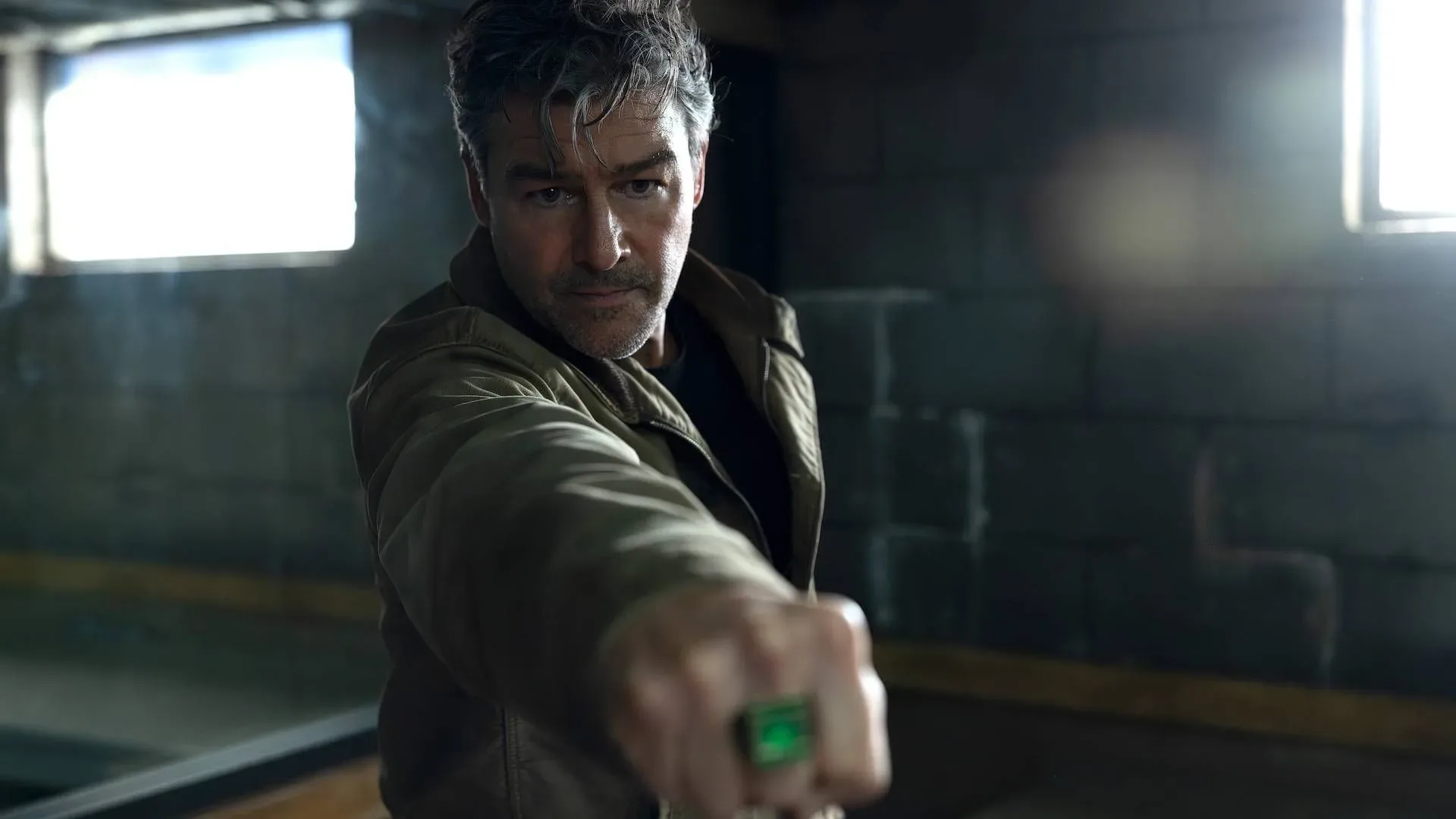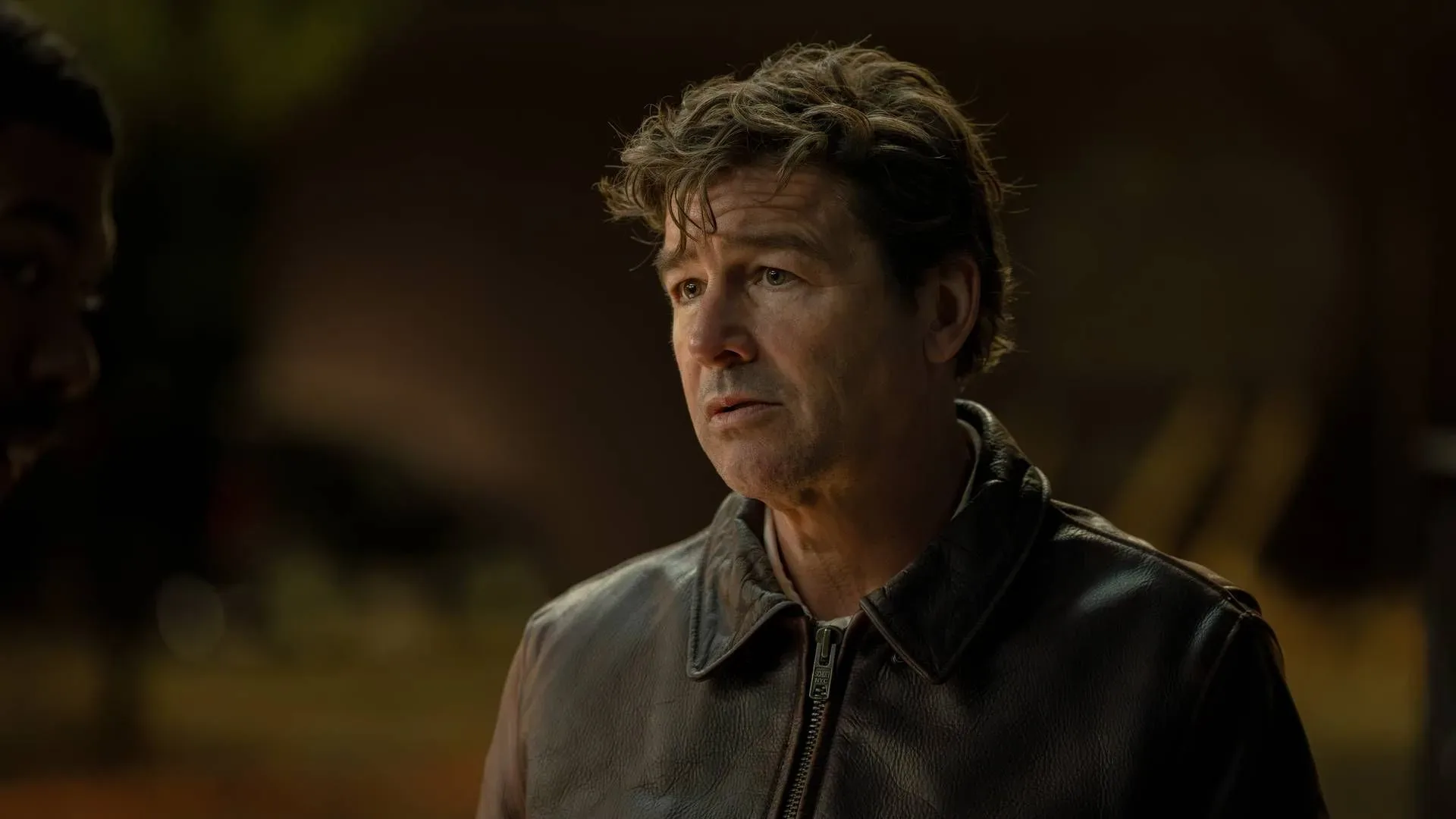
Major spoilers for Lanterns season 1, including episode 8, follow.
Lanterns closes its first season by answering the mystery that began in its premiere: Sheriff Kerry Kane killed Hal Jordan. Yet the resolution refuses the familiar superhero-crime-story ending. John Stewart discovers what Kerry did and does not imprison her, take her to an intergalactic facility, or otherwise deliver an overt institutional punishment.
That choice is meant to be unsettling, not an oversight. Co-creator and co-writer Tom King has said the creative team debated whether Kerry should be punished. Their conclusion was that Kerry’s continuing knowledge of what she did—killing the person she loved—was harsher than imprisonment. As King put it, “Nothing could punish her more than the fact that she did that thing and she has to live with it.”
It is a provocative dramatic position, especially because the finale pairs Kerry’s fate with another mercy decision: John also refuses to kill her son Noah, a Manhunter who asks John to end his life. Rather than treating either character as a problem to be neatly removed, the episode leaves both alive with the possibility—and burden—of choice.
The reveal reframes the season’s opening mystery
Kerry’s involvement is structured as a reversal of audience expectations. She is the person who found Hal’s frozen body on the bleachers and alerted John in episode 1. By the finale, she is also revealed as the person who shot him.
The circumstances matter to how the show approaches culpability. Kerry learns that Noah is a Manhunter, while Hal learns the same truth and asks her to meet at the football field. Hal asks her to flee with him. Kerry instead panics and shoots him in the head, apparently fearing that Hal will kill Noah. The episode establishes that killing Noah would have been consistent with Corps guidelines.
That does not make Kerry’s action consequence-free. It does, however, put it in a frame very different from a detached act of villainy. She believes she is facing an immediate choice between the man she loves and her son. Her response is catastrophic, irreversible, and driven by fear. The finale’s concern is not whether the killing can be undone or excused; it is whether external punishment is the only meaningful way to recognize its gravity.
King’s explanation makes the answer clear. The writers viewed Kerry’s survival, and her awareness that she killed Hal, as the consequence that best fits the tragedy. Jail would impose a formal penalty, but it would not necessarily exceed the private, permanent damage caused by her decision.
Why John Stewart refuses the simple answer
John’s response is also central to the episode’s moral argument. He could treat Kerry’s confession or exposure as the final step of a case. Instead, he leaves her to confront what she has done. That makes his decision feel less like a declaration that her crime does not matter and more like a refusal to reduce the situation to a procedural endpoint.
There is an important distinction here. Consequences are not always the same as punishment. Punishment is an imposed penalty: prison, execution, or another formal sanction. Consequences include the continuing reality that follows an action—grief, guilt, damaged relationships, fear, and accountability to oneself. The finale prioritizes the latter for Kerry.
That framing will not satisfy every viewer, and the show appears designed to invite that discomfort. Kerry was not merely caught in a tragic situation; she shot Hal. A conventional justice-driven finale could reasonably have made her arrest a climactic beat. By declining that route, Lanterns asks viewers to sit with a less tidy outcome: John’s moral authority is expressed through restraint, while Kerry’s future is defined by an act she cannot take back.
The approach also keeps the episode focused on character rather than administrative mechanics. There is no indication that the story treats the death as insignificant. Quite the opposite: the decision to leave Kerry alive is presented as a sentence of memory, grief, and responsibility rather than a way to wave away the killing.
Noah’s fate turns the finale into a story about agency
John’s decision concerning Noah develops the same idea from a different angle. Earlier episodes establish Manhunters as extremely dangerous extraterrestrials capable of wiping out entire species. John has personally seen destruction caused by one on another planet. The danger is therefore neither abstract nor unknown to him.
Still, John does not kill Noah, even when Noah asks him to do so. He wants Noah to make choices beyond the behavior he has been programmed to follow. In practical story terms, that means John rejects the premise that Noah’s identity as a Manhunter automatically determines every future act.
Programming, in this context, refers to built-in direction or compulsion: a design that shapes how someone behaves. The finale contrasts that force with agency, the capacity to make one’s own choices. John’s mercy does not erase the threat posed by Manhunters, nor does it guarantee Noah will choose well. It means John believes the possibility of self-determination is worth protecting even under frightening conditions.
The show further ties that belief to John himself. He sees aspects of his own experience in Noah. That connection does not turn Noah into an uncomplicated innocent; it explains why John resists making a final, fatal decision for him. Noah must have room to become more than the role he was made to perform.
Placed next to Kerry’s fate, Noah’s survival gives the ending a clear thematic shape. Kerry made a choice under pressure and must live with it. Noah is being offered the chance to make choices that are not dictated by his programming. John, meanwhile, chooses not to answer violence with the most permanent form of violence available to him.
Mercy is not the same thing as absolution
The finale’s hardest idea is that mercy can coexist with accountability. John’s choices do not announce that Kerry is forgiven, or that Noah’s potential danger has evaporated. He simply declines to turn either situation into a clean execution or incarceration narrative.
For Kerry, the distinction is especially important. She loses Hal because she killed him. The story gives her no opportunity to repair that fact. Whatever her motives, panic does not restore the life she took. King’s comments suggest the writers considered this irreversible loss the essential punishment: Kerry is left to carry the knowledge that fear drove her to kill someone she loved.
For Noah, mercy is a risk. The season has already supplied a reason to fear what Manhunters can do. John’s choice therefore has stakes beyond abstract compassion. He is not acting from ignorance. He has seen the devastation associated with one Manhunter and nevertheless decides that Noah should have an opportunity to exercise free will.
That is what makes the ending more morally complicated than a simple “nobody is punished” reading. Kerry faces a life defined by guilt and loss. Noah faces the demand to prove he is not only his programming. John faces responsibility for sparing them. Each outcome remains unresolved because the series is more interested in what comes after judgment than in delivering a cathartic sentence.
What the finale leaves open for Hal, John and a possible second season
Hal’s status beyond his death remains uncertain. It is not known whether he could return in physical form or as a hologram. That ambiguity matters because Hal’s death is the emotional center of both Kerry’s guilt and John’s final decision; a future appearance could deepen that fallout without undoing the consequences established by the finale.
The second season situation is also not final. A writers’ room is open for another season of Lanterns, but the series has not been renewed. In the wider DCU Chapter One slate, Clayface is next, followed by Man of Tomorrow, which is set to bring back Aaron Pierre’s John Stewart.
That makes John’s ending in Lanterns potentially relevant beyond a single mystery plot. The finale defines him as someone unwilling to let rules, fear, or another being’s apparent design substitute for moral judgment. Whether a future Lanterns season follows up on Kerry and Noah or not, John’s choices establish a version of the character shaped by restraint as much as force.
For viewers drawn to screen stories where ethical ambiguity matters as much as lore, there is also a broader genre tradition worth exploring in this guide to the wider Blade Runner timeline, another science-fiction world that repeatedly examines identity and personhood.
For now, Lanterns season 1 ends with an answer that deliberately withholds easy closure. Kerry is not taken away in chains. Noah is not executed for what he is or might become. And John’s defining act is to leave both of them alive, facing the difficult freedom to live with what has happened and decide what happens next.