Major spoilers for Lanterns season 1 follow.
Lanterns closes its first season by resolving its central murder mystery while deliberately making the larger Green Lantern situation messier. Hal Jordan is dead, the person responsible is finally named, Sinestro is stranded elsewhere, and John Stewart emerges with a ring that is neither standard-issue nor comfortably aligned with the Green Lantern Corps. The finale supplies answers, but it also makes John’s new role feel conditional, personal and potentially dangerous.
The broadest takeaway is simple: John is now operating as Earth’s Green Lantern, even if he does not present himself as a conventional Corps member. His decision is his own, his oath is his own, and the Lantern he carries has been shaped by Sinestro and powered in part by fear. That combination gives the finale a clear hero at its center without pretending that the consequences are settled.
Who killed Hal Jordan in Lanterns?
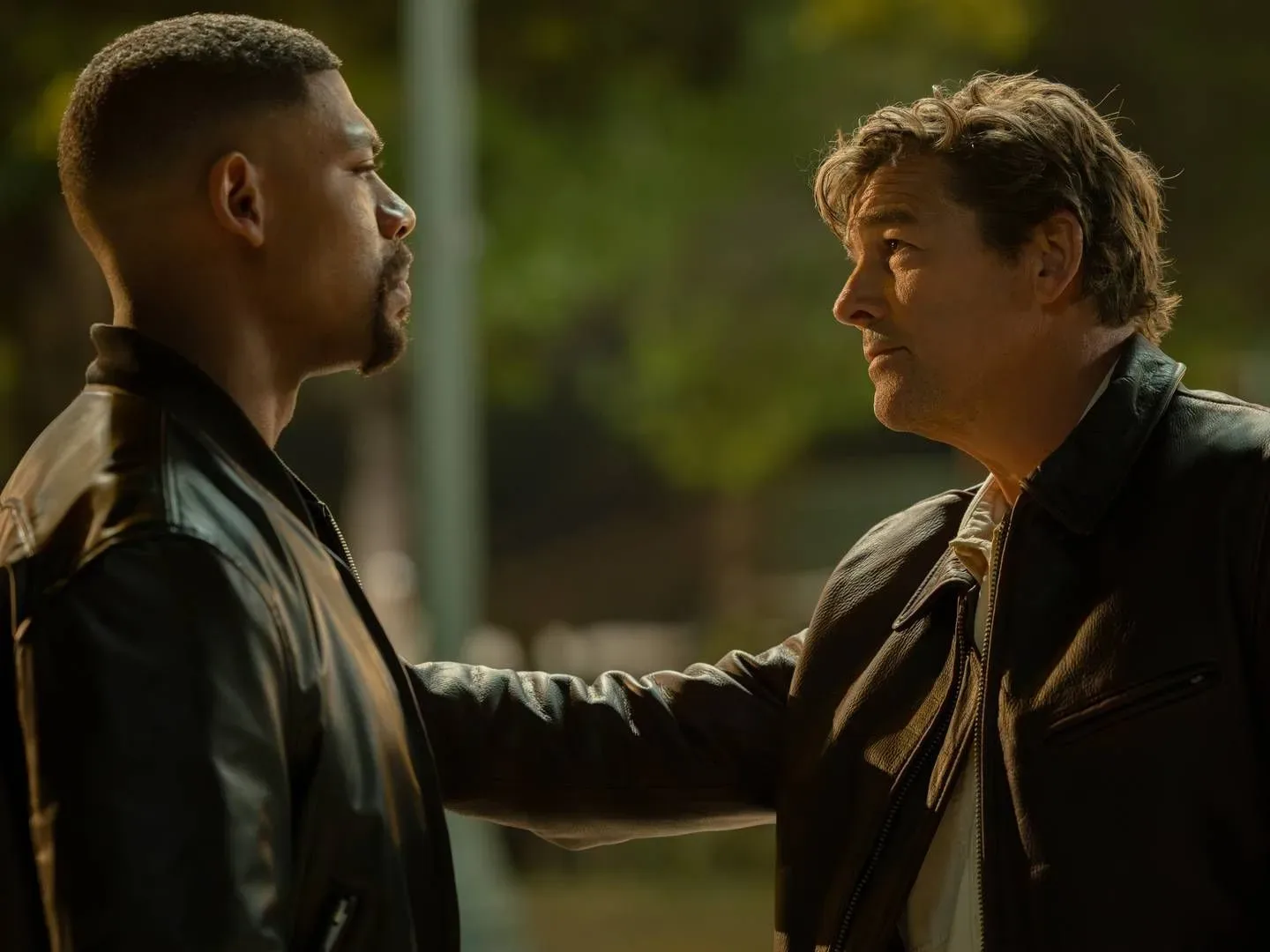
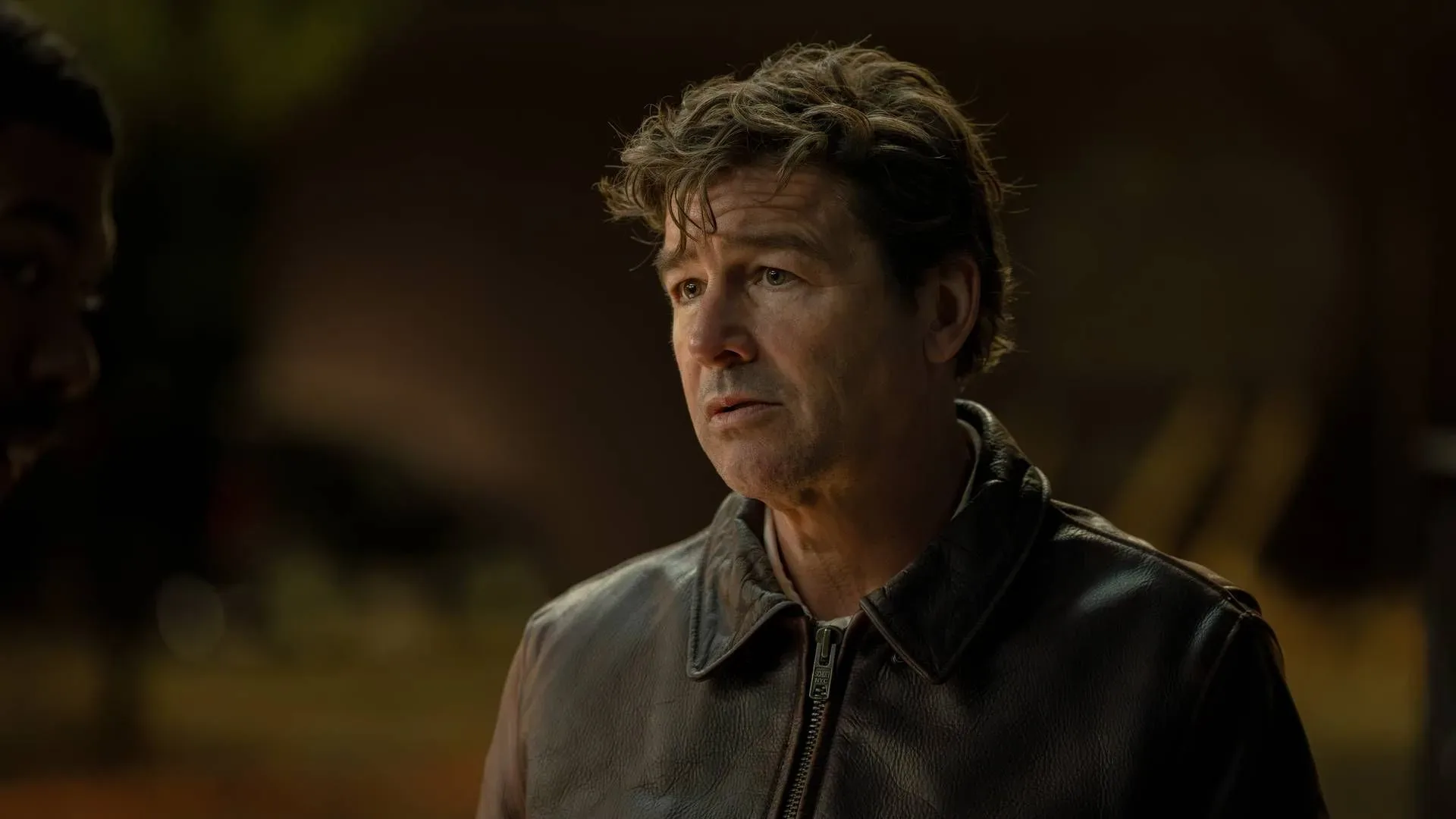
Sheriff Kerry Kane killed Hal Jordan. The episode revisits Hal’s final moments in the football stadium stands and reveals the crucial motive. Kerry explains that she became pregnant with Noah after Zoe restored her finger. Hal knows Noah’s secret identity as a Manhunter and intends to leave Rushville. Fearing what that knowledge could mean, Kerry shoots Hal in the head.
It is a deliberately grounded answer to a mystery that had accumulated cosmic possibilities. The season had made room for suspicion to fall on Sinestro, the Guardians, John and Noah, among others. Instead, the murder comes down to panic, family and a terrible attempt to protect a child whose existence and nature have become impossible to keep contained.
Noah’s earlier statement that he killed Hal is therefore a false confession. The most persuasive reading offered by the finale is that Noah is trying to shield his mother. That lie does more than preserve the whodunnit until late in the episode: it demonstrates that Noah’s human loyalties are real, even while his Manhunter side remains a source of fear for him and everyone around him.
The cold open adds important context to Hal’s place in Rushville. After accepting prison in 2016, he is released a decade later and collected by Sheriff Kane. His return receives a cold reception, and his home is firebombed. Noah saves him using alien technology, exposing the overlap between the town’s human resentments and its extraterrestrial secrets. Hal survives that attack only to die later because he knows too much about Noah.
Noah is a Manhunter—but John refuses to kill him
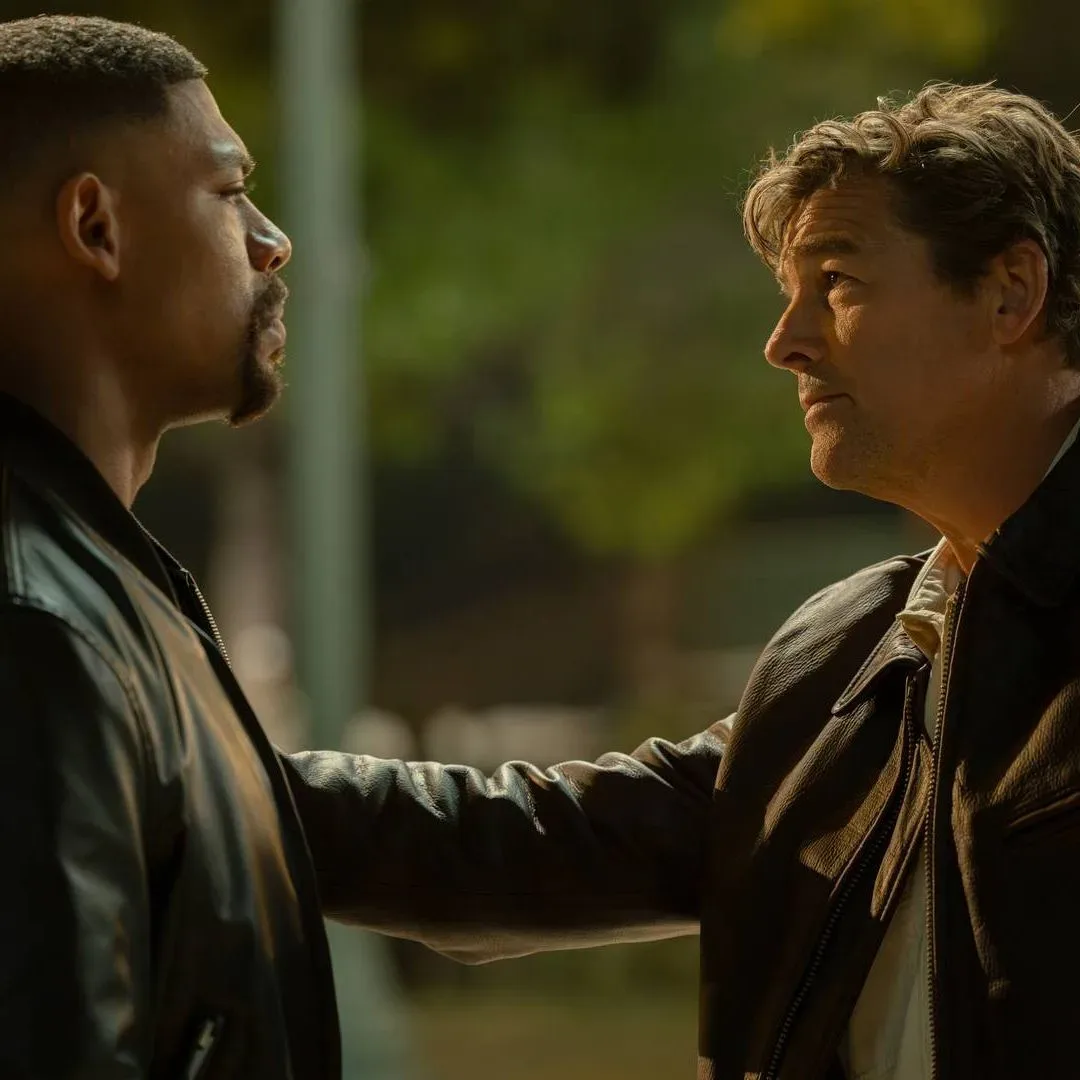
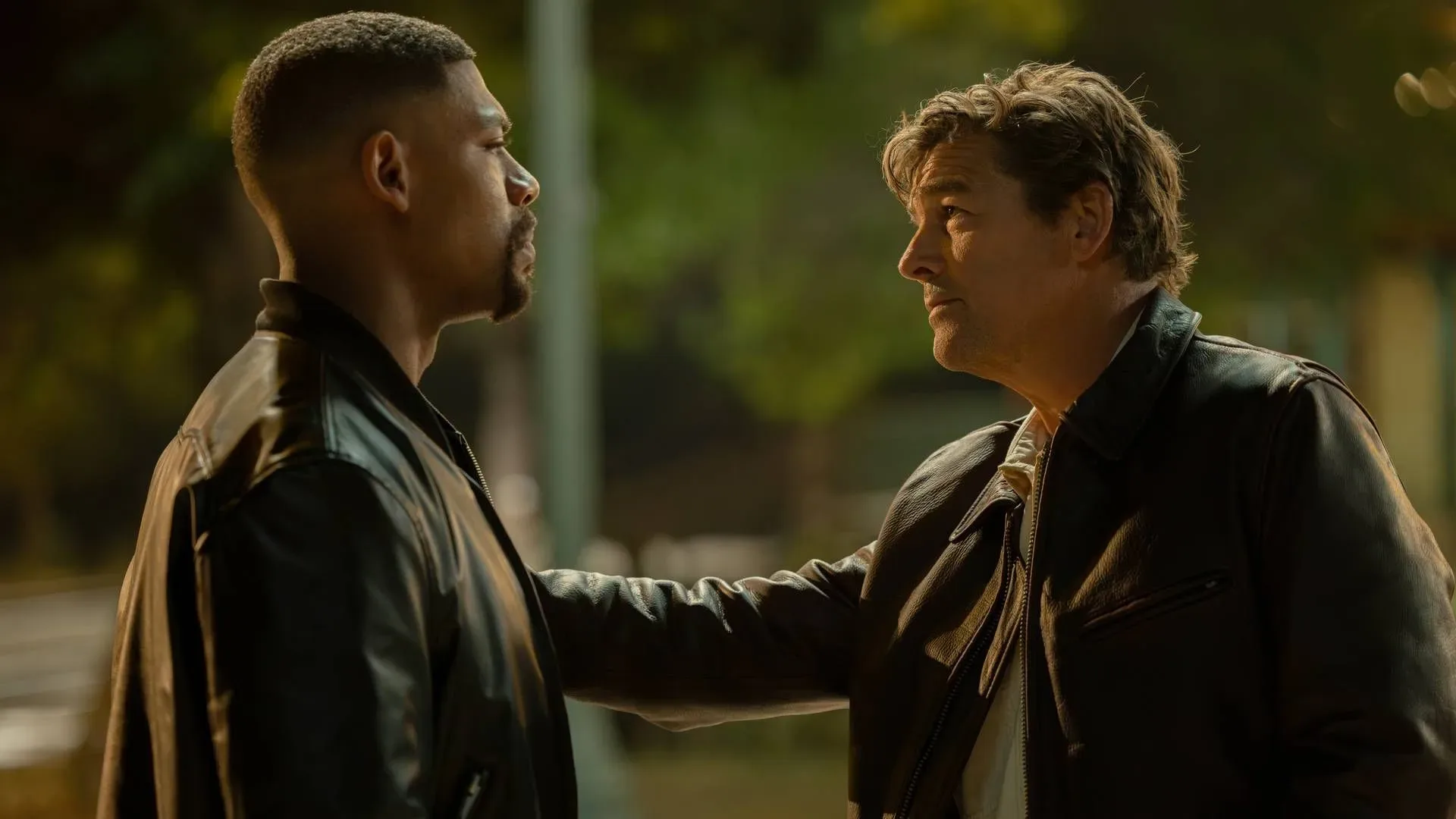
John’s most consequential decision may not be taking up the new Lantern at all. Once he comes back through the portal, Noah confronts him. Their conflict turns physical before becoming personal: Noah asks John to kill him because he fears his Manhunter nature will overpower the gentler, human part of himself.
John refuses.
This is not presented as ignorance of the threat. John knows what Noah is, and Noah himself acknowledges a pull toward power. John’s response is rooted in mercy and in the belief that someone can still choose what they become. The episode contrasts Noah with Zoe, for whom John’s version of mercy meant killing her. With Noah, mercy means leaving him alive and allowing him the chance to make decisions beyond the identity imposed on him.
That distinction matters because a Manhunter, in this story, is not merely a villainous label or an alien disguise. Noah’s origin creates a conflict between predetermined purpose and personal agency. He is still alive at season’s end and playing college football, so the show has not converted him into an immediate final boss. But it has left John responsible for living with the risk embedded in his choice.
John likely recognizes something of himself in Noah: both were marked for extraordinary power while young. The finale’s argument is that potential is not destiny. It is hopeful, though hardly uncomplicated. Noah’s survival is also a major unresolved thread, because the question is no longer whether the Manhunter danger exists—it plainly does—but whether Noah can resist it when greater power or pressure arrives.
Is John Stewart officially a Green Lantern now?
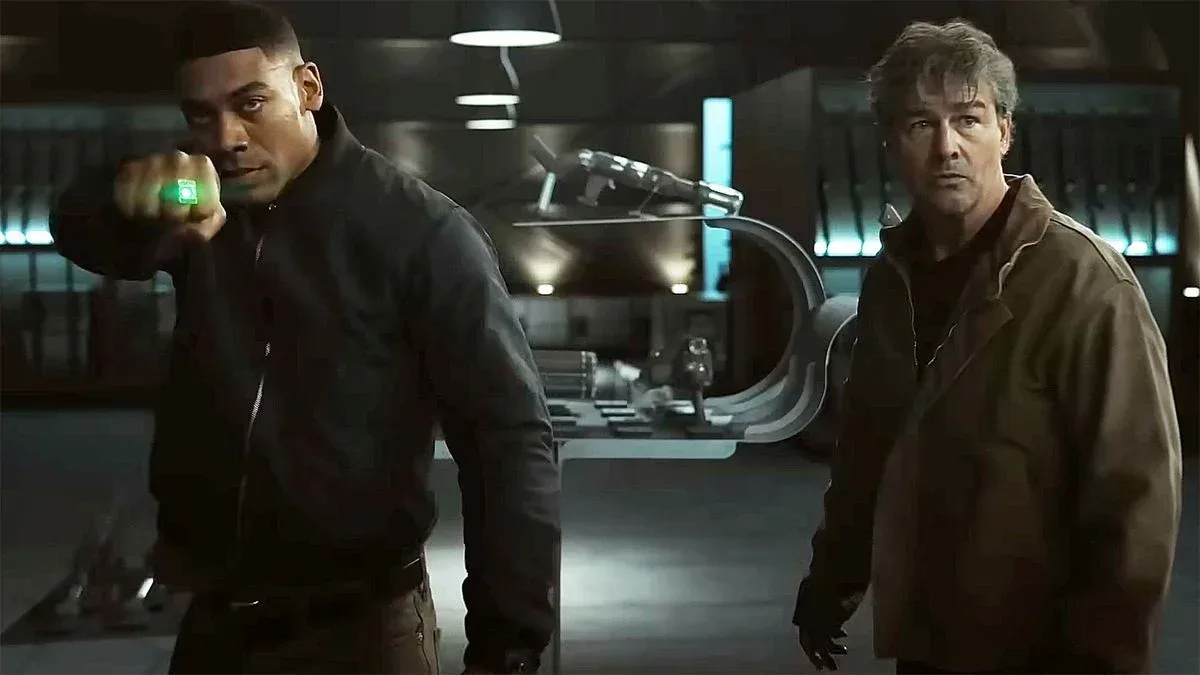
John calls himself an “independent contractor,” but the finale makes his practical status hard to dispute: he has a Lantern, he flies beneath the Lantern Signal, and he declares that he will protect Earth. He is a Green Lantern in function, though not one operating under the usual Corps arrangement.
His meeting with Guy Gardner makes the split explicit. John warns the Guardians, in coded fashion, that he knows about their creation of the Manhunters. Then he tells Guy that he will be Earth’s Green Lantern while Guy patrols space in Sector 2814. A sector is a designated area of space under Lantern protection; here, it becomes a clean way of separating their claimed responsibilities while revealing an obvious point of tension.
John’s position is therefore less a promotion than a declaration of independence. He is not waiting to be selected, assigned or approved. He chooses the ring, claims the fight and sets the geographic terms of his mission. That is why “independent contractor” is more than a throwaway joke: it describes a hero who intends to serve a purpose without submitting to the organization that traditionally defines that role.
The finale also briefly ties this independent path to Alan Scott’s more individual trajectory in the comics. The comparison supports the idea that John’s future does not have to mirror the ordinary Green Lantern Corps model. Still, the show’s specific version of John is defined by the choices in front of him: distrust of the Guardians, a warning to Guy, and willingness to wield an unusual device whose origin should make anyone cautious.
What makes John’s Lantern different?
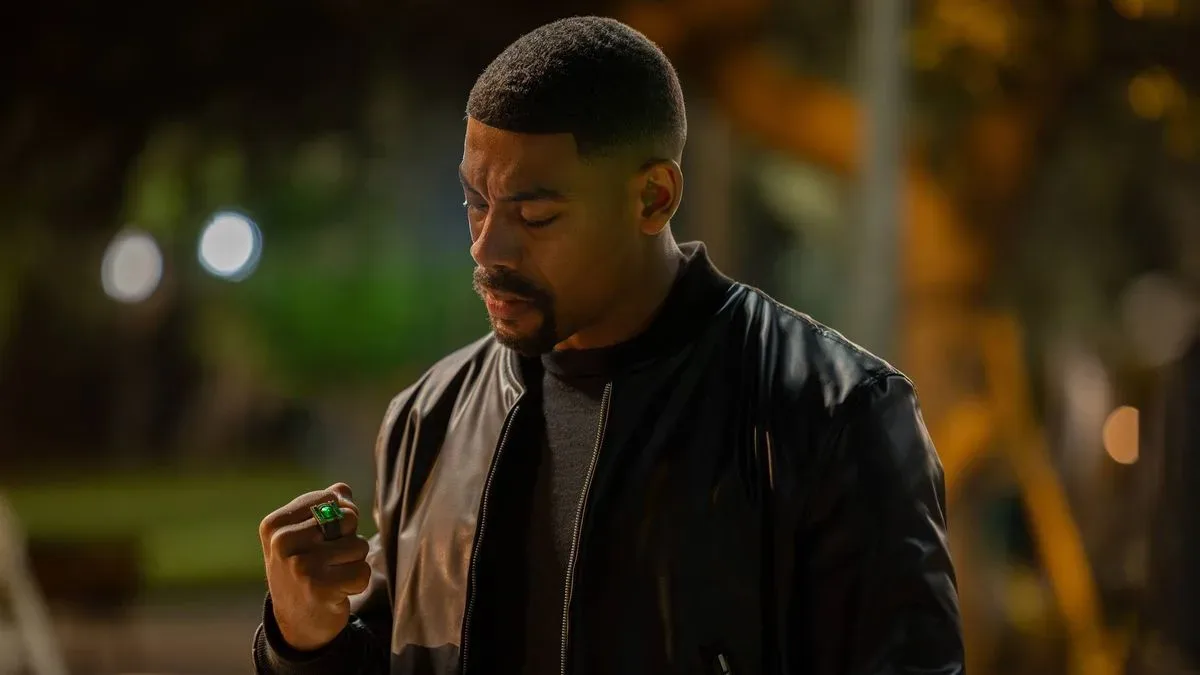
John’s new Lantern is not a standard Lantern from Oa. Sinestro created it on Antaan’s ruined planet using gas and water, and it draws on yellow cracks associated with fear. Sinestro also made a ring for Noah, who helped him escape. John takes both the yellow Lantern and the ring, while Sinestro is left behind on the planet.
That origin is crucial. In Green Lantern language, the color and emotional source of a power object are not cosmetic details. The finale explicitly associates the yellow element with fear, creating a sharp contrast with the usual image of a Green Lantern whose power is understood through will. John’s equipment is a hybrid creation: it contains fear, was forged by Sinestro, and has not been sanctioned by the Corps.
“In brightest day, in darkest night, I embrace my fear, I’ll do what’s right. I choose this ring, I choose this fight – in service to this lantern’s light.”
John’s oath makes that difference unmistakable. Rather than reject fear, he says he will embrace it while choosing to do what is right. The language of choice appears twice, underscoring the season’s major theme: John has not simply been handed an identity. He has elected to bear it.
The final line, “in service to this lantern’s light,” is particularly revealing. John’s allegiance appears to be to this singular Lantern rather than the larger Corps. That can be empowering—he is not beholden to an institution he distrusts—but it also means his source of authority is tied to a creation with Sinestro’s fingerprints all over it.
The fear component gives the ring a built-in dramatic hazard. Fear can be something John acknowledges and masters, as his oath suggests. But the same power could become corrupting. The season does not establish that corruption will happen; it establishes that the possibility is meaningful enough to hang over every future use of the Lantern.
What happens to Sinestro, and can Hal return?
Sinestro ends the finale stranded on Antaan’s planet after John takes the yellow Lantern and the ring. That is containment, not closure. He has already proved capable of creating unusual Lantern technology, escaping with Noah’s assistance, and speaking in ways calculated to exploit grief and uncertainty.
His most provocative claim concerns Hal. Speaking to the Halogram on the alien planet, Sinestro says that, with Hal’s ring, he could bring Hal back to life. The finale provides no proof that he can do this. It may be a genuine possibility, a manipulation, or a promise that would only be fulfilled on terms favorable to Sinestro.
Comic-book history leaves room for the concept without confirming this particular outcome. Hal has returned from death in more than one form in the comics, including connections to Parallax after his ring became infected by yellow fear and a period as the Spectre, a supernatural force associated with vengeance. Those precedents explain why Sinestro’s claim cannot be dismissed out of hand. They do not establish that the television story will repeat any one of them.
That uncertainty is worth preserving, especially because the story’s immediate emotional resolution depends on Hal being gone. For more context on the creative position around that outcome, see our coverage of the view that Hal Jordan’s death was not intended to be reversed. Sinestro’s line works best, for now, as a dangerous temptation rather than a confirmed resurrection plan.
The Halogram gives John a final goodbye
Before John takes to the sky, the Halogram appears one last time. Hal asks John what his final words were. John answers, “I love you.” Hal replies, “I love you too, Junior,” and disappears.
The scene does not solve the mechanics of a Hal return, nor does it undo the murder. Instead, it gives John a moment of personal resolution after a season shaped by Hal’s death and all its repercussions. John can move forward carrying grief, but he is no longer left without an answer to that final exchange.
It also helps explain why John’s independent course feels emotional rather than merely procedural. He reunites with his family, receives this last fragment of connection with Hal, and then rises into the night with the Lantern Signal shining. The imagery is heroic, but the context is uneasy: Earth has a protector who has just chosen a fear-touched power source and challenged the authority that once governed it.
Does the finale directly set up Man of Tomorrow?
Not directly. The finale’s writers have indicated that a direct setup is not the goal. The episode does, however, put pieces on the board that could matter later: John is a fully established Earth-based Lantern, Guy Gardner has a potentially competing claim to that space, and John is now positioned as a powerful possible ally to other heroes.
Any specific crossover outcome remains speculation. It is reasonable to note that John and Guy’s jurisdictional divide could become a source of conflict, but the finale does not promise a confrontation in Man of Tomorrow. Likewise, John’s background as an architect invites thoughts of inventive Lantern constructs, yet the episode does not preview a particular battle or opponent.
What it does accomplish is clearer and more useful: John Stewart exits season 1 with an identity, territory, toolset and moral problem of his own. Hal’s murder is solved. Kerry’s act is exposed. Noah gets another chance. Sinestro waits in exile. And John becomes Earth’s Lantern by choice—one who has decided that fear can be carried without being obeyed.