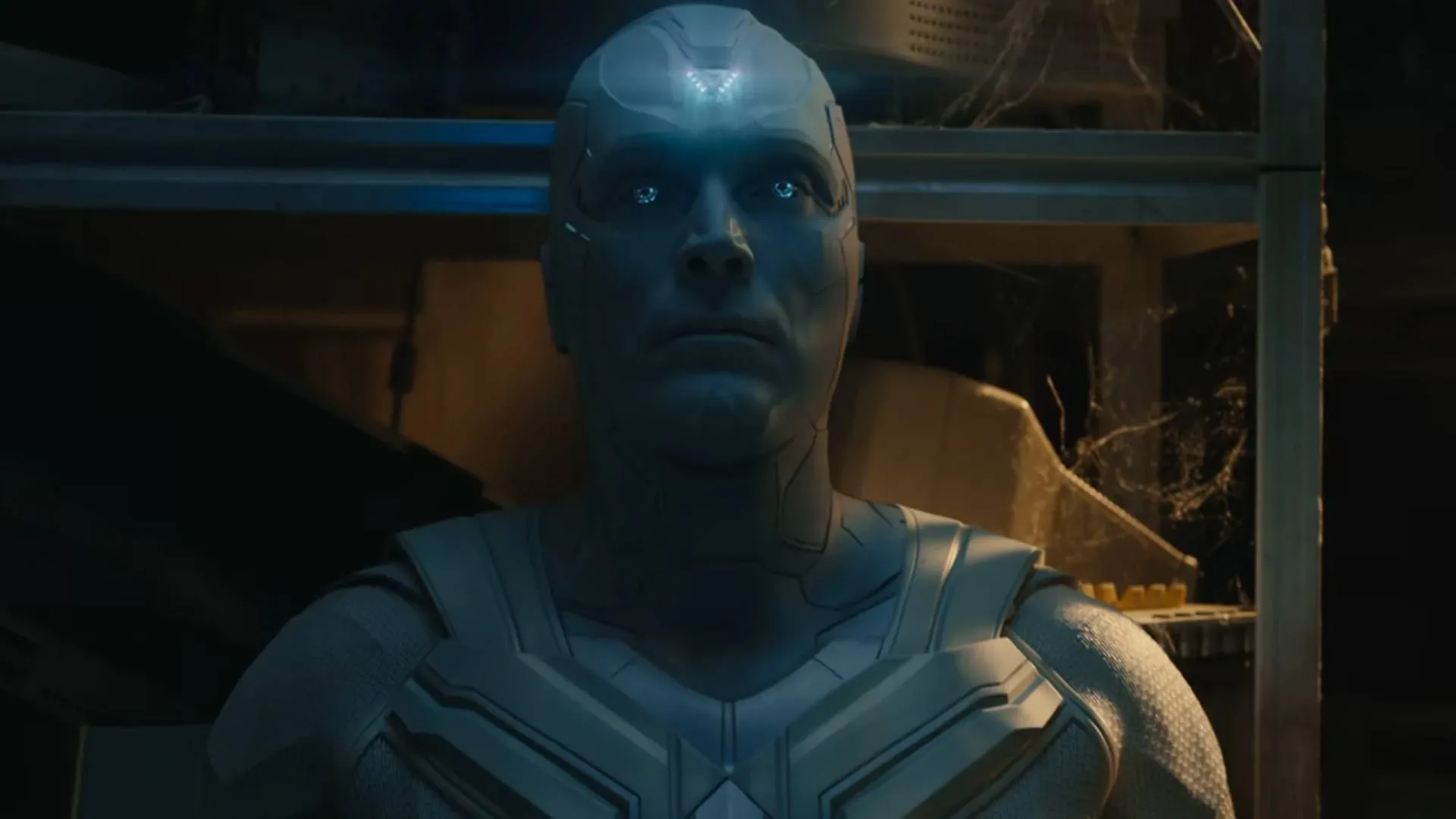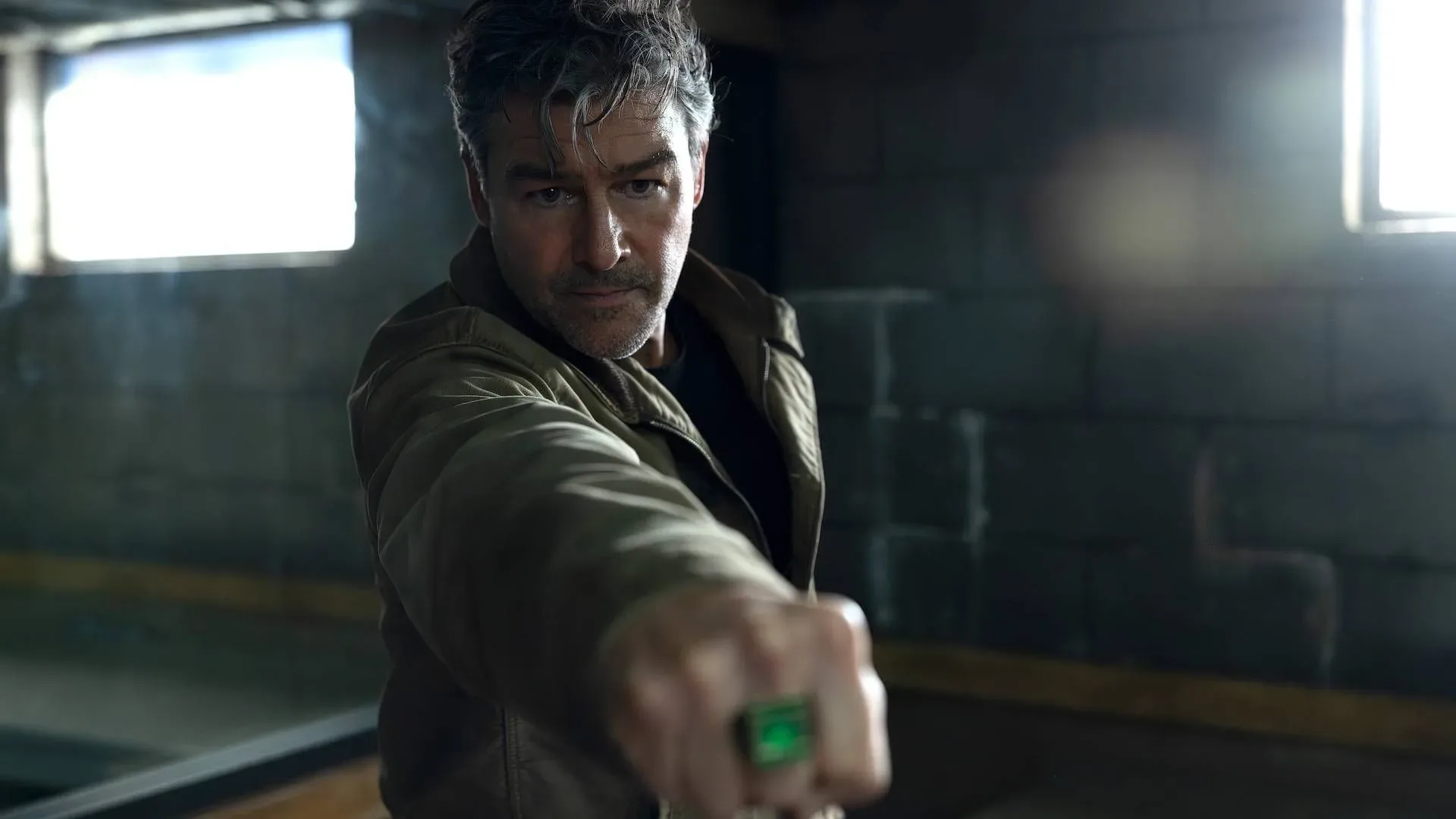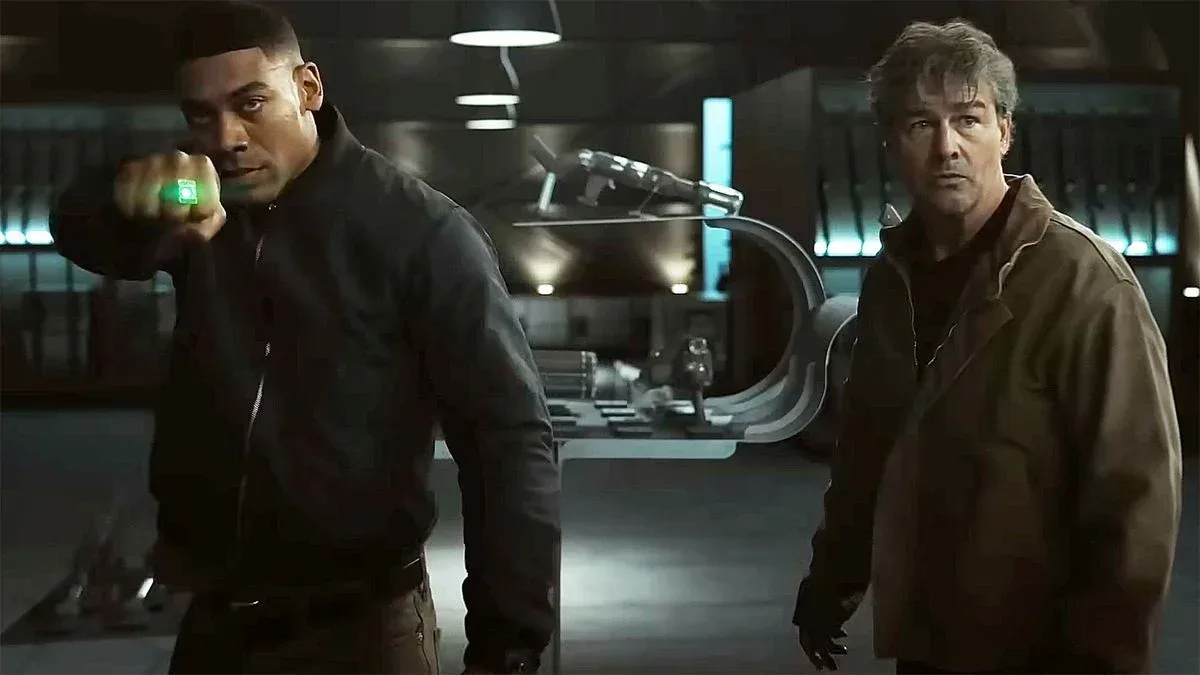
Spoiler warning: This article discusses unresolved story questions heading into the Lanterns Season 1 finale.
Lanterns is approaching the end of its first season after eight episodes, and it has arrived at the finale without making the outcome feel remotely routine. Rather than presenting Episode 8 as a simple finish line, the season has built a collection of major uncertainties around Hal Jordan, Sinestro and John Stewart. That is exactly why the final episode is likely to command so much attention: the show has taught viewers that a convincing theory is not the same thing as a safe prediction.
The finale is set to air Sunday. HBO has not confirmed a second season, despite the show drawing millions of viewers and despite discussion around a possible Season 2 writers’ room. For now, the only confirmed endpoint is the end of Season 1—not the fate of the broader story.
An eight-episode season with no obvious final destination
Short seasons can create a strange kind of television anxiety. There is less time for stories to wander, but every remaining scene can seem loaded with promise. With Lanterns, the tension comes from the possibility that the finale could provide decisive answers, deliberately leave threads hanging, or do both at once.
Several questions are still central heading into Episode 8:
- Is Hal Jordan really dead?
- Will Sinestro fully embrace the Yellow Lantern path?
- Will John Stewart finally use his powers without restraint?
- Will John’s childhood trauma receive a more direct reckoning?
- Could the finale spend substantial time in flashbacks?
Those are not minor dangling details. They touch character survival, identity, power and the show’s approach to its own timeline. A finale that answers even one of them could reorder the meaning of what preceded it. A finale that declines to answer them all could make a potential next season feel essential rather than optional.
That uncertainty is a strength when it is earned. In a mystery-driven genre story, a twist only works if it follows from what the audience has been shown, while still changing how that information is understood. Lanterns has encouraged active weekly theorizing, then undercut expectations often enough that viewers cannot assume the cleanest answer will prove correct.
Why the Hal, Sinestro and John questions matter
The biggest outstanding questions are effective because they are not merely plot mechanics. The answer to whether Hal is alive or dead would obviously transform the story’s immediate stakes, but it would also change the emotional framework around every character still reacting to his absence.
Sinestro’s possible move toward becoming a Yellow Lantern carries a different kind of weight. In broad comic-book terminology, a character’s turn toward a new color-coded identity can signal more than a costume or power-set adjustment. It can represent a change in allegiance, worldview or method. Whether Lanterns treats that possibility as an outright transformation, a tease, or a misdirection is one of the finale’s most consequential questions.
John Stewart’s situation is just as important, though it appears to be grounded as much in character as spectacle. The possibility that he might fully unleash his abilities is paired with the prospect of confronting childhood trauma. That combination suggests that power is not being treated as a separate reward track. It is tied to his emotional ability to face what has shaped him.
That is an important distinction in a prestige genre drama. “Prestige” is often used to describe series that pursue dense characterization, ambitious dramatic presentation and sustained thematic concerns alongside their genre elements. In the best version of that approach, personal history is not added merely to make superhero material seem serious. It informs the choices characters make when pressure finally peaks.
Flashbacks could clarify the past—or complicate it further
One theory surrounding Episode 8 is that it may rely heavily on flashbacks. Flashbacks can serve several different purposes in a finale. They can fill in missing information, let audiences re-evaluate an earlier event, establish a character’s motivation, or place an apparent present-day certainty in doubt.
In a show with questions surrounding Hal and John in particular, a flashback-heavy structure would not necessarily mean the present-day storyline has paused. It could be the mechanism by which the present finally becomes understandable. The risk, of course, is that too much withheld information can feel like evasion. The opportunity is that a well-placed reveal can make the existing season feel more deliberate in retrospect.
The right measure will be whether the finale’s answers feel connected to the season’s emotional arcs. Audiences generally do not need every mystery solved immediately. They do need a sense that the episode understands which questions have become most urgent and why those questions matter to the people on screen.
Season finale versus series finale is not a small wording difference
There is currently no official renewal announcement for Lanterns. That remains the key fact amid the growing speculation. Reports and online discussion about a possible writers’ room are not confirmation that a second season has been ordered, scheduled or guaranteed.
James Gunn has also been notably noncommittal on social media about the distinction between a “season” finale and a “series” finale. That phrasing has naturally intensified anticipation, but it should be read carefully. A season finale ends one chapter of a continuing program; a series finale is intended to close the program as a whole. The difference matters enormously for expectations, but ambiguity around the terms is not itself a renewal notice.
Lanterns appears capable of functioning as a self-contained first season while still leaving room for more. Those are not contradictory goals. A successful season should resolve enough of its immediate dramatic engine to feel worthwhile on its own. At the same time, it can preserve new conflicts, unsettled relationships, or fresh consequences that give a follow-up season a meaningful reason to exist.
A cliffhanger is one possible route, but it is not the only one. The finale could land a substantial resolution and still reveal that the resolution has created a larger problem. It could also close one character’s journey while beginning another’s. The most satisfying continuation hooks tend to arise from the choices characters make, rather than from a random final-minute surprise dropped in from orbit.
The practical reality: an unconfirmed second season means waiting
Even if a renewal follows, a second season would not arrive immediately. That is worth keeping in mind as the finale approaches. The urge to treat every unresolved question as proof of an imminent next chapter is understandable, but television production and scheduling do not turn around at the speed of a weekly fan theory.
For viewers, that makes Episode 8 more than a bridge to hypothetical future episodes. It needs to work as the ending audiences actually have. Any long-term plan will be more compelling if the current season earns its emotional payoff first.
The gap after a finale can also be a good time to return to the wider Green Lantern comics catalog. That does not require treating the comics as a decoder ring for every television development. Adaptations can rearrange, compress or reinterpret familiar ideas. But comics offer a substantial body of material for readers who want more of the characters and concepts after the credits roll.
That broader appetite is part of what makes Lanterns’ final episode feel unusually charged. It is not simply that an eight-episode run is ending. It is that the season has made its remaining mysteries feel connected to larger character questions, while avoiding an obvious route through them. The show has built enough confidence that viewers can hope for answers without presuming they know what those answers are.
What to watch for in Episode 8
Heading into the finale, it is useful to separate what is confirmed from what is speculation. The confirmed reality is straightforward: Episode 8 closes Season 1 on Sunday, and no Season 2 renewal has been officially announced. Everything involving Hal’s fate, Sinestro’s direction, John’s powers, flashback structure and the possibility of a future season remains part of the episode’s unanswered terrain.
The most revealing moments may not be the loudest ones. Watch for the choices that establish what each character believes, fears or is finally willing to sacrifice. If Lanterns has a future beyond this weekend, those choices are more likely to define it than any single piece of lore.
And if this is all the story the series gets for now, the finale has an equally demanding job: it must make the season’s accumulated suspense feel like it was leading somewhere. With the show’s central questions still intact, Episode 8 has plenty of room to surprise—and a lot riding on how it does.
For more TV-focused pop-culture coverage, see NYCC 2026’s biggest TV panels.