Major spoilers for Lanterns through Episode 7 follow, along with trailer-based speculation about Episode 8.
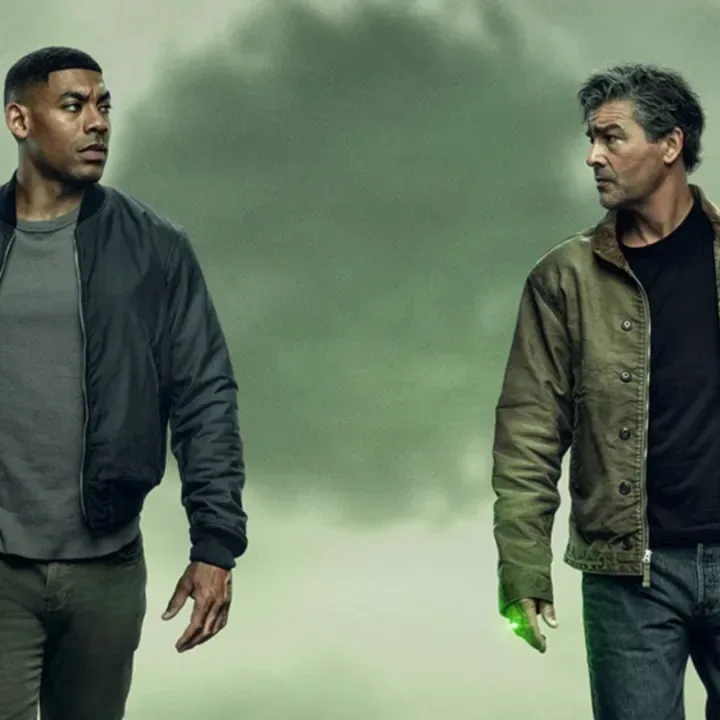
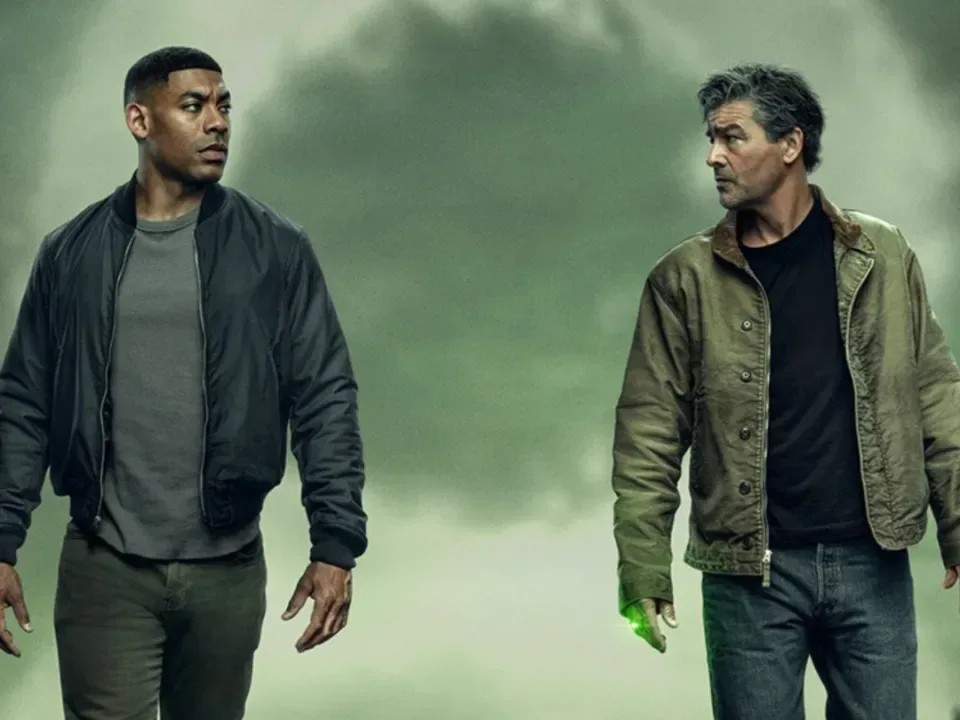
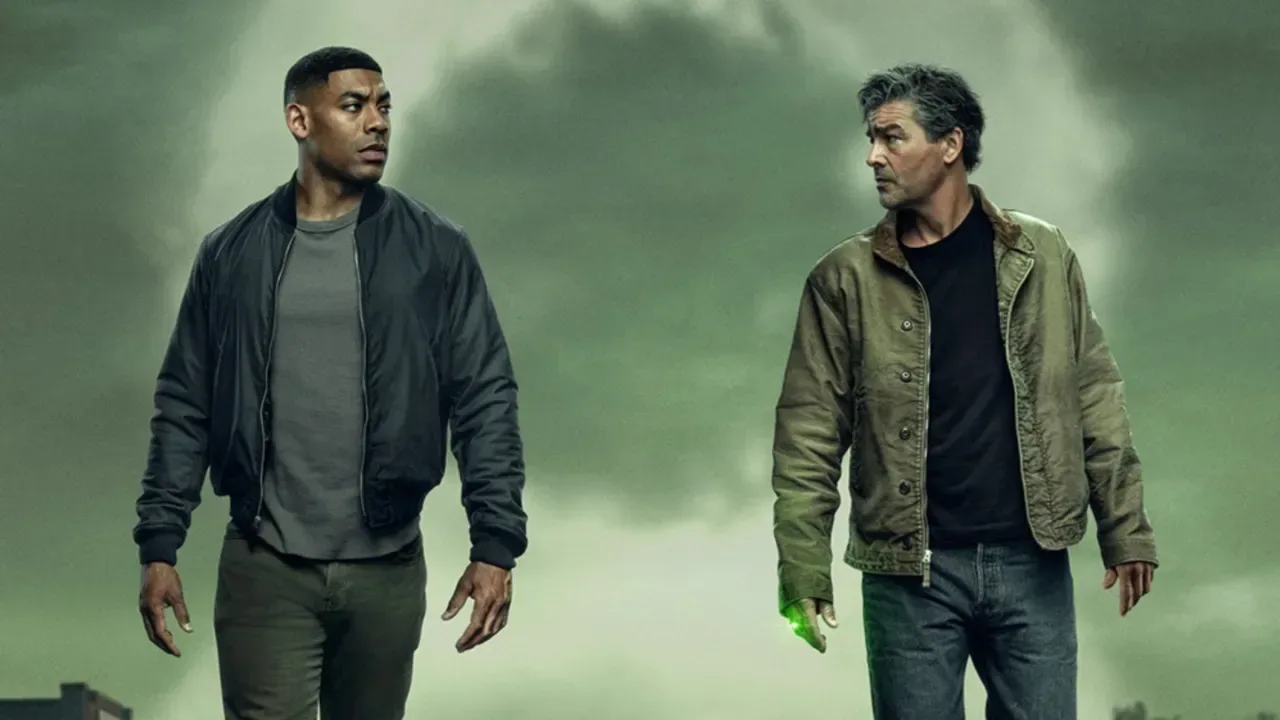
The Lanterns Season 1 finale has a sizeable number of mysteries to close, and its Episode 8 teaser appears determined to stir up a few more before it does. John Stewart and the holographic version of Hal Jordan ended Episode 7 facing Sinestro on an unfamiliar planet, still seeking the truth behind the real Hal’s death. The new footage keeps that investigation at the center, but frames it beside what may be an attempted resurrection, a return for Guy Gardner, and a deeper explanation for John’s startling abilities.
Trailers are edited to create questions rather than settle them, so none of these apparent answers should be treated as confirmed. Still, the scenes selected for the finale offer a useful map of the pressure points going into it: whether Hal is truly dead, what the alien cloning device has done, why Hal’s posthumous trail leads to Sinestro, and whether John’s relationship to the ring is far more unusual than it first appeared.
Hal Jordan’s death may not be the straightforward mystery it seemed
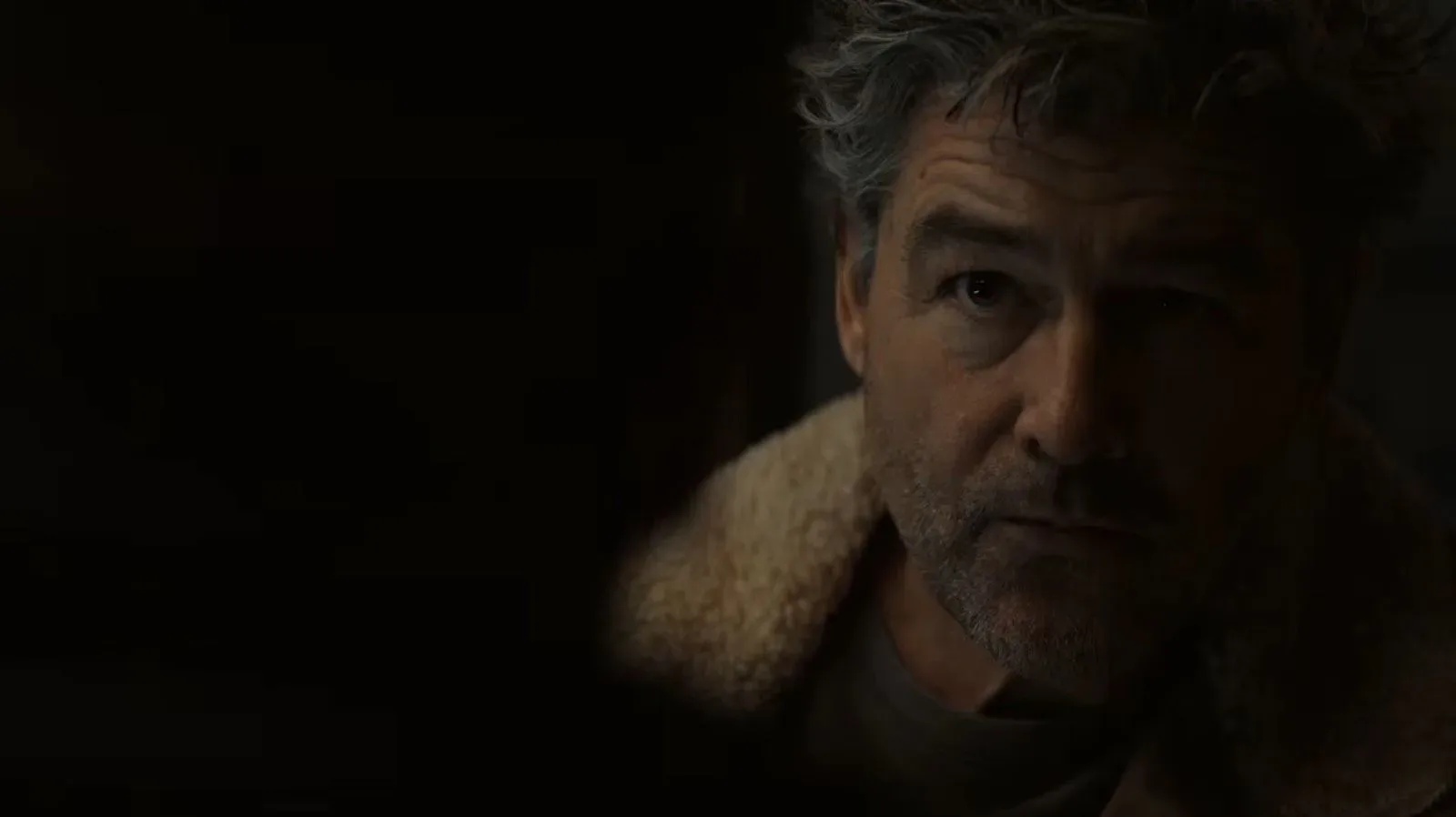
Hal’s death is the case that has set the season in motion. John has already dug up Hal’s body, while a holographic Hal has helped guide the search for whoever killed him. Episode 8 now seems to put the possibility of bringing him back on the table. The teaser connects this possibility to the alien cloning machine shown earlier in the season, with a ring-shaped impression on Hal’s arm suggesting that the device has been used on him in some fashion.
That phrasing matters. A cloning machine would not necessarily restore the same person in a simple, clean sense. The trailer’s imagery can support the idea of a resurrection attempt, but it does not establish exactly what comes out of such a process, who is directing it, or whose interests it serves. The finale appears likely to make those distinctions consequential rather than merely technical.
A clone, in the basic science-fiction sense, is a newly created biological duplicate. That is different from reviving a dead individual, even if the duplicate has a familiar face and perhaps some access to memories or programming. Lanterns has already complicated identity with the existence of Hal’s hologram. Adding a cloned Hal would give the story several possible versions of one person at once: the deceased original, the digital representation and a new physical body. The trailer does not confirm that this is the outcome, but it plainly invites viewers to consider the problem.
There is another possibility: the apparent resurrection may be a deliberate fake-out. The story has already indicated there is more to Hal’s death than viewers have been led to believe. That leaves room for the possibility that he arranged a clone of himself before his death, potentially as part of a plan to stage that death. Such a reveal would radically alter the investigation’s premise, though it remains only a theory until the episode explains the sequence of events.
A home-fire scene could be a flashback, not an aftermath
One especially slippery trailer image shows Hal fighting a fire at his own home. Its placement can make it look like a scene from after the supposed resurrection, but editing does not establish chronology. It may instead be from before Hal died.
The season has said that people in town hated Hal. In that context, the fire could represent an attack on him and potentially a piece of the larger murder story. A Molotov cocktail is one possible explanation proposed by viewers, but it is not confirmed by the teaser. The important point is simpler: the fire supplies an apparent pre-death danger that could change how the audience reads Hal’s enemies and his vulnerabilities.
It also raises the possibility that the finale will use flashbacks to fill in the gaps around Hal’s last days. A murder mystery benefits from withheld context, but the final episode needs to distinguish between motive, opportunity and proof. Showing Hal under threat would establish atmosphere and suspicion; it would not by itself identify his killer. The difference will matter if the show wants its solution to feel earned rather than merely surprising.
Sinestro turns fear into the finale’s philosophical fault line
The teaser has Sinestro challenge the Lantern Corps’ ideal of having no fear by arguing that fear itself is immensely powerful. Given Sinestro’s role in the story, that is not simply villainous posturing. It presses directly on John’s core presentation so far: a man who projects control, restraint and a refusal to be ruled by fear.
“Don’t be afraid to be afraid,” Hal appears to tell John.
The line complicates the expected heroic response. It does not say fear should take command. Rather, it suggests that acknowledging fear may be healthier or more useful than pretending it does not exist. This creates a more interesting tension than a straightforward bravery test. John may need to recognize what frightens him before he can decide what to do with that knowledge.
Sinestro’s argument also lands at a moment when the stakes seem to extend beyond solving one death. The trailer suggests that whatever plan surrounds Hal’s return risks a catastrophe. It is not yet clear whether Sinestro is attempting to cause that disaster, exploit it, prevent it on his own terms, or steer John into making the wrong choice. Nor is it clear that John and Hal want the same outcome. Those uncertainties make the finale’s apparent resurrection plot potentially a conflict of values as much as a plot-device puzzle.
John Stewart’s powers look set for an explanation
John’s connection to the ring is perhaps the most direct sign that the finale has more to reveal than a culprit’s name. Previous episodes have shown him producing constructs without wearing the ring. In Lanterns terms, constructs are created manifestations of ring power: physical-looking forms brought into being through that power rather than ordinary tools or materials. The holographic Hal was visibly taken aback by John’s ability to do this in Episode 7.
That reaction makes clear that John’s talent is not routine. It is an exception even within the show’s own rules, or at least something Hal does not expect. The Episode 8 teaser shows John looking skyward, an image that may hint at him finally using ring power to fly. That is still interpretation, not confirmation, but it fits the trailer’s broader suggestion that John’s potential is about to become explicit.
For the finale, the practical question is not just whether John can do more, but whether he understands the cost and meaning of doing it. His power could be the means to avert the threatened catastrophe. It could also make him vulnerable to manipulation by Sinestro or to the emotional pull of bringing Hal back. If fear is the episode’s stated theme, John’s emerging abilities give that theme a concrete dramatic form: he may have to act while afraid rather than wait for certainty.
Guy Gardner’s return adds another Lantern to an already unstable situation
The teaser confirms Guy Gardner will return. Beyond that, it does not explain where Guy has been, what he knows, or how he will fit into the confrontation between John, the holographic Hal and Sinestro. His arrival is notable because the finale’s central issues are no longer confined to an isolated investigation. There is now an apparent cloning process, a missing-or-dead Lantern whose status is uncertain, and a threat that may have catastrophic consequences.
Guy could supply missing context, provide another perspective on Hal, or simply become another person forced to make a decision with incomplete information. The footage does not settle which. But his presence should make it harder for the finale to present the story as a private exchange between John and Hal’s hologram. A returning Corps figure potentially broadens the personal fallout of whatever happened to Hal and whatever is about to happen to him.
The Noah and Kerry theory remains unproven
Another major fan theory centers on Noah, the high-school quarterback with presidential ambitions. Viewers have speculated that Noah could be a Manhunter and that Kerry has concealed his identity for years. From there comes a more specific chain of possibilities: Hal learned the truth, threatened to expose Noah, and was then killed either by Kerry or by Noah himself.
It is an intriguing theory because it would connect a personal murder to a concealed identity and to a much larger danger. But it is crucial to separate speculation from what the teaser actually establishes. The Episode 8 material discussed so far does not confirm that Noah is a Manhunter, that Kerry knows anything, or that either character killed Hal. The theory’s appeal lies in how many open questions it could answer at once; its weakness is that it relies on links the show has not yet verified.
That does not make the idea irrelevant. Finale trailers often intensify attention on a few images while avoiding the character or event that supplies the key explanation. If Noah and Kerry matter to Hal’s death, the trailer has ample reason not to advertise it. If they do not, the theory illustrates just how many directions the season’s clues currently appear capable of pointing.
Why did Hal’s failsafe lead John to Sinestro?
Perhaps the most important unresolved question is Hal’s own apparent design. He kept a portal to the planet where Sinestro was hiding in his “failsafe,” and he effectively directed John there after his death. That connection looks too deliberate to be incidental.
Several readings remain open. Hal may have anticipated Sinestro’s involvement in the events leading to his death. He may have expected Sinestro to possess information John would need. Or Hal may have set a path designed to force John into discovering something about himself, the ring or the cloning technology. The finale needs to explain not only why Sinestro is connected to Hal, but why Hal trusted—or deliberately risked—John following that route.
The strongest version of Episode 8 would tie these threads together: Hal’s death, the cloning machine, John’s unusual construct-making, Sinestro’s interest in fear, and the portal within the failsafe. The teaser indicates that all of those pieces are in play. Whether they form one coherent answer, or leave deliberate room for another season, is the question the finale now has to face.
For viewers who enjoy superhero stories built around identity, legacy and hidden machinery beneath a familiar heroic symbol, the broader appetite for big-stakes comic-book finales remains easy to understand. Avengers: Endgame’s renewed box-office run is a reminder of how strongly audiences can respond when long-running superhero questions finally reach a payoff.