Potential spoilers for Lanterns through episode 5, “Lights Out,” and trailer-based speculation for the remaining episodes.
Lanterns has entered the stretch where every striking image risks becoming a very pointed clue. A newly released mid-season trailer previews the final three episodes of the series and suggests that the story is leaving the immediate fallout of episode 5 behind for a much broader reckoning. The footage points toward a 10-year time jump, John Stewart’s return to Rushville, the arrival of Guy Gardner, and a potentially pivotal encounter with Thaal Sinestro.
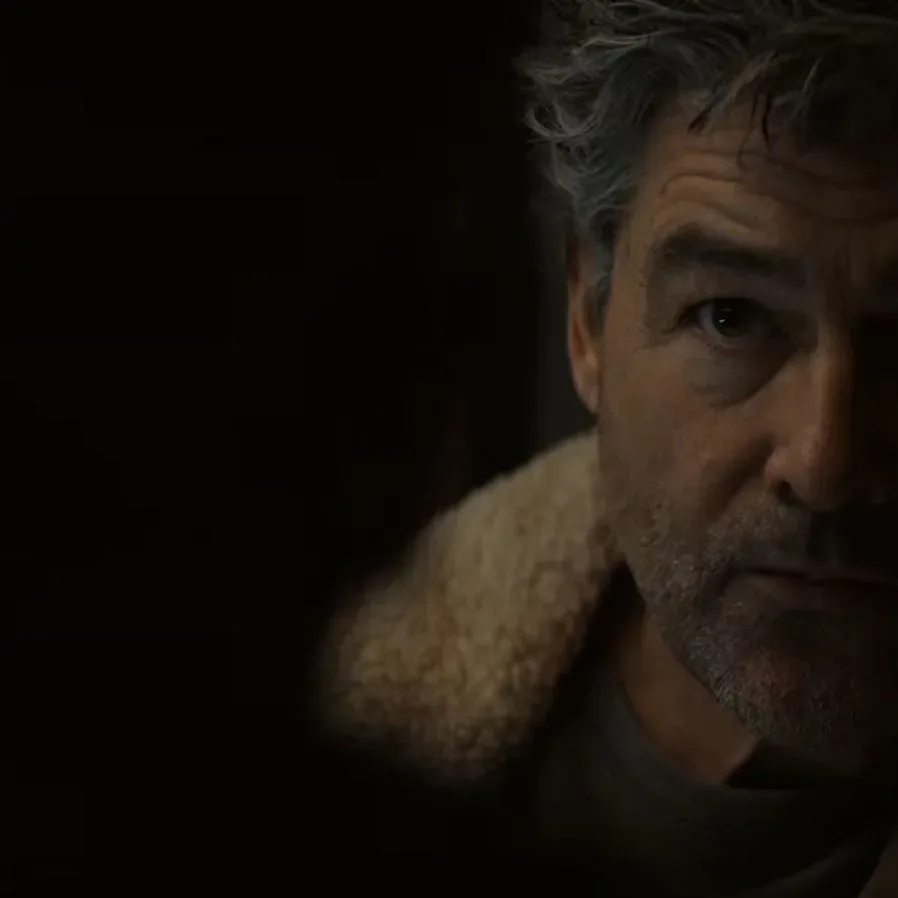
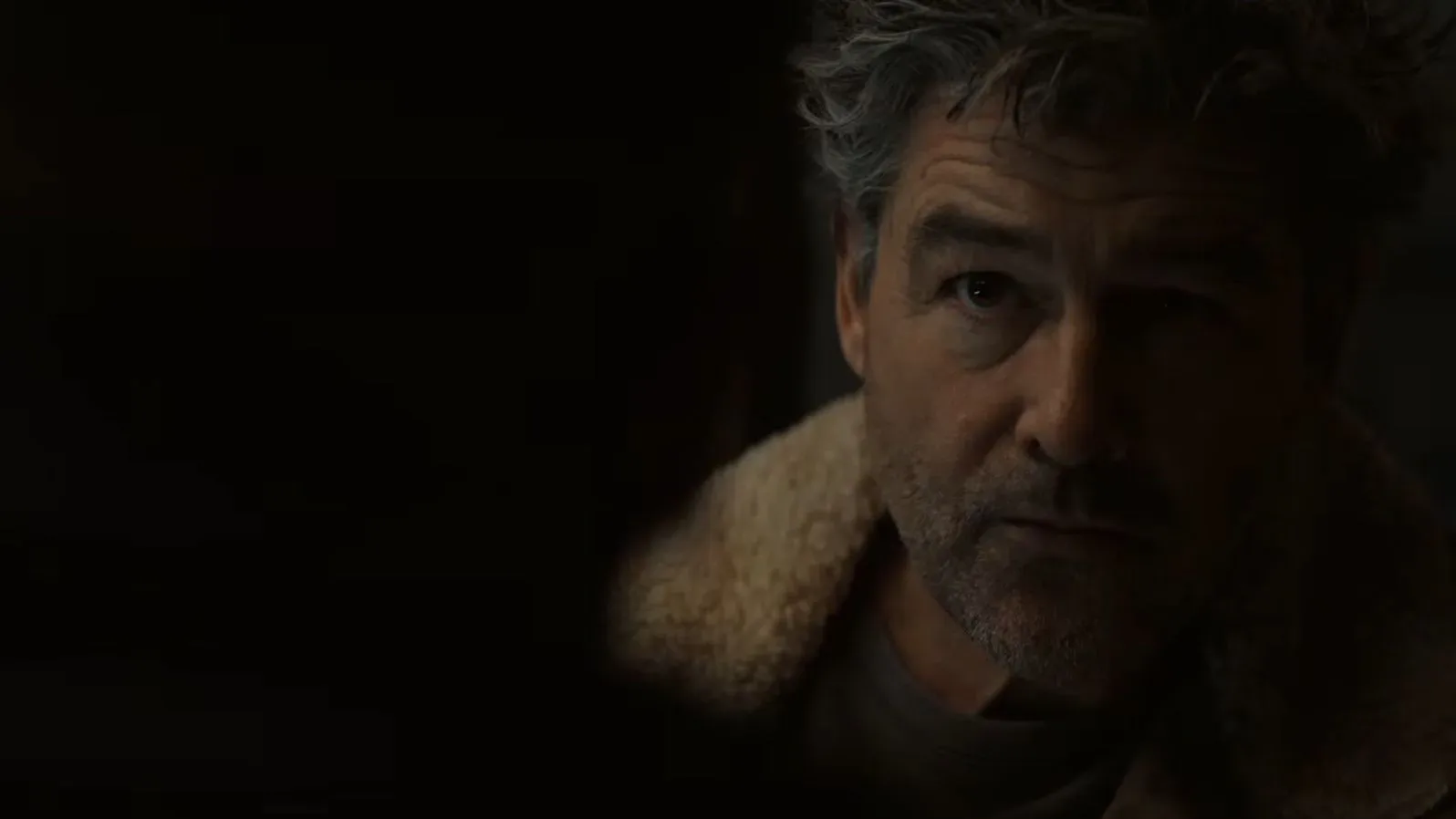
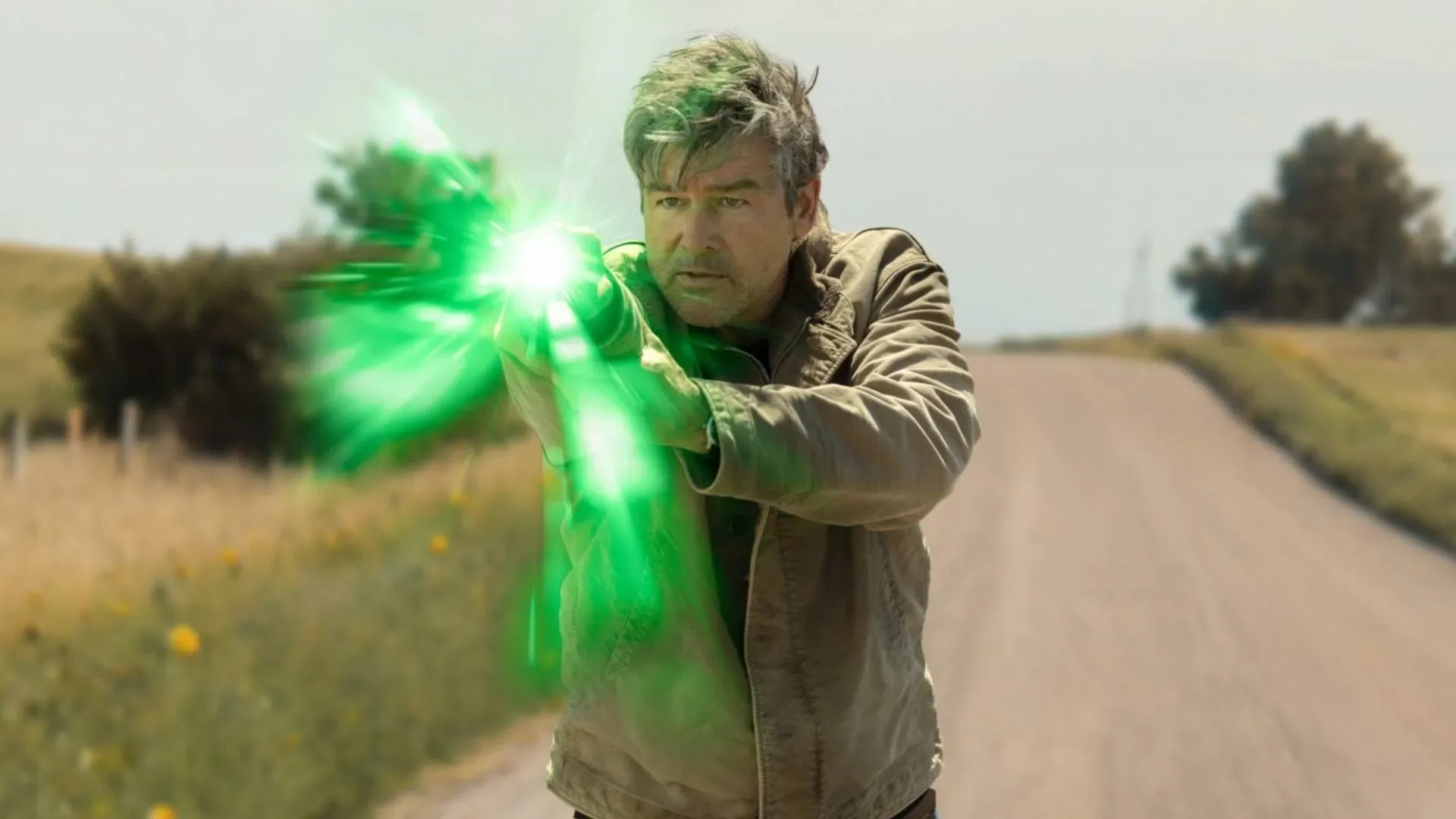
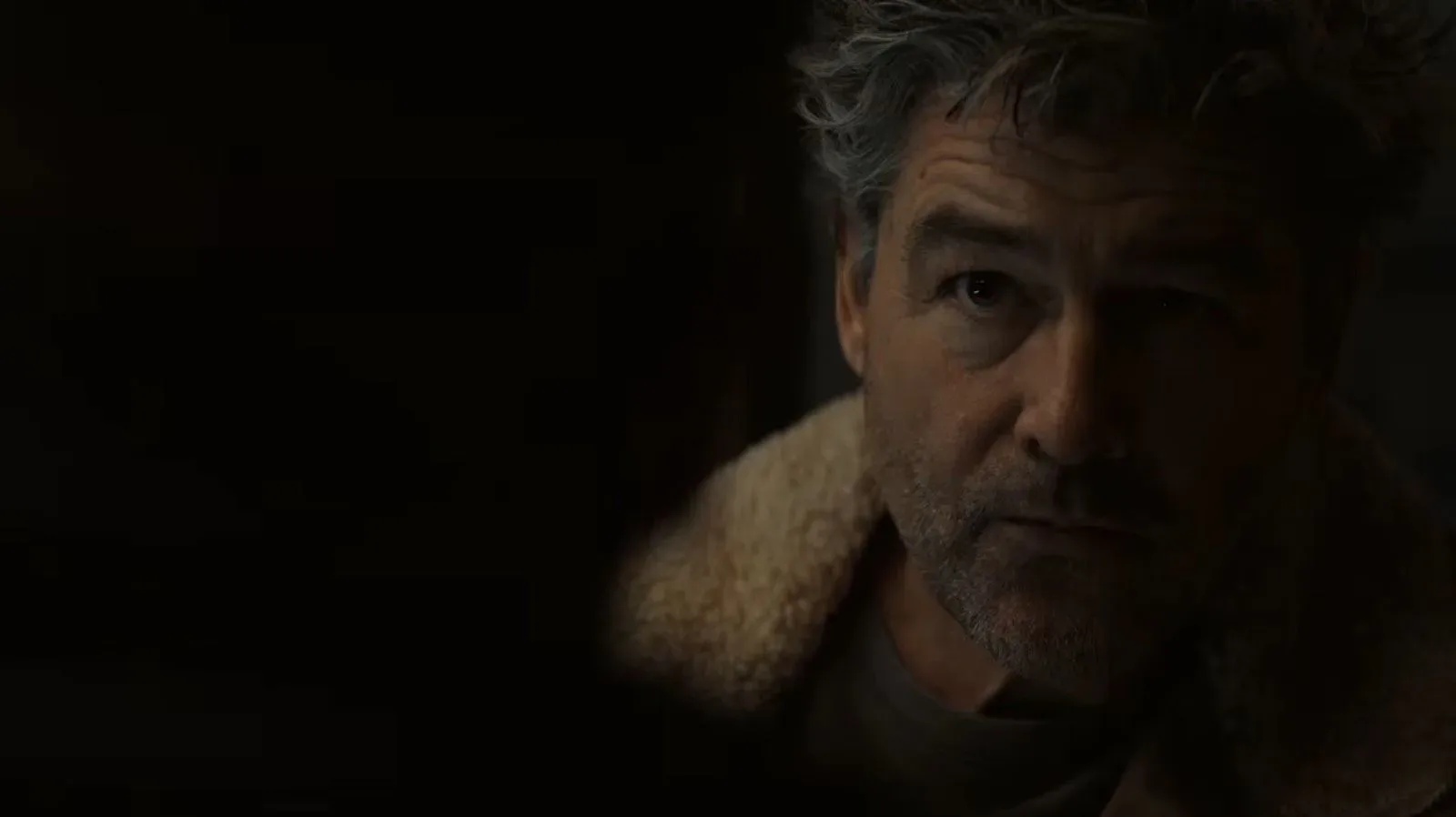
It also hangs an enormous question mark over Hal Jordan. The trailer material is framed around the looming prospect of Hal’s death, yet an apparent figure traveling beside John bears a notable resemblance to him. That does not establish a return in the ordinary sense. Instead, it could indicate that the series is revisiting the “Hal-ogram” concept, allowing Kyle Chandler’s character to remain part of the narrative in another form.
For a show dealing in Lantern mythology, though, the most provocative image may be an abandoned-looking machine with a pronounced yellow cast. The trailer does not identify it, and it does not confirm a yellow ring or a new corps. But its placement alongside Sinestro is plainly designed to make audiences consider what fear might become in the final run.
A decade later, Rushville is still the center of the fallout
The trailer picks up after “Lights Out” by moving the story ahead 10 years. John Stewart, played by Aaron Pierre, returns to Rushville after having left it in ruins. That premise makes the time jump more than a device for changing scenery: it establishes that the consequences of John’s departure have had years to harden.
His return also brings him back to a former mentor who remains resentful about being replaced. The trailer’s setup promises a reunion driven by unresolved personal history rather than a routine heroic homecoming. John may have gained distance, experience and a larger place in the Lantern world during the intervening decade, but Rushville appears positioned as the place where those developments cannot simply erase old damage.
The practical dramatic value of a 10-year jump is that it changes the questions the series can ask. A story set directly after a disaster often focuses on immediate survival, blame and repair. A story set a decade later can ask what survived beneath the surface: which relationships stayed broken, which choices became permanent and which resentments acquired a mythology of their own. The footage does not answer those questions, but John’s difficult homecoming makes clear that the final episodes will not treat time as a clean reset.
Guy Gardner’s appearance may explain a major handoff
Nathan Fillion’s Guy Gardner is set to appear sometime after John’s tense return. The trailer’s timing matters because Guy’s arrival is tied to a central unanswered point: how Earth’s newest Green Lantern, previously described as an “Athletic Director,” came to possess a ring after John declined it.
That makes Guy’s introduction potentially more consequential than a cameo. The ring is not merely superhero equipment; in the story’s present, it represents a responsibility John turned away from and Guy accepted. An explanation of that handoff could reveal why John refused, what changed in the years after Rushville’s ruin and how Guy understands a role that comes with extraordinary expectations.
It could also sharpen the contrast between the two men. John’s journey in the trailer looks outward, toward devastated landscapes and possibly off-world travel. Guy’s position appears rooted in the earthly consequence of John’s decision. The remaining episodes have room to use that divide not as a simple contest over who deserves the ring, but as a question of how different people carry the pressure attached to it.
What a Lantern ring represents here
Within this trailer’s framing, a Green Lantern ring is inseparable from choice. John had the opportunity and said no; Guy ultimately has it. The exact circumstances remain unrevealed, so it would be premature to assume either character was right or wrong. But the transfer gives the series a tangible way to explore a familiar dramatic idea: refusing power does not make the consequences of power disappear. Someone else will have to live with them.
That setup may be particularly important as John heads toward Sinestro. If John is confronting a figure defined in the trailer by the potential use of fear, then Guy’s ring origin could supply a complementary perspective on will, duty and the cost of taking up a mantle another person rejected.
Hal Jordan may be gone, but the trailer leaves room for an echo
Hal Jordan’s apparent death is one of the trailer’s biggest emotional stakes. Chandler’s Hal has been a key presence in the series, and the footage suggests the final episodes are moving closer to the moment when John must contend with his loss.
Yet the material also shows someone accompanying John across what appears to be a dead wasteland, and the figure has a build strongly reminiscent of Hal. That visual resemblance alone is not confirmation that Hal is alive, resurrected or physically present. The more cautious interpretation is that the show could be returning to the Hal-ogram: a version or projection that preserves a younger, more upbeat Hal in some capacity.
The distinction is important. A hologram, recording or comparable construct can carry a character’s image, memories or influence without undoing the finality of a death. If that is what the trailer is signaling, then Hal could still affect John’s decisions while the series maintains the emotional force of losing him. It would also give the final episodes a way to contrast a chipper younger Hal with the difficult, grim terrain John now faces.
Of course, the trailer does not label the figure. It could be another person entirely, or an intentionally edited image meant to evoke Hal without resolving anything. The useful takeaway is not that Hal’s fate has been reversed. It is that the series seems unlikely to treat his presence, or absence, as a matter settled by one plot event.
Sinestro and the yellow image are the trailer’s clearest warning
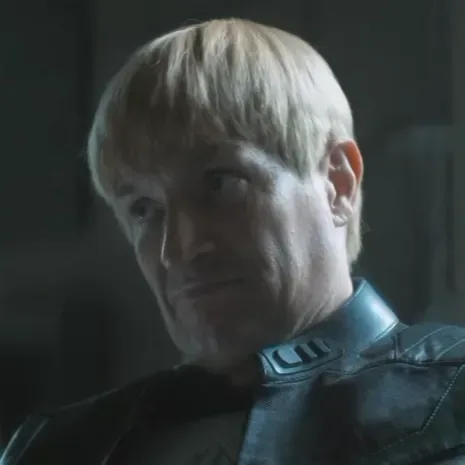
John appears to go off-world in the trailer and cross paths with Thaal Sinestro, played by Ulrich Thomsen. Sinestro is presented as the teacher who taught John’s teacher, immediately placing him at an intimidating remove from John’s own training. The encounter has the feel of a confrontation with a deeper source of Lantern ideology, not simply another obstacle on the route home.
The trailer adds a line that captures its thematic direction: “Fear can be the most powerful force in the universe.” In a story centered on a hero who has spent years being fearless, that statement raises a more interesting possibility than a straightforward villain reveal. It asks whether fear is only something to resist, or whether it can be used—and what that use would cost.
The yellow-tinted abandoned machine is the visual component of that warning. Its purpose is not identified. Still, yellow has an obvious association with Sinestro and fear-based imagery in Lantern lore, making it reasonable to view the shot as deliberate connective tissue. The trailer may be hinting at work on a yellow ring, a corps of Sinestro’s own, or another development that puts fear at the center of the endgame.
Those remain possibilities, not established facts. The footage does not show a completed ring, does not name a corps and does not explain what the machine does. Trailer editing regularly compresses separate moments into an apparent chain of events. Viewers should therefore separate the visible evidence—a yellow machine, Sinestro’s appearance, and the emphasis on fear—from the larger theory built around it.
Why fear changes the stakes for John Stewart
The suggestion that John might use fear as a weapon is especially loaded because the trailer describes his long stretch of fearlessness. Fearlessness can mean courage, discipline or refusal to be controlled. Weaponizing fear is something different: it means deciding that the emotion is useful when directed at someone else.
That is why the Sinestro material has more potential weight than an easter egg for long-time Green Lantern fans. If John is tempted to adopt the methods or logic represented by Sinestro, the conflict becomes internal as well as cosmic. The question would not only be whether John can defeat a powerful adversary. It would be whether the burdens of Rushville, Hal’s fate and a decade of consequences make a forbidden approach seem justified.
There is no confirmation that John makes that choice. In fact, the trailer may be staging the possibility precisely so the series can reject it. But it creates a sharp final-act dilemma: a hero who defines himself through fearlessness may eventually have to decide whether understanding fear gives him the right to wield it.
What to watch for in the final three episodes
- The terms of John’s return: The former mentor’s bitterness may reveal what happened when John left Rushville in ruins and why replacement remains such a raw subject.
- Guy Gardner’s ring origin: The story still needs to clarify why John turned the ring down and how Guy became its bearer.
- The identity of John’s companion: A Hal-like silhouette invites Hal-ogram theories, but the trailer does not provide a definitive answer.
- The machine’s purpose: Its yellow coloration is conspicuous, but whether it connects to a ring, a corps or something else entirely is still unknown.
- Sinestro’s real objective: His words elevate fear into a central idea. The closing episodes should reveal whether he is recruiting, testing, teaching or setting a trap.
The next episode of Lanterns arrives Sunday on HBO Max and NOW TV. Its trailer has deliberately put the show’s central tensions in the same frame: John’s past in Rushville, Hal’s uncertain lingering presence, Guy’s succession, and Sinestro’s invitation to see fear as power. Whether those threads converge on one yellow-tinged revelation or lead to separate disasters is the question carrying the series into its final three episodes.
For another look at how comic-book adaptations can spark debate over what an audience is meant to feel and understand from an on-screen moment, read our analysis of the Marvel’s Wolverine QTE discussion.