Spoilers for the “Lanterns” finale, “Dirt and Stars,” follow.
“Lanterns” ends its current run by answering the question that has shadowed the series: who killed Hal Jordan? The answer is not a single twist but a chain of revelations involving Rushville sheriff Kerry, her son Noah, Manhunter technology, and the fear-powered weaponry associated with Sinestro.
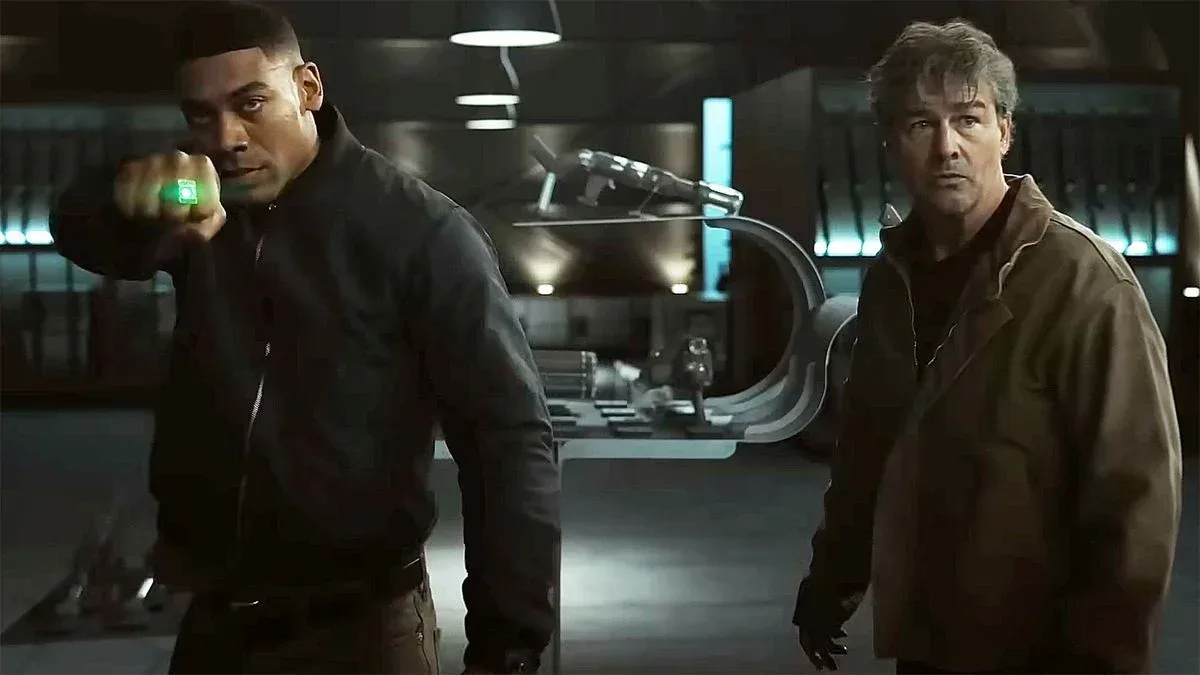
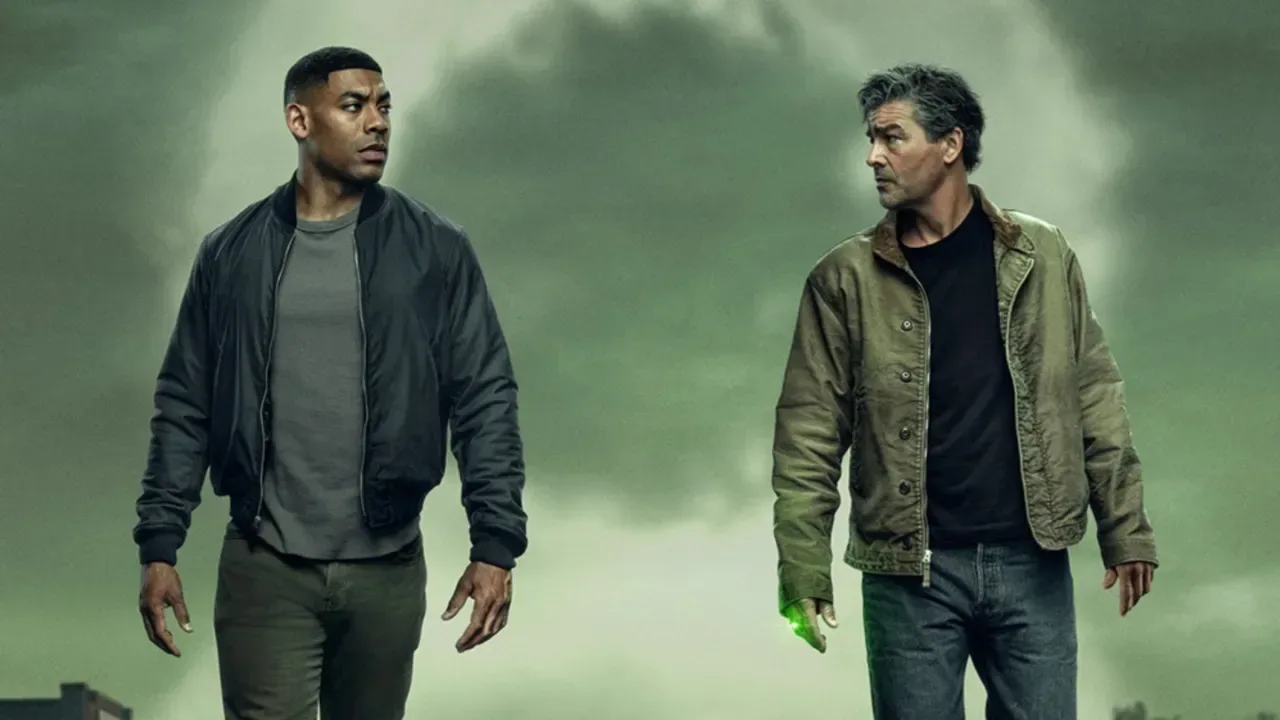
Just as importantly, the finale shifts the centre of the Green Lantern story decisively to John Stewart. Aaron Pierre’s John emerges with an unsanctioned ring and lantern once held by Hal, a defined responsibility for Earth, and a complicated arrangement with Guy Gardner. The episode leaves several threats alive in one form or another, but it gives John a clear personal and professional mission heading toward “Man of Tomorrow.”
The finale’s two answers: Noah is a Manhunter, and Kerry killed Hal
The episode moves between the aftermath of Rushville’s 2016 destruction and events a decade later. In the earlier material, Kerry finds Hal amid the wreckage following the first Manhunter attack. Later, in 2026, she picks him up after his release from prison. Their relationship grows despite the town’s resentment of Hal; Kerry publicly stands up for him, and Hal is invited into her family life, including Noah’s football game.
That apparent path toward a fresh start is interrupted when Hal’s home is firebombed. He survives the blaze but wakes in an unfamiliar lab, where Noah explains that he has repaired Hal’s burned skin with the same Manhunter technology that had previously healed John.
That sequence confirms Noah as the hidden second Manhunter. A Manhunter, in the terms the show has established, is not simply a person using alien equipment. Noah is tied directly to the technology and its violent programming. The distinction becomes vital in the finale, because Noah is aware enough to fear what he could become, yet cannot claim complete certainty over his own impulses.
Noah later tells John that he killed Hal because Hal was going to expose both Noah’s identity and the yellow lantern to Kerry. Noah insists he did not burn down Hal’s house, separating the firebombing from the murder and preserving the larger mystery around the attack itself.
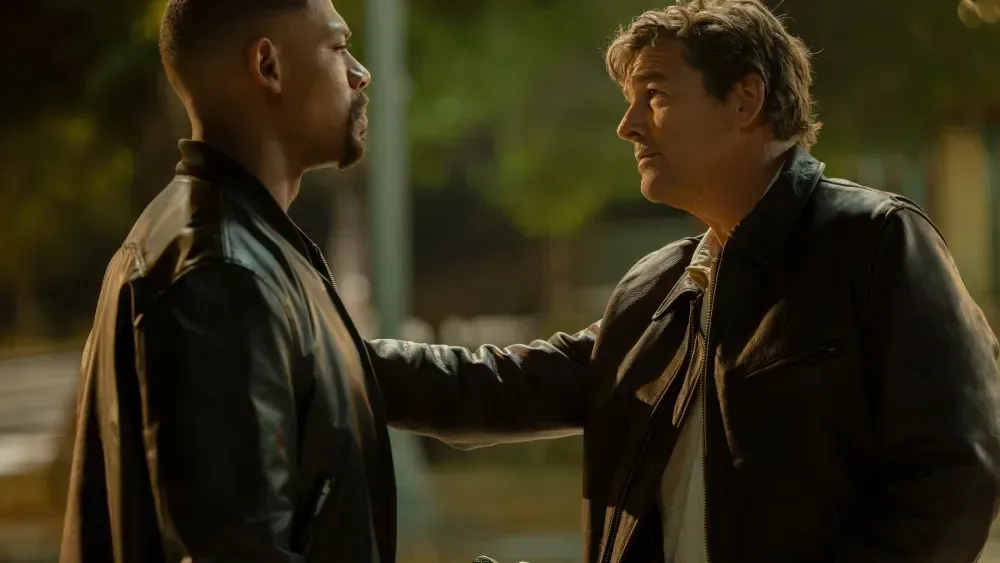
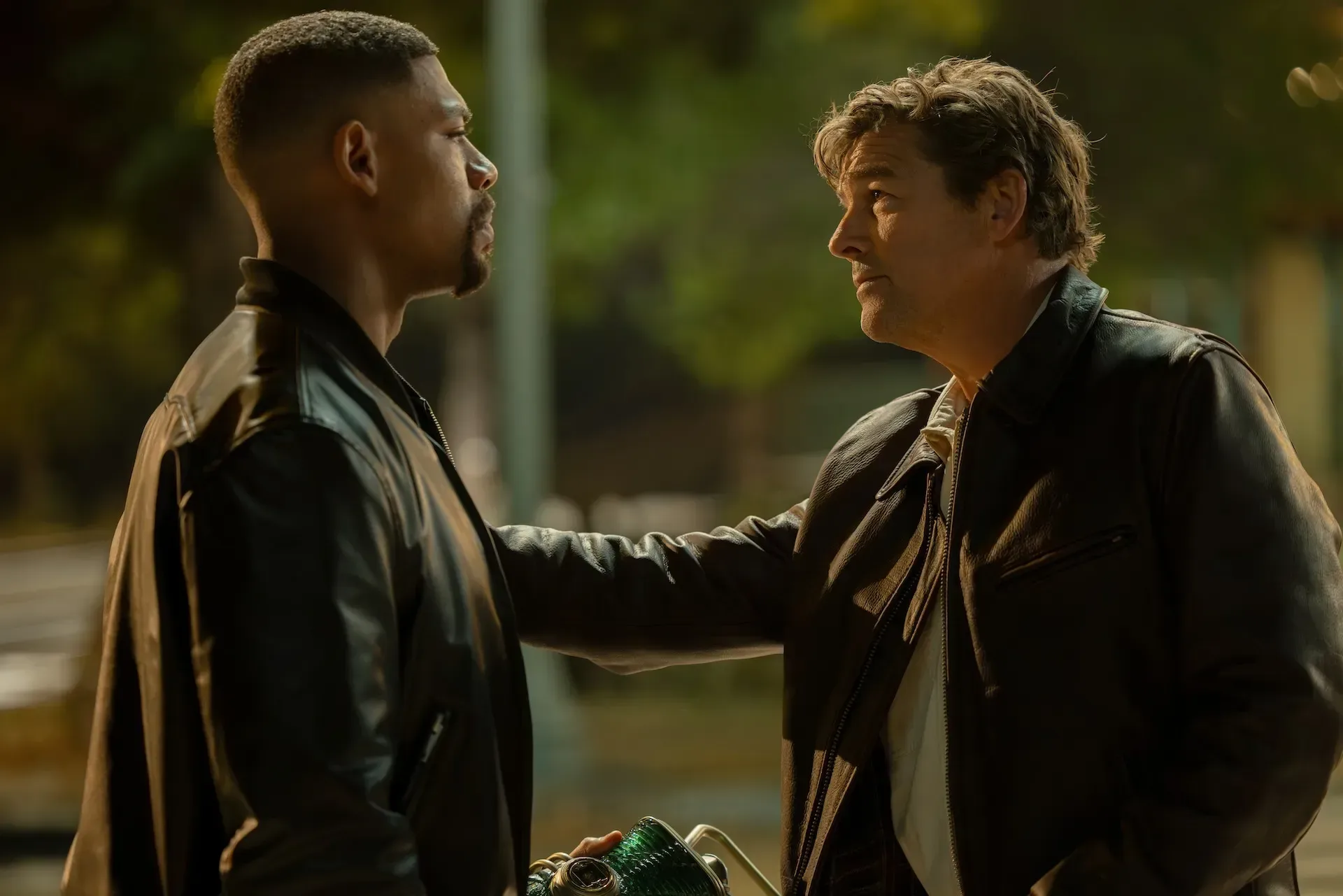
But “Dirt and Stars” has another reveal waiting. John confronts Kerry at Noah’s game, believing she has known what her son is. Flashbacks then show the moments before Hal’s death. Kerry had previously been saved by Zoe Macon, who replaced Kerry’s severed finger with Manhunter technology. Kerry subsequently became pregnant with Noah, who turned out to be a Manhunter like Zoe.
Related coverage includes ‘Lanterns’ Finale Reveals Hal Jordan’s Killer and John Stewart’s New Mission.
Hal understood Noah’s nature and feared what Noah might be planning. He urged Kerry to leave with him so that they could protect themselves. Kerry refused. Overcome by fear, she shot Hal as he tried to persuade her to run, ending the scene by telling her that he loved her.
The reveal makes Kerry, rather than Noah, Hal’s actual killer. It also reframes Noah’s confession. He was implicated in the circumstances around Hal’s death, had a reason to keep his secret concealed, and carries the burden of Manhunter programming. Yet he did not pull the trigger. The episode’s tragedy is that fear guides several characters into destructive choices: Kerry kills a man trying to help her, while Noah believes the safest outcome may be his own death.
John’s response is a rejection of an easy execution
Noah asks John to kill him, arguing that doing so would protect people from whatever the Manhunter part of him might do. John does not grant that request. Instead, he allows Noah to have one more football game with Rushville and later assures Kerry that he will not kill her son. Noah continues toward a future playing football at the University of Nebraska.
This is a pivotal choice for John because it puts his values into practice before he officially declares himself Earth’s Green Lantern. He does not dismiss the danger: Noah’s programming and the yellow ring are plainly serious concerns. But he declines to treat a fearful prediction as grounds for a pre-emptive killing.
That decision pairs directly with John’s revised oath. The familiar Green Lantern formulation is usually associated with overcoming or resisting fear. John’s version changes the emphasis. Rather than denying fear, he acknowledges it and commits himself to the fight anyway:
“In brightest day / in darkest night / I embrace my fear / I’ll do what’s right / I choose this ring / I choose this fight / in service to / this lantern’s light.”
The word embrace matters here. It does not mean John accepts fear as a command or weapon. The finale instead presents fear as an emotion that must be recognized, examined and prevented from making moral decisions by itself. Kerry’s actions provide the warning; John’s treatment of Noah provides the alternative.
Sinestro, yellow energy and the danger of the offered shortcut
Elsewhere, John questions Sinestro on the Manhunter-ravaged planet. Sinestro reveals that Noah freed him from prison and that he used fear-inducing gas from the planet to create a yellow ring for Noah.
The yellow ring is more than a change in costume colour. The episode identifies it as an instrument powered by fear and connects it to Sinestro’s role as creator of the Yellow Lanterns, the adversarial counterpart to the Green Lanterns. In practical story terms, it offers the temptation of power without the same ethical direction John is attempting to establish.
When John’s green ring is depleted, Sinestro offers him a way to recharge it from the yellow lantern. It is a useful technical predicament: a power source is available, but taking it would align John, even temporarily, with a fear-based source controlled by an enemy. Hal’s hologram intervenes, and John leaves Sinestro stranded on the planet rather than take the deal.
That refusal mirrors the Noah storyline. John does not pretend fear is absent; his oath explicitly says otherwise. He simply refuses to let fear become the foundation of his authority. The finale therefore makes its central theme unusually concrete: it appears in Kerry’s panic, Noah’s self-condemnation, Sinestro’s yellow weapon and John’s choice not to use it.
Hal’s hologram keeps the fallen Lantern in John’s story
Hal remains important after his death through the hologram associated with the ring. The replica warns John away from Sinestro’s yellow power, offers him encouragement, and becomes the final recipient of the truth about Hal’s last words to Kerry. John tells the hologram that Hal died saying he loved her, and the construct repeats that sentiment back to him.
The effect is bittersweet rather than a reversal of Hal’s death. A hologram can preserve guidance and memory, but it cannot resolve what happened between Hal and Kerry or remove the damage done in Rushville. For John, however, it offers a living connection to the Lantern legacy he is accepting.
It also leaves a possible avenue for Hal’s continued presence should the wider DC story revisit the character. Nothing in the finale guarantees that outcome, and there is no renewal decision for “Lanterns” at present. But the hologram means the narrative has a built-in way to retain Hal’s voice without undoing the murder that drives the season.
Earth gets its Green Lantern, while Guy Gardner gets the stars
By the episode’s end, John calls Guy Gardner to Rushville and displays the unsanctioned ring and lantern he took from Hal. John declares himself Earth’s Green Lantern in what he characterizes as an independent-contractor-style role. His proposed division of labour is simple: Guy should look after the stars, while John protects the planet.
The arrangement gives the two Earth-based Lanterns different jurisdictions without pretending that their relationship will be effortless. Guy, played by Nathan Fillion, is not displaced from the larger cosmic picture. John, meanwhile, gains a direct claim to Earth that is rooted in what he has witnessed in Rushville: the Manhunter attack’s victims, the harm to Maggie’s family, Kerry and Noah’s precarious future, and the wreckage left by Hal’s death.
John acts on that responsibility in a grounded way before the credits. With his ring charged, he leaves money for Maggie, the waitress who lost her family in the Manhunter attack. He also reunites with his own family, including his estranged mother Bernadette. Neither moment solves the town’s suffering, but both keep the finale focused on consequences beyond cosmic hardware and hero designations.
For readers interested in how comic-book storytelling can move between huge superhero mythology and human-scale stakes, Joking Joystick’s look at “Tales of Wonder #2” and its real-world superhero questions offers a useful adjacent perspective. “Lanterns” similarly makes its largest concepts matter through the people forced to live with their aftermath.
What the ending establishes for “Man of Tomorrow”
The immediate future of the television series is uncertain, since a second season has not been confirmed. John’s next known appearance is in “Man of Tomorrow,” where he will return alongside Guy. The finale has done the necessary character work to explain what could otherwise have been a confusing setup: there are two Green Lanterns connected to Earth, but John sees himself as the planet’s dedicated defender and expects Guy to operate beyond it.
That division could become awkward when both are brought into the same conflict. The coming film is positioned to involve Superman, Supergirl, the emerging Justice League and Brainiac. Within that larger group, John arrives not as a newly assigned cosmic officer but as someone who has chosen the ring, accepted fear without surrendering to it, and assumed responsibility for a world already scarred by alien violence.
The yellow ring and Sinestro are also unresolved pieces. Sinestro is marooned, not redeemed or removed permanently from the story. Noah remains alive and is still connected to the technology that caused so much damage. Kerry has been spared immediate punishment by John’s decision to let her continue raising her son, but the truth of Hal’s death cannot be emotionally erased. These are not loose ends merely for the sake of a tease; each one is tied to the finale’s question of whether fear dictates the future.
“Dirt and Stars” closes with John choosing a different answer. He cannot repair every loss in Rushville, bring Hal back, or guarantee that Noah will never become dangerous. What he can do is refuse Sinestro’s shortcut, decline Noah’s request for execution, acknowledge the truth of Hal’s death, and take on the work of defending Earth. That is the foundation “Lanterns” leaves for its Green Lantern going forward.