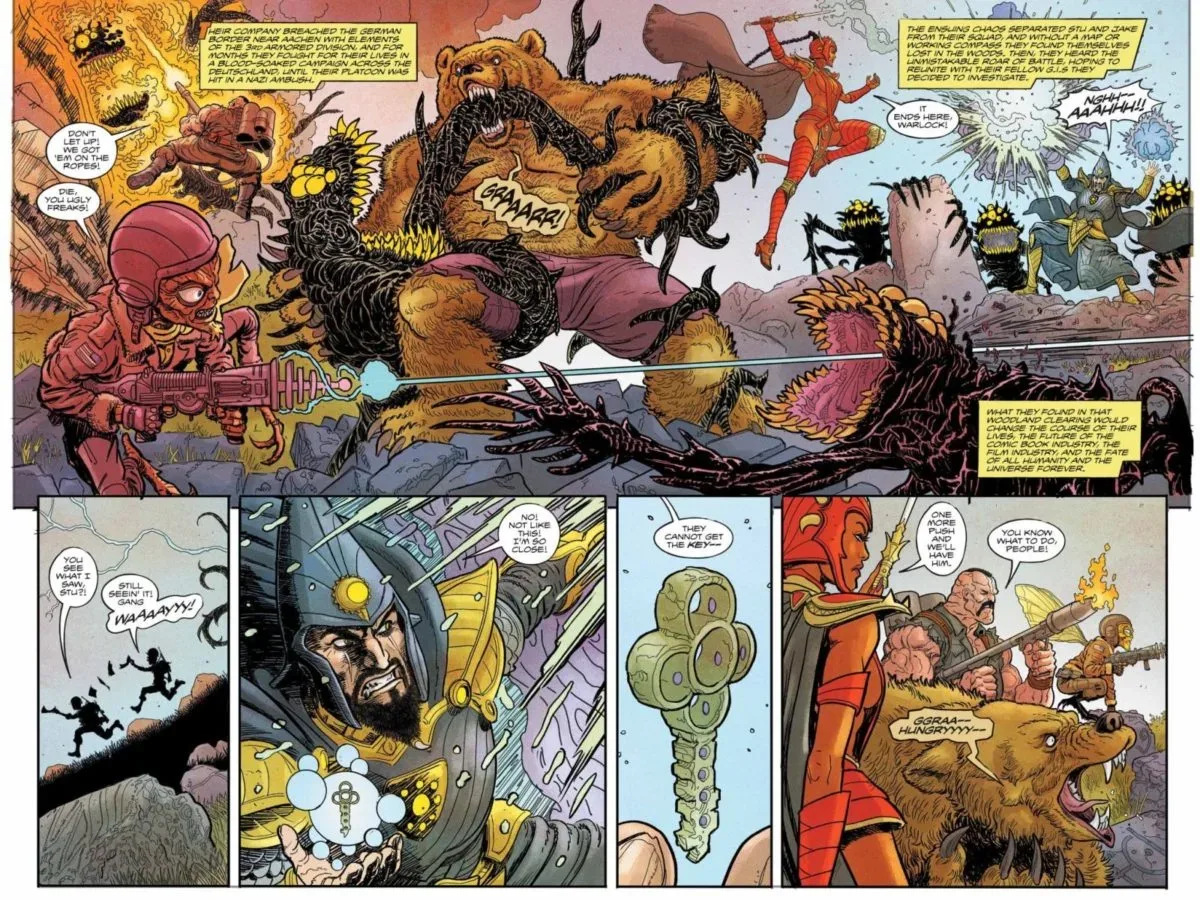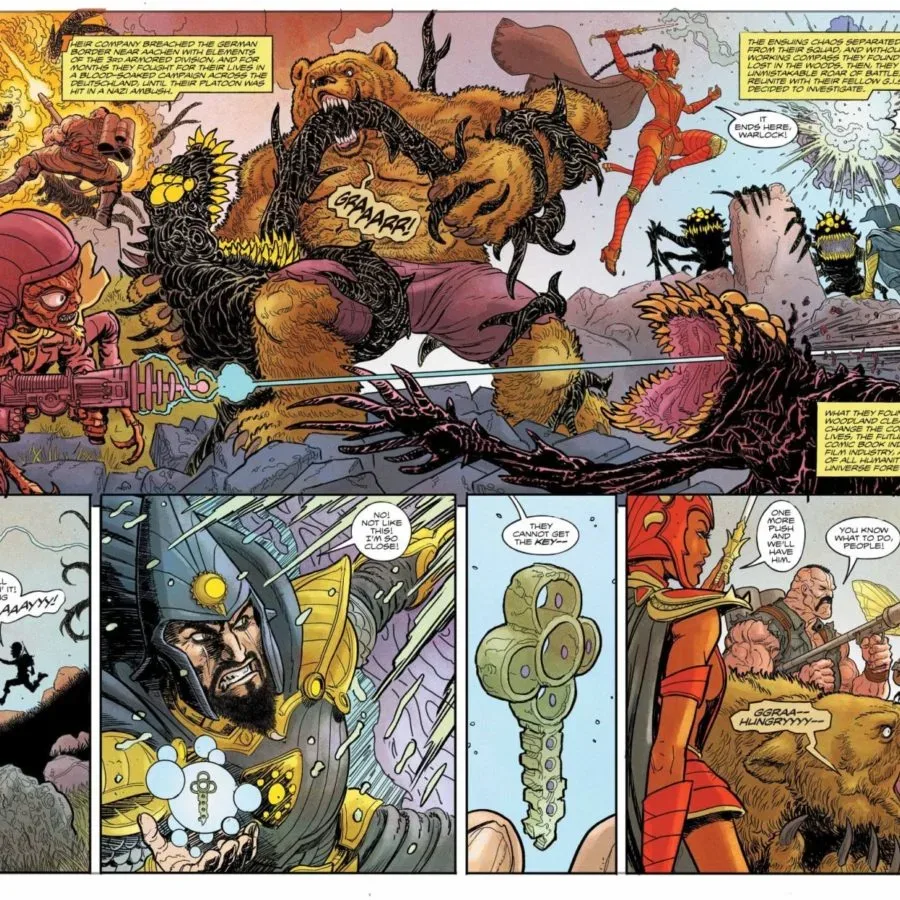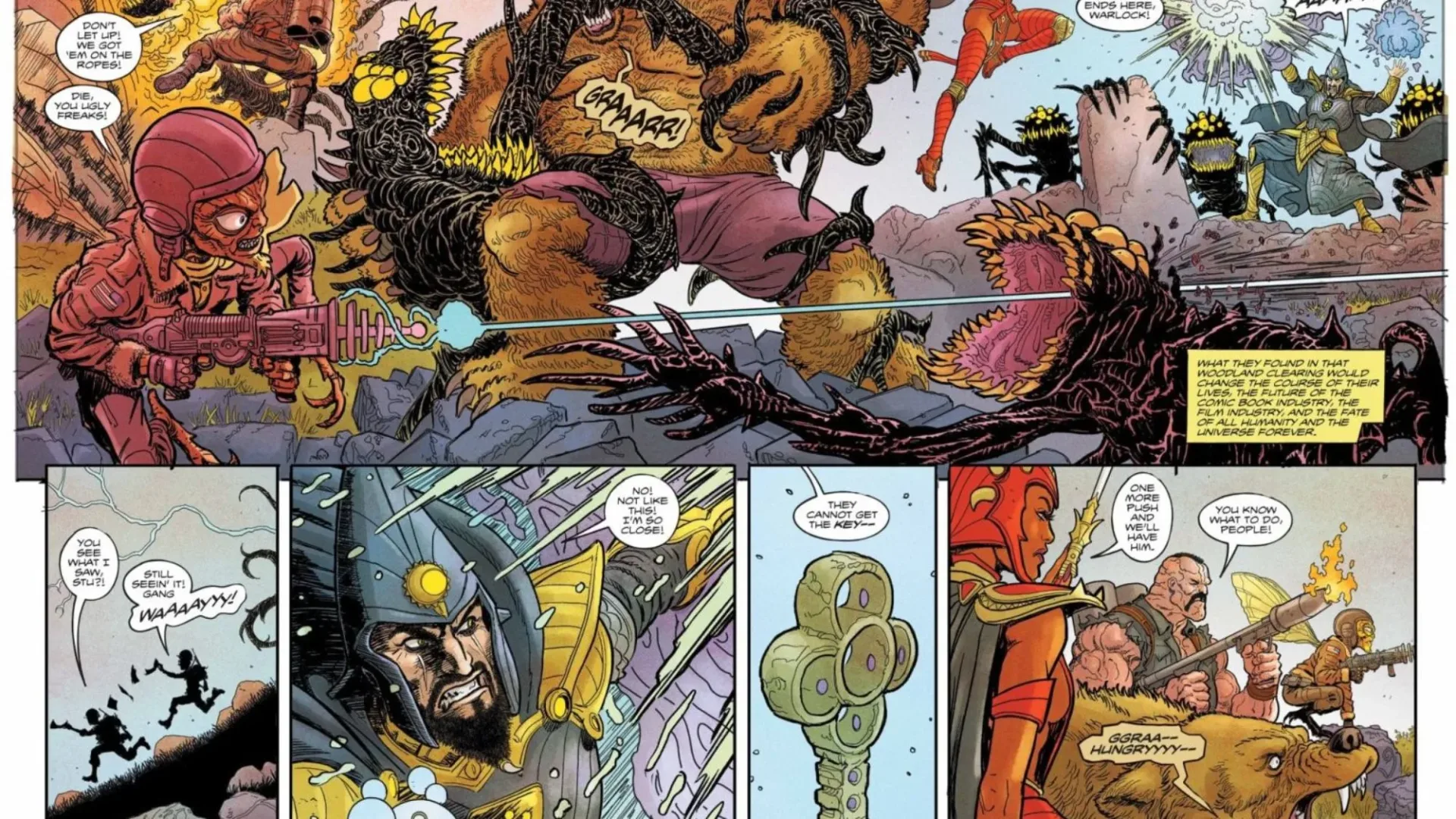
Tales of Wonder #2 is scheduled to reach comic shops on October 7, 2026, with a wonderfully destabilizing premise at its center: America’s Freedom Force, the legendary superheroes associated with Stu and Jake, have crossed into the real world. The complication is not whether the heroes can make the transition. It is whether their world’s villains made it with them.
That question gives the Image Comics series’ second issue a strong hook. Superhero stories are often built around a familiar engine: a threat appears, a hero responds, and the collision reveals character. Tales of Wonder #2 appears to remove that engine—or at least hide it. If costumed champions arrive in a world without an obvious counterpart to fight, what exactly are they supposed to be?
The issue is written, drawn, and cover-illustrated by Steve Skroce, with colors by Ian Herring. It carries a $3.99 suggested retail price. In addition to Skroce’s cover, retailers will have an Ito cover and a Jorge Fornés cover listed for the issue.
A superhero story built around an absence
The official setup is blunt in the best way: “Holy crap! It’s America’s Freedom Force!” That exclamation communicates the immediate shock of the premise. These are not simply new superheroes showing up in an established fictional setting. They are comic-book heroes entering our world, where Stu and Jake have a personal connection to their mythos.
But the important follow-up is the one the issue foregrounds: where are the villains?
It is a deceptively useful question for satire. In superhero fiction, villains do more than throw cars or deliver monologues. They supply a genre’s sense of proportion. The bigger the threat, the more readily a superhero’s extraordinary abilities feel necessary. Take that antagonist away, and the presence of super-powered or otherwise legendary figures can become awkward, funny, unsettling, or all three at once.
That is the comic’s apparent pressure point. America’s Freedom Force may be famous and equipped for the clear moral architecture of a superhero adventure, but the real world does not automatically organize itself into a roster of recognizable enemies. The series can therefore examine what happens when people bring comic-book expectations to a reality that may resist them.
What “satire” means in this setup
The material describes the series as biting satire, and the premise explains why that label fits. Satire is storytelling that uses humor, exaggeration, irony, or an altered scenario to scrutinize people, institutions, and conventions. It does not merely make jokes about superheroes. It can use superheroes to question the habits that superhero stories encourage: the desire for simple answers, the comfort of clearly marked evil, and the assumption that forceful intervention always produces a clean resolution.
None of that requires the comic to declare superheroes foolish or villains unnecessary. Instead, the question of the missing villains could expose a basic tension. Heroes frequently define themselves through the crises they solve. If the crisis cannot be found—or cannot be understood through comic-book logic—then their arrival creates new uncertainty rather than immediate reassurance.
That makes Stu and Jake particularly important to the setup. They are not described merely as bystanders reacting to a bizarre sight. America’s Freedom Force are identified as their legendary comic-book heroes. Their relationship to the characters gives the event an extra dimension: the fantasy has become physical, but it may no longer behave as the fantasy promised.
The mystery matters more than a standard villain reveal
It would be easy to read the solicitation as a tease for a surprise antagonist, and that could still be part of the issue’s direction. Yet the phrasing leaves other possibilities open. “Where are the villains?” is not the same question as “Who is the villain?” The distinction matters.
The former suggests a missing structure, an investigation, or a mismatch between worlds. It asks readers to consider whether villainy can be located as neatly as a costumed enemy in a comic panel. That is a more interesting challenge than simply waiting for an adversary to step out from behind a building.
For readers, this should set expectations appropriately. The information available establishes the central mystery, not its answer. There is no confirmed identity for an antagonist, no stated explanation for the heroes’ arrival, and no revealed account of what America’s Freedom Force will do once they realize their normal rules may not apply. Speculation beyond that would be getting ahead of the issue.
Still, the setup has real potential because it makes the absence of an enemy active rather than passive. The heroes’ entry into reality is already an event. The lack of villains turns that event into a problem. A superhero team built to confront danger may have to confront confusion first.
Steve Skroce and Ian Herring lead the issue
Skroce handles both writing and art on Tales of Wonder #2, while Herring provides colors. That pairing places much of the issue’s storytelling identity in the connection between Skroce’s page construction and Herring’s color work.
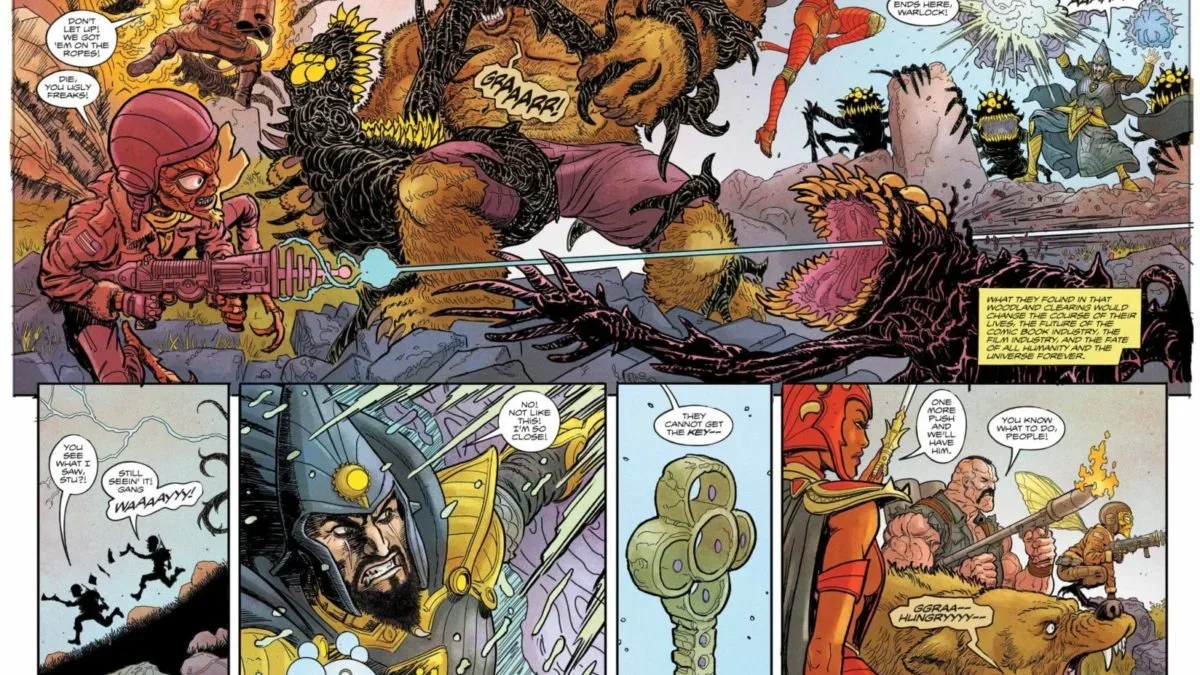
In comics, the artist’s role reaches well beyond drawing individual figures. Visual storytelling involves directing a reader across a page, controlling the pace between moments, deciding what deserves emphasis, and balancing character reactions with the larger event. For a premise that depends on the collision of superhero spectacle and real-world disorientation, those decisions could be central. A huge, heroic entrance can play as thrilling, ridiculous, frightening, or deliberately strange depending on framing, body language, background detail, and color.
Coloring also does more than make a page vivid. It can separate settings, establish mood, clarify action, and define the emotional temperature of a scene. The supplied material calls attention to “gorgeous action,” which indicates that the series is aiming to pair its satirical concept with an overtly dynamic superhero presentation rather than treat the genre as something to be dismissed from a distance.
That balance is worth watching. Satire is often strongest when it understands the pleasure of the form it is examining. A comic about iconic heroes appearing in reality benefits from making those heroes feel genuinely iconic. Otherwise, the characters would not carry enough imaginative weight for their arrival to disrupt anyone’s world.
Variants and practical buying details
Tales of Wonder #2 has three listed cover options: the main cover by Skroce, an Ito cover, and a Jorge Fornés cover. Each has a listed $3.99 price. For readers focused on the story, the listed creative credits and premise are the same across those versions; the cover choice is principally a matter of preferred artwork and local shop availability.
- Publisher: Image Comics
- On sale: October 7, 2026
- Writer/artist/cover artist: Steve Skroce
- Colorist: Ian Herring
- Suggested retail price: $3.99
- Listed covers: Steve Skroce, Ito, and Jorge Fornés
Those collecting a particular cover should ask their comic shop about orders or remaining stock, especially if they have a preference between the listed artists. The supplied listing identifies the variants but does not establish print quantities, retailer incentives, or any difference in story content, so readers should not assume distinctions that have not been announced.
For an additional example of how a single issue solicitation can set up a sharply defined supernatural problem, see the latest details on Deadman #5.
Why the premise has room to grow
At a glance, “comic-book heroes enter the real world” is a high-concept gag. The question in Tales of Wonder #2 gives it a second layer. The series is not only asking how ordinary people react when legends show up; it is asking how the legends react when the reality they enter refuses to provide the kind of conflict that validates their legends.
That leaves several story tensions available without requiring any claims about events that have not yet been revealed. Stu and Jake may have to reconcile their personal idea of America’s Freedom Force with the actual people now standing before them. The heroes may need to determine whether an enemy is concealed, absent, or simply not recognizable in the form they expect. And the series can play with the uneasy possibility that searching too hard for villains can distort how someone sees the world.
The next chapter’s selling point, then, is not just the arrival of a superhero team. It is the unstable silence following that arrival. America’s Freedom Force have made it into reality. Tales of Wonder #2 asks whether reality has supplied anything worthy—or worthy enough—of fighting back.