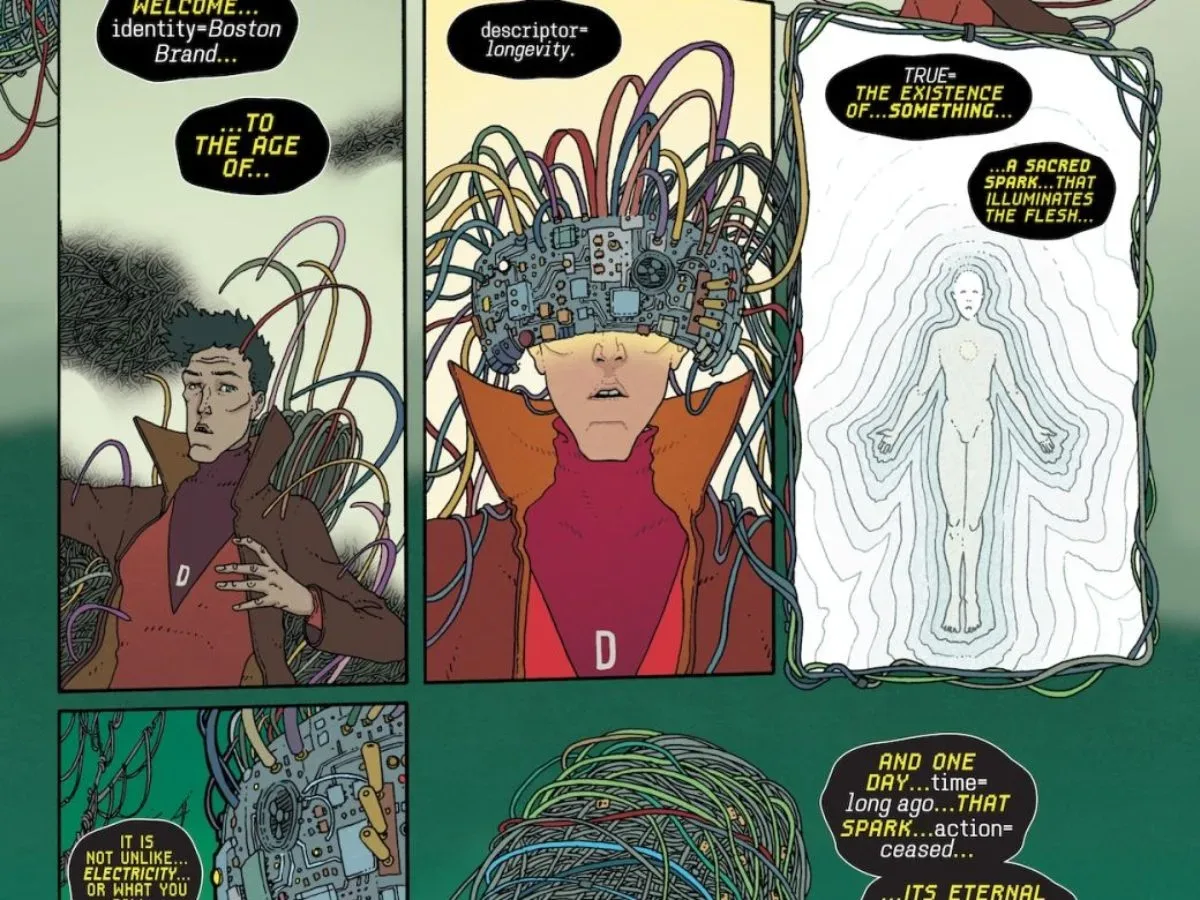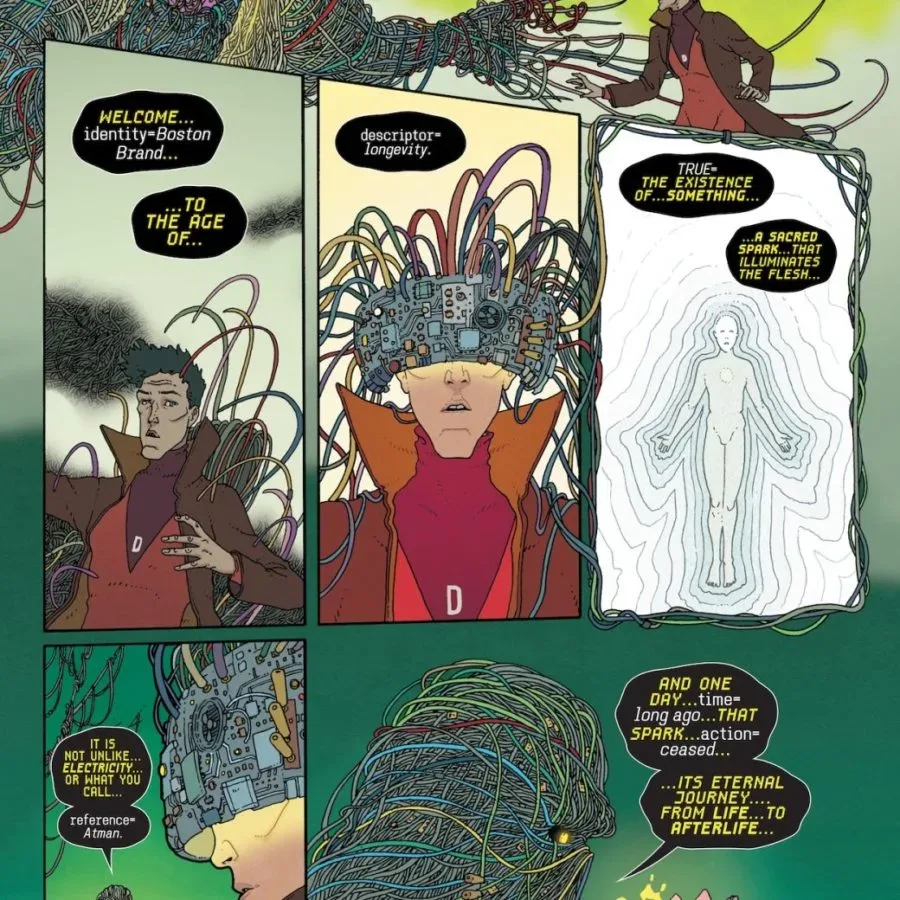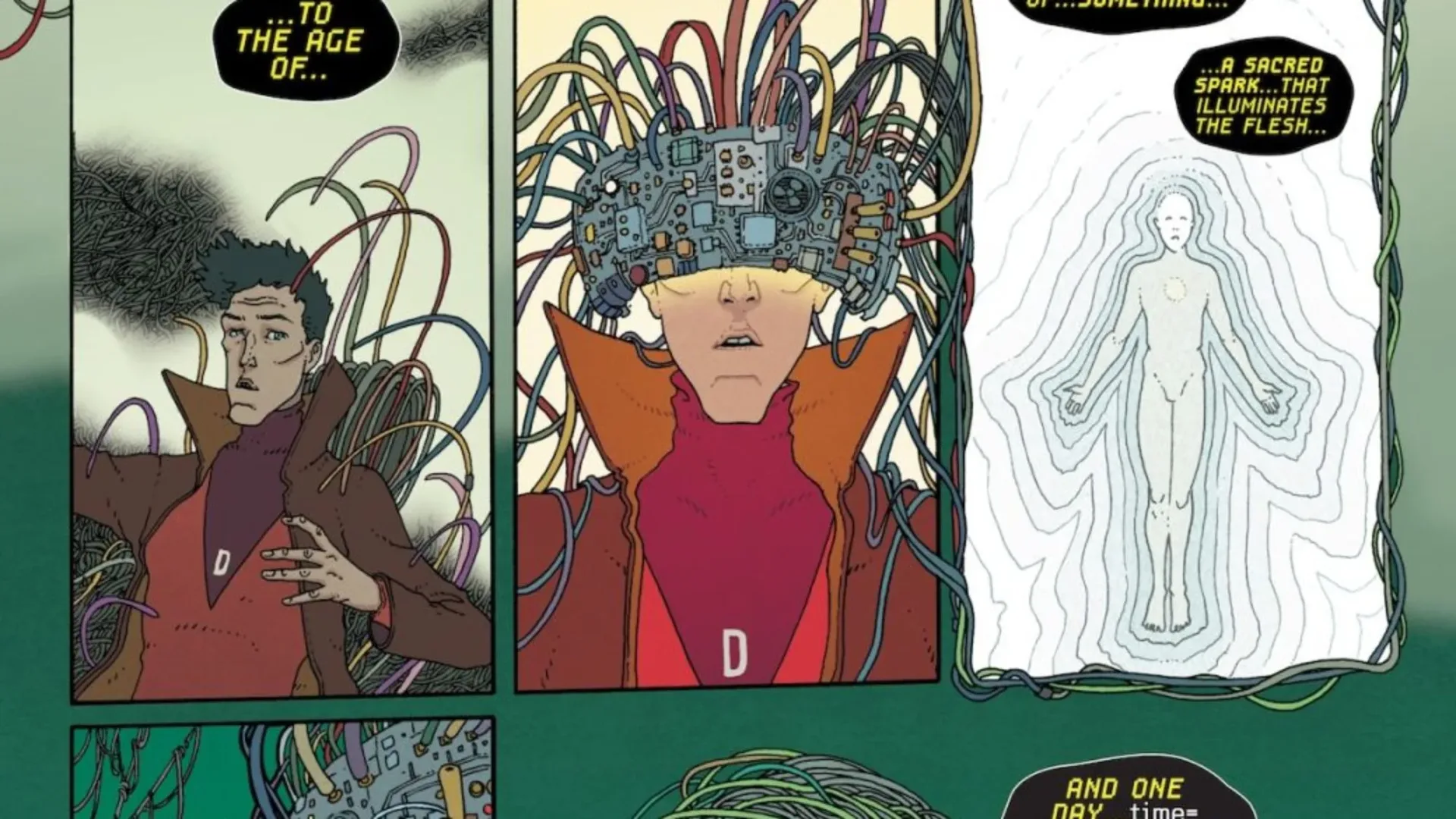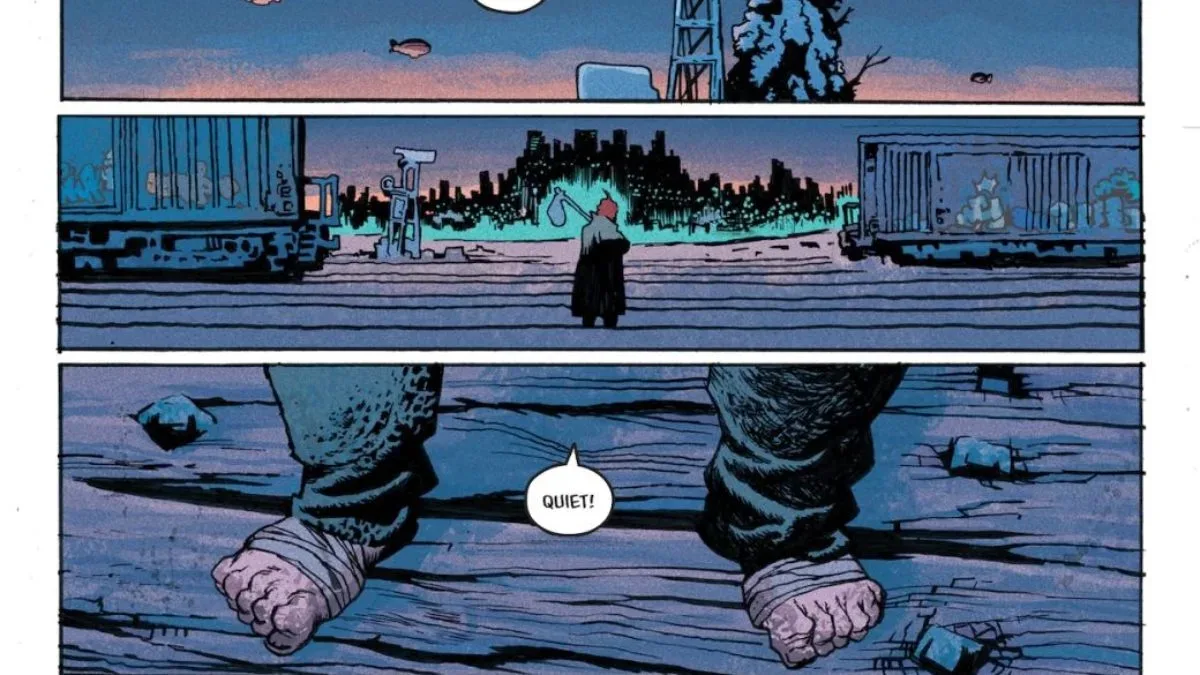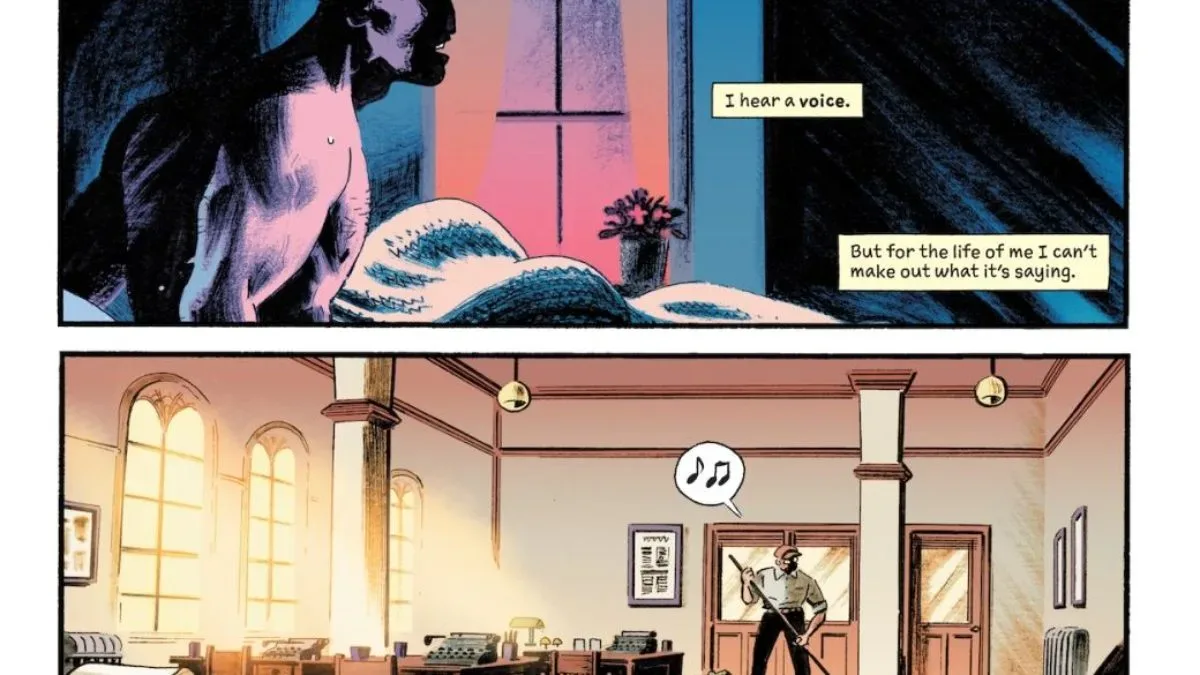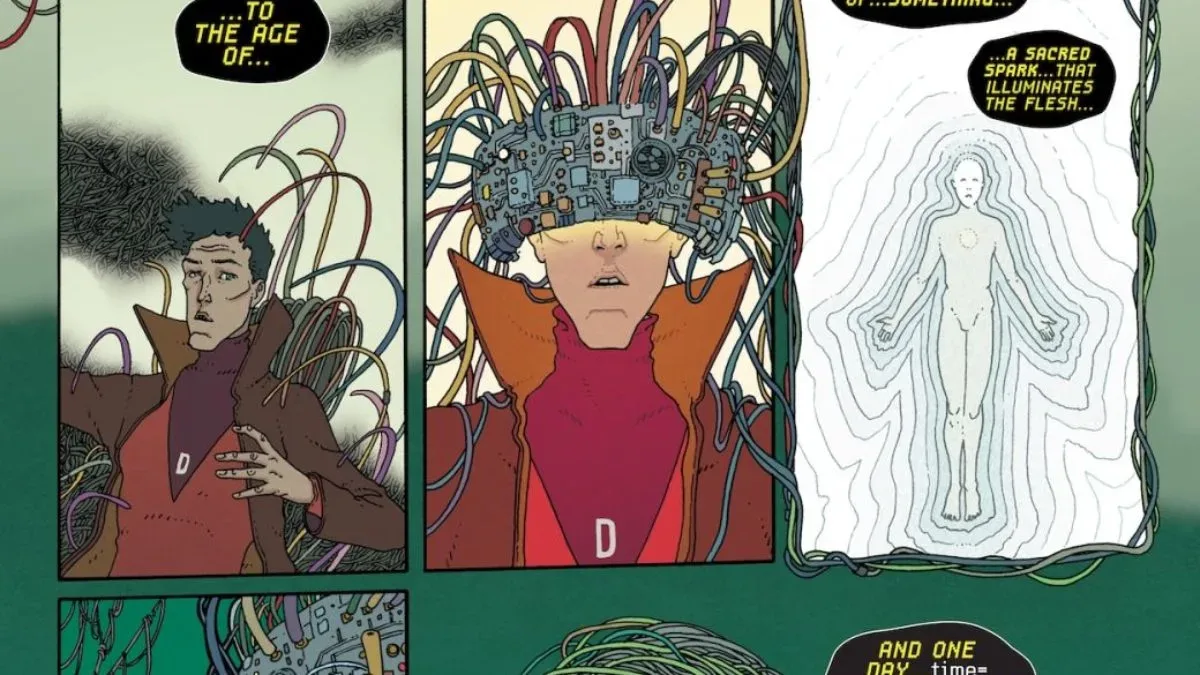
The Deadman #5 is set to bring Boston Brand into a possible future with a distinctly unsettling premise: Earth’s phantoms have stopped moving on. The former Deadman is not simply observing this breakdown from his usual spectral perspective, either. The new issue places Brand back in a human body, leaving him to survive a “soulless tomorrow” and make his way through the psycho-spiritual swamp known as the Gr33n.
DC lists the issue for release in comic shops on October 7, 2026. It is written by W. Maxwell Prince, with art and cover art by Martín Morazzo. The setup positions the fifth issue as a future-facing, occult-minded chapter that uses Deadman’s central idea—life after death—as a springboard for a world in which the dead are apparently stuck.
A Deadman story with Boston Brand alive again
Deadman is a character whose usual operating condition is built into his name: Boston Brand is associated with being a ghost. That makes the stated return to humanity more than a cosmetic shift. It changes the story’s pressure points.
A spectral protagonist suggests distance from ordinary physical danger. A human protagonist, by contrast, must confront the immediate limits of a body. The solicitation does not spell out how or why Brand becomes human again, nor does it explain the rules of the future he enters. But it is clear about the core reversal: the Deadman will have to navigate this scenario as Boston Brand, human once more.
That reversal also sharpens the issue’s larger premise. If the “forward march” of Earth’s phantoms has ended, then death itself may no longer be functioning as an exit or transition in the way the story expects. In plain terms, moving on describes the idea that spirits pass beyond their previous state. A world where they cannot do that is a world with an accumulating supernatural problem, not merely an unusual ghost story.
The language leaves room for uncertainty. This is described as one of several feasible futures, rather than a definitive statement about DC’s broader future. Readers should therefore treat it as a possible-future setting within the comic’s premise, not as confirmation of a permanent new status quo for every character involved.
What is the Gr33n?
The issue’s most evocative new piece of terminology is the Gr33n, written with the number 3 replacing the letter E. It is described as a psycho-spiritual swamp, which combines two ideas:
- Psycho- points toward the mind, perception, emotion, or psychological experience.
- Spiritual points toward souls, ghosts, the afterlife, or other non-physical aspects of existence.
Together, the term suggests a setting that may operate as more than a physical marsh. The solicitation supports reading the Gr33n as a strange zone where mental and supernatural forces overlap. However, no specific mechanics have been announced: it is unknown whether the Gr33n is a place, a dimension, a network-like environment, or something that deliberately resists those categories.
The stylized spelling gives the setting a technological texture even as “swamp” invokes decay, overgrowth, and the occult. That contrast fits the description of a soulless future: a place that may look forward while being haunted by everything that cannot leave. The phrase “photon stranger” pushes the same science-fictional mood. A photon is a unit of light, but the solicitation uses the expression poetically rather than providing a literal technical definition. It is best understood as atmosphere and voice, not a confirmed explanation of a new power system.
Familiar DC faces, transformed by the future
The issue will include futuristic versions of familiar figures connected to the DC Universe’s supernatural side. The official description promises “freakiest-ever futuristic takes” on those familiar faces, but it does not identify them by name. That omission is worth preserving: there is no announced character roster to confirm yet.
What can be said is that the story is not being framed as Boston Brand wandering through an entirely isolated future. The solicitation specifically signals recognizable DC connections, filtered through the altered conditions of this particular timeline. For readers, that makes the appeal twofold. There is the immediate Deadman predicament—Brand alive, trapped, and trying to endure—and there is the mystery of who else has been changed by a world where phantoms no longer progress beyond death.
Those details make the book sound especially suited to readers who enjoy horror-inflected superhero comics that lean into mood and metaphor rather than only straightforward capes-and-crimefighting action. For another upcoming comic using a horror framing around a major superhero, see Midnight Spider-Man #1.
Why the human twist matters
Deadman’s concept naturally carries questions of identity. Boston Brand is a person who is normally defined by an existence beyond ordinary human life. Making him human in a future where the dead cannot move on turns that relationship inside out.
Instead of a dead figure trying to affect the world of the living, the premise suggests a living Brand confronting a world burdened by the dead. That creates an inversion with practical storytelling value. The character’s usual association with death becomes the very thing made uncertain around him, while his own restored mortality gives every encounter a potentially more vulnerable edge.
None of that confirms the issue’s eventual resolution. The solicitation does not state whether Brand’s humanity is temporary, whether he wants to regain his former state, or whether the trapped phantoms can be helped. Still, the contrast is clearly intentional: the protagonist called Deadman is the one person in this future described as human once again.
Creative team and release details
W. Maxwell Prince is credited as writer, while Martín Morazzo is credited for interior art and the main cover. The solicitation calls the story a “loving ode” to an occult classic comic, a description that signals reverence for horror and supernatural-comics traditions without identifying a single specific work as its template.
DC’s listed ordering information includes a standard issue and three named cover listings:
- The Deadman #5 — SRP listed as $3.99
- Javi Fernandez cover — listed at $4.99
- Taurin Clarke cover — listed at $4.99
- Chloe Brailsford cover — listed at $4.99
The named cover artists offer readers multiple cover options, while Morazzo remains credited for the issue’s main cover as well as the art inside. The material provided does not detail the imagery or format of any individual cover, so collectors looking for a particular edition should use the listed artist names and issue information when checking with their local comic shop.
What readers can expect from The Deadman #5
The announced ingredients point to an issue grounded in uncanny future horror: a breakdown in the passage of spirits, a newly mortal Boston Brand, an environment where the psychological and supernatural intermingle, and altered versions of recognizable DC figures. The Gr33n is the key unknown at the center of it all, both a named destination and a signal that this will not be a conventional vision of tomorrow.
For now, the confirmed details are intentionally more atmospheric than explanatory. Readers know where Brand is headed, what has changed about him, and what has gone wrong with Earth’s phantoms. They do not yet know what created the Gr33n, which familiar characters will emerge in it, or what it will take for Deadman to survive a future that has apparently lost the ability to let anyone truly pass on.
The Deadman #5 reaches comic shops on October 7, 2026, with writing by W. Maxwell Prince and art by Martín Morazzo.