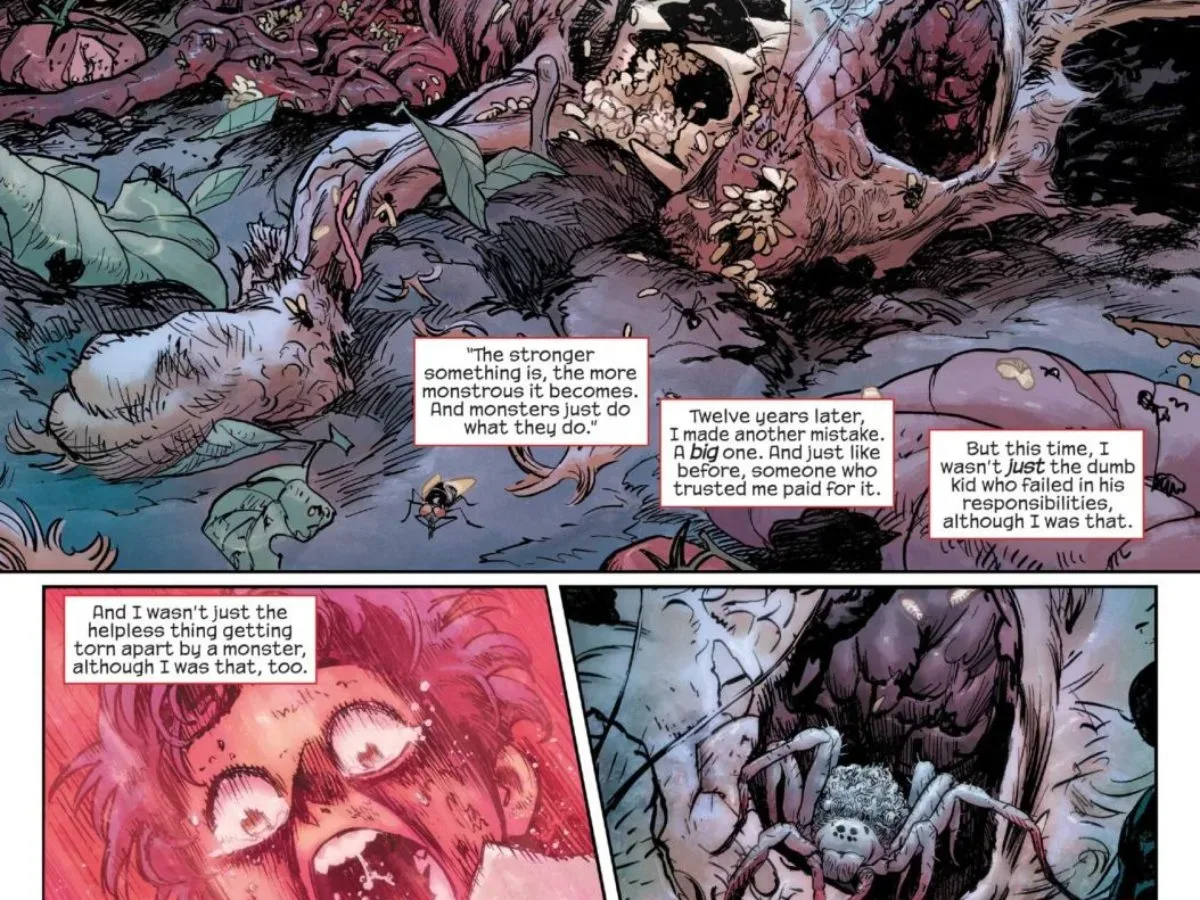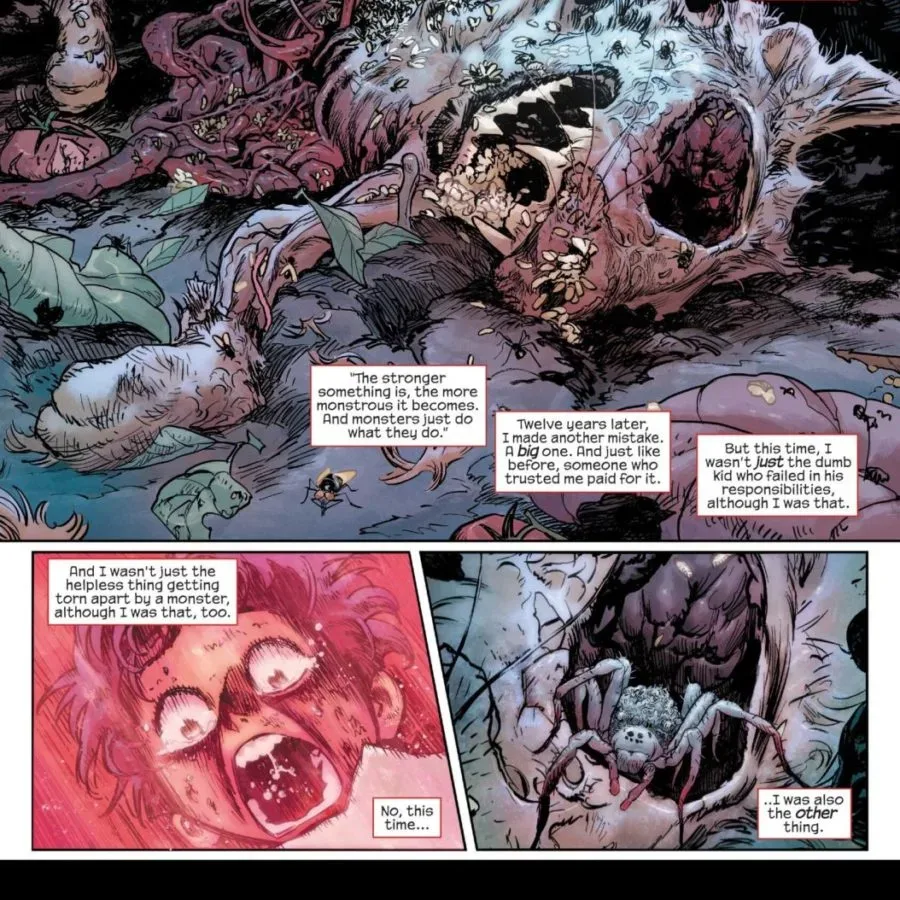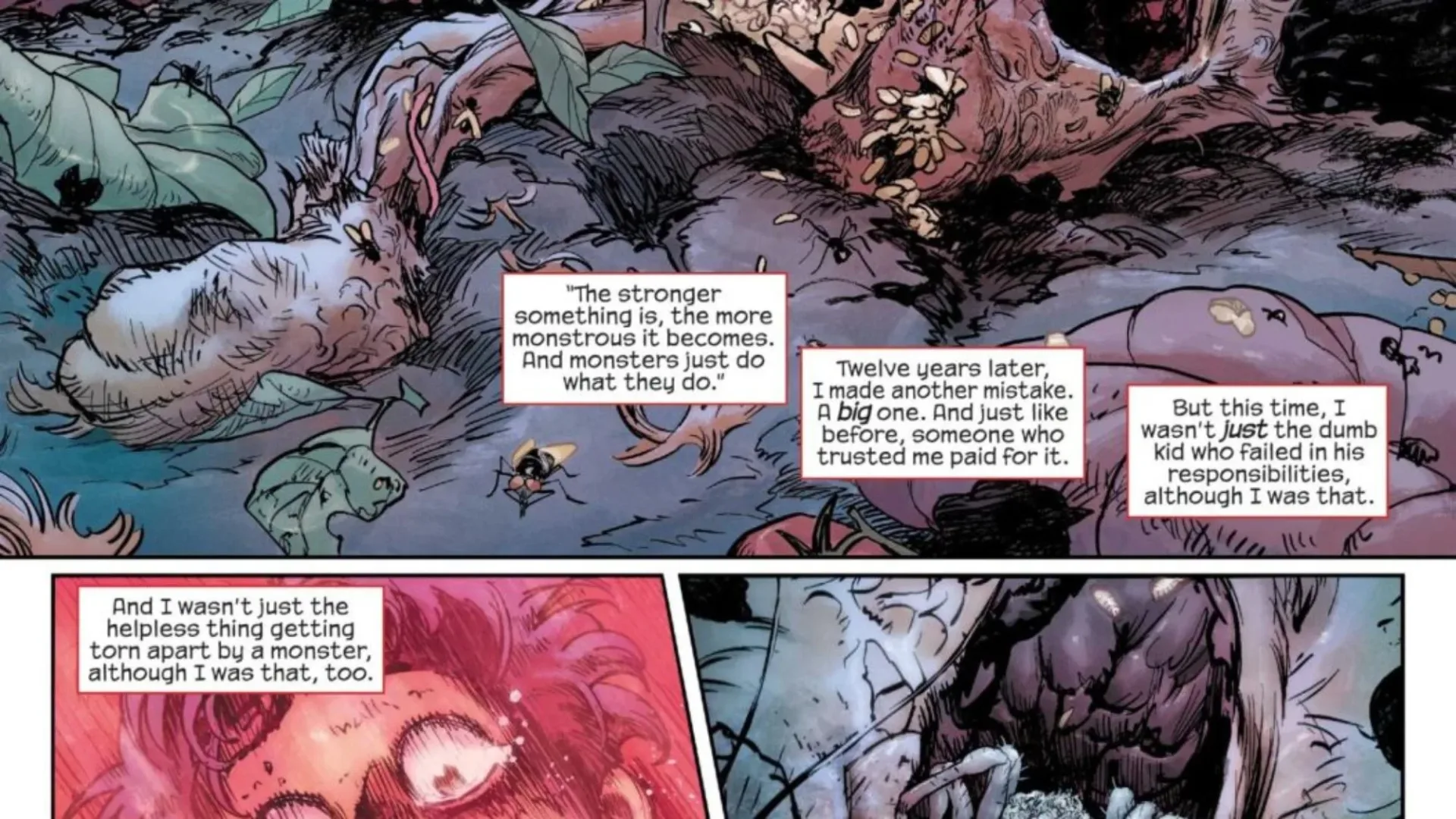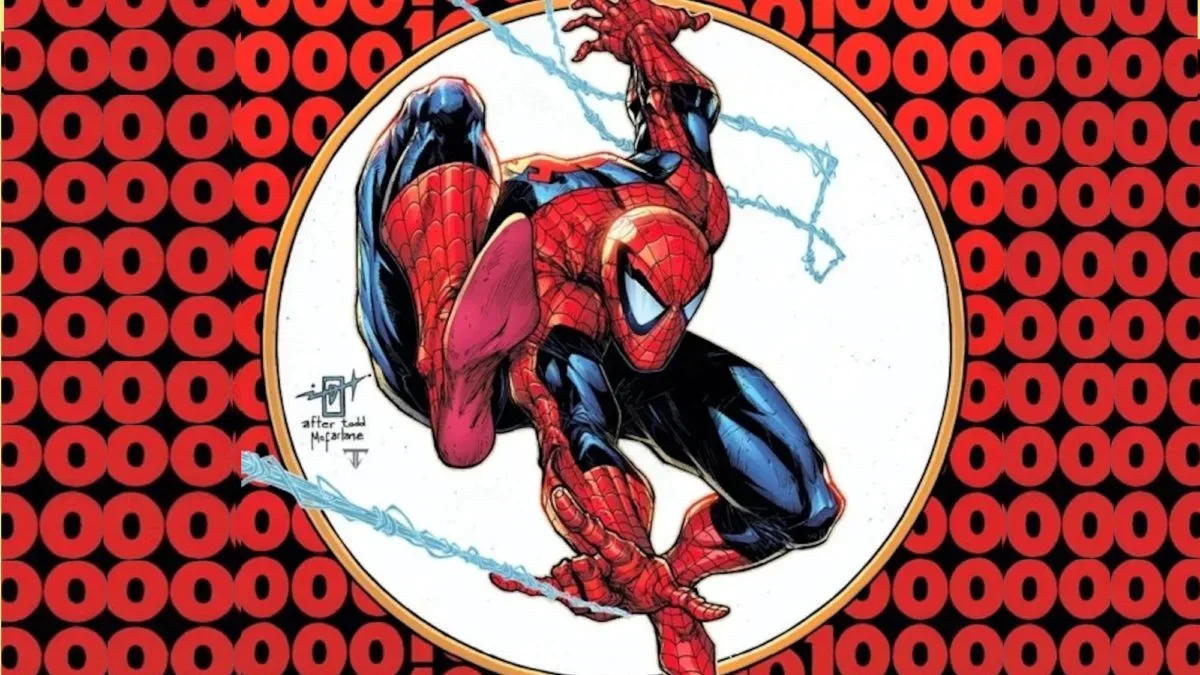
Spider-Man is heading somewhere considerably less friendly than the usual New York skyline. Midnight Spider-Man #1, a new Marvel comic starring Peter Parker, is scheduled to reach comic shops on October 7, 2026. The 40-page, Rated T+ debut frames its take on the wall-crawler as a descent into a darker, creepier section of Marvel horror—and the central idea is appropriately unsettling: power does not merely solve problems. It can make monsters.
Phillip Kennedy Johnson writes the first issue, with art by Scietronc and color art by Neeraj Menon. Steve Beach is credited on the standard cover. Those few confirmed ingredients establish a clear pitch without pretending the rest of the series is already mapped: this is Peter Parker in a horror-inflected Spider-Man story, with the visual presentation and cover program leaning hard into the midnight mood.
For readers who prefer their webs with a side of dread rather than uncomplicated superheroics, that is a potentially intriguing hook. Spider-Man has always had a built-in horror engine: transformation, isolation, secret identities, dangerous experiments and a hero who knows firsthand that a sudden surge of power can change everything. Midnight Spider-Man appears ready to put that engine in a much darker gear.
What is confirmed for Midnight Spider-Man #1
- On-sale date: Wednesday, October 7, 2026
- Publisher: Marvel
- Writer: Phillip Kennedy Johnson
- Interior art: Scietronc
- Color art: Neeraj Menon
- Standard-cover credit: Steve Beach
- Length and rating: 40 pages, Rated T+
- U.S. price: $5.99
The most important limitation is also worth stating plainly. The available details identify the creative team, format, release date and horror direction, but do not lay out the issue’s plot, antagonists, setting or ongoing-series structure. That leaves room for anticipation, not for declaring which familiar faces may appear or how far the premise will take Peter. A creepy Spider-Man concept can mean many things; readers will have to let the actual comic supply the specifics.
Why horror is a natural pressure test for Spider-Man
In superhero language, “darker” can sometimes be little more than a moody cover and a rain-soaked alley. Here, the stated emphasis on Marvel horror points to a more useful dramatic question: what happens when the abilities that make someone heroic become a source of fear?
That question fits Peter Parker particularly well. His powers are inseparable from the spider imagery: walls, webs, heightened senses and a body altered by extraordinary circumstances. Horror often works by turning something familiar into something unsettling. A mask can protect an identity, but it can also make a person unreadable. A superhuman sense can be an advantage, but it can also mean never getting a moment of peace. Strength can save a life, while also raising the stakes whenever control slips.
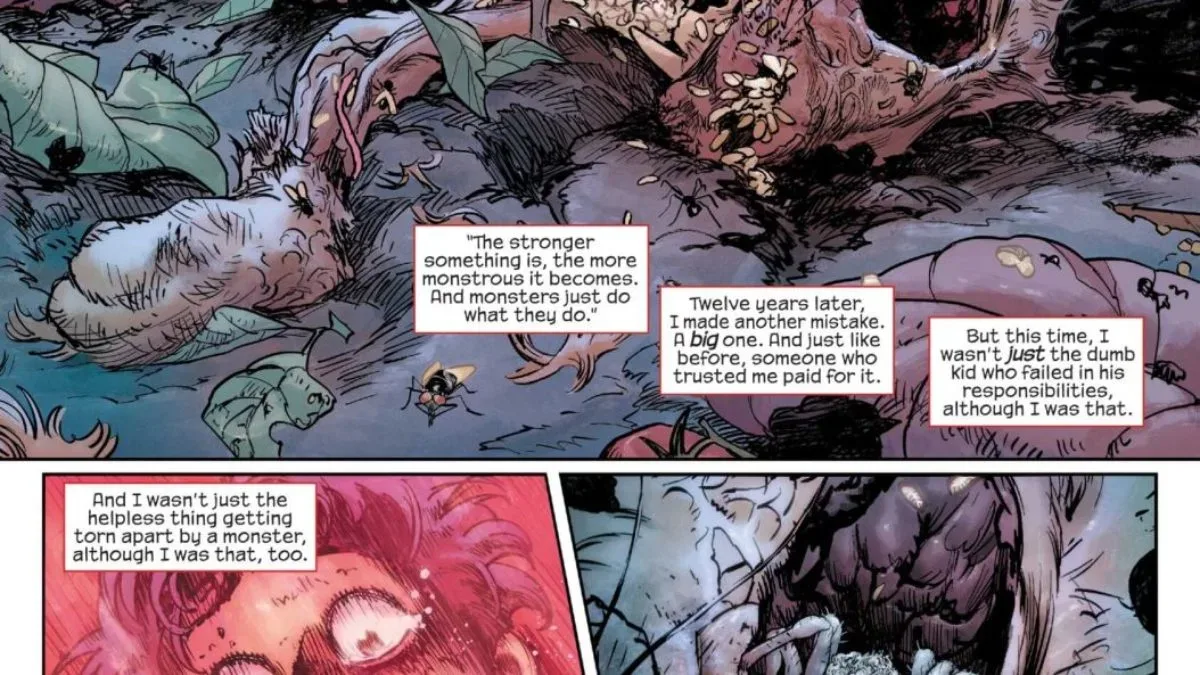
The supplied cover theme, that power makes monsters, every time, gives the book a blunt thematic lane. It is not a plot synopsis, but it does suggest that monstrosity is likely to matter as more than an aesthetic. The idea could apply to bodies, choices, institutions or the simple temptation to use force because one can. The distinction matters: horror is not just a gallery of frightening images. At its best, it makes readers feel uncertainty about what power is doing to the people wielding it.
That is why Spider-Man is a strong candidate for this kind of tonal shift. The character is often defined by responsibility, so a story centered on power and monsters has a built-in moral friction. If the book uses that tension well, the darkness will have a purpose beyond swapping bright skies for black ones.
The creative-team split and what each credit means
Comic-book credits can look deceptively simple, but each role shapes how a horror premise lands on the page. Johnson, as writer, is responsible for the story’s words and structure: scenes, dialogue, narrative pacing and the questions the characters face. Scietronc’s art turns that framework into the physical storytelling readers see, including character acting, page composition, scale, movement and the timing of reveals. Menon’s color art helps establish atmosphere, guiding readers through darkness, contrast and emotional shifts.
For a horror-leaning Spider-Man comic, the art and color partnership is especially consequential. Suspense in comics lives in page turns, empty space, obscured details and the decision of what not to show immediately. Colors can separate a threatening silhouette from its background, make a safe-looking place feel contaminated, or preserve visual clarity when a scene is intentionally dim. None of that reveals what happens in Midnight Spider-Man #1, but it explains why the announced team matters to the premise.
“Horror” is also a broad label, not a guarantee of one particular kind of reading experience. It can refer to psychological unease, grotesque transformations, supernatural menace, violent imagery or a steadily escalating sense of danger. The T+ rating indicates a teen-and-up audience range, but it does not tell readers precisely how intense the material will be. It is best understood as guidance on the intended readership, rather than a detailed content description.
A large cover slate gives the debut a midnight gallery
The first issue is also getting a notably extensive list of alternate covers. In comic publishing, a variant cover is an alternative front-cover illustration for the same issue. The interior comic is not described as changing with each cover; the point is the alternate artwork and, in some cases, a particular retail ordering arrangement.
Listed options include a Ryan Stegman Midnight Bloodbath variant, Peach Momoko’s Midnight Special variant and its virgin version, a Skan horror-homage variant, an Eric Canete variant, an Inhyuk Lee variant and virgin edition, a Jeehyung Lee Midnight Gallery 1:25 variant, plus a Clayton Crain three-part connecting variant.
Some terminology deserves a quick translation. A virgin cover generally refers to cover art presented without the usual title logo or trade dress across the image, leaving the illustration more unobstructed. A connecting variant is part of an artwork designed to align visually with other covers in a set; the Clayton Crain option is identified as a three-part connecting piece. A designation such as 1:25, 1:50 or 1:100 identifies a retailer-incentive ratio in the listed cover name, a shorthand collectors will recognize as distinct from the standard edition.
The listed ratio variants are Jeehyung Lee’s 1:25 Midnight Gallery cover, Peach Momoko’s 1:50 Midnight Special Virgin cover and Inhyuk Lee’s 1:100 Virgin cover. The source material lists each at $5.99 U.S. and $7.50 Canadian, alongside the standard issue’s $5.99 U.S. price. Availability can vary by comic shop, particularly for retailer-incentive editions, so readers seeking a particular cover should ask their local shop what it expects to carry or can obtain.
There is also an Uncloaked 2nd Printing entry in the listed variants. The provided listing identifies it by name and price, but supplies no further details about its cover treatment or timing. It should not be mistaken for a plot detail or a promise of different interior material.
How to approach the release without getting lost in the web
There are two straightforward ways to look at this debut. Readers primarily interested in the story can focus on the standard edition and the creative team: Johnson, Scietronc and Menon are the names attached to the horror-oriented Peter Parker premise. Readers interested in cover art have a broad menu, from horror homage to a multi-cover connected image and several high-ratio designs.
Either route is valid, but they serve different interests. A cover collection is about illustration, presentation and completing a set. Reading the story is about the interior team’s take on Spider-Man at his most ominous. Conflating the two can make an already crowded launch feel more complicated than it needs to be.
Marvel’s wider dark-corner storytelling continues to be an active point of interest for fans, including the complicated path around a planned Blade film. Midnight Spider-Man, however, should be judged on the much narrower facts available: it is a new comic, it is explicitly pointed toward horror, and it gives Peter Parker a new environment in which power may be as frightening as it is useful.
That is enough to make October 7 a date worth marking for Spider-Man readers who want their superhero tension served after dark. Just do not mistake a huge cover menu for plot confirmation. The monsters, the consequences and the precise meaning of “midnight” remain on the other side of page one.