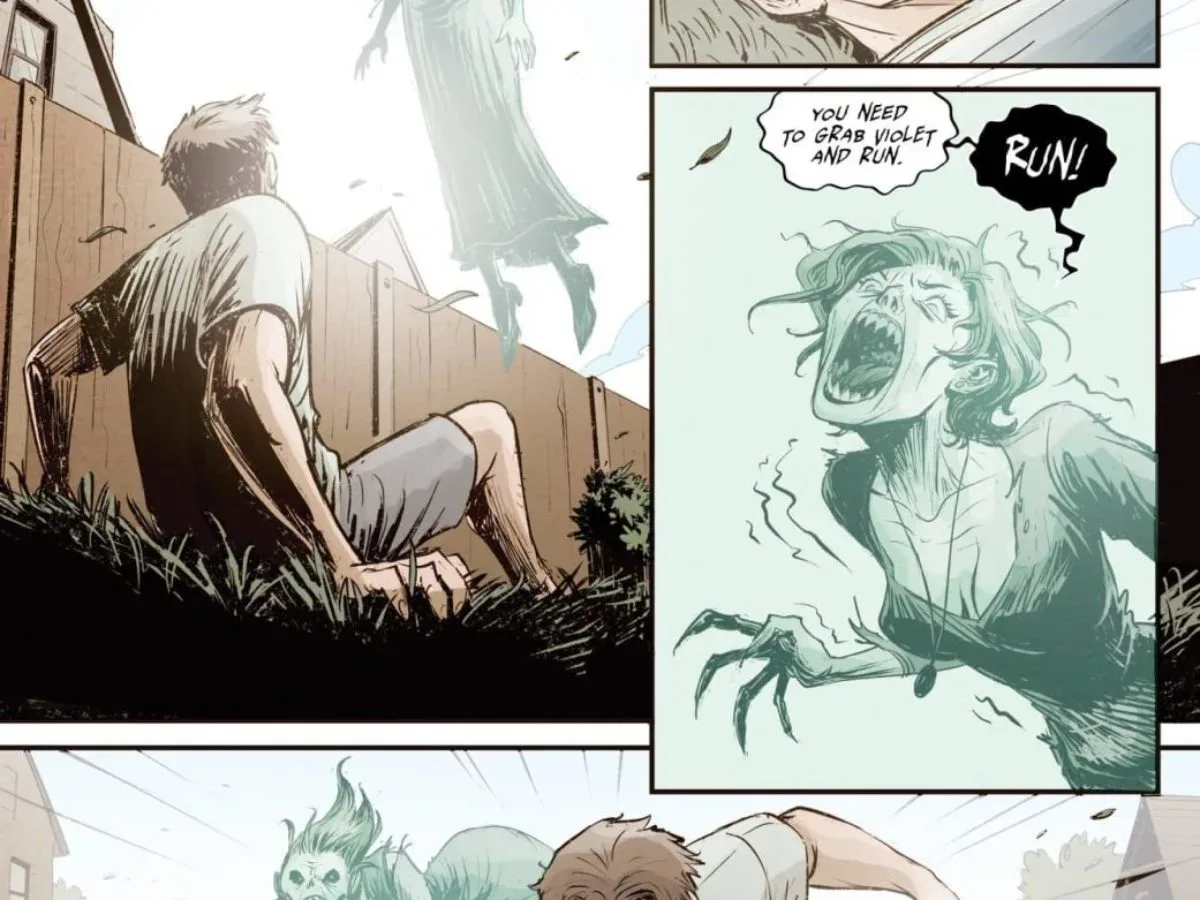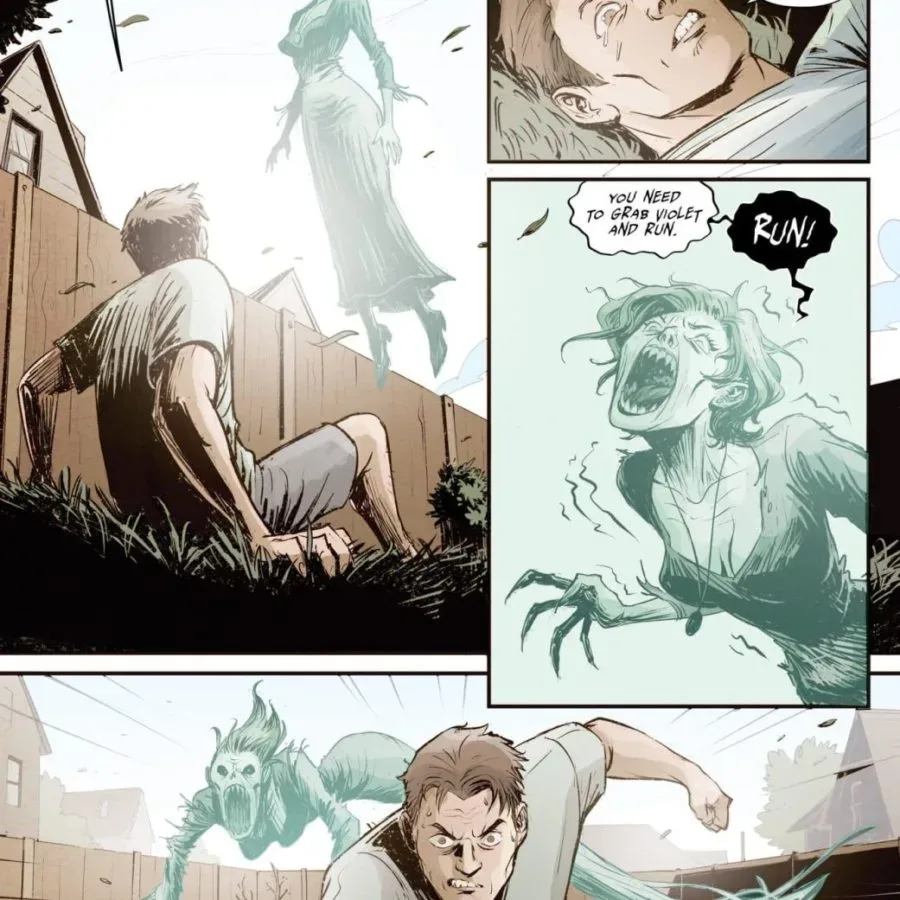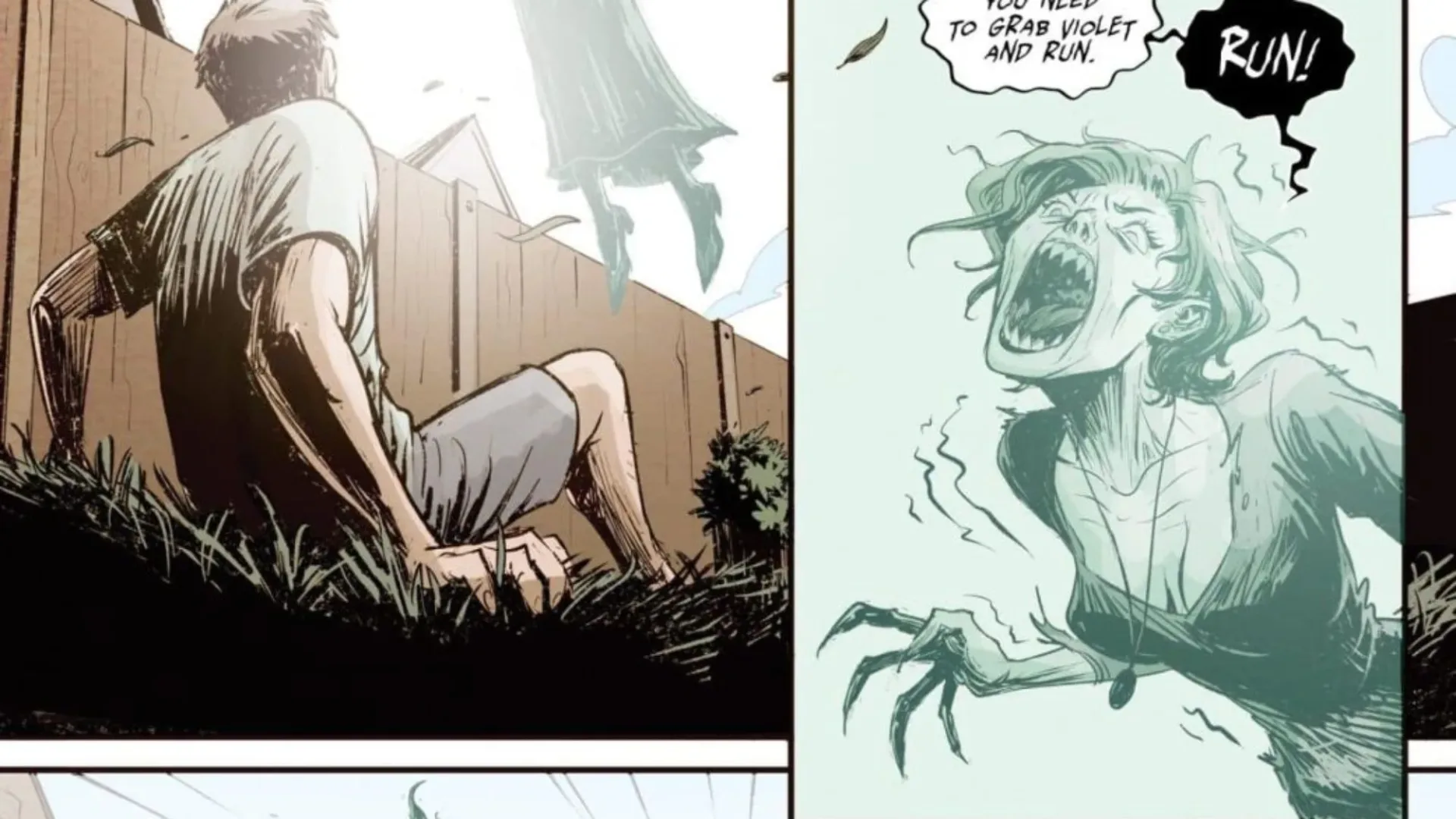
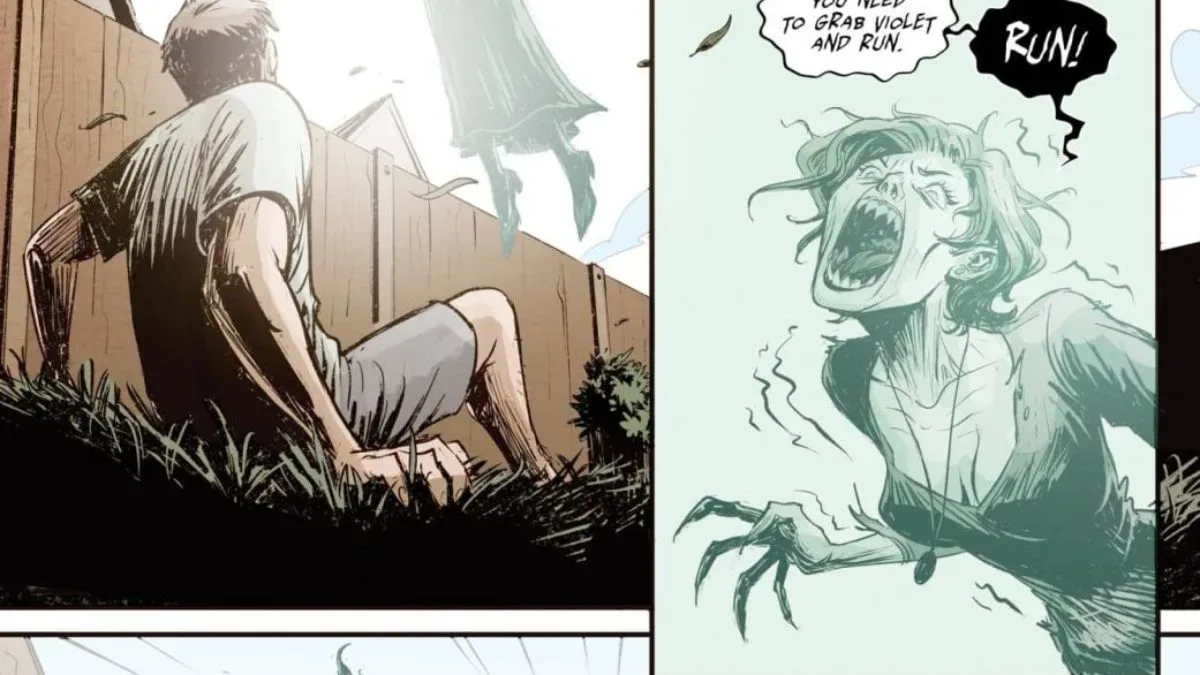
White Sky #7 will step backward at a moment when dystopian stories usually press ahead. The Image Comics issue, due in shops on November 25, 2026, is billed as a standalone “How It Happened” chapter. Its focus is the first hours of the catastrophe that changed the series’ world, following Violet and David as an ordinary existence abruptly gives way to escape, panic and the immediate demands of survival.
That makes issue #7 more than a pause in the present-day plot. It is positioned as an origin point for the setting’s new reality: a flashback designed to show the break itself, rather than only its aftermath. The listed creative team is writer William Harms, artist and cover artist Sumeyye Kesgin, and colorist Lee Loughridge.
A standalone chapter about the moment the world changes
A standalone issue is a comic intended to offer a relatively self-contained reading experience within a continuing series. It does not necessarily mean that it is disconnected from the larger story. In this case, the stated premise directly ties the issue to the central conditions of White Sky: it returns to the event that established the dystopian reality Violet and David now inhabit.
The solicited setup is deliberately immediate. Violet and David are forced to flee as their familiar world collapses in real time. Panic spreads, and survival becomes instinct. Those details establish the issue as a disaster narrative centered on the earliest human response to an unfolding crisis, rather than a retrospective explanation delivered safely after the fact.
The phrase “first hours” matters. A catastrophe story can cover broad social change, but this installment appears concerned with the narrow and volatile interval before characters have rules, resources or reliable information. Violet and David are not described as having a plan; the available description instead stresses flight. That should put urgency at the center of the chapter and give readers a closer look at the conditions that precede the series’ established dystopia.
Flashback as a way to deepen a dystopian setting
A flashback moves the narrative to an earlier point in its timeline. Used well, it can do more than fill in chronology. It can reframe what readers know about characters, places and threats in the present storyline. White Sky #7 is specifically presented as the story that sets the stage for the new dystopian reality, suggesting that its value lies in seeing how a recognizable life becomes unrecognizable.
The supplied premise identifies the collapse as both personal and societal. Violet and David must get out while panic spreads beyond them. This pairing gives the issue two scales at once: the private experience of people trying to stay safe, and the larger failure of the world around them. The tension between those scales is often essential to dystopian fiction. Huge events can feel abstract until they are filtered through decisions made in a home, on a road, or during a sudden attempt to leave danger behind.
For readers already following the series, the chapter may provide context for the emotional and practical pressures of the world that came later. For prospective readers, its standalone design may make it a useful entry point, though it should not be mistaken for a complete substitute for the rest of the series. The issue’s job is more specific: to reveal the point at which normality ended for these characters.
What the premise confirms—and what remains unknown
The available information supports a clear outline, but not a detailed explanation of the disaster. The issue is set during the initial collapse, and Violet and David are at the center of the escape. Panic, instinct and the formation of a dystopian status quo are all part of its stated thematic territory.
It does not establish the full cause, scope or mechanics of the catastrophe. Readers should be cautious about treating any suggestive imagery or brief preview material as confirmation of answers not included in the published description. The story may reveal more when it arrives, but the confirmed pitch is about the human experience of the event as it begins—not a complete technical account of what caused it.
That uncertainty can be particularly effective in a collapse narrative. Characters in the first moments of a crisis rarely receive an organized briefing. They react to incomplete signals, rapidly changing circumstances and the behavior of others. The premise’s emphasis on panic becoming survival instinct points toward that kind of disorientation, with Violet and David confronting a situation before it can be easily understood or named.
The creative team and visual stakes
Harms is credited as writer, while Kesgin and Loughridge are credited for the art and cover. In comics, the writer generally shapes the script, scene progression and dialogue, while the art team turns those instructions into storytelling through character expression, composition, setting and pacing. Color work can also be crucial to a story about a world changing rapidly, helping establish shifts in mood, visibility and threat.
Because this issue depicts the transition from routine life to catastrophe, visual contrast may be a key storytelling tool. The premise itself hinges on a before-and-after divide: a world as Violet and David know it, then a reality in which they must flee. Comics can make that break immediate through page-to-page changes in environment, crowd behavior and the space around the characters. That is an observation about the format’s potential rather than a claim about scenes beyond the announced material.
For a related example of how comic solicitations can frame horror through a major shift in familiar superhero mythology, see the preview for Midnight Fantastic Four #3. White Sky #7, however, is described on its own terms: a grounded-in-character escape during the opening phase of an unspecified collapse.
Release details and cover options
White Sky #7 carries a $3.99 suggested retail price and is scheduled for comic shops on Wednesday, November 25, 2026. The main listing identifies Sumeyye Kesgin and Lee Loughridge as the art and cover team. Additional listed cover editions are credited to Sumeyye Kesgin; Christian Dibari and Lee Loughridge; and JP Mavinga.
- Publisher: Image Comics
- On sale: November 25, 2026
- Writer: William Harms
- Art/cover: Sumeyye Kesgin and Lee Loughridge
- Suggested retail price: $3.99
- Format: Standalone flashback issue within the ongoing series
The multiple covers give interested buyers a choice in presentation, but the story content described for the issue remains the same: Violet and David’s attempt to escape during the initial breakdown of their world. Readers choosing between editions may want to check which covers their local comic shop plans to stock or whether it can place an order.
Why issue #7 could be a pivotal installment
The promise of a “how it happened” issue carries a built-in challenge. Revealing a past disaster can strip a setting of mystery if it only supplies an answer. But an effective flashback can instead add emotional weight by showing the cost of the answer: what characters lost, how quickly their choices narrowed, and why the later world has left such a mark on them.
White Sky #7 has the ingredients for that kind of chapter. Its protagonists are not simply witnesses to a history lesson. They are participants in a live crisis, with their escape tied directly to the origin of the dystopian environment around them. The issue’s promise is not merely that readers will learn more; it is that they will be placed alongside Violet and David at the point when survival first overrides the assumptions of everyday life.
With its standalone structure, the November release looks set to provide a concentrated piece of the series’ larger history. Whether it answers long-running questions or preserves some uncertainty, the confirmed focus is clear: the beginning of the collapse, viewed at ground level through two people trying to get away.