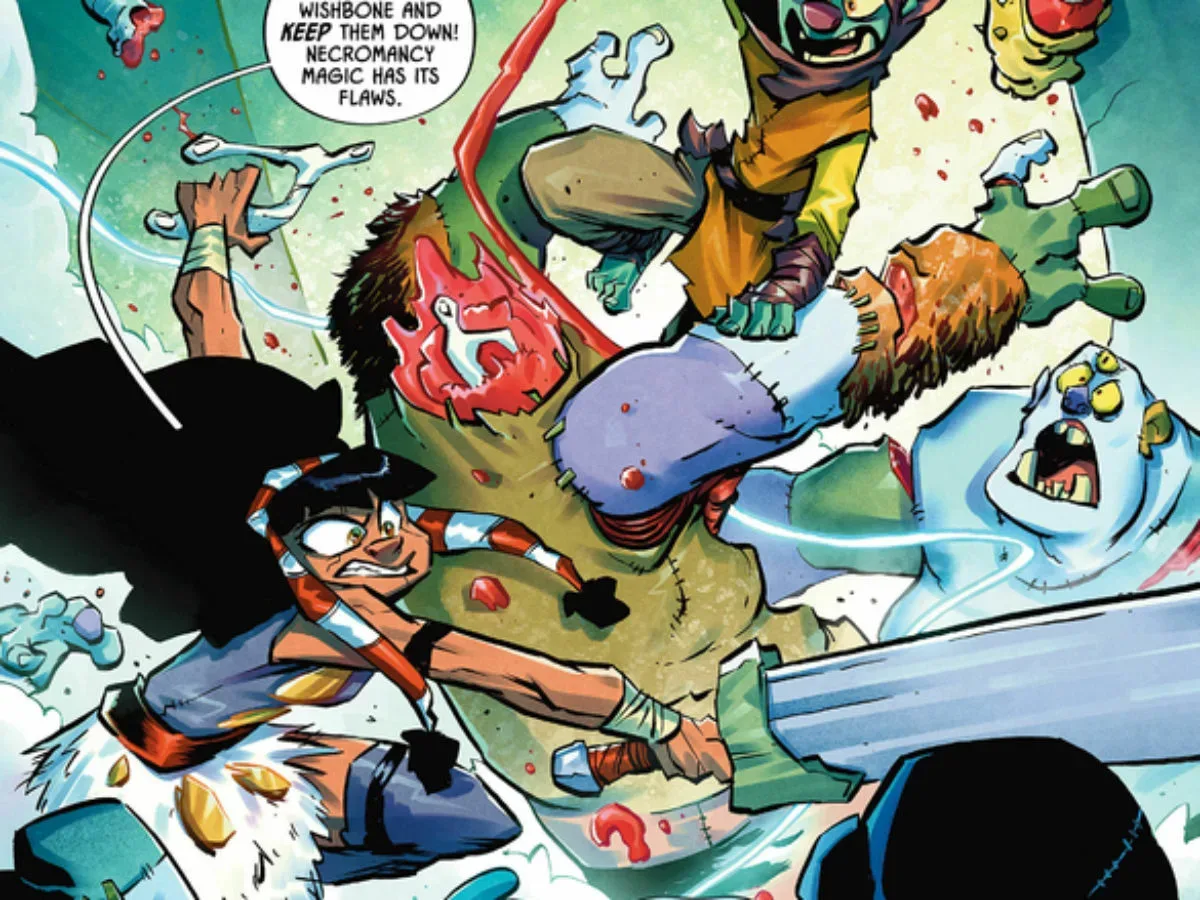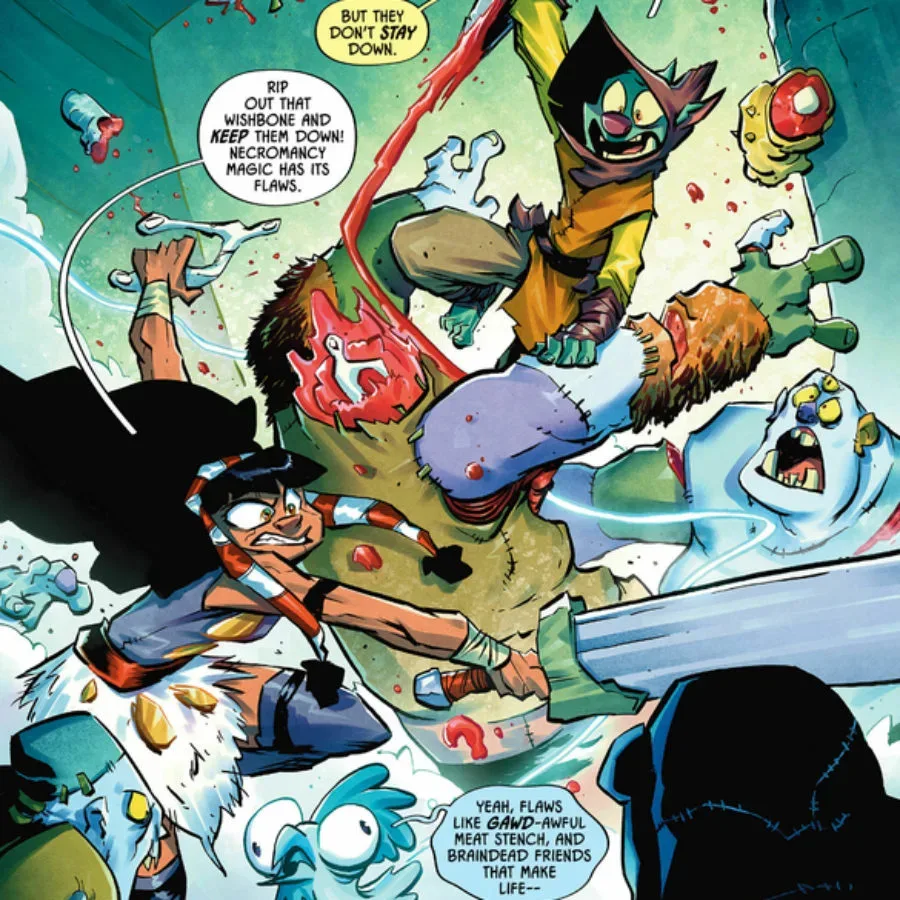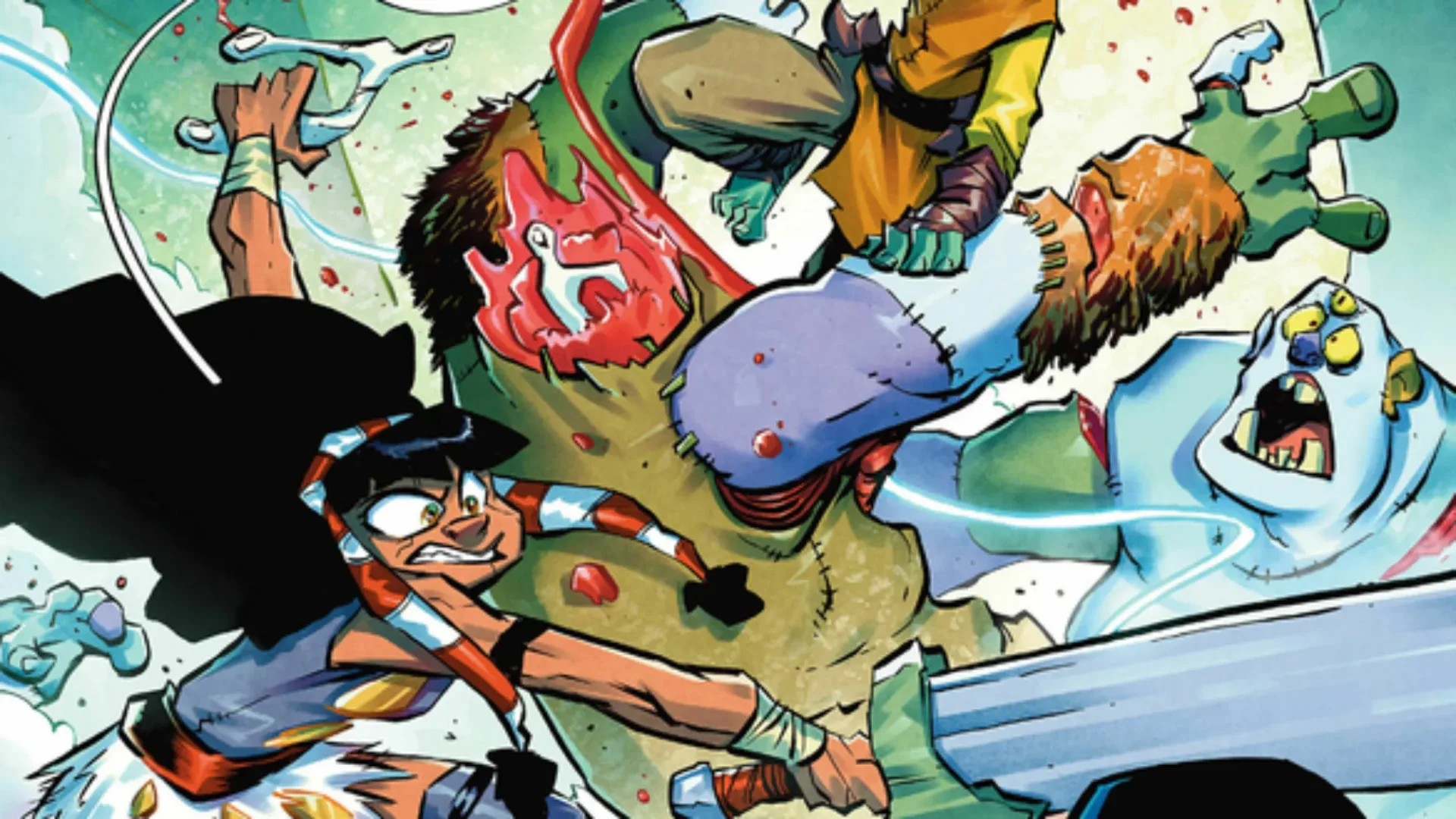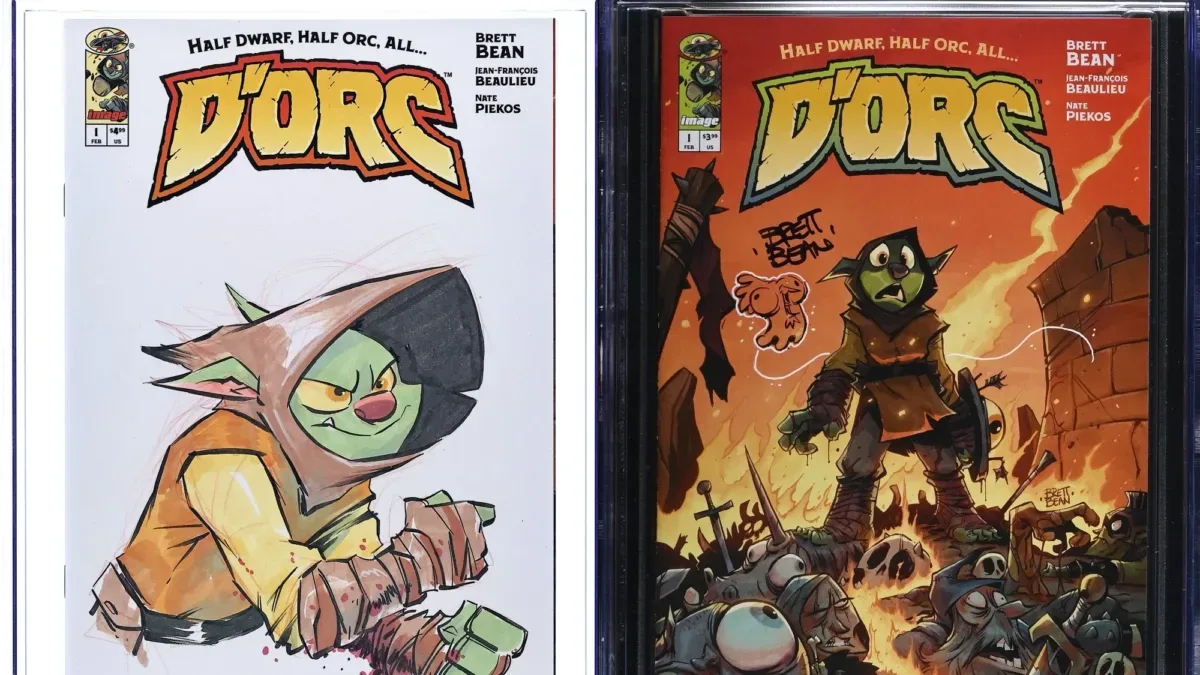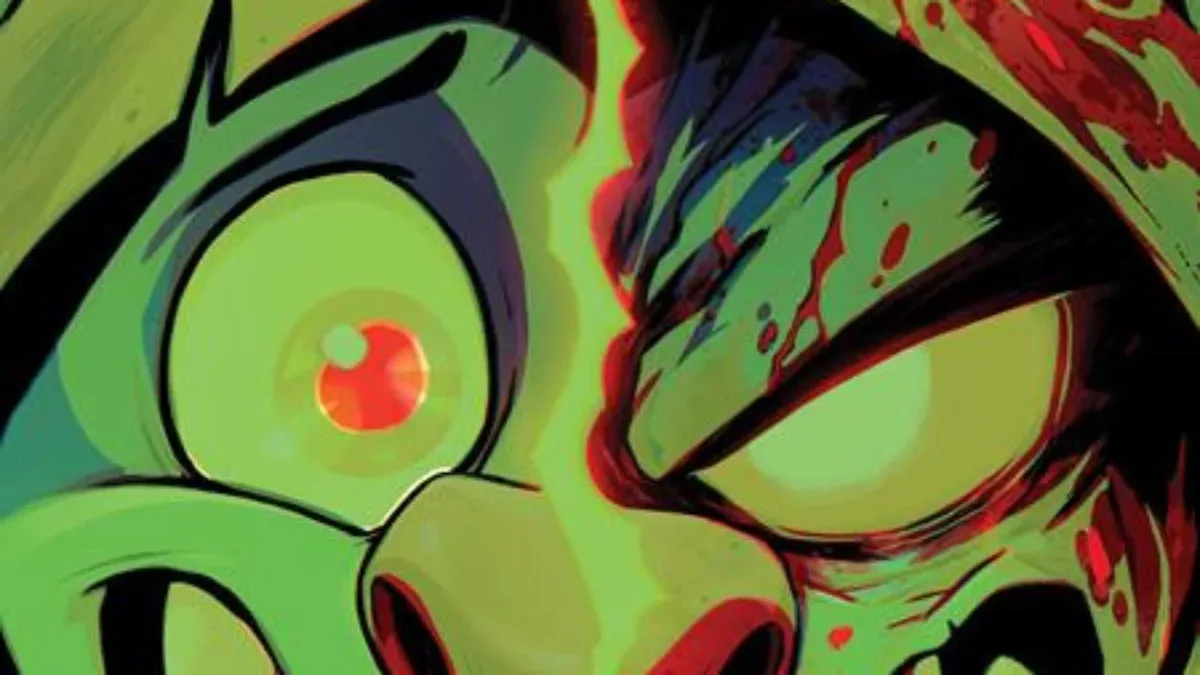
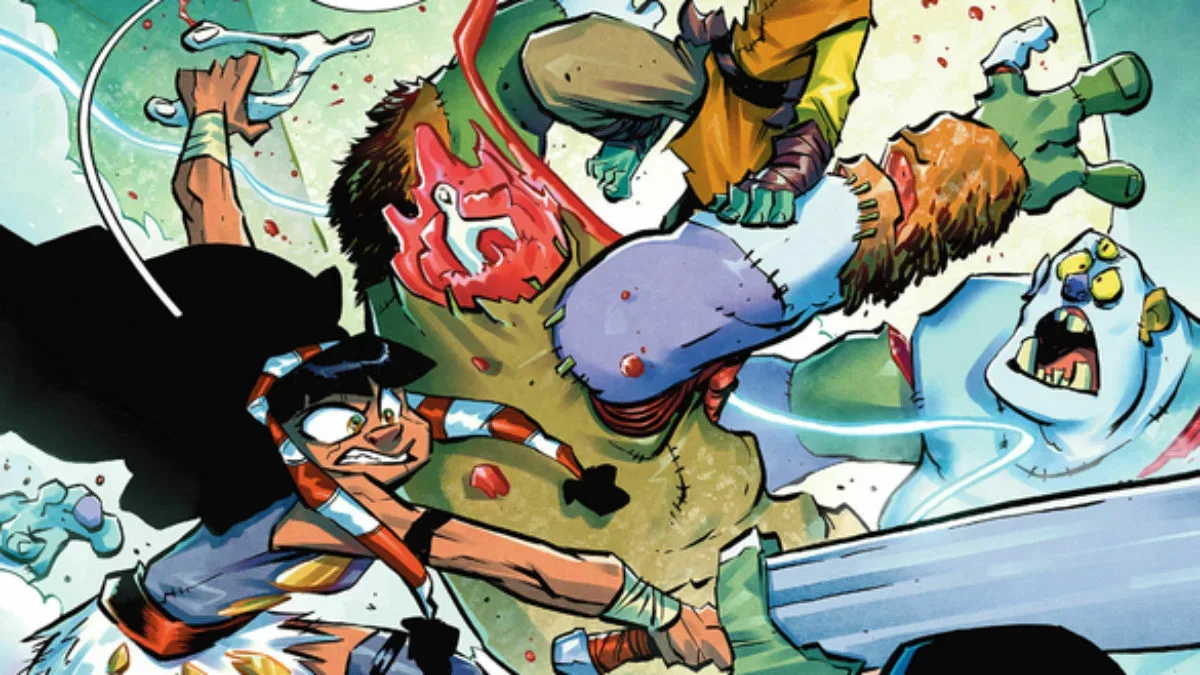
D’Orc #10 is scheduled to reach comic shops on November 18, 2026, with D’orc facing a problem that is equal parts battlefield threat and personal trap. The half-orc, half-dwarf protagonist has joined forces with Olavine, the Dark Golem, to stop Count Daverus, an angry and powerful necromancer commanding an army of meat monsters.
The catch is central to the issue’s setup: Olavine is not simply an ally. The Dark Golem also wants to capture D’orc. That places the protagonist in a familiar kind of fantasy-adventure pressure cooker, where defeating the immediate enemy may require trusting someone whose long-term intentions are plainly dangerous.
An alliance built on necessity, not trust
The solicitation establishes a three-way conflict rather than a straightforward heroes-versus-villain showdown. Count Daverus is the overt threat, described as a twisted and powerful necromancer with an overwhelming army at his disposal. D’orc and Olavine are positioned against him, but their shared opposition does not erase the danger between them.
That distinction matters. An alliance of necessity is a partnership made because the alternative is worse, not because either party has become dependable. D’orc’s decision to work beside Olavine therefore carries its own suspense: even success against Daverus could leave D’orc directly exposed to the figure who has been trying to take him in.
For a character who has already had a difficult run, the premise points toward an issue where every apparent solution may create another problem. D’orc needs help against an army, yet the help available comes with a clear threat attached. Olavine, meanwhile, has reason to cooperate in the short term while retaining an objective that conflicts with D’orc’s freedom.
What a necromancer brings to the conflict
Necromancy is fantasy terminology generally associated with magic involving the dead, reanimation, or the manipulation of bodies. Here, Count Daverus’ force is specifically described as an army of meat monsters. The description gives the confrontation a deliberately grotesque angle: this is not merely an army with unusual soldiers, but a mass of body-horror-style creatures under a necromancer’s command.
The word overwhelming is especially important to the setup. It signals that Daverus’ numbers or battlefield advantage are substantial enough to make a conventional confrontation implausible for D’orc alone. Olavine’s involvement consequently serves a practical dramatic function. The issue is not just asking whether D’orc can beat a formidable opponent, but whether he can survive the fight without handing an advantage to the person beside him.
That combination should make the conflict less predictable than a simple duel. An army creates pressure across the field, while a reluctant partnership creates pressure within the protagonists’ side. Daverus can be treated as the immediate obstacle, but Olavine is the complication that could shape what victory costs.
D’orc faces two different dangers
Issue #10’s central tension can be read in two layers:
- The external danger: Count Daverus and his meat-monster army threaten D’orc and require an urgent response.
- The personal danger: Olavine is helping to fight that threat but still wants to capture D’orc.
These problems do not cancel one another out. If D’orc rejects Olavine’s assistance, Daverus’ army remains an overwhelming force. If he accepts it, he risks giving a would-be captor the proximity and opportunity needed to pursue their own agenda. The premise is effective because neither choice sounds safe.
It also gives Olavine a role beyond raw muscle in the fight. As a Dark Golem, Olavine is presented as a formidable presence, but the character’s importance lies in divided interests. Readers are not being asked only to assess whether Olavine can help turn the tide against Daverus. They are also being asked whether that help can exist without becoming a new form of control over D’orc.
Why the monster concept fits the issue’s tone
An army of meat monsters is an intentionally strange image, one that blends high-fantasy stakes with a macabre, absurdist creature concept. The premise does not provide further details on how Daverus made or commands the monsters, and it would be premature to fill in those gaps. What is clear is that the monsters are framed as a major force rather than a passing gag or a single creature feature.
That matters for expectations around the scale of the story. D’orc is not simply dealing with a hostile magical figure; the necromancer has soldiers. The opposition is organized enough to be called an army, and powerful enough to be described as overwhelming. This leaves room for the action to emphasize evasion, survival, or tactical cooperation as much as direct combat, though the specific approach remains unknown ahead of release.
The meat-monster detail also underscores Daverus’ characterization. He is described as angry, twisted, and powerful, with the army acting as a vivid expression of that threat. Rather than relying on a generic military force, the issue’s central villain arrives with something uglier and more fantastical, giving D’orc and Olavine a distinctive problem to confront.
What is confirmed for D’Orc #10
- Publisher: Image Comics
- Release date: November 18, 2026
- Creator: Brett Bean is credited for writing, art, and cover duties.
- Cover listing: A Shawn Crystal cover is also listed.
- Suggested retail price: $3.99
- Story setup: D’orc reluctantly teams with Olavine to oppose Count Daverus and his meat-monster army.
The issue is listed under the code 0926IM0322, with 0926IM0323 associated with the Shawn Crystal cover listing. Readers considering which edition to seek out should note that the supplied details identify both listings, while not providing additional information about the imagery or distribution of the covers.
The practical question hanging over the issue
The primary question is not whether D’orc trusts Olavine; the setup makes clear that he has reason not to. The more interesting question is how much danger D’orc can accept in order to deal with Daverus first. In a story shaped by reluctant cooperation, the temporary alignment of goals may be the only thing holding the partnership together.
Count Daverus’ army forces the issue. Without that large-scale menace, D’orc would have little reason to stand alongside someone who wants to capture him. Without Olavine’s pursuit of D’orc, the necromancer battle would have a much cleaner line between allies and enemies. Putting both threats in the same story makes #10’s conflict about survival under compromised conditions.
Readers who follow new comic releases can also find another upcoming Gotham-related series in the details on Batman: Shadow of the Bat #1.
D’Orc #10 is set for comic shops on Wednesday, November 18, 2026, at a listed $3.99. Its immediate promise is simple and suitably messy: D’orc must face a necromancer’s monstrous army with assistance from the very golem who means to capture him.