Marvel’s Wolverine arrived exclusively on PS5 on September 15 as an Insomniac superhero action game built largely around arcade-style brawling. Its visuals have earned praise, while its overall critical response has been more muted. Since launch, one unusually specific element has become a lightning rod: quick-time events, or QTEs, that effectively cannot be failed in the conventional checkpoint-restart sense.
That description is true, but it can lead the discussion in an unhelpful direction. A QTE that does not kill the player is not automatically a bad QTE. In fact, forcing a restart for every missed cinematic button press could be a poor fit for Wolverine. He is a character defined by resilience, extreme pain tolerance, and a healing factor. A system in which one mistimed shoulder-button press immediately ends his story would risk making the player feel less like Wolverine, not more.
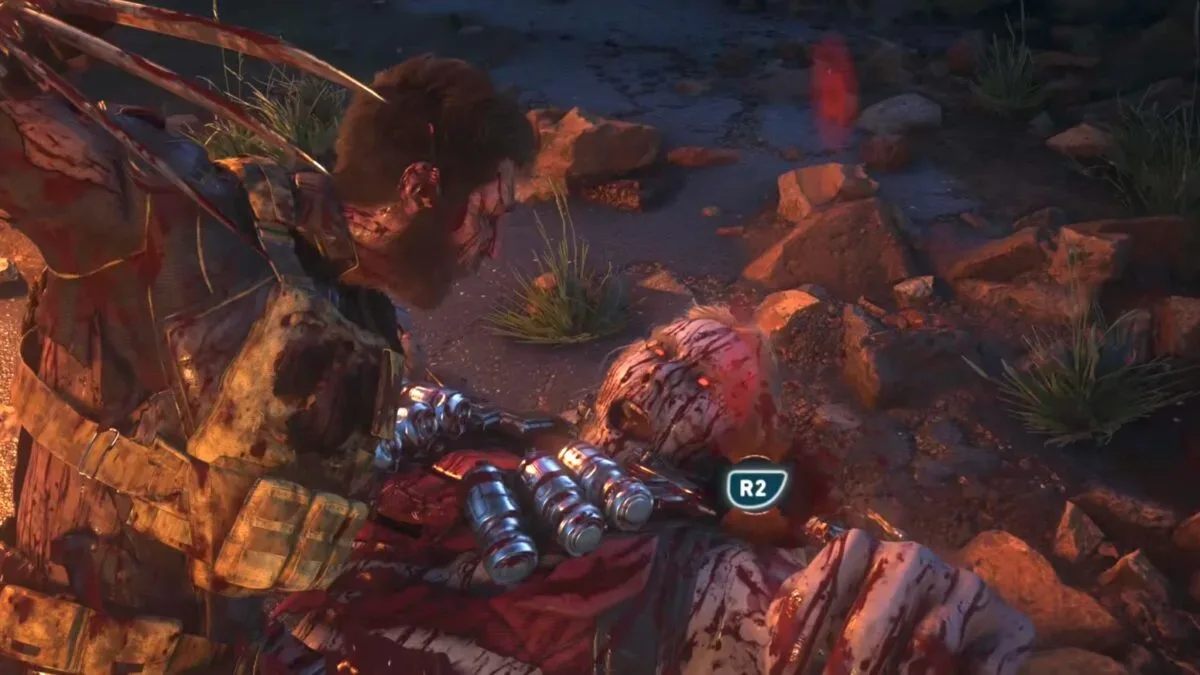
The more persuasive issue is that the game’s QTEs reportedly offer too little follow-through. Players can hit a requested button, hit the wrong one, or sometimes do nothing, and the sequence proceeds with only negligible visible differences. When the player’s input does not meaningfully alter an animation, a line of dialogue, a tactical position, or a later encounter, the prompt stops feeling like play. It becomes an instruction to perform a ceremonial button press while the scene carries on regardless.
That is a design-feedback problem, rather than a simplistic argument over whether games should punish mistakes.
What a QTE is supposed to add
A quick-time event is an on-screen prompt asking for a particular input during an action sequence: a face button, shoulder button, stick motion, or combination of inputs. It can be used to stage a moment that would be difficult to express through normal combat controls, such as a desperate escape, a grapple, a sudden dodge, or a close-range struggle.
The key word is interaction. The prompt should make the player feel that they are participating in the action rather than merely witnessing it. That does not require a binary pass-or-fail gate. It requires a readable relationship between what the player does and what the game shows in response.
There are several ways a QTE can establish that relationship:
- Contextual input: The required action resembles the character’s action. Rapid tapping can communicate exertion or a frantic escape; simultaneous buttons can suggest a complicated evasive maneuver; a stick rotation can echo a throw or hook punch.
- Immediate feedback: A clean input produces a sharper counterattack, smoother dodge, faster escape, or distinct camera and animation beat.
- Graduated outcomes: Missing one input does not erase the scene, but it can cause a stumble, a blocked strike, damage, or a less advantageous position.
- Narrative variation: The same broad plot result can play differently. Characters can react differently, and the choreography can acknowledge whether the hero dominated, barely survived, or took a hit.
- Mechanical carryover: The result can affect the next playable section through health, momentum, enemy pressure, or another clearly communicated condition.
None of those options inherently demands a harsh game-over screen. They ask only that the game recognize the player’s performance.
Related coverage includes Marvel's Wolverine QTE Debate Is About Feedback, Not Failure.
The no-fail label misses the real distinction
“No-fail QTE” sounds like a complete diagnosis, but it combines two separate questions:
- Can the player avoid a restart after missing the prompt?
- Does the player’s performance produce a different result?
Marvel’s Wolverine can reasonably answer yes to the first question and still need a better answer to the second. A Wolverine scene has a built-in case for survival. A missed action does not have to mean death because Wolverine can plausibly absorb the consequences and keep moving. But surviving is not the same as succeeding gracefully.
Consider an arm-wrestling sequence. The broad story can continue regardless of who gains the upper hand. Yet a successful input sequence could let Wolverine slam the opponent’s hand down, while missed prompts could force him to strain, lose the contest, or turn a near-loss into a tense recovery. The player sees the difference, the scene gains personality, and the narrative does not need to branch into an entirely separate campaign.
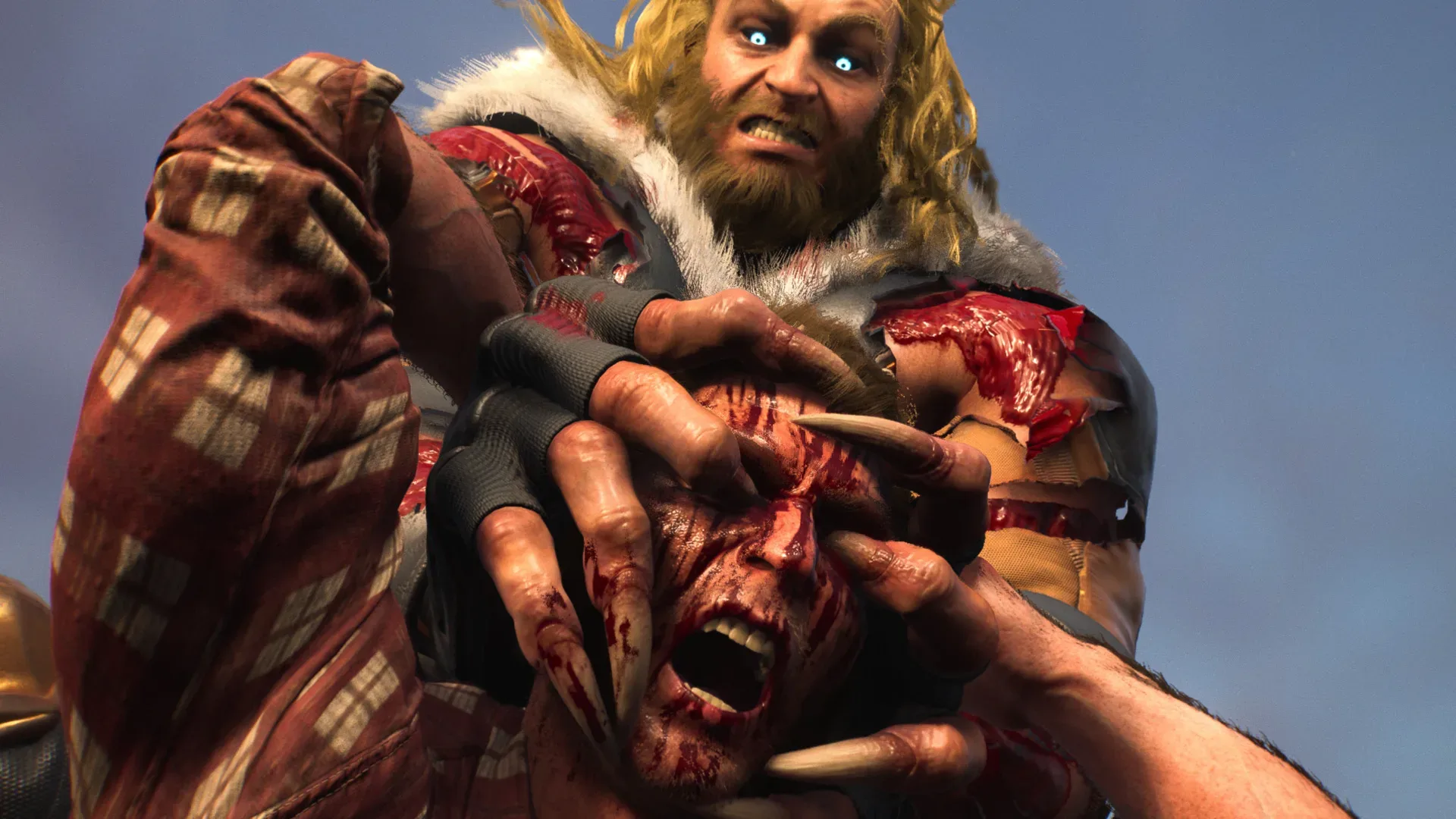
The same principle is even more useful in fight choreography. A successful QTE might show Wolverine landing the intended claw strike. A miss might show an enemy tearing through him, knocking him into an obstacle, or briefly pinning him before his healing factor lets him rise. The hero remains recognizably formidable, but the player’s lapse is acknowledged. Wolverine’s durability becomes a reason for varied consequences, not a reason for inputs to be functionally irrelevant.
Older examples show that failure is not the only tool
Resident Evil 4 is often invoked in QTE discussions because its sequences connected prompts with urgent physical action. During its boulder escape, rapid tapping signaled running, while a later multi-button input represented a last-second evasive movement. The sequence could kill the player, but that lethality was only part of why it worked. The controls communicated the tone of the scene.
It also demonstrated a smaller, important kind of variation. Different timing on a final dodge could place the protagonist behind different cover. The functional destination was similar, but the scene reacted to the player. That distinction matters: an alternate animation can be enough to preserve the sense that the player did something.
Its knife confrontation with Krauser used fast, demanding prompts to make the player feel reactive and off-balance. That is a deliberately stressful use of QTEs, and its severe failure condition suited a scene designed around danger. Not every game, character, or encounter needs that exact structure.
Heavy Rain offers a different model. Its early fight involving Scott Shelby and Troy allows room for imperfect execution: success depends on completing enough prompts rather than every single one. It also uses more expressive inputs, including a joystick rotation connected to a punch-and-throw motion. The result is a useful reminder that a QTE can measure degrees of success instead of treating one missed cue as a total collapse.
These are not demands for Marvel’s Wolverine to imitate games from different genres and eras. They illustrate a broader design principle: QTEs become more compelling when their inputs, outcomes, and narrative framing all point in the same direction. As discussed in a look at remakes that preserve a journey while changing its feel, changing the texture of an experience can matter as much as changing its destination. QTEs can work the same way.
Accessibility and agency are not opposites
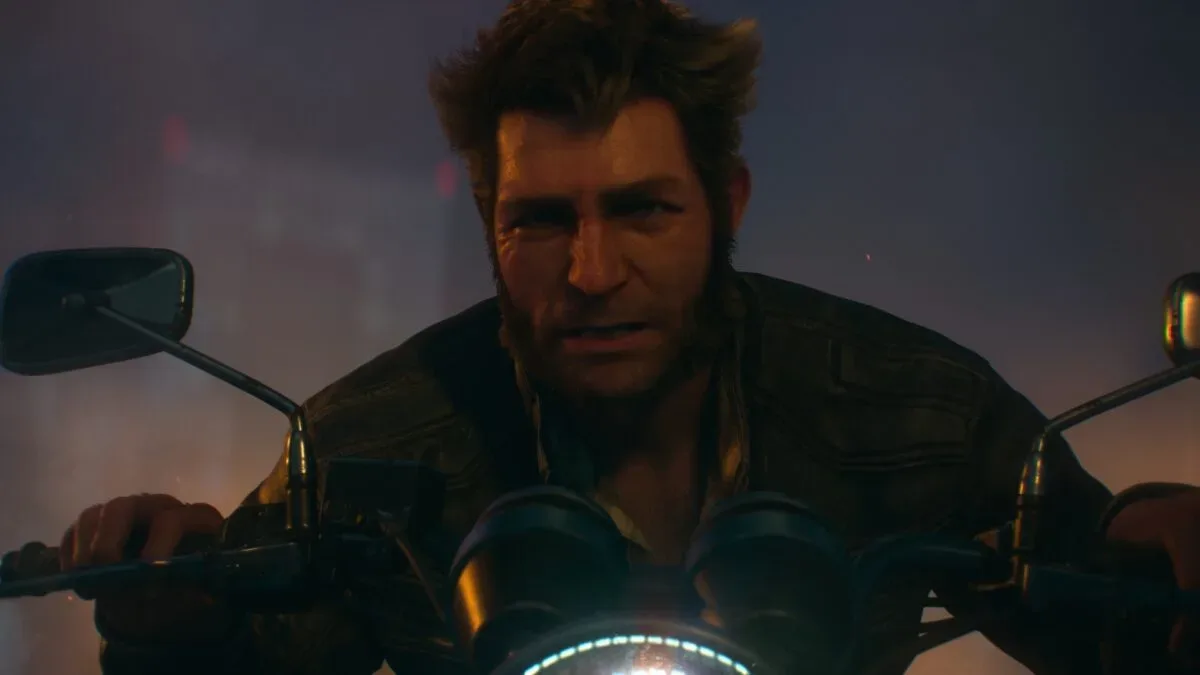
The Wolverine conversation has overlapped with broader complaints that the game is too easy or too eager to guide players. Critics have pointed to navigational aids such as scent trails, GPS markers, painted traversal surfaces, and explicit directional signage. The motorcycle sequences have received especially pointed criticism because letting go of the controls can reportedly allow Wolverine to navigate obstacles by bouncing off barriers, while active steering can lead to a crash.
Those are legitimate subjects for debate, but they are not interchangeable with the QTE issue. Difficulty settings already exist for players who want a tougher challenge. Guidance systems can be evaluated separately on whether they provide useful orientation or overwhelm the player with redundant signals.
More importantly, accessibility should not be treated as the enemy of agency. A forgiving QTE can reduce frustration for people who struggle with rapid reactions, unfamiliar control schemes, or tightly timed prompts. That is a reasonable goal. The missed opportunity comes when forgiveness turns into indifference.
A scene can give every player a route forward while still acknowledging performance. The most accessible version might allow an automatic completion after a missed prompt, but show an alternate animation and carry a modest, optional gameplay consequence. A more demanding setting could tighten timing, increase the number of required actions, or make the resulting health and positioning penalty more substantial. Those are different knobs. They do not require equating “accessible” with “nothing changes.”
What meaningful Wolverine QTEs could look like
The available criticism points toward several practical improvements without requiring a wholesale return to instant-death cinematic prompts.
1. Make success and failure visually distinct
The simplest improvement is alternate choreography. A success can be brutal and efficient; a miss can be messy but survivable. Wolverine is a particularly suitable character for this because his healing factor permits dramatic injury without derailing the story. If the player misses several motions, the game could show him taking the harder route through the exchange instead of silently performing the ideal move anyway.
2. Use partial success rather than a binary result
Rather than marking a whole scene as won or lost, the game could track how many inputs were missed. One miss might mean a glancing blow. Several misses could leave Wolverine visibly wounded or grant the next group of enemies an early advantage. The story stays on rails if needed, but the player feels the difference between precision and recovery.
3. Ask for inputs that fit the on-screen action
Many of Wolverine’s reported prompts rely on simple single-button presses, including shoulder-button actions tied to individual claw strikes. That makes the system easy to read, but repetitive prompts can flatten a sequence that is supposed to feel feral and physical. Carefully chosen combinations, holds, directional gestures, or stick movements could give different moments more character—provided the instructions remain clear and fair.
4. Let characters respond
Dialogue is a relatively direct way to validate the outcome. A clean win could trigger a cocky quip. A missed sequence could prompt an opponent’s taunt or Wolverine’s irritated retort. Such variations do not need to reshape the plot, but they tell the player the game noticed.
5. Preserve the power fantasy through recovery
The goal should not be to make Wolverine fragile. The compelling version of a missed QTE is not “Logan dies because the player pressed the wrong face button.” It is “Logan takes a vicious hit, gets back up, and now the player must manage the aftermath.” That makes the character’s resilience part of the mechanic instead of merely an excuse for the mechanic to have no stakes.
Specific criticism produces a better conversation
There is a temptation to reduce every controversial assist, marker, or forgiving system to a claim that a game has been “dumbed down.” That language is broad, imprecise, and not especially useful. It also overlooks the legitimate reasons games offer guidance and flexible failure conditions.
The sharper critique of Marvel’s Wolverine is that its QTEs may fail to convert player input into expressive feedback. A system can be easy and still satisfying. It can be accessible and still reactive. It can spare players from checkpoint restarts while showing them, through animation, dialogue, damage, and gameplay position, that their choices mattered.
For a superhero game about a man who keeps fighting through almost any wound, that is the richer alternative. Let Wolverine survive the mistake. Just do not let the game pretend the mistake never happened.