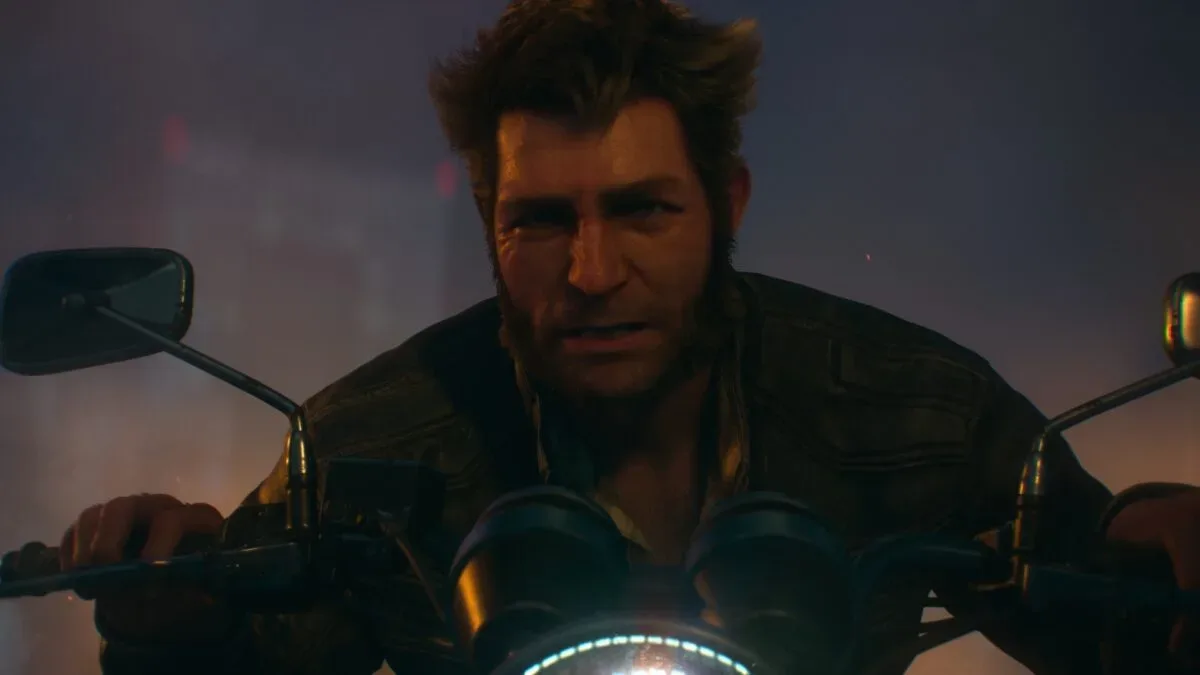
Marvel’s Wolverine is drawing a particular kind of launch-week criticism: not that players cannot get through a sequence, but that some sequences appear happy to get through themselves. Clips circulating online focus on a motorcycle pursuit in which Logan chases a truck carrying captive mutants. The segment presents steering, acceleration and braking as active controls, yet footage suggests the bike can ultimately reach its destination while the player does nothing.
That is an especially awkward result for an action game built around a character whose appeal is force, momentum and physical danger. A motorcycle chase ought to be a clean test of reflexes: spot traffic, line up a turn, manage speed, avoid a crash. Instead, players have found that Logan can rebound from guardrails, correct his course and keep moving. More strikingly, trying to take control may create more opportunities to hit oncoming traffic and restart from a checkpoint than simply leaving the bike alone.
The viral sequence has become shorthand for wider unease around the game’s highly directed structure. Some players were already unhappy with its linear progression and an objective-tracking scent trail. The bike footage turns that broader complaint into a readily understood visual argument: if a player can put down the controller during a supposed action set piece and still see it resolve, how much agency was there in the first place?
What the motorcycle footage appears to show
The chase is not described as a fully simulated motorcycle mode. It is a contained pursuit sequence with a clear intended path, obstacles and quick directional decisions. Logan may collide with guardrails, but the reported behavior is that these impacts ricochet him back toward the route rather than ending the run. His healing factor also reduces the lasting significance of incidental damage taken during the ride.
There is still a meaningful failure condition: a head-on collision can send the player back to the latest checkpoint. But the circulating demonstrations suggest that the unattended bike generally avoids that worse outcome, while manual steering can accidentally cause it. In practical terms, the segment’s safest-looking strategy can be non-participation. That inversion is why the criticism has traveled so far beyond a normal complaint that a vehicle section feels easy.
It is important not to stretch the claim further than the evidence supports. The footage does not establish that every chase, every cinematic sequence or every part of Marvel’s Wolverine is automated. Nor does it mean player action is irrelevant throughout the game. Its hack-and-slash combat can become demanding when enemies overwhelm Logan. The narrower, well-supported issue is that this chase seems designed to preserve the spectacle and forward motion even when the player does not perform the advertised driving task.
QTEs are at the center of the argument
The motorcycle debate sits beside a similar discussion about the game’s quick-time events, commonly shortened to QTEs. A QTE is a moment in which the game briefly asks the player to press a displayed button, often during a cinematic stunt, escape or close-quarters struggle. Traditionally, the point is immediate pressure: correctly reading and responding to the prompt lets the scene continue, while a missed or wrong input can produce a failure, interruption or alternate outcome.
Several QTE sequences in Wolverine reportedly continue in largely the same way whether the player responds correctly, presses the wrong button or does not press anything. That makes the on-screen prompt feel less like a required command and more like an invitation to participate in an action beat the game has already decided will happen.
There are nuances. QTEs do not appear to be consequence-free across the board. Missing some can cause Logan to take damage that could matter in a later conventional fight. That is a softer penalty than an immediate game over, but it remains a gameplay effect: arriving at the next encounter with less health can make a difficult combat situation worse.
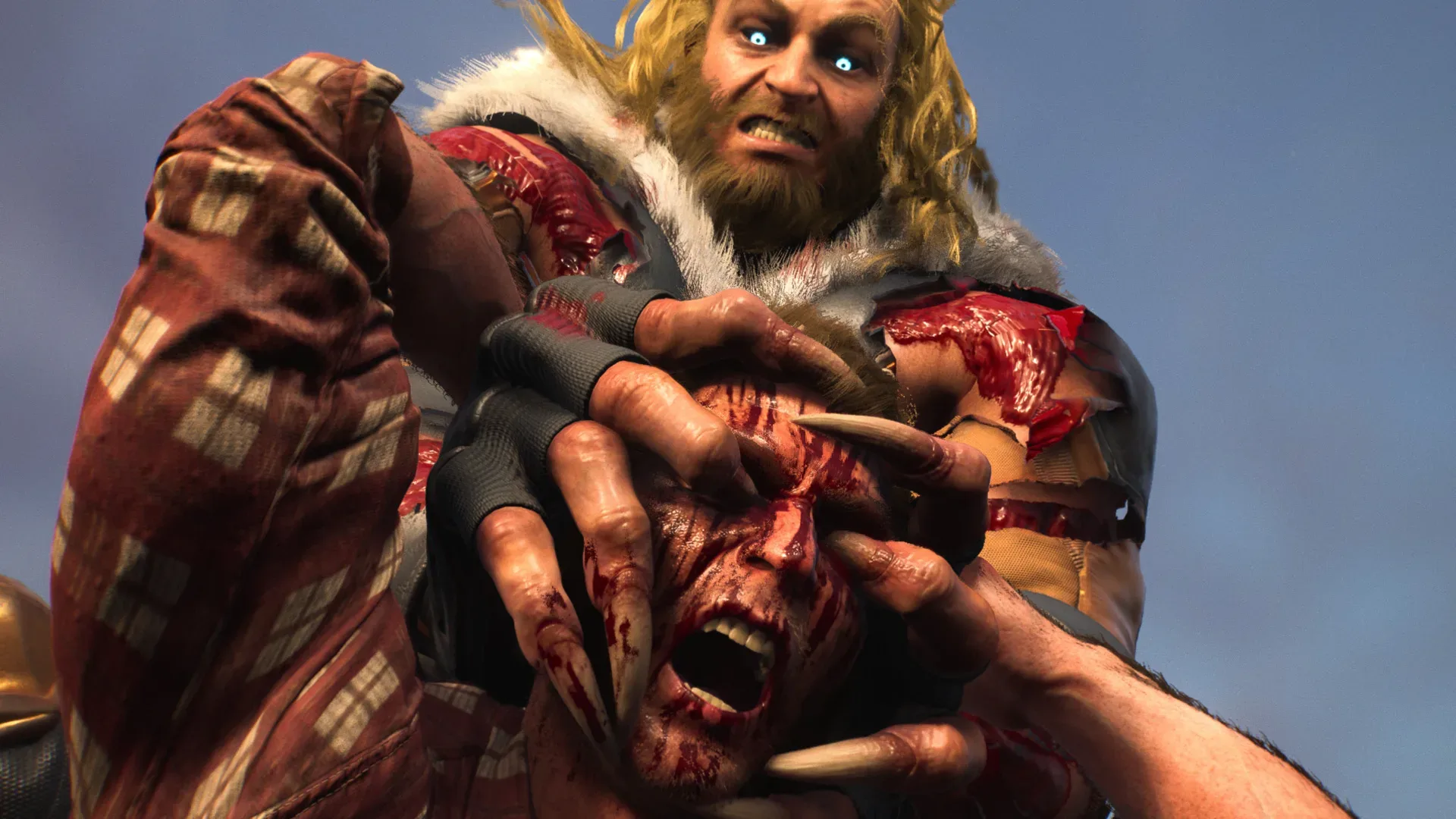
An arm-wrestling scene with Sabretooth also reportedly changes slightly if the prompts go unanswered, with Logan not seeming to gain the upper hand. Yet the reported outcome is still not a major punishment for failing to mash buttons. These details matter because they separate two claims that are often mashed together online. “Every QTE has no effect” overstates the evidence. “Some QTEs visibly complete without required input” is the core criticism.
Autocomplete is not the whole explanation
Wolverine includes a QTE autocomplete accessibility option, which is meant to assist players who may have difficulty with rapid, timed inputs. Accessibility settings that reduce repeated-button demands are valuable, and their existence is not inherently controversial. The unusual part of the current discussion is that players report seeing the same permissive behavior even without QTE autocomplete enabled.
That distinction is crucial. An optional feature says, “the player may choose to have this task completed automatically.” A default sequence that resolves despite a missed prompt says, “the game may not require this task in the first place.” Both approaches can lead to the same cutscene continuing, but they communicate very different design priorities.
Neither model is automatically wrong. A developer may decide that restarting a spectacular scene over a fraction-of-a-second mistake is more frustrating than entertaining. But when a game still frames the moment with button prompts and player-facing controls, it creates an expectation that the response is being evaluated. The criticism emerges when that expectation is revealed to be mostly theatrical.
Why forgiving design can still feel bad
Games can reduce punishment without removing agency. A chase might use generous steering assistance while still requiring the player to choose lanes and react to hazards. A QTE might avoid an instant game over while changing damage, positioning, time, dialogue, enemy behavior or the available route. The player can be protected from a tedious restart and still understand that their choices shaped the result.
What bothers Wolverine’s critics is not simply the lack of a harsh fail state. It is the possibility that the game is presenting an input challenge whose outcome is too insulated from input. A guardrail correction becomes controversial when it seems to do more than save a near-miss—when it also makes the intended path functionally inevitable.
This is fundamentally an issue of feedback. Feedback is the game’s way of showing what an action changed: a vehicle slows, a character loses health, a route closes, a rival gains ground, or a scene takes a different form. If the game responds to player behavior almost identically whether that behavior is precise, clumsy or absent, the feedback loop becomes hard to read. Players are then left wondering whether they are controlling an event or merely supplying optional button presses for it.
There is a related issue of stakes. Stakes do not require constant failure screens. They require credible risk and a clear relationship between decision and result. A player who knows that a bike will self-correct, damage will heal away and the chase will still end at the same truck has little reason to feel tension. The visual language may say “danger,” but the rules say “continue.”
Cinematic pacing versus player agency
Marvel’s Wolverine is caught in a longstanding action-game balancing act. Cinematic sequences want clean camera angles, a specific pace and a heroic stunt that always looks good. Interactive systems are messier. Players can hesitate, choose an unintended route, collide with scenery or fail at the exact point a scripted sequence needs them to succeed.
Heavy assistance is one way to ensure a sequence retains its pacing and spectacle. It can also reduce barriers for players who are less comfortable with driving, timed prompts or sudden control changes. For a character like Logan, whose healing factor is central to the fiction, resilience after a collision also makes thematic sense.
But fiction and interaction serve different needs. Wolverine surviving a crash is believable for Wolverine; a player being unable to meaningfully lose a chase is a separate mechanical decision. The first reinforces character fantasy. The second can undermine the fantasy of embodying that character. There is a big difference between feeling like an indestructible hero because you fought your way through chaos and feeling like an observer while an indestructible hero was guided through it.
The challenge for any game using this style is to make assistance legible and proportionate. If the primary goal is a cinematic ride, controls could be framed as light steering influence rather than a high-stakes driving trial. If the goal is an action challenge, then speed, lanes, hazards and recovery should meaningfully respond to the player. Confusion thrives in the space between those two intentions.
The practical implication for players
Players approaching Wolverine should not assume the motorcycle clip represents the difficulty of the whole game. The reported combat pressure from groups of enemies indicates that the game asks for skill in other areas. Nor should a player conclude from a missed QTE that no consequence exists; lost health can carry forward into a later fight.
Still, the footage is useful for setting expectations. Some cinematic moments may prioritize continuity over strict execution. Players looking for demanding vehicular control or QTE sequences with dramatic branching failures may find that approach unsatisfying. Players who prefer fewer abrupt game overs may see the same decisions as a welcome effort to keep the story moving.
For anyone who wants a reminder of how vehicle controls can be communicated around a more systems-focused challenge, Joking Joystick’s Wardogs helicopter controls guide illustrates the kind of practical questions players ask when inputs, repair and vehicle handling carry clear mechanical weight.
The larger criticism is about trust
The strongest version of the reaction is not “easy games are bad” or “accessibility is bad.” It is that players want a game to be honest about what it is asking them to do. A prompted action can be forgiving. A chase can feature generous recovery. A story-focused game can guide players closely. Yet each of those choices becomes more contentious when the presentation implies a level of control or danger that the underlying rules do not enforce.
Wolverine’s motorcycle sequence has resonated because it makes that gap visible with almost no explanation required. The bike travels, scrapes a rail, points itself back toward the route and continues. For critics, that does not look like accessibility or a minor safety net; it looks like the game taking the wheel. Supporters can reasonably value the uninterrupted spectacle, but the clip clarifies why others see it as an erosion of the player’s role.
Ultimately, this is a debate about what players want from superhero action. Spectacle works best when it feels earned through action, even if the game is quietly smoothing the roughest edges. Once the smoothing is conspicuous enough that doing nothing appears optimal, the scene risks becoming less a playable escape and more an expensive-looking intermission with a controller-shaped prop.