Content note: This article discusses a graphic sequence of violence in Marvel’s Wolverine.
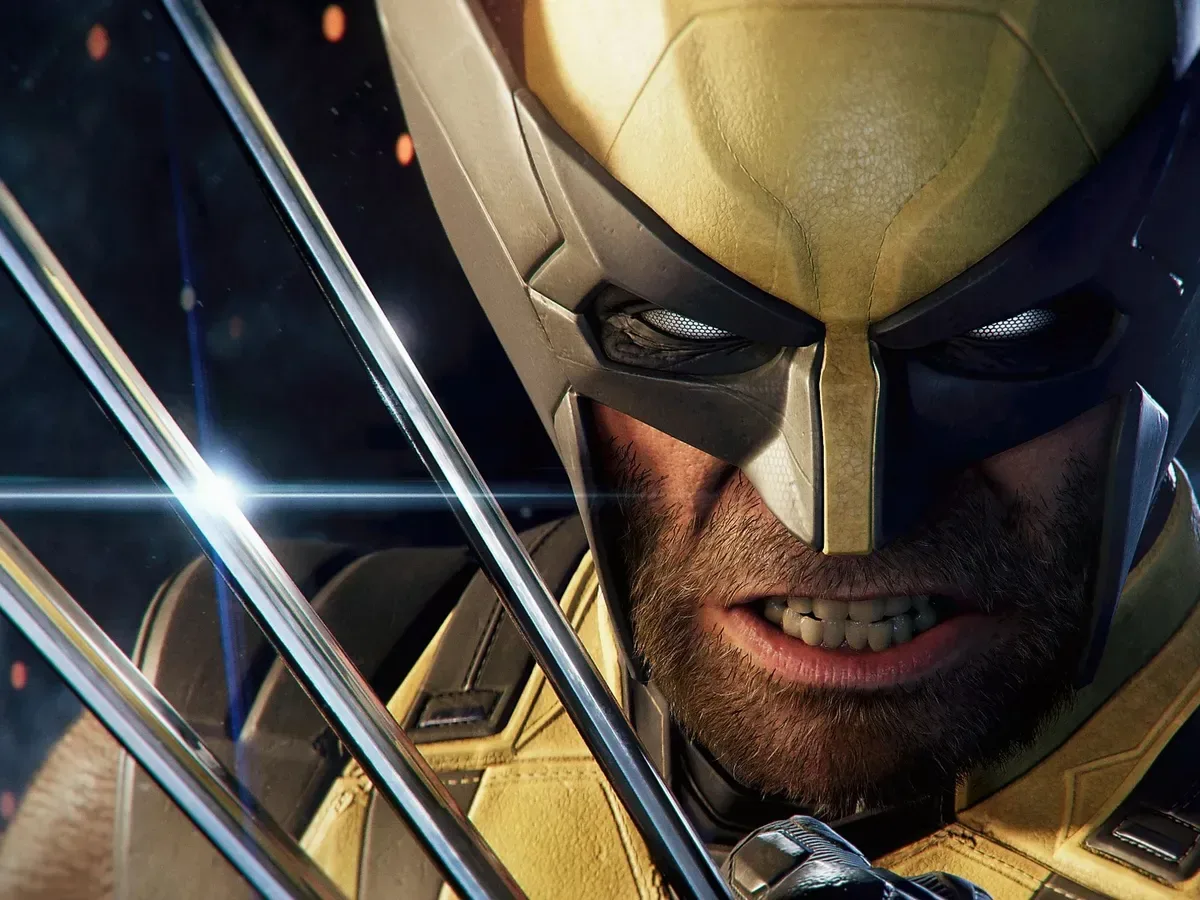
Marvel’s Wolverine has a very obvious videogame problem hidden inside one of comics’ most obvious superpowers. Logan heals from punishment that would end almost anybody else’s fight, and he has claws designed for up-close violence. Those traits make for an immediately legible action-game hero: get near an enemy, cut through them, survive the retaliation, then keep going. They can also make a game feel as if it has settled on its answer before the player has had a chance to ask a question.
That is why one late-game Sabretooth encounter is so striking. For a short stretch, the game reportedly stops treating Logan’s healing factor as bloody decoration or a narrative excuse for him to endure another cinematic injury. Instead, it makes the recovery of his body dictate what the player can perceive and how they must approach the fight. It is a harsh idea, but a smart one: Wolverine temporarily turns damage into a change of rules.
The larger game is described as a linear, old-school character-action experience built largely around slashes, parries and tracking through environments. That structure can certainly deliver a satisfying rhythm. Character action, in this sense, is combat centered on expressive close-range offense, defensive timing and maintaining momentum rather than solving every encounter as a puzzle. A “flow state” is the useful shorthand for the point where a player has internalized those rhythms and reacts almost automatically. But rhythm alone is not the same as range. If every threat asks for the same claws-and-counter response, even a competent combat loop can become repetitive.
The Sabretooth sequence suggests a more interesting possibility: use Wolverine’s specific abilities and vulnerabilities to alter the player’s relationship with space, information and risk.
A rivalry becomes a mechanical problem
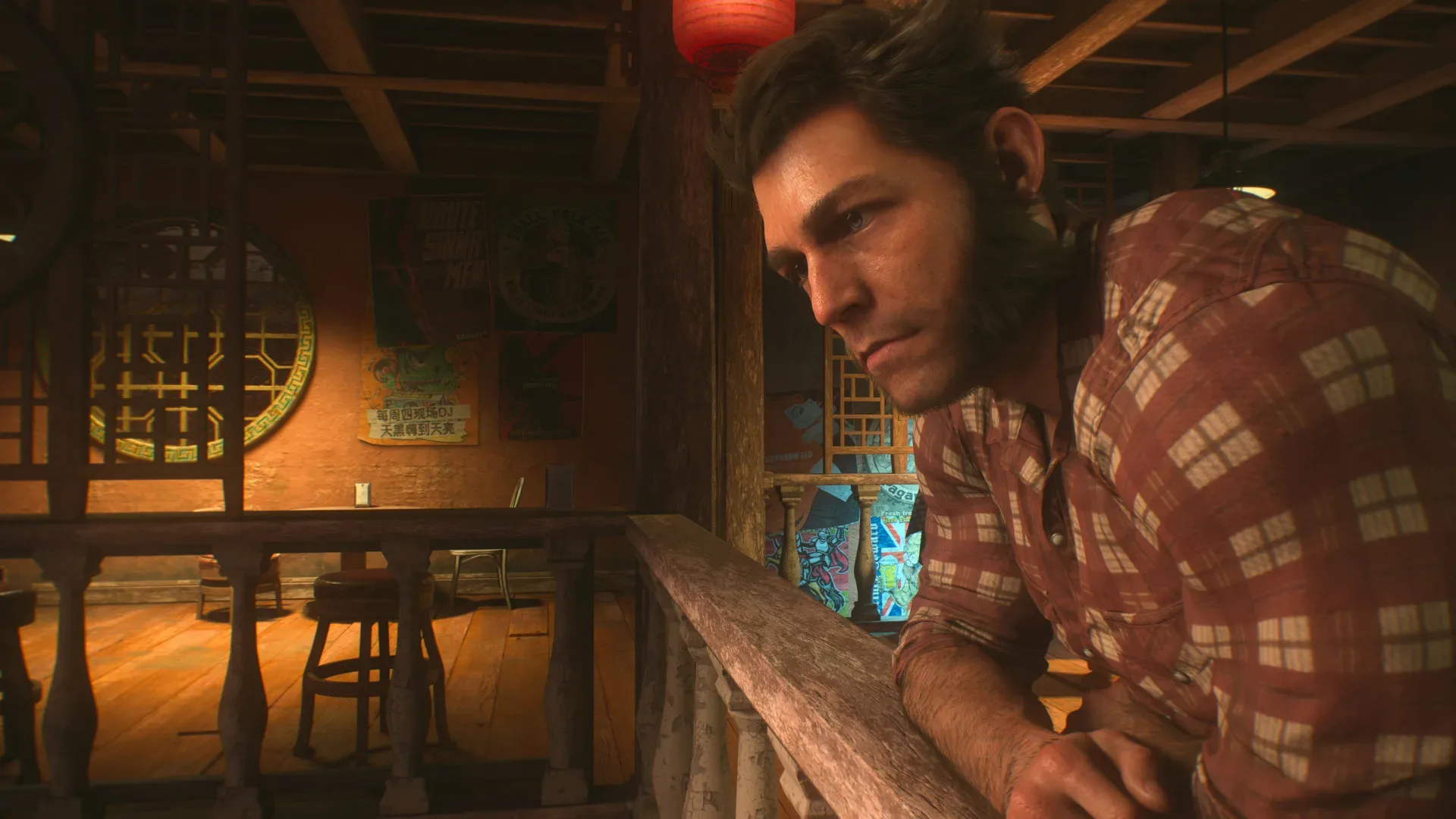
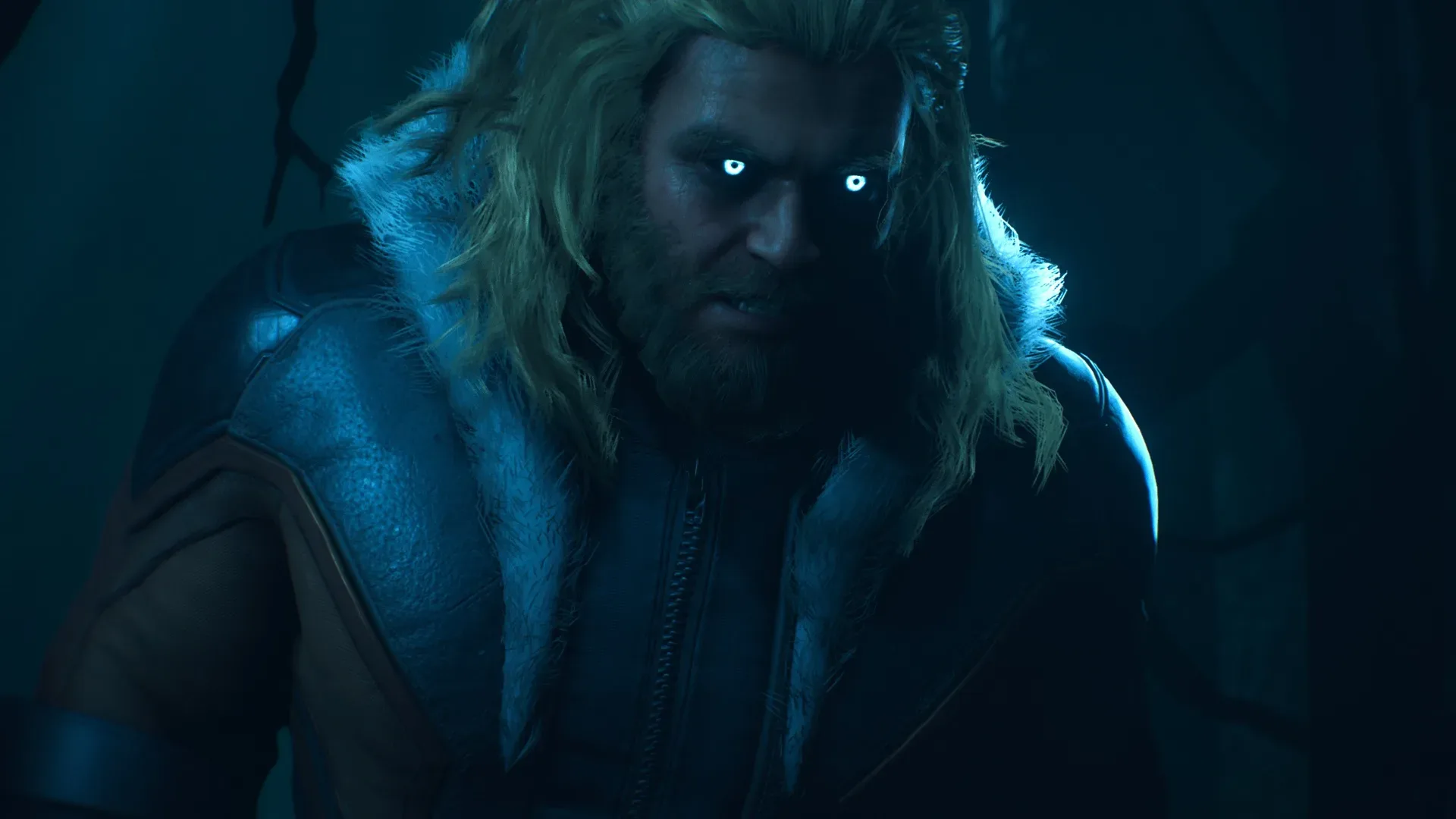
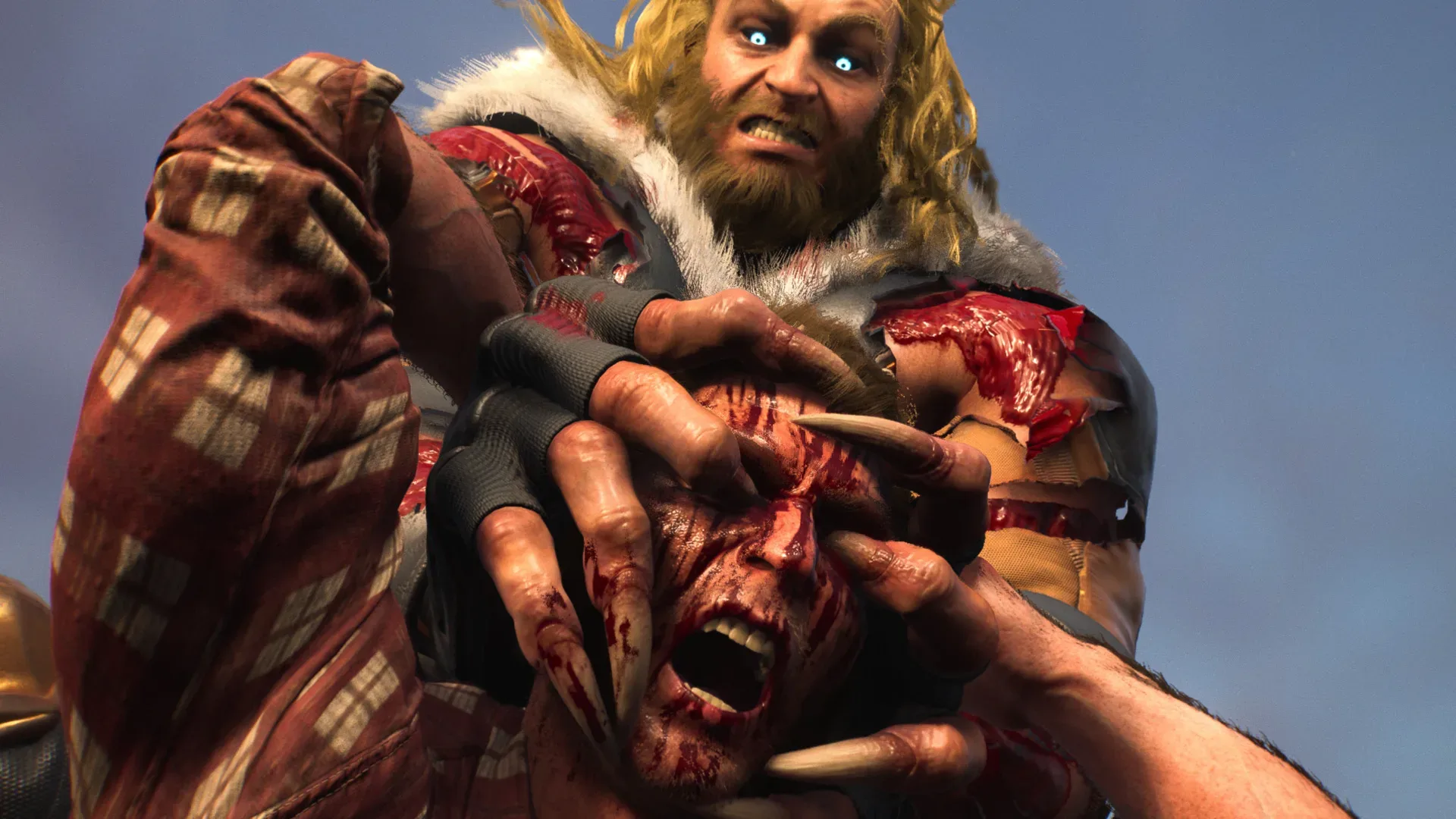
The confrontation arrives in the latter half of the game, after Sabretooth shifts from an uneasy ally to a clear enemy. The two mutants battle at Lowtown’s docks, and Logan is ultimately thrown onto a raft in the water. Sabretooth pins him down, pulls back his adamantium-covered arms and repeatedly drives his head into the raft.
Logan still taunts him, telling Sabretooth that he is blind to the manipulation around him. Sabretooth answers with literal cruelty, gouging out Logan’s eyes.
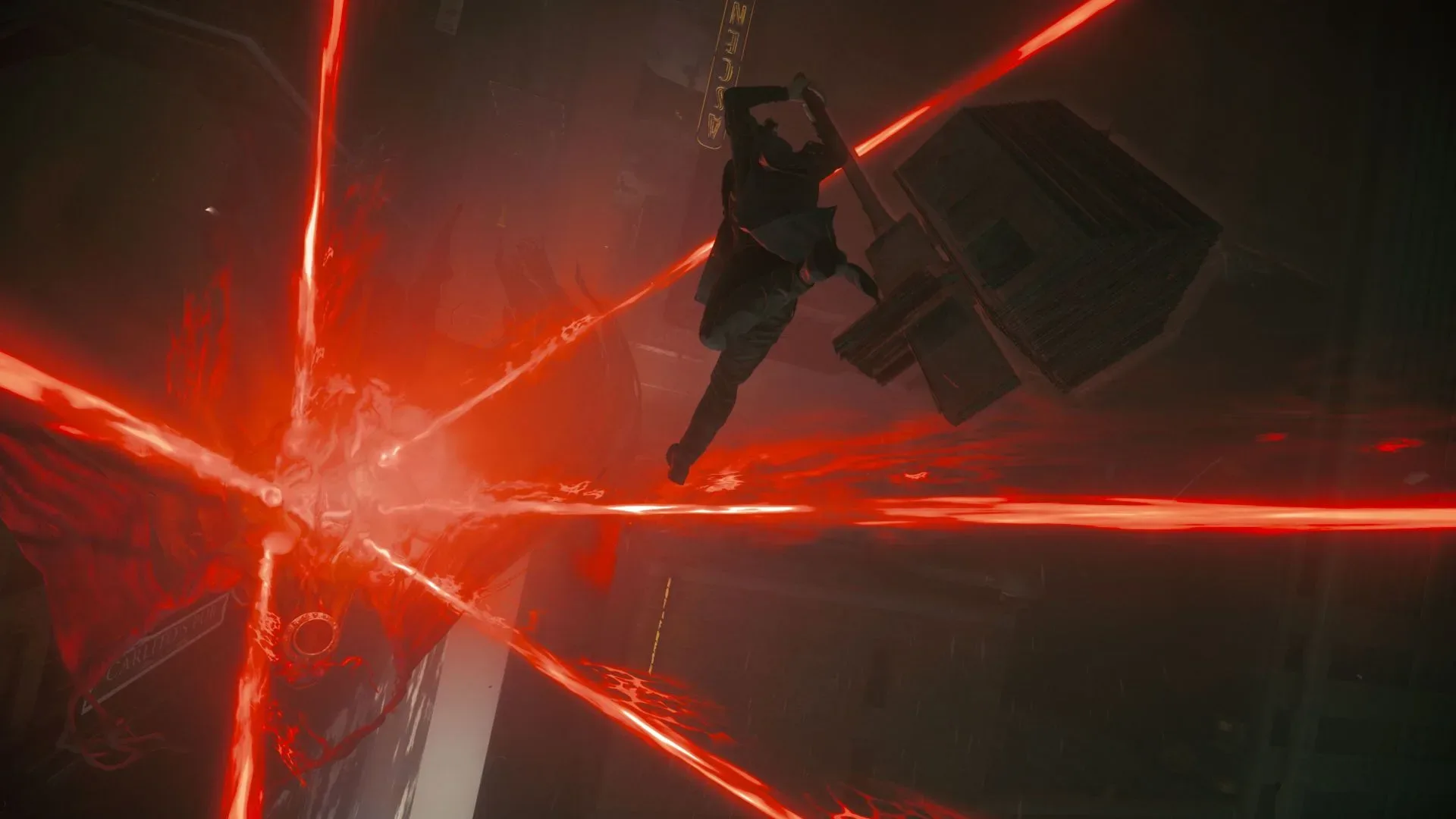
That is an extreme plot beat, yet the important design decision is what comes next. Rather than immediately cutting away or allowing the injury to carry no lasting mechanical consequence, the game reportedly moves into first person and removes the player’s sight with Logan’s. The player can turn and listen for Sabretooth while waiting for the healing factor to restore vision. The opponent can pounce before that recovery is complete, leaving Logan open to further hits.
Related coverage includes Marvel's Wolverine Finds Its Sharpest Idea in a Brief Sabretooth Fight.
First person does more here than offer a dramatic camera angle. It ties the camera to a physical condition. In most third-person action games, the camera gives players broad environmental awareness even when the character is injured, stunned or otherwise compromised. Here, Logan’s blindness narrows the player’s own information. The limitation is not merely represented; it is shared.
Why the loss of vision matters
This is an example of what game design often calls mechanical embodiment: the game conveys a character’s state through the player’s available actions and senses rather than only through dialogue, animation or a health bar. Logan is not simply told to be blind, and the player is not simply shown that he is blind in a scene. The player has to operate under blindness.
That distinction is crucial for a hero as physically indestructible as Wolverine. If impalements, burns and other huge impacts are routinely shrugged off, gore can become visual punctuation. The image is vivid, but the play does not necessarily change. A powerful healing factor can accidentally flatten stakes because the audience expects the wounds to vanish.
In this segment, regeneration creates a different kind of tension. It is still the power that will get Logan back on his feet, but it does not solve the problem instantly. Vision returns progressively: first a rough sense of the docks’ outlines, then returning color, and eventually a clearer image. That staged restoration turns healing into a countdown whose duration matters. Every incomplete stage leaves the player with less certainty about Sabretooth’s position.
It is a notable use of diegetic feedback, meaning feedback that exists within the fiction of the world rather than appearing solely as an abstract interface element. The changing image functions as a practical indicator of recovery, but it is also Logan’s eyes regenerating. A typical meter could communicate the same progress numerically. The returning outlines and color make the progress emotionally legible without separating it from the character.
Sound becomes survival information
With sight unavailable, audio takes over as the player’s primary source of enemy tracking. That is more than an atmospheric trick. It shifts the combat’s information economy: players normally read a rival’s movement, range and attack preparation from animation and spatial positioning; here they must listen and react while the scene withholds the visual certainty they would ordinarily rely on.
That creates pressure without requiring a new weapon, a new upgrade tree or a radically different enemy roster. Sabretooth’s threat comes from what Logan cannot presently confirm. In a battle already built around two clawed, highly resilient combatants, that is a meaningful change. The player is no longer simply optimizing offense and parry timing with a full view of the arena. They are trying to regain a basic sense of where danger is.
There is also a clean thematic fit. Wolverine’s heightened senses are among the character’s defining traits, and the fight appears to ask the player to rely on hearing while his normal vision is absent. The supplied details do not establish a broader sensory system elsewhere in the game, so it would be a stretch to describe this as a fully developed mechanic. As a one-off encounter beat, though, it demonstrates how a familiar piece of superhero fiction can be converted into a moment-to-moment decision problem.
It also puts Sabretooth in an effective role. A rival with comparable bestial qualities is more interesting when the fight can make the player feel hunted, not merely when the rival has a larger health pool and more damaging swings. The blindness stage briefly reverses control. Logan, the often unkillable attacker, is made vulnerable through uncertainty. Sabretooth gains the advantage not because Wolverine’s claws stop working, but because the player’s ability to read the battle has been interrupted.
The missed opportunity is variety, not necessarily restraint
Nothing about this critique requires Wolverine to become less violent. The game’s willingness to show a body that is cut, battered and rebuilt is part of its chosen identity. Nor does every major fight need to become a sensory deprivation challenge. Repeating the exact blindness sequence would quickly turn the surprise into another routine.
The more compelling point is that the fight identifies a design principle worth revisiting in new forms: Logan’s body and powers should occasionally alter the verbs, information or objectives of a scene. “Verbs” is design shorthand for what players actually do—attack, defend, track, evade, search or endure. If Wolverine’s core verbs remain essentially slash and parry through most of the campaign, the character’s particular traits risk being reduced to visual flavor around a conventional action framework.
The Sabretooth encounter expands those verbs, if only briefly. Listening and orienting become as important as attacking. Healing becomes a condition to manage rather than a cutscene reset. The battlefield becomes a place that has to be rediscovered as sight returns. Those changes produce a memorable beat precisely because they disturb the established routine.
Accessibility also belongs in the conversation whenever a game builds tension around reduced sight and sound-based navigation. An encounter can pursue a specific dramatic effect while still needing options that let more people access its essential decisions. That does not have to mean stripping out the challenge; it can mean ensuring that crucial cues and timing are communicated in usable ways. For a wider look at why accessibility settings are more substantial than an “easy mode” label, see this discussion of accessibility controls and the easy-mode argument.
Marvel’s Wolverine reportedly returns to its usual claw-driven brawling soon after this phase of the Sabretooth fight. That makes the sequence feel less like a blueprint the game fully explores and more like a glimpse of one. Still, it is a revealing glimpse. The standout idea is not simply that the game does something shocking to Logan. It is that the injury changes what the player knows, what they can trust and how they survive long enough to heal.
For a character whose defining strength is recovery, that is an especially sharp inversion. The game finds tension not in asking whether Wolverine can take the damage—he almost certainly can—but in asking what it feels like to act before he is whole again.