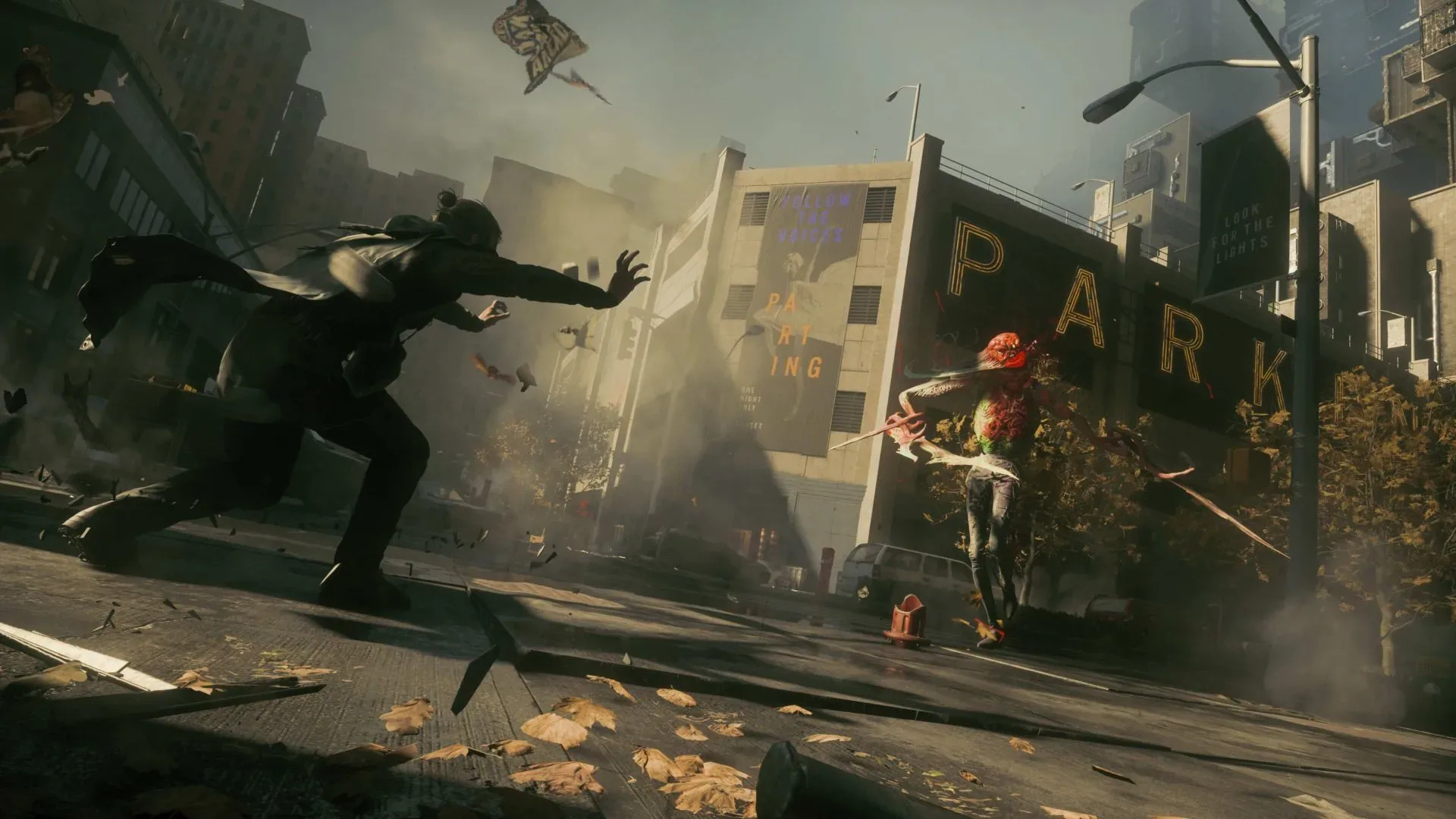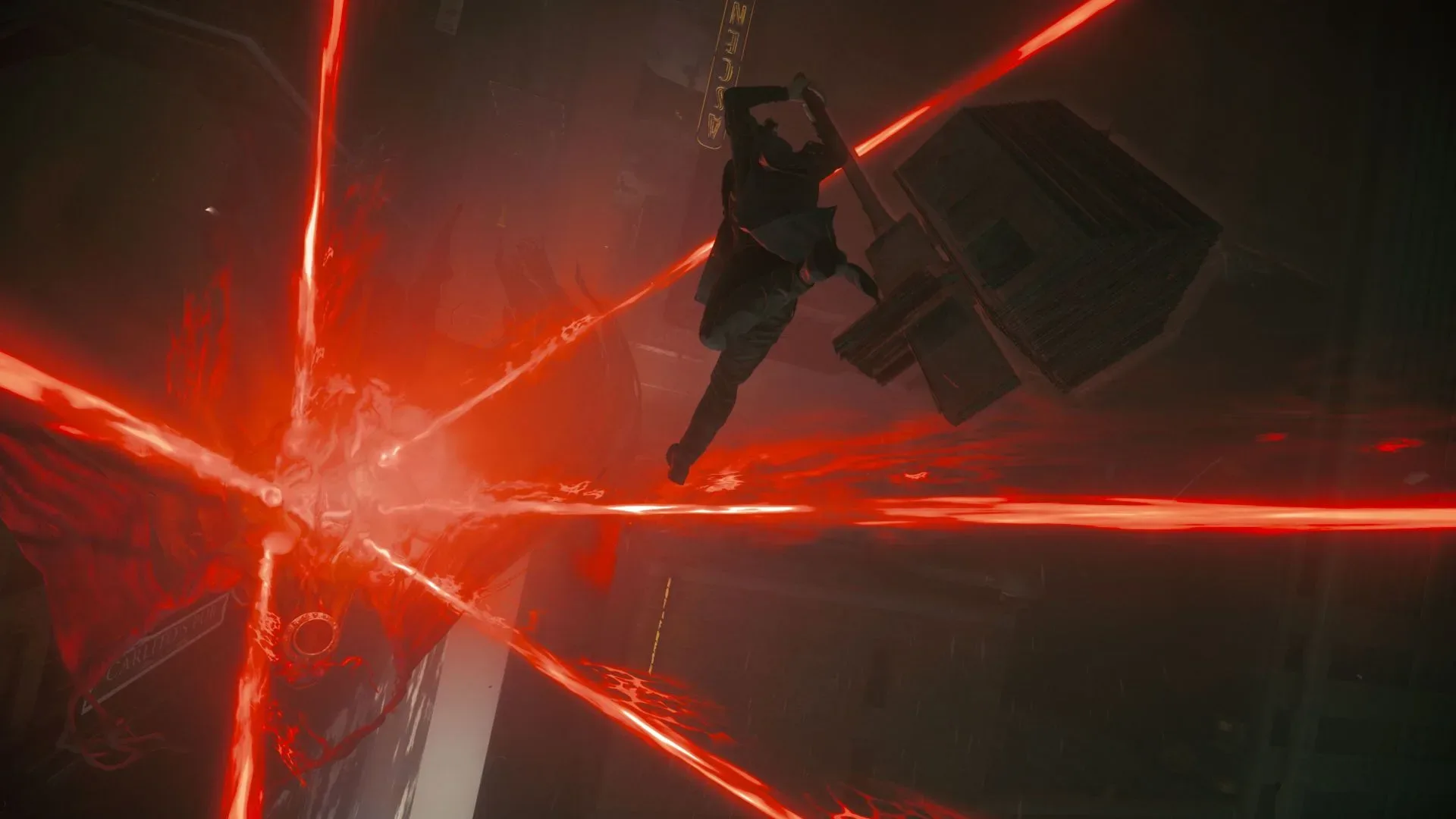
Control Resonant is taking an unusually specific approach to game difficulty: rather than asking players to choose a single blanket setting such as Easy, Normal, or Hard, Remedy plans to let them alter individual pieces of its combat challenge. The forthcoming sequel’s options are described as a granular control panel, covering variables including enemy projectile speed, dodge timing, incoming and outgoing damage, guard-breaking timing, off-screen enemy pressure, and melee targeting assistance.
The important detail is that these controls are not presented solely as a way to reduce challenge. Players will apparently be able to turn the same dials in either direction. Someone unable to react comfortably to a narrow perfect-dodge window can widen it; someone who wants a more punishing fight can make it tighter. That basic symmetry is what makes the proposal more interesting than a conventional menu of presets. It treats difficulty as a collection of distinct interactions, not one universal test of whether a player is “good” at a game.
Remedy’s stated preference is still for players to initially encounter Control Resonant in its intended balance. The premise is not that a default experience is meaningless, or that carefully tuned combat should be discarded before it has been sampled. Rather, the studio’s position is that players should have a way through when a particular mechanic becomes the barrier between them and the rest of the game.
Why one difficulty setting cannot solve every problem
Traditional difficulty choices are useful shorthand, but they tend to change several parts of a game at once. Selecting Easy might lower enemy health, reduce damage, change aggression, or adjust resource availability in one package. That can help many players, but it can also solve the wrong problem.
A player may understand an action game’s resource economy perfectly well yet struggle with fast reactions or precise controller inputs. Another may enjoy close-range combat but find numerous attacks arriving from off-screen visually overwhelming. A third may want every demanding timing check intact while finding a boss’s health or damage output excessive. Those are different forms of friction, and a single global setting cannot reliably distinguish among them.
Control Resonant’s proposed controls address that distinction directly. Projectile speed concerns how quickly a player must perceive and answer danger. A dodge window is the amount of time in which an evasive input counts as successful. Guard-breaking timing governs the opportunity to interrupt or defeat a defended enemy. Melee magnetizing, meanwhile, appears to make close-range attacks connect more readily by reducing the positional precision required. None of those adjustments necessarily needs to alter every other combat system.
That matters because a broad reduction in enemy health can make encounters shorter without making the player’s actual sticking point more manageable. It may also erase an element that another player enjoys, such as planning resources over a longer fight. A focused adjustment can preserve more of the combat structure while reducing one specific demand.
Accessibility is not one slider
The same logic applies outside combat. Control Resonant is also set to include colorblind modes, adjustable subtitle and text sizing, motion-sickness options, multiple volume sliders, and a hyperacusis filter. Hyperacusis refers to heightened sensitivity to sound; an audio filter aimed at that issue could be meaningful for players who find particular frequencies or sharp sounds physically uncomfortable or overwhelming.
These settings should not be treated as extras adjacent to the “real” game. Text size affects whether information can be read. Subtitle controls affect whether dialogue can be followed. Motion-related options can determine whether someone can play for long without discomfort. Separate volume sliders allow players to balance speech, effects, and other audio categories to suit their own hearing and environment. They solve different problems because players have different needs.
The distinction also clarifies why accessibility and difficulty are related but not interchangeable. A larger subtitle font does not make a boss easier. A colorblind mode does not remove combat mastery. A more forgiving dodge window may change an encounter’s demands, but that can be the precise adjustment needed to make its tactics accessible without removing them wholesale.
The other half of the panel: making it harder
It is notable that the options are intended to work upward as well as downward. The original Control offered ways to make the game easier; Control Resonant is planned to let players increase challenge across those same kinds of variables. That means faster projectiles, harsher damage relationships, narrower timing, or less forgiving melee assistance can potentially be used by players who want combat that presses harder on the skills they most want to test.
This is not merely a nice gesture toward challenge-focused players. It exposes a weakness in the familiar claim that detailed options somehow reduce the value of difficulty. If a game lets one player widen a dodge window and another narrow it, the menu is not declaring that challenge is unimportant. It is recognizing that the desired challenge differs from person to person—and can differ within the same person from one mechanic to the next.
There is a useful parallel in the wider conversation about how games serve distinct audiences. Warcraft 3’s reported RPG-first direction similarly illustrates the practical difficulty of designing around players who value different things from the same broader genre. Control Resonant’s solution, at least for accessibility and combat friction, is to offer more agency inside a single experience rather than assume one preset captures every preference.
There are limits to what adjustable difficulty can accomplish. A setting can make an input more forgiving, but it cannot guarantee that every game structure suits every player. Nor is every mechanic necessarily neutral: changing a variable may alter a fight’s feel, its rhythm, or the value of a particular tactic. Remedy is not denying that trade-off. Its stated desire for players to try the intended balance first acknowledges that the default remains a deliberate authored configuration.
Designer intent without a locked gate
Arguments about difficulty are often framed as a contest between two absolutes. One side emphasizes the developer’s authored challenge: overcoming failure, learning an encounter, and mastering a fixed system can be a central part of a game’s identity. The other emphasizes that a single hard obstacle should not block a player from a story, world, or later content they have otherwise enjoyed.
Control Resonant’s model offers a more practical middle position. The intended balance exists and is recommended as a starting point. It is meant to be tense, demanding, and rewarding. But it is not enforced as the only legitimate way to proceed once its friction becomes too high—or too low—for a particular player.
“We do have a meticulously crafted, intended experience for CONTROL Resonant. It’s balanced to be tense, demanding, and rewarding. However, our philosophy is straightforward: if you run into a wall and the friction becomes too much, we would much rather you tweak the rules to overcome it than put the controller down and stop playing.”
The strongest part of that position may be what follows from it: Remedy says trophies and achievements will not be gated behind these settings. Players will not have to avoid accessibility or combat adjustments to retain completion credit. That removes an artificial incentive to endure a setting that is not working for them merely to protect a platform profile or prove that their playthrough counts.
Achievement gating can turn an assistance menu into a hidden penalty system. A player may technically be permitted to make an adjustment, yet feel discouraged from doing so if using it prevents ordinary completion recognition. By promising not to lock trophies or achievements behind the options, Control Resonant makes a clearer statement: those systems are part of supported play, not a disqualifying workaround.
What players can take from the approach
For players who want to preserve the developer’s baseline, the suggested path is straightforward: begin at the standard settings and observe what actually causes trouble. If a boss feels overwhelming, it may be worth identifying whether the issue is damage, reaction time, targeting, screen clutter, or another element before moving a control. The same applies if combat feels too gentle; increasing the specific variable that lacks pressure may produce a more satisfying result than adopting an indiscriminate higher difficulty.
- If timing is the obstacle: a wider dodge window may be more relevant than lower enemy damage.
- If visual pressure is the obstacle: settings that reduce the impact of enemies approaching from off-screen may help more than changing health values.
- If close combat is the obstacle: enhanced melee magnetizing may reduce the precision burden of positioning.
- If the game lacks intensity: increasing individual pressures rather than every value at once could better target the kind of challenge a player wants.
- If comfort is the obstacle: subtitle, text, audio, color, and motion settings should be considered independently of combat difficulty.
The key is that these are tools, not rankings. A player who modifies one part of the system has not necessarily removed challenge; they may have made the challenge legible, manageable, or simply more enjoyable. Likewise, a player who increases a setting has not necessarily found the “correct” version of the game; they may have found the one that best matches their interests.
Control Resonant’s options will ultimately need to be judged in the finished game, including how clearly they are explained and how well each adjustment works in practice. Based on the outlined philosophy, though, the sequel is aiming at a worthwhile standard: respect the crafted default, be honest that it cannot fit everyone, and give players precise control rather than forcing them into a false choice between an all-or-nothing difficulty preset and quitting.