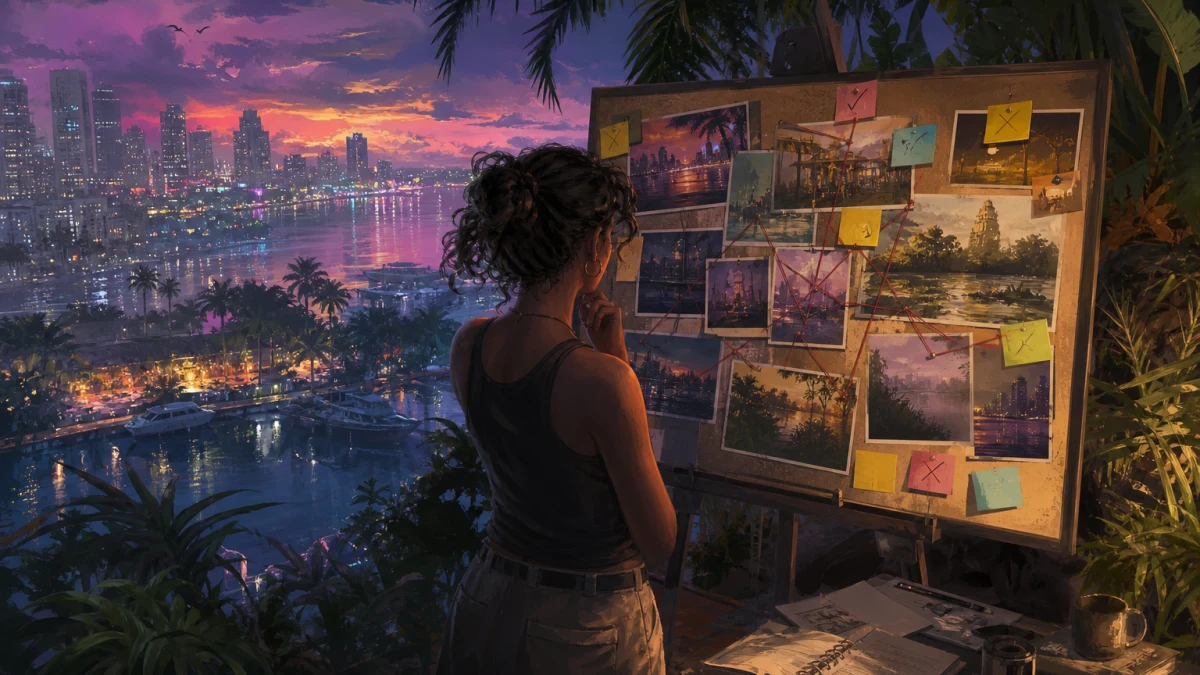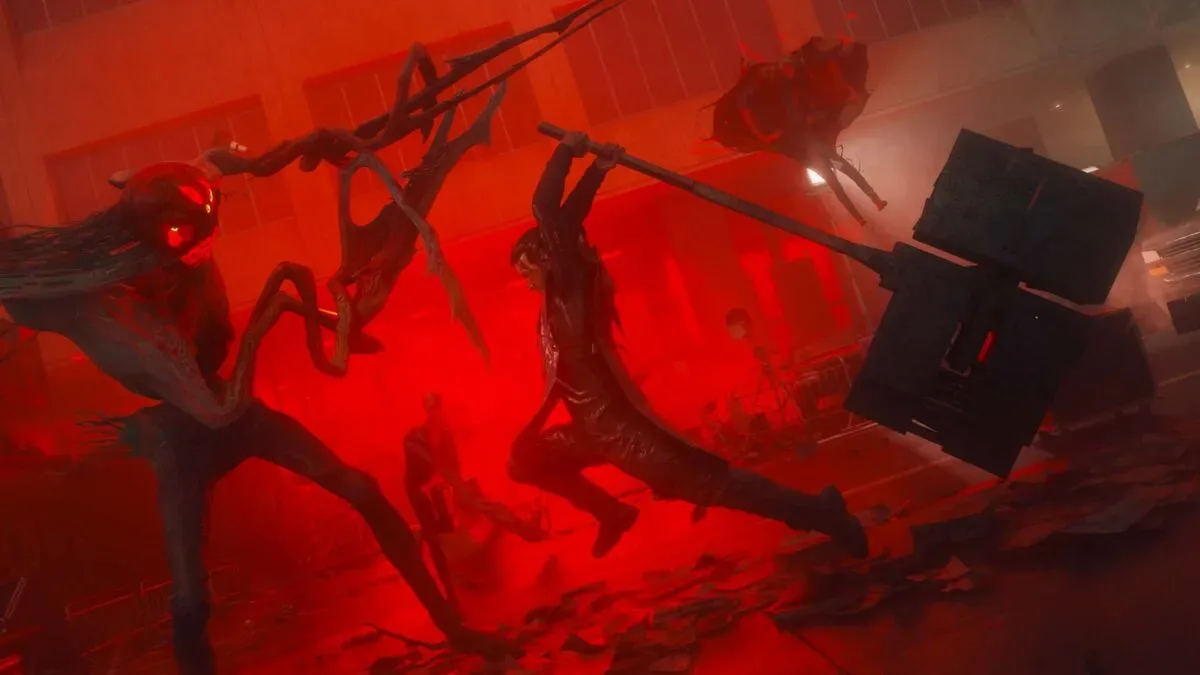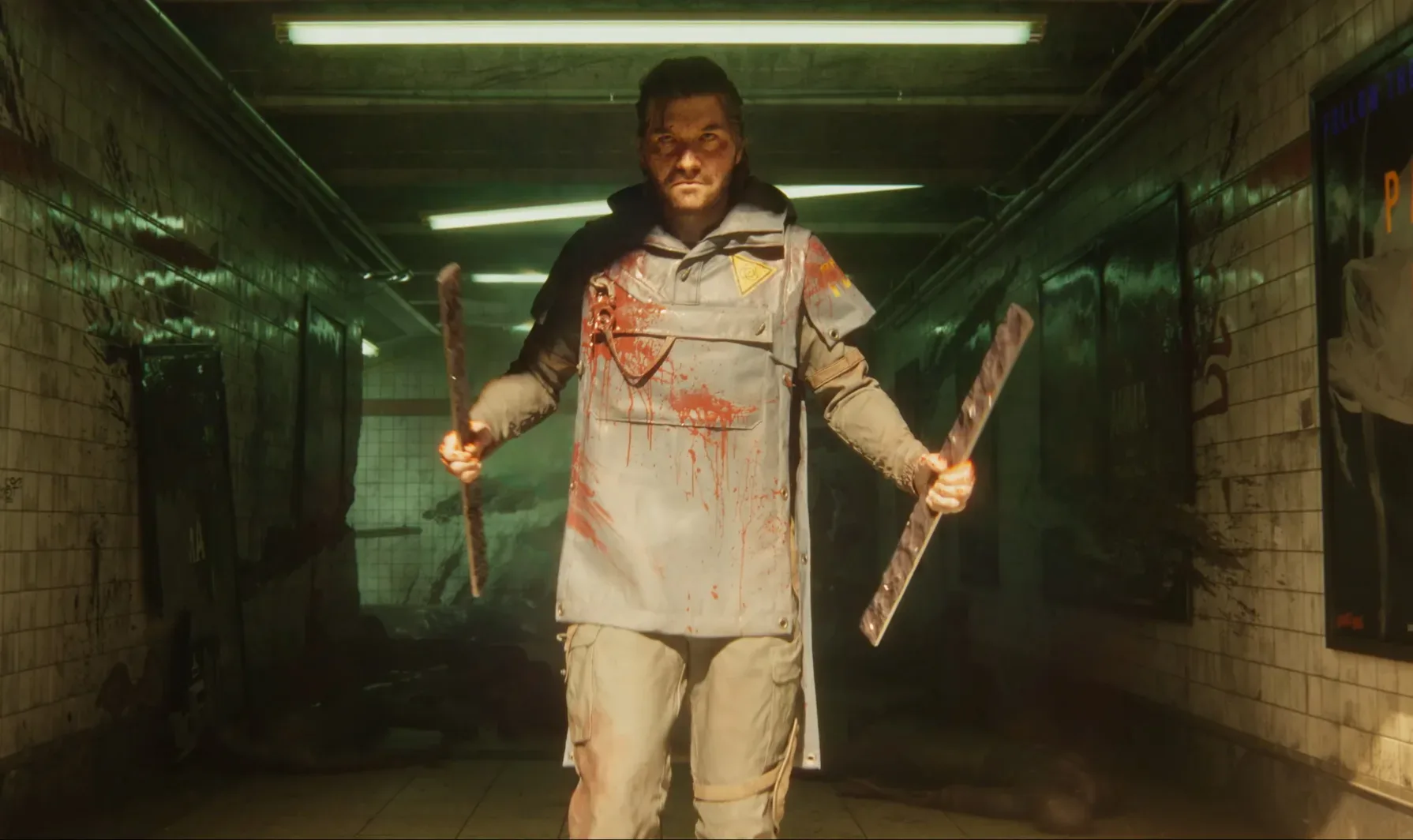
Control: Resonant is choosing suggestion over signage. The open-world action RPG sequel to 2019’s Control, now available on consoles and PC, deliberately avoids the conspicuous yellow paint often used to flag climbable surfaces, doors, treasure containers, or the next required route.
For director Mikael Kasurinen, that absence is not a matter of missing polish or an attempt to make players suffer for the noble art of looking at a wall. It is a central part of the game’s design philosophy. The intent is for players to read the world through its lighting, props, and other environmental cues, then make their own call about where to go and what matters.
“It was a conscious decision, obviously,” Kasurinen said while discussing the approach.
That makes Control: Resonant another entry in the continuing argument over environmental guidance: how much should a game quietly lead the player, and at what point does help become a giant fluorescent hand pointing at the answer?
What “yellow paint” means in game design
Yellow paint has become shorthand for an especially direct kind of visual guidance. A bright stripe on a ledge, ladder, doorframe, or climbable wall tells players that an object is not merely scenery. It is interactive, traversable, important, or a likely route forward.
The shorthand is broader than literal paint. Glowing trails, highlighted objects, objective markers, and unusually bright pathways can serve much the same function. They reduce ambiguity. A player does not need to scrutinize every surface, assess whether a platform is reachable, or worry that a critical route has been hidden too effectively. The game makes the intended interpretation clear.
There is a practical reason such techniques persist. Modern environments can be visually dense, and a game with a large map and substantial exploration can ask a lot of a player’s attention. Clear signposting can prevent frustration, keep pacing moving, and distinguish scenery from gameplay space.
But the cost, as Kasurinen sees it, is that an explicit marker can take the act of discovery away from the player. If a game communicates “go here” too forcefully, the player may still execute the jump, open the door, or follow the route, but the decision has effectively already been made.
Autonomy is the point, not obscurity for its own sake
Kasurinen framed his thinking around three qualities: competence, autonomy, and relatedness. In this context, autonomy means the feeling that the player is making meaningful choices rather than simply processing instructions. Competence concerns the satisfying sense that a player understands and can handle the game’s demands. Relatedness concerns connection—whether to the world, its themes, or the broader experience.
The conflict around navigation cues emerges when these goals pull in different directions. Heavy signposting can support competence by ensuring players understand the immediate task. Yet it can diminish autonomy if every discovery has already been pre-labeled. Sparse instruction can strengthen autonomy, because a route feels found rather than assigned, but it can also leave someone wondering whether they have missed a clue or simply misunderstood the game.
Kasurinen’s preference is clear: the discovery needs to belong to the person holding the controller. He argued that creators still craft the experience and decide which world details deserve attention. The key is to make the player’s response to those details feel like a decision, not compliance with an obvious command.
That is an important distinction. A game can guide without displaying a universal symbol for “correct route here.” A lighted opening can draw attention. The placement of props can create a visual line. An unusual object, contrast in a room, or a break in an otherwise uniform space can encourage investigation. These are still design tools. They are simply softer ones.
In Control: Resonant, Remedy is relying on that softer approach rather than splashing a bright functional label across its world. The result may ask more of the player’s observational skills, memory, and willingness to test a hunch.
A bigger world makes the decision more consequential
The choice is particularly notable because Resonant expands beyond the scale of the 2019 game. It is described as a bigger open-world sequel with a stronger emphasis on exploration. Larger spaces naturally create more possibilities for detours, mistaken assumptions, overlooked paths, and the happy accident of discovering something before the game ever formally asks for it.
In a tightly directed sequence, a blatant marker can feel like a small convenience. In an open-world structure, repeated markers can shape the entire relationship between player and map. They may turn exploration into a checklist of highlighted interactions. Conversely, removing them makes the world more dependent on its own visual language. Players have to decide what looks unusual, useful, reachable, or worth revisiting.
Kasurinen said he wants players to participate in the work of figuring out what to do rather than remain observers who merely look at a series of prescribed destinations. That language gets at the intended emotional payoff: not just progress, but ownership. The valuable moment is not “the route was clear.” It is “I found my way.”
That also helps explain why he wants doubt to remain part of the experience. A player who wonders whether another choice was possible may return, explore an overlooked area, or approach a problem differently. For Kasurinen, those lingering questions are part of what can make a world memorable and worth revisiting instead of something players finish after following a sequence of instructions.
The risk is real: some players may bounce off early
This is not presented as a universally painless solution. Kasurinen acknowledged that Resonant can feel “impenetrable” at first for some people. That is the clearest practical downside of minimizing direct guidance. A person can experience uncertainty as intrigue, but another person can experience the same uncertainty as a stalled evening.
Neither reaction is inherently wrong. The difference often comes down to what a player wants from a particular session. Someone with time and curiosity may enjoy scanning the environment for hints and retracing their steps. Someone seeking a brisk route through a mission may regard unclear visual language as friction. Accessibility and clarity are not enemies of artistic intent, but they are genuine considerations whenever a game chooses ambiguity as part of its identity.
Kasurinen nevertheless calls the approach a risk worth taking. His argument is that a world which requires participation can endure longer in players’ minds than one that continuously directs them through a fixed chain of obvious actions. The objective is not to conceal every answer; it is to preserve the sensation that the player contributed to finding it.
For players, the immediate implication is simple: Resonant’s environments are meant to be read, not just followed. Lighting and objects may carry information that a painted ledge or objective trail would otherwise communicate outright. Slowing down, looking for contrast, and treating unfamiliar spaces as problems to interpret are likely to be more useful habits than waiting for an overt prompt.
Guidance is still there—it is just wearing camouflage
The yellow-paint debate can sometimes flatten into a false choice between total hand-holding and complete opacity. Resonant’s stated approach is more nuanced. It does not abandon direction; it changes the form direction takes.
Environmental guidance is still guidance. Lighting can emphasize a route. Props can frame an interaction or suggest a destination. World composition can move the eye. The player is being led, but ideally in a way that leaves room for interpretation and lets the final movement feel self-authored.
That balance will determine whether the design succeeds for individual players. If the cues are legible enough to reward attention, the game can offer the autonomy Kasurinen wants while maintaining a sense of competence. If those cues are too subtle, the same commitment to player agency can become confusion. The director’s comments show that Remedy is knowingly operating in that tension rather than trying to erase it.
It is also a timely reminder that navigation systems are not merely interface details. They affect pacing, confidence, exploration, replay interest, and the story a player tells themselves afterward. Did they follow directions, or did they notice something, take a chance, and uncover a route that felt personally earned?
Kasurinen wants the latter. He believes the most rewarding version of Control: Resonant is one where players engage closely enough with the world to make discoveries feel like their own decisions—and return because they are still unsure what else they might have missed.
For another lens on how games communicate systems, player expectations, and uncertainty, see this breakdown of what has and has not been confirmed about GTA VI gameplay systems.