Control Resonant faces an awkward sequel problem: it expands beyond the Federal Bureau of Control’s unforgettable headquarters, but that larger canvas appears to weaken the exact quality that made Control so distinctive. The original game turned an anonymous, imposing office building into an engine for dread, surprise, and discovery. Resonant begins in that familiar environment, then moves quickly into a glitched version of Manhattan. On paper, an altered city should offer a much bigger stage for the series’ supernatural oddities. In practice, the early stretch is described as a laborious trek through streets and rooftops that are hard to distinguish and easy to forget.
That does not mean Resonant is presented as a total miss. Its latter half reportedly becomes as strange and memorable as the original game at its best. The issue is structural: players must spend a great deal of time crossing the least compelling part of the game before arriving at its strongest material. For a sequel to a game celebrated for an immediate and unusually cohesive atmosphere, that is a meaningful trade-off. A setting is not merely a visual backdrop. It can establish pacing, provide navigation cues, shape the player’s emotions, and make even repeated traversal feel purposeful.
The Oldest House made the ordinary unsettling
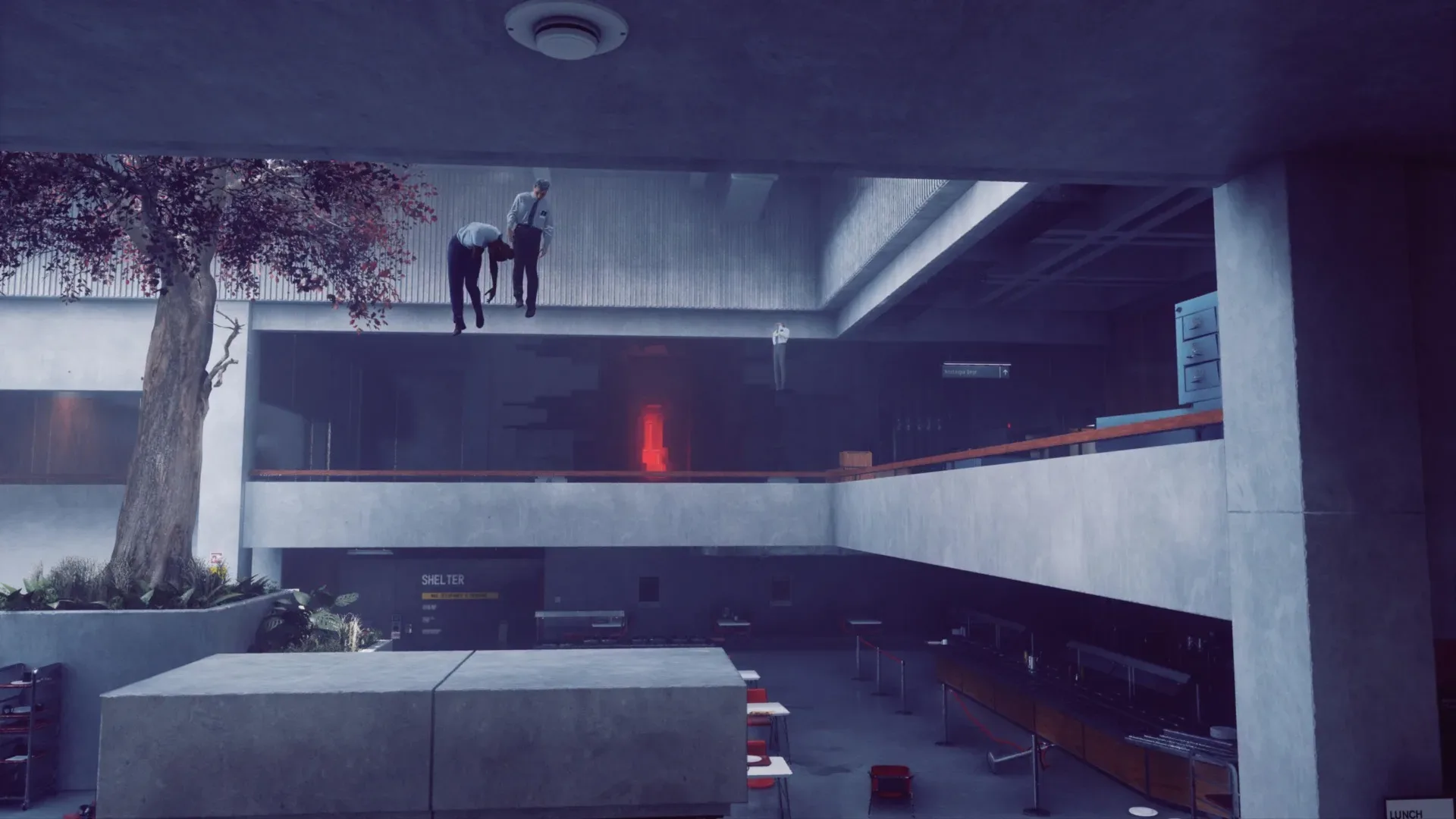
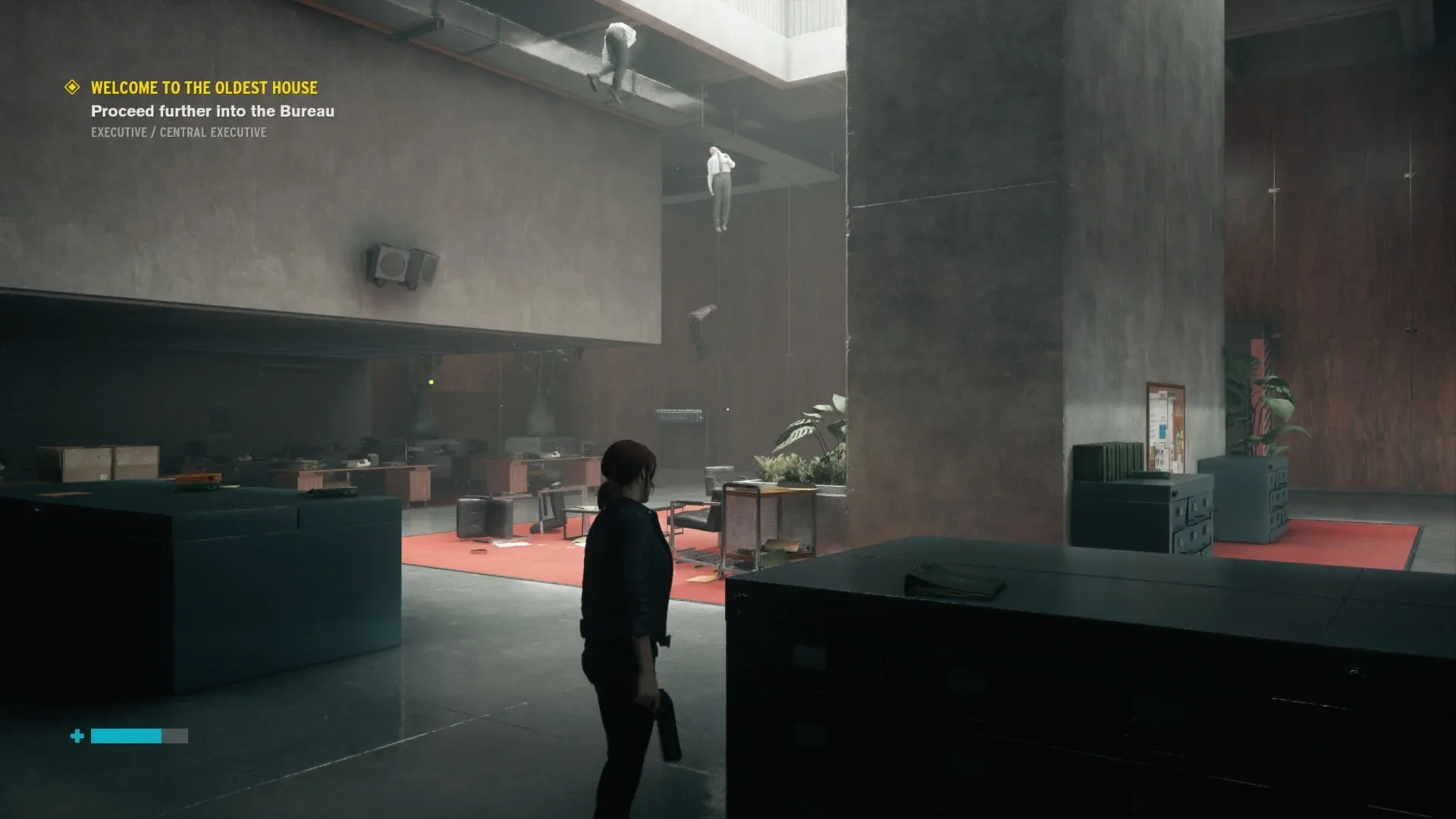
The first Control is set largely within the Oldest House, headquarters of the Federal Bureau of Control, the secretive agency investigating inexplicable phenomena. Its outwardly mundane institutional spaces are fundamental to the premise. The building draws on the severe look of Brutalist architecture: concrete-heavy forms, muted surfaces, blunt geometry, and an impersonal scale. It resembles the kind of office complex that can feel austere even before anything supernatural happens.
That familiarity is the important part. The Oldest House does not begin by looking like a conventional fantasy castle, a laboratory packed with conspicuous gadgets, or a city built for spectacle. It resembles a place associated with paperwork, hierarchy, fluorescent lighting, and stagnant careers. That baseline gives the game room to create contrast. When physics begins to fail, the failure has weight because the surroundings initially feel so restrained.
Employees in office clothes hanging motionless above a hall are disturbing partly because the hall still reads as a workplace. A saturated red light thrown across corridors becomes more alarming because it intrudes on gray concrete and standard office furniture. Rooms that bend, fold, or connect in impossible ways retain their power because they never entirely stop being rooms that seem meant for administrative work. The strange does not replace the mundane; it contaminates it.
This is a useful definition of the term liminal space in this context. The term is often used loosely for any empty or eerie environment. More specifically, it describes a transitional or familiar-yet-dislocated place that produces unease because it is recognizable but somehow wrong: a vacant hallway, a deserted lobby, or an office after its normal social purpose has vanished. The Oldest House operates in that mode. Its architecture is not frightening only because it is impossible. It is frightening because impossible architecture gradually erupts inside an environment players already understand.
Why escalation mattered more than sheer weirdness
The Oldest House’s greatest design strength is that it supports escalation. At first, its drab offices and public-facing institutional rooms establish a consistent physical and emotional vocabulary. As the player moves deeper inside, the game increasingly bends that vocabulary. The building’s shifting geometry, crimson spaces, and suspended workers signal that the rules are changing. Yet the administrative identity of the place remains visible enough to anchor the experience.
That progression also connects environment to gameplay rhythm. Increasingly difficult encounters, further penetration into the Bureau’s mysteries, and more extreme spatial distortions develop together. The player is not simply being shown stranger rooms one after another. The game’s growing unreality feels connected to the act of advancing. Environment, challenge, story, and mood reinforce each other.
Related coverage includes Control Resonant's Manhattan Loses the Unsettling Precision of the Oldest House.
This is the distinction between a setting that is simply unusual and one that is integrated into a game’s structure. An integrated setting does more than look memorable in screenshots. It tells players where they are, conveys a game’s themes, and makes progress feel like a journey through an evolving system. The original Control evidently achieved that unusually well. Its central building was at once an office, a maze, a supernatural presence, and a steady source of visual contrast.
There is a related appeal in Backrooms-style horror, which the Oldest House resembles in broad aesthetic terms. The unsettling force in such imagery comes from banality pushed slightly out of alignment. Empty, repetitive, featureless space creates tension before a direct threat arrives. Once the environment introduces an obvious break from normality, that break hits harder. Resonant’s Manhattan may aim for its own version of this dislocation, but repetition alone is not necessarily enough to create useful unease.
A larger city can create smaller-feeling spaces
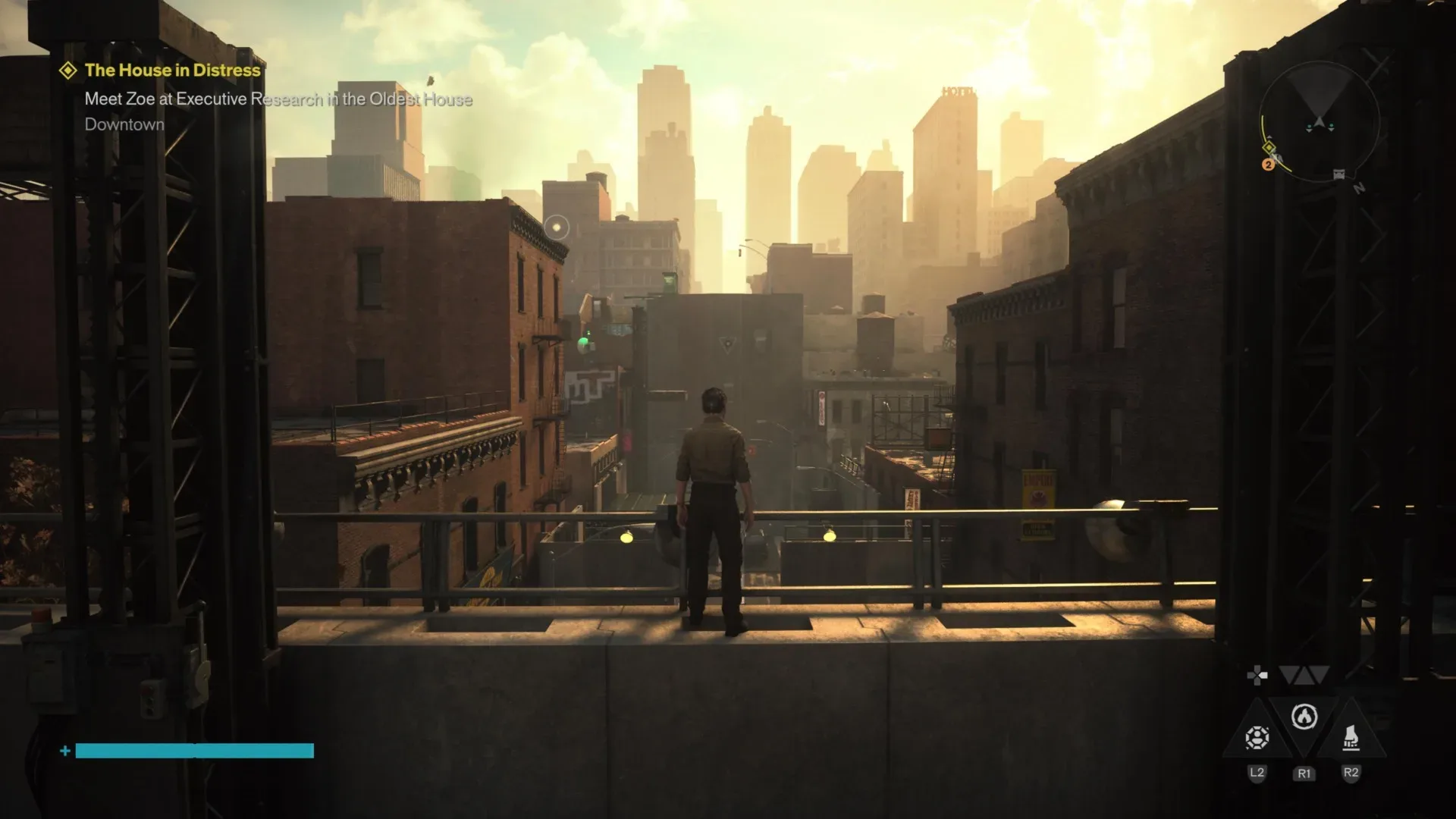
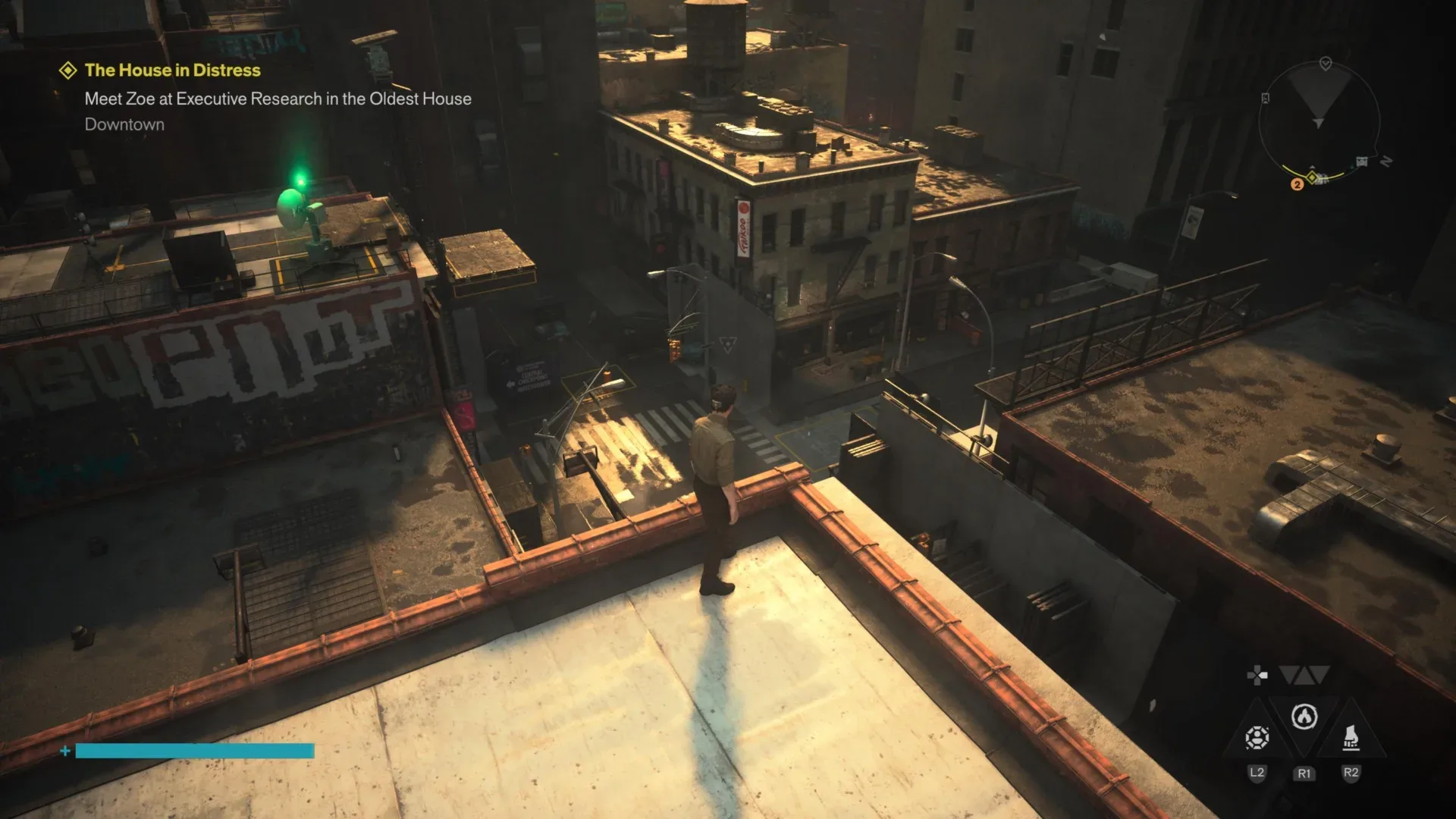
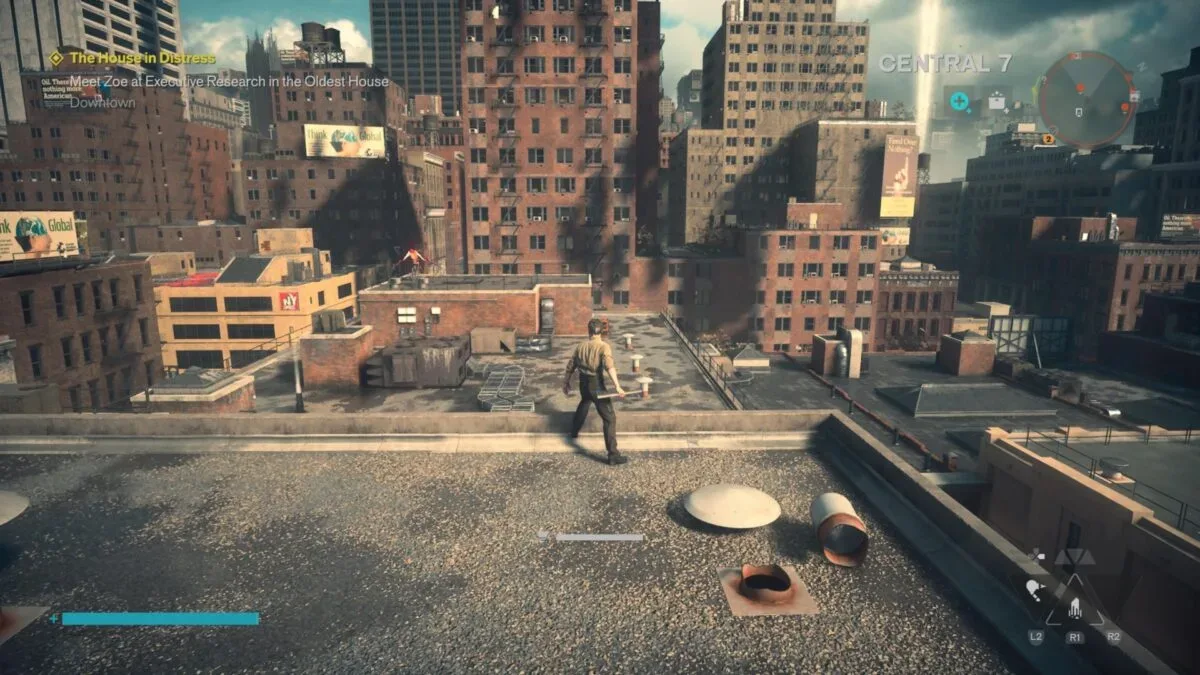
Resonant’s Manhattan is described as a warped, glitching version of New York, but its urban identity reportedly does not come through clearly. Repeated storefronts and signs, recurring businesses, and buildings without sharply differentiated architectural character make block after block blur together. Rather than reading as a particular city distorted by paranormal forces, it can resemble the kind of generalized open-world city that has populated games for decades.
That creates a practical problem as well as an aesthetic one. Environmental legibility is a design term for how easily players can read and remember a place. Distinct landmarks, varied silhouettes, recognizable districts, and clear sightlines help people orient themselves. They reduce the mental drag of moving between missions. A player should not need a literal map to build a rough mental map.
When rooftops overlook streets that all seem interchangeable, a city can feel larger without feeling richer. Objectives might be scattered across the map, but scattering activities is not the same as making travel rewarding. The result described here is a sense of busywork: movement performed to reach the next meaningful event rather than movement that is meaningful on its own.
Open-world design can use repetition intentionally. Reused assets, empty streets, and familiar signage can all communicate alienation, simulation, bureaucratic sameness, or urban abandonment. Resonant’s vacant-feeling city may even be making a deliberate comment on unusually quiet streets during the pandemic era. Intent, however, does not automatically solve the player-experience issue. If deliberate sameness makes routes difficult to remember and traversal feel like a chore, the thematic idea competes with the game’s momentum.
That is especially risky for Control. The series’ weirdness has not depended on scale alone; it has depended on precision. The Oldest House’s generic office material was purposefully selected because it made every escalation more vivid. A generic city, by contrast, can feel generic in an unintended way. Instead of appearing like an oppressive, uncanny imitation of Manhattan, it risks looking assembled from anonymous urban-game components.
The sequel’s opening carries an outsized burden
Resonant reportedly returns to the Oldest House at the beginning, including the rooms where the original starts, before moving outside. That sequence naturally invites comparison. It also asks the city to immediately justify replacing one of modern gaming’s most distinctive fictional locations. The contrast is not kind to the new environment when it offers little early sense of place, even if its later sections eventually become far more imaginative.
First impressions matter disproportionately in games built around exploration. Early areas teach players what the world values. If the initial hours emphasize lengthy trips through a city that appears empty, repetitive, and short on recognizable landmarks, the player learns to associate the experience with navigation friction. Strong later material can change the final assessment, but it cannot erase the hours required to get there.
That friction is why the criticism is more substantial than a preference for interiors over cities. A city can be intimate, surreal, and readable. An open structure can use major landmarks and carefully differentiated spaces to sustain a strong sense of direction. Likewise, an office building can be repetitive and tedious if its design provides no variation or escalation. The concern is that Resonant’s early Manhattan reportedly combines a broad layout with insufficiently specific visual identity, producing travel that feels like labor rather than suspense.
What this says about expansion in sequels
Sequels often interpret success as an instruction to go bigger. More territory, a broader map, and a higher number of destinations are easy ways to signal ambition. But a larger play area can dilute a game whose strength was concentration. Control made a single institution feel inexhaustible because that institution could transform while remaining thematically coherent. Its containment was a creative advantage, not an obvious limitation waiting to be removed.
Resonant’s apparent arc leaves room for a complicated verdict. The game reportedly does find a later stretch of surrealism worthy of its predecessor, suggesting its creative voice is still present. Yet reaching that point demands patience through an opening and middle defined by rote open-world movement. For players who prize the original’s atmosphere and carefully controlled progression, that may be a harder bargain than a sequel’s eventual high points can fully repay.
It is also a reminder that memorable game worlds are not defined by realism or surface scale. They are defined by the relationship between space and feeling. The Oldest House was memorable because its lifeless offices, imposing concrete, and familiar routines gave impossible sights a foundation. Resonant’s Manhattan may have a larger geography, but size cannot substitute for that relationship. A city becomes strange when its details are specific enough to be recognized before they are distorted.
For more on why a game’s distinctive setting can be central to its wider cultural identity, see this discussion of the challenges surrounding BioShock film talks. The medium’s strongest worlds do not merely provide scenery; they give every corridor, landmark, and transformation a particular reason to matter.