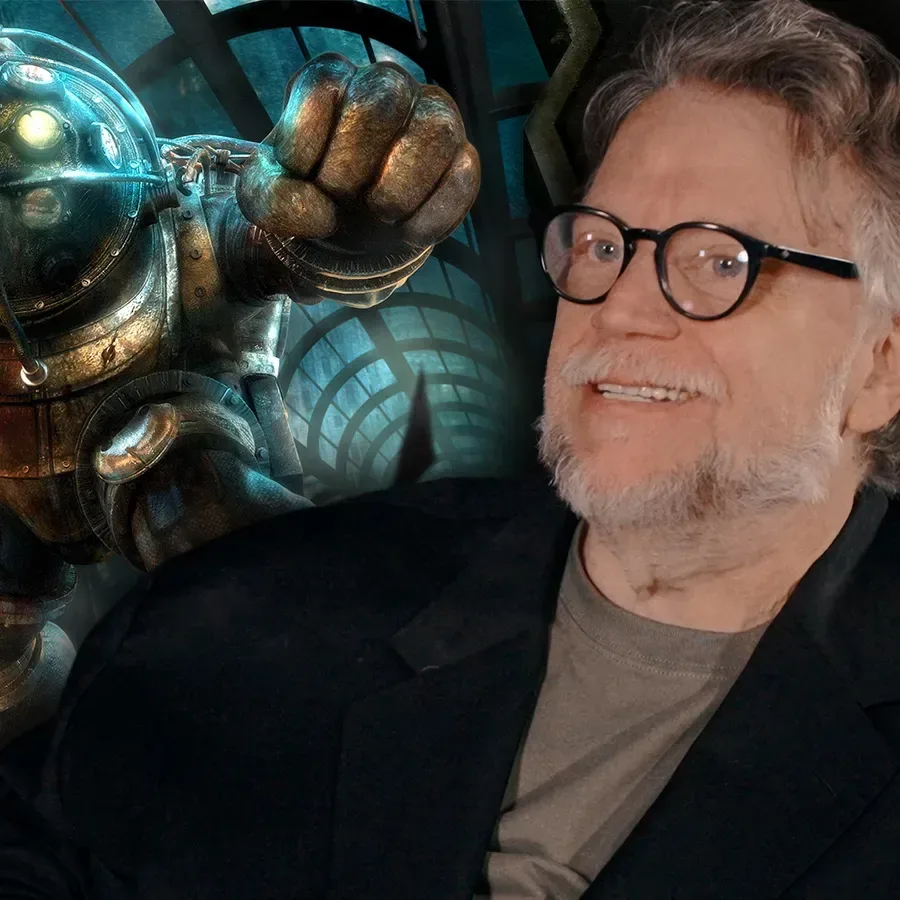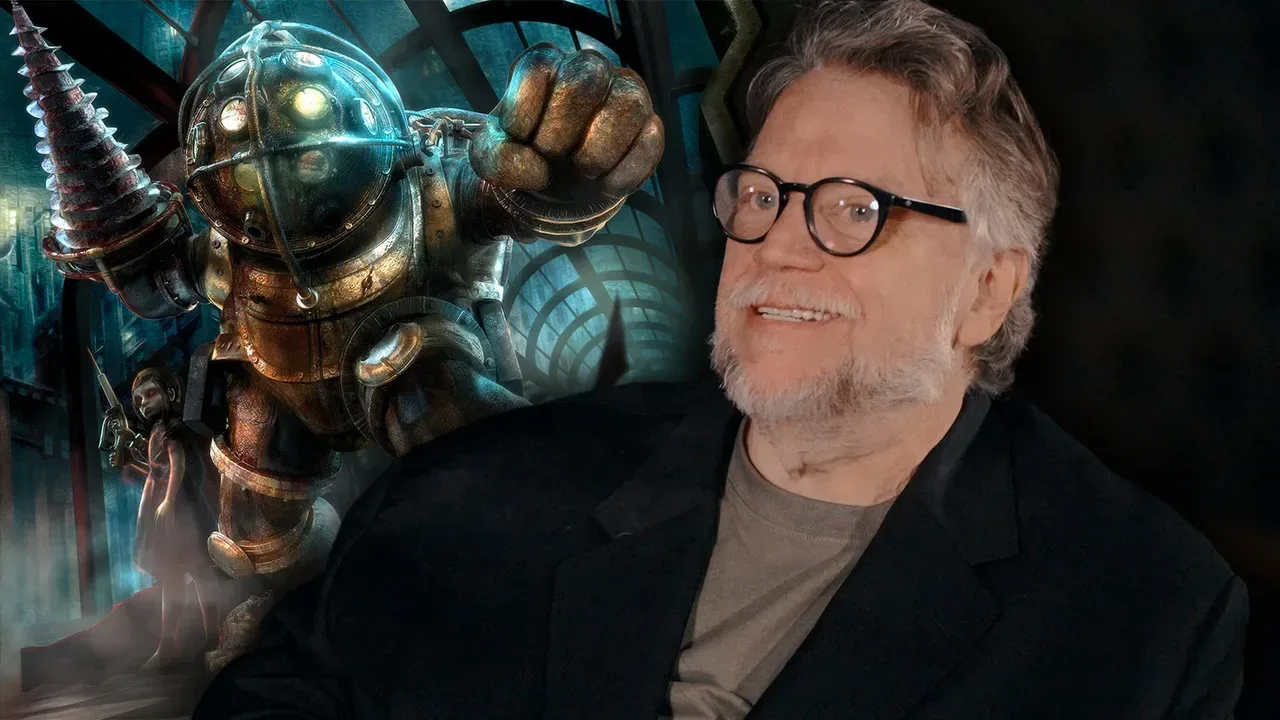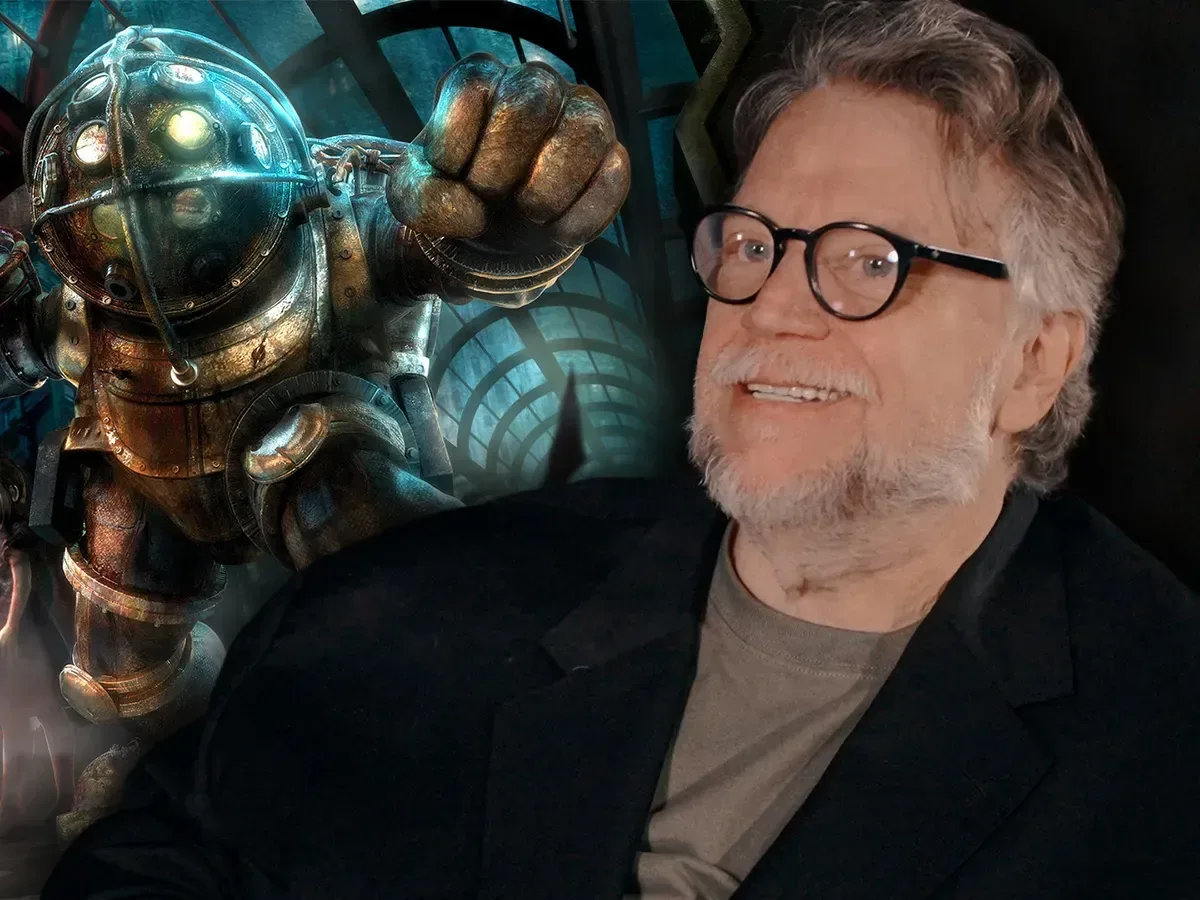
Guillermo del Toro has confirmed that he was involved in early work around a BioShock movie adaptation, ending years of speculation about his connection to the unrealized project. It never reached the screen, and del Toro’s account makes clear that its demise was not simply a quiet case of development losing momentum.
Discussing whether he would take on a game-to-film adaptation, del Toro said conversations concerning BioShock and another game became exceptionally difficult. He characterized the calls as contentious and among the most disastrous discussions of his career. He did not identify the people involved, explain the disputed issues, or say precisely how far the proposed film progressed. Those missing details matter: there is no basis here to assign blame, describe a finished screenplay, or presume what kind of BioShock film might have resulted.
What is clear is the practical outcome. The project was abandoned before an adaptation was made, and the experience appears to have sharply reduced del Toro’s appetite for pursuing another video-game film. His blunt answer when asked about doing so again was: “So no, f**k no.”
Why del Toro sees games and films as fundamentally different
The comments are more than a behind-the-scenes anecdote about a cancelled genre project. Del Toro framed the problem as one of form: games can look cinematic without working like cinema.
For more context, explore Your Gaming Ethernet Cable Doesn’t Need to Cost a Fortune to Do Its Job.
A film audience follows a fixed sequence of scenes selected and paced by the filmmakers. A game player performs actions, navigates spaces, solves puzzles, and may be presented with choices or routes. Even when a game guides players toward an intended destination, participation shapes the feeling of reaching it. That distinction is central to del Toro’s objection. A movie can borrow a game’s world, themes, visual language, or plot foundation, but it cannot simply carry over the player’s role.
Del Toro pointed to the difference between watching a camera move through a setting and inhabiting a system that lets a player investigate and assemble understanding. In this context, player agency means the sense that a player’s input matters—whether that input is choosing a path, finding information, or completing a puzzle. A film can depict a character making choices, but the viewer does not make those choices.
That does not mean an adaptation is inherently impossible. It means the creative work is translation rather than replication. A film version would need to decide what it is preserving: a setting, a particular character arc, an atmosphere, a philosophical question, or a sequence of events. Trying to preserve everything a game does can create a story that has plenty of lore but little room for a film’s own rhythm. Conversely, stripping away the interactive structure can leave fans asking whether the result still captures the appeal of the game.
Related coverage includes Guillermo del Toro Says BioShock Movie Talks Collapsed After 'Disastrous' Calls.
The “mandala” approach to game structure
Del Toro illustrated his point with Insane, the dark, cinematic game trilogy he once developed that was never released. He described its structure using the term “mandala.” His explanation was not a claim that players would literally have unlimited freedom. Instead, it described a design goal: make a game feel like an open, inexhaustible sandbox while quietly directing the player toward necessary outcomes.
A sandbox game structure generally refers to a design that gives the player room to roam, experiment, or approach objectives in varied ways. But freedom in a game is often carefully bounded. Designers must make sure players can find critical information, reach important events, and continue through the experience. Del Toro’s description recognizes this balancing act: players can be encouraged to feel ownership over a route while the game’s underlying structure keeps the narrative from breaking apart.
That is a useful lens for understanding why he sees a major divide between game design and filmmaking. In a game, the structure has to account for what the player may do. In a film, the structure accounts for when and how the audience is shown events. Both require direction, pacing, visual storytelling, and emotional payoff. But the tools are not interchangeable.
For a property such as BioShock, that gap would be especially consequential. The name evokes a game experience rather than merely a setting or a list of plot points. Del Toro’s remarks do not reveal what his team intended to adapt, but they do underline why a familiar game premise alone would not settle the film’s hardest creative questions.
A long-running possibility finally clarified
Del Toro’s involvement had been rumored for years. In 2017, he had already expressed interest in seeing BioShock brought to the big screen after an earlier attempt associated with Gore Verbinski failed to materialize. The new comments provide a firmer answer to one part of that history: del Toro did explore an adaptation, and it did not get beyond the early stages.
They do not establish that del Toro directed the project, that it entered production, or that there was a completed version waiting to be made. “Early concepts” is an important limitation. Entertainment development can encompass broad creative discussions, treatments, pitch materials, or preliminary conversations long before a production is actually moving forward. The distinction helps explain how a prominent filmmaker can be genuinely involved in a project that audiences never see.
The other important limitation is that del Toro referred to calls about “a couple of games.” While he directly connected the experience to adapting BioShock, he did not fully unpack which discussions applied to which project. The available account supports the conclusion that the BioShock effort collapsed amid difficult conversations; it does not support filling in a more detailed timeline.
Del Toro’s complicated record with games
The filmmaker’s refusal to make another game does not come from disinterest in the medium. He has been associated with major game projects including PT and Death Stranding, and he has spoken warmly about Hideo Kojima’s work. Del Toro described Kojima as a “pure artist” focused on stories, while also emphasizing that the vast majority of what PT became was Kojima’s idea rather than his own.
That distinction offers a more precise reading of del Toro’s position. He is not dismissing games as artistically inferior to film; quite the opposite, his comments treat game design as a specific craft with its own demands. His caution is about entering that craft as the person responsible for building it. Insane appears to be the lasting warning sign. It was conceived as a trilogy with ambitious goals, but it was not released.
Del Toro said that, after Insane fell apart, he later encountered ideas in other games that resembled concepts his project had pursued. His reaction was notably not to claim ownership over those ideas. He said somebody else had done them and that this was great. Still, seeing comparable ideas arrive elsewhere appears to have reinforced how exposed an unreleased game project can be: years of ambition and development may never turn into a finished work that players can experience.
He remains a player, too. BioShock is among the games he considers a favorite, while he also said he plays Angry Birds almost every day. That combination should not be mistaken for a roadmap to a future game or movie project. The more immediate takeaway is simpler: admiration for games, participation in their culture, and even prior collaboration with game creators do not erase the difficulty of developing a game or adapting one to film.
What fans should and should not take from this
- Confirmed: Del Toro was involved in early concepts for a BioShock movie and the effort did not come to fruition.
- Confirmed: He links its failure to deeply contentious, disastrous calls and now expresses no interest in taking on another game-film adaptation.
- Confirmed: His experience with the unreleased Insane trilogy also contributes to his reluctance to make a game himself.
- Unknown: The subject of the disputes, the identities of the other participants, the proposed story, and how much material was completed.
- Unknown: Whether any of the early concepts could ever be revisited by someone else.
The lost del Toro version therefore remains an intriguing what-if rather than a film with a recoverable outline. His comments are most revealing not because they tease unseen material, but because they articulate the creative friction beneath many game adaptations. A camera can move through a world in both media. The audience’s relationship to that world, however, is built in very different ways.