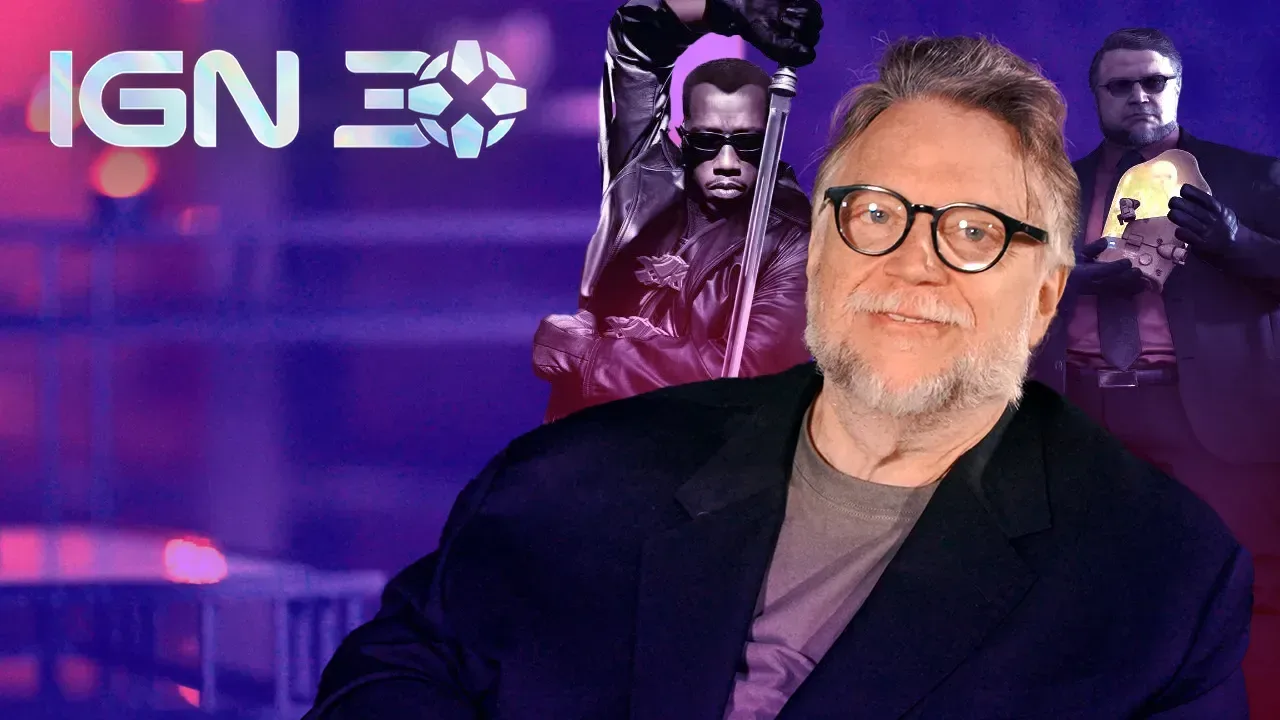
Guillermo del Toro has again ruled out a return to video-game development. The filmmaker, whose name has become attached to tantalizingly unfinished projects as well as a celebrated collaboration with Hideo Kojima, says the answer remains a firm “no” when asked whether he would make another game.
It is an unusually blunt position from somebody who plainly loves games. Del Toro cited Left 4 Dead, Death Stranding, Shadow of the Colossus, BioShock, Journey, Monument Valley, Dead Cells and, with disarming enthusiasm, Angry Birds. Yet admiration for the medium has not softened his reluctance to build within it. His comments point to a practical creative distinction: loving a game’s world, mechanics or emotional impact is not the same as wanting to endure the difficult work of making one.
That distinction matters especially coming from a director often associated with elaborate worlds, creatures and tactile design. Del Toro’s film work is built around the idea that a monster can embody an idea—tragedy, nature, danger or moral corruption—rather than simply serve as visual decoration. Games can clearly provide him with worlds worth exploring, but he described their design demands as fundamentally different from filmmaking’s.
“No, never”: the door remains shut
Asked whether an earlier declaration that he did not want to work on games had changed, del Toro’s response was unequivocal: it had not. He discussed the cancelled project Insane, saying it had aimed high and that, after it collapsed, he later encountered ideas in other games that felt similar to concepts his team had pursued. His reaction was not possessive; he said he was glad someone had made them.
Still, that experience appears to sit behind his refusal. Development is collaborative, lengthy and uncertain, and cancelled games can leave a particularly strange legacy: the audience knows a name and a premise, while the actual design may never have had a chance to become playable. Del Toro referred to himself as an “albatross” of video games—a self-deprecating way to acknowledge that several high-profile game-related ambitions have not reached a conventional finish line.
His best-known connection remains P.T., the horror experience made with Kojima. Del Toro was quick to minimize his own role, crediting Kojima for what ultimately appeared in the game. That is a useful corrective to the instinct to treat famous collaborators as interchangeable authors. High-profile names can generate excitement, but a game’s final form comes from specific creative leadership and an enormous chain of production decisions.
Del Toro nevertheless spoke warmly of Kojima as an artist devoted above all to stories. He also stressed that the friendship itself matters more to him than whether a game comes together, singling out karaoke and shabu-shabu as the real pleasures of spending time with Kojima. It is a charming answer, but it also puts the collaboration in perspective: mutual creative respect does not obligate either person to turn every shared idea into a product.
Why a game’s story is not simply a movie with buttons
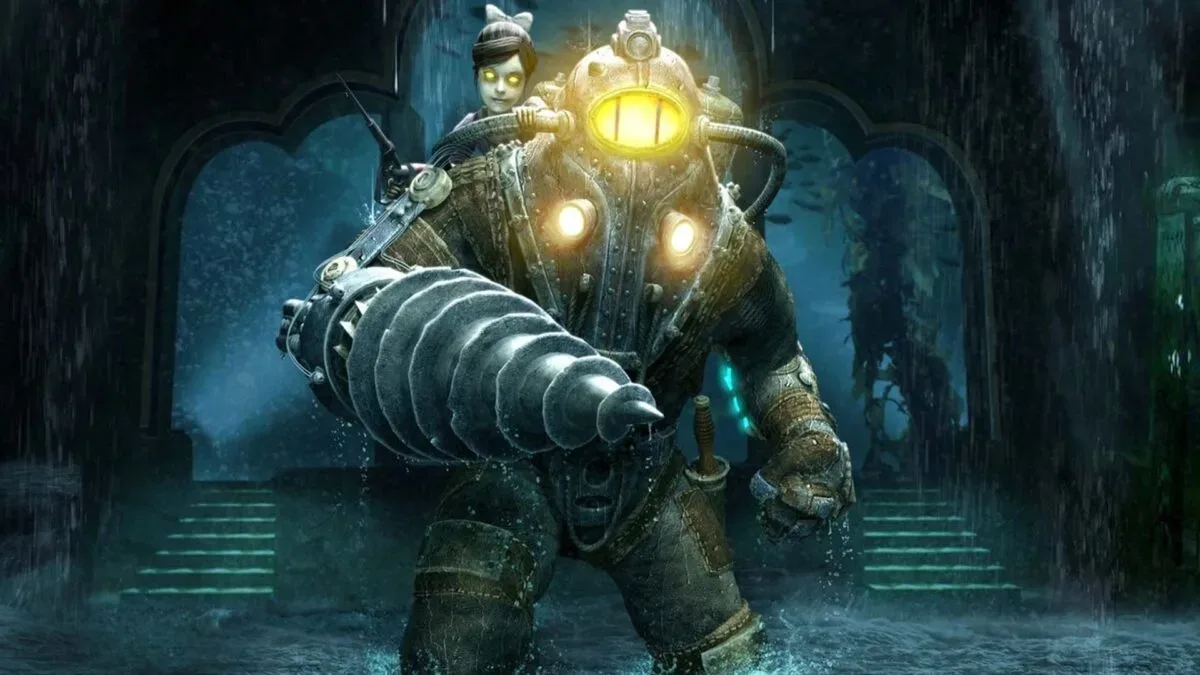
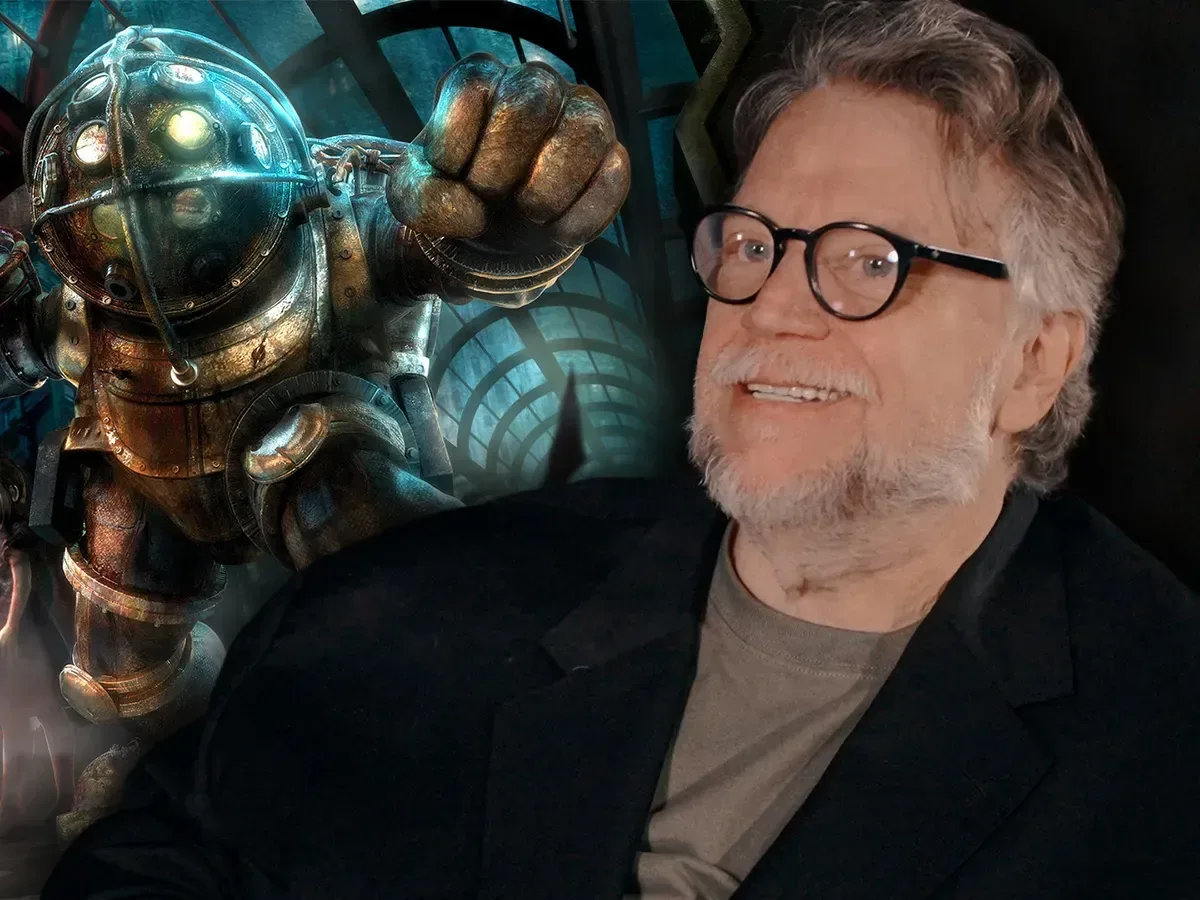
The most revealing part of del Toro’s comments concerns adaptation. He said he had tried to adapt games for film and recalled particularly disastrous conversations connected to BioShock. His conclusion was emphatic: he does not want to pursue it.
Related coverage includes Guillermo del Toro Says He Has No Plans to Make Another Video Game, Reflects on Kojima and BioShock.
His reasoning was more interesting than a simple complaint about meetings. Del Toro argued that the dynamics of games differ from movies even when both use cinematic camera movement, production design and dramatic performances. In his view, games are shaped by solving puzzles, assembling meaning and navigating structures; films do not operate through that same relationship with the audience.
For Insane, he described creating a “mandala” structure. In this context, he was using the term as a metaphor for a design that creates the impression of an expansive, almost limitless sandbox while discreetly steering players through authored routes. The player may feel as if they chose left or right entirely independently, but the designer has constructed boundaries, incentives and pathways that keep the experience coherent.
That is an essential part of game design. A game must account for player agency: what happens if a player explores instead of advancing, misses a clue, repeats an encounter, succeeds unexpectedly or chooses not to engage with an obvious route? A film does not have to solve those problems. Its audience moves through a fixed sequence at a fixed pace. Del Toro’s point is not that one medium is superior; it is that their storytelling tools are different enough that a faithful transfer is rarely as straightforward as reproducing costumes, locations and plot beats.
That perspective also helps explain why a beloved game can be a poor fit for a literal movie adaptation. BioShock, for example, is not only a setting that viewers can admire from a distance. Del Toro called it a world in which he could happily lose himself for ages. The phrasing emphasizes an experience of inhabitation. Turning that feeling into a linear film would require decisions about what is essential, what must change and what player-driven sensations cannot be recreated directly.
It is a useful reminder for audiences debating adaptations. “Accurate” can mean many things: matching a plot point, preserving the central theme, rebuilding an environment, retaining a character’s role, or translating the emotional rhythm of play. Those goals can conflict. Del Toro’s own approach to literary adaptation is to absorb the source material deeply and then make a new work rather than attempt a one-to-one reproduction. But he now appears convinced that game adaptations bring an additional structural obstacle.
A devoted player with a very specific wishlist
Del Toro’s gaming taste is broad, and his answers make the case that he remains engaged as a player even if he no longer wants to develop games. He praised Death Stranding for making him cry and said Shadow of the Colossus left him thinking about intangible subjects. He called BioShock a world he could spend ages in. Those are not comments focused on hardware or spectacle; they are responses to mood, place and feeling.
His response to Dead Cells was more practical. He liked its world and design but disliked having to restart after progressing through many levels. That frustration is tied to the game’s roguelike structure. In a roguelike or roguelite, runs are deliberately repeatable attempts, usually involving loss of some or all immediate progress after defeat. Repetition, learning and adaptation are central to the format rather than an accidental inconvenience.
Del Toro’s request for an option that lets older players return closer to where they left off highlights a real accessibility and time-commitment question. Some players value the tension and mastery that come from starting over; others may be drawn to a game’s art direction and systems but lack the spare time or desire for extensive repetition. Neither preference is a failure to “get” the genre. It is a question of whether a game’s challenge structure fits a player’s life.
He was told that Castlevania might provide the kind of experience he was seeking: an exploration-focused alternative that does not necessarily demand a complete restart after each failure. Whether that particular recommendation becomes a match is unknown, but the exchange captures an important fact about game discovery: describing what you dislike can be as useful as naming a genre you enjoy.
Then there is Angry Birds. Del Toro said he still plays it whenever he has free time and wants perfect results across every available level. It is an endearingly direct expression of completionist drive. Even a creator known for baroque fantasy worlds can be captivated by the clean loop of aim, launch, result, repeat—and by the satisfaction of collecting every star.
Craft, tools and the fear of the “middle”
Although the discussion ranged across films and games, del Toro’s comments on generative AI add context to why he treats creative process so seriously. He argued that filmmaking is not a matter of issuing commands and receiving a finished result. It is messy, physical and responsive: more like a contact sport or a tennis rally than a rigid plan executed without interruption.
His criticism of generative AI was not framed as a prediction about one specific game feature or platform. Instead, he warned that it can quickly produce mediocrity—the “middle”—rather than the hard-won specificity of an authored work. That concern has clear relevance to games, where tools increasingly shape how worlds, art and dialogue can be produced. For a related look at the hardware side of local AI ambitions, see Microsoft’s Surface RTX Spark Dev Box.
Del Toro’s larger argument is about intention and human craft, not nostalgia for difficulty. He has repeatedly embraced the value of explaining process, saying behind-the-scenes material can offer people without access to film school a way to learn. The ideal is not to mystify creation but to show the tools and invite others to do something different with them.
That final idea may be the most constructive takeaway for game creators and players alike. Del Toro may never return to game development, and his attempt to bring BioShock to film is firmly in the past. But he remains an enthusiastic audience member for games with strong worlds, distinctive design and stories that use the medium on its own terms. His refusal is not a rejection of games. It is a recognition that games deserve creators prepared for their particular, demanding craft.