Microsoft has opened preorders for the Surface RTX Spark Dev Box, a compact desktop built around a distinctly non-consumer proposition: giving developers and engineers substantial capacity to run AI workloads on their own hardware. It carries a $6,000 price, with customer shipments set to begin in November.
That price is the headline, and it is hard to sidestep. This is not positioned as a general-purpose Surface PC, a gaming tower, or an affordable route into experimental AI. The Dev Box is purpose-built hardware for teams and professionals whose work calls for large local models, a prepared Windows development setup, and the kinds of memory resources that usually push buyers toward specialized systems or remote cloud services.
Microsoft says the machine can run AI models exceeding 120 billion parameters. That claim gives the Dev Box its clearest reason for existing, while also establishing who is unlikely to need one. For somebody writing documents, compiling modest projects, editing occasional media, or simply playing PC games, its capabilities and price are likely far beyond the practical requirement. For an engineer working directly with large AI models, however, a desktop configured around local execution could be a useful, if expensive, piece of infrastructure.
What Microsoft is putting inside the Dev Box
The Surface RTX Spark Dev Box uses NVIDIA’s RTX Spark N1X chip, paired with 128GB of unified memory and 2TB of storage. The storage can be removed, but the available information indicates that the rest of the machine is not customizable. That fixed configuration makes the product feel closer to an appliance than a traditional enthusiast PC: buyers are selecting Microsoft’s chosen platform rather than assembling a system part by part.
Unified memory means the machine’s processing components draw from a shared memory pool, instead of working with entirely separate pools reserved for the main processor and graphics hardware. In the specific context of AI, memory capacity matters because a model and the data needed to run it must fit into accessible memory. A 120-billion-parameter model is a measure of scale, not an automatic verdict on quality or usefulness, but it does indicate a workload that needs far more serious hardware than an ordinary desktop setup.
The 2TB storage figure is meaningful too, even if it is not the machine’s major selling point. Developers often need space for software environments, model files, project assets, datasets, and multiple versions of work in progress. Removable storage offers at least one upgrade or service path. Still, buyers should recognize the trade-off: memory, chip choice, and the broader core configuration appear locked in at purchase. Anyone whose requirements are likely to change needs to make that decision with care.
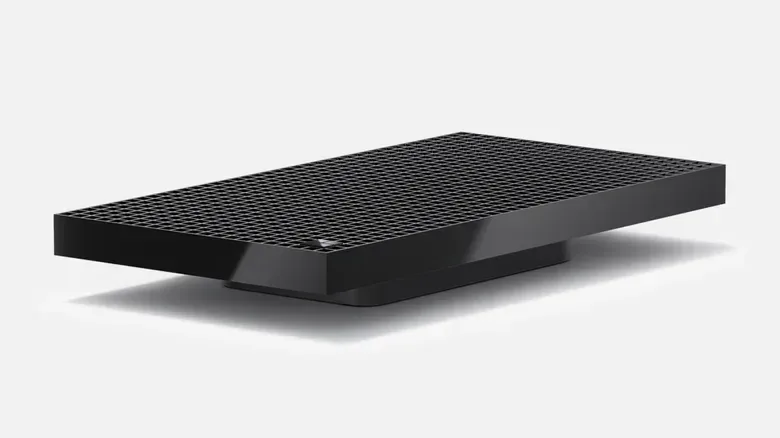
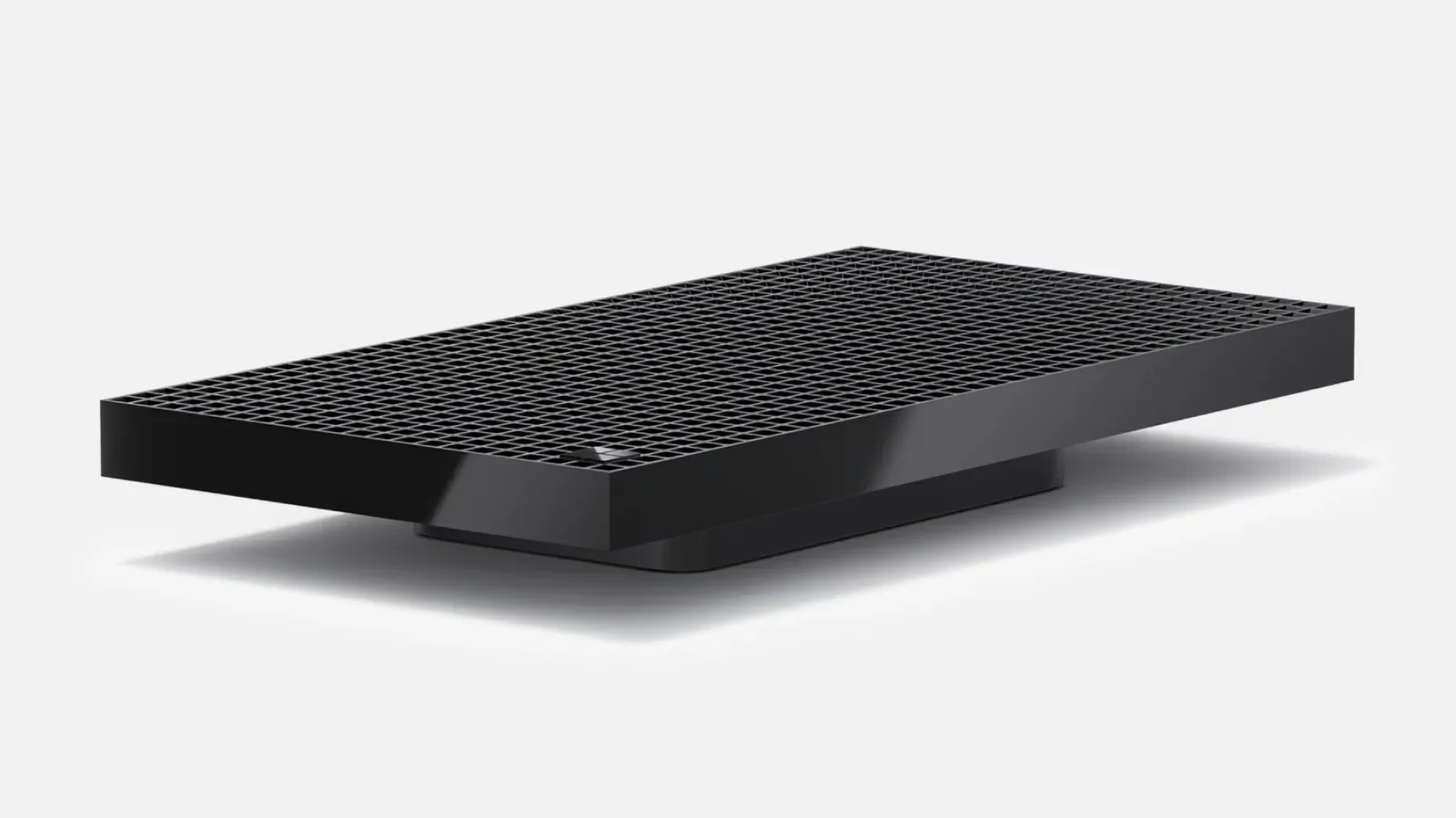
Physically, the Dev Box has an anodized aluminum grille across its top. The rear I/O includes two USB-C ports, one USB-A port, Ethernet, DisplayPort 2.1, and HDMI 2.1b. That selection supports a fairly conventional desk deployment: wired networking, modern display connectivity, and a mixture of newer and legacy USB accessories. It is sensible rather than extravagant, especially for a system whose defining feature is computing capacity rather than a long list of front-facing conveniences.
Local AI is the point, not a bonus feature
The phrase local AI is central to understanding the Surface RTX Spark Dev Box. It refers to AI tasks running on hardware under the user’s direct control, rather than sending every workload to a remote service. Microsoft and NVIDIA are presenting a future where local hardware and cloud computing work together, and this desktop is a high-end expression of that approach.
Running work locally can matter for workflow control. A developer can work against a machine at their desk or within their organization’s environment instead of treating remote compute as the only option. The Dev Box is also meant to make that workflow more immediate by arriving with a defined software stack rather than requiring a new owner to build every foundational toolchain from scratch.
There are limits to what can be inferred from the hardware claim alone. “Able to run” a model above 120 billion parameters does not reveal how quickly a particular task will finish, what precision or configuration is involved, which tools support it best, or how a given developer’s applications will behave. Parameters are a useful shorthand for model scale, but they do not replace task-specific performance information. Prospective buyers will still need to assess whether their own tools, model formats, and working practices suit this system.
That distinction is particularly important as AI language increasingly enters gaming and general PC conversations. A large local model may be relevant to studios, tool creators, researchers, and technical teams, but it is not inherently a gaming feature. The Dev Box is a development machine first. Its display outputs do not turn it into a recommendation for players, just as the presence of a powerful chip does not make every specialized workstation the right home PC.
For readers following the broader PC ecosystem, the device is another sign that the conversation around performance is expanding beyond frame rates and conventional productivity benchmarks. Machines may increasingly be judged by what AI tasks they can host locally, how much memory is available to those tasks, and how well they fit into a cloud-connected development pipeline. That does not mean conventional gaming desktops disappear; it means developers evaluating AI-centric work now have another category to consider.
Windows development tools arrive pre-installed
The RTX Spark Dev Box is part of Microsoft’s Project Zenith lineup and comes with Windows 11 Pro. It also includes a set of developer-oriented software and runtimes: Visual Studio Code, Git, GitHub CLI, GitHub Copilot, and Python.
This bundle speaks to the intended customer more clearly than the exterior design does. Visual Studio Code is a code editor, while Git is used to track changes to files and projects over time. The GitHub CLI provides command-line access to related workflows, and Python is a widely used programming language in software and AI work. GitHub Copilot is included among the preinstalled tools as well.
For a developer, having these pieces present at first boot may reduce initial setup friction. That is valuable, though it should not be overstated. Preinstalled tools do not eliminate project configuration, dependency management, testing, or the work of adapting an application to a particular AI runtime. The convenience is in beginning with an expected baseline, not in skipping the engineering.
It also reinforces that Microsoft is selling an integrated environment: Windows 11 Pro, NVIDIA hardware, sizeable shared memory, removable storage, and familiar coding utilities. In other words, the premium is not only about raw components. It is also about a ready-defined platform intended to slot into professional development work.
A difficult price proposition outside enterprise use
At $6,000, the Dev Box enters a narrow market. Its price creates a straightforward practical question: does an individual developer, small team, or organization have a recurring need for this class of local AI work? If the answer is no, the cost is difficult to justify. If the answer is yes, the calculation becomes more nuanced, involving workflow needs, software compatibility, the value of local access, and whether a fixed-configuration desktop is preferable to other forms of computing capacity.
Microsoft’s pricing also lands in a market where the cost of comparable specialized AI hardware has been volatile. NVIDIA’s earlier DGX Spark AI computer launched at $3,999, while a 128GB version now sells for nearly $7,000. Against that backdrop, the Surface RTX Spark Dev Box is neither a clear bargain nor an unprecedented outlier. It sits squarely in the costly specialist tier, with its own Windows-focused setup and Microsoft software bundle as part of the package.
That comparison should not be read as a direct one-to-one specification judgment. The supplied information does not establish identical configurations, performance, or upgrade options between the systems. What it does show is that access to 128GB-class AI-focused hardware is not moving toward casual-purchase territory. Anyone hoping that powerful local AI boxes would quickly become cheap desktop accessories should temper that expectation.
For companies, the equation can be different. A business may value standardized machines, a known operating system, supportable software tools, local experimentation, and repeatable developer environments. A $6,000 device can be evaluated as workplace equipment rather than a personal splurge. That helps explain why the Dev Box appears targeted most strongly at enterprise customers and serious technical users instead of the wider Surface audience.
The machine’s lack of broad customization becomes part of that same story. Standardized hardware can simplify procurement and deployment, but it can be restrictive for an individual who wants to tune each component. The removable storage offers flexibility where projects grow, yet buyers should treat the 128GB unified-memory configuration as a long-term commitment rather than an entry point to a readily expandable platform.
Why this matters to the wider PC conversation
The Surface RTX Spark Dev Box is notable less because it makes local AI computing accessible to everyone than because it draws a clear line around what the high-end version of that ambition presently costs. Microsoft is offering a desktop designed around local models exceeding 120 billion parameters, but the price puts that capability in professional territory.
For game developers and other software teams, local AI tools may eventually affect asset pipelines, coding workflows, prototyping, and internal experimentation. But the announcement does not establish any particular game-development feature or performance result. The immediate story is hardware availability: a Windows-based, NVIDIA-powered desktop with substantial unified memory and a developer toolkit installed from the start.
For the average PC buyer, the more useful takeaway is simply that “AI PC” covers an enormous range of devices. A $6,000 Dev Box built for large-model work is a world away from a normal desktop marketed with an AI label. Its arrival makes the category easier to understand: at the serious local-workstation end, memory capacity, model support, and software environment can matter much more than the specifications usually used to compare consumer PCs.
Those watching Microsoft’s PC direction can also see the Dev Box as a companion to a broader development-centered strategy rather than a replacement for ordinary desktops. If your interest is still primarily games, established PC news remains focused on the hardware and services that meet players where they are, including the latest Xbox and Game Pass developments. The Spark Dev Box belongs in a different lane: the expensive, highly focused machinery behind software and AI work.