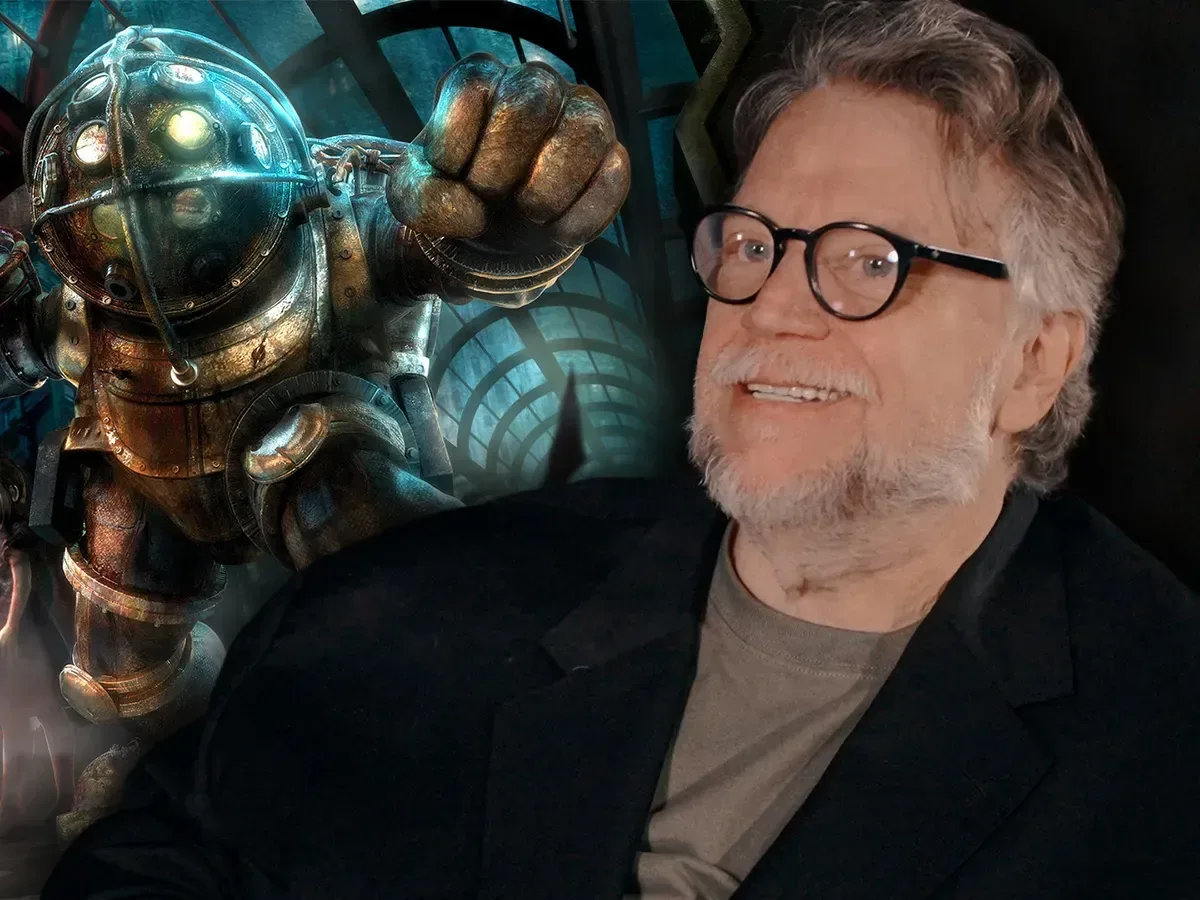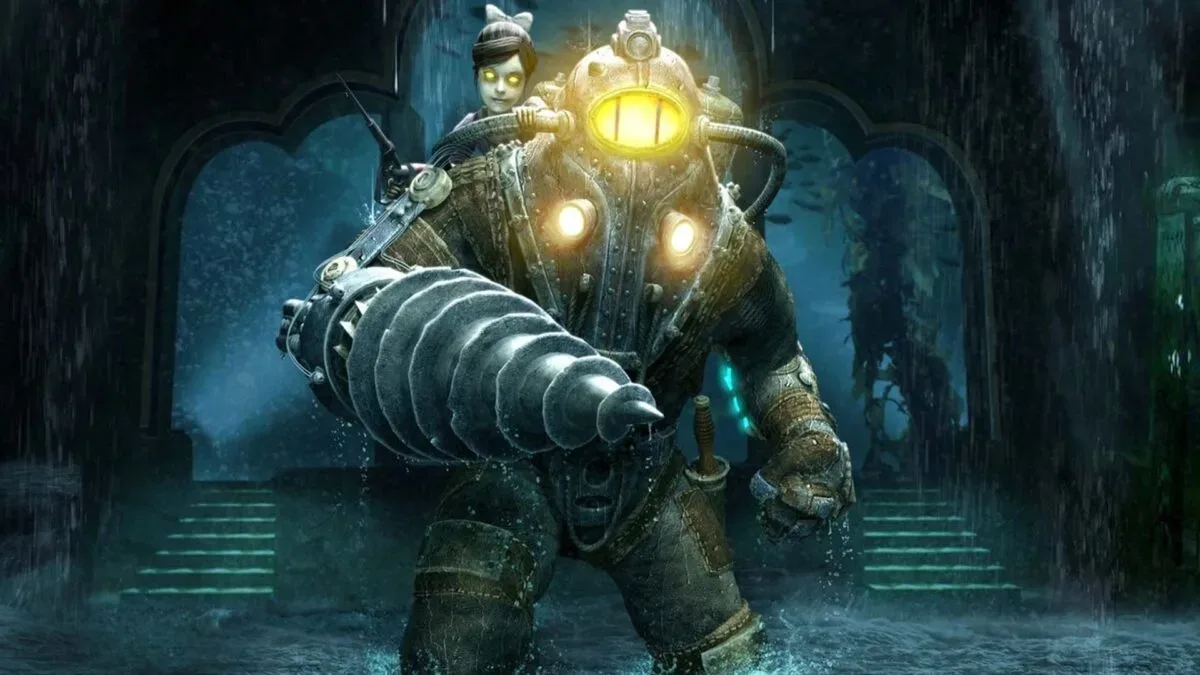
Guillermo del Toro has revealed that he once tried to pursue a film adaptation of BioShock, but the conversations went badly enough that he now sounds thoroughly finished with the idea of adapting video games.
Speaking about whether he would consider turning another game into a film, del Toro said he had tried before and described some discussions around games as contentious. When the subject turned to BioShock, he said there had been several calls and characterized them as among the most disastrous he has experienced.
That does not mean del Toro dislikes the game. Quite the reverse: he spoke warmly of BioShock’s setting, describing it as a world in which he could happily lose himself for a long time. The distinction matters. Admiring a game’s world, mood, or art direction is not the same as agreeing on what a film version should be, who controls its creative direction, or how much of the game’s structure should survive the transition to a linear story.
A game’s cinematic look is not its storytelling structure
Del Toro’s central point was not simply that game adaptations are difficult. It was that games and films ask audiences to participate in stories differently, even when both use elaborate visual design, dramatic camera work, and cinematic presentation.
In a film, viewers follow a fixed sequence of scenes. The filmmaker controls the order of revelations, the rhythm of the edit, and the precise time spent with a character or location. A game can also guide players closely, but it must account for interaction: players explore, attempt puzzles, fail, retry, collect information in a different order, and spend far more or far less time in a particular place than another player might.
Del Toro framed this contrast through his work on the unrealized game Insane. He described constructing a “mandala,” his term for a design that presents an impression of broad, sandbox-like freedom while still steering players through choices toward required outcomes. In game-design terms, that is a useful way to understand guided player agency: a player can choose a route or approach, but the work’s underlying structure keeps the experience from becoming truly unlimited.
A film does not need to create that illusion. Its audience does not have to solve the puzzle or decide which corridor to investigate. Instead, it needs a dramatic path that works at one pace for everyone watching. This is why a faithful recreation of a game’s events can be less important than preserving its themes, atmosphere, and point of view. It is also precisely where creative disagreements can become difficult: one group may want recognizable game material, while another may believe a movie needs a more independent structure.
Del Toro did not detail what was said in the BioShock discussions, who participated, when the calls occurred, or which creative questions caused the breakdown. Those gaps are important. His comments establish that he had conversations about the property and found them deeply unpleasant, but they do not provide a full account of the attempted adaptation or identify a specific disagreement.
Related coverage includes Guillermo del Toro Says BioShock Movie Talks Were ‘Disastrous’.
Why BioShock is an especially complicated adaptation prospect
BioShock is the kind of game that can sound straightforward to adapt in a short pitch: it has a distinctive world and a premise that lends itself to screen imagery. Yet del Toro’s remarks point to the harder question underneath that pitch: what does an adaptation retain when the original experience is built around discovery and interaction?
For players, a game world is not only scenery. It is a place navigated through movement, choices, and repeated encounters. An environment can communicate story through its layout, the order in which a player sees details, and the friction of progressing through it. A movie can translate those ideas visually, but it cannot replicate the act of personally advancing through the space.
That difference does not make a film adaptation impossible. It means the film must make deliberate trade-offs. A screen version might focus on one character’s perspective, reduce the number of locations or plot threads, and use its runtime to deepen a single emotional conflict. Those are not necessarily signs of abandoning the game; they are often the practical consequence of moving from an interactive medium to a fixed one.
The challenge becomes even sharper when a game has a devoted audience. Fans may reasonably hope to see the identity of the original preserved, while filmmakers need enough latitude to make a feature-length story that functions for people who have never held a controller. Del Toro’s experience suggests that this balancing act can become contentious long before cameras roll.
The Netflix BioShock project is still described as moving ahead
Del Toro’s failed effort is separate from the currently known BioShock movie project. A film based on the series has been in some stage of development since 2010. In 2022, 2K said it was being developed for Netflix.
In 2024, producer Roy Lee said the project was still happening at Netflix, while also saying its budget had been reduced. Lee described the resulting direction as a smaller version of the project with a more personal point of view rather than a large-scale production.
That description is significant because it speaks directly to the adaptation problem del Toro outlined. “Smaller” can refer to budget, scope, scale of spectacle, or some combination of all three, but Lee’s accompanying emphasis on a personal viewpoint indicates a possible storytelling choice as well. Rather than attempting to make the film feel like an all-encompassing tour through a giant game world, the production may concentrate on an individual perspective.
There is no further detail here about the script, cast, production timetable, release date, or how the revised scale will appear on screen. The available information supports caution: the project remains in development, and its creative approach has been described in broad terms, not as a finished plan audiences can evaluate.
For adaptation watchers, the useful takeaway is not that a reduced budget automatically means diminished ambition. A more focused story can be an intentional response to the limitations and strengths of film. But a narrower point of view also raises the stakes of execution: it has to choose the right character, conflict, and portion of the setting to carry the entire experience.
Del Toro remains a game enthusiast, despite the bad call
Del Toro’s comments come from someone who is plainly engaged with games rather than observing them from a distance. Alongside BioShock, he named Left 4 Dead, Death Stranding, and Shadow of the Colossus as games he loves. He said Shadow of the Colossus made him think about many intangible ideas.
He also singled out Dead Cells, while admitting that repeatedly respawning frustrates him. Respawning is the game convention in which a player returns after failure to retry a challenge, often losing progress or being placed at a checkpoint. It is a functional part of many games’ learning loops, but it is also exactly the kind of system whose emotional effect does not transfer neatly to a film. On screen, a character’s repeated failure needs a different dramatic language than a player learning from their own attempt.
His most frequent game, however, is apparently Angry Birds. Del Toro said he plays it whenever he has free time and declared, with evident enthusiasm, that he is very good at it. It is a funny contrast with the weighty discussion of game narratives: the same medium can be a complex authored world, a punishing action loop, a meditative experience, or a quick daily ritual.
That breadth is part of why the phrase “video game adaptation” can be misleadingly simple. Games are not one storytelling form with one set of rules, and films cannot apply a single blueprint to all of them. Del Toro’s account of the BioShock calls does not reveal what a version under his direction would have looked like. It does reveal a creator who sees the medium-specific problem clearly—and who, after those discussions, has no appetite to repeat it.
What to watch for next
The next meaningful update on Netflix’s BioShock film would be something concrete: confirmation of its creative team, casting, a production start, or a clearer explanation of its focused perspective. Until then, the most reliable picture is a project still alive after a long development history, but reshaped into a less expansive form than previously envisioned.
Adaptation negotiations also sit within a broader set of business and policy questions affecting game makers and their communities, including debates around ownership, access, and private servers. For more on one current example, see our coverage of concerns raised about game age checks and private servers.