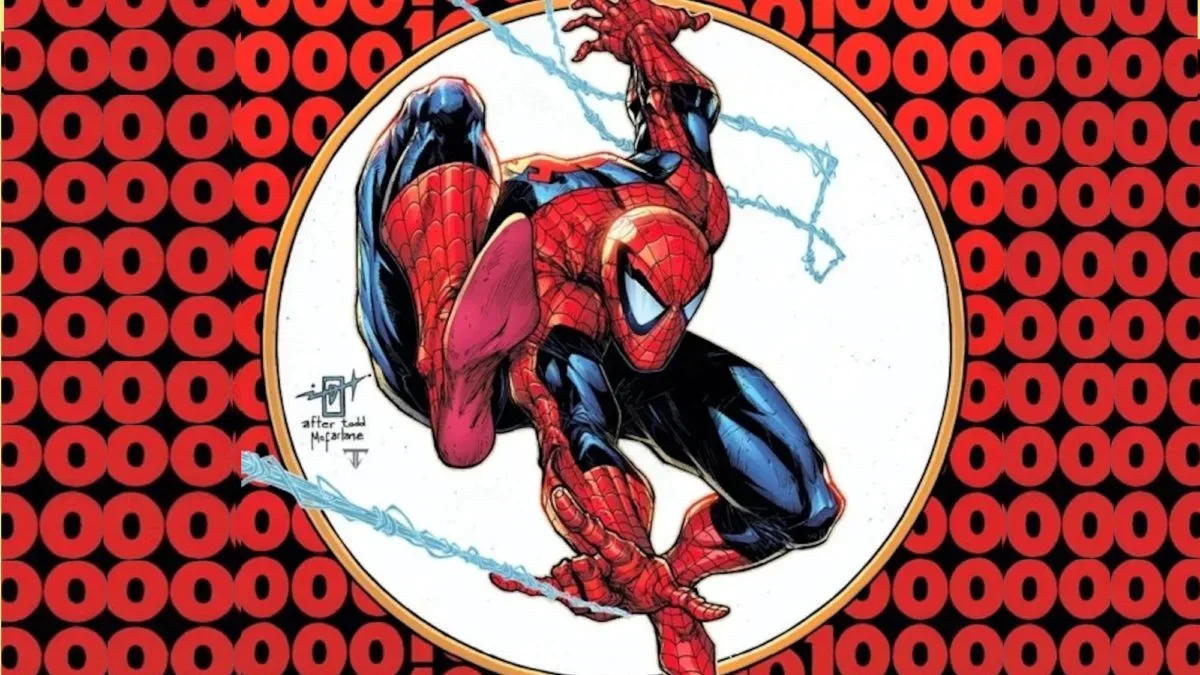
Amazing Spider-Man #1001 is the most-added comic on a 50-title anticipation chart for Wednesday, October 14, 2026. It is followed by Transformers #37, while X-Men #9 sits immediately behind that pair. The early ordering gives Marvel’s Spider-Man line the headline spot, but it also shows a week shared by a long-running superhero institution, an ongoing licensed series, a new Venom launch and a substantial cluster of DC releases.
The chart is built from reader “pull” activity: users marking books they want to follow or obtain through a comics-listing and subscription-management service. That makes it a useful indicator of attention before release, particularly among readers who actively maintain weekly lists. It is not, however, a sales ranking, a measure of how many physical copies a shop has ordered, or evidence of what will be the week’s most valuable issue.
Spider-Man carries momentum beyond issue #1000
Numbering milestones are conspicuous moments for comics readers. Issue #1000 naturally suggests an event-sized checkpoint, but Amazing Spider-Man #1001 leading this week’s interest ranking indicates that the audience watching the title has not simply moved on after the landmark number. A series with this degree of name recognition also has a built-in advantage in any opt-in pull-list system: many readers may have added it long ago and continue to track every issue.
That caveat does not make the result meaningless. Quite the opposite: ongoing reader commitment is a significant form of demand. For a weekly buyer deciding what needs a reservation, a high pull-list position signals that a title is broadly visible within this engaged segment of the direct-market comics audience. It can be a reason to check with a local shop early, especially if a reader wants a particular cover rather than merely any edition.
Still, the ranking should not be read as a prediction of scarcity. The available data specifically separates variant covers into their own pull totals. A title can therefore have strong overall interest while interest in its individual covers is dispersed. Likewise, an issue’s high placement does not state how many copies are being printed or ordered. Collectors and readers should treat anticipation as a sign of attention, not as a shortcut to judging availability or future resale value.
Transformers, X-Men and Venom make the top end competitive
Transformers #37 takes second place, putting it remarkably close to Spider-Man in this particular measure of planned readership. The title is published through Image Comics and Skybound, giving the list a major non-Marvel presence at the very top. Its placement also underscores why a cross-publisher chart is more revealing than looking only at a single company’s slate: readers’ weekly commitments do not stop at one superhero universe.
X-Men #9 follows in third. Along with Spider-Man, it helps place two established Marvel pillars among the week’s three most-tracked comics. The ranking also identifies Venom #1 as one of Marvel’s prominent launches in the wider top 50. A first issue and a four-digit legacy number can attract interest for different reasons. A #1 is a clear potential entry point for people who do not already have a book on their regular list, while #1001 represents continuity after a major milestone for readers already invested in a long-running title.
Those distinctions matter when interpreting the data. Pull-list charts can favor long-running books because users may have subscribed to them long before a given week. New series may have to win their way onto lists afresh. Conversely, a debut can draw attention precisely because readers see it as an approachable starting line. Neither pattern is inherently better; they simply reflect different kinds of reader intent.
What a pull actually means
In comics retail language, a pull list is a reader’s standing list of titles that a participating store or service may reserve or track. The underlying platform also allows readers to mark interest independent of a retailer connection. As a result, the chart combines signals from people who may seek a physical copy at a comic shop, buy digitally, or otherwise use the list as a personal reading tracker.
- A pull is not a sale. It captures interest or intent, not a completed transaction.
- A pull is not a retailer order. Shops use their own ordering decisions and customer subscriptions; the chart is not their complete sales ledger.
- Cover variants are not combined here. Individual covers receive separate pull counts, so the top 50 is not a comprehensive all-cover popularity total.
- Long-running subscriptions can persist. Someone may continue to have a title listed even if they are less actively excited by each specific new issue.
These limitations are important because comics discourse often treats every ranking as a scoreboard. This one is better understood as a snapshot of pre-release reader attention. It answers a narrower, useful question: which upcoming books are most visible to users who maintain a comics pull list?
DC’s Next Level titles make a strong second-issue showing
After the top three, the chart’s most prominent shared pattern is DC’s Next Level lineup. Teen Titans #2, Doom Patrol #2, Legion of Super-Heroes #2 and Barbara Gordon: Breakout are all identified as part of the week’s wave of reader interest.
The concentration is notable because second issues are a meaningful point for a newly launched comic. A debut can bring curiosity from readers sampling a premise, following a character or simply testing a new creative direction. The next installment is where a book starts turning that attention into a reading habit. The available ranking does not reveal exact pull totals or retention rates, so it cannot prove how many people returned from issue #1. It does show, though, that several related DC books are visible at the same time rather than one title carrying the entire initiative alone.
Barbara Gordon: Breakout adds another familiar DC character to the week’s discussion. Readers interested in the broader DC side of pop culture may also want to revisit how the company’s team properties can exist in more than one medium; our coverage of Ben Affleck’s comments on Justice League reshoots examines a separate, film-related chapter involving one of DC’s most recognizable teams.
The key point for comic readers is more immediate: multiple related releases are competing for room in the same Wednesday budget. A grouped initiative can be appealing to readers who want to sample an entire line, but it can also mean prioritizing one or two characters first. A pull chart can help identify what other readers are watching; it cannot decide which series best matches a given reader’s tastes.
How readers can use an anticipation chart sensibly
For someone already buying weekly comics, this kind of list works best as a planning tool rather than a verdict. The top-ranked books provide a quick starting point for checking whether an expected issue is out that week. They can also surface titles outside a reader’s usual routine, such as Transformers for a Marvel-focused buyer or a new DC series for someone who primarily follows Spider-Man.
- Use the ranking to discover, not to assume quality. The chart measures marked interest, not a critical score or a guarantee that every reader will enjoy an issue.
- Confirm the edition you want. Variant covers have separate data, so an overall title placement does not tell a buyer which cover is most requested.
- Check your own continuity point. Ongoing entries such as Amazing Spider-Man #1001, Transformers #37 and X-Men #9 may appeal most to readers already following those runs.
- Consider launches separately. Venom #1 may be especially relevant to someone seeking a fresh place to begin, regardless of whether it ranks above or below a favorite ongoing series.
- Reserve when it matters. If obtaining a specific issue or cover is important, communicating with a local comic shop is more practical than treating an interest chart as a stock forecast.
The data also has a broader limitation: it represents users of one comics-oriented tracking ecosystem, including a large subscriber base and retailer partners, rather than every person who buys comics. That is still a valuable audience, but it is not the whole market. Casual newsstand buyers, readers who do not use pull lists and people who only purchase collected editions may be absent from the signal entirely.
A busy Wednesday, measured as attention rather than sales
The October 14 list presents a clear picture of what has readers’ calendars marked: Spider-Man at the peak, Transformers close behind, X-Men in the leading trio, a Venom relaunch in the mix, and several DC Next Level books arriving with early-series momentum. It is a varied top end, even with Marvel’s major characters commanding the most conspicuous places.
Most importantly, the chart should preserve the distinction between anticipated and purchased. Reader interest is a real and useful metric, but it is only one metric. It does not establish final sales, print quantities, reviews, demand for variants or collectible status. For fans deciding on their Wednesday stack, that modesty is a feature: the list is a map of what people are watching, not an instruction sheet on what anyone must buy.