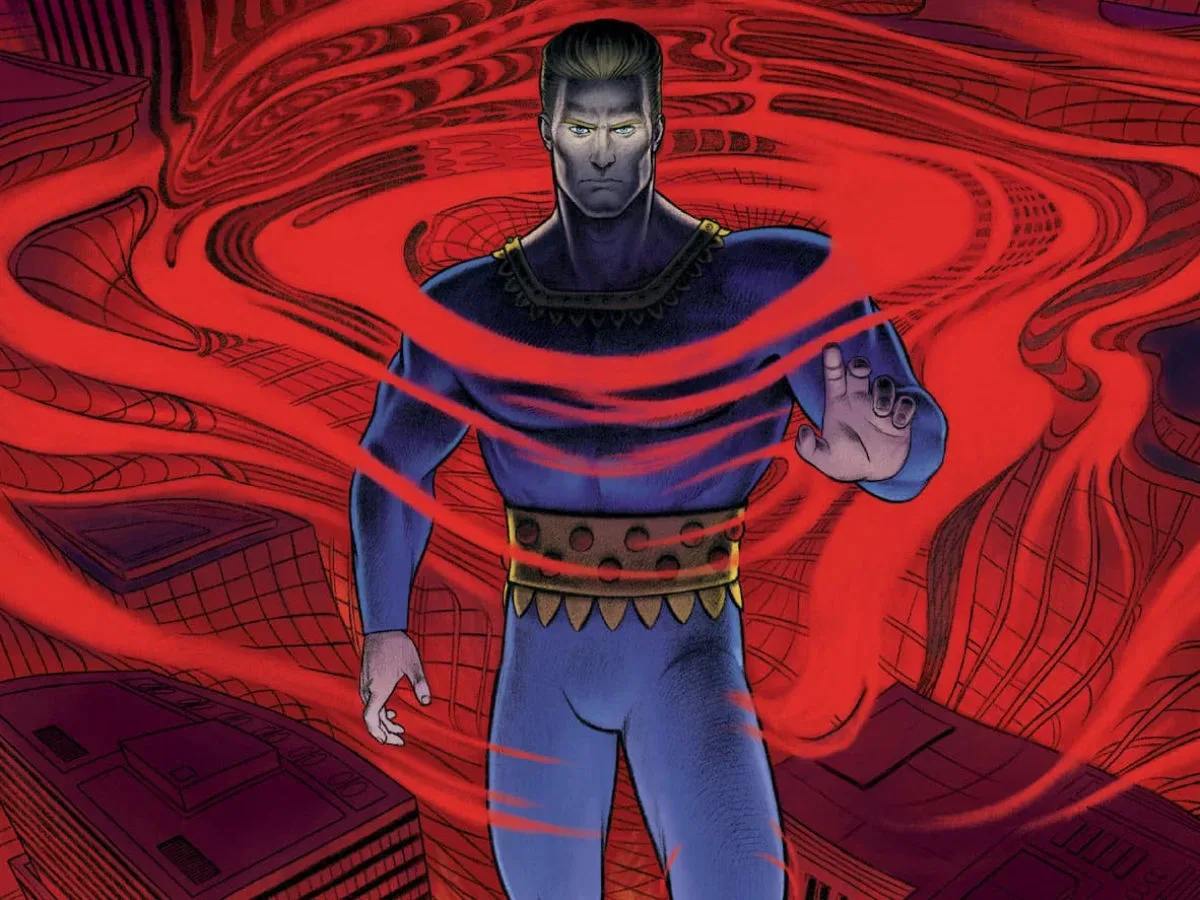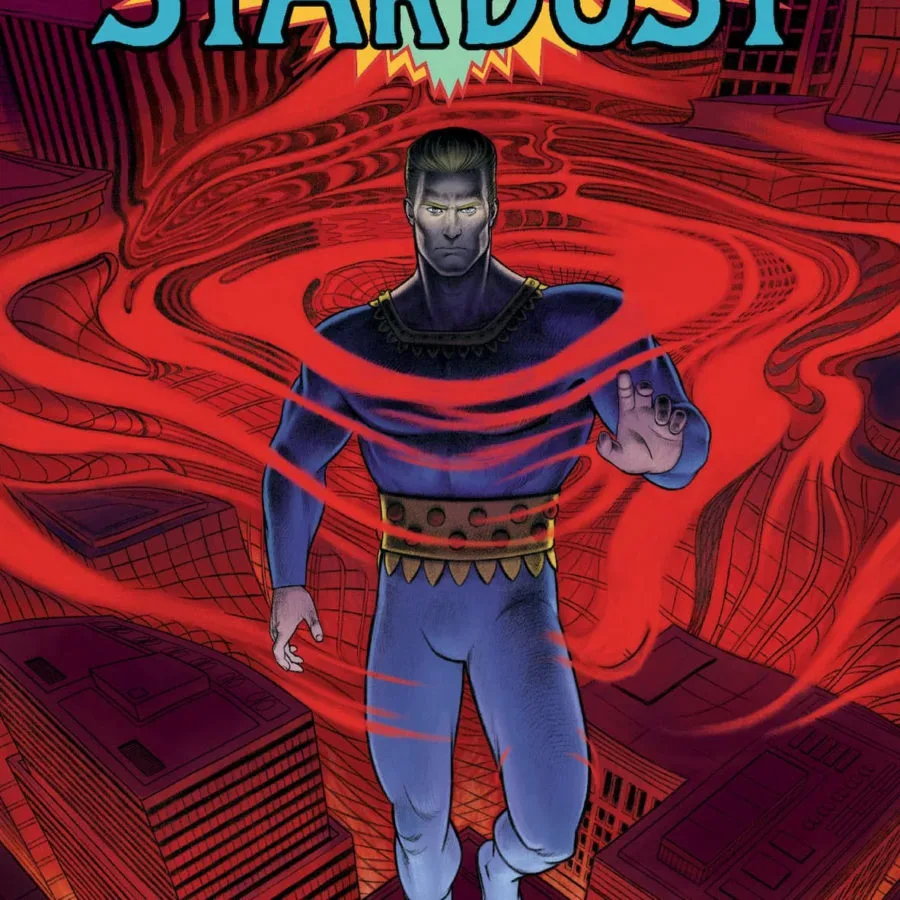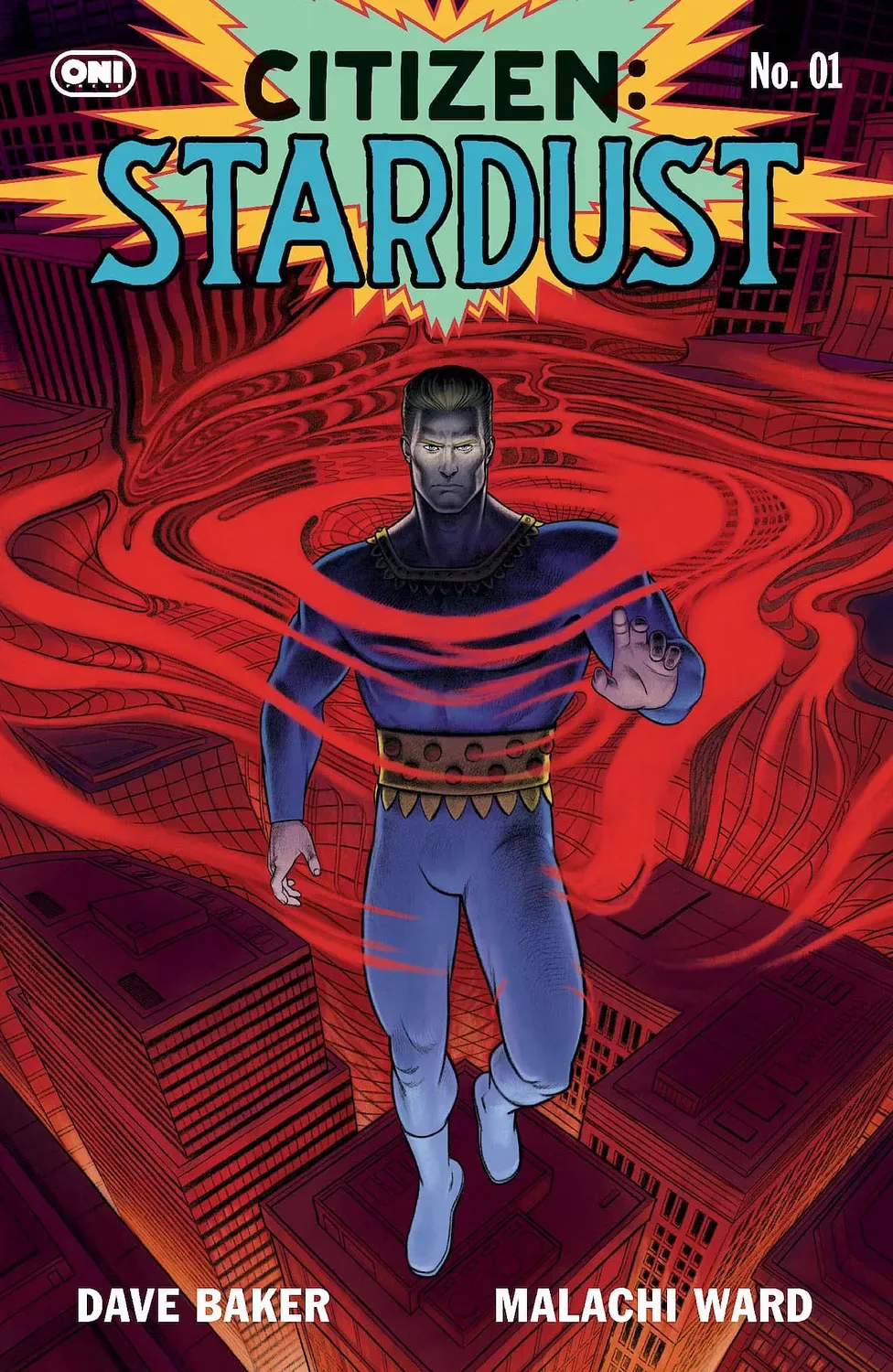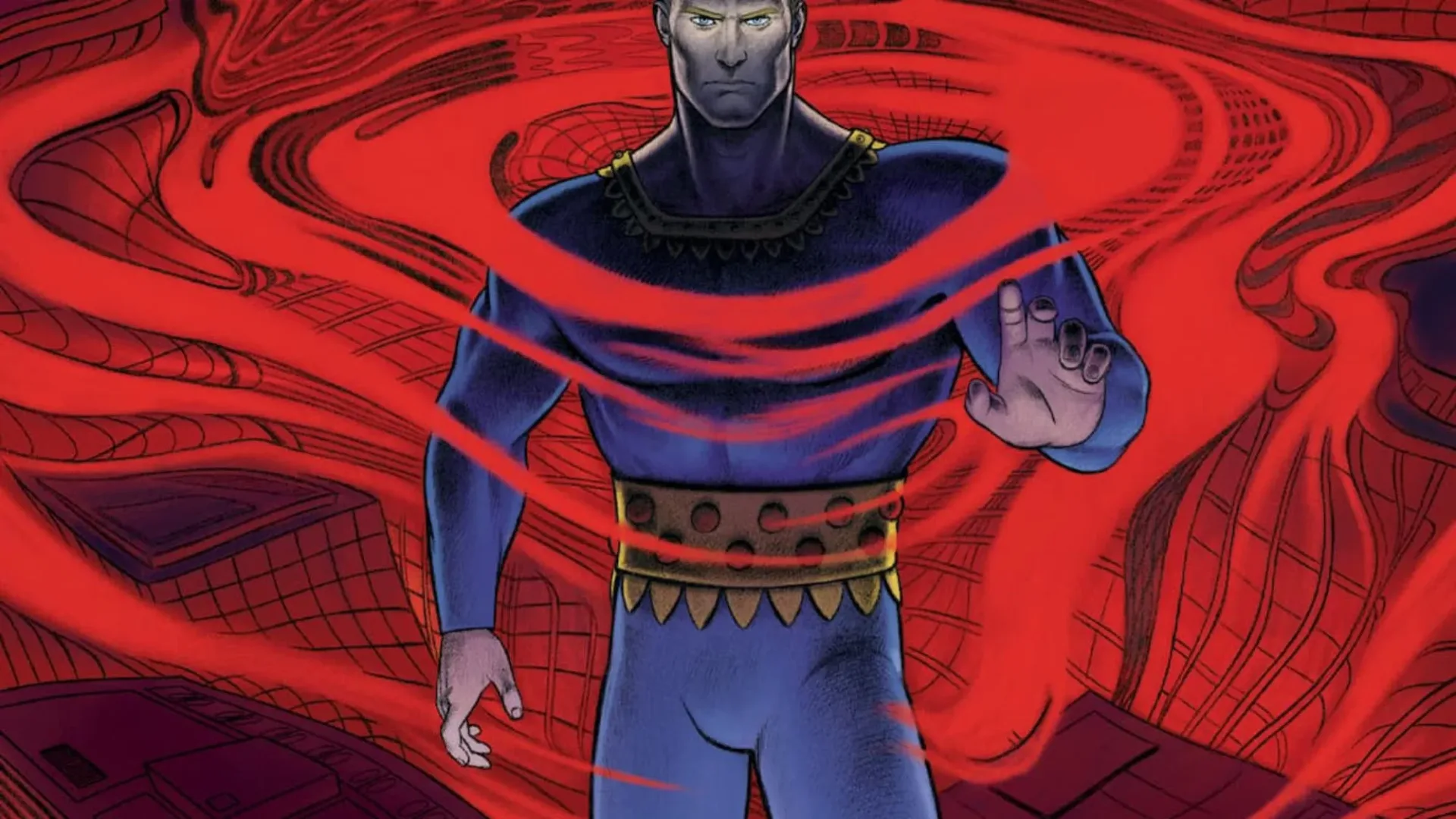
One of superhero comics’ most singular Golden Age creations is returning in Citizen: Stardust, a 12-issue maxi-series from Oni Press scheduled to begin in April 2027. Dave Baker and Malachi Ward are co-writing the project; Ward will provide the art, and Dave Stewart will color it.
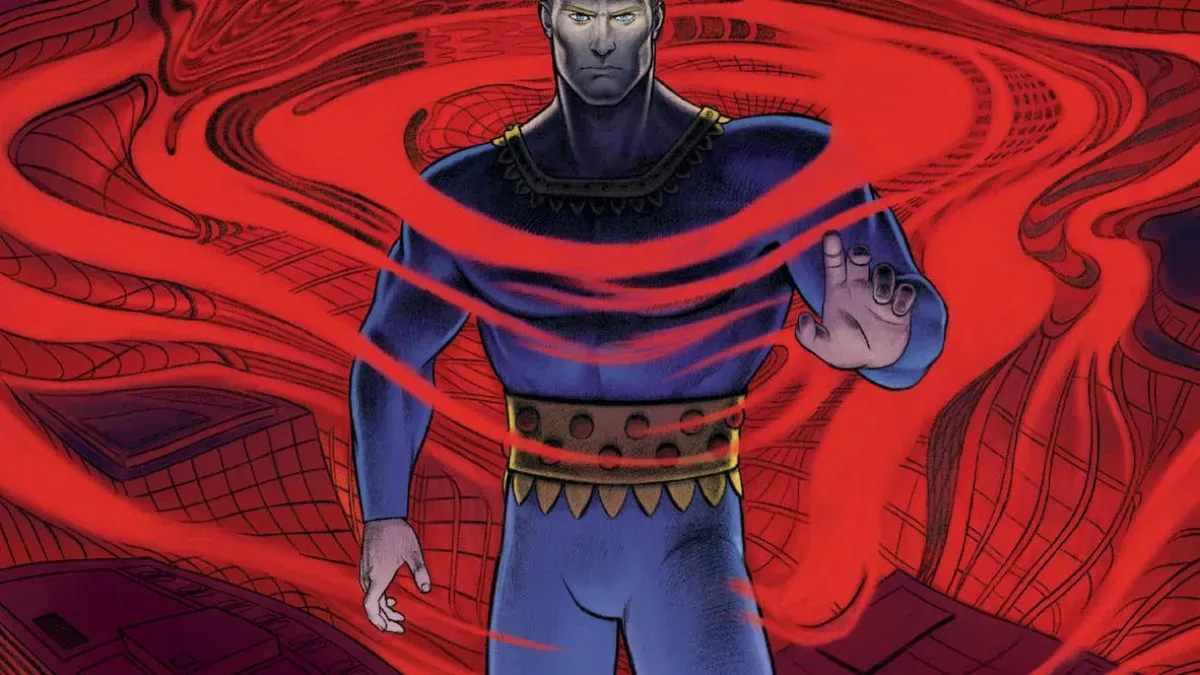
The series revisits Stardust the Super Wizard, the surreal hero created by Fletcher Hanks in 1939. Rather than positioning the character as a straightforward nostalgia exercise, the announced creative direction points toward a horror-inflected story about fame, artistic fixation, power and the disorienting pull of superhero mythology.
At its center is Barclay Flagg, a fallen Hollywood star whose life becomes entangled with Stardust. The premise places celebrity and creative obsession alongside the character’s famously uncanny cosmic scale, with the book described as moving through psychodrama, violence and the blurred boundary between art and superhero fantasy.
A 12-issue return for Stardust
Citizen: Stardust #1 is the first chapter of a planned 12-issue run. In comics publishing, a maxi-series is a limited series with a relatively long fixed length: unlike an ongoing title, it is designed to tell a complete story over a predetermined number of issues. That structure gives Baker and Ward room for a sustained narrative without suggesting that the series will continue indefinitely.
- Title: Citizen: Stardust
- Format: 12-issue maxi-series
- Writers: Dave Baker and Malachi Ward
- Artist: Malachi Ward
- Colorist: Dave Stewart
- Publisher: Oni Press
- First issue: April 2027
Baker has characterized the book as an unusually strange superhero project, citing psychogeography, cult sacrifice and technology beyond human comprehension among its influences. He also pointed to an especially grim visual: a cat o’ nine tails made from human skulls. Ward, meanwhile, has described Baker’s approach to Stardust and Hanks as a consideration of the brutality of American popular culture and the personal cost of striving to create something great.
“Dave’s take on Stardust, and on the work of Fletcher Hanks as a whole, is such a compelling meditation on the savagery of American pop culture and the often tragic consequences of trying to make something great,” Ward said.
Those comments establish expectations more clearly than a conventional plot outline would. This appears set to be a comic interested in the image of the superhero as much as the superhero’s actions: an icon that can inspire awe, invite exploitation, or become frightening when filtered through celebrity and artistic obsession.
Why Stardust remains an unusual superhero figure
Stardust the Super Wizard first appeared in Fantastic Comics #1, published by Fox Comics in 1939. Hanks both wrote and drew the character. Stardust’s original run was brief, comprising fewer than 20 stories during Hanks’ short comics career; Hanks left the medium in 1941.
That limited page count is part of the character’s unusual legacy. Stardust is not a hero supported by decades of continuous publication, a standardized costume bible, or a widely shared modern continuity. The small original body of work gives contemporary creators less accumulated canon to navigate, while Hanks’ idiosyncratic approach remains a substantial artistic shadow over any revival.
Hanks’ original comics later found a devoted audience through archival collections by Paul Karasik, which received an Eisner Award for Best Archival Collection. An archival collection is an edition focused on preserving and presenting historically significant material, often making work that is otherwise difficult to encounter available to new readers. In this case, those collections helped put Hanks’ bizarre, intense superhero work before audiences well after its original publication.
The character is also in the public domain, meaning creators can use Stardust without the exclusive control that normally accompanies a still-protected corporate superhero property. That status does not itself make a new comic inevitable or guarantee that readers will recognize the character. It does, however, create room for divergent interpretations—and Stardust has received several in recent years.
A recent wave of new Stardust work
In 2024, Stardust the Super Wizard Anthology, edited by Van Jensen, collected new short stories from a large roster of contributors, including Mike Allred, Francesco Francavilla, Pete Woods, Ron Marz, Zander Cannon, Jesse Lonergan, Jeff Parker and Tom Fowler. It also contained the first comics story by Ian Hanks, Fletcher Hanks’ grandson.
The anthology later received an Eisner nomination for Best Anthology, though that nomination was withdrawn after it emerged that one contribution used AI-generated art. The episode is a reminder that a book’s awards trajectory and its creative legacy can be complicated by a contribution outside the work of its other participants.
Then, in 2025, James and John Coats revived the hero in Family Fun Comics #18 from Cosmic Lion Productions. The oversized issue used a number that continued the original comic’s sequence and paired reverence for the Golden Age material with a modernized, heightened and more violent treatment of its strange elements.
Citizen: Stardust joins that renewed attention but is not simply repeating either model. The 2024 anthology offered multiple short-form interpretations. Family Fun Comics #18 explicitly engaged with the numbering and legacy of an old series. Baker and Ward’s project instead has a defined 12-issue narrative and a new protagonist, Barclay Flagg, through whom the book can explore Stardust’s mythology from an angle shaped by Hollywood decline, ambition and horror.
What the creative team’s approach suggests
Oni Press has framed the series as an attempt to probe American fascination with superheroes, celebrity, self-destruction and power. That is a useful lens for the announced premise. A “superhero deconstruction” generally examines the assumptions that make traditional cape stories work—heroism, moral certainty, public adoration, exceptional power—rather than merely presenting those conventions at face value.
But the stated intent here is not merely to strip Stardust down or explain him away. The team’s descriptions emphasize excess: grotesque action, vast imagination and forces beyond ordinary human comprehension. In other words, the project appears to want the outlandishness of Hanks’ material intact while using it to examine the culture that creates and consumes larger-than-life heroes.
The word psychogeography, invoked by Baker, refers broadly to the ways environments and places affect emotions, behavior and imagination. No specific locations or story mechanics have been detailed for Citizen: Stardust, so readers should not assume a particular setting from the term alone. Its inclusion does suggest that place may matter as more than background—that a city, a Hollywood landscape or another environment could be treated as a psychological force within the story.
Stewart’s role is also worth noting. Color is not merely a finishing layer in comics; it can establish time, emotional temperature, readability and the distinction between reality and an altered state. Given the announced collision of celebrity drama, horror and cosmic superhero imagery, Stewart’s colors may be central to how the series separates—or deliberately merges—those modes on the page. The available details do not describe a specific palette or technique, but the credit confirms a three-person creative team with discrete writing, line-art and color responsibilities.
What is confirmed, and what remains unknown
The firm details are the format, principal creative credits, publisher and April 2027 start for issue #1. The announced premise establishes Barclay Flagg as a fallen Hollywood figure and signals a story concerned with art, obsession, horror and superhero myth. It also makes clear that the project intends a far more unsettling register than a routine retro revival.
There are still major unknowns. No issue-by-issue release cadence has been provided. No cover art, retailer information, variant plans, collected-edition plans or price have been detailed. The full supporting cast, the precise role Stardust plays in Flagg’s story, and how closely the comic will adapt versus reinvent Hanks’ concepts have not been laid out.
That uncertainty is important for readers and collectors alike. A public-domain character can foster wildly different creative takes, and the character’s earlier revivals demonstrate that there is no single modern “default” Stardust. Citizen: Stardust should therefore be approached as Baker, Ward and Stewart’s own project rather than as a promised restoration of a definitive continuity. Readers interested in other comic-book market stories can also find our coverage of the Detective Comics #880 LEGO facsimile variant’s early listings.
For now, the most distinctive element of Citizen: Stardust is its choice of vehicle. Stardust brings a deeply specific Golden Age strangeness, a brief original history and a contemporary public-domain afterlife. Pairing that material with a story of a disgraced screen star gives the series room to question how cultural icons are made, damaged, repurposed and feared. Whether it becomes a new landmark for the character will depend on the pages themselves, but its ambition is already unusually clear.