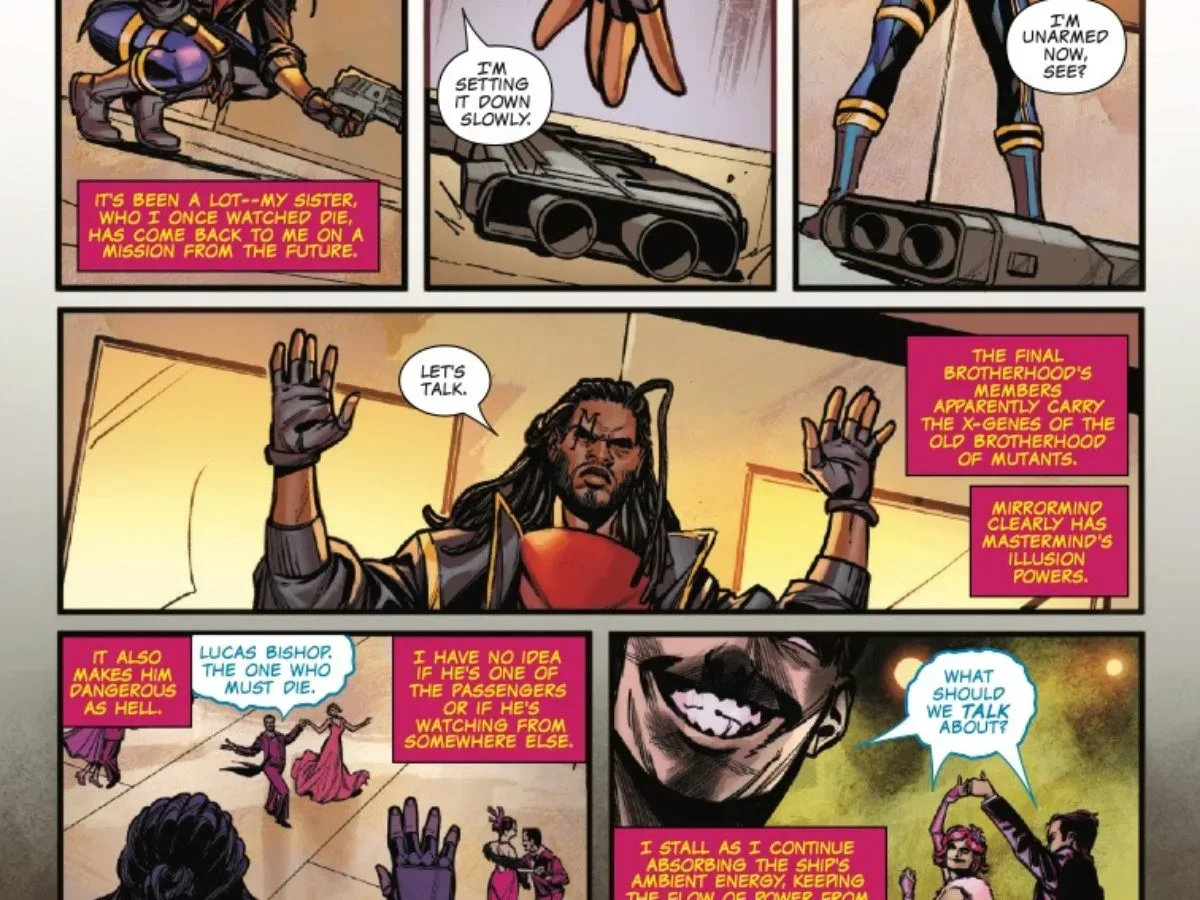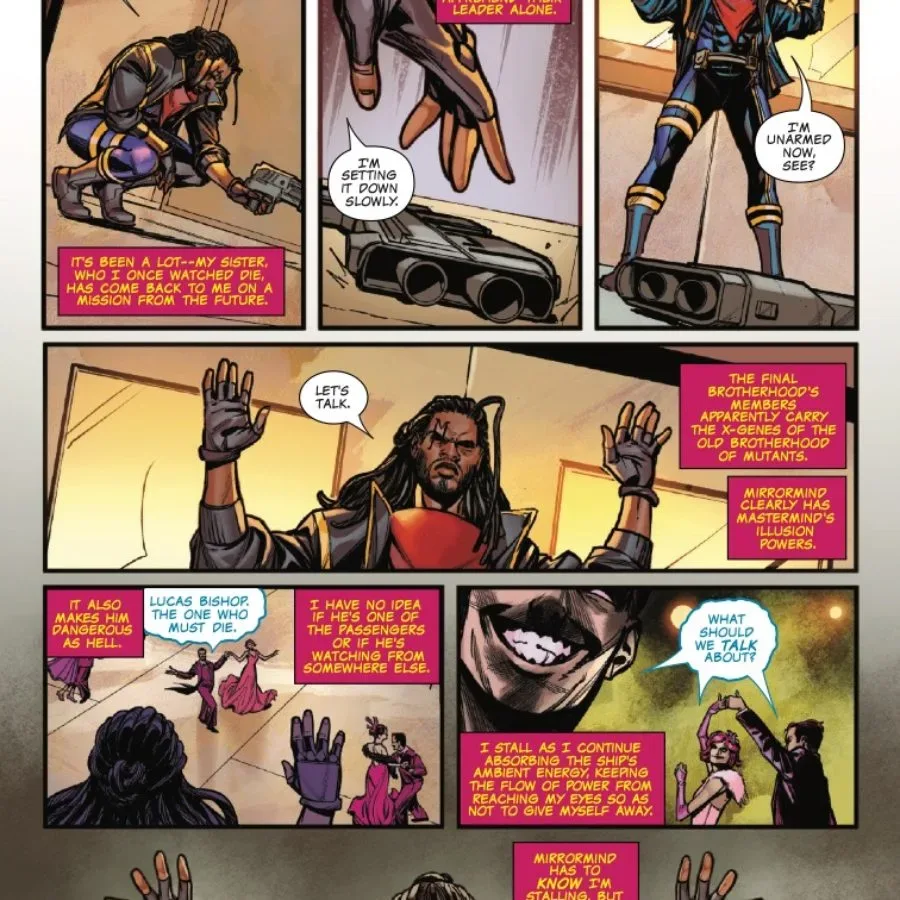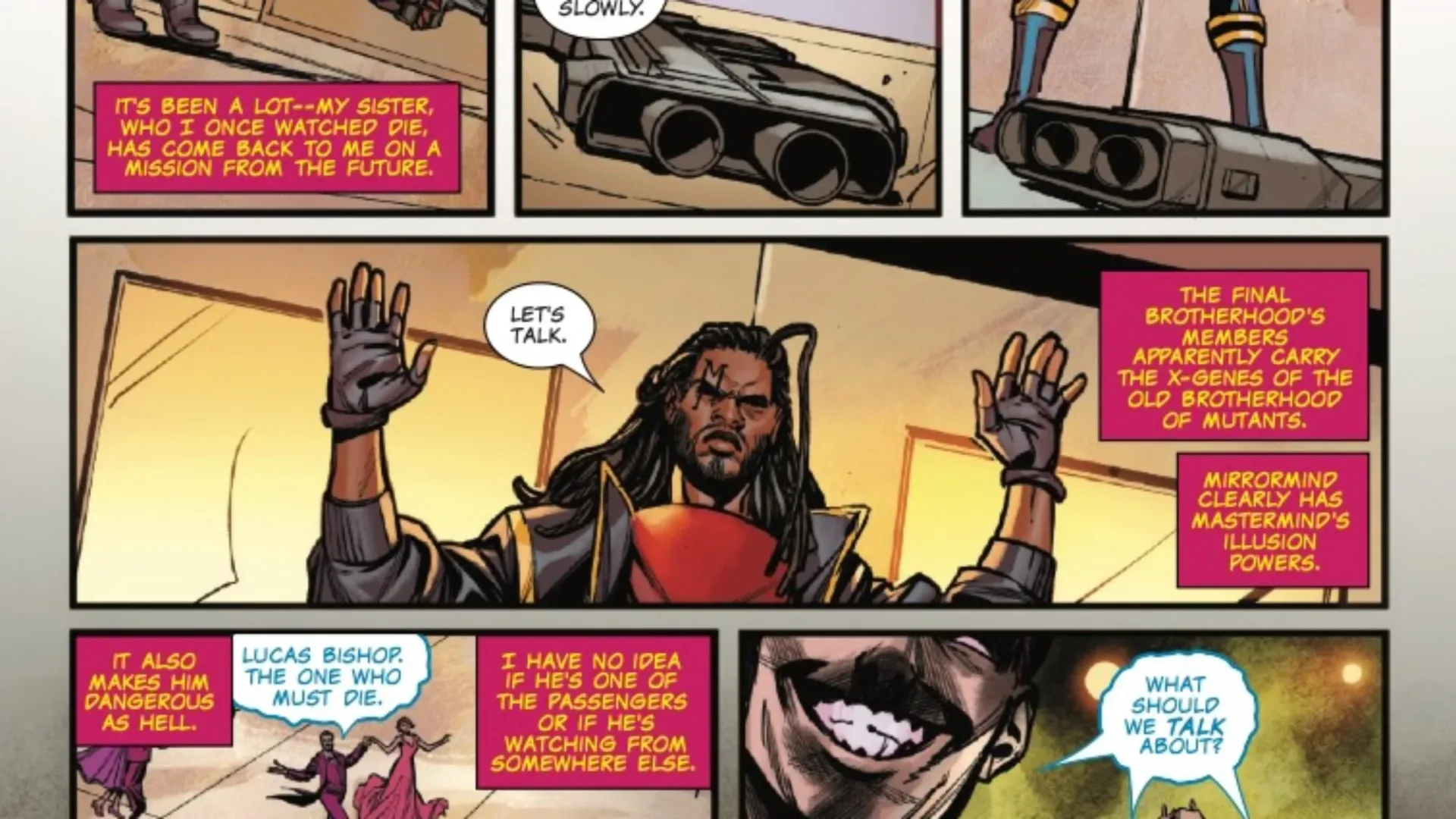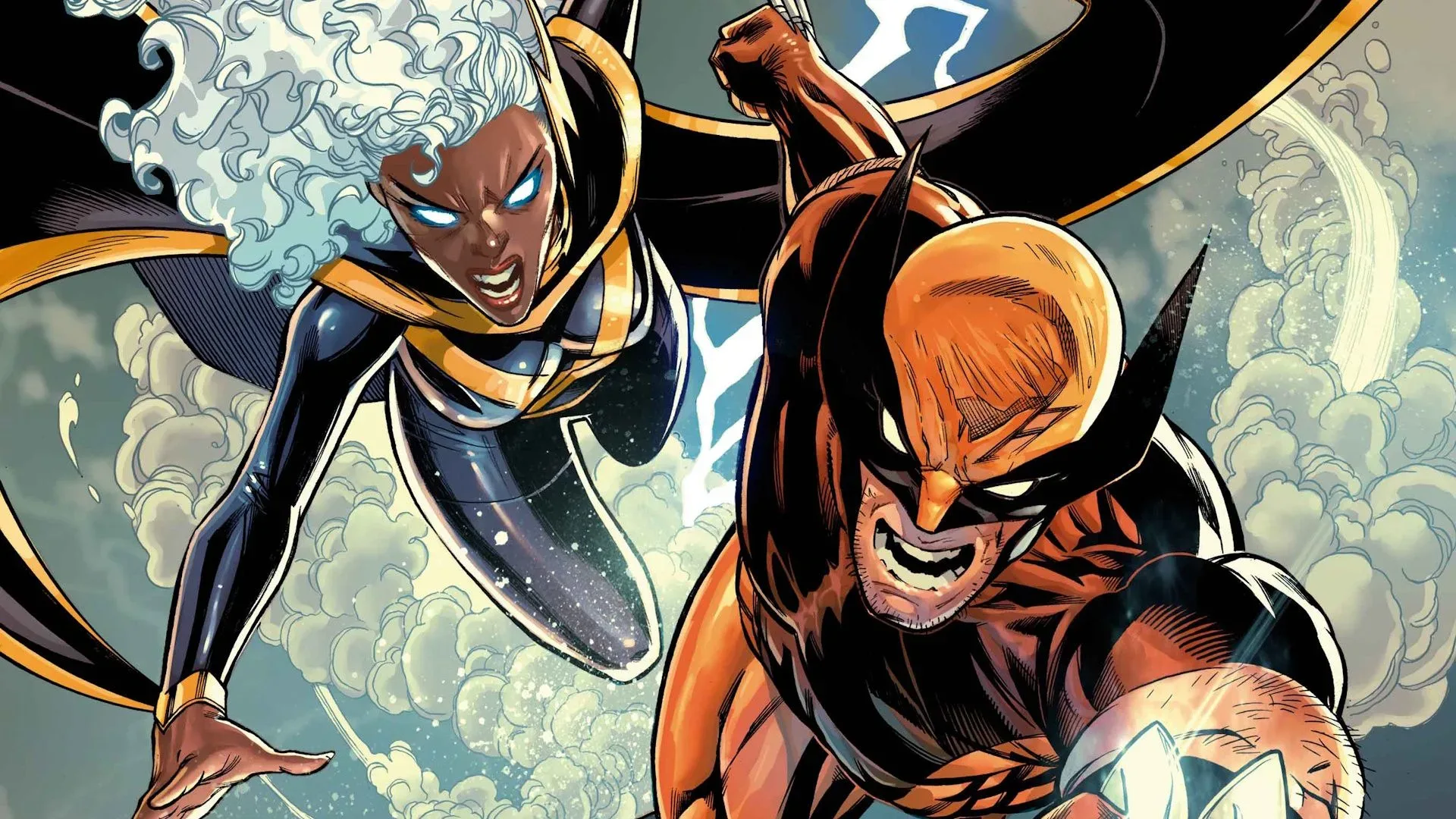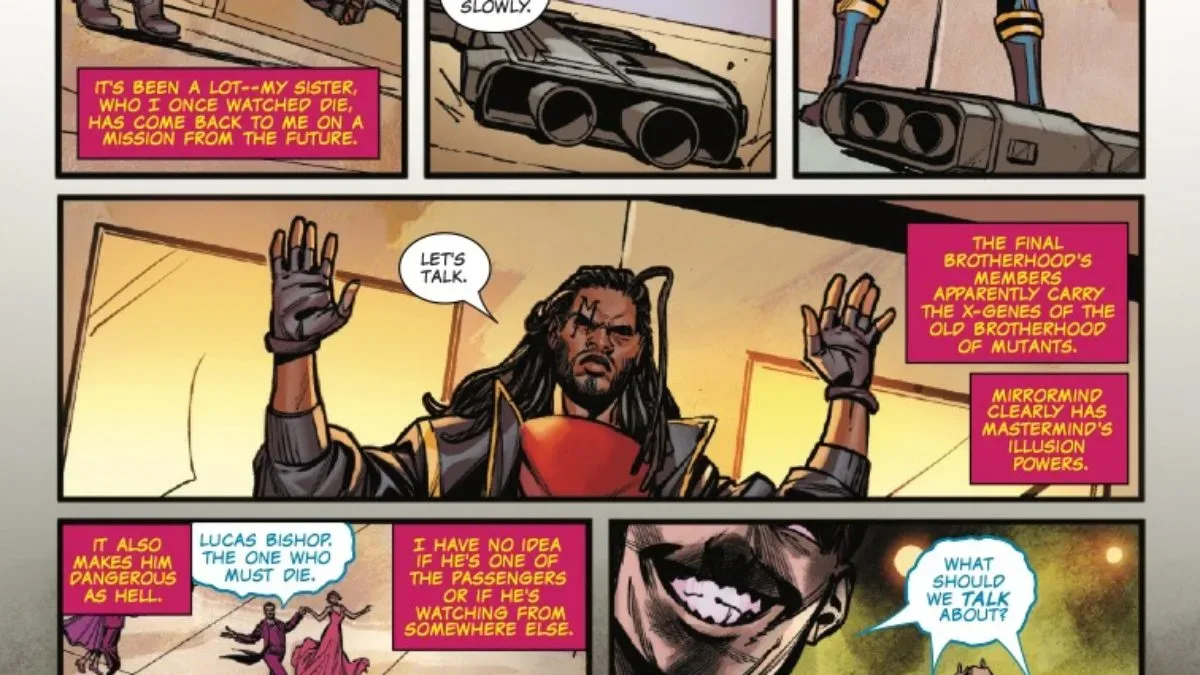
Bishop #4 is set to put Lucas Bishop and his sister Shard in a particularly nasty kind of superhero fight: one where a punch may be aimed at the wrong person, an escape route may not exist, and the setting itself cannot be trusted. The Marvel issue goes on sale September 23, 2026, and places the pair aboard a cruise ship controlled by Mirrormind, an illusion-wielding member of the Final Brotherhood.
That premise has immediate pulp appeal. A cruise ship is already a self-contained location: an enclosed venue packed with corridors, cabins, gathering spaces, crew-only areas, and a vast amount of water between its passengers and an easy exit. Add mirror walls and a villain who can manipulate what people perceive, and the ordinary geography of the ship becomes part of the threat. The question is no longer simply whether Bishop can defeat an opponent. It is whether he and Shard can establish what is real before the Final Brotherhood completes its stated effort to eliminate him.
The issue is written by Saladin Ahmed, with art credited to Mario Santoro, Reese Hannigan, and Federica Mancin. Davide Paratore provides the cover. It is a 32-page, Rated T+ Marvel release priced at $4.99 in the U.S.; a Matteo Della Fonte variant is also listed at $4.99 U.S. and $6.25 Canadian.
A villain built around uncertainty
Mirrormind’s defining advantage is illusion. In straightforward terms, an illusion-based threat does not necessarily need to overpower a hero physically if it can corrupt the information that hero uses to make decisions. A closed door might look open. An ally might look like an attacker. A crowd may continue enjoying a ballroom dance while danger unfolds nearby. Every moment spent checking whether something is genuine gives the villain more control over the encounter.
That makes the ship setting more than a colorful backdrop. Its many reflective surfaces, repeating hallways and compartmentalized rooms can amplify the basic tension of an illusion story. A mirror normally confirms where a character is standing; in a Mirrormind scenario, it can instead become another reason to doubt one’s own bearings. The title character may be powerful, but power does not automatically solve a problem when the target, the room and even the stakes can be obscured.
The supplied setup describes Mirrormind as the deadliest member of the Final Brotherhood. That is a high bar in the issue’s own framing, though readers should treat it as the book’s conflict-building description rather than a detailed accounting of the group’s entire hierarchy. What it clearly establishes is the villain’s importance: this is not a random obstacle during Bishop’s journey, but an assassin positioned to bring the Brotherhood’s mission to a decisive point.
Why Shard changes the stakes
The issue’s central pairing is Lucas Bishop and Shard, his sister. Their shared predicament gives the story a more personal engine than a standard hero-versus-villain showdown. Bishop’s problem is not only surviving an ambush; he must work alongside someone whose safety is directly tied to his own emotional vulnerability.
Material from the issue indicates that Bishop is haunted by the possibility of seeing Shard die again. That detail matters because illusion stories frequently turn on fear, memory and anticipation. A villain capable of making a target see false images has an obvious opening against someone already carrying trauma. The most effective deception would not have to be wildly implausible. It would only need to resemble the outcome Bishop most fears.
That does not reveal how the comic resolves the confrontation, and the premise leaves plenty of room for reversals. Still, it gives the conflict a useful dramatic shape. Mirrormind can attack perception; Bishop and Shard need to preserve trust. If they cannot identify what they are seeing, they may have to rely on each other’s judgment. If the villain can turn that trust into doubt, the brother-and-sister partnership becomes a weapon aimed back at them.
The apparent counterplay: making the hidden visible
The issue’s material points to Bishop answering Mirrormind’s misdirection with a blinding energy burst. That is an interesting tactical response because it is not framed as a conventional attempt to hit the villain harder than the villain can hit back. Instead, it appears designed to overwhelm a visual deception.
In superhero-comics terms, a countermeasure is a move chosen to negate an opponent’s specific advantage. Against an illusionist, it could mean changing the lighting, destroying an object sustaining an effect, forcing the opponent into close quarters, or creating enough disruption that false images can no longer be maintained cleanly. Bishop’s flash-like blast fits that basic idea: when vision is being weaponized, flooding the environment with light can be a way to deny the illusionist precision, even if only briefly.
The important word is briefly. A villain whose strength is manipulation may be most dangerous in the seconds after a hero believes the trick has been broken. The promotional setup does not promise an easy escape, and the Final Brotherhood’s objective remains active. Readers should expect the cruise ship’s confusion to be a sustained pressure point rather than a one-panel problem.
A contained setting with broad consequences
There is a practical reason stories often return to locked-room or trapped-location structures: they make every decision more consequential. On a cruise ship, Bishop and Shard cannot simply put distance between themselves and the threat. Other people aboard may be unable to recognize that they are in danger. And if the environment has been transformed into a funhouse of unreliable sights, moving through it can become as risky as standing still.
The reported imagery of ballroom guests dancing while a threat lurks nearby captures the premise neatly. It creates a divide between what the passengers believe is happening and what Bishop understands may be happening. That divide is fertile territory for suspense. The heroes have to act in a space where bystanders may not know they need saving, and their attempts to intervene could look irrational or hostile to people caught inside the deception.
It also creates a potential visual showcase for the art team. Illusion scenes can use repeated figures, disrupted perspectives, reflections and deliberately uncertain staging to put readers in the same unsettled position as the characters. The key challenge is clarity: the audience should feel the deception without becoming so lost that the action no longer has impact. With Santoro, Hannigan and Mancin all credited on art, the issue has a substantial visual assignment in making the ship feel both alluring and threatening.
What is confirmed for Bishop #4
- Release date: September 23, 2026.
- Publisher: Marvel.
- Writer: Saladin Ahmed.
- Art: Mario Santoro, Reese Hannigan and Federica Mancin.
- Cover: Davide Paratore.
- Premise: Bishop and Shard are trapped on a cruise ship where Mirrormind’s illusions distort reality.
- Antagonists: Mirrormind and the Final Brotherhood, whose mission includes eliminating Lucas Bishop.
- Format: 32 pages, Rated T+.
- Price: $4.99 U.S.; the listed Matteo Della Fonte variant is also $4.99 U.S.
What readers should not assume yet
The premise gives away the location, the core players and the immediate danger, but it does not establish the outcome. It does not confirm the full scope of Mirrormind’s abilities, the exact mechanics behind the cruise ship illusion, whether every passenger is affected in the same way, or what form the Final Brotherhood’s larger plan takes after this attempted hit.
It is likewise too early to treat Bishop’s apparent flash of energy as a permanent answer to Mirrormind. A counterattack shown in advance can signal a temporary advantage, a failed gambit, or the trigger for a more elaborate deception. The appeal of this issue’s setup is that certainty is the commodity in shortest supply.
Marvel readers looking for more mutant-adjacent comic discussion can also see how another Marvel project is being framed in this report on Insomniac’s Marvel’s Wolverine asset clarification.
The immediate appeal of Bishop #4
Bishop #4 has a clean, focused hook: place a hero and his sister inside an enclosed illusion maze, then send a high-priority assassin after them. The concept marries personal stakes to a location that naturally encourages paranoia. A ballroom can become a trap. A reflection can become misinformation. A rescue can become another layer of the enemy’s game.
For readers following the series, the issue appears positioned as a direct escalation in the Final Brotherhood’s campaign against Lucas Bishop. For anyone drawn to superhero stories that use a strong genre premise, the cruise-ship nightmare offers a contained thriller structure without abandoning the larger mutant conflict. Either way, the central challenge is wonderfully cruel: Bishop has to protect Shard and stop Mirrormind while operating in a world that has made looking closely an act of risk.